Last updated: July 24, 2026
Quick Answer: You can teach your dog to clean up toys by breaking the behavior into small steps – pick up, carry, drop into a basket – and rewarding each step with treats and praise. Most dogs can learn the basics in 2 to 4 weeks with short daily sessions. The key is building on commands your dog already knows, like “fetch” and “drop it,” before adding the cleanup cue.
Key Takeaways 🐾
- Teach “drop it” first – cleanup is impossible without a reliable drop command
- Use a wide, low-sided basket so your dog can easily drop toys inside
- Short sessions (5 to 10 minutes) work better than long, frustrating ones
- Puppies as young as 8 weeks can start learning foundation skills
- Clicker training speeds up the process significantly
- Most dog breeds can learn this trick – motivation level matters more than breed
- Carrying toys around instead of dropping them is a common stage, not a failure
- Cleanup training can reduce destructive chewing by giving dogs a mental job
Is It Really Possible to Teach Your Dog to Clean Up Toys?
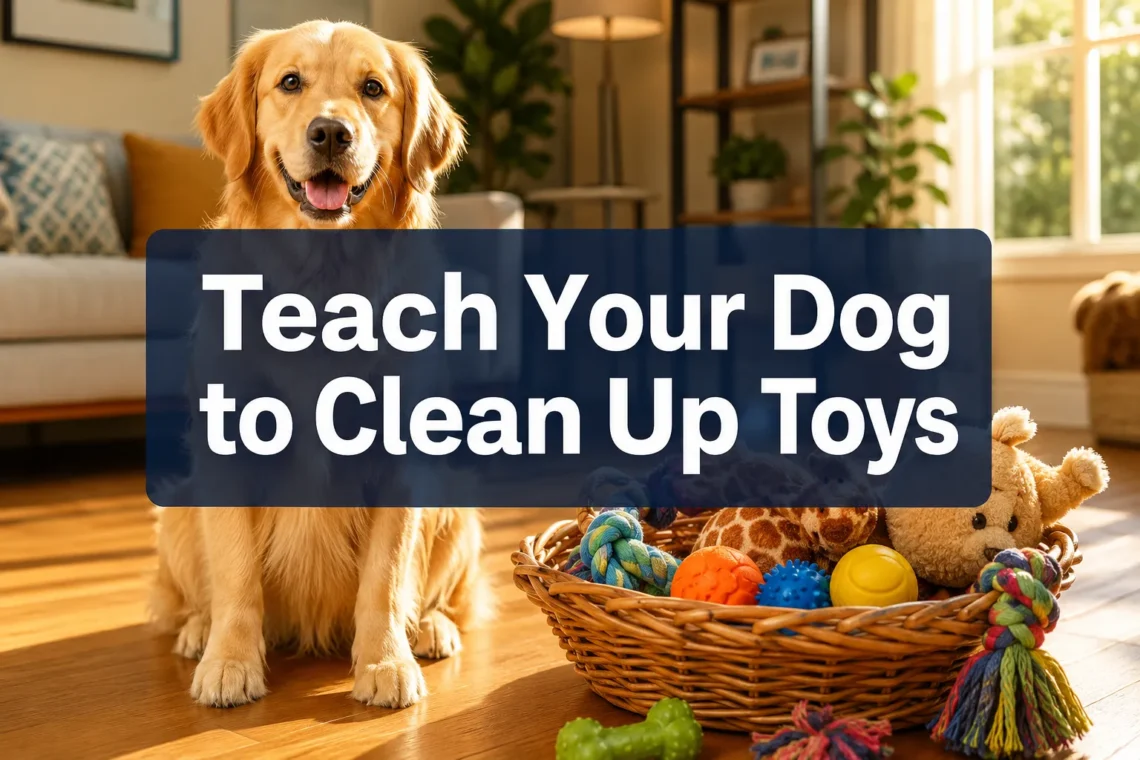
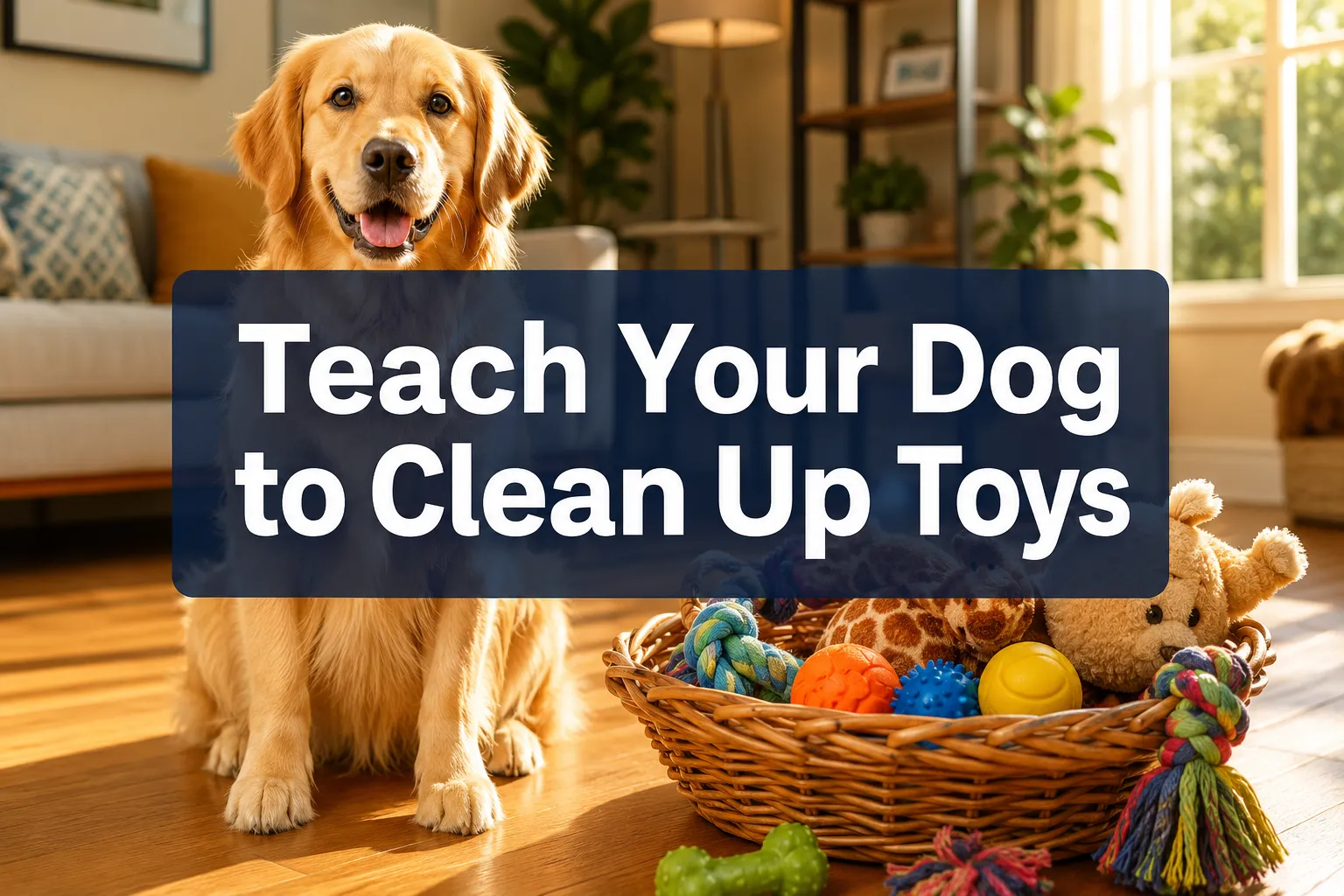
Yes, absolutely. Teaching your dog to clean up toys is one of the most practical and impressive tricks you can train. It combines several behaviors your dog likely already knows – picking things up, carrying them, and dropping on command – into one satisfying sequence. [1]
The American Kennel Club confirms that this trick is totally achievable for most dogs, and it doubles as great mental enrichment. [8]
I taught my own Border Collie mix, Biscuit, this trick in about three weeks. The first day felt hopeless. By week two, she was dropping toys into the basket like it was her full-time job. The trick? I stopped repeating myself and let the treats do the talking.
“Dogs don’t repeat behaviors that don’t pay off. Make cleanup the most rewarding thing in the room, and they’ll do it without being asked twice.”
Is It Better to Teach “Drop It” Before Teaching Cleanup?
Yes – teaching “drop it” before starting cleanup training is strongly recommended. Without a reliable drop command, your dog will pick up the toy and then walk away with it, which is the opposite of what you want.
Here’s why this order matters:
- Drop it teaches your dog that releasing an object earns a reward
- Without it, your dog may pick up toys but refuse to let go over the basket
- A solid drop command also helps with safety (dropping harmful items on walks)
If your dog doesn’t have a reliable “drop it” yet, spend one to two weeks on that alone before moving to cleanup. Check out these top dog commands to transform your pup’s behavior for a solid foundation.
Common mistake: Skipping straight to cleanup training and then getting frustrated when the dog carries the toy around instead of dropping it. That’s not stubbornness – it’s a missing prerequisite skill.
How to Teach Your Dog to Clean Up Toys Step by Step
Here’s the core method that works. Each step builds on the last, so don’t rush ahead. [1][4]
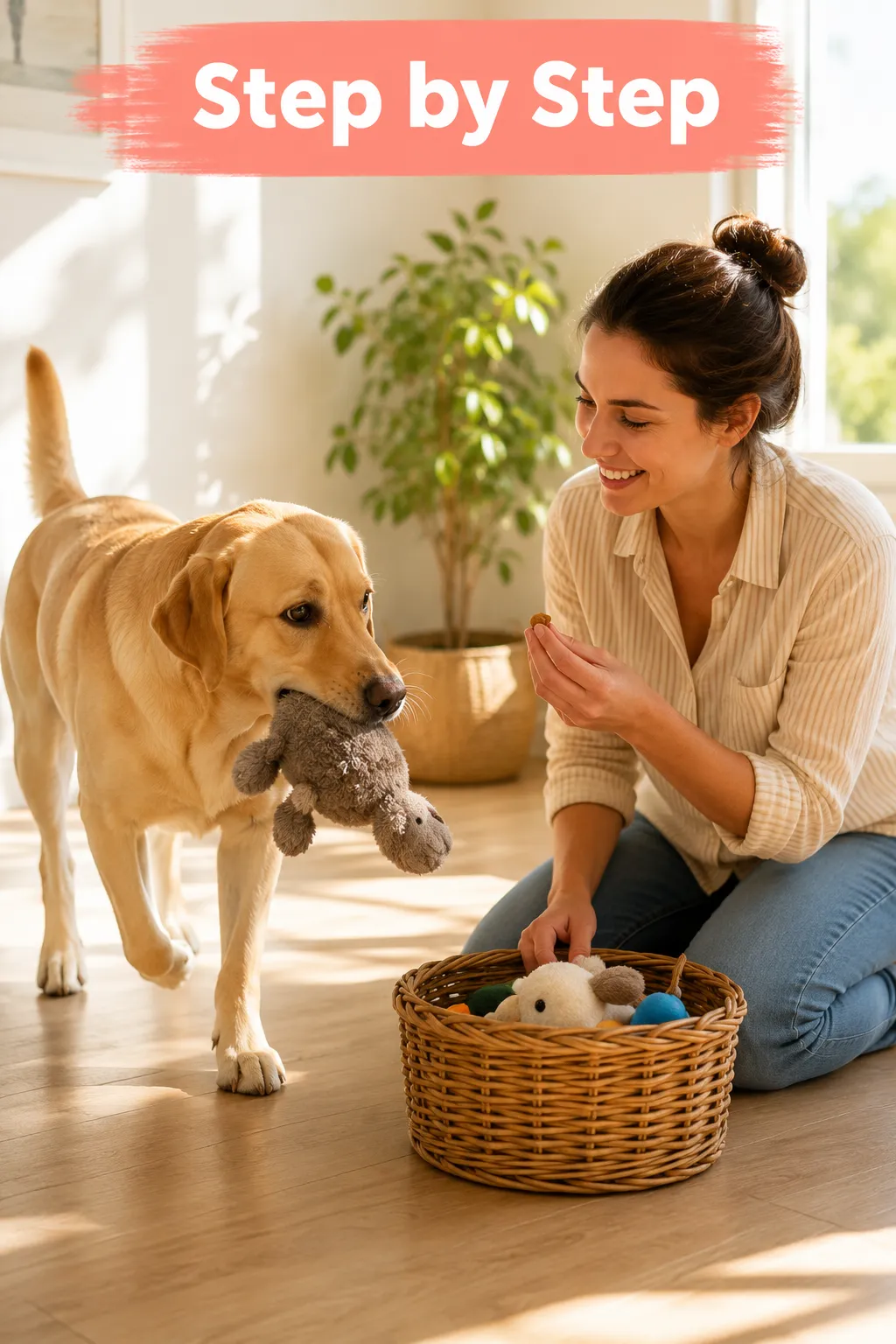
Step 1 – Introduce the basket
Place the toy basket on the floor. Let your dog sniff it and get comfortable with it. Reward any interaction with the basket (sniffing, pawing, looking at it).
Step 2 – Lure the drop over the basket
Hold a toy directly over the basket. Ask your dog to “take it,” then immediately say “drop it” while holding a treat to their nose. When the toy falls in, reward with a big treat and enthusiastic praise.
Step 3 – Add distance gradually
Once your dog drops the toy in reliably from directly above, place the toy 1 foot away. Ask them to pick it up and bring it to the basket. Reward every success.
Step 4 – Add the cleanup cue
Once your dog is doing the sequence reliably, add a verbal cue like “clean up” or “tidy up” right before they pick up the toy. Repeat this consistently.
Step 5 – Add more toys
Start with one toy, then slowly add more. Ask your dog to clean up one at a time. Reward after each toy goes in, then give a big jackpot reward when all toys are in the basket.
Step 6 – Fade the treats gradually
Once the behavior is solid, reward every other toy, then every third toy, then only at the end. This keeps the behavior strong without needing a treat for every single action.
Step 7 – Practice in different rooms
Generalize the behavior by practicing in the living room, bedroom, and hallway. Dogs don’t automatically transfer skills between locations.
Dogs Trust recommends using clear verbal cues like “get it” and “drop” throughout this process to help dogs connect the action to the word. [2]
How to Teach Your Dog to Clean Up Toys Without Constant Repetition
The secret to teaching cleanup without repeating yourself is to use the environment and timing – not your voice. [6][7]
Most owners fall into the trap of saying “clean up, clean up, CLEAN UP” in an increasingly frustrated tone. Dogs tune this out fast.
Instead, try these approaches:
- Wait it out: After giving the cue once, stay quiet and wait. If your dog looks confused, guide them toward the toy with a hand gesture rather than repeating the word.
- Use a clicker for precision: Click the exact moment the toy hits the basket. This tells your dog exactly what earned the reward, no words needed.
- Set up for success: Keep sessions short (5 to 10 minutes). End on a win, even if it means making the task easier.
- Use high-value treats: If your dog isn’t motivated, the treat isn’t good enough. Try small pieces of chicken, cheese, or their favorite reward.
For more ideas on making training fun and stress-free, see The Calm Dog Method.
What Age Can Puppies Learn to Clean Up Toys?
Puppies can start learning the foundation skills (pick up, carry, drop) as early as 8 weeks old. However, the full cleanup sequence – picking up a toy, carrying it across the room, and dropping it in a basket – is better suited for puppies 4 months and older when their attention span and impulse control are more developed.
Age guide:
| Age | What to Focus On |
|---|---|
| 8 to 16 weeks | “Drop it,” name recognition, basic fetch |
| 4 to 6 months | Carrying objects, drop over basket |
| 6 months+ | Full cleanup sequence with cue word |
Adult dogs can learn this trick at any age. Older dogs may take a little longer, but they’re fully capable. [5]
Clicker Training for Teaching Dogs to Pick Up Toys
Clicker training is one of the fastest ways to teach the cleanup trick because it marks the exact moment your dog does the right thing. [4]
Here’s how to use a clicker for toy cleanup:
- Charge the clicker first – click and treat 10 to 15 times in a row so your dog learns the click means a reward is coming
- Click when the toy leaves the floor – mark the pickup action
- Click when the toy goes into the basket – this is the most important moment to mark
- Do NOT click for carrying around – only click for the drop into the basket
The clicker removes ambiguity. Your dog knows exactly which part of the behavior earned the treat. This speeds up learning significantly compared to verbal praise alone.
If you’re new to trick training, this guide on 15 fun dog training tricks your dog will love learning is a great starting point.
Best Treats for Rewarding Toy Cleanup Behavior
The best treats for cleanup training are small, smelly, and easy to eat quickly so training momentum isn’t broken. [3][6]
Top treat options:
- Soft chicken pieces – high value, quick to eat
- Small cheese cubes – most dogs go wild for these
- Commercial soft training treats – look for pea-sized pieces
- Hot dog slices – cut small, very motivating
- Freeze-dried liver – excellent for dogs with low food motivation
What to avoid:
- Crunchy biscuits (take too long to chew, breaks the training flow)
- Treats that are too large (fills your dog up too fast)
- Treats your dog is bored of (rotate flavors to keep interest high)
You can also make your own high-value rewards. Try these easy 3-ingredient dog treat recipes that are quick to make and dogs absolutely love.
Why Won’t My Dog Pick Up Toys and Put Them in the Basket?
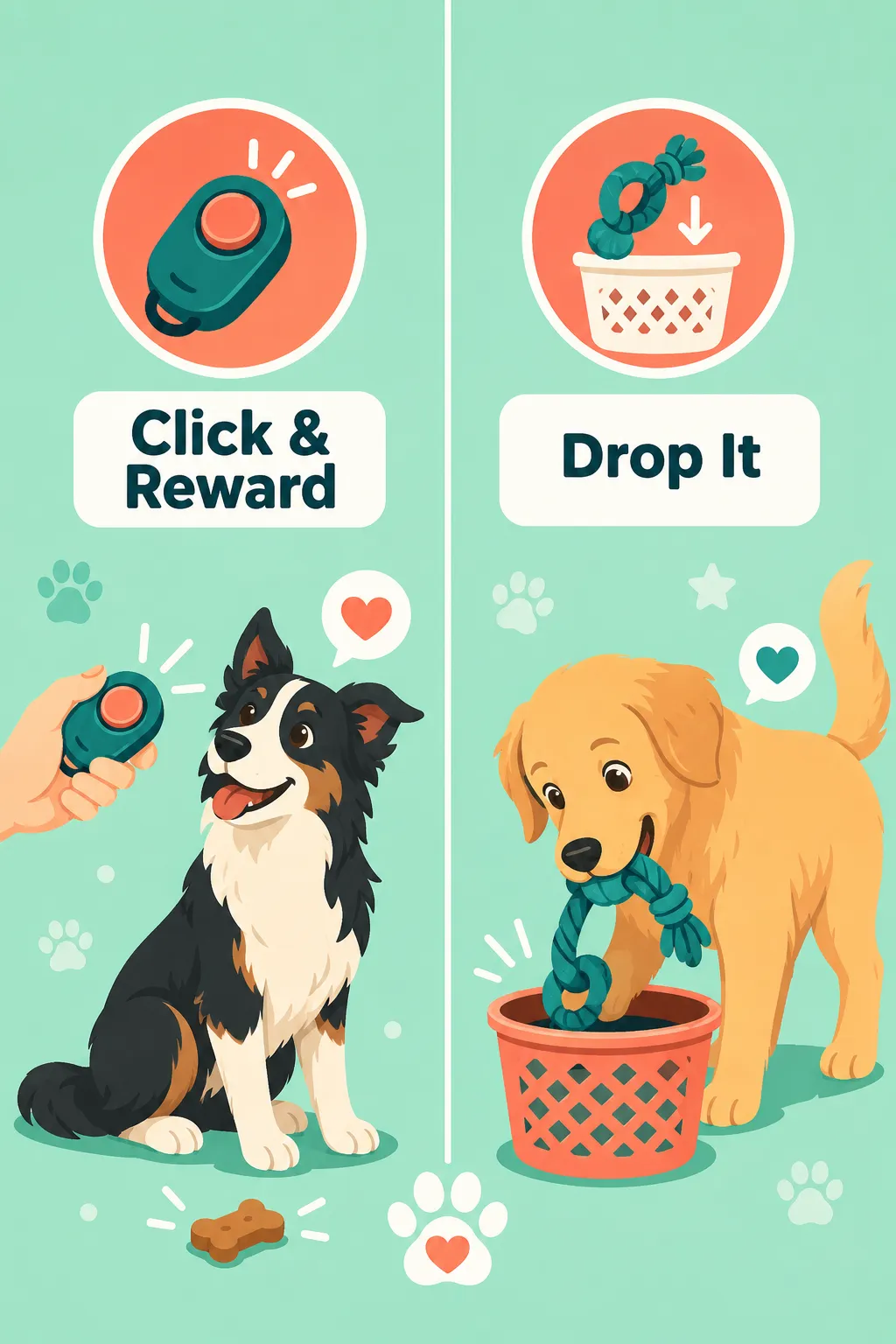
There are a few common reasons dogs stall during cleanup training. Each has a simple fix.
Reason 1 – The basket is too deep or narrow
Dogs can’t easily drop toys into a tall, narrow bin. Use a wide, flat-sided basket or laundry hamper with low walls. [4]
Reason 2 – The drop command isn’t solid yet
If your dog picks up the toy and then wanders off, go back to practicing “drop it” over the basket from scratch.
Reason 3 – The reward isn’t motivating enough
Try a higher-value treat. If your dog walks away from training, the payoff isn’t worth the effort in their mind.
Reason 4 – Sessions are too long
Dogs lose focus after 10 minutes. Keep sessions short and always end before your dog gets bored.
Reason 5 – Too many distractions
Train in a quiet room first. Add distractions only after the behavior is solid.
What If My Dog Just Carries Toys Around Instead of Putting Them Away?
This is one of the most common stages in cleanup training, and it’s actually a good sign. Your dog understands they should pick up the toy – they just haven’t connected the “drop in basket” part yet.
The AKC notes that some dogs have a natural instinct to hoard and carry objects, which is rooted in ancestral food-storing behavior. [9] This doesn’t mean they can’t learn cleanup – it just means you need to be more deliberate about rewarding the drop.
Fix it with these steps:
- Hold the treat directly over the basket so your dog has to position their head over the bin to get it
- The moment their mouth opens for the treat, the toy drops in – click and reward immediately
- Repeat this 10 to 15 times before expecting the dog to do it independently
Carrying is a phase. It passes quickly once your dog figures out that the basket is where the treats appear.
Can All Dog Breeds Learn to Clean Up Toys?
Most dog breeds can learn to clean up toys, but motivation and natural drive vary. [5][7]
Breeds that typically pick this up fastest:
- Border Collies, Australian Shepherds (high work drive)
- Labrador and Golden Retrievers (love to carry objects)
- Poodles, German Shepherds (highly trainable)
- Belgian Malinois (intense work ethic)
Breeds that may need more patience:
- Basset Hounds, Bulldogs (lower energy, less motivated by tasks)
- Chow Chows, Shiba Inus (more independent temperament)
- Brachycephalic breeds (may have difficulty carrying toys due to breathing)
For low-motivation dogs, use higher-value treats and shorter sessions. Play-based rewards (a quick game of tug after a successful cleanup) can also work well for dogs who aren’t food-driven.
Even stubborn breeds can learn this trick. It just takes more patience and better treats.
How Long Does It Take to Teach a Dog the Cleanup Trick?
Most dogs can learn the basics of toy cleanup in 2 to 4 weeks with daily 5 to 10 minute sessions. A fully reliable cleanup routine – where your dog cleans up multiple toys without prompting – typically takes 4 to 8 weeks. [7]
Factors that speed up training:
- Dog already knows “fetch” and “drop it”
- High food motivation
- Short, consistent daily sessions
- Starting with just one toy
Factors that slow it down:
- Starting without prerequisite commands
- Inconsistent practice
- Sessions that are too long or frustrating
- Using low-value treats
Don’t compare your dog’s progress to videos online. Every dog learns at their own pace.
Does Teaching Cleanup Reduce Destructive Dog Behavior?
Yes, and this is one of the most underrated benefits of cleanup training. Teaching dogs to clean up toys gives them a mental job, which directly reduces boredom-driven destructive behavior like chewing furniture, excessive barking, or digging.
The AKC recommends giving dogs jobs to do at home specifically because mental stimulation reduces problem behaviors. [8] Cleanup training checks that box perfectly.
Dogs that have a purpose – even a small one like tidying their toys – tend to be calmer and more settled overall. For more on keeping your dog mentally engaged, see these DIY dog games and enrichment activities.
Easiest Way to Train Dog to Clean Up Without Frustration
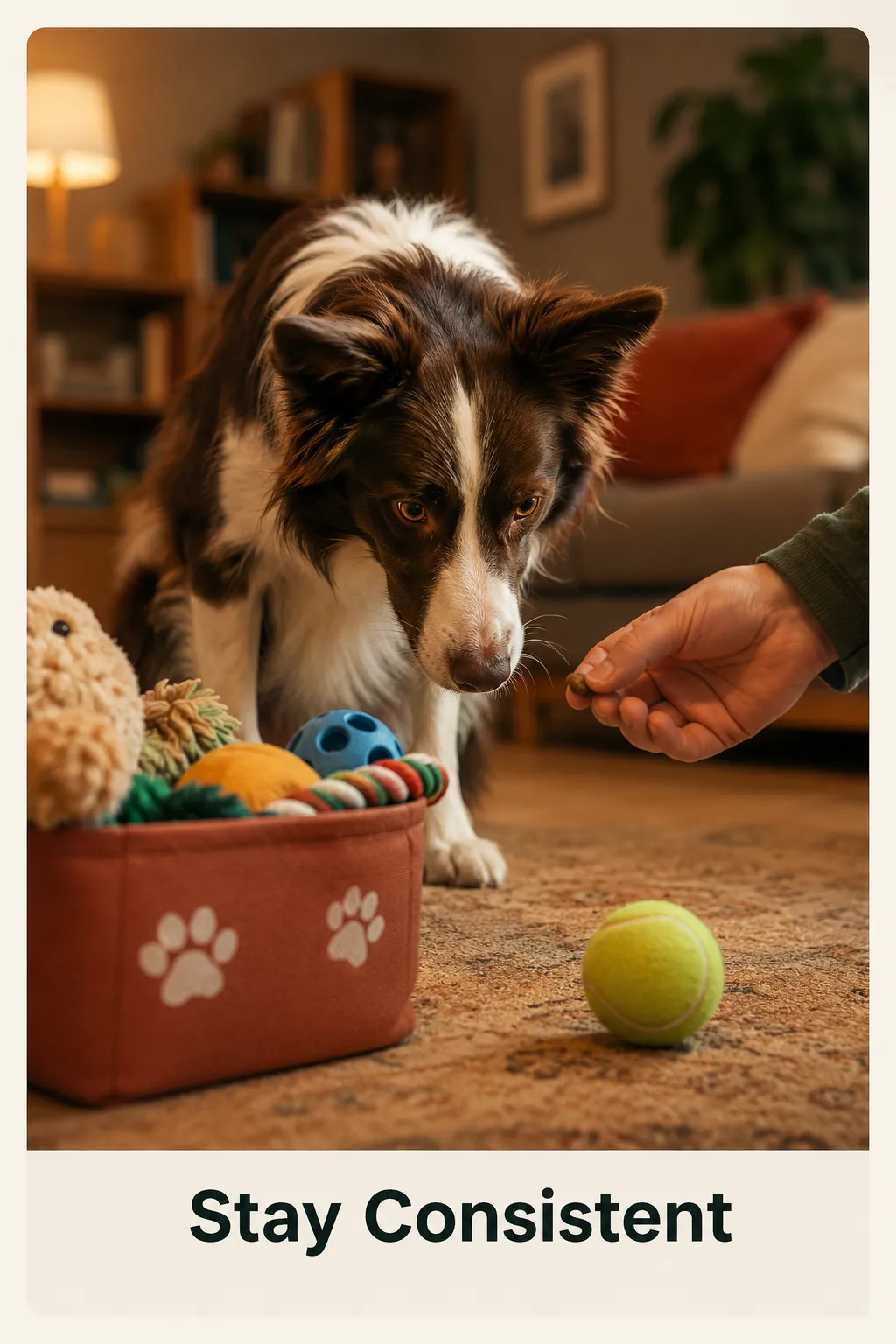
The easiest approach combines three things: a low-sided basket, a reliable “drop it” command, and incredibly short sessions. [2][3]
The no-frustration formula:
- Set up for success – use one toy, a wide basket, and your dog’s favorite treat
- Train when your dog is calm but not tired – right before a meal works well
- Never repeat the cue more than once – if they don’t respond, guide them physically and reward anyway
- Celebrate every tiny win – even sniffing the basket deserves praise early on
- Stop before your dog loses interest – always end on a positive rep
Rover’s training guide emphasizes that making the process enjoyable for the dog is the single biggest factor in long-term success. [7]
Also, if you’re working on multiple behaviors at once, check out The 14-Day Dog Training Plan for a structured approach that keeps training manageable.
FAQ
Q: Do I need a special toy box for cleanup training?
A: No special box needed. Use a wide, low-sided laundry basket or plastic bin. The key is that your dog can easily drop toys in without precise aim.
Q: Can I teach cleanup to a rescue dog?
A: Yes. Rescue dogs can absolutely learn this trick. Start with basic commands first if they don’t have them, then follow the same steps.
Q: How many toys should I start with?
A: Start with just one toy. Add a second only after your dog reliably puts the first one away. Build up slowly.
Q: My dog knows “drop it” but won’t drop into the basket – why?
A: “Drop it” in one context doesn’t automatically transfer to a new location. Practice drop specifically over the basket until it becomes the new habit.
Q: Should I use a specific word for cleanup?
A: Any consistent word works – “clean up,” “tidy up,” “box,” or even “toys.” Pick one and stick with it every time.
Q: Can I teach this without a clicker?
A: Yes. A clicker speeds things up, but verbal praise (“yes!”) timed precisely works too. The key is marking the exact moment the toy hits the basket.
Q: What if my dog is scared of the basket?
A: Spend a few sessions just rewarding your dog for approaching and sniffing the basket before asking them to drop anything in it.
Q: Is cleanup training good for senior dogs?
A: Yes, as long as your dog is physically comfortable carrying objects. Mental stimulation is great for senior dogs. Just keep sessions very short.
Q: How do I stop my dog from taking toys back out of the basket?
A: Reward immediately after the toy goes in and redirect your dog’s attention to you. Over time, the “job done” feeling replaces the urge to retrieve.
Q: My dog loses interest after one toy – is that normal?
A: Completely normal at the start. End the session after one successful toy and gradually build up over weeks.
Conclusion
Teaching your dog how to clean up toys is one of the most satisfying tricks you can work on together. It’s practical, it’s impressive, and it genuinely improves your dog’s mental well-being.
Your action plan:
- Spend one to two weeks solidifying “drop it” if needed
- Get a wide, low-sided basket and place it in your training area
- Start with one toy and reward every successful drop into the basket
- Add the verbal cue “clean up” once the behavior is consistent
- Gradually add more toys and fade treat frequency over time
- Practice in different rooms to generalize the behavior
Be patient with the carrying-around phase – it’s normal and temporary. Keep sessions short, treats high-value, and your energy positive. Most importantly, say the cue once and let the reward system do the work for you.
Your dog wants to please you. Give them a clear way to do it, and they’ll clean up without you having to ask twice. 🐶🧺
References
[1] Trick Teach Dog Clean Up Toys – https://www.akc.org/expert-advice/training/trick-teach-dog-clean-up-toys/?utm_source=openai
[2] Tidying Up – https://www.dogstrust.org.uk/dog-advice/training/tips-tricks/tidying-up?utm_source=openai
[3] Training Training Tips How To Teach Your Dog To Put Away His Toys – https://www.chewy.com/education/dog/training-and-behavior/training-training-tips-how-to-teach-your-dog-to-put-away-his-toys?utm_source=openai
[4] Teach Dog To Tidy Up – https://www.hundeo.com/en/training/teach-dog-to-tidy-up?utm_source=openai
[5] Can I Teach My Dog To Put His Toys Away – https://www.vetstreet.com/our-pet-experts/can-i-teach-my-dog-to-put-his-toys-away?utm_source=openai
[6] How To Teach Your Dog To Put Away Toys – https://www.dogster.com/dog-training/how-to-teach-your-dog-to-put-away-toys/?utm_source=openai
[7] How To Teach Dog To Clean Up Toys – https://www.rover.com/blog/how-to-teach-dog-to-clean-up-toys/?utm_source=openai
[8] Give Your Dog Jobs To Do At Home – https://www.akc.org/expert-advice/training/give-your-dog-jobs-to-do-at-home/?utm_source=openai
[9] Why Do Dogs Hoard – https://www.akc.org/expert-advice/training/why-do-dogs-hoard/?utm_source=openai