
Last updated: September 11, 2026
Quick Answer: Dogs get hot spots when they repeatedly scratch, lick, or bite one area of skin in response to an itch, pain, or emotional distress. This self-trauma breaks the skin barrier, traps moisture, and allows bacteria to multiply rapidly – turning a small irritation into a raw, weeping sore within hours. The real surprise is that the hot spot itself is rarely the problem. Something else is driving your dog to attack that spot in the first place.
Key Takeaways
- Hot spots are a symptom, not a disease – always look for the hidden trigger
- Flea allergy is the single most common cause, and even one bite can set it off in sensitive dogs
- Ear infections, anal gland problems, and joint pain are surprising but well-documented triggers
- Thick-coated breeds like golden retrievers and German shepherds are at higher risk
- Most mild hot spots improve with prompt home care, but a vet visit is often needed to find the root cause
- Stress, anxiety, and boredom can cause dogs to lick themselves into a hot spot
- Wet or matted fur dramatically raises the risk, especially in warm weather
- Preventing recurrence means treating the underlying cause, not just the skin lesion
What Are Hot Spots on Dogs?
A hot spot – also called acute moist dermatitis or pyotraumatic dermatitis – is a localized area of inflamed, infected skin caused by a dog’s own scratching, licking, or biting. The lesion appears suddenly, spreads fast, and is almost always moist, red, hairless, and painful to the touch.
According to Cornell University’s Riney Canine Health Center, hot spots are no longer viewed as “just a skin infection.” They are a consequence of self-inflicted trauma triggered by something else bothering the dog – often far from the actual lesion site.
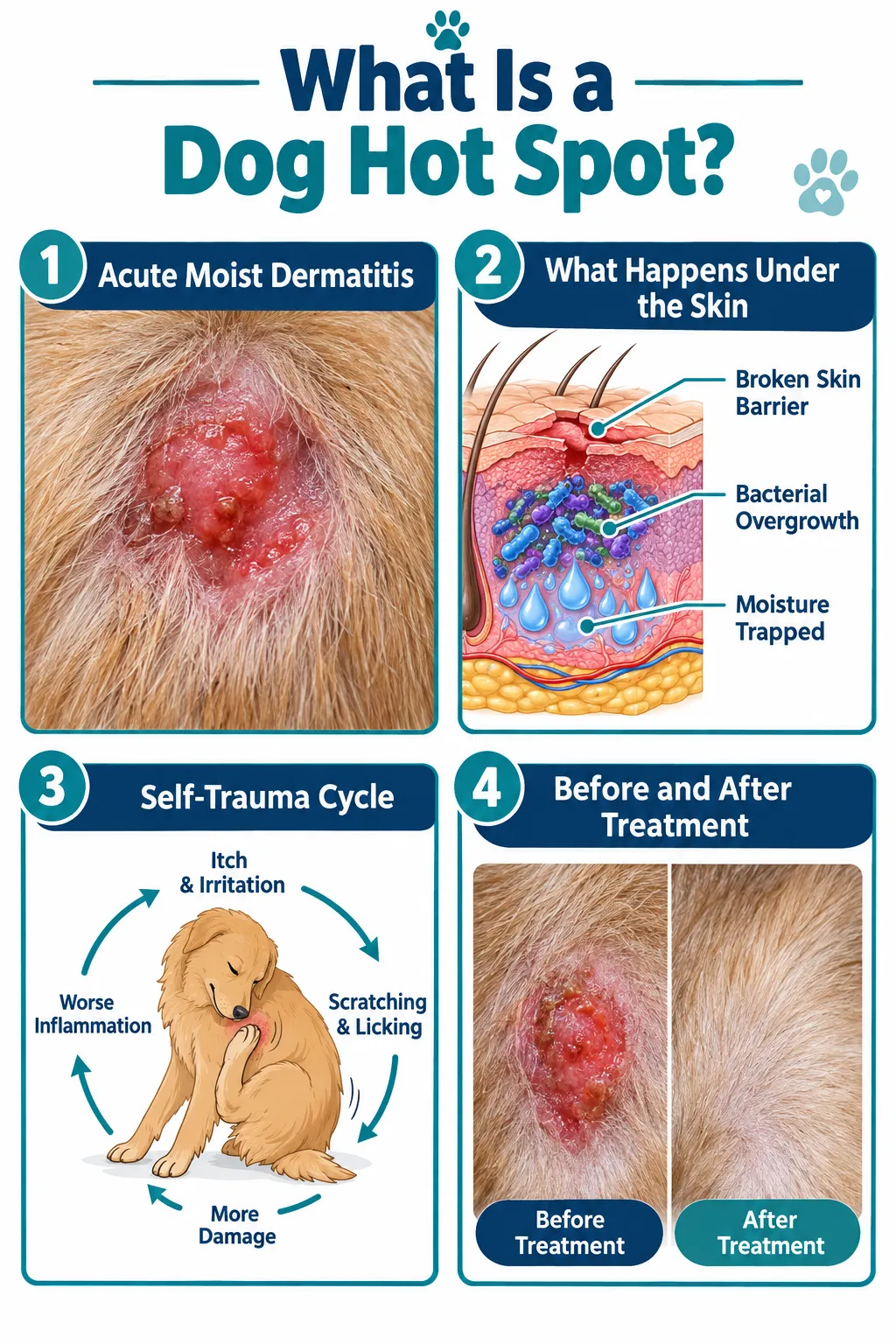
Hot spots can appear anywhere on the body, but common locations include:
- The neck and face (often linked to ear infections)
- The hip and rump area (often linked to flea allergy or anal gland issues)
- The thighs and lower back (often linked to joint pain or allergies)
They can grow from the size of a coin to the size of your palm in less than 24 hours. That speed is what makes them alarming.
Why Do Dogs Get Hot Spots? The 7 Surprising Triggers
Understanding why dogs get hot spots means looking past the skin and asking: what is making my dog so uncomfortable that they can’t stop scratching?
Virginia Tech’s veterinary team frames it clearly – hot spots are a cycle of itch, trauma, and infection. Break the cycle at the source, and the skin can heal. Ignore the source, and the hot spots keep coming back.
Here are the 7 triggers most owners never suspect:
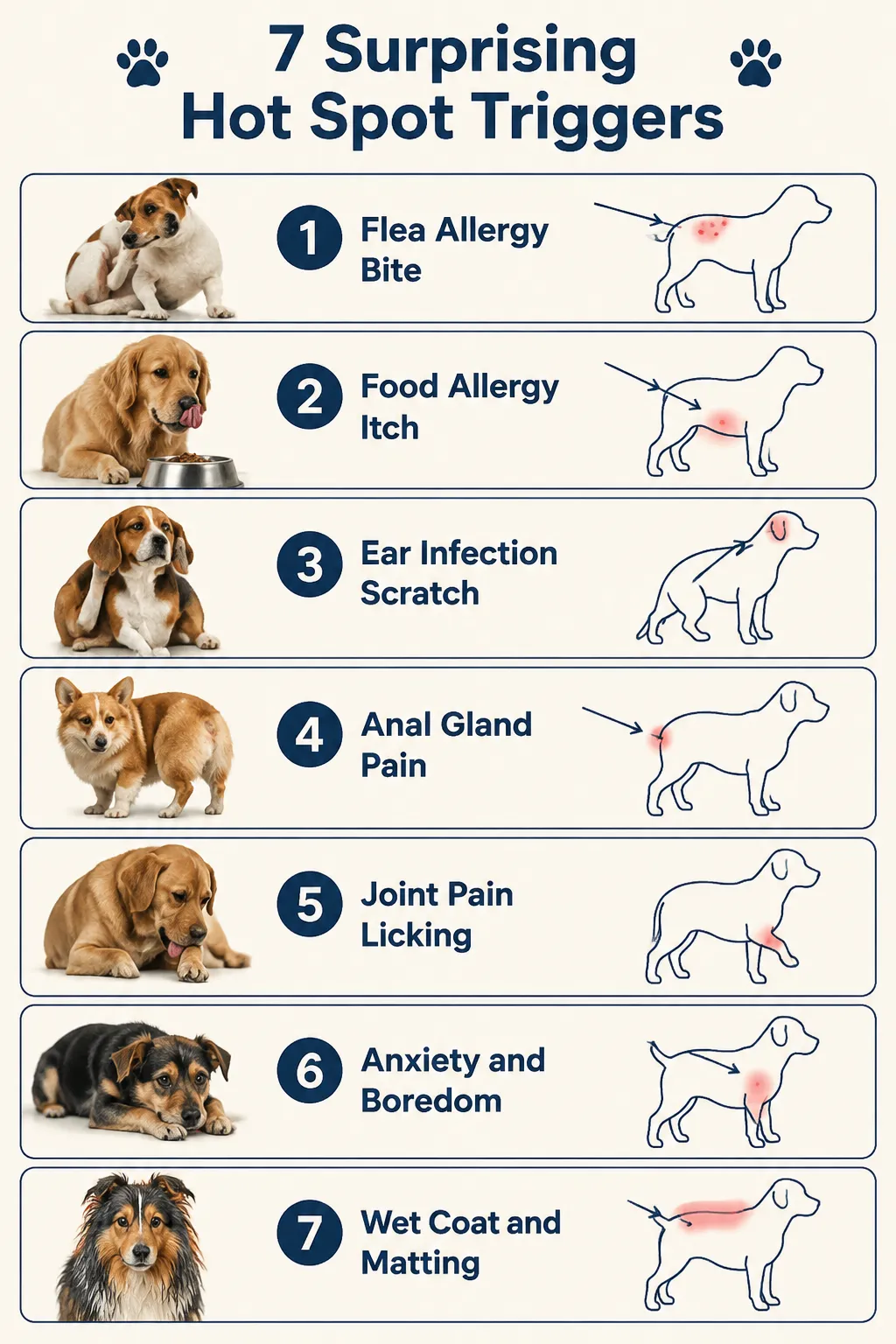
Trigger 1 – Flea Allergy Dermatitis
This is the number one cause. In flea-allergic dogs, a single flea bite triggers an intense immune reaction that causes severe, widespread itching. The dog focuses on one spot and scratches until the skin breaks.
You may never even see a flea. The bite happens, the dog reacts, and a hot spot forms within hours. Check out our guide on how to get rid of fleas on dogs if you suspect fleas are involved.
Trigger 2 – Environmental and Food Allergies
Atopic dermatitis – allergies to pollens, molds, or dust mites – causes generalized itching that dogs often focus on one spot. Food allergies work the same way.
The tricky part is that the itching may be mild and widespread, but the owner only notices when a dramatic hot spot suddenly appears. PetMD’s guide on hot spots in dogs lists environmental and food allergies as major hidden drivers of recurrent episodes.
Trigger 3 – Ear Infections
This one surprises most owners. A bacterial or yeast infection deep in the ear canal causes intense discomfort. The dog scratches at the ear and rubs the side of its face and neck – creating hot spots on the ear flap, behind the ear, or along the shoulder.
If your dog keeps getting hot spots on the neck or face, always check the ears first.
Trigger 4 – Anal Gland Problems
Impacted or infected anal glands cause itching and pain around the rump. Dogs respond by chewing and licking the base of the tail, upper thighs, and hindquarters – classic hot spot territory.
This is one of the most overlooked triggers. The skin lesion is visible, but the real problem is internal. VCA Hospitals’ overview of hot spots specifically lists anal sac disease as a key inciting cause.
Trigger 5 – Joint Pain and Arthritis
Dogs with arthritis or spinal pain will obsessively lick the painful area. This creates hot spots over hips, knees, or the lower back. Owners often treat the skin and miss the orthopedic problem entirely.
If your older dog develops hot spots over joints, ask your vet about pain management – not just skin treatment. You can also learn to spot early signs of pain in dogs before they escalate.
Trigger 6 – Anxiety, Stress, and Boredom
Under-stimulated or anxious dogs lick and chew out of habit, not just itch. This is especially common in high-energy breeds left alone for long periods.
The licking becomes compulsive, the skin breaks down, and a hot spot forms. If you notice your dog seems restless or stressed, our article on 12 stressed dog signs most owners miss is worth reading. Keeping your dog mentally engaged – with activities like brain games for dogs – can genuinely reduce this risk.
Trigger 7 – Moisture, Matting, and Poor Grooming
Wet fur from swimming or bathing that isn’t dried properly traps heat and moisture against the skin. Matted coats make this worse. Bacteria thrive in that warm, damp environment and a hot spot can form within hours.
MedVet’s clinical guide on hot spots highlights that dense undercoats and warm weather create a “perfect storm” for acute moist dermatitis.
Hot Spots on Dogs vs Other Skin Conditions
Hot spots are often confused with ringworm, mange, or regular rashes. Knowing the difference helps you act faster.
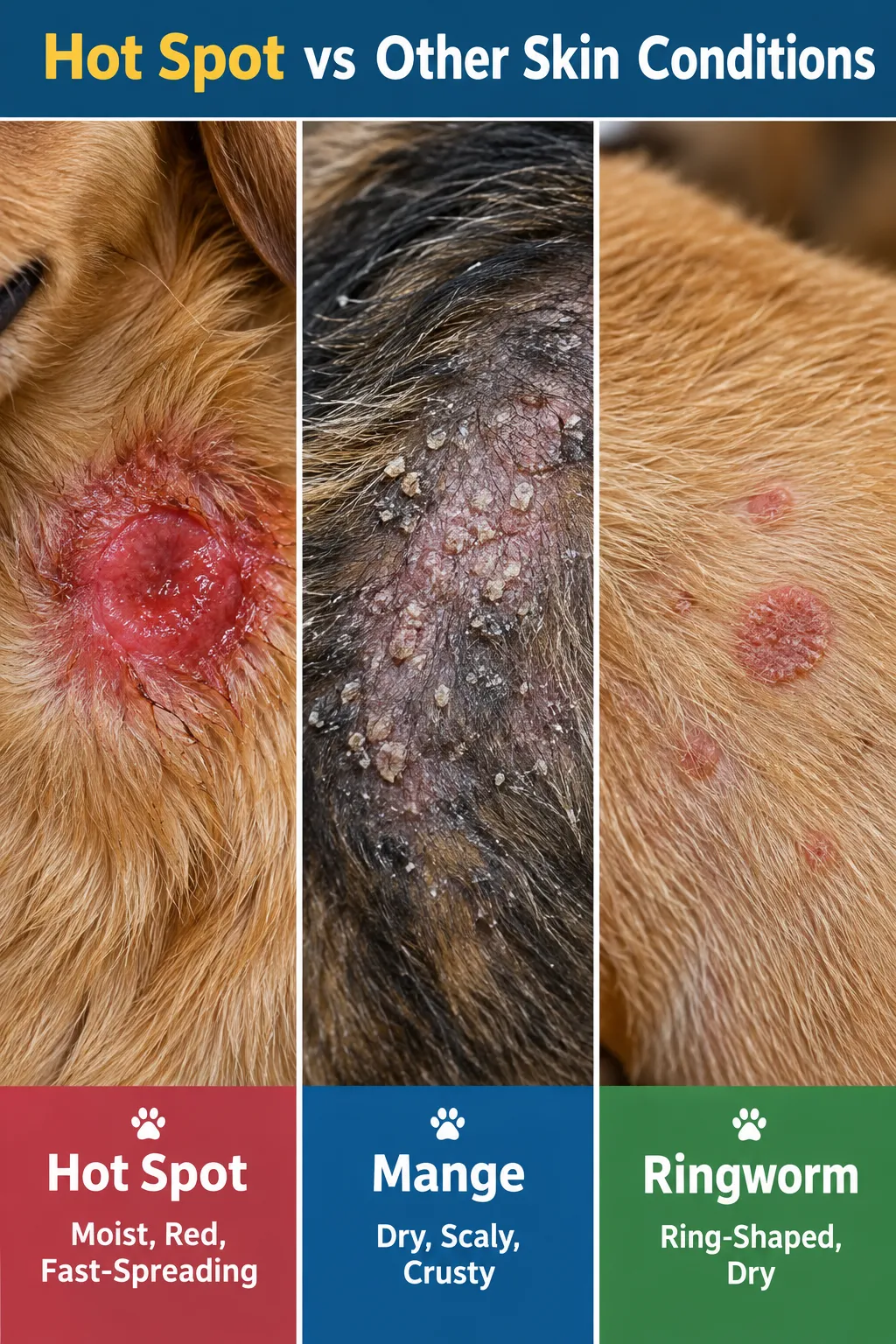
| Condition | Appearance | Key Difference |
|---|---|---|
| Hot Spot | Moist, red, hairless, weeping | Appears fast, very painful, spreads rapidly |
| Ringworm | Dry, ring-shaped, scaly patch | Fungal, not bacterial; less painful |
| Mange (Sarcoptic) | Crusty, scaly, widespread | Caused by mites; intensely itchy all over |
| Contact Dermatitis | Red bumps, often on belly | Linked to a specific substance or surface |
Key rule: If the lesion appeared within hours, is moist and raw, and your dog won’t stop licking it – it’s almost certainly a hot spot.
Can Allergies Cause Hot Spots in Dogs?
Yes – allergies are one of the most common reasons why dogs get hot spots, and they’re often the hidden cause behind recurrent cases. Both environmental allergies (atopic dermatitis) and food allergies cause generalized itching that leads to focused self-trauma.
PDSA’s veterinary guide on acute moist dermatitis lists allergies alongside flea infestation and insect bites as primary itch triggers. If your dog gets hot spots repeatedly in the same season, environmental allergies are a strong suspect.
Food allergies are trickier to identify. They require an elimination diet trial under vet guidance – usually 8 to 12 weeks on a novel protein.
Are Some Dog Breeds More Prone to Hot Spots?
Yes. Certain breeds are significantly more vulnerable, mainly because of coat type, skin folds, or temperament.
Higher-risk breeds include:
- Golden Retrievers
- German Shepherds
- Labrador Retrievers
- Saint Bernards
- Collies
- Rottweilers
These breeds tend to have dense, thick undercoats that trap moisture and heat. Male dogs under 4 years appear overrepresented in case studies, though any dog can develop a hot spot.
Interestingly, some small breeds with anxiety tendencies – like those described in our Jack Russell Terrier facts guide – can also be prone to stress-related skin licking.
How to Treat Dog Hot Spots at Home
Mild hot spots caught early can often be managed at home. The goal is to stop the licking, clean the area, and let it dry out.
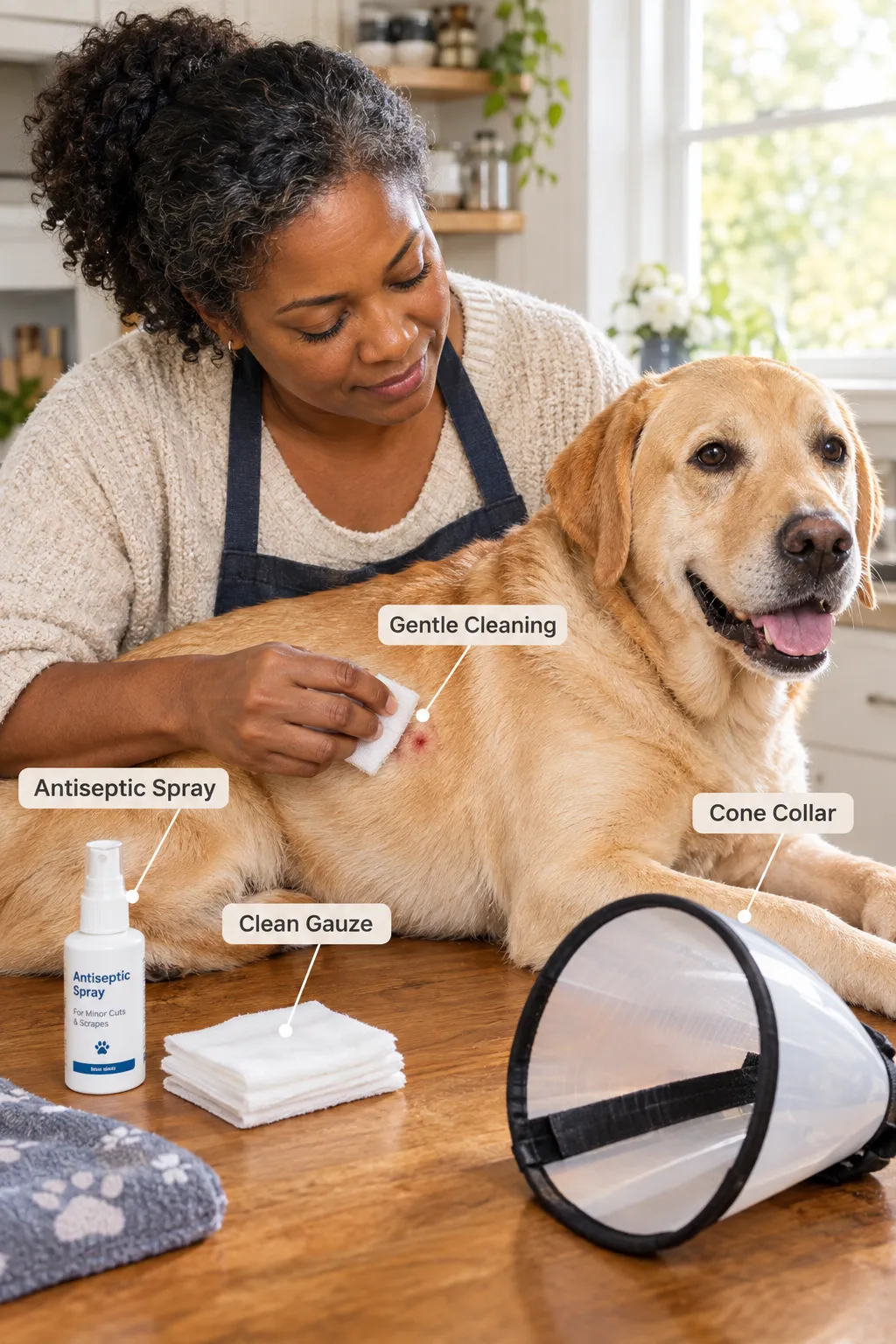
Step-by-step home care:
- Trim the fur around the hot spot carefully with blunt-nosed scissors to expose the lesion and improve air circulation
- Clean gently with a mild antiseptic solution (diluted chlorhexidine or saline) – avoid hydrogen peroxide, which damages tissue
- Pat dry thoroughly – moisture is the enemy
- Apply a vet-approved topical spray or hydrocortisone cream to reduce inflammation and itch
- Put on an e-collar (cone) to prevent further licking or biting
- Monitor daily for signs of spreading, deeper infection, or fever
“The single most important step is stopping the self-trauma. Without the cone, nothing else works.” – general veterinary consensus
Do NOT use: tea tree oil, undiluted essential oils, or human antibiotic creams containing ingredients like neomycin without vet guidance.
According to Chewy’s guide on hot spots, topical antimicrobials and anti-itch therapies are the recommended first-line approach for localized cases.
Can Hot Spots on Dogs Go Away on Their Own?
Very small, early-stage hot spots may begin to dry out if the dog stops licking – but this rarely happens without intervention. Most hot spots will worsen rapidly without treatment because the dog’s licking introduces more bacteria and keeps the wound moist.
Do not wait more than 24 to 48 hours to treat a hot spot. The lesion can double in size overnight.
How Long Does It Take for Dog Hot Spots to Heal?
With proper treatment, most hot spots improve noticeably within 3 to 7 days. Full healing – where new hair grows back over the area – typically takes 2 to 4 weeks.
Healing time depends on:
- How early treatment started
- Whether the dog stops licking (cone compliance matters a lot)
- Whether the underlying trigger is identified and addressed
- The size and depth of the lesion
Deep or infected hot spots treated with antibiotics may take longer. If a hot spot hasn’t improved after 5 days of home care, see a vet.
Why Does My Dog Keep Getting Hot Spots?
Recurrent hot spots almost always mean the underlying trigger hasn’t been found or treated. The skin heals, but the itch source remains – so the cycle repeats.
Common reasons for recurrence:
- Uncontrolled flea allergy (even with treatment, re-exposure keeps triggering reactions)
- Undiagnosed food or environmental allergy
- Chronic ear infections that keep coming back
- Ongoing anal gland problems
- Untreated joint pain
- Persistent anxiety or boredom
Virginia Tech’s canine dermatology research emphasizes that clinicians must identify and manage the inciting cause rather than just treating the surface lesion. The same logic applies at home – if your dog keeps getting hot spots, push your vet to investigate deeper.
Are Hot Spots on Dogs Contagious to Other Pets?
No – hot spots themselves are not contagious. The bacteria involved (most commonly Staphylococcus pseudintermedius) are normal skin residents that overgrow due to self-trauma, not a pathogen that spreads between animals.
However, if the underlying trigger is a parasite like fleas or mites, those can spread to other pets in the household. Treat all pets for parasites if one is affected.
When Should I Take My Dog to the Vet for Hot Spots?
Some hot spots need professional care. See a vet promptly if:
- The lesion is larger than a 50-cent coin when you first notice it
- The area is swollen, deeply infected, or has a foul smell
- Your dog is in obvious pain, won’t eat, or has a fever
- The hot spot doesn’t improve after 48 to 72 hours of home care
- Your dog has had multiple hot spots in the past year
- You suspect an ear infection, anal gland issue, or joint pain as the trigger
Dog hot spot treatment cost at the vet typically ranges from $75 to $300 for a straightforward case (exam, shaving, topical treatment, and a short antibiotic course if needed). Costs rise if allergy testing, imaging for joint pain, or specialist referral is required. These are estimates based on typical US veterinary pricing in 2026 – actual costs vary by region and clinic.
Hot Spots on Dogs Prevention Tips
Preventing hot spots means removing the triggers before they cause damage.
Practical prevention checklist:
- ✅ Use year-round flea and parasite prevention – even indoor dogs need it
- ✅ Dry your dog’s coat thoroughly after swimming or bathing, especially in skin folds
- ✅ Brush and groom regularly to prevent matting in thick-coated breeds
- ✅ Check ears monthly for redness, odor, or discharge
- ✅ Have anal glands expressed regularly if your dog has a history of impaction
- ✅ Keep up with joint health check-ups in older or large-breed dogs
- ✅ Provide adequate exercise and mental stimulation to reduce anxiety-driven licking
- ✅ Feed a high-quality diet and discuss allergy testing with your vet if hot spots recur
For dogs prone to stress-related licking, our guide on stress signals in dogs can help you catch anxiety early before it turns into a skin problem.
Frequently Asked Questions
What does a hot spot look like on a dog?
A hot spot is a moist, red, hairless patch of skin that appears suddenly. It often has a wet or weeping surface, may have a slight odor, and is painful when touched. The fur around it may be matted or discolored.
Can I use Neosporin on my dog’s hot spot?
It’s best to avoid it. Some ingredients in human antibiotic creams can be harmful if licked. Use a vet-approved antiseptic spray or diluted chlorhexidine instead, and always use a cone to prevent licking.
Why do hot spots appear so suddenly?
The skin breaks down fast because the dog’s licking and scratching introduce bacteria, remove the protective skin barrier, and keep the area moist – all at the same time. A hot spot can form within 2 to 4 hours of intense self-trauma.
Do hot spots hurt dogs?
Yes – hot spots are typically painful and itchy simultaneously. This is why dogs often react strongly when you touch the area, and why stopping the licking with a cone is so important.
Can stress cause hot spots in dogs?
Yes. Anxiety, boredom, and compulsive disorders can lead to repetitive licking that breaks down skin and creates hot spots, even without any physical itch trigger.
Is it safe to pop or squeeze a hot spot?
No. Squeezing or picking at a hot spot can push bacteria deeper into the skin and worsen the infection. Clean it gently and let it dry out.
What’s the fastest way to heal a hot spot?
Stop the licking immediately with a cone, trim the fur around the lesion, clean with a mild antiseptic, and apply a topical anti-inflammatory. Most hot spots improve within 3 to 5 days with consistent care.
Can hot spots spread to humans?
The bacteria in hot spots are not typically dangerous to healthy humans, but basic hygiene – washing hands after handling the wound – is always a good idea.
Why does my dog keep getting hot spots in summer?
Warm, humid weather increases sweating and moisture under thick coats, which promotes bacterial growth. Flea activity also peaks in summer, raising the risk of flea allergy reactions.
Should I shave my dog to prevent hot spots?
Trimming – not full shaving – around hot spot-prone areas helps with airflow and drying. Full body shaving isn’t necessary and can cause other skin issues in some breeds.
Conclusion
Understanding why dogs get hot spots is the first step to actually stopping them. The skin lesion is just the visible result of something else going on – a flea bite, an ear infection, a food allergy, joint pain, or even chronic stress.
Here’s what to do right now:
- If your dog has an active hot spot – put a cone on, clean the area, and monitor it closely for 48 hours
- If it doesn’t improve, see your vet and ask specifically about underlying triggers
- If your dog gets hot spots repeatedly, push for allergy testing, an ear exam, and an anal gland check
- Start year-round flea prevention if you haven’t already
- Assess your dog’s mental health – boredom and anxiety are real skin triggers
Hot spots are frustrating, but they’re also one of the most preventable skin conditions in dogs. Once you find and fix the real cause, many dogs go months or even years without another episode.
Your dog is telling you something hurts or itches. Listen to the message, not just the mess.