

Last updated: September 21, 2026
Quick Answer: Dogs dig holes for several natural reasons – including boredom, instinct, heat relief, prey drive, and anxiety. Most digging is normal canine behavior, not defiance. Each hole your dog digs is actually a message about an unmet need, and once you decode it, stopping the behavior becomes much easier.
Key Takeaways
- Digging is a natural, instinct-driven behavior inherited from wolves – it is not “bad” behavior by default
- Boredom and lack of stimulation drive more than half of all problem digging cases, making enrichment the most effective fix
- Dogs dig to cool down, bury valuables, hunt prey underground, escape confinement, or relieve anxiety
- Terrier breeds and northern breeds like Huskies are the most likely to dig due to selective breeding
- Digging before lying down is a normal nesting instinct, not a problem behavior
- Sudden or compulsive digging can signal medical issues or anxiety – worth a vet visit
- The most effective fix is meeting the need behind the digging, not punishing the dog
- A designated “dig zone” or sandbox satisfies the urge without destroying your yard
Is Digging Normal Dog Behavior or a Problem?
Digging is completely normal for dogs. Veterinary behavior experts describe it as an innate motor pattern with multiple motivations – much like a medical symptom that needs a “differential diagnosis” rather than a single blanket solution.
Think of it this way: your dog isn’t digging to ruin your garden. They’re communicating something. The behavior only becomes a problem when it’s excessive, destructive, or tied to distress.
When digging is normal:
- Occasional holes in warm weather (cooling behavior)
- Digging before lying down (nesting instinct)
- Burying a bone or toy
- Chasing a scent near a mole tunnel
When digging may signal a problem:
- Sudden onset with no clear trigger
- Compulsive digging at night or near exits
- Digging paired with pacing, whining, or destructive chewing
- Escape attempts along fence lines
If your dog has started digging suddenly and also shows other behavior changes, it’s worth checking out early signs of pain in dogs to rule out a physical cause.
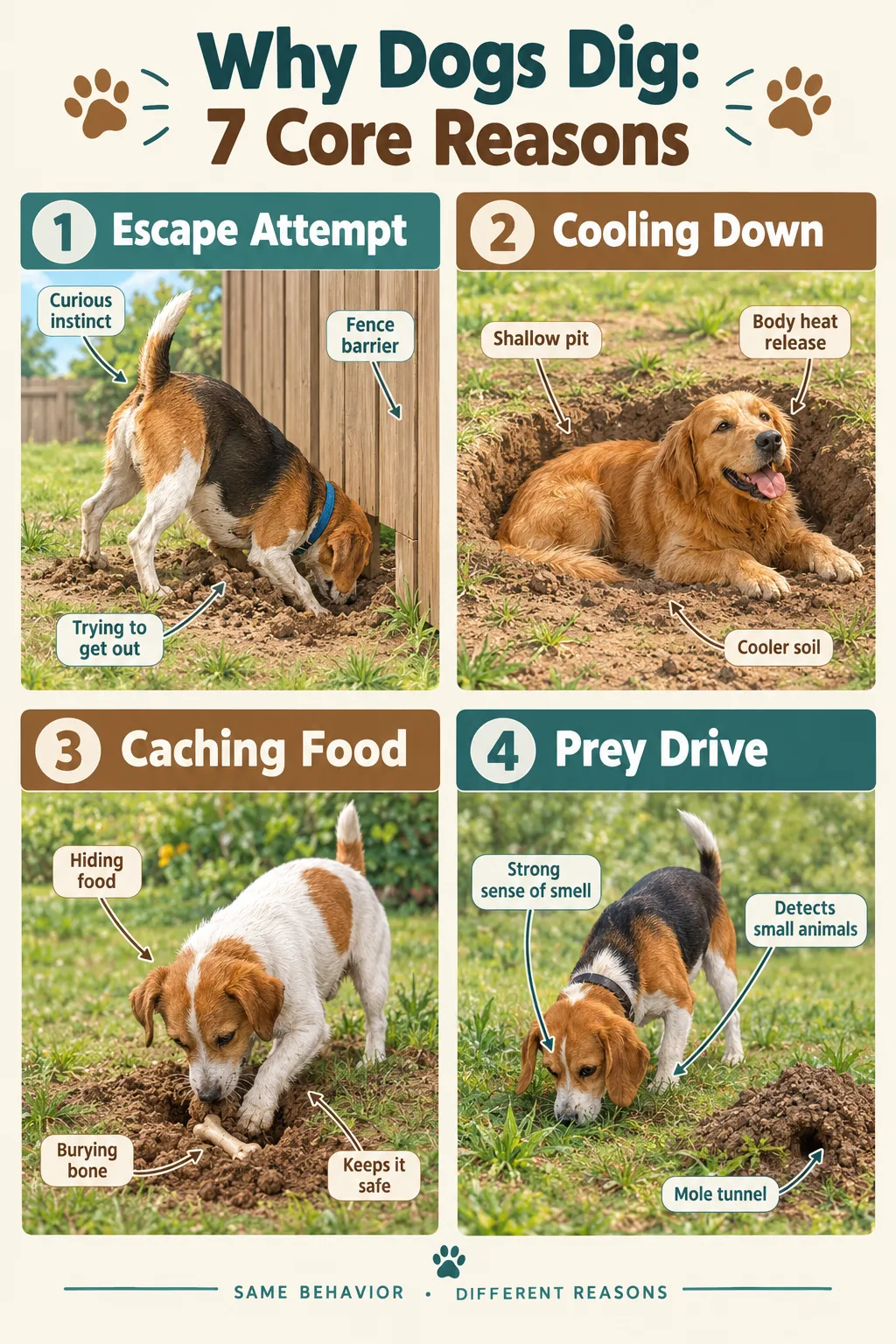
Why Do Dogs Dig Holes in the Yard? The 7 Core Reasons
Dogs dig in yards for seven main reasons: instinct, boredom, heat regulation, prey drive, caching valuables, escape, and anxiety. According to the Colorado Veterinary Medical Association, each hole is essentially a different “message” depending on the context – where the dog digs, what they do after, and when it happens all matter.
Here’s a breakdown of each message:
1. 🐾 Pure Instinct (Denning Behavior)
Dogs inherited digging from wolves, who dug dens for shelter and raising young. Even well-fed, comfortable pet dogs carry this drive.
2. 😴 Boredom and Excess Energy
A dog with nothing to do will make their own fun. Digging is physically satisfying and mentally stimulating – a perfect boredom buster from your dog’s perspective.
3. 🌡️ Thermoregulation
Hot dogs (literally) dig shallow pits to press against cool earth. This is especially common in thick-coated breeds during summer.
4. 🐭 Prey Drive
Dogs can hear and smell small animals like moles and voles moving underground. If your dog digs in a specific trail pattern, prey is likely the trigger.
5. 🦴 Caching Valuables
Burying bones, toys, or treats is a resource-protection instinct. Your dog is essentially hiding their “savings.”
6. 🚪 Escape Attempts
Digging under fences or at gates signals that your dog wants out – whether from boredom, a nearby scent, or separation anxiety.
7. 😰 Stress and Anxiety
Some dogs dig at doors or specific spots as a distress response, especially when left alone.
What Does It Mean When a Dog Digs Holes in Specific Spots?
Where your dog digs tells you a lot about why they’re doing it. Location is one of the clearest clues.
| Digging Location | Most Likely Message |
|---|---|
| Along fence line | Escape attempt or prey near perimeter |
| Random yard spots | Boredom or prey drive |
| Under a shady tree | Heat relief – cooling down |
| Near the house foundation | Anxiety or escape |
| Same spot repeatedly | Buried item or persistent prey scent |
| At doors or indoors | Separation anxiety or stress |
If your dog digs in one concentrated area near an exit, that’s a red flag worth addressing quickly. Pair that observation with a read on why dogs howl – both behaviors together often point to separation anxiety.
Is Dog Digging a Sign of Anxiety or Stress?
Yes, digging can absolutely signal anxiety – especially when it happens at doors, near exits, or in repetitive patterns. Vetster’s guidance on digging and anxiety explains that dogs with uncontrolled anxiety may dig as a distress response, particularly when confined or left alone.
Signs that digging is anxiety-driven (not just instinct or boredom):
- Digging starts when you leave and stops when you return
- Concentrated at entry/exit points (doors, gates, fence edges)
- Paired with whining, barking, or destructive chewing
- Dog seems frantic rather than playful while digging
What helps: Structured exercise before alone time, scent-based enrichment, pheromone diffusers, and creating a predictable routine. If anxiety is severe, a vet or certified behaviorist can help.
For comparison, dogs also express anxiety through other repetitive behaviors – check out why dogs scratch all the time for a related pattern.
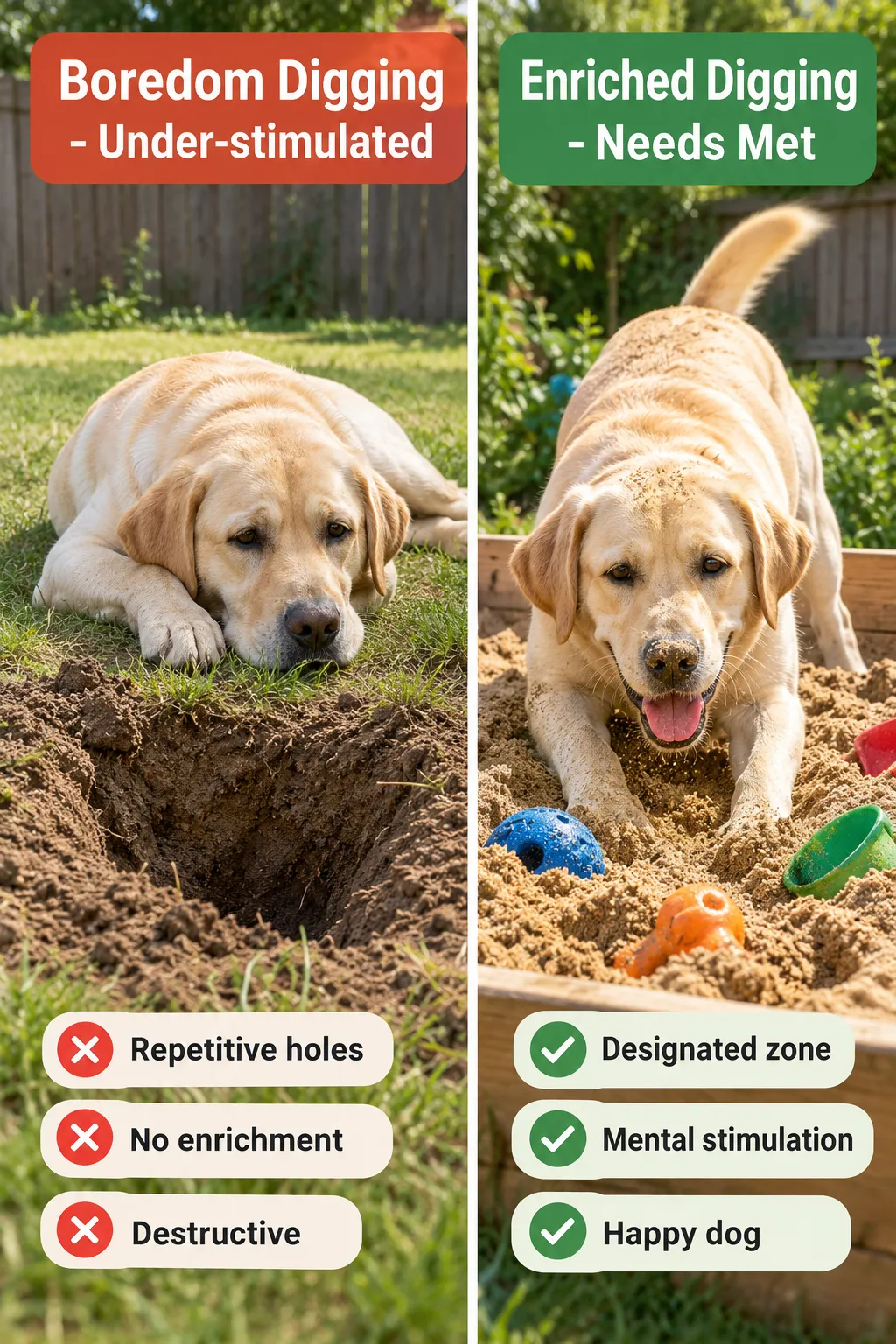
What’s the Difference Between Digging for Fun vs. Digging Due to Boredom?
Fun digging is purposeful – your dog is chasing a scent, burying something, or cooling down. Boredom digging is repetitive and unfocused, happening simply because there’s nothing else to do.
Fun/purposeful digging looks like:
- Dog sniffs intensely before digging in one spot
- Dog buries an item and walks away satisfied
- Dog digs a shallow pit, lies in it, and relaxes
Boredom digging looks like:
- Random holes scattered across the yard
- Dog digs, stops, wanders, digs again with no clear goal
- Behavior increases when the dog is alone for long periods
- Happens more on days with less exercise or play
More than 50% of problem digging cases are primarily driven by boredom and insufficient physical or mental stimulation. The fix is straightforward: more exercise, more mental engagement. Try brain games for dogs or structured activities for bored dogs before reaching for deterrents.
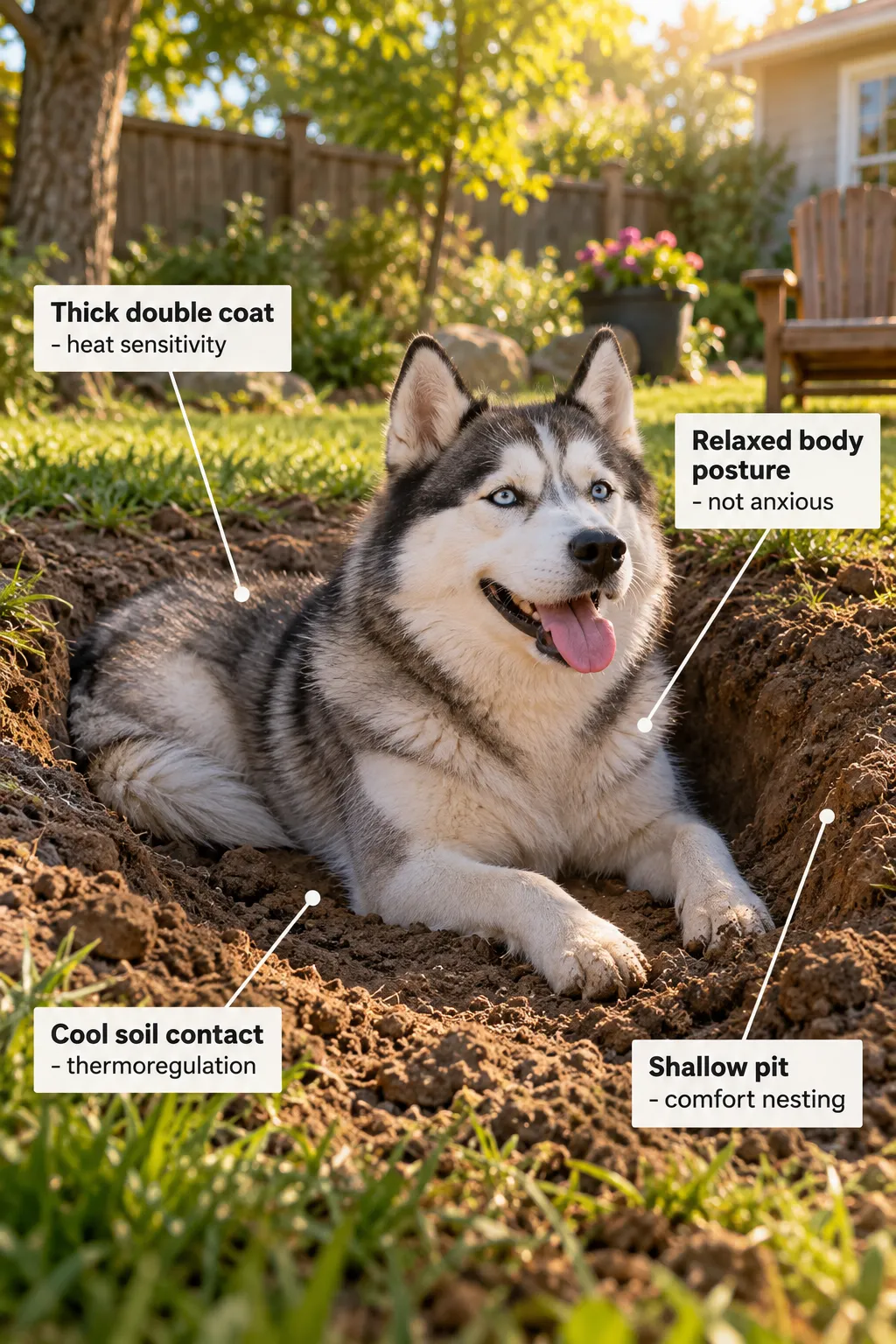
Why Do Dogs Dig Holes and Lay in Them?
Dogs that dig a hole and then lie in it are almost always regulating their body temperature. The soil a few inches below the surface stays significantly cooler than the air temperature – it’s natural air conditioning.
This behavior is especially common in:
- Huskies, Malamutes, and Samoyeds (thick double coats)
- Dogs kept outdoors in warm or humid climates
- Any dog without access to shade or cool water
Simple fix: Provide a shaded area, a cooling mat, or a kiddie pool. If your dog has a cool spot to rest, they’ll usually stop digging pits.
Why Do Dogs Dig Holes Before Lying Down?
This is a nesting instinct, not a destructive behavior. Before domestication, dogs would pat down grass, leaves, or soil to create a comfortable, safe resting spot. The behavior is hardwired.
It’s completely normal and harmless on soft ground. It only becomes an issue indoors on carpet or furniture, where it can cause damage over time.
When to address it: If your dog is obsessively “digging” at their bed or blankets for extended periods before settling, it may indicate discomfort or anxiety rather than simple nesting. Worth monitoring alongside signs of arthritis in dogs if your dog is older.
Do All Dog Breeds Dig, or Just Some?
Not all breeds dig equally. Digging instinct varies significantly based on what a breed was originally developed to do.
Highest-risk breeds for digging:
- Terriers (Jack Russell, Cairn, Border, Rat Terrier) – bred specifically to dig out prey from burrows
- Northern breeds (Husky, Malamute, Samoyed) – dig cooling pits and dens instinctively
- Dachshunds – name literally means “badger dog,” bred to dig into tunnels
- Beagles and Basset Hounds – strong prey drive and scent-following instinct
- Sporting breeds (Retrievers, Spaniels) – exploratory and energetic
Lower-risk breeds: Many toy and companion breeds (Maltese, Cavalier King Charles Spaniel, Shih Tzu) dig far less, though no breed is completely immune if bored or anxious.
How to Stop a Dog From Digging Holes
The most effective approach is addressing the root cause, not punishing the behavior. Modern veterinary guidance consistently recommends enrichment, designated dig zones, and exercise over scolding or physical deterrents.
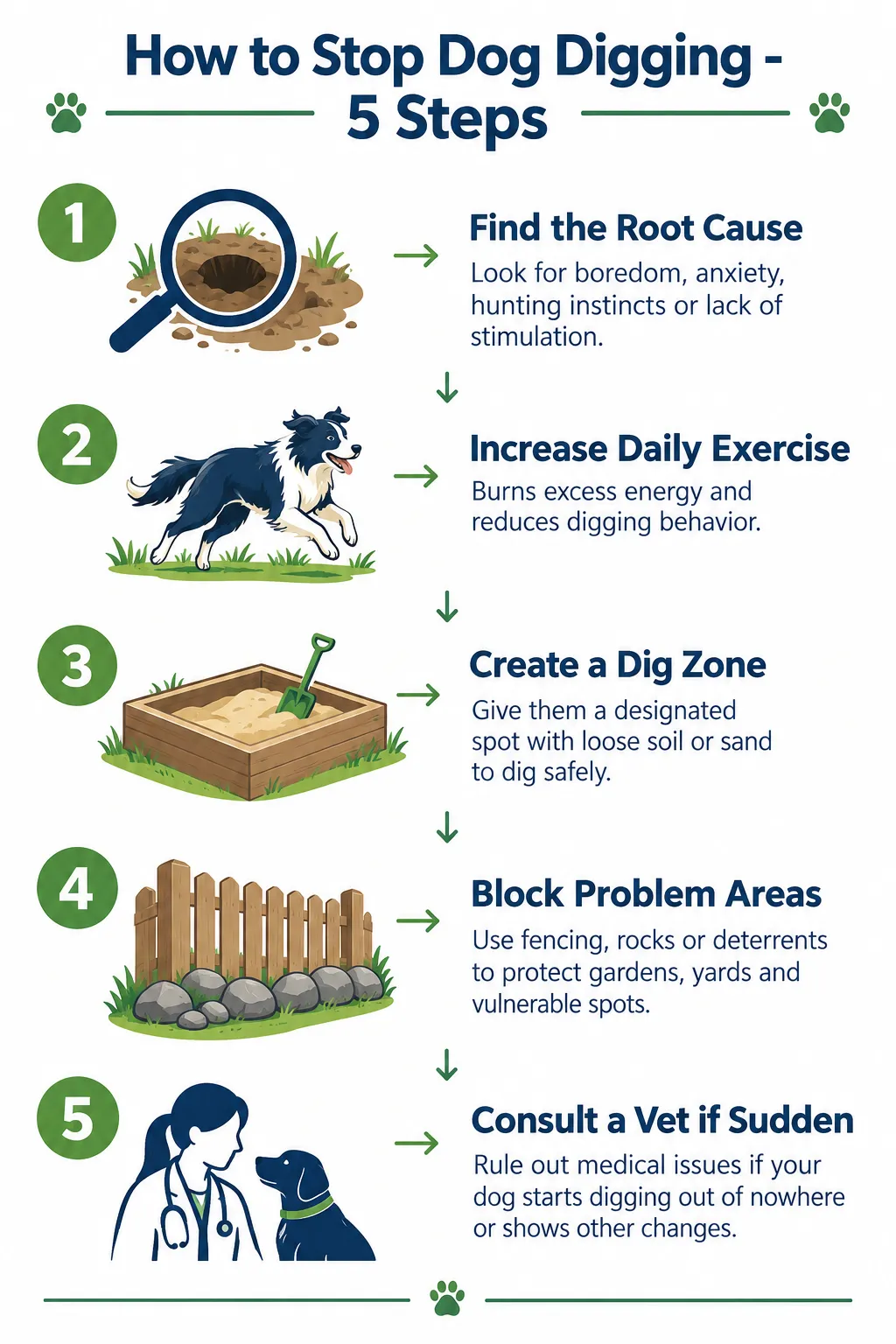
Step-by-step approach:
- Identify the trigger – Use the location and context clues from the table above
- Increase exercise – A tired dog digs far less. Aim for breed-appropriate daily activity
- Add mental stimulation – Puzzle feeders, training sessions, and scent games help
- Create a legal dig zone – A sandbox or marked garden bed with buried toys gives an outlet
- Block problem areas – Rocks, chicken wire just under soil, or citrus peels deter digging in specific spots
- Never punish after the fact – Dogs don’t connect delayed punishment to earlier behavior
For dogs digging due to anxiety, also consider top commands for dogs to build structure and confidence.
Choose this approach if: Your dog digs in random spots (boredom fix) or along a fence (escape fix with physical barriers + exercise).
See a vet if: Digging started suddenly, happens compulsively at night, or is paired with other behavior changes.
Can Dog Digging Damage My Yard and How Do I Prevent It?
Yes – repeated digging can damage root systems, create trip hazards, and destroy landscaping. The good news is that prevention is straightforward once you know the cause.
Practical yard protection tips:
- Fill existing holes with soil mixed with the dog’s own waste (natural deterrent)
- Lay chicken wire just below the soil surface in high-dig zones
- Use raised garden beds with borders dogs can’t easily access
- Plant dense ground cover in areas you want protected
- Designate a specific “dog zone” in the yard with loose soil or sand
Yahoo Lifestyle’s veterinary experts describe digging as an “innate behavior” that is easier to redirect than eliminate entirely – which is why a designated dig zone works better than trying to stop all digging completely.
Is Excessive Digging a Sign My Dog Is Sick?
Sudden or compulsive digging can sometimes indicate a medical or behavioral health issue. Most casual digging is not a health concern, but certain patterns warrant attention.
Red flags to watch for:
- Digging started suddenly with no lifestyle change
- Compulsive digging that the dog can’t seem to stop
- Digging paired with other new symptoms (lethargy, appetite changes, pacing)
- Pregnant females digging obsessively (nesting behavior is normal near birth, but monitor closely)
- Older dogs suddenly starting to dig (could relate to cognitive changes)
If you notice any of these alongside the digging, a vet visit is the right call. It’s also worth reviewing 10 early signs of pain in dogs to see if anything else fits.
How Much Digging Is Too Much?
There’s no universal number of holes that crosses the line. The real question is: is the digging causing harm – to your yard, your dog’s paws, or your dog’s mental state?
Digging is “too much” when:
- It’s happening daily and destroying the yard
- Your dog seems unable to stop or is digging compulsively
- It’s paired with other signs of distress
- Your dog is injuring their paws or nails
Digging is fine when:
- It’s occasional and purposeful
- Your dog seems relaxed and satisfied afterward
- It’s contained to one area you don’t mind
A good rule of thumb: if the digging is increasing over time rather than staying stable, something in your dog’s environment has changed and is worth investigating.
FAQ
Why do dogs dig holes in the yard?
Dogs dig in yards due to boredom, instinct, heat regulation, prey drive, or escape attempts. The location and pattern of the holes usually reveal the specific reason.
What does it mean when a dog digs a hole and lays in it?
It means the dog is using the cooler soil to regulate their body temperature. This is a normal thermoregulation behavior, especially common in thick-coated breeds during warm weather.
Is dog digging a sign of anxiety?
It can be. Digging at doors, gates, or fence lines – especially when paired with whining or destructive behavior – often signals separation anxiety or stress. Random yard digging is more likely boredom.
Do terriers dig more than other breeds?
Yes. Terriers were selectively bred to dig prey out of burrows, so their digging instinct is significantly stronger than most companion breeds. This is hardwired, not a training failure.
Why does my dog dig before lying down?
This is a nesting instinct inherited from wild ancestors who would pat down grass or soil to create a comfortable resting spot. It’s completely normal behavior.
How do I stop my dog from digging up my garden?
Identify the cause first. Then increase exercise, add mental enrichment, create a designated dig zone, and use physical deterrents (rocks, wire under soil) in areas you want to protect. Avoid punishment.
Do older dogs dig more than younger dogs?
Not typically. Younger dogs tend to dig more due to higher energy levels. If an older dog suddenly starts digging more, it could signal cognitive changes or discomfort and warrants a vet check.
Can digging hurt my dog?
Repeated digging can cause cracked paw pads, broken nails, and muscle strain. Dogs digging near fence bases may also encounter sharp objects or toxic plants. Monitor paws regularly.
What breeds are most likely to dig holes?
Terriers (Jack Russell, Cairn, Rat Terrier), Dachshunds, Huskies, Malamutes, and Beagles are among the highest-risk breeds due to their working and hunting heritage.
Is a designated dig zone actually effective?
Yes – it’s one of the most consistently recommended solutions by vets and trainers. Bury toys or treats in a sandbox or marked area to redirect the behavior to an acceptable spot.
Should I punish my dog for digging?
No. Punishment after the fact doesn’t work because dogs can’t connect delayed consequences to earlier actions. Redirection, enrichment, and meeting the underlying need are far more effective.
When should I call a vet about my dog’s digging?
Call a vet if digging started suddenly with no clear trigger, is compulsive or happening at night, or is paired with other behavioral or physical changes like pacing, appetite loss, or lethargy.
Conclusion
Understanding why dogs dig holes changes everything. Instead of seeing a ruined garden, you start seeing a message – your dog is bored, hot, anxious, or following an instinct as old as the species itself.
Your action steps:
- Observe the pattern – Note where, when, and how your dog digs to identify the trigger
- Meet the need – More exercise for boredom, shade and water for heat, enrichment for anxiety
- Create a legal outlet – A sandbox or designated dig zone is the single most effective long-term solution
- Protect problem areas – Physical deterrents work best when paired with the enrichment fix
- See a vet for sudden changes – Compulsive or new-onset digging deserves professional eyes
Most digging problems are solved not by stopping the behavior, but by giving your dog a better way to meet the same need. Start with the cause, and the holes will follow.