Last updated: September 15, 2026
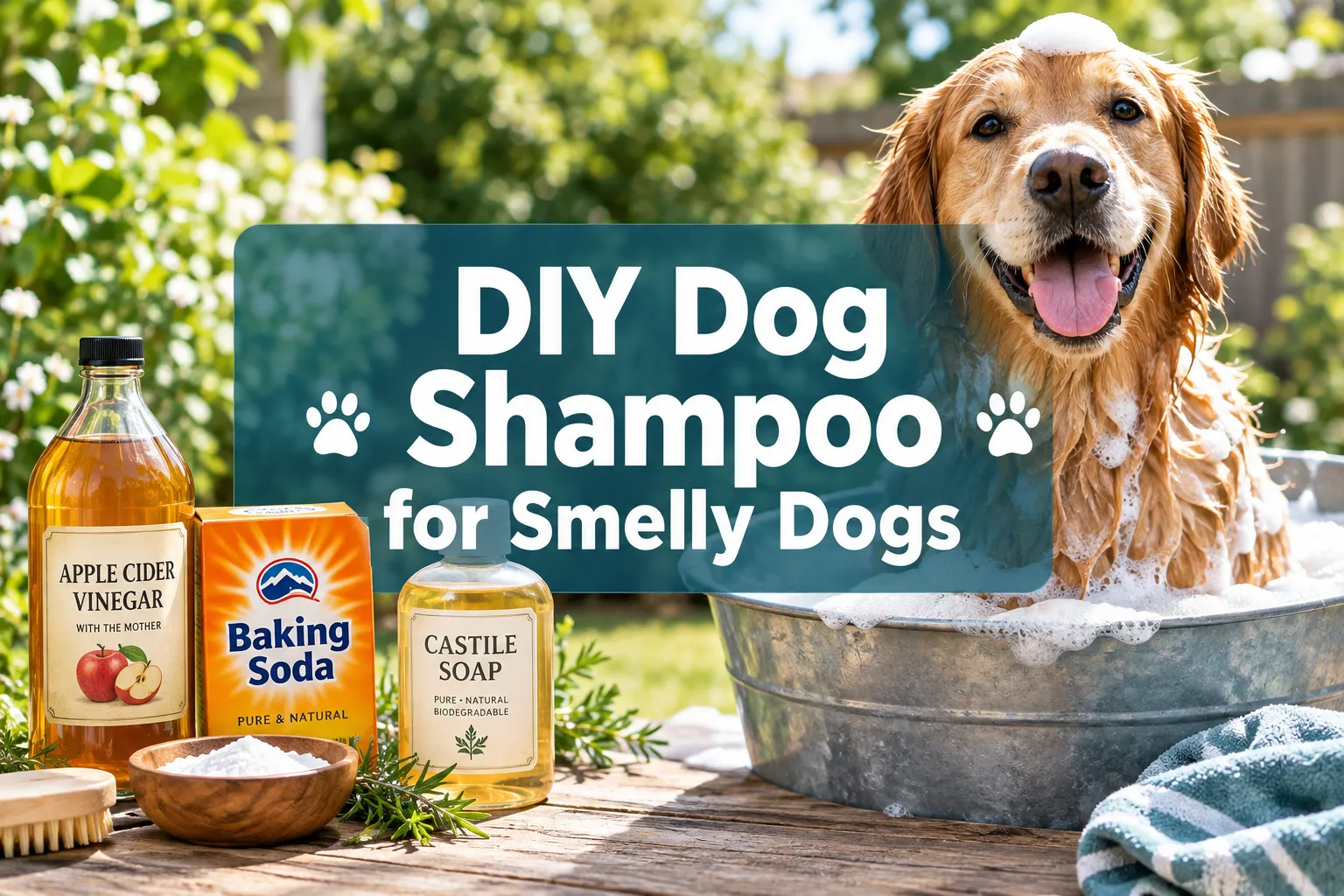
Quick Answer: The best DIY dog shampoo for smelly dogs combines an oatmeal-castile soap wash, an apple cider vinegar rinse, and a baking soda finishing powder. This three-step routine neutralizes odor at the source rather than masking it, and the dry baking soda step is what actually extends freshness between baths. Most dogs stay noticeably cleaner-smelling for 2-4 weeks with this method.
Key Takeaways
- 🐾 Dog odor usually comes from skin bacteria, yeast, wet fur, or anal glands – not just dirt.
- 🧴 The best homemade dog shampoo for odor uses castile soap, apple cider vinegar, and baking soda.
- 🚿 The “Fresh Fur” trick has three steps: wash, rinse with diluted ACV, then apply a baking soda powder finish.
- ⏱️ Leave the shampoo on for 2-3 minutes before rinsing for best odor control.
- ❌ Never use human shampoo, dish soap, tea tree oil, or undiluted essential oils on dogs.
- 🔁 Bathe most dogs no more than once every 2-4 weeks to protect their skin barrier.
- 🌿 Dogs with sensitive skin do best with an oatmeal and castile soap base, no essential oils needed.
- 🩺 Persistent or sudden strong odor can signal a medical issue – see a vet if the smell doesn’t improve.
- 🧪 Homemade shampoo can work just as well as store-bought for odor, but safety depends on the recipe.
- 💧 Rinse twice as long as feels necessary – residue left on skin causes more irritation than the smell itself.
What Causes Dogs to Smell Bad
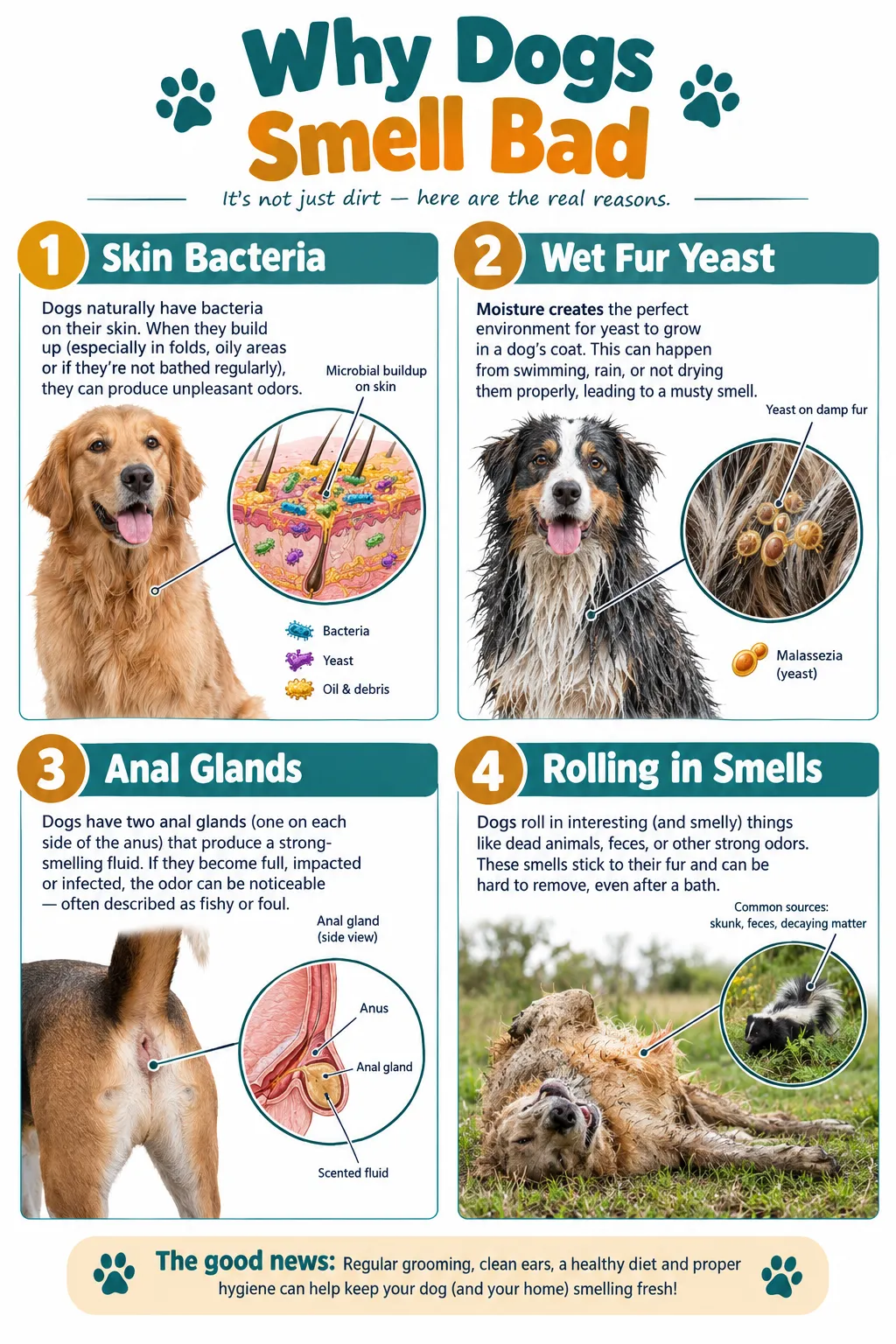
Dog odor is almost always caused by something biological, not just outdoor adventures. The most common culprits are skin bacteria, yeast overgrowth, wet fur, and anal gland secretions.
Here’s a quick breakdown of the main causes:
- Skin bacteria and yeast – Dogs naturally carry microorganisms on their skin. When moisture gets trapped in folds or thick fur, bacteria and yeast multiply fast.
- Wet fur – Water activates microbes already living on the coat, which is why your dog smells worse right after a swim than before.
- Anal glands – These small scent glands near the tail can leak or become impacted, producing a strong fishy smell.
- Rolling in things – Grass, dead animals, and other dogs’ markings are irresistible to many dogs.
- Diet – What a dog eats can affect how their skin and coat smell over time.
- Ear infections – A yeasty or sour smell near the head often points to the ears, not the coat.
If you’ve ever wondered why your dog’s feet smell like Fritos, that’s actually a classic sign of normal yeast living between the paw pads – totally common, but worth managing.
How to Make Homemade Dog Shampoo That Actually Works: The 3-Step “Fresh Fur” Method
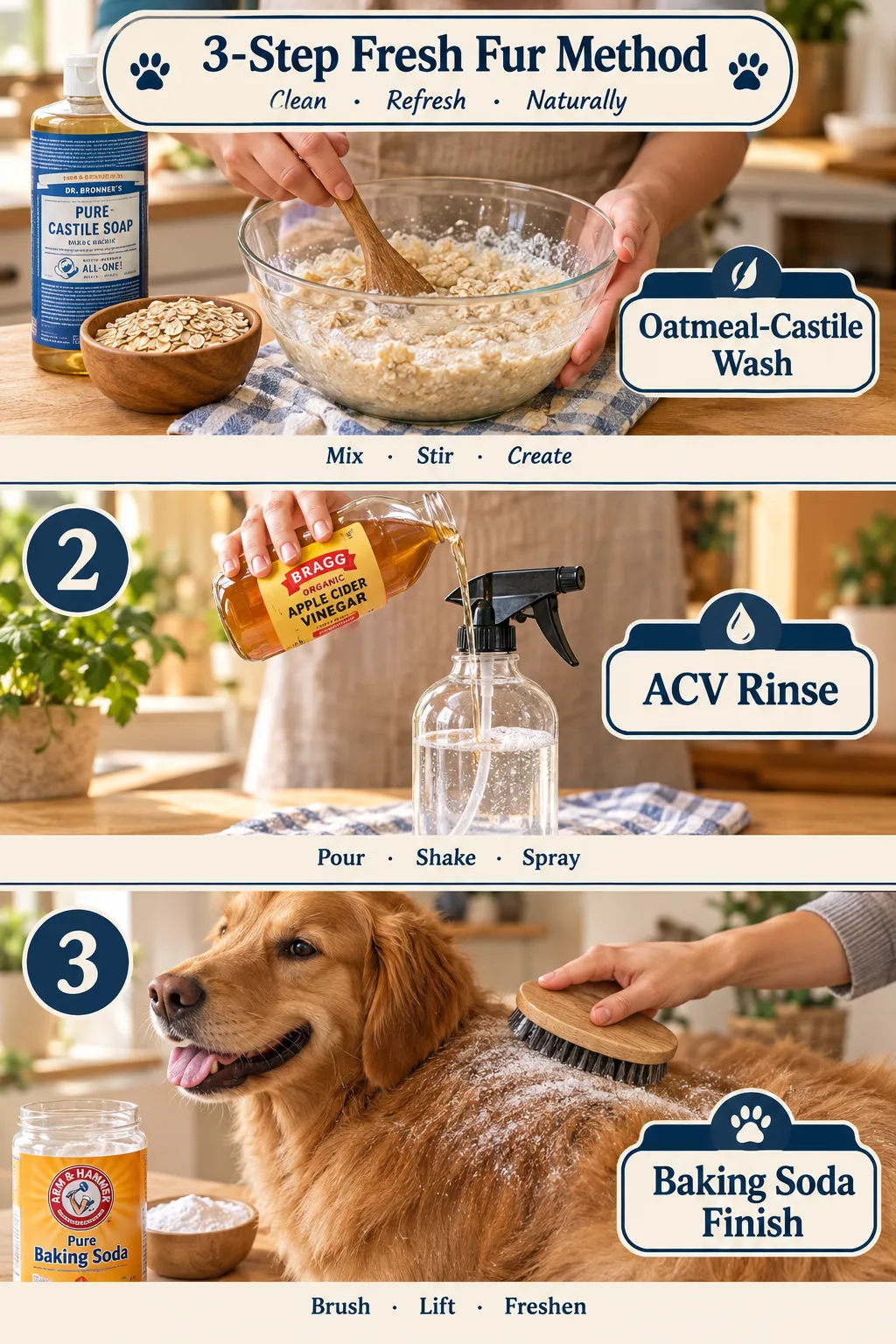
A good DIY dog shampoo for smelly dogs doesn’t just clean – it neutralizes odor molecules. The three-step “Fresh Fur” routine does exactly that.
Step 1: The Oatmeal-Castile Wash
Mix these ingredients in a squeeze bottle or bowl:
- 1 cup warm water
- 1/2 cup unscented liquid castile soap
- 2 tablespoons colloidal oatmeal (or finely ground plain oats)
- 1 tablespoon raw honey (optional, for coat conditioning)
Wet your dog thoroughly, apply the mix, and massage it in for 2-3 minutes before rinsing. The contact time is key – it gives the soap time to lift embedded odor and dirt.
Step 2: The Apple Cider Vinegar Rinse
After rinsing the shampoo, mix 1/4 cup apple cider vinegar with 1 cup water and pour it over the coat. Work it in gently, then rinse again. This step neutralizes remaining odor at the pH level. Your dog may smell slightly vinegary when wet, but once the coat dries, they’ll smell like nothing but a clean dog.
Step 3: The Baking Soda Powder Finish
This is the step most people skip – and it’s the one that makes freshness last. Once your dog is dry, sprinkle a small amount of plain baking soda onto the coat, work it in gently with your fingers, let it sit for 10-15 minutes, then brush it out thoroughly. Baking soda is a natural deodorizer that neutralizes acidic odor compounds and can also be used between baths as a dry shampoo.
Best Ingredients for DIY Dog Shampoo for Odor Control
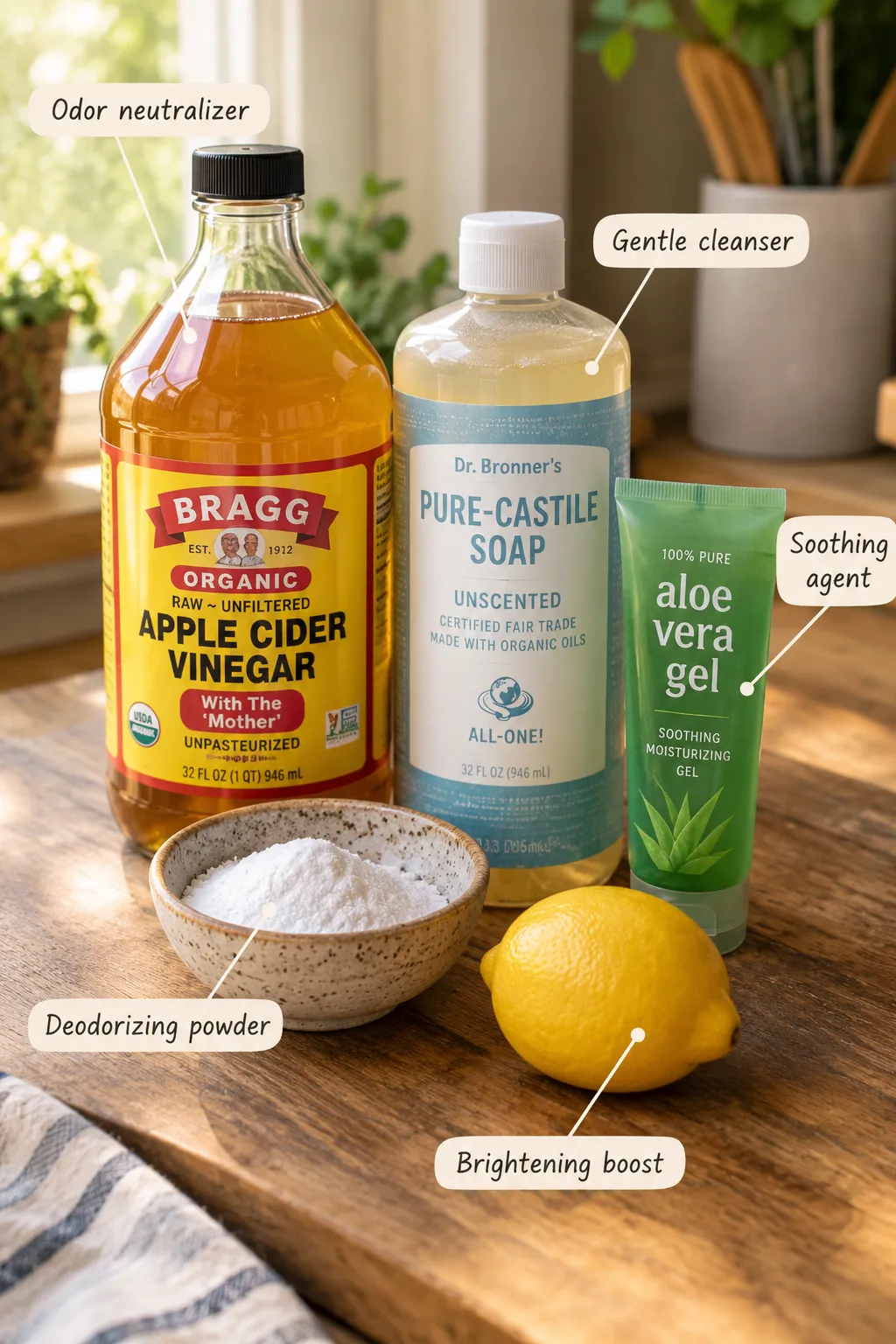
The right ingredients make or break a homemade dog shampoo. Stick to these proven options.
Safe and effective:
| Ingredient | What It Does |
|---|---|
| Unscented castile soap | Gentle cleanser, safe for dog skin pH |
| Colloidal oatmeal | Soothes irritated skin, mild deodorizer |
| Apple cider vinegar (diluted) | Neutralizes odor, balances pH |
| Baking soda | Absorbs and neutralizes acidic smells |
| Aloe vera gel | Moisturizes and calms sensitive skin |
| Rosemary tea (cooled) | Light natural scent, antioxidant properties |
Avoid these completely:
- Tea tree oil (toxic to dogs even in small amounts)
- Undiluted essential oils of any kind
- Dish soap (strips natural skin oils)
- Human shampoo (wrong pH for dogs)
- Bar soap
A safety analysis of DIY dog shampoos confirms that well-diluted castile soap and colloidal oatmeal are among the safest options, while dish soap and essential oils like tea tree should never be used on dogs.
Does Homemade Dog Shampoo Work as Well as Store-Bought?
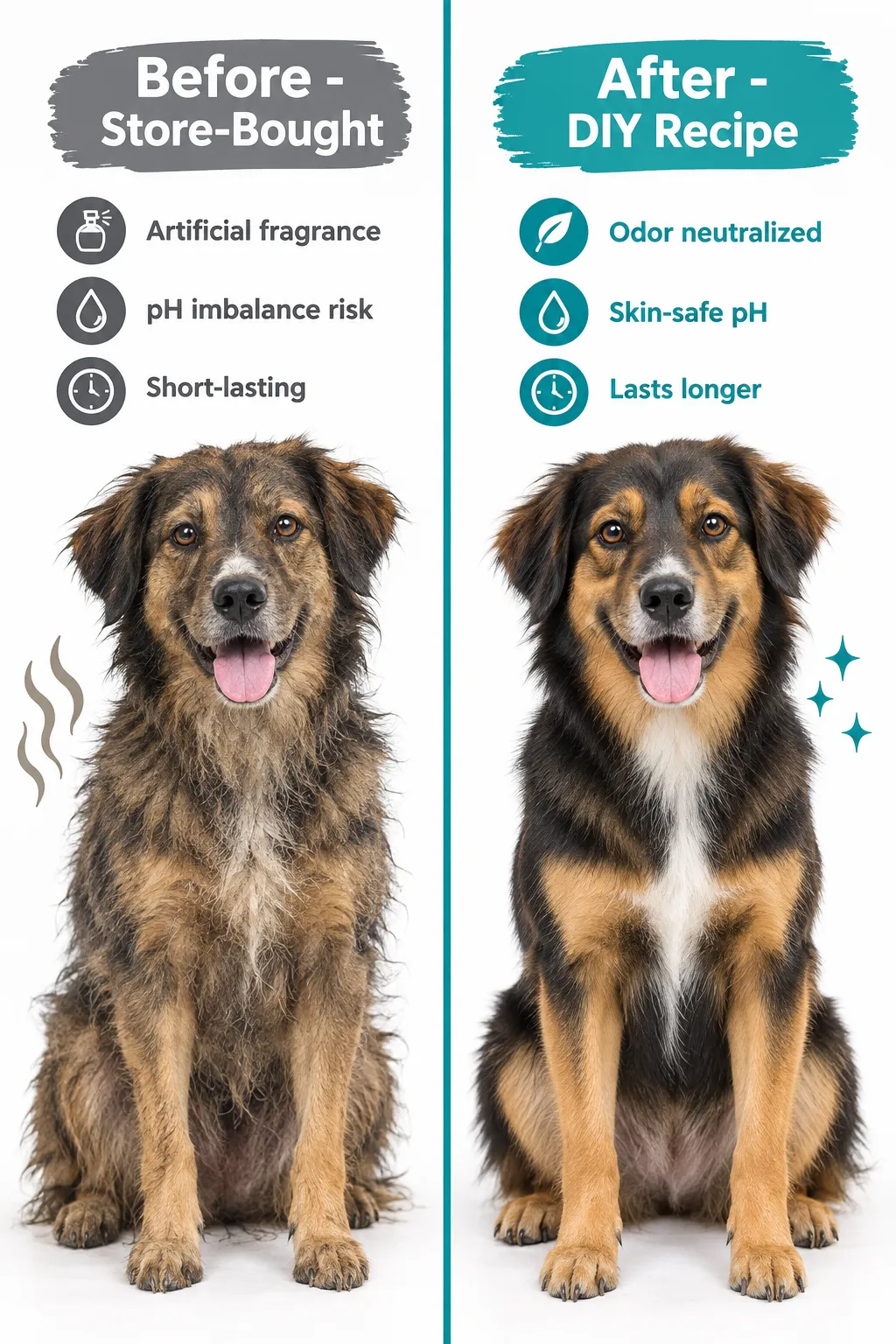
Yes – for most dogs and most odor problems, a well-made DIY dog shampoo for smelly dogs performs just as well as commercial options. The key difference is that store-bought shampoos often use synthetic fragrances to mask odor, while homemade recipes neutralize it.
That said, store-bought medicated shampoos are better for dogs with diagnosed skin conditions like seborrhea or ringworm. For everyday stink, the DIY route is solid.
Choose DIY if:
- Your dog has a normal coat and mild-to-moderate odor
- You want to avoid artificial fragrances and preservatives
- Your dog has mild skin sensitivity
Choose store-bought if:
- Your vet has prescribed a medicated shampoo
- Your dog has a severe skin condition
- You need a shelf-stable product for travel or convenience
DIY Dog Shampoo Recipe With Apple Cider Vinegar
Apple cider vinegar is one of the most effective natural deodorizers for dogs. Here’s a complete recipe that uses it as a core ingredient.
ACV Odor-Control Shampoo:
- Add 1 cup warm water to a clean bottle first.
- Pour in 1/2 cup unscented castile soap slowly.
- Add 1/4 cup apple cider vinegar.
- Add 1 teaspoon baking soda – add this last and slowly to manage fizzing.
- Optional: add 1 teaspoon fresh lemon juice for extra brightness.
Use this ACV-based formula immediately on wet fur, massage thoroughly, and rinse completely. Don’t let it sit too long – the acid-base reaction between vinegar and baking soda dissipates quickly.
Quick tip: Always add the baking soda last and to a liquid mixture, not directly to the vinegar. This controls the fizzing and keeps the formula stable long enough to use.
Can I Make Dog Shampoo Without Essential Oils?
Absolutely – and for most dogs, skipping essential oils is the safer choice. Essential oils are not necessary for a great-smelling, effective DIY dog shampoo for smelly dogs.
Many natural dog shampoo recipes use herbal teas like rosemary or chamomile as a gentle scent base instead. Brew a strong tea, let it cool completely, then use it as the water base in your recipe. Strain out all plant material before mixing.
This approach gives a light, natural scent without the toxicity risk that comes with concentrated essential oils.
Essential oil safety note: If you do want to use an essential oil, only use one that a veterinarian has specifically approved for your dog’s size and breed. Never add it to a recipe without that guidance.
Is DIY Dog Shampoo Safe for Sensitive Skin?
Yes, when made with the right ingredients. Dogs with sensitive skin actually do better with a simple homemade formula than with commercial shampoos loaded with fragrances and preservatives.
The best base for sensitive dogs:
- Unscented castile soap (no added fragrance)
- Colloidal oatmeal (anti-inflammatory, soothing)
- Aloe vera gel (calms redness and itching)
- Plain warm water
Skip the vinegar rinse if your dog has open sores, raw patches, or very inflamed skin – the acidity can sting. Also skip baking soda on broken skin.
If you have a fluffy breed with a dense coat – like a Samoyed or a Havanese – pay extra attention to rinsing thoroughly. Dense coats trap residue easily, and leftover shampoo causes more irritation than the original smell.
How Often Should I Bathe My Smelly Dog
Most dogs should be bathed no more than once every 2-4 weeks. Bathing too frequently strips the natural oils from a dog’s skin, which actually makes odor worse over time because the skin overproduces oil to compensate.
General bathing frequency by coat type:
- Short-haired dogs: every 4-6 weeks
- Medium-coated dogs: every 3-4 weeks
- Long or dense coats: every 2-3 weeks
- Dogs with skin conditions: follow your vet’s schedule
Between baths, use the baking soda dry shampoo method from Step 3 to keep odor under control. A quick brush-through and a light baking soda treatment can buy you another week of freshness without stressing your dog’s skin.
How Long Does Homemade Dog Shampoo Last
Homemade dog shampoo has a short shelf life because it contains no preservatives. Most recipes last 1-2 weeks when stored in a sealed container in the refrigerator.
A few storage tips:
- Use an airtight glass or BPA-free plastic bottle.
- Label the bottle with the date you made it.
- Discard any batch that smells off or looks cloudy.
- Recipes with herbal infusions should be strained carefully and used within a week.
The safest approach is to make small batches – enough for 1-2 baths – rather than a large bottle that sits for weeks.
What If My Dog Still Smells After Homemade Shampoo
If your dog still smells after a thorough wash, the problem is likely one of these:
- Incomplete rinsing – Residue left in the coat traps odor. Rinse for twice as long as you think is necessary.
- Anal glands – A fishy smell that persists after bathing almost always points to the anal glands. A vet or groomer can express them safely.
- Ear infection – Check the ears for a yeasty or sour smell.
- Skin infection – Bacterial or fungal infections produce a persistent odor that shampoo alone won’t fix.
- Diet – Some dogs smell better when switched to a higher-quality food.
If the smell is sudden, strong, or coming from a specific area, don’t keep trying different shampoos. See a vet.
When Should I See a Vet About Dog Odor Problems
See a vet if the smell is sudden, unusually strong, or accompanied by other symptoms. A DIY dog shampoo for smelly dogs is a great maintenance tool, but it can’t treat medical conditions.
See a vet if you notice:
- A fishy or metallic smell that doesn’t go away after bathing
- Skin that looks red, flaky, crusty, or has visible sores
- Your dog scratching, biting, or rubbing the smelly area constantly
- A sweet or fruity odor (can signal diabetes)
- Discharge from ears, eyes, or skin folds
- The smell developed suddenly with no change in routine
Some dogs, especially those prone to skin issues – like Pugs with their facial folds – need regular veterinary skin care alongside any home grooming routine.
Best DIY Dog Shampoo for Itchy Smelly Dogs
Dogs that are both itchy and smelly often have a yeast or bacterial imbalance on the skin. The best approach combines gentle cleansing with anti-inflammatory ingredients.
Itchy + Smelly Dog Recipe:
- 1 cup cooled chamomile or green tea (steeped and strained)
- 1/2 cup unscented castile soap
- 2 tablespoons colloidal oatmeal
- 1 tablespoon aloe vera gel
- 1/4 cup diluted apple cider vinegar (for the rinse step, not mixed in)
Apply the shampoo, leave it on for 2-3 minutes, rinse well, then follow with the diluted ACV rinse. The tea-based formula combined with a vinegar rinse is especially effective for dogs that have gotten into something particularly smelly and have reactive skin.
Skip the baking soda powder step if your dog is actively scratching – it can be drying on already-irritated skin.
How to Make Dog Shampoo Freshness Last Longer Between Baths
The secret to longer-lasting freshness isn’t a stronger shampoo – it’s what you do after the bath. The baking soda dry shampoo step is the single most effective way to extend clean-coat time.
Between-bath freshness routine:
- Brush your dog thoroughly every 2-3 days to remove dead skin cells and loose fur.
- Wipe down paws and belly after outdoor walks with a damp cloth.
- Apply a light baking soda dry treatment once a week – sprinkle, massage in, wait 10 minutes, brush out.
- Use a diluted apple cider vinegar spray as a post-walk mist on the coat (avoid eyes and face).
- Keep bedding clean – a dog’s bed is often the real source of lingering smell.
If you’re caring for a long-haired breed like a Long Hair Dachshund, regular brushing is especially important because odor-causing debris gets trapped deep in the coat.
Frequently Asked Questions
Can I use human shampoo on my dog in an emergency?
No – human shampoo has a much lower pH than dog skin requires, which can disrupt the skin barrier and cause dryness, irritation, and increased odor over time. Use plain warm water in a true emergency instead.
Is apple cider vinegar safe for all dogs?
Diluted ACV is generally safe for most dogs, but avoid it on dogs with open wounds, raw skin, or known skin infections. Always dilute it at least 1:4 with water before applying.
Can I add lavender essential oil to my DIY dog shampoo?
Only if a vet has specifically approved it for your dog. Lavender is one of the less toxic essential oils for dogs, but it can still cause reactions in sensitive individuals and should never be used on puppies or pregnant dogs.
How do I know if my homemade shampoo is too harsh?
Watch for redness, excessive scratching, flaking, or dull coat after bathing. If you see any of these signs, rinse thoroughly and switch to a simpler formula with fewer ingredients.
Can I use baking soda on my dog every week?
Light use once a week is generally fine for most dogs. Overuse can dry out the skin and push the coat’s pH in the wrong direction. If your dog needs more frequent odor control, focus on brushing and wiping down rather than more baking soda.
What’s the best DIY shampoo for a dog that rolled in something dead?
Start with the diluted white vinegar pre-rinse directly on the affected area, then follow with the full three-step Fresh Fur routine. The vinegar pre-rinse helps break down the organic compounds before you even apply the shampoo.
Is colloidal oatmeal the same as regular oatmeal?
Not exactly. Colloidal oatmeal is finely milled and processed to release more of the anti-inflammatory compounds. You can grind plain, unflavored rolled oats in a blender as a substitute, but strain the mixture well before use.
How do I store leftover homemade dog shampoo?
Store in an airtight container in the refrigerator for up to 2 weeks. Discard sooner if it smells off, changes color, or becomes cloudy.
Can puppies use DIY dog shampoo?
Use extra caution with puppies. Stick to the simplest possible recipe – just diluted castile soap and warm water. Skip vinegar, baking soda, and any herbal ingredients until your puppy is at least 12 weeks old and consult your vet first.
Will the vinegar smell stay on my dog?
No – the vinegar smell disappears completely once the coat dries. Dogs may smell slightly sour when wet, but the scent fades as the coat dries, leaving a neutral, clean smell.
Conclusion
A smelly dog doesn’t have to mean a trip to the groomer every week or a cabinet full of expensive shampoos. The three-step “Fresh Fur” method – oatmeal-castile wash, ACV rinse, and baking soda finish – tackles dog odor where it starts and keeps coats fresher for longer.
Your action steps:
- Make a small batch of the ACV odor-control recipe this week and test it on your dog.
- Add the baking soda dry shampoo step to your between-bath routine.
- Check your dog’s ears, paws, and anal gland area if the smell persists after a good wash.
- See a vet if the odor is sudden, strong, or comes with skin changes.
The goal isn’t a dog that smells like a perfume counter – it’s a clean, comfortable dog with healthy skin. These simple ingredients get you there without the guesswork.