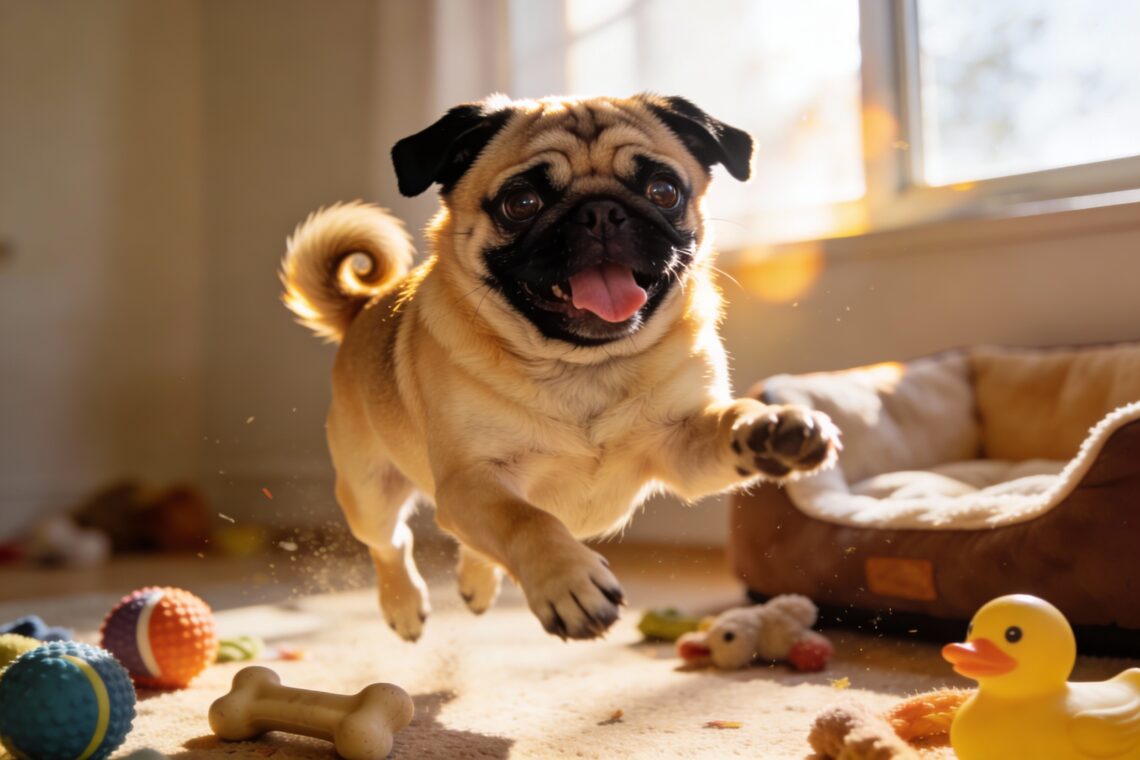
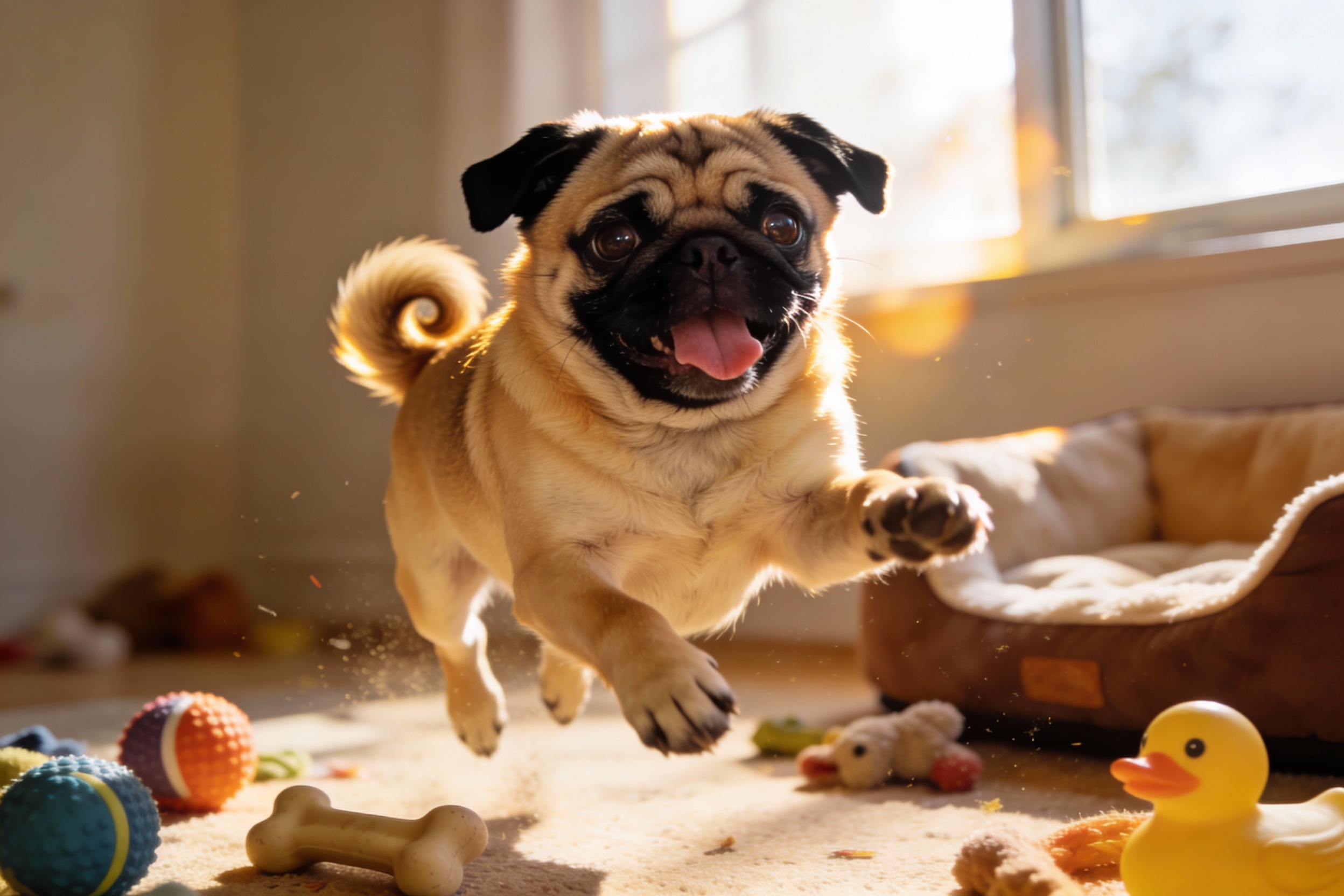
Pugs don’t walk into your life quietly. They tumble in with snorts, wiggles, and a face only everyone could love. They’re walking memes wrapped in velvet fur, equal parts gremlin and angel. If you’ve ever wondered why pug people act like they’ve joined a secret society, buckle up—these wrinkly babies are pure chaos and love.
Meet the Pug: Royal Clown, Couch Comedian
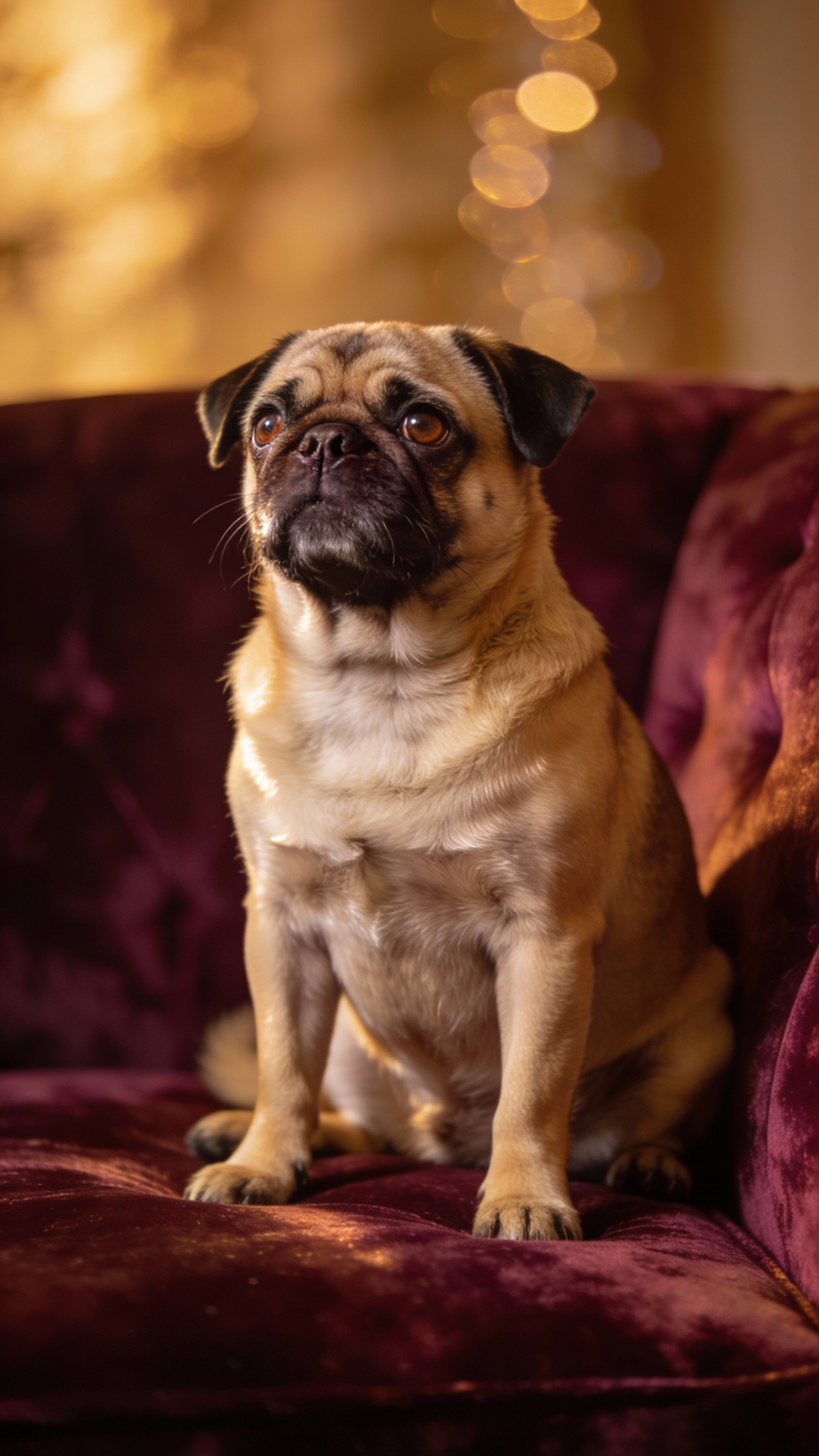
Pugs started as royal lap warmers in ancient China, and honestly, nothing has changed. They still worship the throne—your couch, your lap, your pillow. They’re equal parts regal and ridiculous, and they know it. Fun truth: A pug will double as a heated blanket and a stand-up comedian. You get warmth and a nonstop show.
15 Pug Facts That Prove They’re Chaos & Love
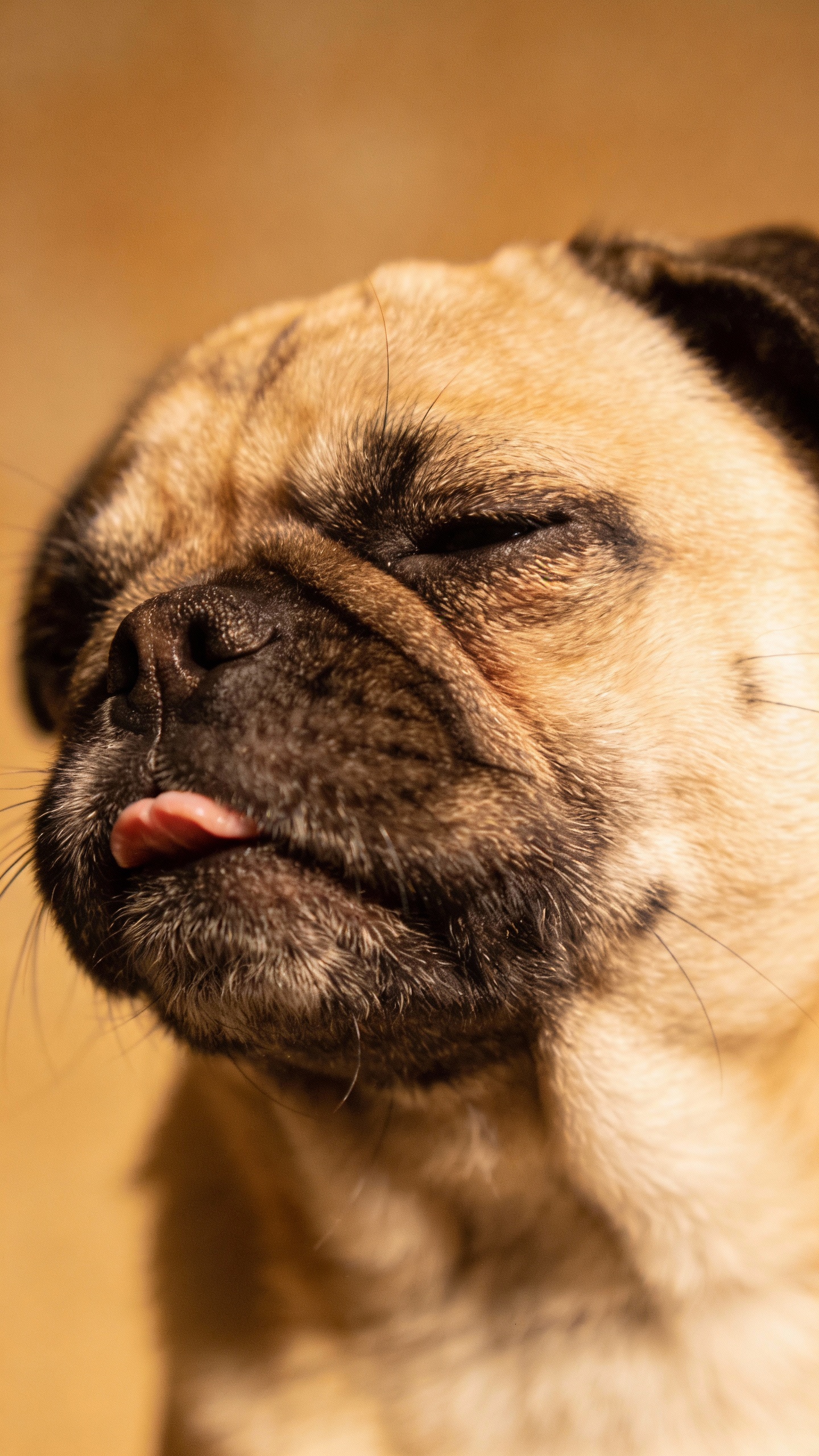
- They speak fluent snort. Pugs communicate with honks, snuffles, and reverse sneezes. You’ll learn the language within a week.
- They were bred to be companions—period. No herding, no guarding, just pure hanging out. If you want a shadow, you just got one.
- Wrinkles aren’t just cute—they’re high-maintenance. You must clean the face folds regularly to avoid irritation. Quick wipe, happy pug.
- They give world-class head tilts. Ask a question and watch the dramatic tilt show. Do they understand? Who cares, it’s adorable.
- Short snout, big responsibility. Pugs overheat easily. AC, shade, and controlled exercise matter, especially in summer.
- They take naps like it’s a job. Pugs will nap on your foot, your laptop, and your soul. They recharge often, then sprint like maniacs.
- They’re surprisingly athletic—in bursts. Zoomies happen. Then they collapse like a loaf of bread. Balance is key.
- Food? Yes. Pugs act perma-hungry. You must measure meals, pick quality food, and ignore the Oscar-worthy begging.
- They shed like confetti. Those tiny hairs invade everything. Still worth it, IMO.
- They’re total extroverts. Pugs love people, children, and other pets. They will say hi to every neighbor, mail carrier, and breeze.
- Training works—if you use snacks. Positive reinforcement turns a stubborn pug into a genius. Keep sessions short and fun.
- They’re emotional sponges. Pugs read your mood and pile on the comfort. Rough day? Prepare for a snuggle ambush.
- They don’t need marathons. Daily walks and playtime keep them healthy. Avoid intense heat and long-distance runs.
- They have “selective hearing.” “Come here” translates to “come here if treats exist.” Consistency matters.
- They love costumes and attention. Halloween? Tuesday? Doesn’t matter. Dress them up and prepare for applause.
The Chaos: Daily Life With a Pug
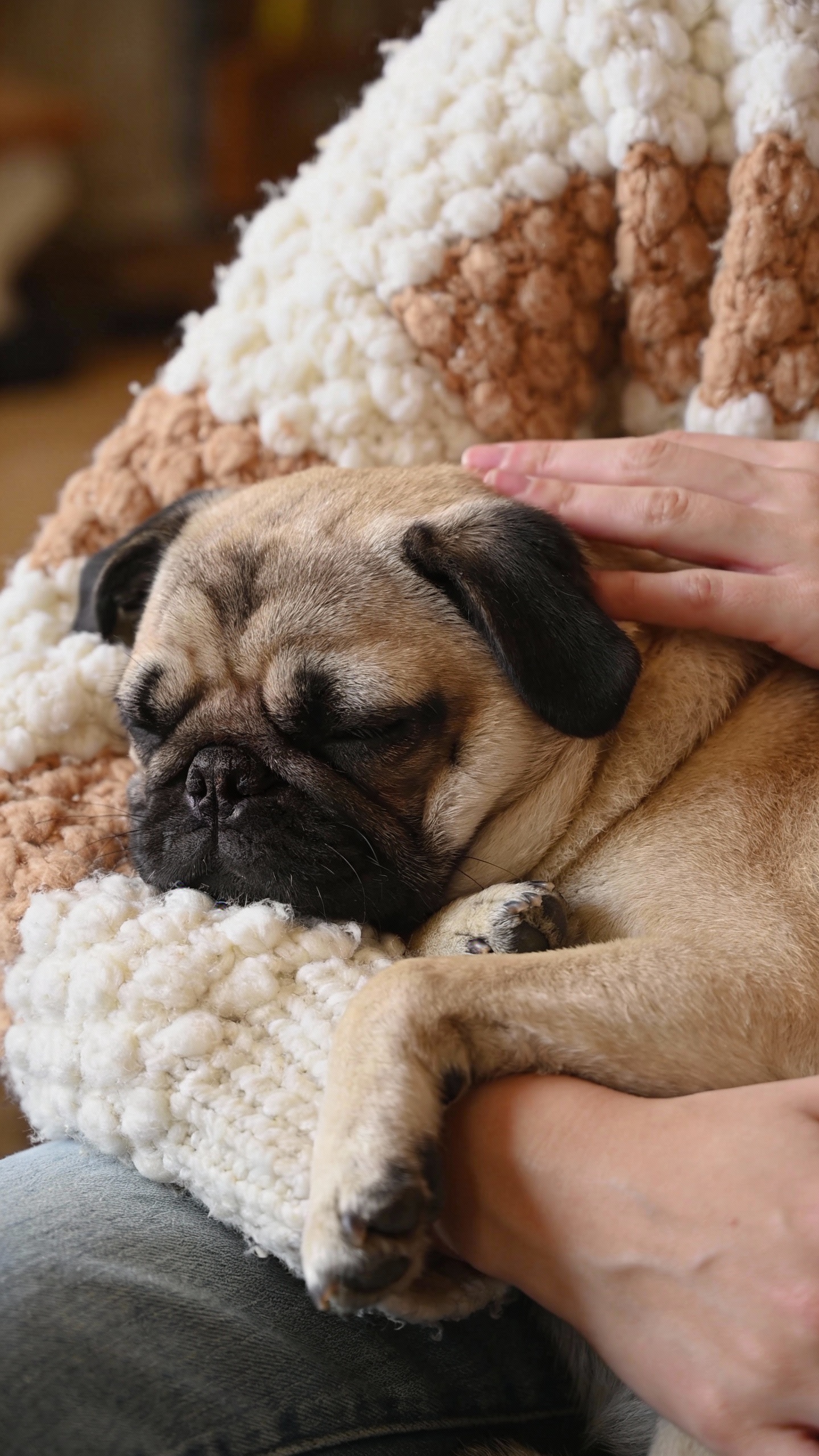
Pugs turn mundane moments into sitcom scenes. You’ll make coffee while they supervise from underfoot, snorting their approval. They will photobomb your Zoom calls because they think your boss needs a close-up. Expect this combo:
- Morning snort alarm clock
- Zoomies after breakfast
- 11 naps before lunch
- Sudden cuddle emergencies
House Rules (As Dictated by Pugs)
- The lap belongs to the pug.
- Blankets exist for burrowing.
- Food dropped on floor = legally the pug’s.
The Love: Velcro Hearts With Curly Tails
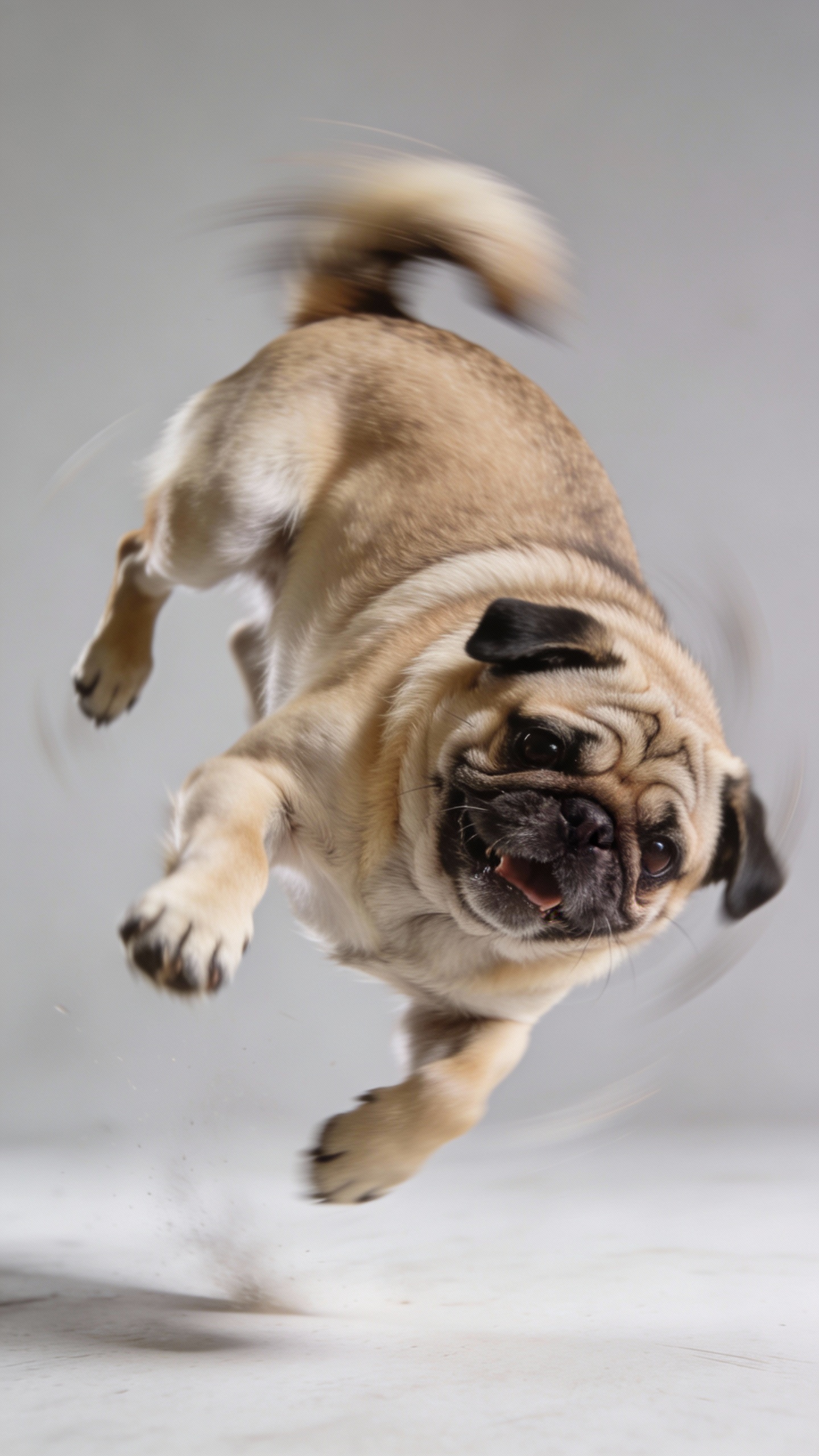
Pugs give love like it’s their personal brand. They curl into your side and let out a contented little huff that could cure stress. They make eye contact like they’re reading your soul, and then snore on your arm. Translation: If you want a companion who prioritizes snuggles over everything, you found your match.
Pug Love Languages
- Physical touch: Maximum cuddle contact at all times.
- Quality time: Follow you from room to room, no questions asked.
- Acts of service: Warm your lap. Supervise bathroom trips. Vital stuff.
Health Stuff You Should Actually Know
Cute comes with maintenance. With brachycephalic faces, pugs need careful care—nothing scary, just consistent. Basics to keep them thriving:
- Breathing: Avoid heat, use a harness, and watch for labored breathing.
- Eyes: Big eyes = occasional injuries. Keep them clean and see the vet for redness or squinting.
- Wrinkles: Gentle wipes, dry thoroughly, keep yeast at bay.
- Weight: Extra pounds stress joints and breathing. Control portions and treats.
- Teeth: Small mouths need brushing. Yes, you can train it. Treats are your friend.
Exercise That Works (Without Overdoing It)
- Two short walks daily, adjusted for weather.
- Indoor play like fetch in a hallway or gentle tug.
- Puzzle feeders for mental exercise—tired brain, happy pug.
Training a Pug Without Losing Your Mind
Pugs have big personalities and medium attention spans. Keep sessions bite-sized and fun. Pay up with treats and praise, and they’ll crush it. Starter skill set:
- Recall: Use a cheerful tone and high-value treats.
- Leave it: Crucial for floor snacks and rogue chicken bones.
- Settle on a mat: Great for guests and mealtime calm.
- Harness manners: Gentle, flat harnesses protect their necks.
Social Life: Pugs Are Party People
Introduce them to new folks, dogs, and places early. Keep it positive. Your pug will become the unofficial mayor of your block, FYI.
Living With the Shedding and Snoring
You’ll find pug glitter (aka hair) on black clothes forever. You’ll also fall asleep to gentle snoring that sounds like a tiny chainsaw. Easy hacks:
- Weekly brushing with a de-shedding tool.
- Washable couch throws and dog bed covers.
- White-noise machine if the snoring hits jet-engine levels.
FAQ
Are pugs good for first-time dog owners?
Yes. They’re friendly, adaptable, and people-focused. You’ll need to commit to training, cleaning wrinkles, and weight management, but they reward you with endless affection.
Do pugs get along with kids and other pets?
Usually, absolutely. Pugs tend to love everyone and everything. Teach kids to handle them gently, and supervise like you would with any dog.
How much exercise does a pug need?
Short daily walks and play sessions work best. Avoid heat and high-intensity running. If your pug pants hard or lags, slow down and take breaks.
What should I know about pug health issues?
Common concerns include breathing challenges, eye injuries, skin fold infections, and obesity. Regular vet visits, good diet, and smart exercise make a huge difference.
Can pugs be left alone during the day?
They can handle short periods, but they prefer company. Use puzzle toys, a comfy crate or pen, and a mid-day potty break if you’ll be gone for long. They’re velcro, not independent operators.
Do pugs bark a lot?
They’re more likely to grumble and “talk” than bark nonstop. Training and enrichment reduce boredom noises. Also, some of the sounds are just…pug audio files you can’t disable, IMO.
Conclusion
Pugs are living proof that love and chaos can share the same squishy face. They’ll steal your seat, your snacks, and your heart—and you won’t even complain. If you want a best friend who makes every day softer, sillier, and louder (in snorts), a pug might be your perfect tiny tornado.