Last updated: September 1, 2026
Quick Answer: The most effective way to keep a dog from digging up plants combines physical deterrents, smart garden layout, and behavioral redirection – not just fencing. Use buried mesh under mulch, raised beds, scent deterrents, a designated dig zone, and consistent training cues to protect your garden while keeping your dog happy.
Key Takeaways
- Dogs dig for specific reasons – boredom, heat, prey drive, or anxiety – and fixing the root cause is the fastest long-term solution.
- A designated “dig pit” gives your dog a legal outlet and dramatically reduces random garden destruction.
- Buried chicken wire or hardware cloth under mulch makes soil physically unappealing to dig without looking like a construction site.
- Raised garden beds (18+ inches tall) are one of the most effective dog-proof garden solutions that also look beautiful.
- Motion-sensor sprinklers are a humane, hands-free deterrent that works even when you’re not watching.
- Scent deterrents like citrus peels and diluted vinegar work for many dogs, but cayenne pepper carries real safety risks.
- Dense planting and ground covers hide bare soil – and bare soil is basically an invitation to dig.
- Training “leave it” and recall cues focused on garden boundaries is more effective than punishment.
- Some common garden plants are toxic to dogs – knowing which ones to avoid protects your pup, not just your plants.
- A bored dog is a digging dog – daily exercise and mental enrichment reduce the urge to excavate.
Why Do Dogs Dig Up Plants in the Garden?
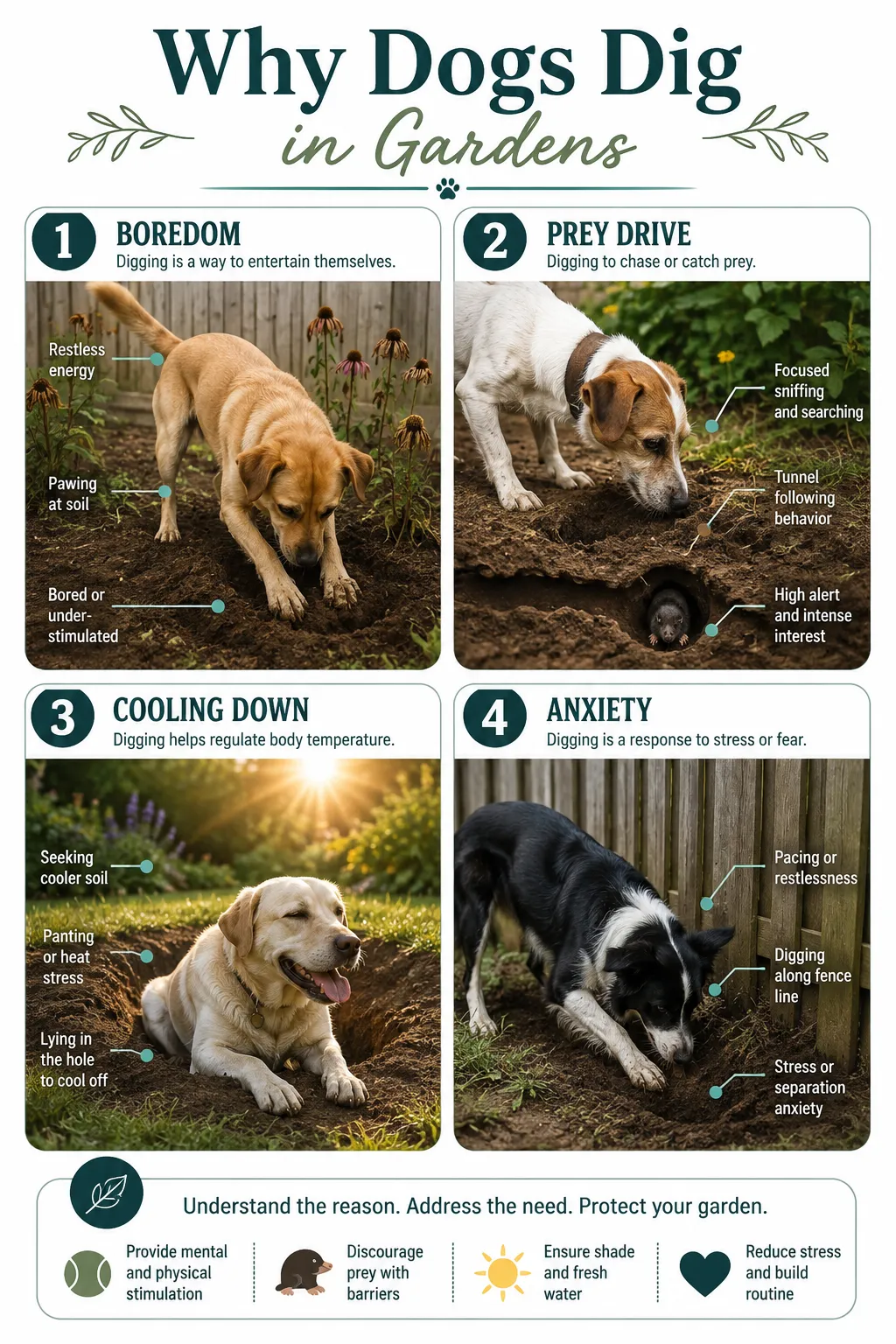
Dogs dig up plants for several distinct reasons, and the fix depends on which one is driving your dog. The most common causes are boredom, prey drive, cooling behavior, anxiety, and scent attraction to fertilizers or compost.
According to Battersea’s guide on how to stop your dog digging, digging is a completely natural behavior for dogs – it’s not misbehavior in the way we think of it. But understanding the trigger helps you choose the right hack.
Here’s a quick breakdown:
- Boredom or excess energy – The dog has nothing better to do.
- Prey drive – They smell something underground (moles, grubs, worms).
- Cooling down – On hot days, dogs dig to reach cooler soil beneath the surface.
- Anxiety or stress – Digging can be a self-soothing behavior.
- Scent attraction – Bone meal, blood meal, and compost smell irresistible to dogs.
Identifying the trigger first saves you from buying a dozen products that don’t address the actual problem.
What’s the Difference Between Digging and Uprooting Plants in Dogs?
Digging and uprooting are related but slightly different behaviors. Digging means the dog is pawing at the soil itself – usually for cooling, prey, or habit. Uprooting means the dog is specifically targeting a plant – pulling, chewing, or tossing it – which often signals scent attraction to fertilizers or simple play behavior.
If your dog is uprooting specific plants but ignoring others, check what you used to feed those plants. Bone meal and blood meal fertilizers are common culprits. Switching to a plant-based fertilizer often stops targeted uprooting almost immediately.
Is It Normal for Dogs to Dig Up Plants?
Yes, digging is completely normal dog behavior – especially in terriers, dachshunds, huskies, and other breeds with strong working instincts. According to Hartz’s advice on keeping dogs from digging in the garden, some breeds were literally developed to dig, so expecting them to stop entirely without an outlet is unrealistic.
That said, “normal” doesn’t mean you have to accept a destroyed garden. The goal is to redirect the behavior, not eliminate a natural instinct.
Hack 1 – Create a Designated Dig Pit
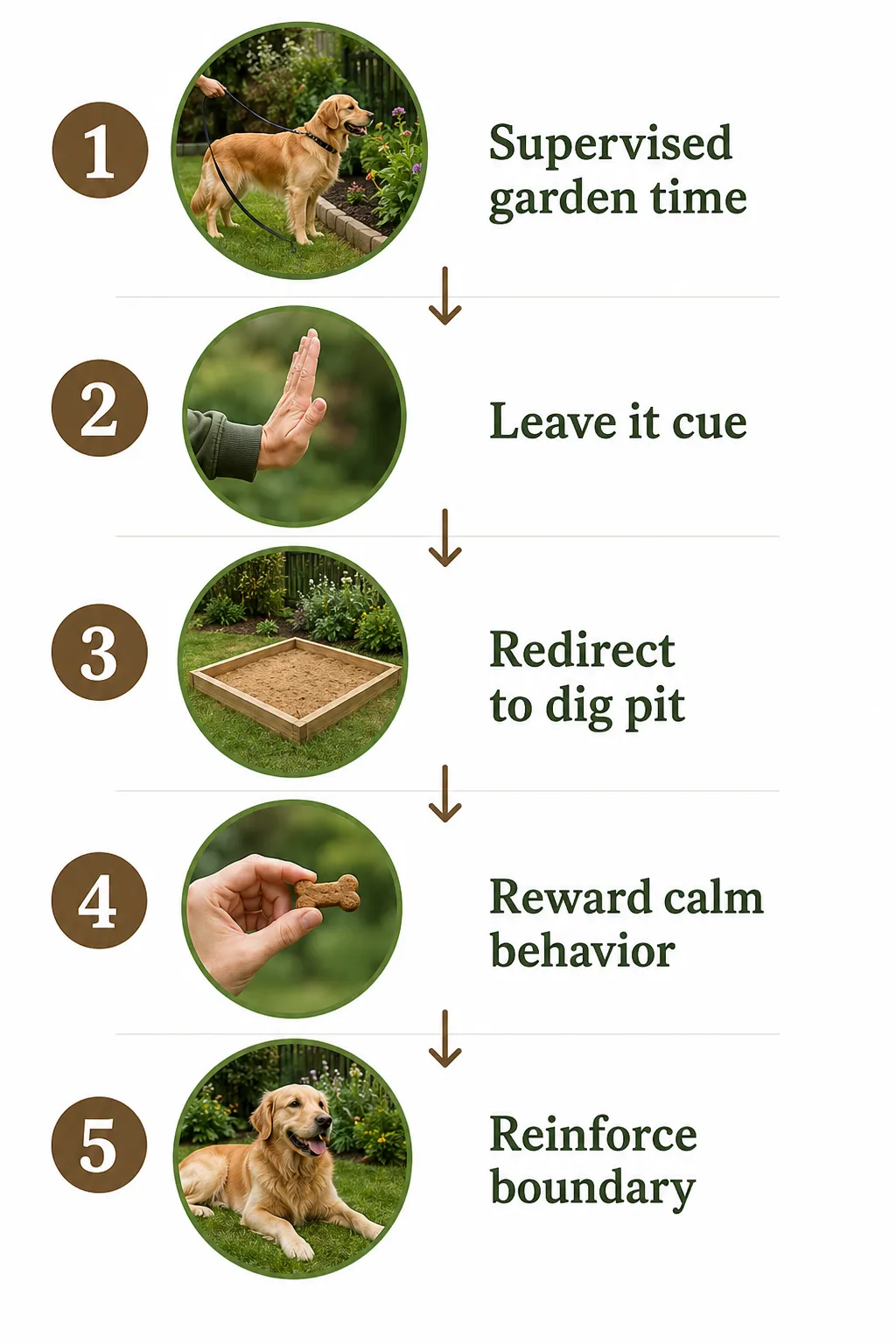
Give your dog one legal place to dig, and they’re far less likely to destroy the rest of the garden. A dig pit is simply a defined area – a sandbox, a loose-soil corner, or a raised box filled with soft dirt – where digging is actively encouraged.
To make it work:
- Choose a shaded spot your dog already gravitates toward.
- Fill it with loose, soft soil or play sand.
- Bury a few toys or treats just below the surface to make it exciting.
- When you catch your dog digging elsewhere, calmly redirect them to the pit and praise them for digging there.
This approach works especially well for boredom diggers and breed-driven diggers. It’s one of the most recommended strategies from professional dog trainers who address flower bed digging.
How to Stop a Dog from Digging Holes in the Yard – The Physical Barrier Approach
Physical barriers are one of the most reliable ways to keep a dog from digging up plants, especially in established garden beds. The key is making them effective without making your garden look like a construction zone.
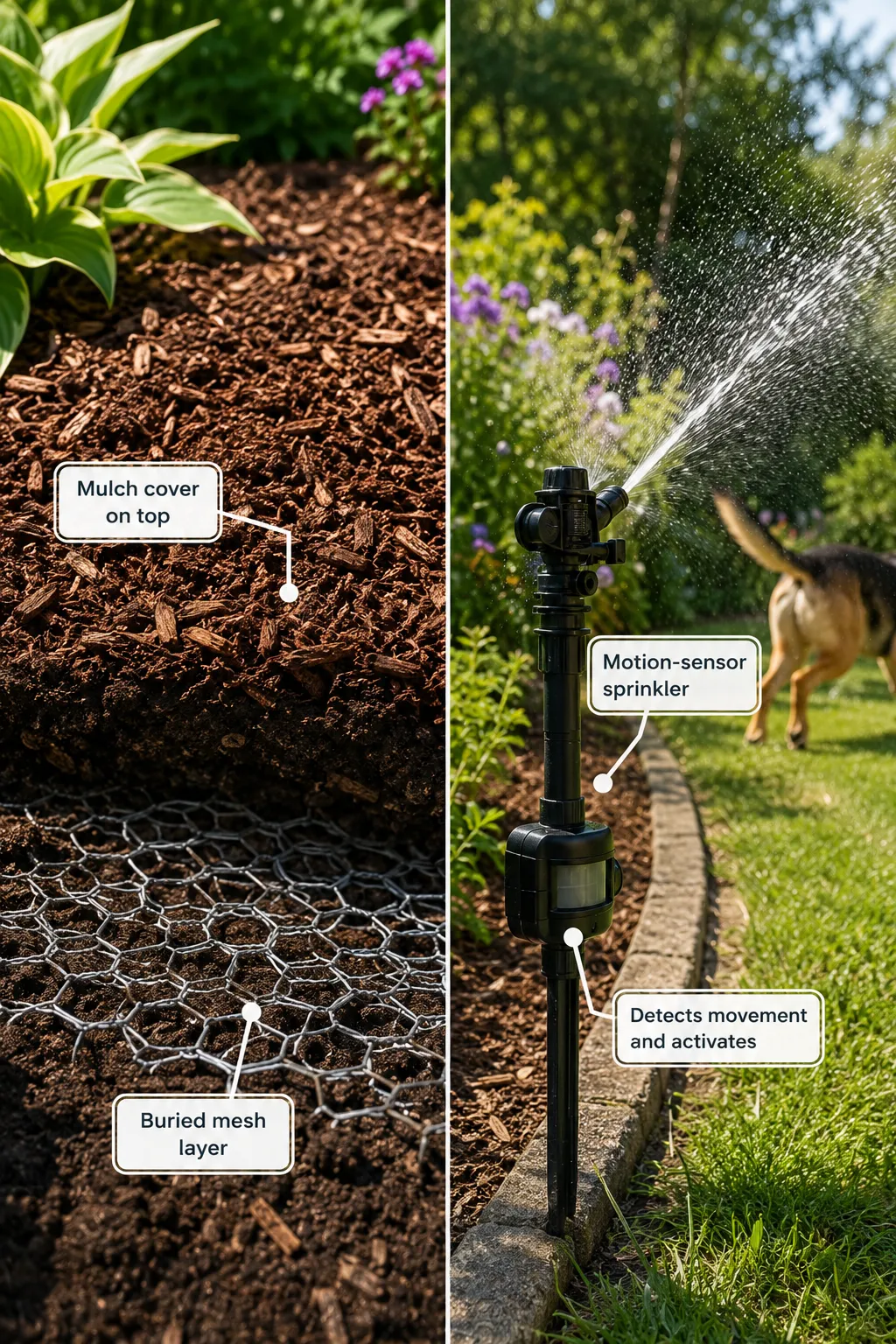
Buried mesh under mulch is the top choice. Lay galvanized hardware cloth or chicken wire flat on the soil surface, then cover it with 2-3 inches of mulch. Dogs hate the feel of wire under their paws and will quickly lose interest. The mulch hides it completely.
Edging and border stones create a psychological and physical boundary. Dogs tend to respect clear edges, especially when combined with dense planting right up to the border.
Decorative river rocks around plant bases make digging uncomfortable without any installation. Large smooth stones placed tightly around stems remove the loose-soil entry point dogs look for.
Quick tip: Chicken wire laid flat under mulch is one of the most cost-effective solutions – but make sure the edges are folded under or secured so they don’t become a hazard.
Should I Use Chicken Wire to Protect My Garden from Dogs?
Yes, chicken wire works well – but how you use it matters. Laying it flat under mulch (rather than upright as a fence) is the most effective approach for stopping digging. The wire makes the soil surface uncomfortable to paw at, and dogs typically give up after one or two attempts.
For upright use, chicken wire is less attractive visually. If you want a barrier that doesn’t look like fencing, consider decorative metal edging, woven willow borders, or low picket edging instead. These create a clear boundary without the industrial look.
Dog-Safe Deterrents for Garden Digging
The best dog-safe deterrents use scent or texture to make garden areas unappealing – without causing harm. According to tips from VetIQ on keeping dogs out of flower beds, scent-based deterrents work well for many dogs, though individual sensitivity varies.
Effective and safe options:
- Citrus peels – Most dogs dislike the smell of orange, lemon, or grapefruit. Scatter fresh peels around plant bases and replace weekly.
- Diluted white vinegar – Spray around garden edges (not directly on plants). Reapply after rain.
- Coffee grounds – Doubles as a mild fertilizer for acid-loving plants and deters many dogs.
- Commercial dog-repellent sprays – Look for products with natural bitter agents. Follow label instructions.
Does Cayenne Pepper Keep Dogs Away from Plants?
Cayenne pepper does deter many dogs because the capsaicin irritates their sensitive noses. However, it carries real risks – it can cause significant pain and irritation if a dog sniffs it directly, and it can be harmful to their eyes and respiratory system.
Most trainers and vets recommend avoiding cayenne pepper as a deterrent. Safer alternatives like citrus peels or commercial bitter sprays achieve a similar result without the risk of hurting your dog. If you’re looking for more guidance on keeping your dog safe from garden hazards, our article on 15 everyday foods that can kill your dog covers related safety topics worth knowing.
Will Motion Sensor Sprinklers Stop Dogs from Digging?
Motion-sensor sprinklers are one of the most effective hands-free deterrents for keeping dogs out of garden areas. They trigger a burst of water when movement is detected, which startles the dog without causing any harm. Most dogs learn to avoid the zone within a few days.
They work best when:
- The garden area is clearly defined and the sprinkler covers the full zone.
- You use them consistently (don’t turn them off during the day).
- You combine them with other deterrents during the learning phase.
The main downside is cost (basic models start around $30-$50) and the need to remember to turn them off before you walk through the garden yourself.
Do Ultrasonic Devices Work for Keeping Dogs Out of Gardens?
Ultrasonic devices emit a high-frequency sound triggered by motion. The evidence for their effectiveness is mixed. Some dogs are deterred, especially initially, but many habituate to the sound within a week or two and resume normal behavior.
They work better as part of a combined approach – paired with scent deterrents and physical barriers – rather than as a standalone solution. They’re also not a good choice if you have cats or other small animals in the garden, as the sound affects them too.
Garden Barriers That Don’t Look Like Fencing
You can create strong garden boundaries that look intentional and attractive rather than defensive. The goal is to use layout and design to make the garden naturally less accessible.
Options that blend in beautifully:
- Raised garden beds – Elevated 18+ inches, they’re simply out of reach for most dogs.
- Dense low hedging – Lavender, boxwood, or ornamental grasses planted tightly along borders create a natural wall.
- Decorative metal edging – Low-profile and clean-looking, it creates a clear physical edge.
- Woven willow or bamboo borders – Attractive, natural-looking, and surprisingly effective.
- Large container planting – Moving vulnerable plants into pots raised on stands removes them from the dig zone entirely.
The key insight from WikiHow’s guide to dog-proofing a garden is that combining layout changes with plant choices creates a garden that’s naturally harder to damage – without looking like a fortress.
Raised Garden Beds – The Best Dog-Proof Garden Idea
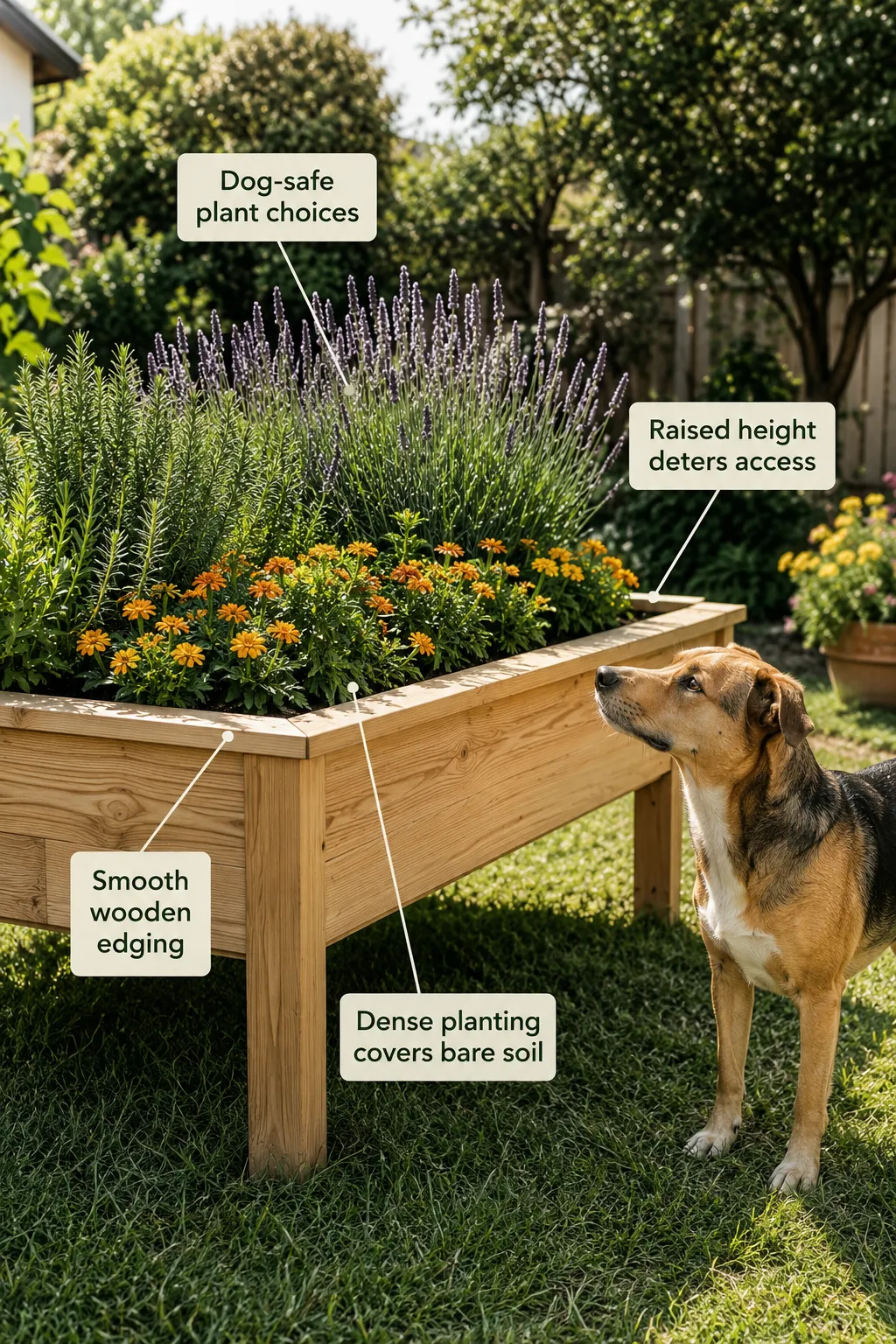
Raised garden beds are the single most effective structural solution for protecting plants from dogs. A bed raised 18-24 inches off the ground is simply too high for most dogs to dig into comfortably, and the defined edges create a clear boundary dogs tend to respect.
Beyond function, raised beds look intentional and add visual structure to any garden. They’re especially useful for protecting vegetables, herbs, and delicate flowering plants.
To maximize dog-proofing:
- Use smooth-sided materials (dogs can’t get purchase to climb).
- Fill beds densely so there’s no visible bare soil to attract attention.
- Add a layer of decorative stone mulch around the base.
For more smart ideas on managing your dog’s outdoor behavior, check out how to stop your dog from escaping – many of the same boundary-reinforcement principles apply.
Best Plants That Dogs Won’t Dig Up
Certain plants are naturally less attractive to dogs because they lack the strong scents that trigger digging, have unpleasant textures, or grow in dense mats that leave no loose soil exposed.
Dog-resistant plant choices:
- Lavender – Strong scent dogs tend to avoid, drought-tolerant, and beautiful.
- Rosemary – Prickly texture and strong smell deter most dogs.
- Marigolds – The scent is off-putting to many dogs and also repels certain insects.
- Ornamental grasses – Dense growth covers soil completely, leaving nothing to dig into.
- Creeping thyme – Ground cover that fills bare soil gaps and is tough enough to handle foot traffic.
Dense ground covers are particularly useful because they eliminate the bare soil that invites digging in the first place. According to Gardening Beyond’s advice on keeping dogs out of flower gardens, removing the visual and textural cue of loose soil is one of the most underrated prevention strategies.
What Plants Are Toxic to Dogs I Should Avoid Planting?
This is a critical safety question. Several common garden plants are toxic to dogs if ingested, and a dog that digs up a plant may chew on roots or leaves in the process.
Common toxic garden plants to avoid:
- Foxglove – Can cause serious cardiac issues.
- Sago palm – Extremely toxic, even small amounts can be fatal.
- Azalea and rhododendron – Toxic to dogs and cats.
- Daffodil bulbs – Highly toxic if chewed or ingested.
- Lily of the valley – Causes heart problems.
- Tulip bulbs – Mildly to moderately toxic.
If you’re redesigning your garden with a dog in mind, replacing high-risk plants with dog-safe alternatives is a smart first step. Our guide to 15 everyday foods that can kill your dog also covers related toxicity topics.
Can I Train My Dog to Not Dig in the Garden?
Yes – and training is one of the most durable long-term solutions for how to keep a dog from digging up plants. The most effective approach combines boundary training with redirection, not punishment.
Core training steps:
- Teach “leave it” – Practice this cue away from the garden first, then generalize it to garden boundaries.
- Use a long-line leash during supervised garden time so you can interrupt digging before it becomes a habit.
- Redirect immediately – The moment digging starts, calmly guide your dog to the dig pit or another activity.
- Reward calm garden behavior – Treat and praise your dog for walking through the garden without disturbing plants.
- Be consistent – Every person in the household needs to apply the same rules.
Delaware K9 Academy’s advice on keeping dogs from digging in flower beds emphasizes that punishment after the fact is ineffective – dogs don’t connect a correction to something they did minutes ago. Catching it in the moment and redirecting is what actually changes behavior.
For structured training support, The 14-Day Dog Training Plan That Actually Works is a great resource to work through alongside these garden-specific steps. You might also find 7 powerful playtime games that secretly train your dog useful for burning off the energy that leads to digging in the first place.
How to Keep Dog from Digging Up Plants – The Exercise and Enrichment Factor
A tired dog is a well-behaved dog – and this is especially true for digging. Many dogs dig simply because they have excess energy and no outlet. Increasing daily exercise and mental stimulation can reduce garden digging dramatically, even before you add any physical deterrents.
According to Animal Medical Center’s advice on stopping dogs from digging up flower beds, boredom is one of the top causes of repetitive digging, and enrichment activities are a first-line recommendation.
Practical enrichment ideas:
- Add a 15-minute sniff walk (slow, dog-led) to your daily routine – sniffing is mentally exhausting for dogs.
- Use puzzle feeders or scatter feeding at mealtimes.
- Rotate toys to keep them novel and interesting. Our guide on how to keep your dog occupied with toys has practical ideas.
- Try brain games for dogs that instantly boost focus and beat boredom on rainy days when outdoor exercise is limited.
If your dog digs specifically on hot days, they may be seeking cool ground. Providing a shaded rest area, a cooling mat, or a paddling pool gives them a better option than digging.
How to Keep Dog from Digging Up Plants – Combining All 9 Hacks
Here’s a quick reference for all nine strategies covered in this guide:
| Hack | Best For | Effort Level |
|---|---|---|
| 1. Designated dig pit | Boredom/breed-driven diggers | Low |
| 2. Buried chicken wire under mulch | Any garden bed | Medium |
| 3. Raised garden beds | Vegetables, herbs, delicate plants | Medium-High |
| 4. Motion-sensor sprinklers | Persistent diggers, large areas | Low (after setup) |
| 5. Scent deterrents (citrus, vinegar) | Scent-attracted diggers | Low |
| 6. Dense planting and ground covers | Removing bare soil entry points | Medium |
| 7. Decorative garden barriers | Aesthetic-conscious gardens | Low-Medium |
| 8. Training (leave it + redirection) | Long-term behavior change | Medium (ongoing) |
| 9. Exercise and enrichment | Boredom-driven digging | Low-Medium |
FAQ
Q: What is the quickest fix to stop my dog digging up plants today?
Scatter fresh citrus peels around affected plants and lay a flat piece of chicken wire over the soil surface. These two steps combined stop most dogs immediately while you work on longer-term solutions.
Q: Will vinegar hurt my plants if I spray it as a deterrent?
Undiluted vinegar can damage or kill plants – always dilute it (roughly 1 part vinegar to 3 parts water) and spray around the perimeter of beds rather than directly on plants or soil near roots.
Q: My dog only digs in hot weather. What’s going on?
Your dog is almost certainly seeking cool soil. Provide a shaded rest area, a cooling mat, or a small paddling pool. This addresses the root cause better than any deterrent.
Q: How deep should I bury chicken wire to stop digging?
You don’t need to bury it deep – laying it flat on the soil surface and covering with 2-3 inches of mulch is enough. The sensation of wire underfoot is the deterrent, not the depth.
Q: Can I use coffee grounds around all my plants?
Coffee grounds work well around acid-loving plants (roses, blueberries, azaleas) but can alter soil pH if overused. Apply a thin layer and avoid piling them up against plant stems.
Q: My dog digs at the base of one specific plant. Why?
Check if you used bone meal or blood meal fertilizer on that plant. These smell like prey to dogs. Switch to a plant-based fertilizer and the targeted digging usually stops.
Q: Are ultrasonic repellers safe for dogs?
Yes, ultrasonic devices don’t cause physical harm. However, many dogs habituate to the sound quickly. Use them as part of a combined approach rather than a standalone solution.
Q: How long does it take to train a dog to stay out of the garden?
With consistent daily practice, most dogs show significant improvement within 2-4 weeks. Breeds with strong digging instincts (terriers, huskies, dachshunds) may take longer and benefit most from having a designated dig pit as an outlet.
Q: Is it okay to punish my dog for digging?
Punishment after the fact doesn’t work – dogs can’t connect a correction to something they did minutes ago. Calm redirection in the moment, combined with rewarding good behavior, is far more effective and kinder.
Q: What ground cover is best for stopping dogs from digging?
Creeping thyme and ornamental grasses are top choices – they grow dense enough to cover bare soil completely, are tough enough to handle some foot traffic, and don’t attract dogs with strong scents.
Conclusion
Knowing how to keep a dog from digging up plants doesn’t require turning your garden into a fortress. The most effective approach layers a few simple strategies – a dig pit for redirection, buried mesh for physical deterrence, raised beds for vulnerable plants, and consistent training to reinforce boundaries.
Start with the hack that matches your dog’s main trigger. Boredom digger? Build the pit and increase enrichment first. Scent-attracted? Switch your fertilizer and add citrus deterrents. Heat seeker? Add shade before anything else.
Combine two or three of these hacks and you’ll see results within days. And remember – your dog isn’t trying to ruin your garden. They’re just being a dog. Work with that instinct rather than against it, and both your plants and your pup can thrive in the same space.
For more on managing your dog’s outdoor behavior and keeping them happy and engaged, explore activities for bored dogs and 10 dog parent hacks smart owners use to raise happier pups.