Last updated: October 1, 2026
Quick Answer
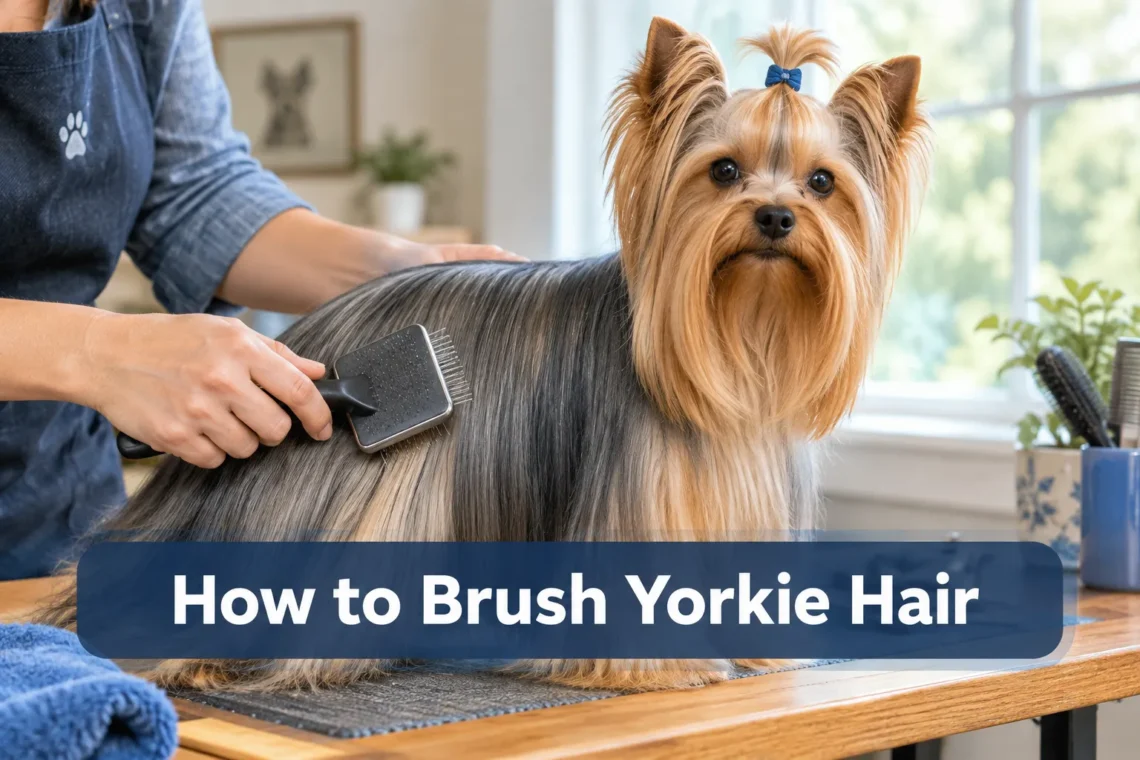
Brushing a Yorkie the right way means working in thin sections from the ends of the hair up to the skin, using a slicker brush followed by a metal comb, on a slightly dampened coat. Do this daily for seven minutes and you’ll stop mats before they start. Skip even a few days on a long-coated Yorkie and tangles can lock in fast, especially behind the ears and under the legs.
I learned how to brush Yorkie hair the hard way, after my first attempt left my dog’s coat full of rice-sized knots I didn’t catch for a week. Once I switched to a short daily routine instead of a once-a-week marathon session, the mats basically stopped showing up.
Key Takeaways
- A slicker brush plus a metal comb is the core combo most groomers recommend for Yorkie coats, according to AKC’s grooming guidance.
- Daily brushing is the standard for Yorkies with long, silky show-style coats; puppy cuts need less.
- Lightly dampen the coat with water or detangling spray before brushing to cut down on breakage and static.
- Brush section by section, from ends to skin, never just skim the top layer.
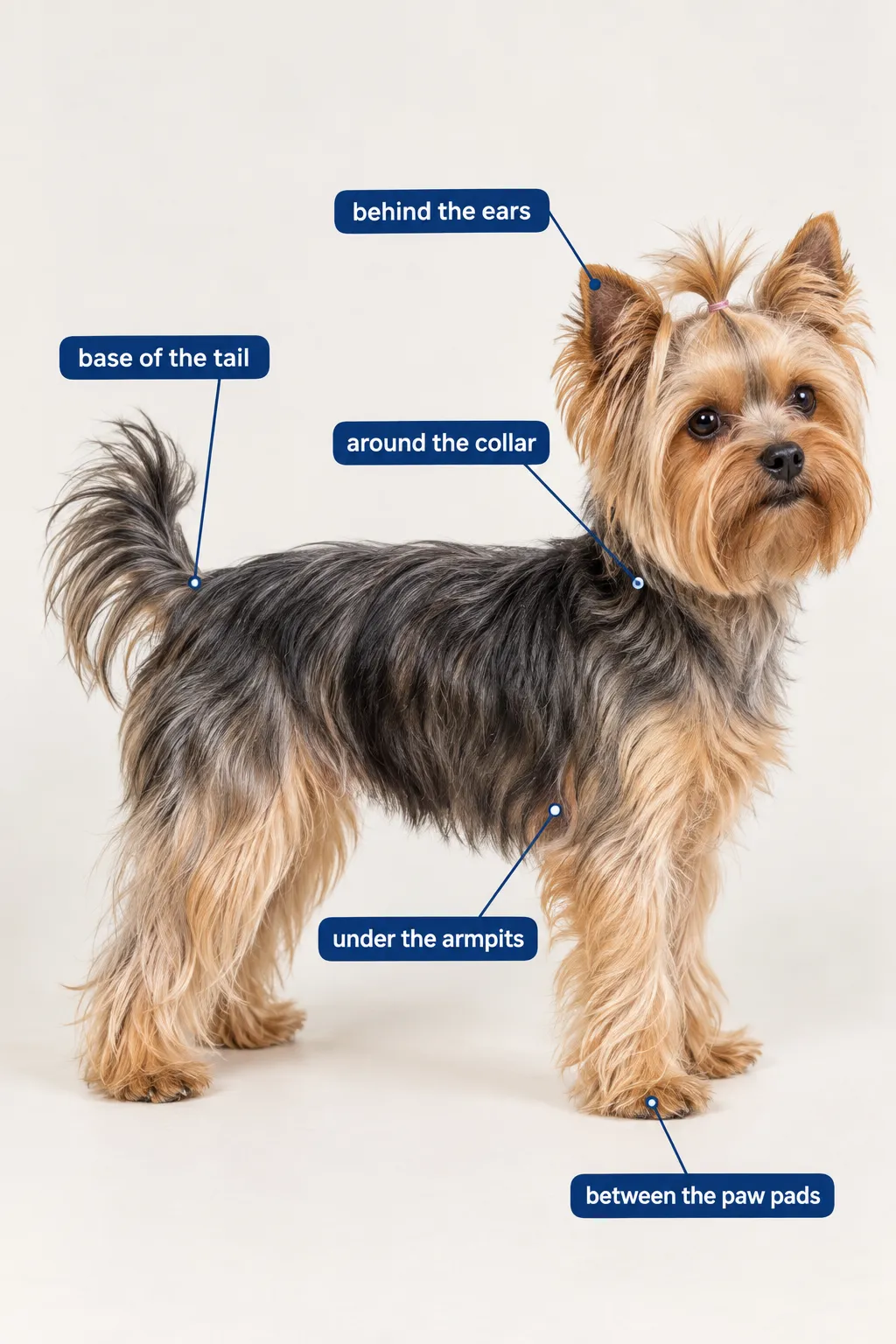
- High-risk mat zones are behind the ears, armpits, collar area, tail base, and between paw pads.
- Mats must be worked out before a bath, not after, or they tighten into a solid clump.
- A consistent short routine beats a long weekly session for both the dog’s comfort and your sanity.
What’s the Best Brush for Yorkie Hair?
The best brush for Yorkie hair is a quality slicker brush for the main coat, paired with a fine metal comb for finishing and mat checks. This combo handles the Yorkie’s fine, silky, single-layer coat without snagging it.
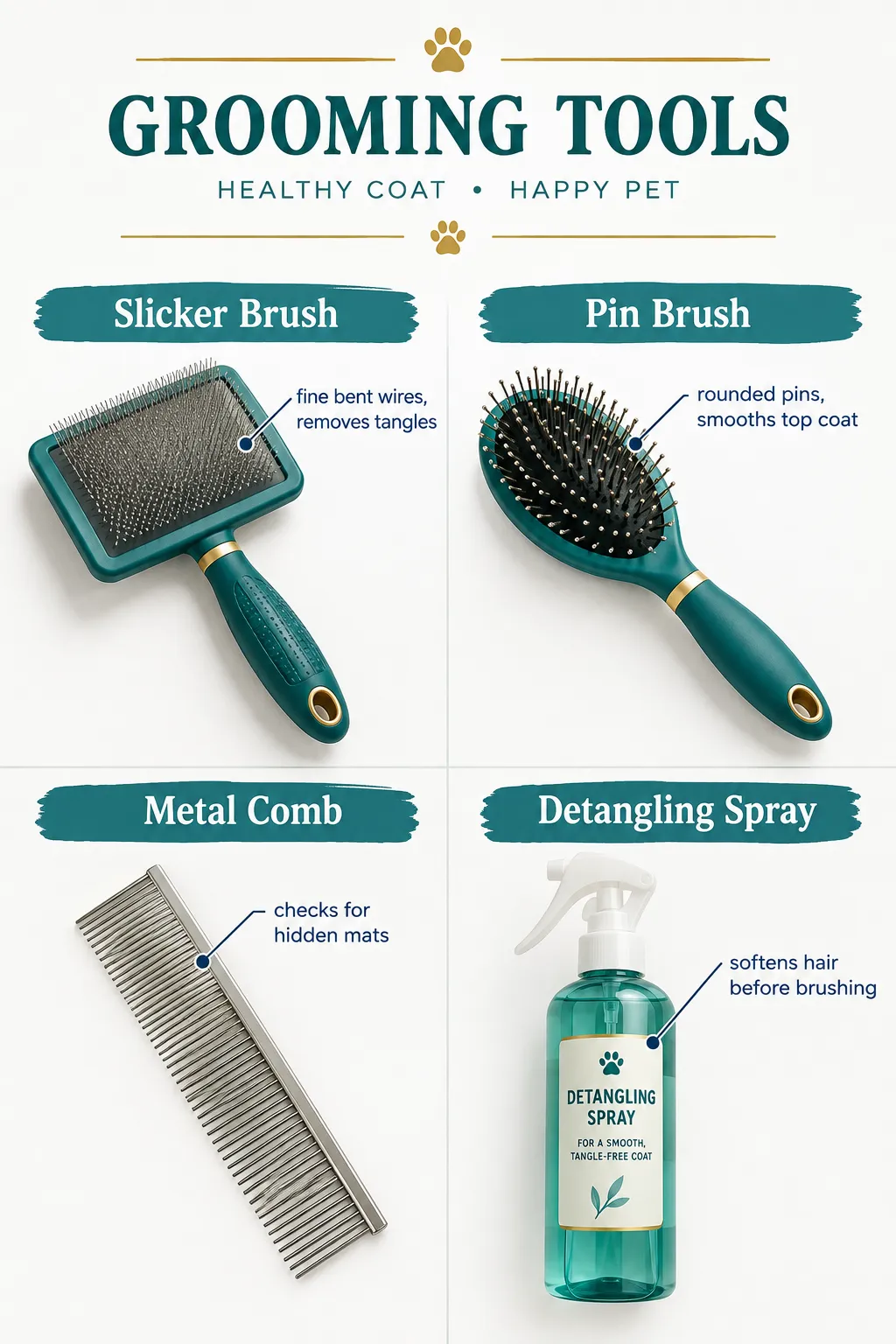
Yorkies have a human-hair-like texture that tangles easily but doesn’t have a thick undercoat to protect the skin, so the wrong tool can scratch or pull, as noted by PetMD’s breed profile.
Slicker Brush vs Pin Brush: What’s the Difference for Yorkies?
A slicker brush has fine, slightly bent wire bristles that pull through tangles and loose hair. A pin brush has longer, rounded metal pins that mostly smooth the top coat without removing deep knots.
Choose a slicker brush if your Yorkie’s coat is long or prone to mats. Choose a pin brush only as a quick daily touch-up tool on a short, well-maintained puppy cut.
Can You Use a Human Hair Brush on a Yorkie?
No, you shouldn’t use a human hairbrush on a Yorkie. Human brushes aren’t designed for a dog’s thinner skin and can pull harder than a slicker brush, causing discomfort or small scrapes.
Stick to dog-specific grooming tools. They’re inexpensive and built with bristle spacing that matches a Yorkie’s coat density, something Petdirect’s grooming guide also recommends for home grooming kits.
Best Brush for Yorkie Puppy Hair vs Adult Yorkie
Yorkie puppies have softer, thinner hair that mats less often, so a soft pin brush or soft slicker is usually enough. Adult Yorkies with full-length coats need a firmer slicker brush plus a metal comb for the denser, longer hair.
- Puppy coat (under 1 year): soft slicker or pin brush, gentle pressure
- Adult long coat: firm slicker brush + metal comb
- Adult puppy-cut coat: pin brush for quick daily pass, slicker for weekly deep check
How Often Should You Brush a Yorkie?
Yorkies with long, silky coats need brushing every day. Yorkies kept in a short puppy cut can often get by with brushing two to three times a week.
The coat length is the deciding factor, not the dog’s age or size. A daily pass also distributes natural oils through the coat and doubles as a quick skin check, something groomers flag as a hidden benefit of staying consistent.
Do All Yorkies Need Daily Brushing or Just Long-Haired Ones?
Not every Yorkie needs daily brushing. Only Yorkies with the traditional long, flowing coat require it daily to prevent mats. Dogs with a trimmed puppy cut can skip a day or two without major risk, as long as you still check the usual trouble spots.
If you’re weighing a shorter cut specifically to cut down on grooming time, that’s a completely reasonable trade-off, and it’s one many pet owners make once they see how much upkeep a long show coat takes, per Yorkshire Terrier Central’s grooming guide.
How to Brush Yorkie Hair Without Hurting Them (The 7-Minute Routine)
You can brush a Yorkie without causing pain by working in small sections, supporting the skin with one hand while brushing with the other, and always moving from the ends of the hair toward the skin, never the reverse.
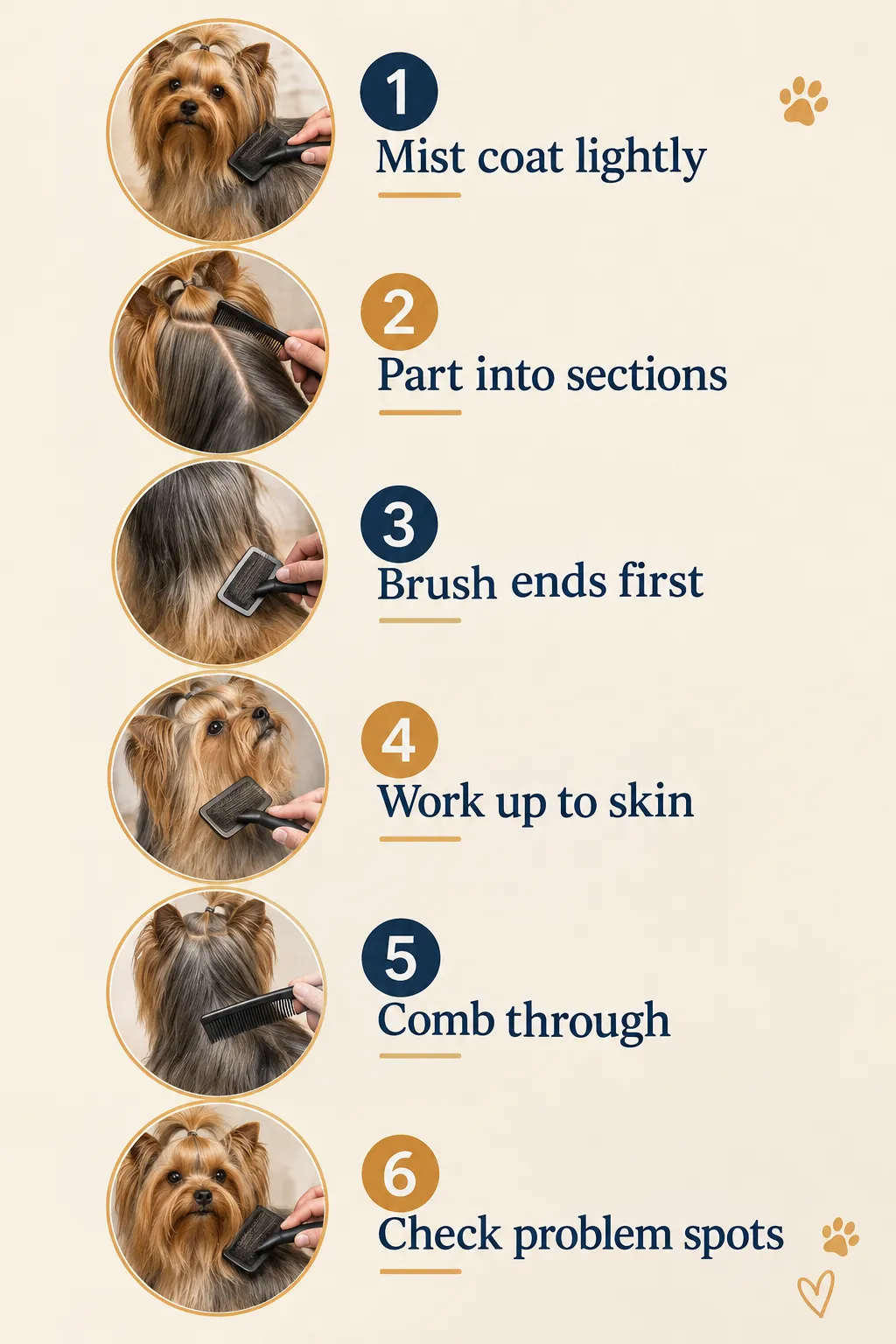
Here’s the full seven-minute routine I use, broken into simple steps.
- Mist the coat lightly with water or a leave-in detangling spray (about 30 seconds).
- Part the hair into small sections using your fingers or a comb (1 minute).
- Brush the ends first with the slicker brush to loosen any surface tangles (1.5 minutes).
- Work upward toward the skin in the same section, holding the base of the hair to avoid tugging (2 minutes).
- Follow with the metal comb to catch anything the slicker missed (1 minute).
- Check the high-risk zones: behind the ears, armpits, collar, tail base, paws (1 minute).
- Reward and release your dog, so brushing stays a positive habit.
Common mistake: brushing only the top layer of hair and skipping the undercoat near the skin. The surface can look smooth while a mat is already forming closer to the body.
If you’re also building other short daily habits with your dog, this fits well alongside a busy owner’s daily dog routine or a quick dog teeth brushing habit.
Why Does My Yorkie Get Mats Even Though I Brush Regularly?
Mats usually form in a few specific spots that get missed during a quick, surface-level brush. If you’re only brushing the top coat and skipping the skin-level layer in tight areas, tangles can build underneath without being visible.
The usual culprits:
- Behind the ears, where friction from collars and head-shaking causes rubbing
- Armpits and groin, where skin folds trap loose hair
- Collar line, from daily friction with a harness or collar
- Tail base, often missed because it’s awkward to reach
- Between paw pads, especially after walks in wet grass or mud
Edge case: even dogs brushed daily can mat in these zones if the brush never actually touches the skin, it just glides over the top layer.
What Do You Do If Your Yorkie’s Hair Is Already Matted?
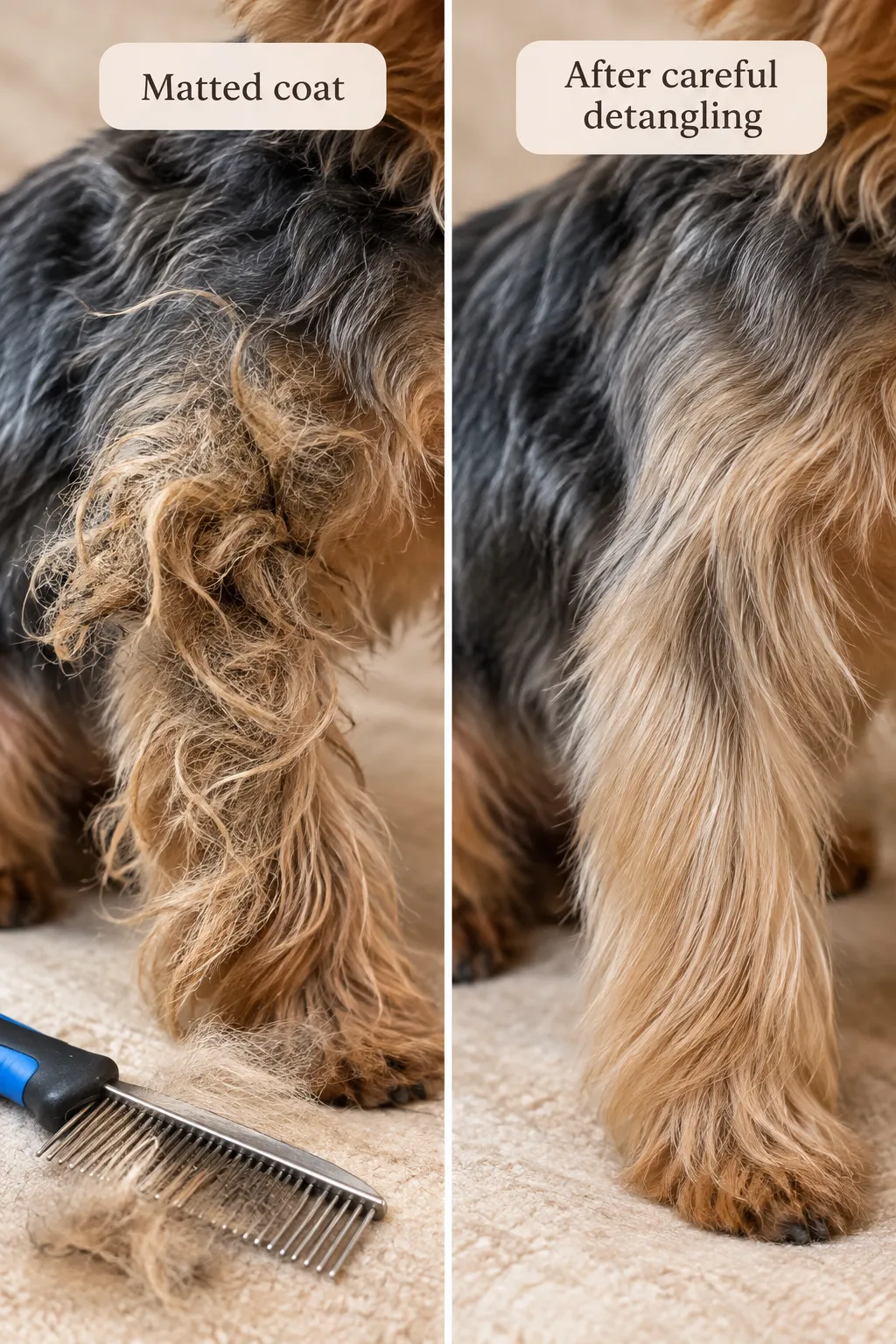
Work small mats out gently with your fingers first, then a detangling spray, then a mat splitter or wide-tooth comb. Never bathe a Yorkie with mats still in the coat, since water tightens them into a denser clump.
Steps for dealing with an existing mat:
- Spray the mat generously with detangling spray and let it sit a minute.
- Use your fingers to gently separate the smallest strands at the edge.
- Switch to a metal comb, working from the outside of the mat inward.
- For stubborn mats, use a mat splitter tool rather than scissors, to avoid cutting skin.
- If the mat is tight against the skin and won’t budge, a professional groomer should handle it rather than risking injury.
If your Yorkie’s coat gets matted often despite effort, the same core principles apply across other silky-coated breeds, like the routine described in this Maltese grooming guide for preventing mats or this Havanese coat care guide.
Is It Better to Brush a Yorkie Wet or Dry?
Brushing on a lightly damp coat is generally better than brushing completely dry. A light mist cuts down on static, reduces hair breakage, and helps the slicker brush glide through tangles instead of snapping fine hairs.
This doesn’t mean soaking wet. A spray bottle with water or a leave-in conditioning spray is enough, a point echoed in Royal Canin’s coat care advice for Yorkshire Terriers.
Can You Brush a Yorkie Right After a Bath?
Yes, and it’s actually one of the best times to brush, but only after towel-drying the coat to damp, not dripping wet. Brushing a soaking-wet coat stretches and weakens the hair strands.
Decision rule: brush before the bath to remove existing tangles, then brush again once the coat is towel-dried but still slightly damp, working in the same ends-to-skin direction.
How to Brush a Yorkie That Hates Being Brushed
Start with very short sessions, as little as one to two minutes, paired with treats, and slowly build up to the full seven-minute routine over a couple of weeks. Rushing a dog that’s already anxious about brushing usually backfires.
Practical tips that help:
- Brush right after a walk or play session, when your dog is tired and calmer
- Use a calm, quiet voice and keep the first few sessions short on purpose
- Stop before your dog gets frantic, even if you didn’t finish the whole coat
- Pair brushing with a high-value treat your dog only gets during grooming
Example: if your Yorkie bolts the moment the brush appears, try just holding the brush near them for a few sessions first, with treats, before you ever touch the coat with it.
What Happens If You Don’t Brush a Yorkie?
Skipping brushing lets loose hair clump together into mats, which pull on the skin, trap moisture, and can lead to irritation or skin infections underneath. In long-coated Yorkies, neglect for even a week or two can create mats that are too tight to remove without cutting.
Beyond mats, an unbrushed coat traps dirt and dander against the skin, which can worsen itching. If you’re also tracking general comfort issues in your dog, it’s worth knowing the early signs of pain in dogs, since a tight mat pulling on the skin is a real source of discomfort many owners miss.
Professional Grooming Cost vs Brushing at Home
Professional grooming for a Yorkie typically costs more per visit than the cost of basic home tools, but it doesn’t replace daily brushing between appointments. Groomers handle trims, bath, and deep mat removal, while daily home brushing is what actually prevents mats from forming in the first place.
| Approach | Best for | Frequency |
|---|---|---|
| Daily home brushing | Mat prevention, bonding, early health checks | Every day, ~7 minutes |
| Professional grooming | Trims, deep mat removal, bath, nails | Every 4 to 6 weeks |
Decision rule: choose home brushing as your daily baseline, and treat professional grooming as a maintenance visit, not a substitute for the routine. Skipping daily brushing between grooming appointments is the number one reason mats come back.
Learning the basics early also helps if you’re raising a puppy, since good habits formed during the first months of training make grooming sessions much easier as the coat grows in.
FAQ
Do Yorkies shed a lot?
No, Yorkies shed very little compared to most breeds, which is why loose hair tends to get trapped in the coat as mats instead of falling out, according to Canine Journal’s shedding breakdown.
How long should a Yorkie brushing session take?
A daily session of about five to seven minutes is enough if done consistently. Weekly deep sessions take longer, especially if mats have already formed.
What’s the biggest brushing mistake owners make?
Brushing only the surface layer and skipping the hair closest to the skin, which is exactly where mats usually start.
Can I brush my Yorkie too often?
Not really, daily brushing is standard for long coats and won’t damage healthy hair as long as you’re gentle and not yanking through tangles.
Should I trim my Yorkie’s coat to make brushing easier?
Yes, a shorter puppy cut genuinely reduces brushing time and mat risk, and it’s a common choice for owners who want lower maintenance.
Does diet affect Yorkie coat health?
A balanced diet supports healthy skin and coat, which can make hair less prone to breakage and tangling, per a-z-animals’ grooming guide.
Is a detangling spray necessary?
It’s not required but makes brushing noticeably easier and reduces breakage, especially on longer coats, as suggested by Jungle Aquatics’ coat maintenance tips.
Conclusion
Learning how to brush Yorkie hair properly comes down to one habit: a short, consistent daily session beats an occasional marathon brush-out every time. Use a slicker brush and metal comb, dampen the coat first, and always work from the ends toward the skin.
Check the high-risk zones (ears, armpits, collar, tail base, paws) every single day, even if you don’t have time for a full brush-out. That alone catches most mats before they tighten up.
Start tonight with just the seven-minute routine above. If your Yorkie resists, shrink the session to two minutes and build up slowly. Consistency matters far more than a perfect technique on day one.
For more on keeping other silky-coated breeds mat-free, check out the Yorkie personality traits guide and this long-haired coat care routine for comparison.