Last updated: September 19, 2026
Quick Answer: Stubborn dog training tips that actually work focus on finding the right motivation, keeping sessions short, saying commands only once, and being consistent every single time. Most dogs labeled “stubborn” are actually under-motivated, confused, or overstimulated – not defiant. With the right approach, even the most resistant dog can learn.
Key Takeaways
- “Stubborn” often means under-motivated, confused, bored, or anxious – not willfully disobedient
- Positive reinforcement consistently outperforms punishment for stubborn dogs
- Short sessions of 3-5 minutes work better than long, exhausting ones
- High-value treats like chicken, cheese, or freeze-dried liver are non-negotiable for resistant dogs
- Say a command once – repeating it teaches your dog to ignore you
- Start training in a quiet, low-distraction space before adding complexity
- Social rewards like petting and praise matter as much as food
- Rule out pain, anxiety, or health issues before labeling a dog stubborn
- Older dogs absolutely can learn new behaviors – age is not a barrier
- Consistency across all family members is one of the biggest make-or-break factors
- Professional trainers are worth considering when behavior is severe or safety is a concern
What Makes a Dog Stubborn vs Just Not Trained
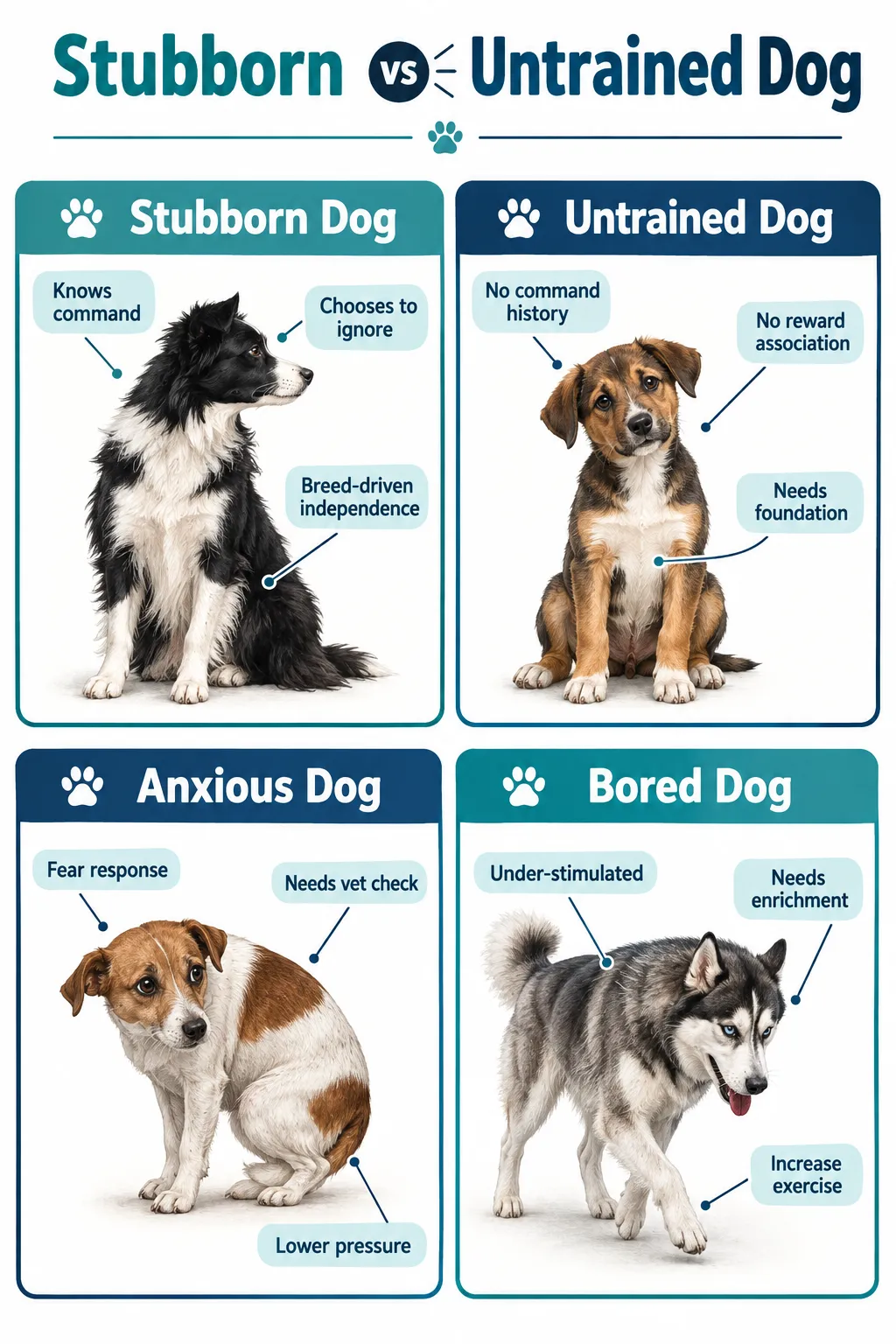
A dog that knows a command but chooses not to follow it is showing stubborn behavior. A dog that has never been taught the command simply doesn’t know what you want.
The difference matters because the fix is different. An untrained dog needs foundation work. A stubborn dog needs better motivation, clearer communication, or a check for underlying issues.
Research published in early 2026 in Frontiers in Veterinary Science found that what looks like stubbornness often reflects human inconsistency more than canine defiance. When owners are unpredictable with rules or rewards, dogs stop trusting that compliance is worth the effort.
Signs your dog knows the command but is choosing to ignore it:
- Performs the behavior reliably at home but not outside
- Looks at you, then looks away before ignoring the cue
- Responds when you have a treat visible but not when empty-handed
- Obeys for one family member but not another
Is My Dog Stubborn or Does It Have Anxiety or Health Issues
Before diving into stubborn dog training tips, rule out physical and emotional causes first. A dog in pain, a dog with undiagnosed hearing loss, or a dog experiencing anxiety can all look “stubborn” when they’re actually struggling.
Check these first:
- Has your vet ruled out joint pain, ear infections, or vision/hearing changes?
- Does your dog shut down in new environments or around strangers?
- Is the “ignoring” happening only in specific situations (loud spaces, around other dogs)?
If your dog seems fearful or anxious rather than independent, lower-pressure training with shorter sessions and extra patience is the right call – not more corrections.
How to Know If Your Dog Is Truly Stubborn or Just Bored
A bored dog and a stubborn dog look almost identical. Both will ignore commands, disengage quickly, and seem uninterested in training.
The key difference: a bored dog perks up immediately when something novel or exciting is introduced. A truly independent, stubborn dog may still resist even when you bring out the good stuff.
Try these quick tests:
- Swap your regular kibble reward for real chicken. Does engagement jump?
- Switch from verbal commands to hand signals for dogs – sometimes novelty alone resets attention
- Add a short game of tug before training. Does focus improve?
If any of these work, your dog isn’t stubborn – they’re under-stimulated. Check out 12 brain games for dogs that boost focus and beat boredom for ideas that help.
If you’re serious about breaking through resistance for good, check out this Free Dog Training Workshop – a first-of-its-kind online program that uses the same methods service dog trainers rely on to stop bad behaviors and build real obedience.
Best Stubborn Dog Training Tips That Actually Work
These 11 tips are built around what the research and experienced trainers actually support – not guesswork.
Tip 1: Find What Your Dog Truly Values
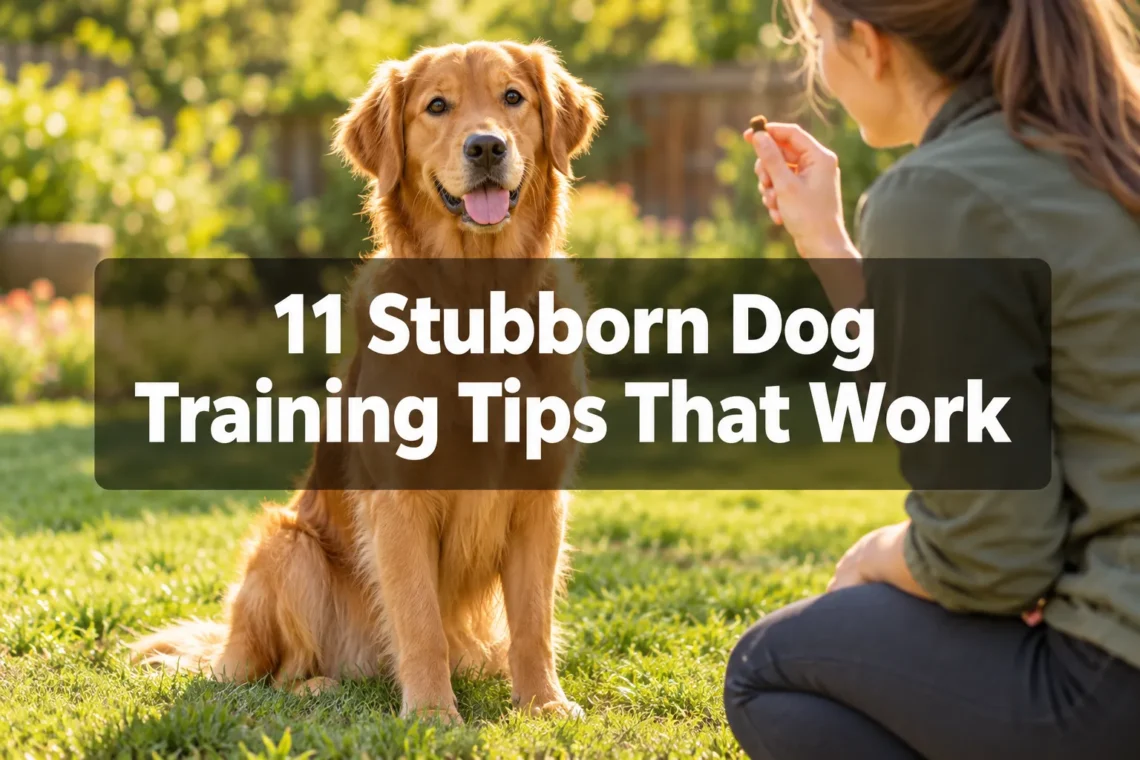
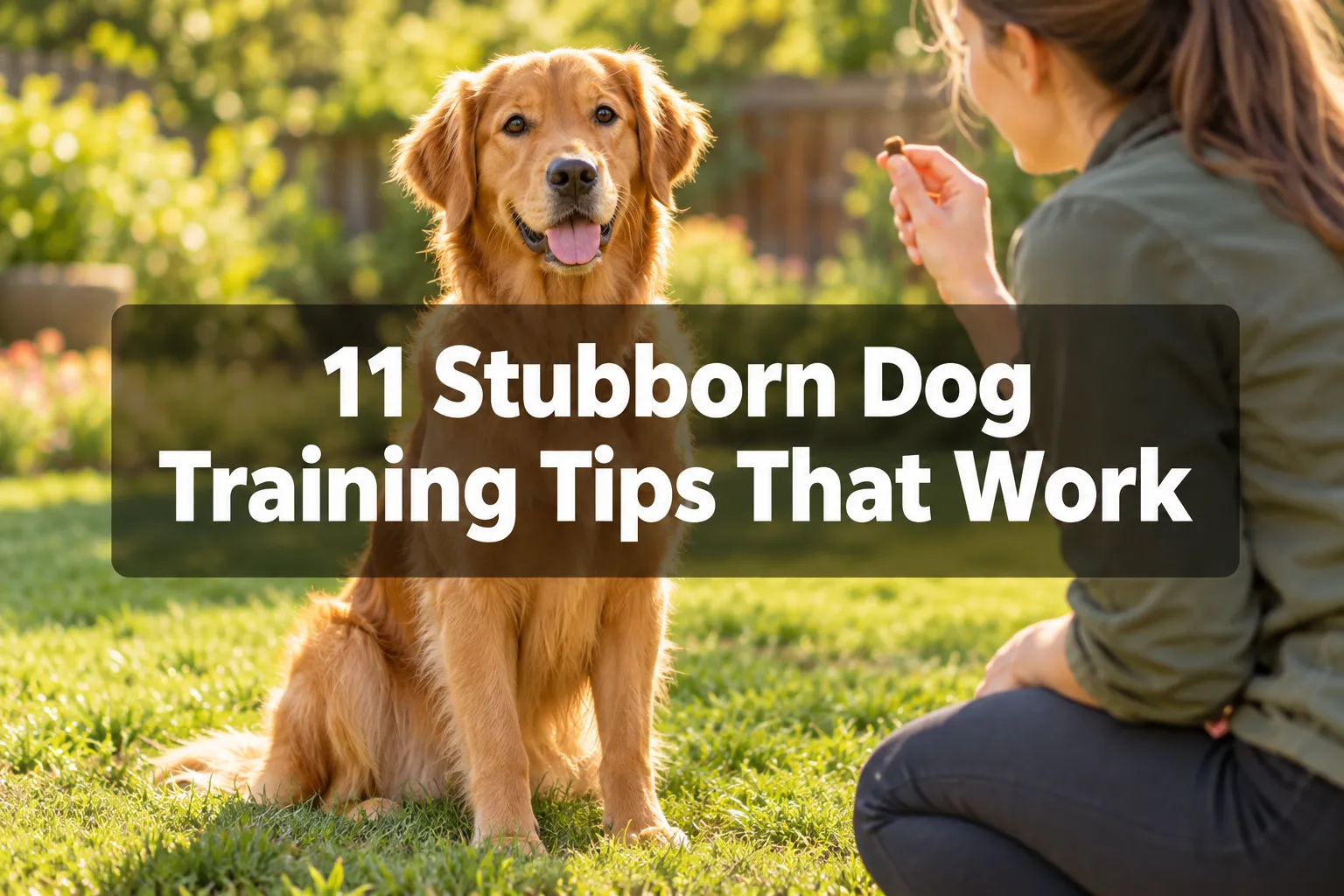
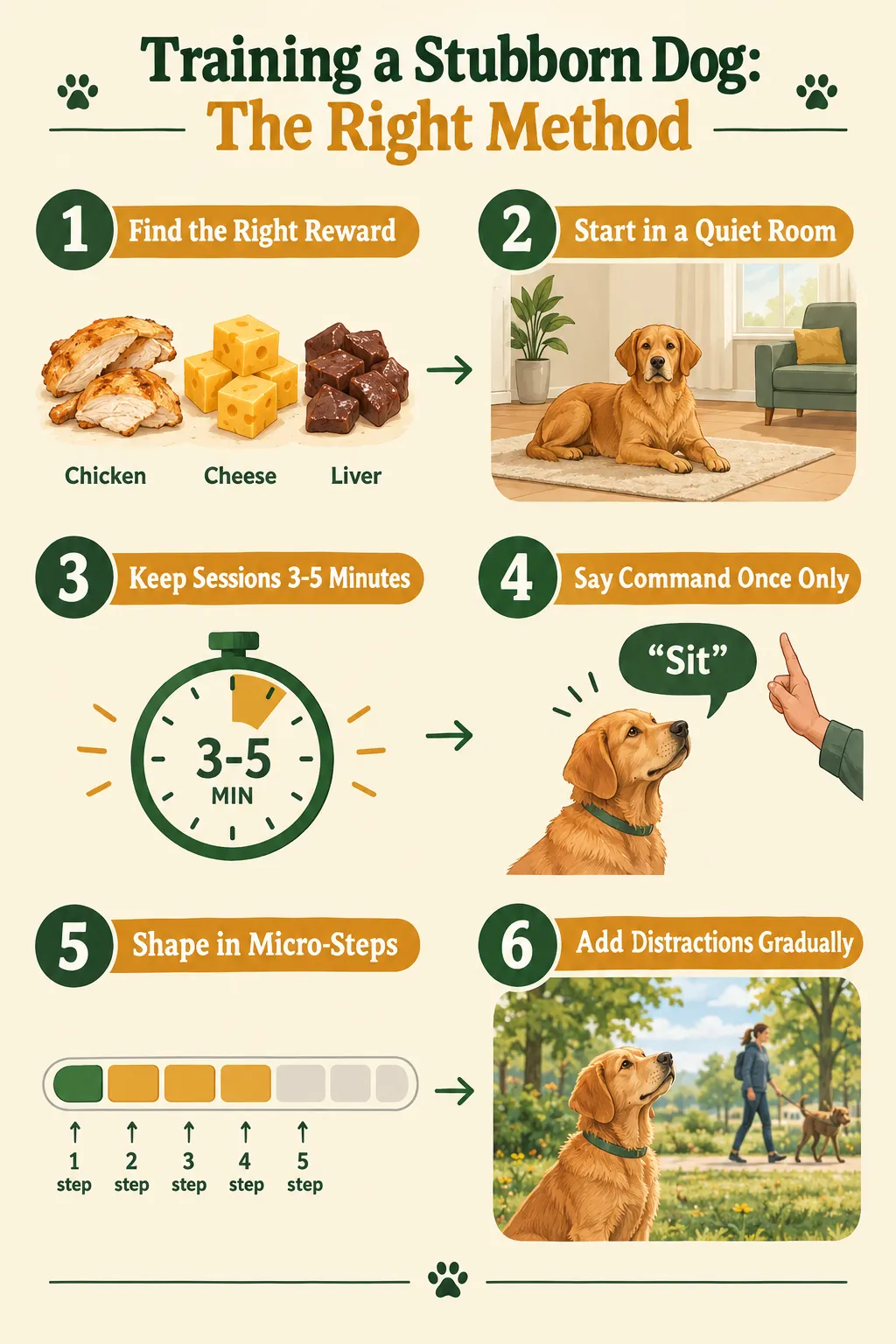
Every dog has a currency. For most stubborn dogs, regular kibble isn’t enough. High-value rewards like chicken, cheese, or freeze-dried liver are often the difference between a dog that ignores you and one that locks in.
Some dogs are toy-motivated. Some want social praise. Try different rewards and watch your dog’s reaction – their body language will tell you what works.
Tip 2: Say the Command Once
This is one of the most important stubborn dog training tips most owners miss. Repeating “sit, sit, sit, SIT” teaches your dog that the first few repetitions don’t count.
Say the cue once, wait a few seconds, and if there’s no response, reset and try again. Consistency here is critical – your dog needs to learn that responding the first time is what earns the reward.
Tip 3: Keep Sessions Short
Three to five minutes, several times a day, beats one long 30-minute session every time. Short, focused sessions match dogs’ natural attention spans and prevent the frustration and boredom that look like stubbornness.
End every session on a win – even if that means asking for something easy right before you stop.
Tip 4: Start in a Quiet Environment
Many dogs that seem stubborn outdoors perform perfectly at home. That’s not stubbornness – that’s overstimulation.
Start every new skill in a low-distraction space like a quiet room or fenced yard. Only add distractions (other people, other dogs, street noise) after your dog is responding reliably in calm conditions.
Tip 5: Use Shaping and Micro-Steps
Don’t ask for the full behavior right away. Break it into tiny, achievable pieces and reward each small step forward.
For example, teaching a stubborn dog to “down” might start with rewarding just a head dip, then a slight crouch, then a full down. This approach – called shaping – keeps dogs engaged and builds momentum instead of frustration.
Tip 6: Add Social Rewards
Research from June 2024 found that verbal praise and petting significantly improve dogs’ learning efficiency. Stubborn dogs often respond better when training includes genuine affection alongside food.
Don’t just toss a treat and move on. Make a moment of it – a quick scratch behind the ears, an enthusiastic “yes!” – and watch engagement improve.
Tip 7: Be Consistent Across the Whole Family
If one person lets the dog jump on the couch and another corrects it, the dog isn’t being stubborn – it’s responding to mixed signals. Consistency across all family members is one of the single biggest factors in whether training sticks.
Write down the rules. Make sure everyone uses the same cues, the same tone, and the same consequences.
Tip 8: Never Punish – Redirect Instead
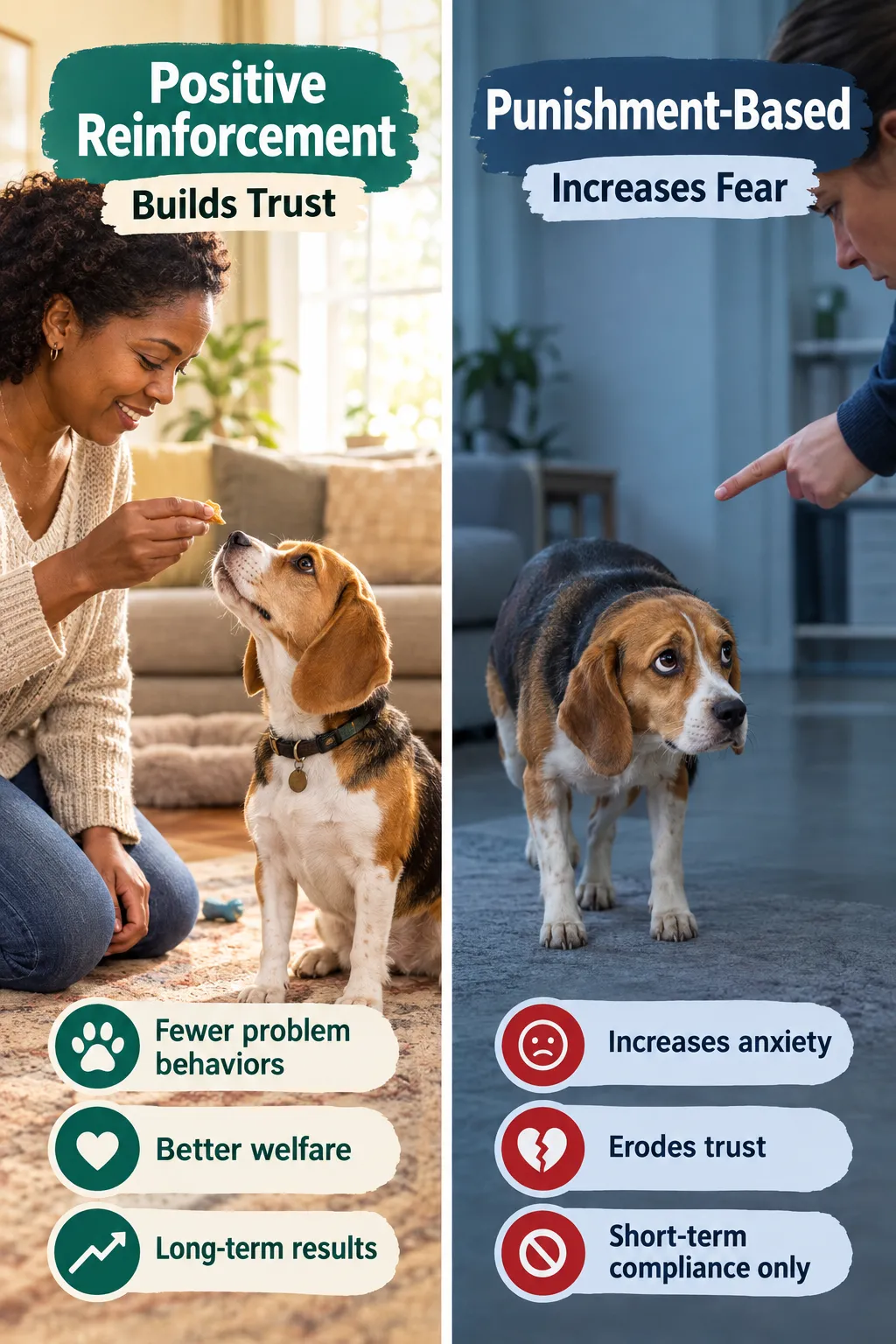
Physical corrections, yelling, or choke collars don’t fix stubbornness. They increase fear and erode trust. A University of Lincoln study highlighted by AVSAB found that positive reinforcement produced better results than electronic collars even in challenging dogs.
When your dog makes a mistake, calmly redirect to the correct behavior and reward that instead.
Tip 9: Make Exercise Non-Negotiable
An under-exercised dog is a distracted, restless, and seemingly stubborn dog. Daily physical activity – appropriate for the breed and age – reduces the excess energy that makes training nearly impossible.
Check out how much exercise your dog actually needs to make sure you’re meeting that baseline before each session.
Tip 10: Use a Clicker for Precision
A clicker gives your dog instant, clear feedback the moment they do something right. This precision is especially helpful for stubborn dogs who need crystal-clear communication about exactly what earns the reward.
Read up on how to use a clicker for dog training to get started – it’s simpler than most people expect.
Tip 11: Follow Through Every Single Time
If your dog ignores a command and nothing happens, they learn that ignoring works. Following through consistently – every session, every command – is what builds the habit of responding.
This doesn’t mean force. It means calmly managing the situation so the dog can’t self-reward for ignoring you.
Positive Reinforcement vs Punishment for Stubborn Dogs
Positive reinforcement wins – and not just by a small margin. The evidence consistently shows that reward-based training leads to fewer behavior problems, less fear and distress, and results equal to or better than aversive methods.
Punishment-based approaches might produce short-term compliance, but they often create secondary problems: increased anxiety, redirected aggression, or a dog that shuts down entirely.
The American Veterinary Society of Animal Behavior recommends reward-based training exclusively – and that recommendation applies especially to stubborn dogs, where trust and motivation are already the core challenges.
| Approach | Short-Term Result | Long-Term Result | Risk |
|---|---|---|---|
| Positive reinforcement | Moderate speed | Strong, lasting behavior | Very low |
| Punishment/corrections | Fast compliance | Often breaks down | Fear, aggression |
| Ignoring bad behavior | Slow | Effective with consistency | Needs patience |
| Mixed signals | Unpredictable | Confusing for dog | Worsens stubbornness |
Stubborn Dog Breeds Hardest to Train
Some breeds are genuinely more independent and harder to motivate than others. That doesn’t mean untrainable – it means you need to adjust your approach.
Breeds commonly labeled stubborn:
- Basset Hound – scent-driven, easily distracted
- Beagle – smarter and sneakier than most owners expect
- Siberian Husky – independent, high-energy
- Dachshund – bred to work independently underground
- Chow Chow – naturally aloof with strangers
- Afghan Hound – intelligent but self-directed
- Jack Russell Terrier – full of surprises for new owners
Choose your approach based on breed tendencies:
- Scent-driven dogs: use scent games and food rewards heavily
- Independent working breeds: make compliance feel like their idea using shaping
- High-energy breeds: exercise first, train second
Why Won’t My Stubborn Dog Listen to Commands
The most common reasons a dog ignores commands are: the reward isn’t valuable enough, the environment is too distracting, the command has been repeated so many times it lost meaning, or the dog hasn’t fully learned the behavior yet.
- Upgrade the reward
- Move to a quieter space
- Go back to basics and rebuild the command from scratch
- Check that every family member is using the same cue word
If your dog ignores you specifically during walks, that’s often a leash and distraction issue – see leash training a dog that pulls for targeted help.
What to Do When Your Dog Ignores You During Training
Stop, reset, and make it easier. When a dog ignores you mid-session, the session has gone on too long, the reward isn’t motivating enough, or the ask is too hard.
Quick reset steps:
- End the current attempt calmly – no frustration
- Ask for something the dog knows well and reward it
- End the session on that positive note
- Next session: shorten the time, upgrade the reward, simplify the task
Never repeat the command louder or more forcefully. That just teaches the dog that you escalate when ignored.
How Long Does It Take to Train a Stubborn Dog
Realistically, basic commands take 2-6 weeks of consistent daily practice for most stubborn dogs. Complex behaviors or deeply ingrained habits can take 3-6 months.
The timeline depends on:
- How consistent you are (daily practice beats occasional long sessions)
- How motivating your rewards are
- Whether the whole household is on the same page
- The dog’s age, breed, and history
A structured plan helps enormously. The 14-day dog training plan that actually works is a solid starting point if you want a clear daily roadmap.
Can You Train an Older Stubborn Dog or Is It Too Late
You absolutely can train an older dog. The idea that “you can’t teach an old dog new tricks” is simply not true.
Older dogs may take slightly longer to form new habits, but they often have better focus and impulse control than puppies. The same stubborn dog training tips apply – high-value rewards, short sessions, positive reinforcement, and consistency.
The one adjustment: be patient with physical limitations. An older dog with joint pain may struggle with “down” or “sit” – check with your vet before training positions that require physical effort.
If you want a proven system that works for dogs of any age, the Free Dog Training Workshop covers exactly this – using service dog training methods to build real obedience, even in dogs that have resisted training for years.
Stubborn Dog Training Tools and Equipment Worth Buying
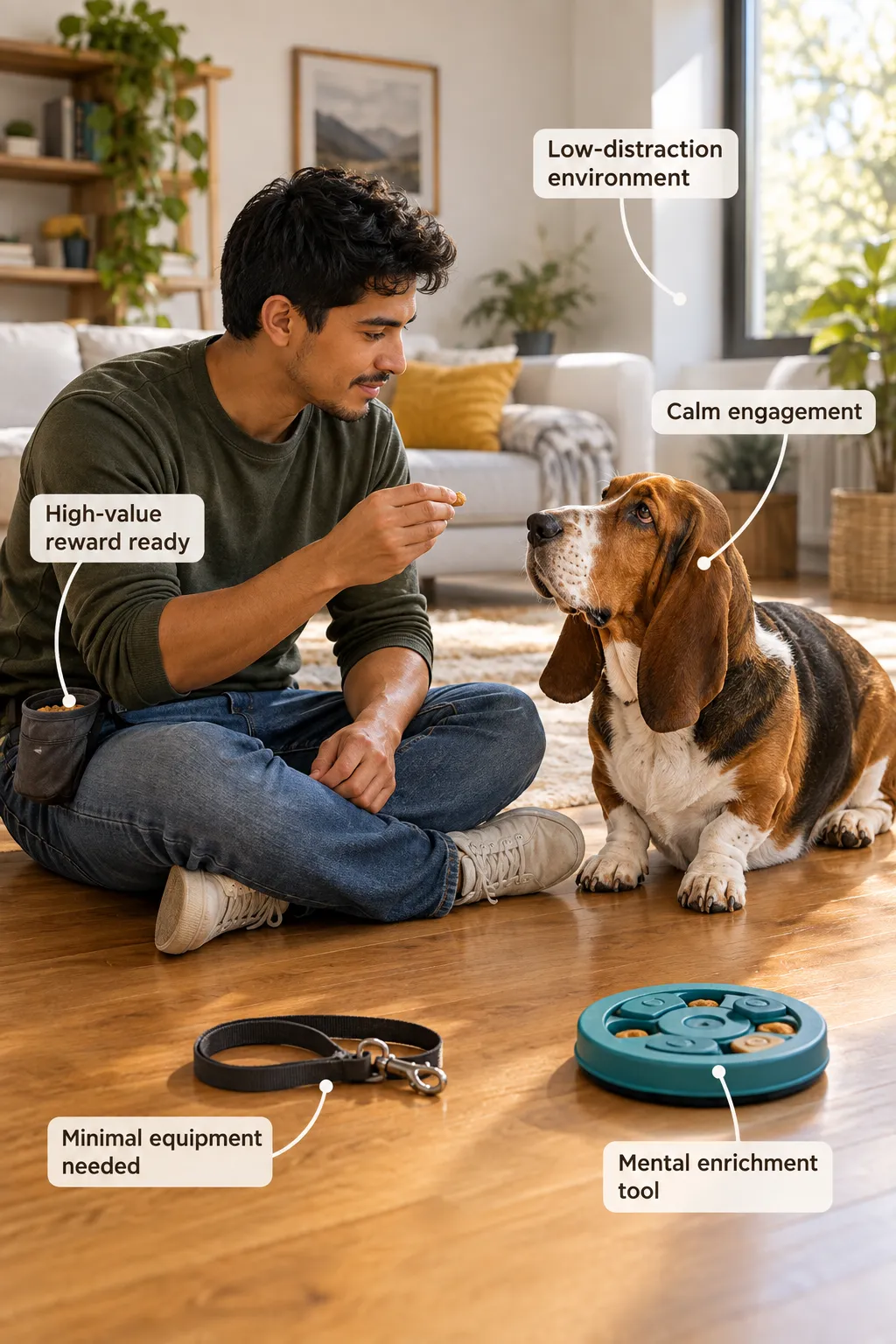
You don’t need a lot of gear. But a few tools make a real difference.
Worth buying:
- Treat pouch – keeps high-value rewards accessible during training
- Clicker – gives precise, instant feedback
- Front-clip harness – reduces pulling without pain or fear
- Long line (15-30 ft) – allows distance work safely outdoors
- Puzzle toys – for mental enrichment between sessions
Skip these:
- Choke chains or prong collars – increase fear and can worsen behavior
- Electronic shock collars – research shows positive reinforcement outperforms them even with challenging dogs
Best Treats and Rewards for Motivating Stubborn Dogs
For stubborn dogs, the treat has to be worth the effort. Standard kibble often isn’t enough.
High-value options that work:
- Small pieces of cooked chicken or turkey
- Real cheese (small cubes)
- Freeze-dried liver or salmon
- Hot dog slices (tiny pieces)
- Commercial training treats with strong smell
Keep pieces tiny – about the size of a pea. You want your dog to want more, not feel full after five rewards.
Also remember: some dogs value play over food. A quick game of tug or a favorite toy toss can be just as motivating as any treat.
Common Mistakes People Make Training Stubborn Dogs
These mistakes are extremely common – and each one actively makes stubbornness worse.
- Repeating commands – teaches the dog that the first cue doesn’t matter
- Using low-value rewards – the dog simply isn’t motivated enough
- Training when frustrated – dogs read your energy and shut down
- Sessions that are too long – leads to mental fatigue that looks like defiance
- Inconsistent rules – the dog can’t predict what earns a reward
- Skipping foundation work – asking for advanced behaviors before basics are solid
- Punishing confusion – the dog didn’t understand, not refused
For a deeper look at what derails training, see 15 terrible dog training mistakes – several of them are surprisingly common even among experienced owners.
Stubborn Dog Training vs Hiring a Professional Trainer – Cost and When to Choose
For most stubborn dogs, consistent home training with the right techniques is enough. But there are situations where a professional trainer is the smarter call.
Consider a professional trainer if:
- The dog is showing aggression (toward people or other animals)
- Training has been attempted consistently for months with no progress
- The behavior is a safety risk
- You’re dealing with severe anxiety or fear-based responses
Typical costs (2026 estimates):
- Group classes: $100-$200 for a 6-week course
- Private sessions: $75-$150 per hour
- Board-and-train programs: $1,500-$3,500 for 2-4 weeks
For most everyday stubbornness, a structured online program or workshop is a cost-effective middle ground before committing to private sessions.
FAQ
Q: My dog listens inside but ignores me outside. Is that stubbornness?
Not exactly – it’s a generalization problem. Your dog has learned the command in one context but not yet in distracting environments. Practice the same command outdoors at low-distraction times, gradually increasing difficulty.
Q: Should I use a clicker with a stubborn dog?
Yes. Clickers give precise, instant feedback that helps stubborn dogs understand exactly what earns the reward. It’s especially useful when shaping new behaviors step by step.
Q: How many times should I repeat a command?
Once. Say it clearly, wait a few seconds, then reset if there’s no response. Repeating commands teaches your dog to tune out the first few repetitions.
Q: My stubborn dog only listens when I have treats visible. How do I fix this?
Start hiding the treat in a pouch or pocket. Reward from there after the behavior, not before. Gradually randomize when rewards appear – this “variable reward schedule” actually strengthens behavior over time.
Q: Is it okay to train a stubborn dog off-leash?
Only in a fully enclosed, safe space. Stubborn dogs are more likely to self-reward by running off, which reinforces ignoring you. Use a long line outdoors until recall is rock-solid.
Q: My older dog has been stubborn for years. Can I really change this?
Yes. Older dogs can absolutely learn new behaviors. The process may take longer, but the same principles apply. Patience, high-value rewards, and short daily sessions work at any age.
Q: What if my dog refuses all treats during training?
Check if your dog is too full (train before meals), too stressed, or in too distracting an environment. Also try switching to a higher-value reward or using a toy or play as the reward instead.
Q: How do I get my whole family to train the dog consistently?
Write down the rules and cue words everyone will use. Hold a quick family meeting. Designate one person as the lead trainer and have others observe sessions before training independently.
Q: Can anxiety look like stubbornness?
Absolutely. An anxious dog may freeze, look away, or shut down during training – all of which look like ignoring commands. If you suspect anxiety, consult your vet before pushing harder with training.
Q: Are puzzle toys really helpful for stubborn dogs?
Yes. Under-stimulated dogs often appear stubborn because their mental needs aren’t met. Puzzle toys, scent games, and enrichment activities reduce the restlessness that interferes with training focus.
Conclusion
Most dogs labeled “stubborn” aren’t being defiant – they’re under-motivated, confused, overstimulated, or responding to inconsistent handling. The stubborn dog training tips that actually work all come back to the same core principles: find what motivates your dog, communicate clearly, keep sessions short and positive, and be consistent every single time.
Your actionable next steps:
- Rule out pain, anxiety, or health issues with a vet check
- Identify your dog’s highest-value reward and use it exclusively for training
- Commit to 3-5 minute sessions, twice daily, for the next two weeks
- Pick one command to focus on and rebuild it from scratch in a quiet space
- Get every family member using the same cues and rules
If you want to accelerate the process significantly, the Free Dog Training Workshop is a genuinely useful resource – it’s a first-of-its-kind online workshop that teaches you the same methods service dog trainers use to build real, lasting obedience, including housebreaking and stopping bad behaviors for good.
Stubborn dogs aren’t lost causes. They’re often the most intelligent, spirited dogs in the room – they just need a handler who matches their energy with patience, clarity, and the right motivation. You’ve got this. 🐾
Related reading:
- The 14-day dog training plan that actually works
- 9 smart dog discipline training tips
- 15 terrible dog training mistakes to avoid
- 7 powerful playtime games that secretly train your dog
- How to train a reactive dog: 8 game-changing tips