
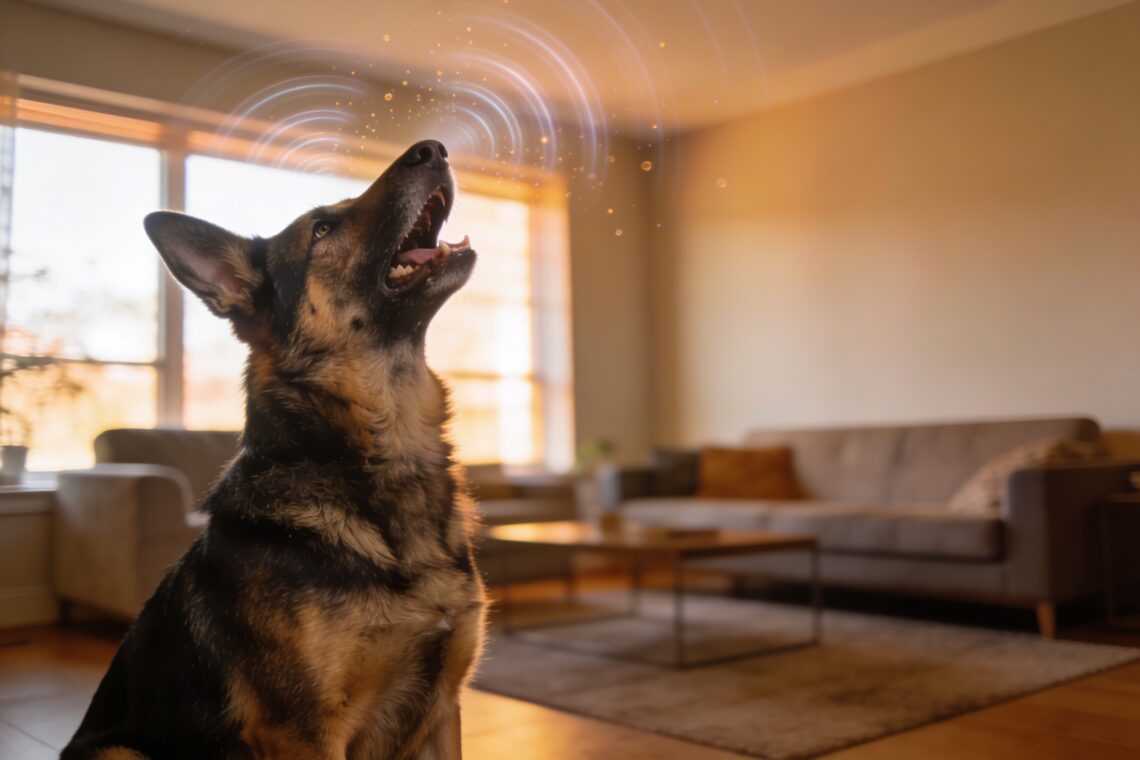
You’re relaxing on the couch, scrolling through your phone, when suddenly your dog launches into a full-blown barking session at… absolutely nothing. No mailman, no squirrel, not even a suspicious leaf. Just your pup, completely losing it at what appears to be thin air. Here’s the thing: your dog isn’t crazy, and they’re definitely not barking at nothing—they’re picking up on signals you can’t detect.
Your Dog’s Superpowers Make “Nothing” Something Real

Let’s get one thing straight right away: dogs experience the world completely differently than we do. While you’re standing there seeing an empty hallway, your dog might be hearing the neighbor’s cat three houses down or smelling last week’s pizza delivery guy’s cologne lingering on the doormat. Dogs hear frequencies between 40 Hz and 60,000 Hz. Humans? We tap out at around 20,000 Hz. That means your pup is picking up sounds you literally cannot perceive. The refrigerator humming, electrical wiring buzzing, rodents scurrying in the walls—all of these register as real, present threats or curiosities to your furry friend. Their sense of smell is equally mind-blowing. Dogs have up to 300 million olfactory receptors compared to our measly 6 million. They’re not barking at nothing—they’re barking at the scent story of everything that’s happened in that spot for the past few days.
The 9 Surprising Signals Your Dog Actually Detects

1. Ultrasonic Pest Deterrents and Electronics
Got one of those plug-in pest repellers? Your dog hears it. Constantly. And it’s probably driving them nuts. These devices emit high-frequency sounds designed to annoy rodents, but guess who else has super-sonic hearing? Your barking buddy, that’s who. Even regular electronics create frequencies during normal operation. Phone chargers, TVs on standby, smart home devices—they all emit sounds in ranges dogs can detect but you can’t.
2. Distant Animal Activity
Your dog might be alerting you to critters you’d never notice. Squirrels in the attic, mice in the walls, possums shuffling around outside—these are all legitimate targets for your pup’s alarm system. They’re not being dramatic; they’re being a dog.
3. Environmental Changes and Weather
Dogs can sense barometric pressure changes before storms roll in. That “random” barking session might actually be your dog’s way of saying “Hey, weird weather’s coming and I’m not comfortable with it.” Changes in wind patterns, humidity, or temperature can all trigger barking because they carry new scents and sounds into your dog’s detection range.
4. Residual Scents from Previous Visitors
Remember when your friend visited three days ago? Your dog does. Their scent is still there, faintly lingering on the couch, and your dog might bark at that spot because something smells “off” compared to the current situation. It’s like they’re saying, “I smell John, but I don’t see John—what’s going on?!”
5. Reflections and Shadows
Sometimes the culprit is visual. Light reflecting off a passing car, shadows moving across walls, or even their own reflection in a window at night can trigger barking episodes. Dogs don’t necessarily understand mirrors or glass the way we do, so these visual anomalies genuinely confuse them.
6. Outside Noises You’ve Tuned Out
You’ve lived in your house long enough to completely ignore the garbage truck every Tuesday morning. Your dog? Not so much. They also haven’t learned to tune out delivery trucks, distant sirens, neighborhood dogs barking blocks away, or people walking past your property line.
7. Neurological or Cognitive Issues
In older dogs especially, barking at “nothing” can indicate canine cognitive dysfunction—basically doggy dementia. If your senior pup has recently started barking at walls or empty spaces, especially at night, it’s worth mentioning to your vet.
8. Attention-Seeking Behavior
Okay, sometimes your dog has trained YOU. If they’ve learned that barking gets them attention (even negative attention like “stop it!”), they’ll bark to engage with you. The “nothing” they’re barking at is really just bait to get you involved in their activity.
9. Boredom and Excess Energy
A bored dog will create their own entertainment, and sometimes that entertainment is barking. FYI, this is especially common in high-energy breeds that haven’t gotten adequate physical or mental stimulation.
When “Nothing” Barking Becomes a Problem

Not all barking at invisible things is created equal. If your dog barks occasionally at seemingly nothing, that’s pretty normal. But if it’s happening constantly, escalating in intensity, or accompanied by other weird behaviors, you’ve got a situation that needs addressing. Look out for these red flags: compulsive barking that your dog can’t seem to stop, barking accompanied by pacing or circling, barking that happens primarily at night and disrupts sleep, or sudden changes in barking patterns in older dogs. Also pay attention if your dog seems genuinely distressed or fearful during these episodes rather than just alert or excited. That’s a whole different ballgame and might indicate anxiety issues or even hallucinations related to health problems.
The Simple Routine to Reduce Mysterious Barking

Here’s the thing: you can’t eliminate all “nothing” barking because your dog legitimately perceives things you don’t. But you can create a routine that minimizes excessive alerts and helps your dog feel more secure.
Morning Energy Release
Start every day with 20-30 minutes of physical exercise. A tired dog is a quiet dog, IMO. This could be a brisk walk, fetch session, or even treadmill time for high-energy breeds. The goal is to take the edge off that pent-up energy.
Mental Stimulation Time
After physical exercise, spend 10-15 minutes on training, puzzle toys, or nose work. Mental exhaustion is just as valuable as physical tiredness for reducing boredom-based barking.
Designated “Alert” Training
Teach your dog a “quiet” or “enough” command specifically for barking situations. Here’s how:
- Wait for your dog to bark at something
- Acknowledge it verbally: “Good alert, I see it”
- Give the “quiet” command
- Reward immediately when they stop barking
- Practice consistently until they understand the pattern
This validates their instinct to alert you while giving you control over when it ends.
Evening Wind-Down Protocol
About an hour before bedtime, reduce stimulation. Lower lighting, turn off loud TVs, and engage in calm activities. This helps anxious dogs settle and reduces nighttime “nothing” barking episodes. Give your dog a chew toy or stuffed Kong to focus on during this quiet time. It redirects their attention and creates a positive association with evening calmness.
Environmental Adjustments That Actually Work
Sometimes simple changes to your home environment can drastically reduce mysterious barking. Close curtains or blinds at night to eliminate shadows and reflections that might trigger alerts. Your dog can’t bark at what they can’t see. Consider using white noise machines or calming music to mask those high-frequency sounds your dog picks up on. This works especially well if electronics or outside noises are the primary triggers. Unplug ultrasonic pest deterrents if you have them, or at least move them to areas where your dog doesn’t hang out. These things are basically dog torture devices, even if they’re marketed as pet-safe. Create a “safe space” where your dog can retreat when they feel overwhelmed by all those invisible signals. This could be a crate, a specific room, or even just a corner with their bed and favorite toys.
Frequently Asked Questions
Is my dog seeing ghosts when they bark at nothing?
While I can’t definitively rule out the paranormal (I’m a dog expert, not a ghostbuster), the scientific explanation is way more likely. Your dog is responding to real stimuli you simply can’t detect—sounds, smells, or visual cues beyond your sensory range. That said, if believing your house is haunted makes the barking less annoying, you do you.
Should I punish my dog for barking at nothing?
Nope. Punishment doesn’t work for this type of barking because your dog is genuinely responding to something they perceive as real. Instead, focus on positive reinforcement for quiet behavior and teaching a reliable “quiet” command. Punishment will just make your dog anxious and potentially lead to more behavioral issues.
Can medication help with excessive “nothing” barking?
In some cases, yes—especially if anxiety is driving the behavior or if cognitive dysfunction is the culprit in senior dogs. But medication should always be a last resort after you’ve tried behavioral modification and environmental changes. Talk to your vet about whether your dog’s situation warrants pharmaceutical intervention.
Why does my dog only bark at nothing at night?
Nighttime brings different sounds, smells, and visual stimuli. Nocturnal animals become active, sound travels differently in cooler air, and your dog might experience anxiety when the household settles down. Senior dogs with cognitive issues also experience “sundowning” similar to human dementia patients. Plus, everything’s just creepier at night, right?
Do certain breeds bark at nothing more than others?
Absolutely. Guardian breeds and herding dogs tend to be more alert-oriented and will bark at perceived threats more readily. Beagles and hounds bark because, well, that’s literally what they were bred to do—alert hunters to prey. Terriers are also notorious for being reactive to every little sound and movement. Meanwhile, breeds like Basenjis barely bark at all, even when there IS something there.
How do I know if the barking indicates a health problem?
Watch for sudden changes in barking patterns, especially in older dogs. If your previously chill senior suddenly starts barking at walls or empty spaces, schedule a vet visit to rule out cognitive dysfunction, vision problems, or pain issues. Also be concerned if the barking is accompanied by disorientation, changes in sleep patterns, house soiling, or decreased interaction with family members.
Conclusion: Your Dog’s World Is Bigger Than Yours
At the end of the day, your dog isn’t being dramatic or trying to drive you crazy (well, maybe a little). They’re experiencing a sensory-rich world you can only imagine. Those “nothing” barking sessions are your dog’s way of processing and responding to legitimate stimuli—you just can’t perceive them with your inferior human senses. The simple routine of adequate exercise, mental stimulation, alert training, and environmental adjustments will handle about 80% of excessive “nothing” barking. For the remaining 20%, remember that some barking is just part of having a dog with superhero-level senses. Accept it, work with it, and maybe invest in some good noise-canceling headphones for those extra vocal days.





2 Comments on “Why Do Dogs Bark at Nothing: 9 Surprising Signals + a Simple Routine”
Comments are closed.