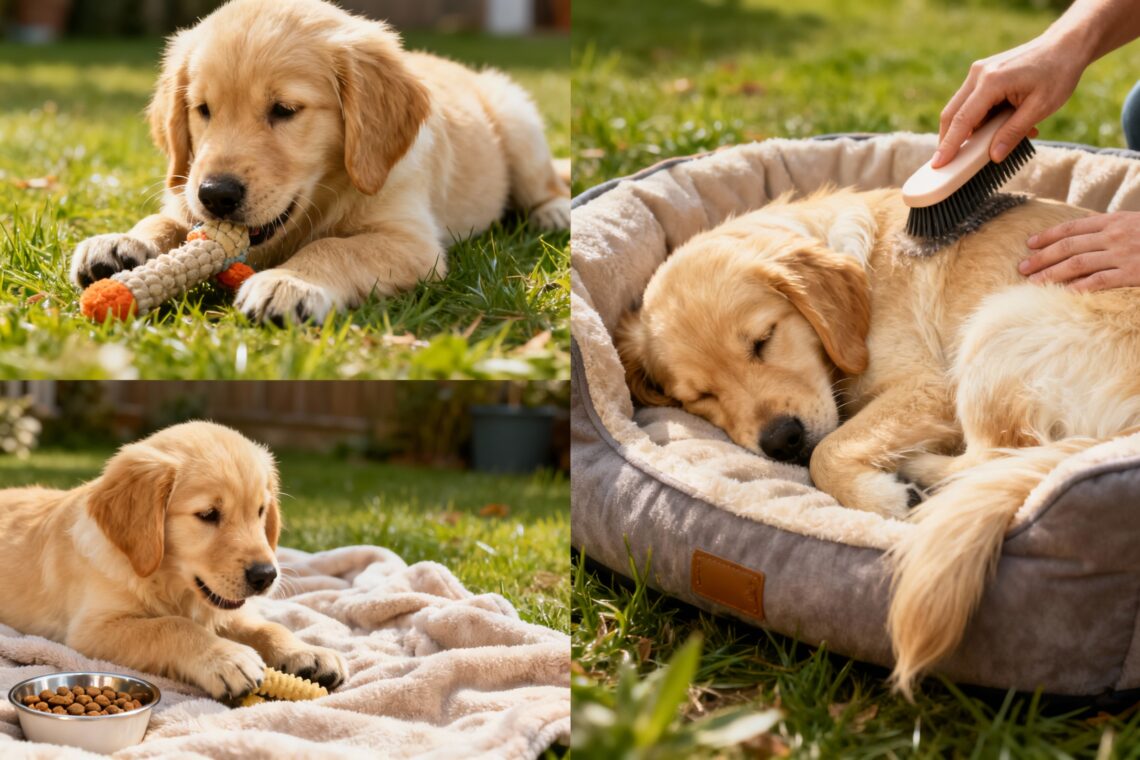
Golden retriever puppies don’t come with a snooze button. One minute they nap like angels, the next they’re zooming through your living room with a sock trophy. If you’re bringing one home (or already did), congrats—you just adopted a sunshine-colored tornado.
Here’s how to keep that fluffball happy, healthy, and out of your shoe closet.
Set Up Your Puppy’s Home Base
Create a cozy, predictable spot your pup can call their own. A crate works wonders for naps, potty training, and keeping them safe when you can’t supervise. Think of it as their bedroom, not a jail. What you need:
- Crate sized so your puppy can stand, turn, and lie down
- Comfy bed or crate mat (washable, always)
- Food and water bowls on a non-slip mat
- Chew toys designed for puppies
- Baby gates to block off danger zones
Crate Training 101
Start with short, positive sessions.
Toss treats inside and feed meals in the crate so it screams “good things happen here.” Close the door for a few minutes at a time and gradually increase. If they whine, wait for a second of quiet before opening—don’t teach them that drama gets results.
Feed for Growth, Not Chonk
Goldens grow fast, and their joints need support, not extra weight. Choose a large-breed puppy formula to control calcium and growth rate. General feeding tips:
- 8–12 weeks: 3–4 small meals per day
- 3–6 months: 3 meals per day
- 6–12 months: 2 meals per day
Check the bag for a starting amount, then adjust based on body condition.
You should feel ribs with a light touch but not see them. No free-feeding—Goldens will absolutely pretend they’re starving actors.
Treats and Chews
Use small, soft training treats and limit the total to under 10% of daily calories. Skip cooked bones and hard chews that can crack teeth.
IMO, frozen Kongs with puppy-safe fillings are a sanity saver.
Potty Training Without Tears
Consistency wins. Take your puppy out:
- First thing in the morning and last thing at night
- After meals, naps, and play
- Every 1–2 hours in the early weeks
When they go outside, praise like they won a Nobel Prize and give a tiny treat. Inside accidents?
Clean with an enzymatic cleaner and move on. No scolding—your puppy isn’t plotting revenge; they’re just a baby with poor bladder management.
Train the Brain (and Save Your Shoes)
Goldens love to learn, and you’ll love living with one that understands house rules. Keep sessions short and fun, 3–5 minutes at a time, a few times a day. Start with:
- Name recognition: Say their name, reward eye contact
- Sit, down, stay: Basic manners, huge payoff
- Leave it: For socks, rocks, and questionable “snacks”
- Recall (“come”): Reward like crazy—make it their favorite word
Socialization Done Right
Expose your puppy to the world before 16 weeks, but do it smart.
Pair new people, surfaces, sounds, and gentle dogs with treats. Keep it positive, never overwhelming. FYI, puppy classes with vaccination requirements are ideal.
Bitey Phase Survival
Puppy teeth are basically tiny needles.
Offer a chew, redirect to a toy, and end play if they chomp skin. Gentle, consistent responses beat yelling every time.
Exercise: Tired Brain, Happy Pup
Yes, your Golden is a future athlete—but those puppy joints need care. Use the 5-minute rule: about five minutes of structured exercise per month of age, up to twice a day.
That’s not counting free play and training. Good activities:
- Short, sniffy walks for a mental workout
- Fetch—mini sessions on soft grass
- Food puzzles and scent games in the house
Avoid forced jogging, stairs marathons, and high-impact jumping. Their grown-up hips will thank you.
Grooming: Fluff Maintenance 101
That glorious coat? It sheds.
A lot. Stay ahead of it with quick, regular sessions. Routine:
- Brush 3–4 times a week with a slicker brush
- De-shed during seasonal blowouts (spring/fall)
- Bath every 4–6 weeks or when they smell “interesting”
- Trim nails weekly; aim for frequent, tiny trims
- Clean ears weekly—Goldens love water and ear infections
- Brush teeth 2–3 times a week (daily is gold-star behavior)
Ear Care Pro Tip
After swimming or baths, use a vet-approved ear cleaner and dry the ears. Moisture + floppy ears = yeast party.
You don’t want that invite.
Health Basics You Can’t Skip
Set your puppy up with a vet right away. Bring any breeder or rescue records and schedule vaccines and deworming. Typical vet timeline (varies by location):
- 8–16 weeks: Core vaccines (parvo, distemper, adenovirus), +/- leptospirosis
- 12–16 weeks: Rabies
- Monthly: Heartworm, flea, and tick prevention
- 6–18 months: Discuss spay/neuter timing—larger breeds may benefit from waiting
Ask about screening for hip and elbow dysplasia, heart issues, and inherited eye conditions common in Goldens. Keep them lean—excess weight strains joints and shortens lifespans, IMO.
Build Routines That Stick
Dogs thrive on predictability.
Create a simple daily schedule for meals, potty breaks, training, play, and rest. Use the crate for naps to prevent overtired chaos gremlins. Sample day for a young pup:
- Out to potty, breakfast, 5-minute training
- Crate nap
- Potty, play, short walk/sniffari
- Crate nap
- Lunch, training, chew time
- Nap, potty, gentle play
- Dinner, potty, cuddles, bedtime routine
Will it go perfectly? Absolutely not.
But a loose structure makes life easier for both of you.
FAQs
When can my Golden Retriever puppy meet other dogs?
After the first vaccines, start with healthy, fully vaccinated dogs you know. Avoid high-traffic dog parks until your pup finishes their vaccine series. Controlled playdates and puppy classes strike the perfect balance between safety and socialization.
How much should my Golden puppy sleep?
A lot.
Expect 18–20 hours a day between naps and nighttime sleep. If your puppy acts wild, they probably need a nap, not more stimulation. Crate or pen time helps them settle.
My puppy eats everything.
How do I stop it?
Work on a rock-solid leave it and drop it. Use a lightweight house line so you can guide them away from forbidden treasures. Manage the environment—pick up laundry, use baby gates, and never underestimate a Golden’s talent for “floor snacks.”
What’s the best way to handle separation?
Teach independence early.
Scatter-feed in a playpen, give a stuffed Kong in the crate, and practice short exits where you actually come back. Increase duration slowly and keep goodbyes boring. Drama-free departures, drama-free puppy.
How do I stop jumping on people?
Jumping works because it gets attention.
Teach an auto-sit for greetings and reward the sit like it’s magic. Ask friends to help—no attention unless four paws stay on the floor. Consistency from every human matters, FYI.
When should I switch to adult food?
Most Goldens transition around 12–18 months.
Your vet can help decide based on growth and body condition. Don’t rush it—large-breed puppy formulas support healthy development.
Conclusion
Raising a Golden Retriever puppy feels like managing a fluffy chaos intern—enthusiastic, clumsy, and absurdly lovable. Keep routines simple, training positive, and exercise smart.
Do that, and you’ll end up with the world’s best roommate—who still steals your socks but brings them back with a wag.