Last updated: August 5, 2026
Quick Answer: Long lasting pumpkin dog treats are baked or dehydrated snacks made with pumpkin puree as a primary ingredient, designed to keep dogs chewing for extended periods while delivering real nutritional benefits. They’re easy to make at home with just 3 to 5 ingredients, and dogs absolutely love them. The right recipe and baking technique can make these treats last 10 to 30 minutes of active chewing, depending on your dog’s size and chewing style.
Key Takeaways
- Pumpkin is safe and beneficial for dogs – it’s rich in fiber, beta-carotene, and vitamins A, C, and E
- Long lasting pumpkin dog treats are made longer-lasting by baking at lower temperatures for extended time, which dries out the dough
- The classic recipe uses just 3 ingredients: pumpkin puree, peanut butter, and whole wheat flour
- Always use plain canned pumpkin – never pumpkin pie filling, which contains xylitol and spices that are toxic to dogs
- Natural peanut butter (xylitol-free) is safe for dogs and adds protein to each treat
- Homemade treats can be stored in an airtight container for up to 2 weeks at room temperature, or frozen for up to 3 months
- Dogs with sensitive stomachs often do well with pumpkin treats because pumpkin supports healthy digestion
- Puppies can have pumpkin treats, but keep portions small and choose softer textures
What Are Long Lasting Pumpkin Dog Treats?
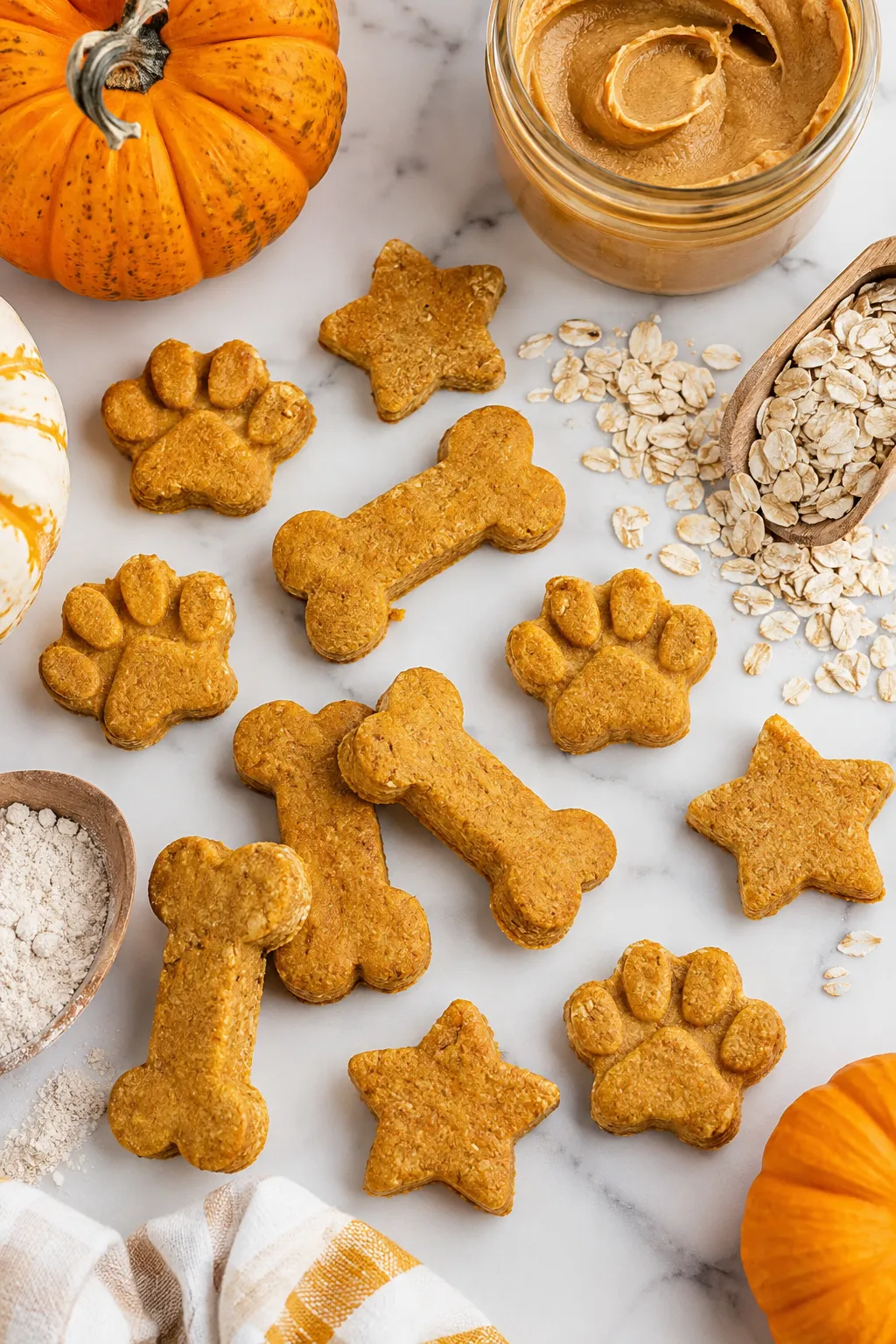
Long lasting pumpkin dog treats are chew-worthy baked snacks that use pumpkin as a base ingredient, formulated to hold up under a dog’s chewing pressure for longer than a standard soft treat. Unlike thin, crumbly biscuits that disappear in seconds, these treats are rolled thicker, baked longer, or dehydrated to create a dense, satisfying texture dogs have to work at.
The key difference between a regular dog treat and a long-lasting one comes down to moisture. The drier the treat, the harder and longer-lasting it becomes. A standard pumpkin biscuit baked at 350°F for 15 minutes will be soft and gone in a few seconds. The same dough rolled thicker and baked at 300°F for 35 to 40 minutes becomes a hard, durable chew that keeps dogs busy.
Why pumpkin? Pumpkin is one of the most dog-friendly foods out there. According to the American Kennel Club, pumpkin is a great source of fiber, potassium, and vitamins that support digestion and overall health in dogs. It also adds natural moisture to dough, which makes it easy to mix and roll without extra oil or eggs.
In 2026, homemade dog treats have become one of the fastest-growing trends in pet care, as more dog owners look for ways to control what goes into their dog’s food. Pumpkin dog treats sit right at the center of that movement.
Are Pumpkin Dog Treats Safe for Dogs?
Yes, pumpkin dog treats are safe for most dogs when made with the right ingredients. Plain pumpkin puree – not pumpkin pie filling – is non-toxic and genuinely good for dogs. The danger zone is pumpkin pie spice mix, which often contains nutmeg, a compound that is toxic to dogs even in small amounts.
Here’s what’s safe vs. what to avoid:
| Ingredient | Safe? | Notes |
|---|---|---|
| Plain canned pumpkin | ✅ Yes | Use 100% pure pumpkin only |
| Pumpkin pie filling | ❌ No | Contains spices and sweeteners |
| Natural peanut butter | ✅ Yes | Must be xylitol-free |
| Xylitol sweetener | ❌ No | Toxic to dogs – always check labels |
| Whole wheat flour | ✅ Yes | Fine for most dogs |
| Oat flour | ✅ Yes | Great gluten-free option |
| Nutmeg | ❌ No | Toxic to dogs |
| Cinnamon (small amounts) | ⚠️ Caution | Not toxic but can irritate digestion |
The ASPCA Animal Poison Control Center lists xylitol as one of the most dangerous food-based toxins for dogs. Always read peanut butter labels before using them in any dog treat recipe. Brands like Portland Pet Food Company and others that make dog-specific products are formulated with this in mind.
Pro tip: When in doubt about an ingredient, check with your vet before adding it to a homemade dog treat recipe.
How Long Do Pumpkin Chew Treats Last?
How long a pumpkin chew treat lasts depends on three factors: how thick the treat is, how long it was baked, and the size of your dog. A small dog working on a thick, well-baked pumpkin bone might take 15 to 30 minutes to finish it. A large breed dog like a German Shepherd or Lab might crunch through the same treat in under 5 minutes.
To make treats last longer:
- Roll dough to at least 1/2 inch thick (not the standard 1/4 inch most recipes suggest)
- Bake at a lower temperature (275°F to 300°F) for 35 to 45 minutes
- After baking, turn off the oven and leave treats inside for another 20 minutes to dry out further
- For maximum hardness, dehydrate treats at 200°F for 2 to 3 hours instead of standard baking
Shelf life is a different question. Properly baked and dried pumpkin dog treats stored in an airtight container last about 1 to 2 weeks at room temperature. Refrigerated, they stay good for up to 3 weeks. Frozen treats last up to 3 months – just thaw one at a time before giving it to your dog.
Homemade Pumpkin Dog Treats Recipe – 7 Variations to Try
Making homemade dog treats is one of the most rewarding things you can do as a dog owner. These 7 recipes range from the classic 3-ingredient version to more nutritious options with added protein and fiber. Each recipe is easy to make and uses ingredients you likely already have.
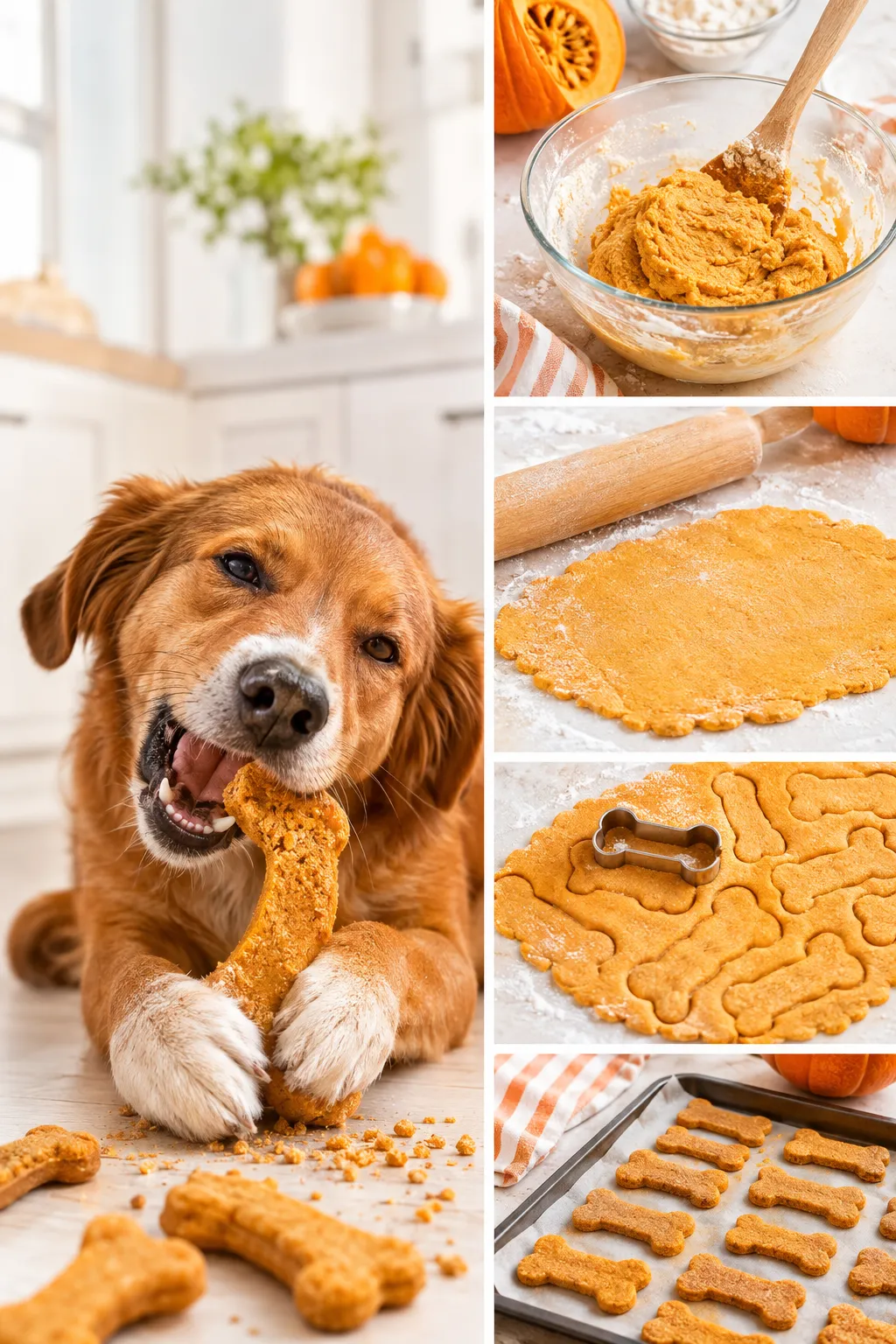
Recipe 1: Classic Pumpkin and Peanut Butter Dog Treats (3 Ingredients)
This is the gold standard oatmeal pumpkin dog treat recipe that thousands of dog owners love. It’s simple, quick, and dogs go absolutely wild for it.
Ingredients:
- 1 cup plain canned pumpkin (not pumpkin pie filling)
- 1/2 cup natural peanut butter (xylitol-free)
- 2 1/2 cups whole wheat flour (plus extra for rolling)
Instructions:
- Preheat your oven to 350°F. Line a baking sheet with parchment paper.
- Mix pumpkin puree and peanut butter together in a large bowl until smooth.
- Add flour one cup at a time, mixing until a firm dough forms. The dough should not be sticky.
- Roll dough out on a floured surface to about 1/4 inch thick for regular treats, or 1/2 inch for long lasting treats.
- Use a cookie cutter to cut out shapes – bone shapes are always a hit.
- Place on the prepared baking sheet and bake for 20 to 25 minutes (or 35 to 40 minutes for harder, longer-lasting treats).
- Let cool completely on a wire rack before giving to your dog.
Yield: About 30 to 40 treats depending on cutter size
Storage: Airtight container, up to 2 weeks
This is the recipe that gets the most love from dog owners online. One reader says, “My dog Pook goes absolutely crazy every time I make these. Pook says they’re the best thing since walks!” Another reply says, “I made a double batch and my dogs demolished them in a week – definitely making more!”
Recipe 2: Oatmeal Pumpkin Dog Treats (Gluten-Free Option)
For dogs with wheat sensitivities, this oatmeal pumpkin dog treat recipe swaps wheat flour for oat flour. It’s just as easy to make and produces a slightly softer, chewier texture.
Ingredients:
- 1 cup plain pumpkin puree
- 1/3 cup natural peanut butter
- 1 egg
- 2 cups oat flour (make your own by blending rolled oats)
- 1/2 teaspoon cinnamon (optional, very small amount)
Instructions:
- Preheat oven to 325°F.
- Combine pumpkin, peanut butter, and egg in a bowl. Mix well.
- Stir in oat flour until a soft dough forms.
- Roll out and cut into shapes, then bake 25 to 30 minutes.
- Cool completely before serving.
Many dog owners find this recipe works well for dogs who don’t taste like chicken-flavored treats – the pumpkin and peanut butter combo is irresistible even to picky eaters.
Recipe 3: Long Lasting Pumpkin Dog Treats – Hard Baked Version
This is specifically designed for dogs who inhale treats too fast. The dough is the same as Recipe 1, but the baking method changes everything.
Key difference: After the initial 35-minute bake, turn the oven down to 200°F and leave the treats in for another 60 to 90 minutes. This slow dehydration creates a rock-hard treat that even aggressive chewers have to work at.
This approach is similar to what commercial dog treat companies use in their manufacturing process. The result is a treat that can keep a medium-sized dog busy for 20 minutes or more.
Recipe 4: Pumpkin and Banana Dog Treats (No Peanut Butter)
For dogs with peanut allergies or owners who prefer a butter dog treats alternative without nut products, this recipe uses banana as the binding agent.
Ingredients:
- 1 ripe banana, mashed
- 1/2 cup plain pumpkin puree
- 2 cups whole wheat flour or oat flour
- 1 egg
Mix all ingredients, roll out, cut, and bake at 350°F for 20 to 25 minutes. These treats are softer than the peanut butter version but still hold together well.
Recipe 5: Pumpkin Protein Treats with Chicken
This recipe adds real protein to the standard pumpkin base, making it a more complete snack for active dogs.
Ingredients:
- 1/2 cup plain pumpkin puree
- 1/2 cup cooked, shredded chicken (no seasoning)
- 1 egg
- 1 1/2 cups whole wheat flour
The chicken adds both protein and a flavor dogs love. One reply from a reader says, “These don’t taste like chicken to me but my dog disagrees – she says they’re amazing!” Another comment says, “My picky eater finally found a treat he loves.”
Recipe 6: No-Bake Pumpkin Dog Treats
Not everyone wants to turn on the oven. This no-bake version uses rolled oats as the base and sets in the fridge.
Ingredients:
- 1/2 cup plain pumpkin puree
- 1/4 cup natural peanut butter
- 1 1/2 cups rolled oats
- 1 tablespoon honey (optional)
Mix all ingredients, roll into balls or press into molds, and refrigerate for at least 2 hours. These treats are softer and won’t last as long in terms of chewing time, but they’re great for puppies or senior dogs with sensitive teeth.
For more ideas like this, check out our collection of 12 easy no-bake dog treats using simple, dog-safe ingredients.
Recipe 7: Pumpkin and Sweet Potato Chews (Dehydrated)
This is the longest-lasting option on the list. Dehydrated treats can keep a dog busy for 30 minutes or more.
Ingredients:
- 1/2 cup plain pumpkin puree
- 1/2 cup cooked, mashed sweet potato
- 1 cup whole wheat flour
- 1 tablespoon coconut oil
Mix into a firm dough, roll very thin (1/8 inch), cut into strips, and dehydrate at 200°F for 3 to 4 hours. The result is a jerky-like chew that dogs love and that lasts a long time.
Pumpkin Dog Treats vs. Other Chew Toys and Treats
Pumpkin dog treats offer something most commercial chew toys and rawhide products don’t: they’re edible, digestible, and nutritious. Standard rawhide chews, for example, can cause digestive blockages and are made with chemical processing that many vets now advise against.
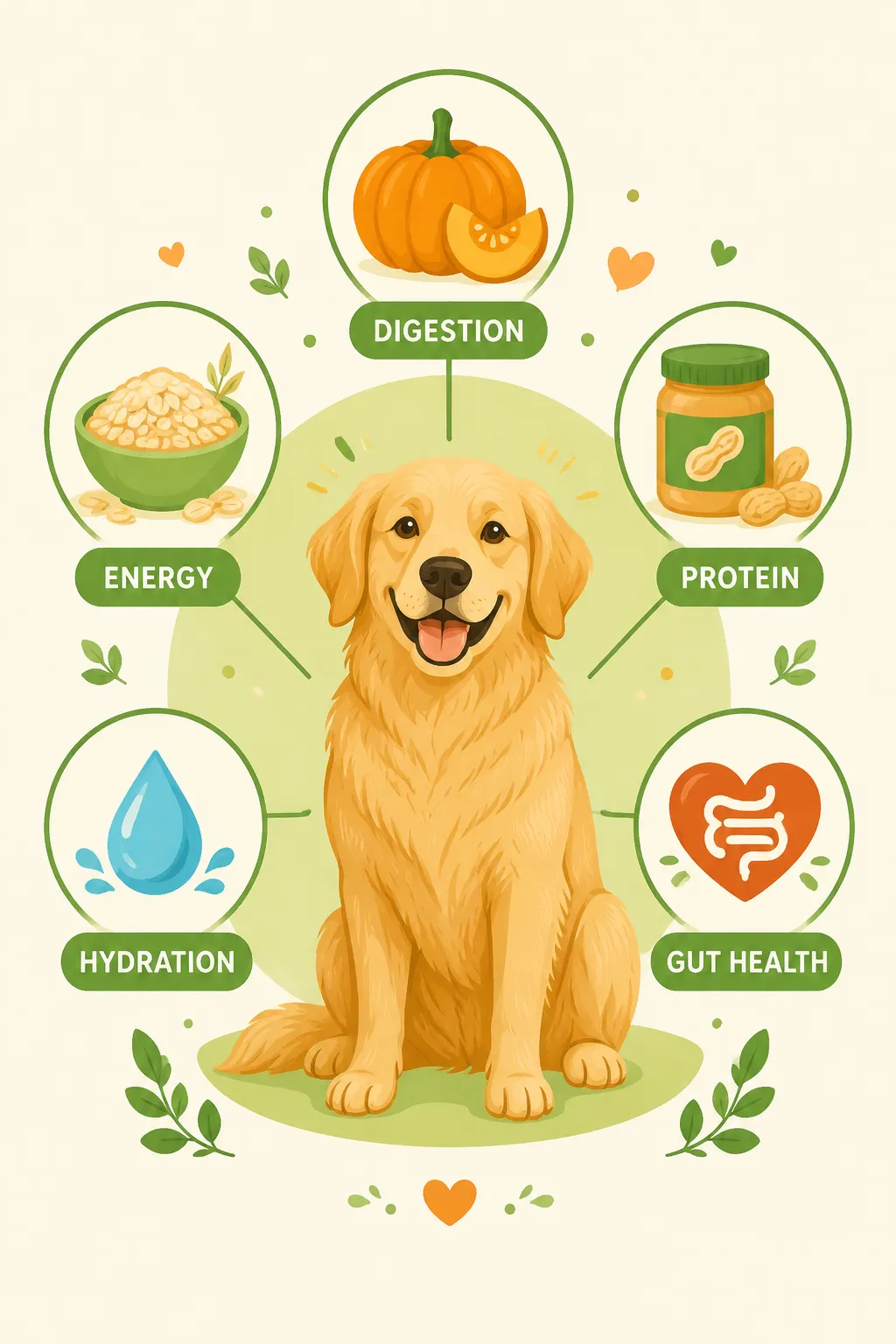
Here’s how pumpkin dog treats stack up:
Pumpkin treats vs. rawhide:
- Pumpkin treats are fully digestible; rawhide can cause blockages
- Pumpkin adds fiber and vitamins; rawhide has minimal nutritional value
- Pumpkin treats are easy to make at home; rawhide requires commercial processing
Pumpkin treats vs. commercial dog biscuits:
- Homemade pumpkin treats have no preservatives or artificial colors
- You control every ingredient – no hidden fillers or by-products
- Commercial treats from brands like Portland Pet Food Company are a good middle ground if you want convenience with quality ingredients
Pumpkin treats vs. dental chews:
- Dental chews are specifically designed to reduce tartar; pumpkin treats are not
- However, the chewing action from hard-baked pumpkin treats does provide some mechanical cleaning benefit
- For dental health specifically, dental chews are the better choice
For dogs who chew everything in sight, long lasting pumpkin dog treats can also redirect destructive chewing behavior. If your dog is chewing furniture or shoes, check out our guide on how to stop dogs from chewing everything for more strategies.
Can Dogs with Sensitive Stomachs Eat Pumpkin Treats?
Dogs with sensitive stomachs are actually among the best candidates for pumpkin treats. Pumpkin is one of the most widely recommended foods for dogs with digestive issues, and it’s commonly suggested by vets to help with both diarrhea and constipation.
According to the American Kennel Club’s nutrition guidance, plain pumpkin contains soluble fiber that helps regulate digestion. For dogs with loose stools, the fiber in pumpkin absorbs excess water. For dogs with constipation, it adds bulk and moisture to help things move along.
Tips for sensitive-stomach dogs:
- Start with a small treat (about the size of a quarter) and watch for any reaction
- Use oat flour instead of wheat flour to reduce gluten
- Skip the peanut butter if your dog has known food sensitivities – use banana or sweet potato instead
- Avoid adding any spices, including cinnamon
- Make sure the pumpkin is plain – no added salt, sugar, or spices
For more help with sensitive stomach recipes, our 7 homemade dog food recipes for sensitive stomachs has a full guide with vet-aligned suggestions.
Do Pumpkin Treats Help with Dog Digestion?
Yes, pumpkin treats genuinely support dog digestion, and this is one of the most evidence-backed benefits of adding pumpkin to a dog’s diet. The fiber in pumpkin – both soluble and insoluble – plays a direct role in gut health.
How pumpkin supports digestion:
- Soluble fiber slows digestion and helps regulate blood sugar
- Insoluble fiber adds bulk to stools and supports regular bowel movements
- High water content in pumpkin puree helps keep dogs hydrated
- Beta-carotene acts as an antioxidant that supports the immune system
A study published in the Journal of Nutritional Science found that dietary fiber plays a significant role in maintaining gut microbiome diversity in dogs, which directly affects overall health and immune function.
One cup of plain canned pumpkin contains approximately 3 grams of fiber, according to the USDA FoodData Central database. When spread across 30 to 40 treats, each treat delivers a small but meaningful fiber boost.
The fiber content also makes pumpkin treats a smart choice for dogs prone to anal gland issues, as firmer stools help naturally express the glands during bowel movements.
How Often Can I Give My Dog Pumpkin Treats?
Most dogs can have pumpkin treats daily in moderate amounts. The general rule is that treats should make up no more than 10% of a dog’s daily caloric intake, according to veterinary nutrition guidelines from the Cummings School of Veterinary Medicine at Tufts University.
Suggested frequency by dog size:
- Small dogs (under 20 lbs): 1 to 2 small treats per day
- Medium dogs (20 to 50 lbs): 2 to 3 treats per day
- Large dogs (50+ lbs): 3 to 4 treats per day
Too much pumpkin can actually cause loose stools, even though it’s used to treat them – it’s all about the amount. Stick to about 1 to 4 tablespoons of pumpkin per day for most dogs, spread across their treats.
If your dog is on a weight management plan, factor in the calories from treats. A standard pumpkin peanut butter dog treat made from the recipe above contains roughly 30 to 50 calories, depending on size.
What Dogs Benefit Most from Pumpkin Treats?
While most dogs can enjoy pumpkin treats, certain dogs get the most out of them. Senior dogs, dogs with digestive issues, and overweight dogs all have specific reasons to love pumpkin as a treat ingredient.
Dogs that benefit most:
- Senior dogs – The fiber supports digestion as metabolism slows, and the soft texture (in no-bake versions) is gentle on aging teeth. Our 7 best homemade dog food for senior dogs covers more senior-specific nutrition tips.
- Overweight dogs – Pumpkin is low in calories and high in fiber, which helps dogs feel full. You can substitute pumpkin for some of the fat in recipes.
- Dogs with digestive issues – As covered above, pumpkin’s fiber content directly supports gut health.
- Anxious chewers – Dogs that chew from anxiety or boredom benefit from long-lasting treats that keep them occupied. Pair treats with brain games for dogs for even better results.
- Dogs on limited-ingredient diets – The basic 3-ingredient pumpkin recipe is ideal for dogs with multiple food sensitivities.
Tips, Tricks, and Common Questions About Making Pumpkin Dog Treats
Getting the recipe right the first time is easy if you know a few key things. Here are the most common questions and answers from dog owners who make these treats regularly.
Getting the Dough Right
The dough for pumpkin dog treats should feel similar to pie crust dough – firm, not sticky, and easy to roll. If your dough is too sticky, add flour one tablespoon at a time. If it’s too dry and cracking, add a teaspoon of water or a bit more pumpkin puree.
Common dough problems:
- Sticky dough: Add more flour gradually. Different brands of canned pumpkin have different moisture levels, so the amount of flour you need can vary.
- Crumbly dough: Add a small amount of water or an egg to bind the ingredients together.
- Dough not holding shape after cutting: Chill the dough in the fridge for 30 minutes before rolling.
Choosing the Right Flour
Whole wheat flour is the most common choice for pumpkin dog treats because it’s easy to find and produces a firm, workable dough. But it’s not the only option.
- Whole wheat flour: Best for firm, long-lasting treats. Easy to use.
- Oat flour: Great for gluten-sensitive dogs. Makes a slightly softer treat.
- Coconut flour: Very absorbent – use about 1/3 the amount called for in a wheat flour recipe. Adds a mild sweetness dogs love.
- Rice flour: Good for dogs with grain sensitivities. Produces a crispier treat.
Avoid using regular all-purpose white flour as the primary flour – it has less nutritional value and produces a less interesting texture for dogs.
Using Amazon to Find Ingredients and Tools
Many dog owners use Amazon to stock up on bulk ingredients for making treats. You can find large bags of oat flour, coconut flour, and whole wheat flour at good prices. Amazon also carries silicone bone-shaped molds, dog treat cookie cutters, and airtight storage containers that are perfect for keeping treats fresh.
When shopping on Amazon for pumpkin puree, look for 100% pure canned pumpkin with no added ingredients. Libby’s and Farmer’s Market are two brands that make plain pumpkin puree that works well in dog treat recipes. Always double-check the label – the product should list only one ingredient: pumpkin.
Amazon also carries natural peanut butter in bulk, which is cost-effective if you make treats often. Just always check that it’s xylitol-free before buying.
Scaling the Recipe
Most pumpkin dog treat recipes are easy to scale up or down. The basic ratio is 1 part pumpkin to 1/2 part peanut butter to 2.5 parts flour. You can use this ratio to make a small batch (great for first-time bakers) or a large batch to freeze.
A double batch made with 2 cups of pumpkin, 1 cup of peanut butter, and 5 cups of flour will yield about 60 to 80 treats – enough to last a month for most dogs.
Where to Buy Long Lasting Pumpkin Dog Treats
If you’d rather buy than make, there are good commercial options available. Look for treats that list pumpkin as one of the first three ingredients and avoid anything with artificial preservatives, corn syrup, or unnamed “meat by-products.”
What to look for on the label:
- First ingredient should be a whole food (pumpkin, oats, chicken, etc.)
- Short ingredient list (5 to 10 ingredients is ideal)
- No xylitol, propylene glycol, or BHA/BHT
- AAFCO statement or “made in USA” designation
Portland Pet Food Company is one brand worth mentioning – they make dog treats and food with human-grade ingredients, including pumpkin-based products. Their commitment to clean ingredients aligns with what most health-conscious dog owners are looking for in 2026.
You can also find pumpkin dog treats on Amazon, at Chewy, PetSmart, and local pet food stores. Prices typically range from $8 to $20 for a bag of 20 to 40 treats, depending on the brand and size.
For dogs with specific dietary needs, specialty pet food companies and natural pet stores often carry limited-ingredient pumpkin treats that work well for sensitive dogs.
How to Make Pumpkin Treats Last Longer for Dogs
The biggest trick to making long lasting pumpkin dog treats is controlling moisture. The less moisture in the finished treat, the harder and longer-lasting it will be.
Step-by-step guide to maximum-lasting treats:
- Use less liquid in the dough. Skip the egg if the recipe calls for one, or reduce the pumpkin slightly.
- Roll thicker. Aim for 1/2 inch instead of 1/4 inch.
- Bake low and slow. Use 275°F to 300°F for 40 to 50 minutes.
- Dry in the oven after baking. Turn off the oven and leave treats inside for 30 to 60 minutes as the oven cools.
- Dehydrate instead of bake. A food dehydrator set to 165°F for 4 to 6 hours produces the hardest, longest-lasting treats.
- Freeze before serving. Frozen treats take even longer to chew through and are great for hot summer days.
Also, the shape matters. Thick, compact shapes (like a thick bone or a ball) last longer than flat, thin shapes. Avoid using very small cookie cutters if you want treats that keep dogs busy.
For more ideas on keeping dogs engaged with food-based activities, check out our guide on activities for bored dogs.
Pumpkin Dog Treats for Puppies – Are They Safe?
Pumpkin dog treats are generally safe for puppies, but there are a few adjustments to make for young dogs. Puppies have smaller mouths, developing teeth, and more sensitive digestive systems than adult dogs.
For puppies:
- Make treats smaller – about the size of a marble for small breeds, a grape for medium breeds
- Use a softer recipe (no-bake or lightly baked) to protect developing teeth
- Skip the peanut butter for very young puppies under 8 weeks and introduce it gradually
- Start with just one treat and watch for any digestive reaction over 24 hours
- Avoid any recipe with cinnamon or other spices
Puppies can have pumpkin in their diet from a young age. In fact, many breeders use a small amount of plain pumpkin puree to help puppies transition to solid food because it’s gentle on their digestive systems.
For more puppy care tips, our first week with new puppy survival guide covers everything you need to know about feeding and caring for a new pup.
Nutrition in Pumpkin Dog Treats
Understanding what’s actually in each treat helps you make informed decisions about how many to give your dog. Here’s the approximate nutritional profile for one medium-sized pumpkin peanut butter dog treat (about 15g):
- Calories: 40 to 55 kcal
- Protein: 1.5 to 2g
- Carbohydrates: 6 to 8g
- Fat: 1 to 2g
- Fiber: 0.5 to 1g
- Sodium: Less than 10mg (if no salt is added)
- Sugar: Less than 1g (naturally occurring from pumpkin)
These numbers will vary based on the specific recipe and treat size. The pumpkin itself contributes beta-carotene (which converts to vitamin A), vitamin C, potassium, and iron. The peanut butter adds protein and healthy fats. The flour provides carbohydrates for energy.
Compared to many commercial dog treats, homemade pumpkin treats have significantly less sodium and no artificial preservatives. They’re also lower in sugar than many store-bought options.
If you’re interested in more nutritious homemade options, our 3-ingredient no-bake peanut butter and pumpkin dog treats guide is a great next read.
Reader Comments and Community Love
One of the best parts about sharing pumpkin dog treat recipes is hearing back from other dog owners. Here’s a sample of the kind of feedback these recipes get:
A reader reply says: “Made the 3-ingredient recipe for the first time in January 2026 and my dog went absolutely nuts. Thank you so much for sharing this!”
Another reply says: “Pook says these are the best treats ever – and Pook says that about everything, but this time I believe it!”
One comment says: “I made a batch in July and froze half. They lasted perfectly in the freezer for 6 weeks. Thank you for the storage tips!”
A reply says: “My vet actually recommended pumpkin treats for my dog’s digestion issues. So glad I found this recipe. Pook says hi!”
And another says: “I used oat flour instead of wheat flour and they came out great. Made them in March 2021 and have been making them ever since.”
The love for these recipes is real. Dog owners from all over share their results, ask questions, and leave comments about how their dogs react. It’s a genuine community built around wanting the best for our dogs.
FAQ
Can I give my dog pumpkin long term?
Yes, you can give your dog pumpkin long term. Plain pumpkin puree is safe for daily use in moderate amounts. Most vets recommend 1 to 4 tablespoons per day depending on dog size. Long-term use supports digestive health, provides antioxidants, and adds fiber to the diet. Just make sure you’re using plain canned pumpkin, not pumpkin pie filling, which contains spices and sweeteners that are harmful to dogs.
What are the best long-lasting treats for dogs?
The best long-lasting treats for dogs are hard-baked biscuits, dehydrated chews, and frozen treats. Pumpkin-based treats baked at low temperatures for extended time rank among the top homemade options. Commercial options like bully sticks, yak chews, and antlers also last a long time. For a nutritious homemade option, thick-rolled pumpkin peanut butter treats baked at 275°F for 40 to 50 minutes are hard to beat.
How to make dog treats that last a long time?
To make dog treats that last a long time, roll the dough thicker (at least 1/2 inch), bake at a lower temperature (275°F to 300°F) for 35 to 50 minutes, and then leave the treats in the oven as it cools down. You can also dehydrate treats at 200°F for 2 to 4 hours for maximum hardness. Freezing treats before serving is another easy way to extend chewing time significantly.
Are pumpkin dog treats good for dogs?
Yes, pumpkin dog treats are genuinely good for dogs. Pumpkin is rich in fiber, beta-carotene, vitamins A and C, and potassium. These nutrients support digestion, immune health, and eye health. When made with simple, clean ingredients like natural peanut butter and whole wheat flour, pumpkin dog treats are a far healthier option than most commercial treats loaded with fillers and preservatives.
Conclusion
Long lasting pumpkin dog treats are one of the smartest, most versatile things you can make for your dog in 2026. They’re easy to make, cost-effective, and genuinely good for your dog’s health. Whether you go with the classic 3-ingredient pumpkin and peanut butter recipe or try the dehydrated sweet potato and pumpkin chew, your dog is going to love every single treat.
Here are your next steps:
- Start with Recipe 1 – the classic pumpkin peanut butter dog treat. It’s the easiest and most popular for a reason.
- Bake thicker and longer if your dog inhales treats too fast. Low and slow is the key to long lasting results.
- Use plain canned pumpkin – always check the label and make sure it’s 100% pumpkin with nothing added.
- Store extras in the freezer – make a big batch and freeze half for later.
- Adjust for your dog’s needs – sensitive stomach? Use oat flour and skip the peanut butter. Senior dog? Go softer. Puppy? Make them smaller.
Your dog deserves treats made with love and real ingredients. These recipes deliver both. Now go make a batch – Pook says it’s time! 🐾