Last updated: August 7, 2026
Quick Answer: The male vs female pug debate comes down to a few key differences in size, temperament, and health. Generally, male pugs are slightly larger and more affectionate, while female pugs tend to be more independent and can be easier to train. Neither gender is universally better – it depends on your lifestyle and what you want in a pet.
Key Takeaways
- Male pugs typically weigh 1-2 lbs more than females and can be slightly taller
- Female pugs often show stronger independence; males tend to be more openly clingy
- Both genders share the same average lifespan of 12-15 years, though spaying and neutering can influence longevity
- Female pugs go into heat about twice a year if unspayed, adding care complexity
- Neutering a male pug reduces territorial marking and can cost less than spaying a female
- Male pugs may be slightly more prone to humping and marking without neutering
- Female personality differences include being more selective with affection and more focused during training
- Both male and female pugs are equally loving with kids and other animals
- Rescue adoption is a great option for either gender, often at lower cost than buying from a breeder
- Spaying or neutering largely closes the behavioral gap between the two genders
What’s the Difference Between Male and Female Pugs?
Male and female pugs share the same lovable, wrinkly personality that makes this breed so popular. However, there are real differences between the two in size, behavior, training response, and health needs that are worth knowing before you bring one home.
Here’s a quick overview of the key differences:
| Trait | Male Pug | Female Pug |
|---|---|---|
| Weight | 14-18 lbs | 13-16 lbs |
| Temperament | Playful, clingy | Independent, focused |
| Training | Easily distracted | More focused |
| Marking | More likely | Less likely |
| Heat cycle | N/A | Twice yearly |
| Spay/Neuter cost | Lower (neuter) | Higher (spay) |
Both male and female pugs make wonderful companions. Read on to get the full breakdown.
Male vs Female Pug Size – Which One Gets Bigger?
Male pugs are generally slightly larger than females. According to the American Kennel Club (AKC), pugs of both sexes typically weigh between 14 and 18 pounds, but males tend to sit at the higher end of that range.
- Male pugs: 14-18 lbs, about 12-13 inches tall
- Female pugs: 13-16 lbs, about 10-12 inches tall
The difference is subtle – we’re talking about 1-2 pounds on average. If you’re hoping for a slightly more compact lap dog, a female pug may be your pick. If size is not a deciding factor for you, don’t stress about it too much.
Are female pugs smaller than males? Yes, slightly – but both genders are firmly in the small dog category.
Male vs Female Pug Appearance – Do They Look Different?
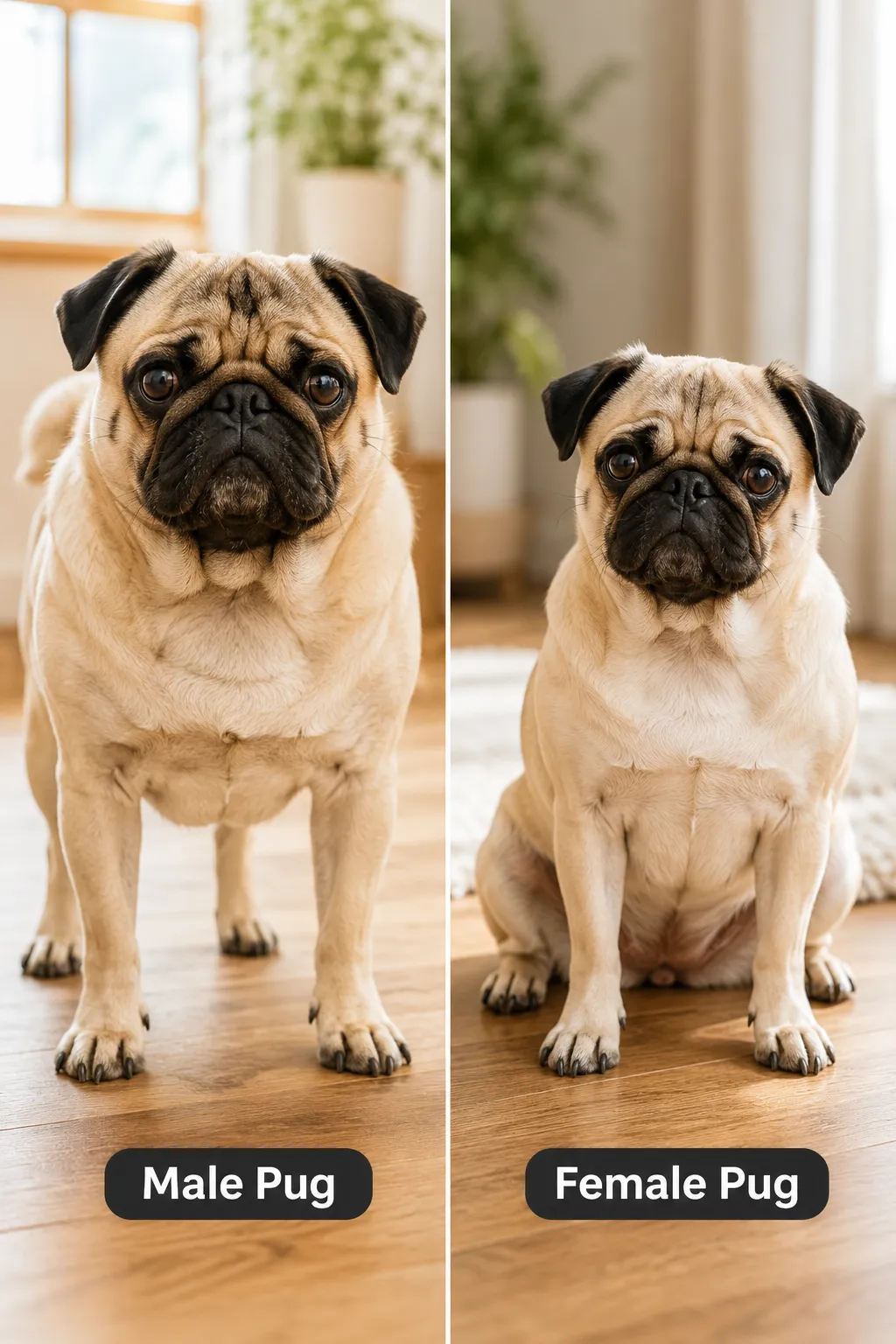
Male and female pugs look nearly identical at first glance. Both have the same flat face, deep wrinkles, curled tail, and large round eyes that make pugs so distinctive.
The main visual differences are subtle:
- Males may have a slightly broader head and stockier build
- Females can appear a bit more refined and slender
- Coat color and markings are not gender-specific – both come in fawn and black
For most dog lovers, telling a male pug from a female pug by looks alone is genuinely difficult without checking. The AKC breed standard does not distinguish appearance requirements between the sexes.
Male vs Female Pug Temperament and Personality Differences
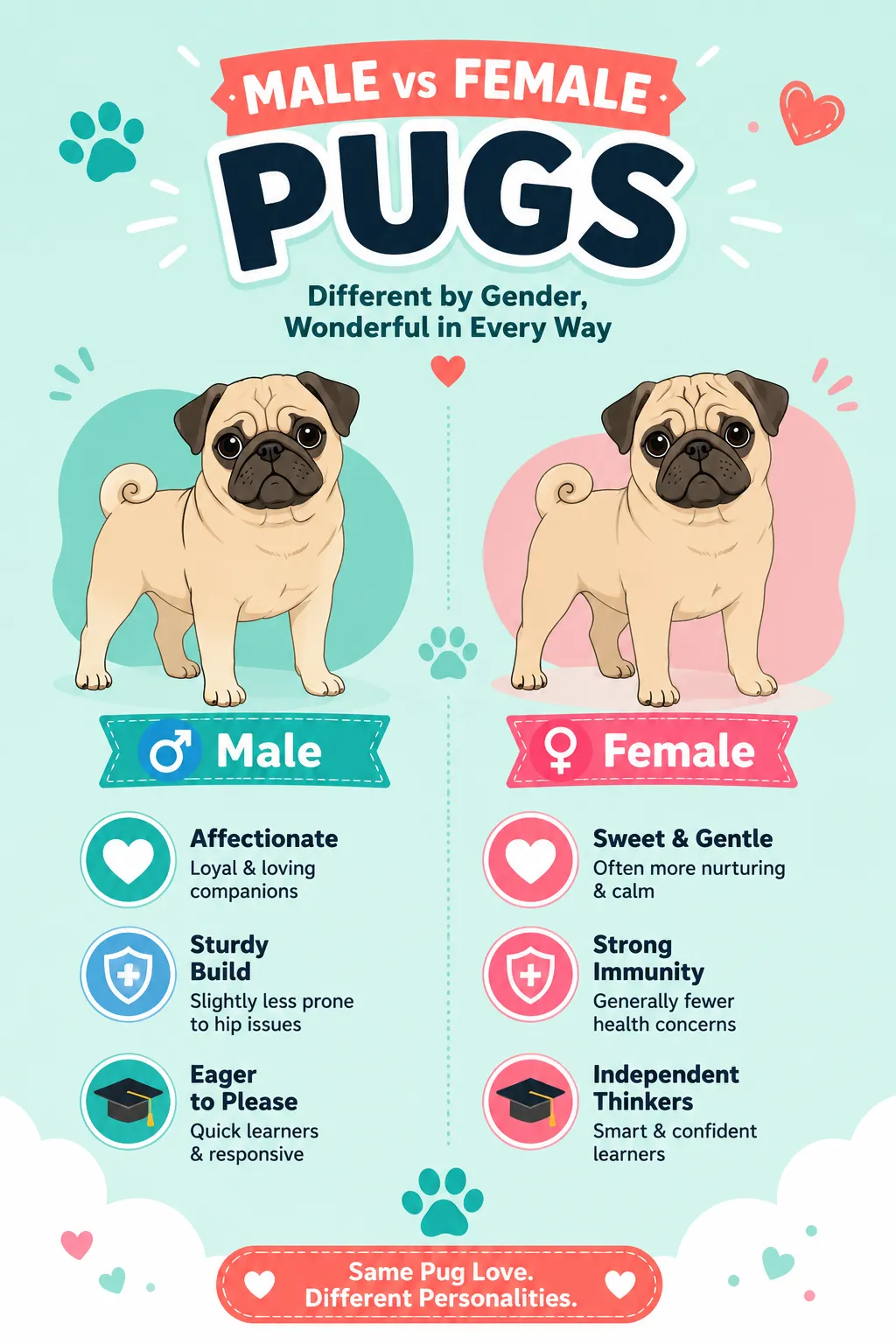
Generally, male pugs are described as more openly affectionate and attention-seeking, while female pugs tend to be more independent and selective. That said, individual personality varies a lot between animals, and early socialization matters just as much as gender.
Male pug personality traits:
- More likely to follow you from room to room
- Playful and goofy well into adulthood
- Can be more openly demanding of affection
- May show more interest in other dogs and animals
Female pug personality traits:
- More self-sufficient between cuddle sessions
- Can be more focused and alert
- Female personality differences include being more selective about when they want attention
- May be slightly more territorial with other female dogs
Both male and female pugs are social animals that do not do well with long periods alone. Read our 15 Pug Dog Facts for more about what makes this breed tick.

Are Male Pugs More Affectionate – or More Clingy?
Male pugs are generally more openly affectionate than females, and yes, some owners would call that clingy. Males tend to seek physical contact more consistently and may follow their pet parent around the house more than female pugs do.
Female pugs show affection too – they just tend to do it on their own terms. Females may come to you for cuddles, then wander off when they’re done. Males often want to stay glued to your side.
If you want a dog that’s always in your lap, a male pug might be your best match. If you prefer a pet that’s loving but gives you a bit more space, a female pug could be the better fit.
Are Male Pugs Easier to Train Than Females?
Females are often considered slightly easier to train than males, especially in the early stages. Female pugs tend to be more focused and less easily distracted, which helps during short training sessions.
Male pugs can get sidetracked by smells, other animals, or the urge to play. However, with consistent positive reinforcement, both genders learn quickly. Check out this 14-day dog training plan that works well for small breeds like pugs.
Training tips for male pugs:
- Keep sessions short (5-10 minutes)
- Use high-value treats to hold focus
- Train before meals when motivation is highest
Training tips for female pugs:
- Use their independent streak as motivation – make training feel like their idea
- Vary rewards to keep them engaged
Do Male Pugs Mark Territory More Than Females?
Yes – unneutered male pugs are significantly more likely to mark territory indoors than females. This is one of the most practical differences between the two genders for new owners.
Marking behavior in males is driven by testosterone and typically starts between 6-12 months of age. Neutering a male pug early – ideally before 6 months – greatly reduces or eliminates this behavior. For more on training a dog that has developed habits, our leash training guide covers focus and impulse control techniques that apply here too.
Female pugs can occasionally mark, but it’s far less common and usually tied to the heat cycle.
Female Pug Heat Cycle – What to Expect
An unspayed female pug will go into heat roughly twice a year, with each cycle lasting about 2-4 weeks. During this time, you may notice behavioral changes, light bleeding, and increased attention from male dogs.
Key things to know about the female pug heat cycle:
- First heat usually occurs between 6-12 months of age
- Cycles repeat every 5-8 months on average
- Signs include swelling, spotting, and restlessness
- Keeping an unspayed female away from intact males requires active management
Spaying eliminates the heat cycle entirely and removes the risk of pyometra, a serious uterine infection that affects unspayed females.
Male vs Female Pug Health – Are There Real Differences?
Both male and female pugs share the same breed-specific health challenges, including brachycephalic obstructive airway syndrome (BOAS), skin fold dermatitis, and eye problems. However, there are some gender-specific health concerns to know about.
Health risks specific to female pugs:
- Pyometra (uterine infection) if unspayed
- Mammary tumors – risk drops significantly if spayed before first heat
- Pregnancy complications due to their compact build
Health risks more common in male pugs:
- Testicular cancer if unneutered
- Prostate issues in older intact males
- Increased roaming behavior that can lead to injury
Spaying and neutering both genders reduces many of these risks. Talk to your vet about the best timing for your individual dog.
Male vs Female Pug Cost – Do Females Cost More?
Female pugs from breeders often cost slightly more than males – typically $1,200 to $2,500 for a female vs $1,000 to $2,000 for a male, depending on breeder reputation, bloodline, and location. However, prices vary widely and these are general estimates.
Ongoing cost differences to consider:
- Spaying a female typically costs $200-$500, often more than neutering a male ($150-$350)
- Unspayed females may need additional care during heat cycles
- A pug mix (like a pug mix chug – a pug crossed with a Chihuahua) may cost less from a rescue or shelter
Want to save on cost? Pug rescue adoption fees typically run between $100 and $400 for either gender. Organizations like Pug Rescue of Austin and similar groups across the country list available animals regularly. Rescue news updates and available dogs are posted on their sites – worth checking if you’re open to an adult pug.
Do Male or Female Pugs Live Longer?
There is no strong evidence that one gender lives significantly longer than the other. Both male and female pugs have an average lifespan of 12-15 years, according to AKC data.
Spaying and neutering can positively influence lifespan for both genders by reducing cancer risks and preventing serious reproductive health issues. A 2013 study published in PLOS ONE found that sterilized dogs lived on average 1.5 years longer than intact dogs.
The biggest factors in a pug’s lifespan are diet, weight management, veterinary care, and avoiding overheating – not gender.
Which Gender Pug Is Better for Families With Kids?
Both male and female pugs are excellent with children. Pugs are gentle, patient, and naturally drawn to human company, making them one of the best small dog breeds for families.
Male pugs may be slightly more boisterous and playful, which can be a great match for energetic kids. Female pugs may be a bit calmer and more measured, which some families prefer. Either way, supervision between young children and any dog is always recommended.
If you’re comparing pugs to other family-friendly breeds, read about big dogs that are total gentle giants for a broader comparison.
Should You Get a Male or Female Pug for Your Lifestyle?
The right choice between a male and female pug depends on what you’re looking for in a pet. Here’s a simple decision guide:
Choose a male pug if:
- You want a dog that’s openly affectionate and loves to cuddle
- You have other male-friendly animals in the home
- You plan to neuter early to avoid marking
Choose a female pug if:
- You prefer a dog with a slightly more independent streak
- You want a pet that may be easier to train from day one
- You’re prepared for heat cycles or plan to spay early
Either gender works well if:
- You have children or other animals at home
- You’re adopting from a rescue and want an adult dog with a known personality
- You’re open to a pug mix like a pug mix chug for a slightly different temperament
For more about pugs and small dog behavior, read our posts on 15 cute small dogs that look like puppies forever and 15 facts about Yorkies for comparison.

Do Pugs Get Along With Other Animals?
Yes – pugs generally get along well with other animals, including cats and other dog breeds. Their friendly, non-aggressive nature makes them adaptable to multi-pet households.
There are some nuances between the genders:
- Male pugs can sometimes clash with other intact males due to dominance behavior
- Female pugs may occasionally be territorial with other females
- Both genders tend to do well with cats and smaller animals when introduced properly
Neutering and spaying significantly reduce same-sex tension in most cases. Early socialization is the biggest factor in how well any pug gets along with other animals.
Why Can’t Pugs Stay Outdoors?
Pugs cannot safely live outdoors because of their brachycephalic (flat-faced) anatomy. Their shortened airways make it very difficult for them to regulate body temperature, putting them at serious risk of heatstroke in warm weather.
Key reasons pugs must stay indoors:
- They overheat quickly in temperatures above 80°F (27°C)
- They are also sensitive to cold due to their short coat
- Their flat faces make panting – the primary cooling mechanism for dogs – less effective
- They are companion animals that suffer emotionally from isolation outdoors
This applies equally to both male and female pugs. Always keep pugs in a climate-controlled environment.
Related Reading
Looking for more helpful posts about pugs and dog care? Here are some articles you may find interesting:
- 15 Pug Dog Facts That Prove These Wrinkly Babies Are Pure Chaos and Love
- The 14-Day Dog Training Plan That Actually Works
- 15 Puppy Potty Training Tips That Actually Work
- 12 Brain Games for Dogs That Instantly Boost Focus and Beat Boredom
- How to Socialize a Reactive Dog Without Stress
These articles, posts, and stories cover everything from training basics to breed-specific facts. Back to reading whenever you’re ready – there’s a lot to explore.
Conclusion
The male vs female pug question doesn’t have one right answer – it has the right answer for you. Generally, males are more openly affectionate and playful, while females tend to be more independent and focused. Both genders are healthy, loving, and wonderful with families and other animals.
Here’s what to do next:
- Decide on your lifestyle fit – use the “choose X if” guide above
- Contact a reputable breeder or pug rescue – check rescue news and available animals in your location
- Plan for spay/neuter – it closes most behavioral differences and improves long-term health
- Read more about pugs – the more you know about pugs before bringing one home, the better
Whether you go male or female, you’re getting one of the most charming, funny, and loyal dog breeds out there. Thank yourself later for doing the research now.
FAQ
Do male or female pugs live longer?
Both male and female pugs have a similar average lifespan of 12-15 years. There is no strong evidence that one gender consistently outlives the other. Spaying or neutering either gender can extend lifespan by reducing cancer risks. Diet, healthy weight, and regular vet care matter far more than sex when it comes to longevity in pugs.
Do male and female pugs look different?
Male and female pugs look nearly identical. Males may have a slightly broader, stockier build, while females can appear a bit more slender. Both have the same flat face, deep wrinkles, curled tail, and large eyes. The differences are subtle enough that most people cannot tell a male pug from a female pug by appearance alone without checking.
Is it better to have one pug or two?
Two pugs can be great companions for each other, especially if you work long hours. Pugs are social animals that dislike being alone. However, two pugs means double the cost, double the vet bills, and double the shedding. Start with one pug, get them settled and trained, then consider adding a second. A male-female pair typically gets along better than two males or two females.
Are male pugs more clingy?
Yes, male pugs are generally considered more clingy than females. Males tend to follow their owners from room to room, demand more frequent attention, and seek physical contact more consistently. Female pugs are affectionate too, but they tend to be more selective about when they want cuddles. After neutering, some of the intensity in male behavior typically softens a bit.