

Last updated: August 13, 2026
Quick Answer: Dogs scratch all the time mainly because of allergies, parasites like fleas, skin infections, or dry and damaged skin. Identifying the root cause is the key to real relief – and a simple oatmeal bath can ease mild itching fast while you figure out what’s going on. If scratching is constant or causing wounds, a vet visit is essential.
Key Takeaways
- Allergies (environmental, food, and contact) are the leading cause of chronic itching in dogs
- Fleas remain the most common parasite trigger – flea allergy dermatitis is the most widespread allergic skin disease in dogs
- Bacterial and fungal skin infections often develop as a result of scratching, making the cycle worse
- Dry skin from weather, over-bathing, or poor diet is a frequently overlooked cause
- A colloidal oatmeal bath is the single most effective home step for mild itch relief dogs can benefit from quickly
- Dogs scratching with no fleas present may have mites, yeast infections, food allergies, or hormonal issues
- Omega-3 fatty acid supplements support skin health and can reduce itching over time
- Always consult a vet if scratching causes open sores, hair loss, or lasts more than a week
- Compulsive scratching licking and chewing can also be anxiety-driven – stress matters
- Early veterinary involvement leads to better outcomes than relying on home remedies alone
What Causes Itchy Skin in Dogs? The 4 Big Reasons
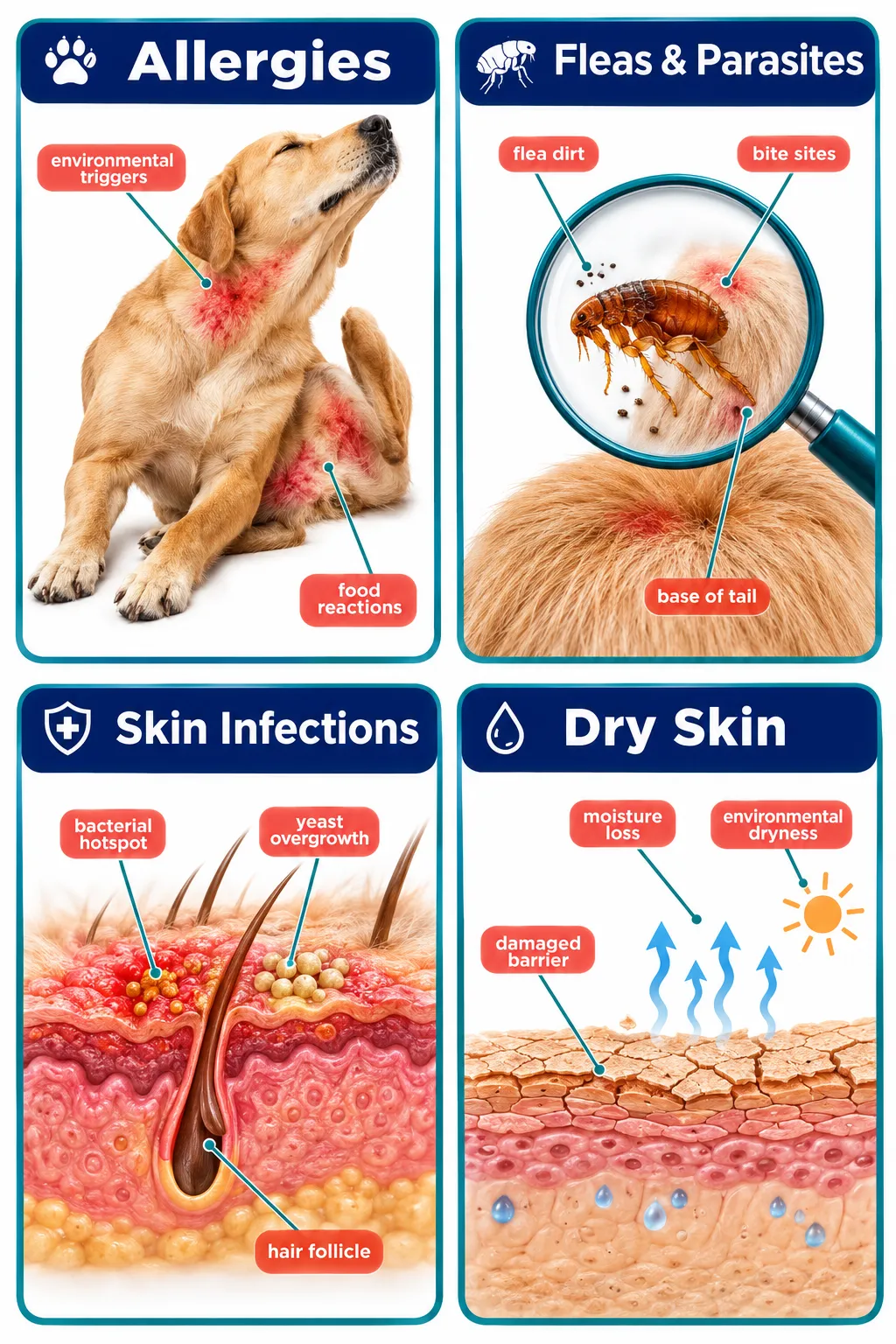
Itchy skin in dogs has four main causes: allergies, parasites, skin infections, and dry or damaged skin. Understanding which one is driving your dog’s scratching determines the right treatment path.
Reason 1 – Allergies (Environmental, Food, and Contact)
Allergies are the top reason dogs develop chronic itching, and they’re more common than most owners realize. According to veterinary experts, allergic dermatitis is now the leading driver of persistent scratching in dogs.
There are three main allergy types to know about:
- Environmental allergies – pollen, mold, dust mites, and grass. These often cause seasonal itching that gets worse in spring and fall.
- Food allergies – proteins like chicken, beef, or dairy can trigger itchy skin, especially around the paws, belly, and ears.
- Contact allergies – reactions to certain fabrics, cleaning products, or lawn chemicals.
Dogs with allergies typically scratch, lick, and chew specific areas repeatedly. You might notice red skin, recurring ear infections, or watery eyes alongside the itching. This pattern of scratching licking chewing is a classic sign of allergic dermatitis.
Vet tip: Food allergies in dogs require an elimination diet trial of 8-12 weeks to properly diagnose. Don’t skip this step.
Reason 2 – Fleas and Other Parasites
Fleas are the most common immediate cause of intense scratching in dogs. Flea allergy dermatitis is the most widespread allergic skin disease in dogs – and it only takes one flea bite to trigger a reaction in a sensitive dog.
Common parasites that cause itching include:
- Fleas – look for “flea dirt” (tiny black specks) at the base of the tail
- Mites – sarcoptic mange mites cause intense itching and are highly contagious
- Ear mites – cause scratching around the ears and head shaking
- Lice – less common but still a cause of skin irritation in dogs
Many owners assume their dog is flea-free because they can’t see any. But a single flea can cause days of itching in an allergic dog. Always use a fine-toothed comb and check the base of the tail, groin, and belly. Parasite testing prevention is part of routine veterinary care for a reason.
Reason 3 – Bacterial and Fungal Skin Infections
Skin infections are often both a cause and a consequence of scratching. Dogs that scratch constantly can break the skin barrier, allowing bacteria and yeast to move in and create secondary infections.
Signs of infections include:
- Hot, red, or moist patches of skin (hot spots)
- A musty or yeasty smell
- Crusty or scaly areas
- Hair loss in patches
Bacterial infections (like Staphylococcus) and fungal infections (like Malassezia yeast) both require specific treatment – usually medicated shampoos, topical creams, or oral medications prescribed by a veterinarian. Treating the infection without addressing the underlying cause will just lead to recurrence.
Reason 4 – Dry Skin and Environmental Damage
Dry skin is a surprisingly common and often missed reason dogs scratch all the time. Low humidity in winter, over-bathing with harsh shampoos, and diets low in healthy fats can all strip the skin of its natural moisture.
Signs of dry skin in dogs:
- Flaking or dandruff-like white flakes
- Dull, brittle coat
- Scratching that’s mild but constant
- No redness or obvious infection
Adding an omega-3 fatty acid supplement to your dog’s food is one of the most evidence-backed ways to support skin health. Fish oil, in particular, helps restore the skin barrier over time. You can also check our guide on homemade dog food recipes for diet ideas that support coat and skin health.
The 1-Step Bath Trick: Does Bathing Help With Dog Scratching?
A colloidal oatmeal bath is the single most effective home step for soothing a mildly itchy dog. It works by coating the skin with anti-inflammatory compounds that reduce redness, calm irritation, and temporarily relieve itching – often within minutes.
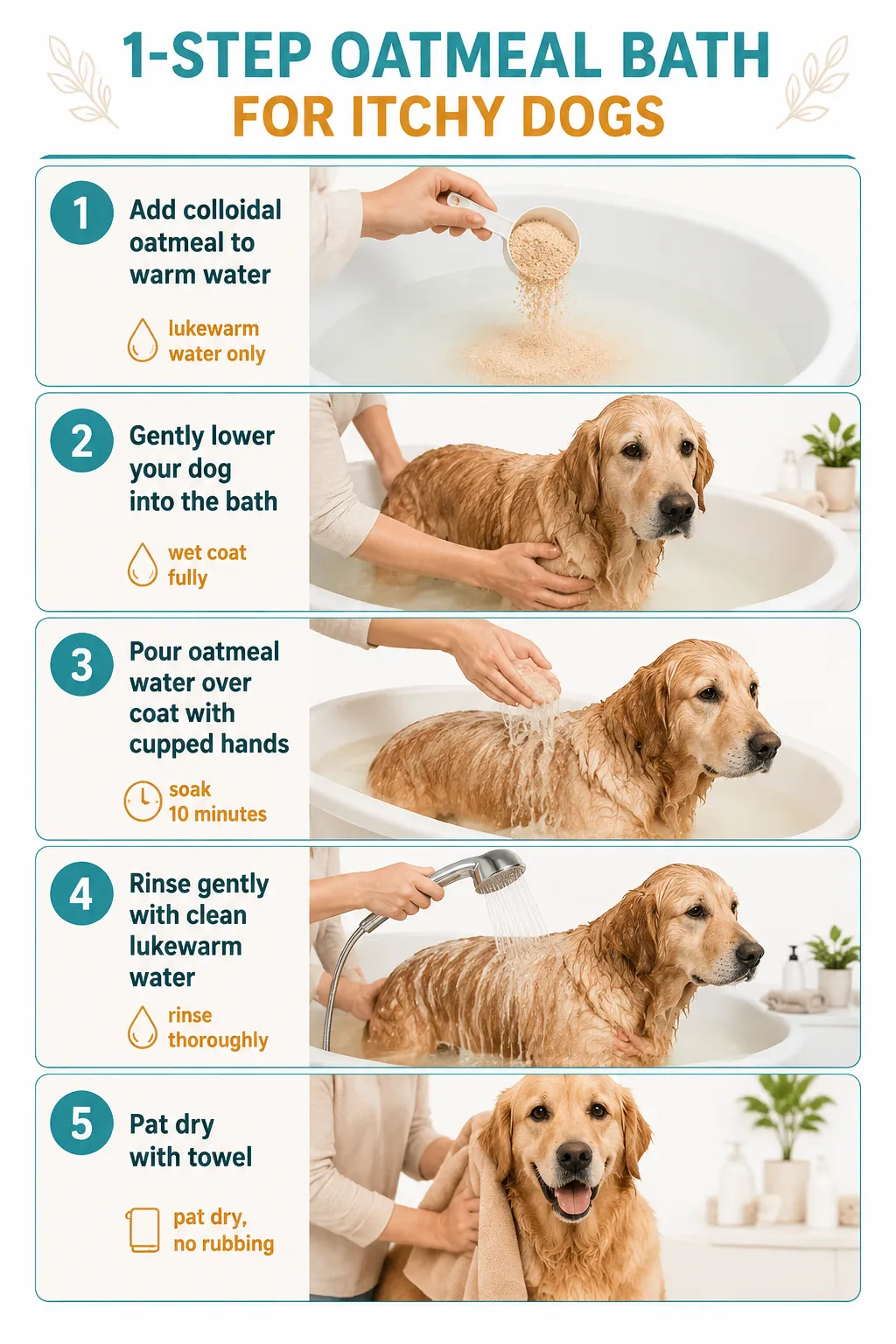
Here’s exactly how to do it:
- Fill the tub with lukewarm (not hot) water – heat makes itching worse
- Add colloidal oatmeal – use a finely ground, plain colloidal oatmeal product (about 1 cup for a medium dog)
- Wet your dog’s coat fully and let them soak for 10 minutes
- Pour the oatmeal water over itchy areas repeatedly using cupped hands
- Rinse thoroughly – leftover oatmeal residue can cause more irritation
- Pat dry – never rub, which can aggravate inflamed skin
How often should you bathe an itchy dog? For dogs with mild dry skin or environmental allergies, once every 1-2 weeks with a gentle or medicated shampoo is appropriate. Over-bathing strips natural oils and worsens dry skin.
Important: This bath trick provides itch relief for dogs with mild symptoms. It does not treat the underlying cause. If your dog’s scratching is severe or returns within days, a vet visit is the right next step.
My Dog Is Scratching But Has No Fleas – What’s Going On?
Dogs can scratch intensely with no fleas present, and this is one of the most common concerns owners bring to the vet. Hudson Highlands Veterinary Medical Group notes that no-flea scratching is often caused by environmental allergies, food sensitivities, mites, yeast infections, or hormonal imbalances like hypothyroidism.
Common no-flea causes:
| Cause | Key Signs |
|---|---|
| Environmental allergies | Seasonal pattern, paw licking, red ears |
| Food allergies | Year-round, belly and paw focus |
| Mites (mange) | Intense itch, crusty skin, hair loss |
| Yeast infection | Musty smell, dark skin, ear issues |
| Hypothyroidism | Weight gain, dull coat, lethargy |
| Anxiety/behavioral | No skin changes, stress triggers |
Diagnostic laboratory testing by a veterinarian is often needed to identify the exact cause. Don’t assume it’s “just dry skin” if scratching is persistent.
When Should You Take Your Dog to the Vet for Scratching?
Call your vet if scratching is causing wounds, hair loss, or isn’t improving after a week of home care. Veterinary guidance consistently emphasizes that early vet involvement leads to faster resolution and prevents secondary infections from taking hold.
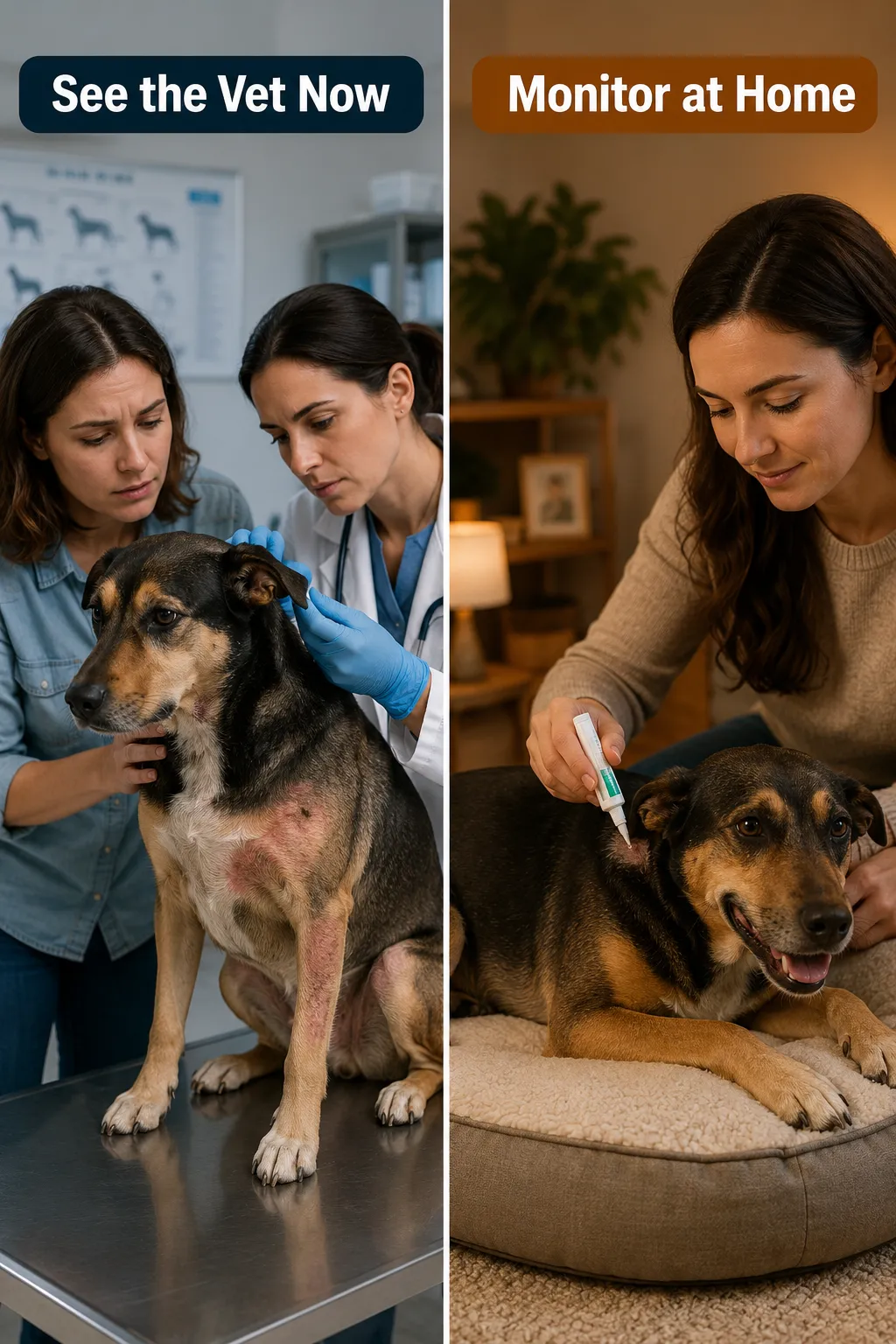
See your vet promptly if your dog shows:
- Open sores or raw, bleeding skin
- Sudden intense scratching that came on fast
- Hair loss in patches
- Swollen, hot, or smelly skin
- Scratching combined with vomiting, diarrhea, or lethargy
- No improvement after 7 days of home care
- Signs of mites (extremely contagious to other pets)
For dogs with persistent symptoms, a veterinarian may recommend digital x-ray ultrasound imaging, allergy testing, or skin cytology. A DVM can also use a symptom checker approach – reviewing signs systematically to narrow down causes before recommending treatment.
If you’ve noticed your dog also showing other unusual behaviors, our article on 12 stressed dog signs most owners miss may help you spot anxiety-related scratching early.
Home Remedies for a Mildly Itchy Dog
For mild cases, several home remedies can provide safe, short-term itch relief for dogs while you identify the cause. These work best when scratching is occasional, not compulsive.
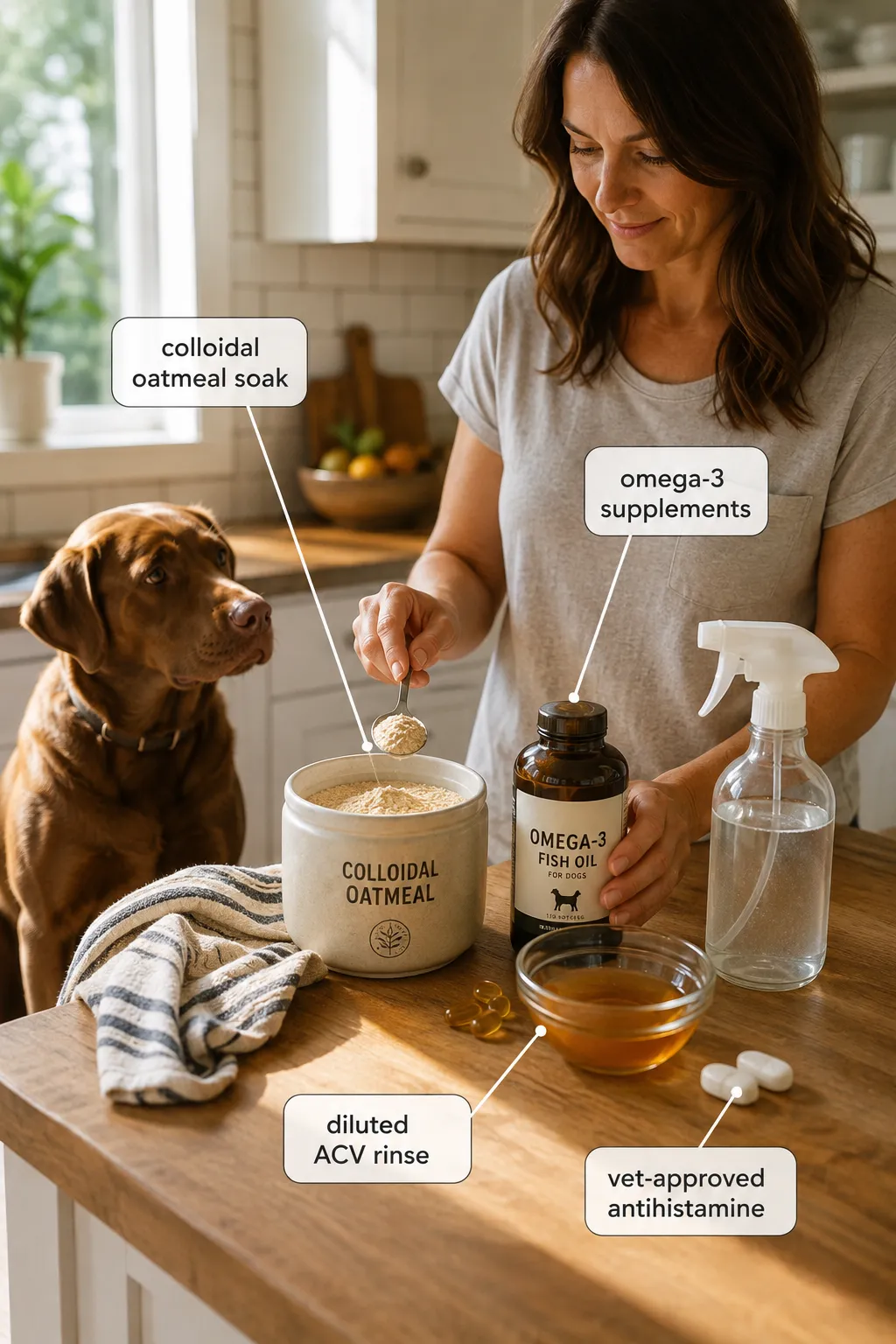
Safe home options:
- Colloidal oatmeal bath – the gold standard for soothing itchy skin in dogs (see the bath steps above)
- Diluted apple cider vinegar rinse – mix 50/50 with water and apply to non-broken skin only; never on open wounds
- Omega-3 fatty acid supplements – fish oil capsules added to food support the skin barrier over weeks
- Cool water compress – a clean damp cloth on hot spots provides immediate short-term relief
- Aloe vera gel – pure, xylitol-free aloe can soothe minor skin irritation
For dogs that also lick their paws constantly, our guide on home remedies to stop your dog from licking its paws covers targeted solutions.
What to avoid:
- Human antihistamines without vet approval (some are toxic to dogs)
- Essential oils directly on skin (many are harmful to pets)
- Steroid creams meant for humans
- Over-bathing, which worsens dry skin
How Vets Diagnose and Treat an Itchy Dog
Vets use a systematic process to find the cause of itching in dogs, starting with a full physical exam and health history. According to PetMD, the diagnostic process often includes skin scraping for mites, cytology for infections, food elimination trials, and allergy testing.
Common diagnostic steps:
- Full skin exam and coat check
- Skin scraping to check for mites
- Cytology (microscope check for bacteria or yeast)
- Blood panel to rule out hormonal causes
- Food elimination diet trial (8-12 weeks)
- Intradermal or blood allergy testing if needed
Treatment options a vet may recommend:
- Antiparasitic medications – for fleas, mites, and other parasites
- Antifungal or antibiotic medications – for bacterial or fungal infections
- Immunotherapy – allergy shots or sublingual drops for environmental allergies
- Apoquel or Cytopoint – targeted medications that block the itch signal in dogs with allergic dermatitis
- Medicated shampoos – for infections and seborrhea
- Dietary changes – prescription hydrolyzed protein diets for food allergies
Brittany Kleszynski DVM and other veterinary professionals reviewed guidance from clinics like Topaz Veterinary Clinic and Hudson Highlands Veterinary Medical Group confirms that the most effective treatment is always cause-based, not symptom-based. Vanesa Farmer and reviewed Vanesa-level expert guidance consistently reinforces this multi-step approach.
For dogs whose scratching is linked to diet, check out our vet-approved crockpot dog food recipes for skin-supporting meal ideas.
How to Prevent Itchy Skin in Dogs
Preventing itching in dogs means addressing the most common causes before they become problems. Country Living’s pet health guidance and veterinary sources agree that consistent flea prevention, a quality diet, and regular grooming are the three pillars of itch prevention.
Prevention checklist:
- ✅ Use year-round flea and tick prevention (ask your vet for the right product)
- ✅ Feed a complete diet with adequate omega-3 fatty acids for skin health
- ✅ Bathe your dog every 4-6 weeks with a gentle, dog-specific shampoo
- ✅ Wipe paws after outdoor walks to remove allergens like pollen
- ✅ Wash dog bedding weekly in hot water
- ✅ Schedule annual vet check-ups that include parasite testing prevention
- ✅ Address anxiety early – behavioral nutritional consultations can help dogs with stress-related scratching
For dogs with anxiety-driven compulsive scratching licking, reducing stress at home matters too. Our guide on how to keep your dog calm around visitors covers practical calming strategies.
Itchy Dog FAQs
How do I stop my dog from compulsive scratching?
Compulsive scratching in dogs needs a root cause diagnosis first. See your vet to rule out allergies, parasites, mites, and infections. For anxiety-driven compulsive scratching licking, behavioral support and environmental enrichment help. Short-term, a colloidal oatmeal bath and omega-3 supplements can reduce the urge to scratch while you work on the underlying issue.
What can I give my dog to stop itching naturally?
Safe natural options include colloidal oatmeal baths, omega-3 fatty acid supplements (fish oil), diluted apple cider vinegar rinses on unbroken skin, and cool water compresses on hot spots. These provide itch relief for dogs with mild symptoms. Always check with your vet before starting any supplement, especially if your dog is on other medications.
What can I do to stop my dog from constantly scratching?
Start by identifying the cause – check for fleas, look at your dog’s diet, and note whether scratching is seasonal. Give an oatmeal bath for immediate relief. Add fish oil to meals for long-term skin support. If scratching is constant (daily, disrupting sleep, causing wounds), book a vet appointment. Persistent itching in dogs rarely resolves without treating the underlying cause.
What does it mean if my dog is constantly scratching?
Constant scratching in dogs signals an underlying health issue – not just a habit. The most common causes are allergies (environmental or food), flea allergy dermatitis, skin infections (bacterial or fungal), mites, or dry skin. Less commonly, hormonal disorders like hypothyroidism or anxiety can drive compulsive scratching licking chewing. A dog scratching every day without obvious cause needs veterinary evaluation.
Conclusion
Understanding why do dogs scratch all the time comes down to four main culprits: allergies, parasites, skin infections, and dry skin. Each one has specific signs, and each one needs a targeted approach to fix properly.
The 1-step oatmeal bath is a genuinely useful tool for mild itch relief – but it’s a comfort measure, not a cure. Real, lasting relief for dogs comes from identifying and treating the root cause, whether that’s a flea prevention plan, a dietary change, or prescription medications from your vet.
Your action plan:
- Check for fleas first – use a fine-toothed comb at the base of the tail
- Try a colloidal oatmeal bath for immediate soothing
- Add an omega-3 supplement to meals to support skin health
- Note the pattern – is it seasonal? After certain foods? After walks?
- Book a vet visit if scratching persists more than 7 days or causes wounds
Your dog’s health and comfort depend on you catching these signs early. The sooner you act, the faster they get relief.