Last updated: September 3, 2026
Quick Answer: Butter is not toxic to dogs, but it is not safe to feed them either. It is roughly 80% saturated fat with zero nutritional benefit for dogs, and even small repeated amounts can trigger vomiting, diarrhea, or pancreatitis. One accidental lick is unlikely to cause harm, but deliberately offering butter as a treat is a habit worth stopping now.
Key Takeaways
- 🧈 Butter is not poisonous to dogs, but it is also not safe or beneficial
- 🐾 Even tiny repeated bites raise the risk of pancreatitis and obesity over time
- 🚨 A large amount of butter (like a whole stick) can trigger acute pancreatitis, which is a medical emergency
- 🐕 Dogs with a history of pancreatitis, overweight dogs, and breeds like Miniature Schnauzers face higher risk even from small amounts
- 🧂 Salted butter adds sodium risk on top of the fat risk
- ⚠️ Flavored spreads and “light” butters may contain xylitol, which is acutely toxic to dogs
- ✅ Xylitol-free, unsalted peanut butter is a far safer alternative if you want a fatty treat
- 📞 If your dog eats a large quantity of butter, call your vet right away rather than waiting to see what happens
- 🍞 Buttered toast, popcorn, and baked goods count too – it is the cumulative fat load that matters
Is Butter Toxic to Dogs?
Butter is not toxic to dogs in the way that chocolate or xylitol are. A single lick off a knife or a small smear is unlikely to cause a serious emergency in a healthy adult dog.
That said, “not toxic” does not mean “safe.” According to veterinary nutrition guidance at PetMD, butter offers no nutritional value for dogs and carries real health risks because of its extremely high fat content and dairy components. The distinction matters: not poisonous is not the same as okay to eat.
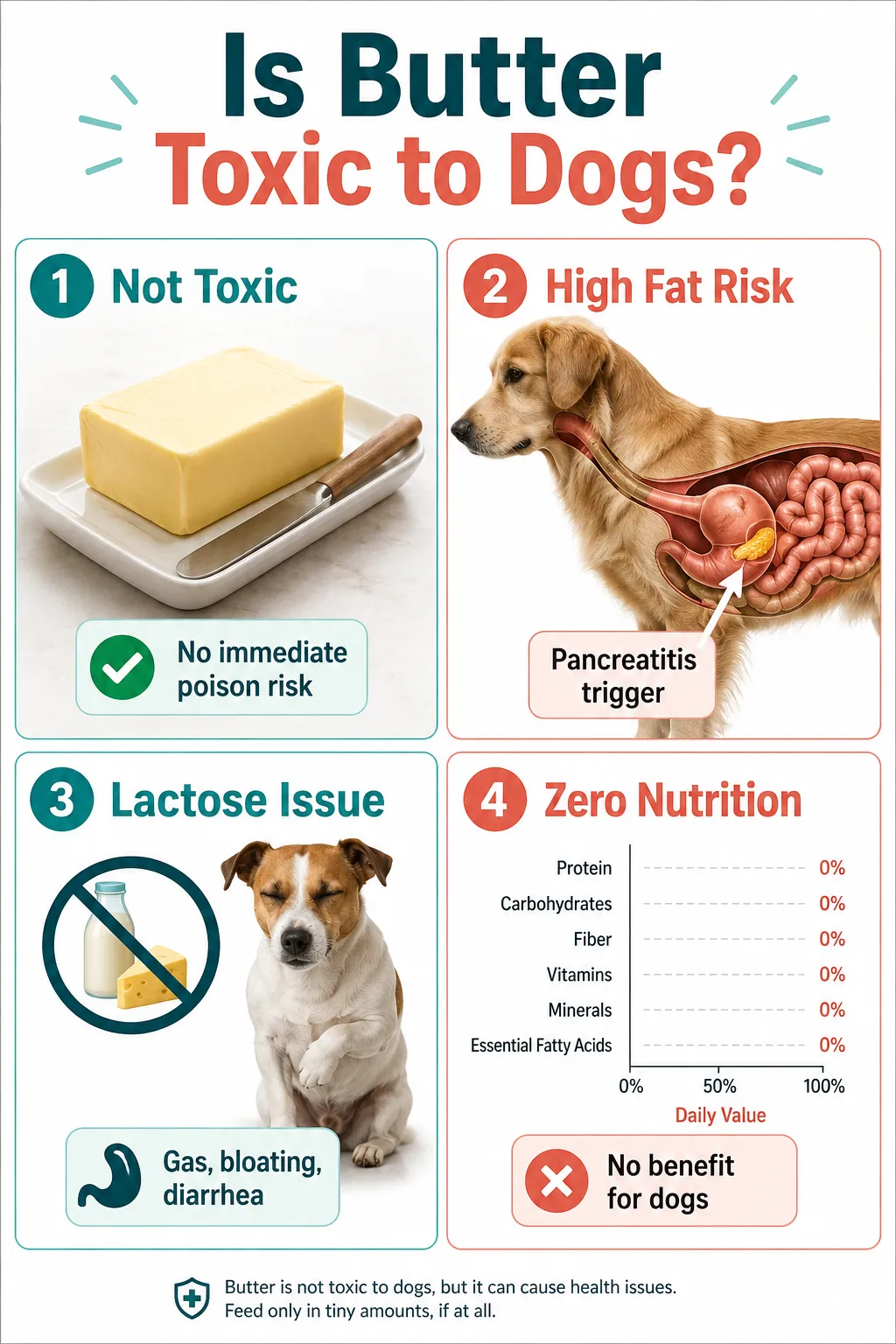
Think of it this way. Butter will not send your dog to the emergency room after one lick, but it is also not a food that belongs in their diet at all. The “it’s just a tiny bite” logic is where most dog owners go wrong.
How Much Butter Can a Dog Safely Eat?
The honest answer is: ideally none, on purpose. There is no recommended serving size for butter in a dog’s diet because there is no benefit that justifies any amount of risk.
Fetch Pet’s guidance on butter for dogs puts it plainly: butter is “almost entirely fat with zero nutritional value” for dogs. There is simply no good reason to offer it.
If your dog accidentally gets a small lick, that is unlikely to cause harm in a healthy, normal-weight adult dog. But that is very different from treating butter as an occasional snack.
Rough risk scale by amount:
| Amount | Likely Outcome in a Healthy Dog |
|---|---|
| A lick or smear (under 1 tsp) | Probably fine, monitor briefly |
| 1-2 teaspoons | Possible mild stomach upset |
| 1 tablespoon or more | Risk of vomiting, diarrhea, GI distress |
| A full stick (4 oz / 113g) | Serious pancreatitis risk, call vet immediately |
These are estimates for a healthy, average-sized adult dog. Smaller dogs, puppies, and dogs with health conditions face higher risk at lower amounts.
What Happens If a Dog Eats Butter?
What happens depends on how much butter your dog ate and their individual health. A small accidental exposure usually causes mild or no symptoms. A larger amount can cause real problems.
Common symptoms after a dog eats butter include:
- Vomiting
- Diarrhea or loose stools
- Bloating or gassy stomach
- Lethargy
- Loss of appetite
- Abdominal pain (your dog may hunch, whine, or resist belly touching)
The most serious outcome is pancreatitis, which is inflammation of the pancreas triggered by a sudden high-fat load. Symptoms of pancreatitis include repeated vomiting, severe abdominal pain, and lethargy. This can occasionally become life-threatening and always warrants a vet call.
If you notice your dog showing early signs of pain after eating butter, do not wait to see if it passes.
Does Butter Cause Pancreatitis in Dogs?
Yes, butter is one of the dietary triggers most commonly linked to pancreatitis in dogs. Butter is approximately 80% saturated fat, and the pancreas can become inflamed when it is suddenly forced to produce large amounts of digestive enzymes to process a high-fat meal.
HousePetAuthority notes that even small amounts of butter can trigger pancreatitis in sensitive dogs, not just large portions. This is especially true for dogs that are already predisposed.
Pancreatitis is not always mild. Acute cases can require hospitalization, IV fluids, and pain management. Chronic repeated exposure to high-fat foods can lead to recurring pancreatitis, which permanently damages the pancreas over time.
This is why the “tiny bite is fine” rule is more dangerous than it sounds. One bite probably will not cause pancreatitis. But a pattern of small bites, week after week, absolutely can.
Is Butter Bad for Dogs’ Digestion?
Yes, butter is hard on a dog’s digestive system for two reasons: the fat content and the dairy content.
Dogs are not well-equipped to digest large amounts of saturated fat. Their digestive systems can handle some fat, but butter is almost nothing but fat.
On top of that, many dogs are lactose intolerant to varying degrees. Butter contains less lactose than milk or cream, but it still has enough to cause gas, bloating, and loose stools in sensitive dogs.
If your dog already has a sensitive stomach, even a small amount of butter can cause a noticeable reaction. For dogs with known GI issues, Petful’s guidance on butter for dogs recommends avoiding it entirely rather than testing how much they can tolerate.
Is Butter Safe for Dogs With Sensitive Stomachs or Pancreatitis History?
No. Dogs with sensitive stomachs, a history of pancreatitis, or GI disease should have zero intentional butter exposure.
For these dogs, even a teaspoon of butter can be enough to trigger a flare-up. Veterinary guidance consistently flags this group as high-risk, and the advice is not “limit to a tiny amount” but rather “avoid completely.”
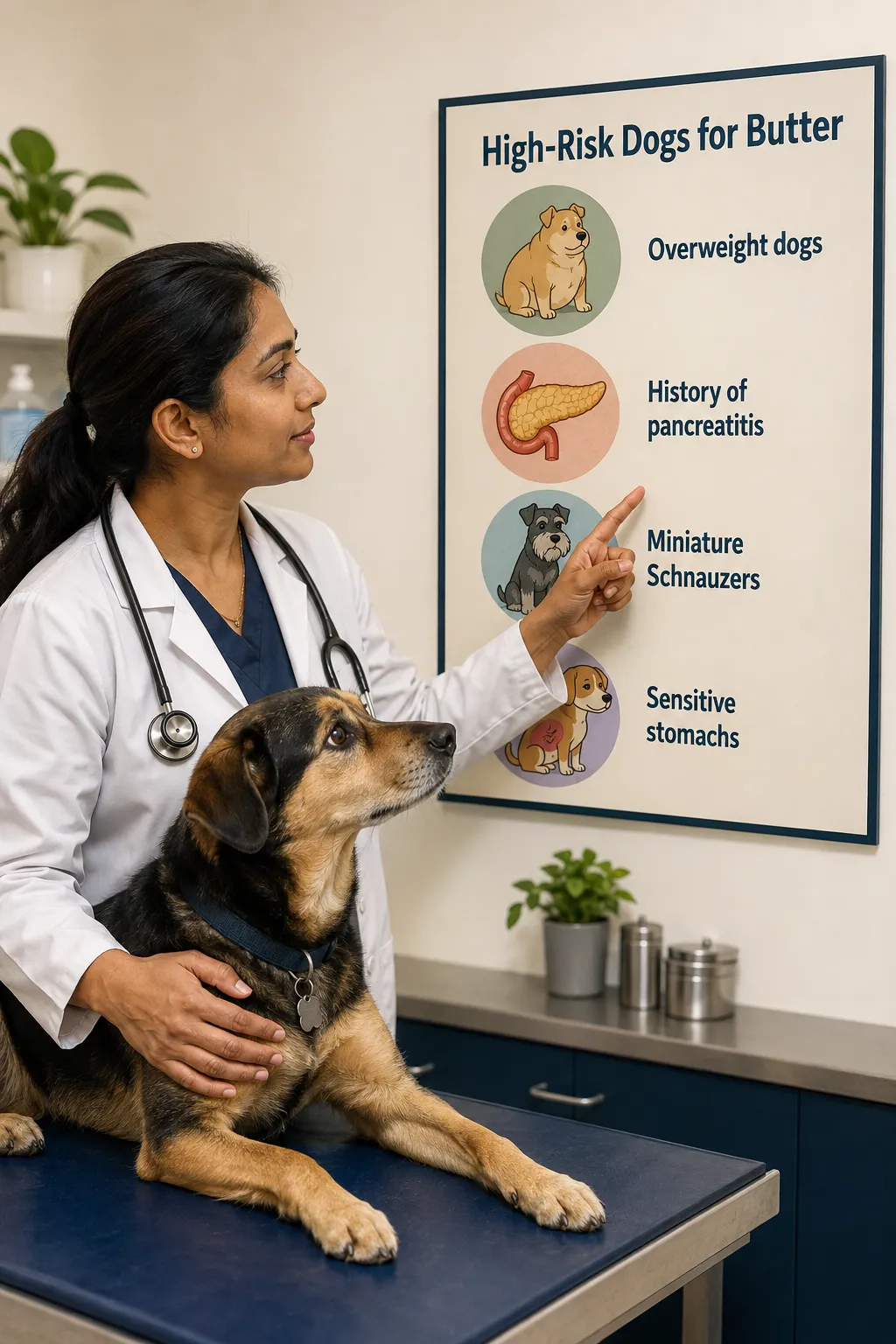
High-risk dogs include:
- Dogs with a history of pancreatitis
- Overweight or obese dogs
- Miniature Schnauzers (a breed with genetic pancreatitis predisposition)
- Dogs with inflammatory bowel disease or chronic GI issues
- Senior dogs with slower metabolism
If your dog falls into any of these categories, treat butter like a hazard, not a harmless treat. If you notice signs your dog is stressed or in discomfort after eating fatty food, that is worth taking seriously.
Can Dogs Eat Salted Butter vs. Unsalted Butter?
Neither is a good choice, but salted butter adds an extra layer of risk. Unsalted butter is still almost entirely saturated fat, which carries all the pancreatitis and digestive risks described above.
Salted butter adds sodium on top of that. Dogs need very little sodium in their diet, and excess salt can cause increased thirst, urination, and in larger amounts, sodium ion poisoning with symptoms like vomiting, tremors, and seizures.
If your dog accidentally eats a small amount of either type, the fat content is the bigger immediate concern. But if you are choosing between the two for any reason, unsalted is the lesser risk.
Can Puppies Eat Butter?
No. Puppies should not eat butter. Their digestive systems are still developing, and they are even more sensitive to high-fat foods than adult dogs.
Puppies also tend to be smaller, so the same amount of butter represents a proportionally larger fat load. The pancreatitis risk is real, and the lactose intolerance risk is also higher in young dogs.
Keep butter well out of reach of puppies, especially if they are the type to counter-surf or steal food. A puppy eating a stick of butter is a genuine vet-call situation.
What Should I Do If My Dog Ate a Lot of Butter?
Act quickly and do not wait to see how your dog feels. PetsCare’s guidance on dogs eating butter recommends a clear set of steps.
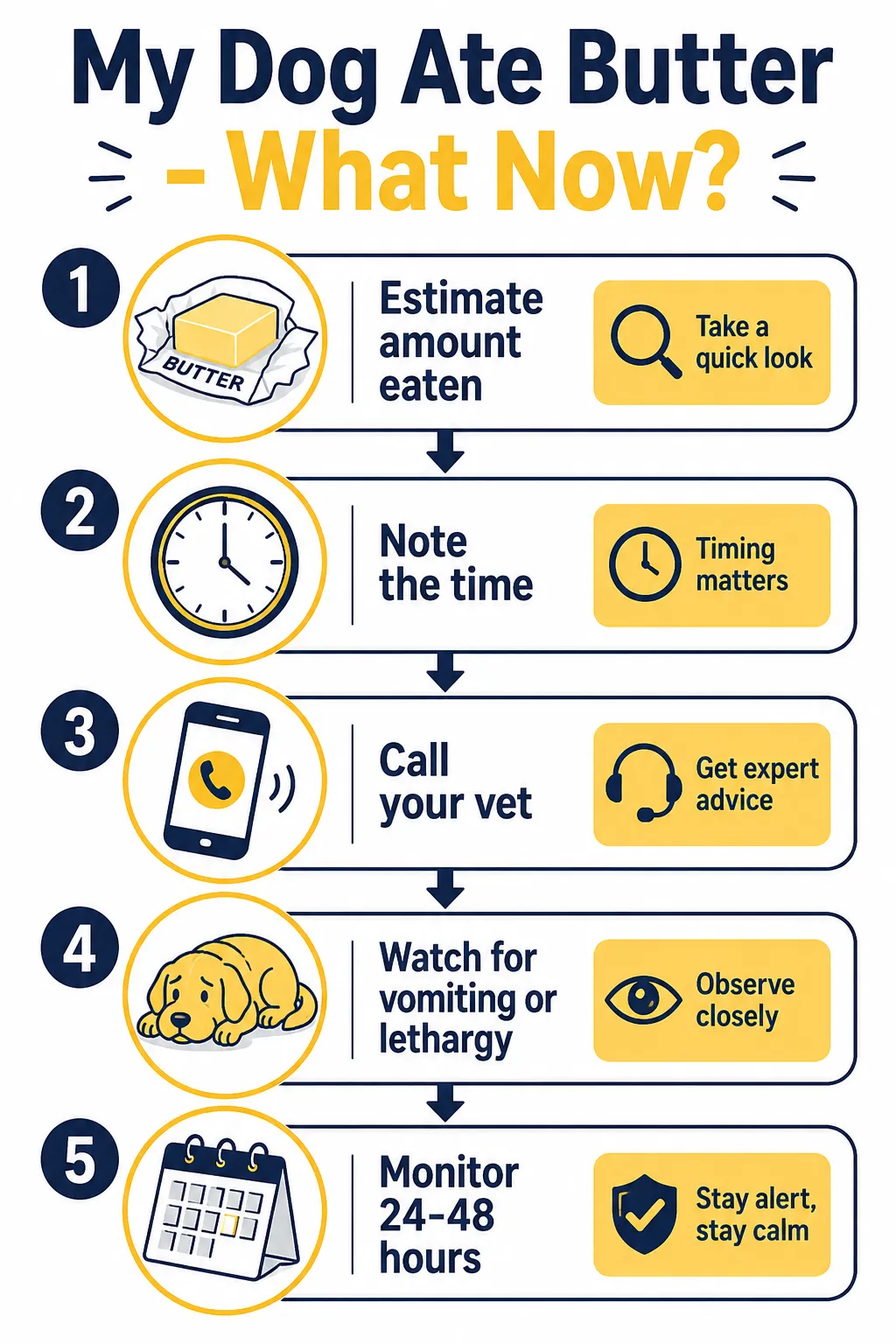
Here is what to do:
- Remove access – make sure your dog cannot eat any more
- Estimate the amount – how much butter did they eat, and when?
- Call your vet or an animal poison control line – especially if they ate more than a tablespoon, are a small dog, or are in a high-risk group
- Watch for symptoms – vomiting, diarrhea, lethargy, abdominal pain, bloating
- Do not induce vomiting unless specifically told to by a vet
- Monitor for 24-48 hours even if your dog seems fine at first
Pancreatitis symptoms can take several hours to appear after a high-fat meal. Do not assume your dog is in the clear just because they seem normal right after eating the butter.
Butter vs. Other Human Foods Dogs Can Eat
Butter sits near the bottom of the “human foods for dogs” list. It has no nutritional upside and carries meaningful health risks. Compare that to some genuinely dog-friendly options:
| Food | Safe for Dogs? | Nutritional Value |
|---|---|---|
| Butter | Avoid | None – high fat risk |
| Plain cooked chicken | Yes | High protein |
| Blueberries | Yes | Antioxidants |
| Strawberries | Yes (in moderation) | Vitamin C, fiber |
| Sweet potatoes | Yes (cooked, plain) | Fiber, vitamins |
| Xylitol-free peanut butter | Yes (small amounts) | Protein, healthy fats |
| Avocado | No | Contains persin toxin |
The contrast is clear. Many human foods offer dogs real nutritional value. Butter is not one of them.
Why Do Dogs Like Butter So Much?
Dogs are drawn to butter because of its fat content and smell. Dogs have a strong biological drive toward high-calorie, high-fat foods. In the wild, fat was a valuable energy source, so the instinct to seek it out is deeply wired in.
Butter also has a rich, complex smell that dogs find intensely appealing. The combination of fat aroma and creamy texture makes it almost irresistible to most dogs.
This is worth knowing because it explains why “my dog would never eat a whole stick of butter” is not a safe assumption. Given the chance, many dogs absolutely would.
Best Alternatives to Butter for Dogs
If you want to give your dog a fatty, flavorful treat, there are much safer options. Vet-backed guidance on butter alternatives points to xylitol-free, unsalted peanut butter as the go-to substitute.
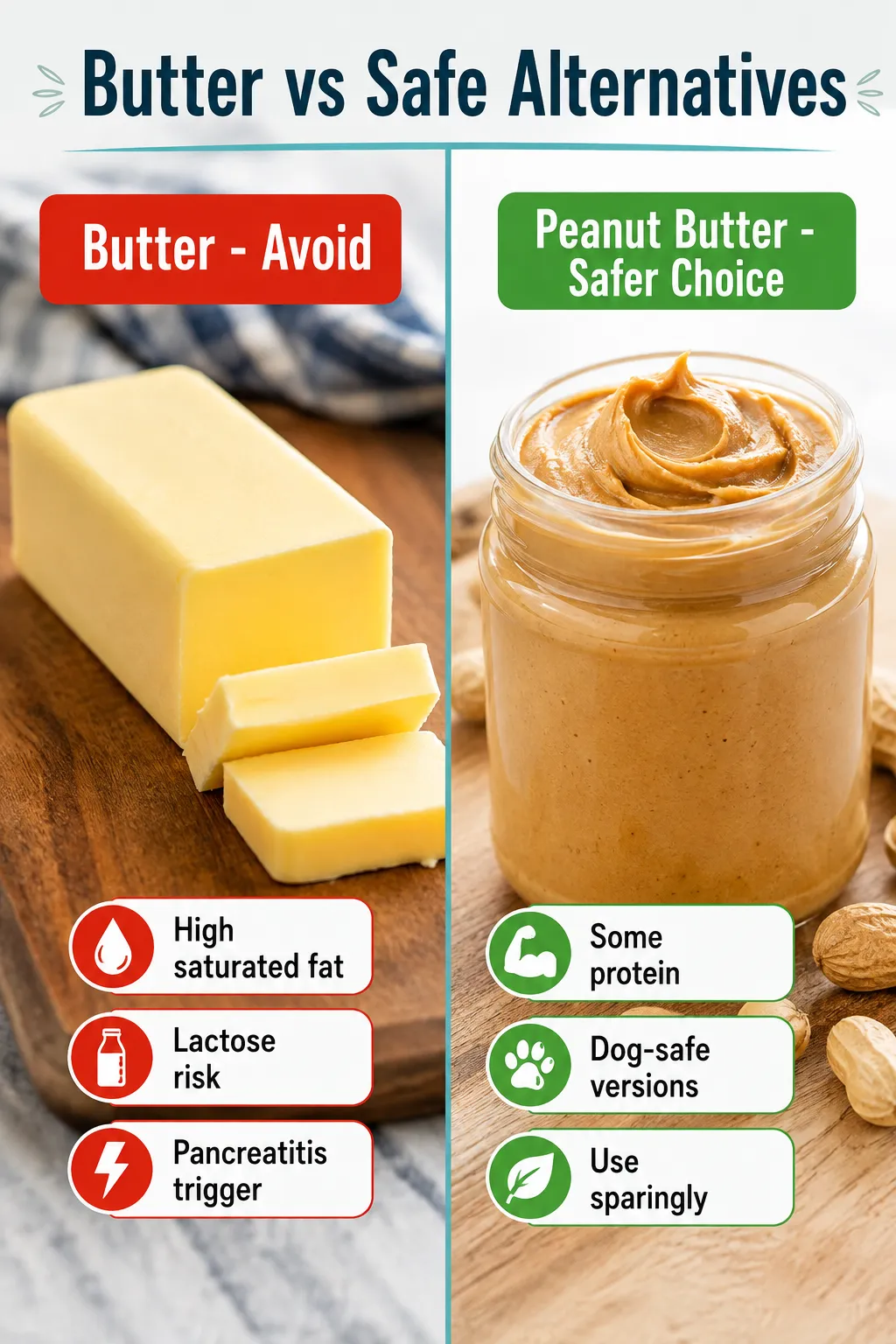
Safer alternatives include:
- Xylitol-free, unsalted peanut butter – check the label every time, as some brands have switched to xylitol
- Plain cooked chicken or turkey – high protein, low fat
- Small pieces of banana – natural sweetness, easy on digestion
- Plain cooked sweet potato – fiber-rich and dogs love it
- Plain Greek yogurt (small amounts) – some dogs tolerate this well; check out whether dogs can eat Greek yogurt for guidance
If you enjoy baking treats for your dog, try these easy peanut butter oatmeal chew sticks or these mini peanut butter bundt cakes for dogs – both use dog-safe ingredients and are vet-approved.
Common Mistakes Dog Owners Make With Butter and Human Foods
The biggest mistake is treating “not toxic” as “safe.” Many dog owners hear that butter will not kill their dog and take that as permission to share it freely. It is not.
Here are the most common errors:
- Buttered toast as a regular snack – the cumulative fat adds up fast
- Using butter to hide pills – a small amount occasionally is lower risk, but there are better options like pill pockets or a tiny piece of banana
- Assuming “a little bit” is always fine – for high-risk dogs, it is not
- Not checking flavored butter spreads – garlic butter is toxic; sugar-free spreads may contain xylitol
- Ignoring mild symptoms – one episode of loose stools after butter is a warning sign, not something to brush off
Being a responsible dog owner means knowing that “not immediately dangerous” and “safe to feed regularly” are very different things.
How Often Can Dogs Have Butter as a Treat?
The short answer is: ideally never, on purpose. There is no safe frequency for deliberately feeding butter to dogs because there is no nutritional reason to do so.
If your dog occasionally licks a small amount by accident, that is not something to panic about in a healthy dog. But building butter into their treat rotation, even once a week, is a habit that increases cumulative risk of obesity, GI issues, and pancreatitis over time.
The “tiny bite” rule most dog owners follow assumes that small means safe. But small and repeated is exactly how chronic health problems develop. Choose one of the safer alternatives above instead.
FAQ
Q: Can dogs eat butter in small amounts?
A: A single accidental lick is unlikely to cause harm in a healthy adult dog, but deliberately feeding butter even in small amounts is not recommended. There is no nutritional benefit and the fat content carries real health risks over time.
Q: Is butter or margarine worse for dogs?
A: Both are bad choices, but margarine and “light” spreads can be worse because some contain xylitol or other additives that are directly toxic to dogs. Always check labels on any spread before it gets near your dog.
Q: My dog ate a whole stick of butter. What do I do?
A: Call your vet immediately. A whole stick of butter is a large fat load that can trigger acute pancreatitis, especially in smaller dogs or those with health conditions. Do not wait for symptoms to appear.
Q: Can dogs eat butter on popcorn or toast?
A: No. Buttered popcorn and buttered toast both count as butter exposure. The fat content is the same regardless of what the butter is spread on, and the other ingredients (salt, seasonings) can add additional risks.
Q: Is unsalted butter safer than salted butter for dogs?
A: Unsalted butter is slightly lower risk because it removes the sodium concern, but it is still almost entirely saturated fat. Neither type is a safe or recommended food for dogs.
Q: Can I use butter to give my dog a pill?
A: Occasionally using a tiny smear of butter to coat a pill is a lower-risk use than feeding butter as a treat, but there are better options. Try a small piece of banana, a pill pocket treat, or a tiny amount of xylitol-free peanut butter instead.
Q: Do all dogs react badly to butter?
A: No. Some healthy dogs with robust digestion will eat a small amount of butter and show no symptoms. But you cannot predict which dogs will react, and high-risk dogs (overweight, history of pancreatitis, small breeds) can have serious reactions to small amounts.
Q: What are the signs of pancreatitis in dogs after eating butter?
A: Watch for repeated vomiting, diarrhea, hunching over, abdominal pain, lethargy, and loss of appetite. These symptoms can appear several hours after eating a fatty meal. Contact your vet if you see more than one of these signs together.
Q: Is garlic butter toxic to dogs?
A: Yes. Garlic is toxic to dogs and garlic butter should be treated as a hazard, not just an unhealthy food. Even small amounts of garlic can damage red blood cells in dogs.
Q: Can dogs eat butter cookies or baked goods made with butter?
A: No. Baked goods made with butter carry the same fat risks, plus additional concerns from sugar, chocolate, raisins, or xylitol that may be in the recipe.
Conclusion
So, can dogs eat butter? Technically, butter will not poison your dog. But “not toxic” is not the same as safe, and the “tiny bite is fine” rule is exactly where most dog owners get tripped up.
Butter is roughly 80% saturated fat with no nutritional value for dogs. Repeated small amounts raise the risk of pancreatitis, obesity, and chronic digestive problems. For high-risk dogs, even a small amount can trigger a serious reaction.
Here are your actionable next steps:
- Keep butter covered and out of reach – especially from counter-surfing dogs and puppies
- Stop sharing buttered toast, popcorn, or baked goods with your dog as a habit
- Switch to safer alternatives like xylitol-free peanut butter for treat time
- Check the label on any spread before it gets anywhere near your dog
- Call your vet if your dog eats a large amount of butter, rather than waiting to see what happens
Your dog does not need butter. They need you to know the difference between “not immediately dangerous” and “actually safe.” Now you do.