Last updated: November 19, 2026
Here’s something that surprises a lot of new Border Collie owners: both coat types shed roughly the same amount. The long haired version just makes the fur more obvious when it collects on your couch.
Quick Answer
The main difference between a long hair Border Collie and a short hair Border Collie is coat length and feathering, not body type, health, or temperament. Both are double-coated, weather-resistant dogs recognized by breed standards, and the rough (long) coat simply needs more brushing to prevent mats. Shedding volume is similar between the two, and both can appear in the same litter since coat length is controlled by a separate gene from color or structure.
Key Takeaways
- Long hair (rough coat) and short hair (smooth coat) are both official Border Collie coat types, with no show preference between them, according to the AKC breed standard.
- Both coats are dense, weatherproof double coats built for outdoor herding work.
- Shedding amount is similar, rough coats just show loose fur more visibly.
- Rough coats need more frequent brushing, roughly 3 to 4 times a week, to avoid mats.
- You should never shave a long hair Border Collie down to the skin.
- Neither coat type is linked to more health problems.
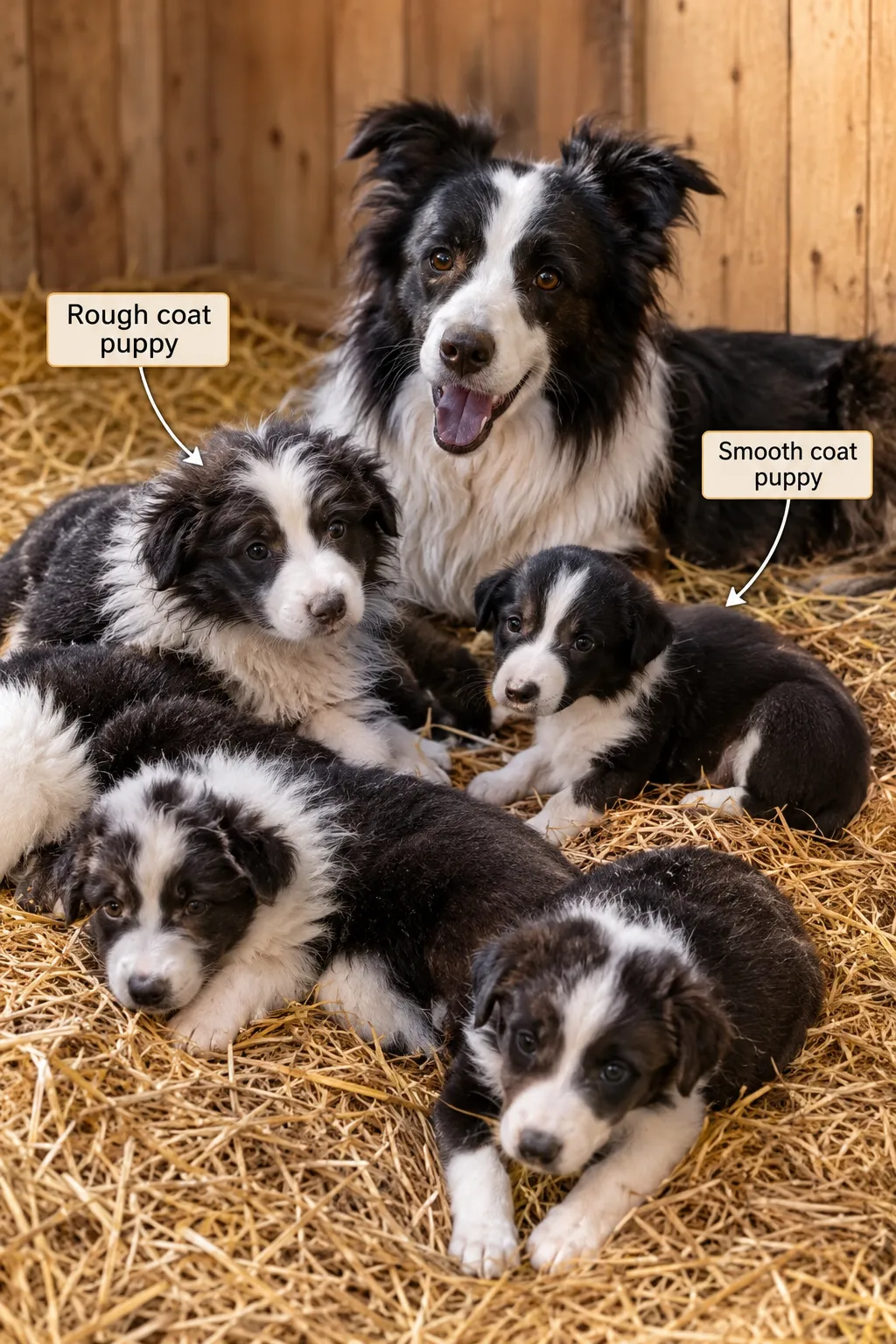
- Puppies from the same litter can have different coat lengths.
- Price differences between coat types are usually small to none.
What’s the Actual Difference Between Long and Short Haired Border Collies
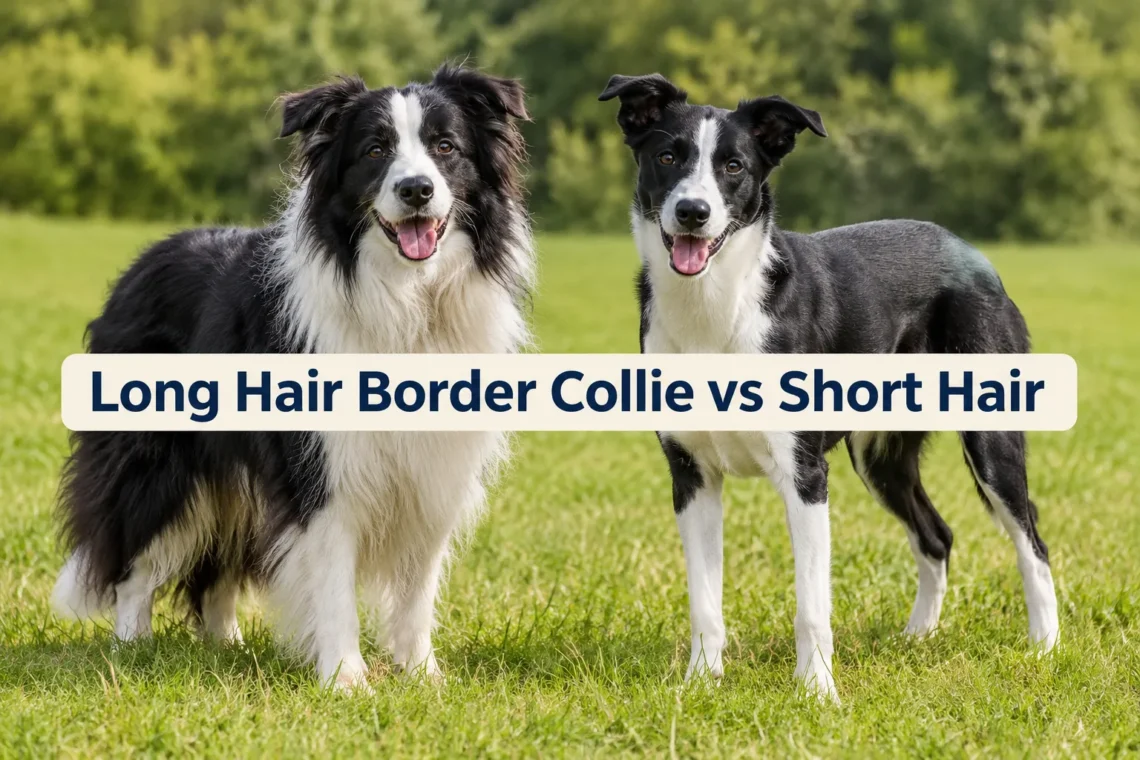
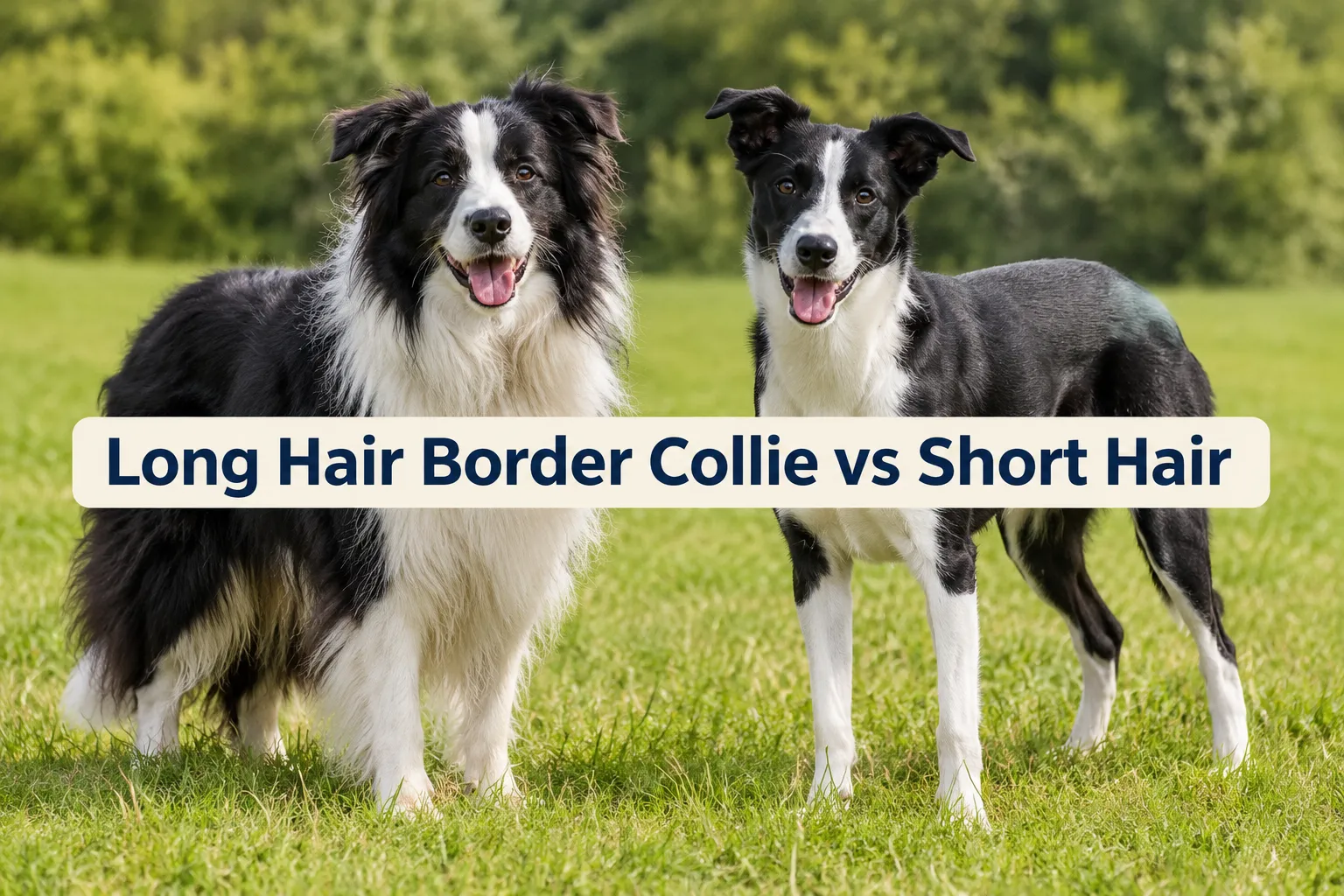
The real difference comes down to coat length and feathering, not body size or build. Border Collies with a “rough” coat have longer outer hair, feathering on the legs, chest, and tail, and often a visible mane around the neck. Dogs with a “smooth” coat have shorter, flatter hair all over.
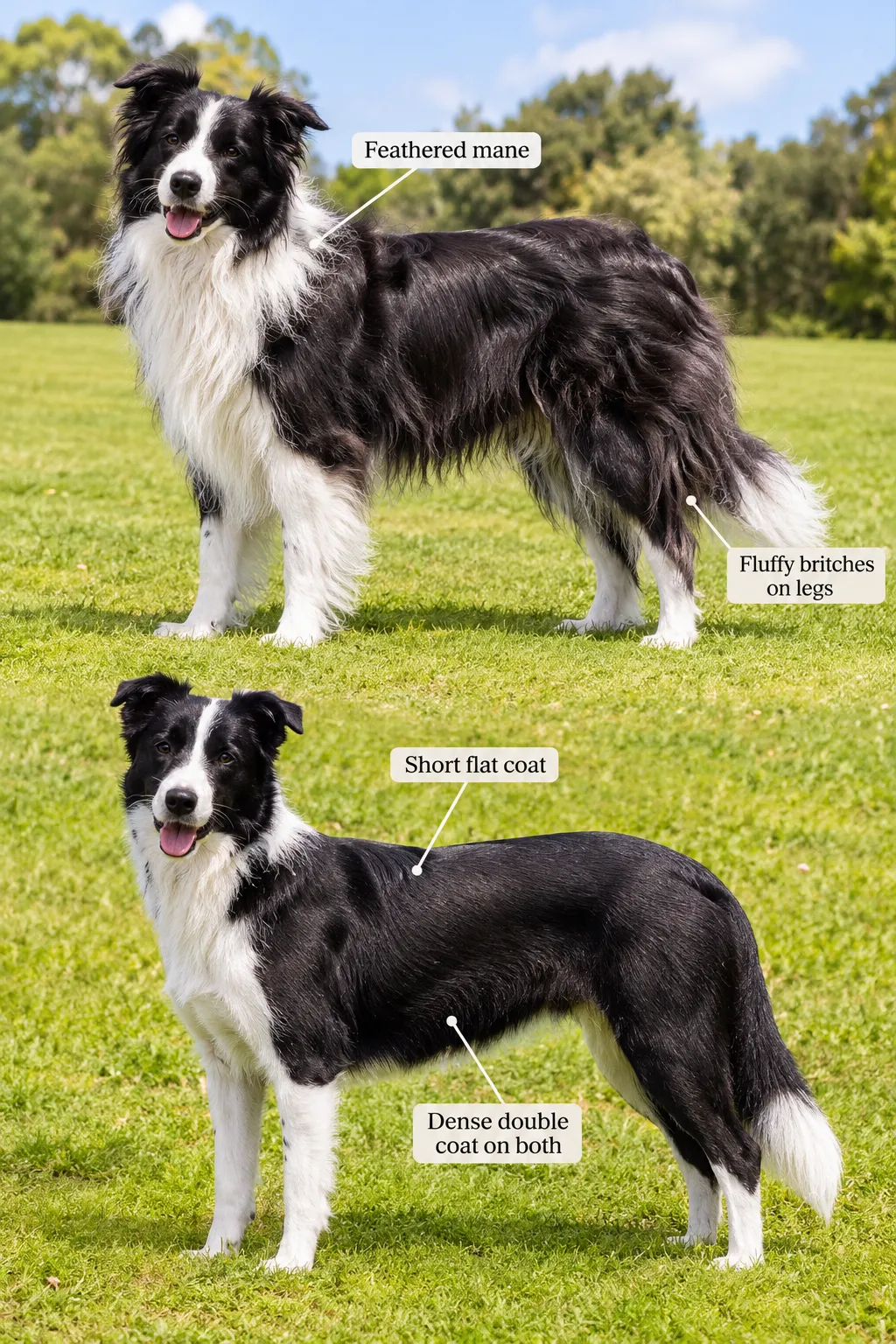
Both types are recognized under the same breed standard. The AKC breed standard lists rough and smooth as the two accepted coat varieties, with no preference given to either in the show ring.
Think of it like two siblings with different hair textures. Same bone structure, same personality traits, just different hair.
A few structural notes worth knowing:
- Rough coat: medium to long length, feathering on legs and tail, fuller neck ruff.
- Smooth coat: short and flat, minimal feathering, sleeker silhouette.
- Both: dense double coat with a soft undercoat and coarser outer guard hairs.
This distinction also shows up in related collie breeds. The Collie vs Rough Collie comparison shows a similar pattern, where coat length varies but underlying structure stays consistent.
Do Long Haired Border Collies Shed Way More
No, long haired Border Collies don’t actually shed more hair than their short haired counterparts. The volume of shedding is similar between both coat types, according to grooming guidance from LocalPetFinder. The long coat just makes shed fur more noticeable because the strands are longer and can tangle into visible clumps.
Short haired Border Collies shed fine, short hairs that work their way into carpets and clothing just as easily. It’s less visually dramatic, but it’s not less.
Decision rule: if you’re choosing based on shedding alone, coat length shouldn’t be your deciding factor. Choose based on how much time you want to spend brushing instead.
Common mistake: assuming a short coat means less vacuuming. In reality, short fur can stick to fabric more stubbornly than long fur, which at least brushes off in larger pieces.
How Much More Grooming Does a Long Haired Border Collie Really Need
A long haired Border Collie needs brushing about 3 to 4 times a week, compared to once or twice weekly for a short haired dog. The extra time goes toward preventing mats in the feathering around the legs, ears, and tail, areas the smooth coat simply doesn’t have.
Here’s a realistic grooming breakdown:
| Task | Long Hair (Rough) | Short Hair (Smooth) |
|---|---|---|
| Brushing frequency | 3-4 times weekly | 1-2 times weekly |
| Mat checking | Weekly, focus on legs/ears | Rarely needed |
| Shedding season brushing | Daily | Every other day |
| Bath frequency | Every 6-8 weeks | Every 6-8 weeks |
During shedding season, both coats blow out their undercoat, so daily brushing helps either dog. If you’re also managing another long-coated breed, the routine in our Yorkie mat prevention guide uses similar brushing principles, even though the breeds differ.
Can You Groom a Long Haired Border Collie Short
Yes, you can trim a long haired Border Collie’s feathering, but you should never shave the coat down to the skin. The double coat regulates body temperature and protects skin from sun and insects, so shaving can disrupt that system and sometimes cause uneven regrowth.
A better approach:
- Trim feathering on the legs and britches for a tidier look.
- Clean up the area around the paws and ears.
- Leave the body coat at a natural length.
- Avoid clippers on the topcoat itself.
Edge case: if a mat is severe and close to the skin, a groomer may need to shave a small section to remove it safely. That’s different from shaving the whole coat for a cooling effect, which doesn’t work the way people assume.
Are Long Haired Border Collies Harder to Take Care of
Long haired Border Collies require more grooming time, but they aren’t harder to care for overall. Exercise needs, training, and mental stimulation are identical between coat types, since both are the same breed with the same energy level and working drive.
The extra workload is almost entirely about brushing and occasional trimming. Feeding, exercise, vet visits, and training stay the same.
If you’re weighing this against other high-maintenance routines, our guide on holistic dog care tips covers broader care habits that apply no matter which coat type you pick.
Which Is Better for Hot Weather, Long or Short Hair Border Collie
Both coat types insulate against heat and cold equally well, since the double coat structure is the same underneath. Coat length affects grooming more than it affects temperature regulation.
That said, long coats trap more debris and moisture after swimming or rain, so they need faster drying attention in humid climates. Short coats dry out quicker and show less visible dirt.
Quick example: a rough-coated Border Collie working outside in summer heat does fine as long as the undercoat isn’t matted. Mats trap heat and block airflow, which is the real risk, not the length of the topcoat itself.
Do Long Haired Border Collies Have More Health Problems
No, there’s no evidence that coat length affects a Border Collie’s health. Both coat types come from the same breed lines and carry the same risk profile for conditions like hip dysplasia or collie eye anomaly, which are tied to genetics, not fur length.
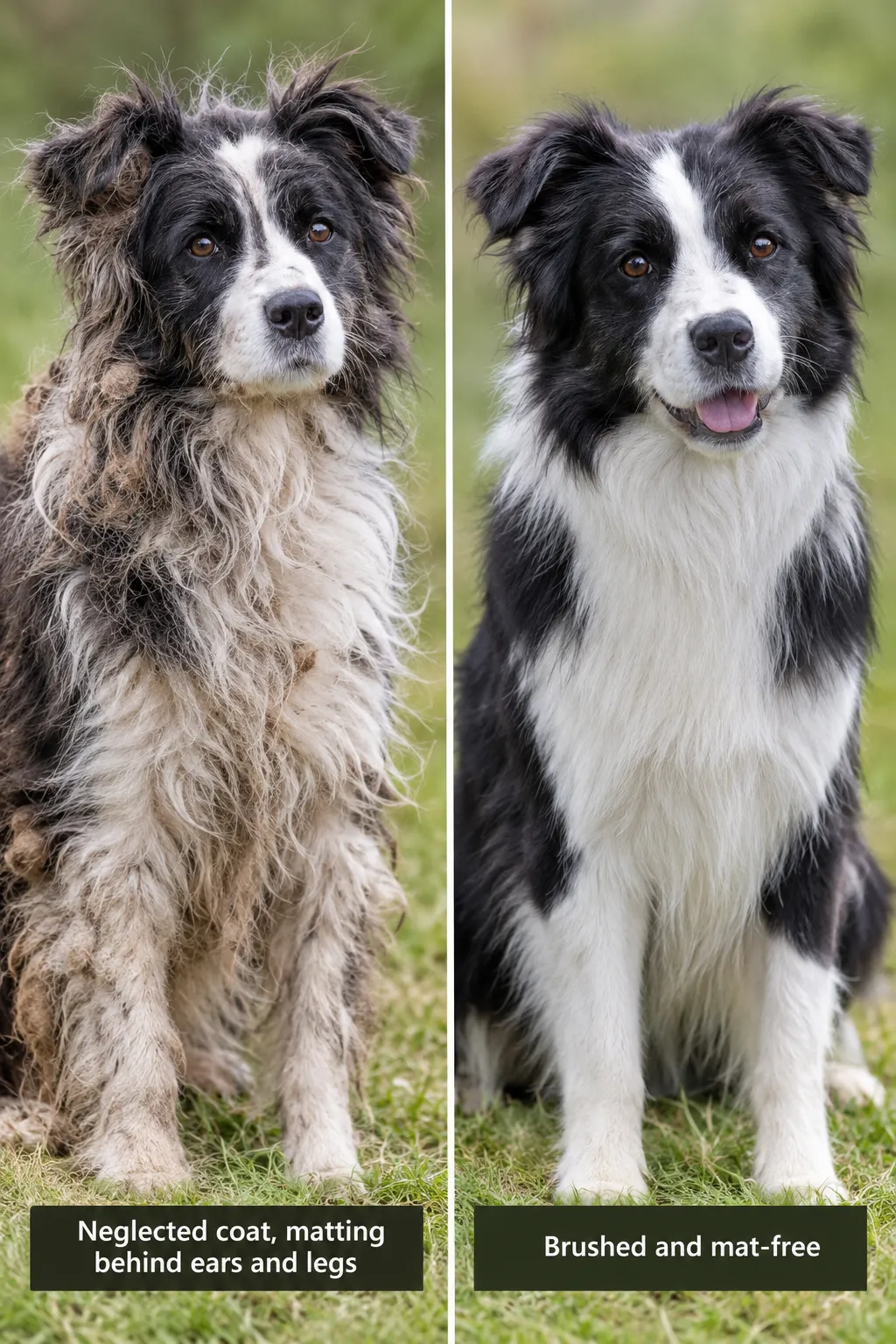
The only health-adjacent concern tied to coat length is matting, which if left unchecked can trap moisture and lead to skin irritation. That’s a grooming issue, not a breed-wide health issue. The BCCSA breed information page doesn’t list coat type as a factor in any known health conditions.
Is Short Haired Border Collie Easier for First Time Owners
A short haired Border Collie is slightly easier for first time owners mainly because grooming takes less time each week. But the bigger challenge for new owners is the breed’s high energy and need for mental stimulation, which applies equally to both coat types.
If you’re new to dog ownership, focus less on coat length and more on whether you can meet a Border Collie’s exercise needs, which often means an hour or more of activity daily.
Who it’s for: someone who wants lower grooming upkeep but is fully prepared for an intense, high-drive herding dog.
Who it’s not for: anyone expecting a low-energy pet just because the coat is shorter.
How Often Should I Bathe My Long Haired Border Collie
Bathe a long haired Border Collie about every 6 to 8 weeks, or when visibly dirty, the same frequency recommended for the short coat variety. Over-bathing strips natural oils from the double coat and can actually make matting worse.
Before bathing a rough coat dog:
- Brush out tangles first, water tightens existing mats.
- Use a dog-specific shampoo, not human shampoo.
- Rinse thoroughly, leftover residue can cause itchy skin.
- Dry fully, especially around the feathering and ears.
What’s the Best Tool to Prevent Matting in Long Haired Border Collies
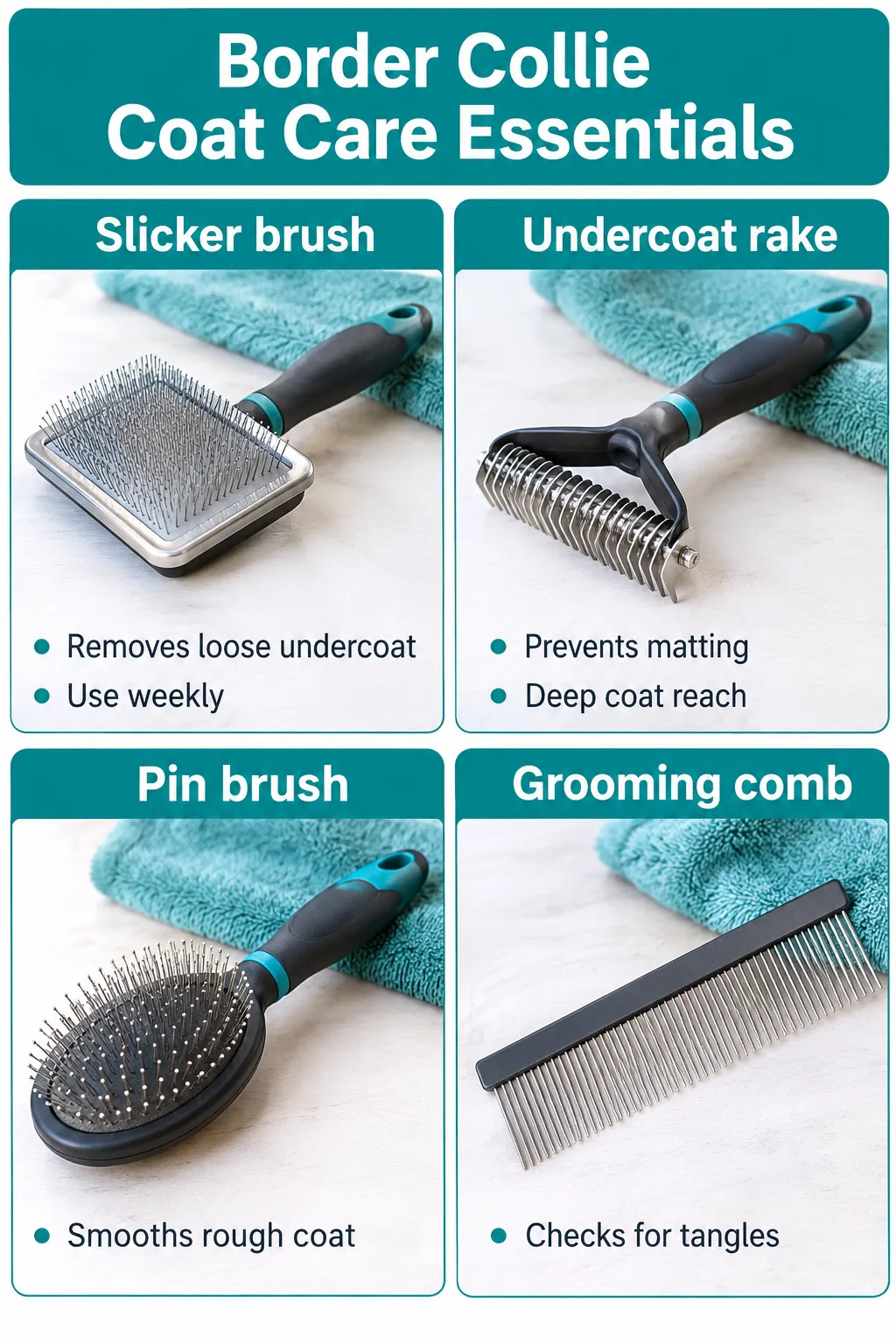
A slicker brush combined with an undercoat rake is the most effective matting-prevention combo for a long haired Border Collie. The slicker handles the surface topcoat while the rake reaches the dense undercoat where mats usually start.
Weekly focus areas:
- Behind the ears
- Under the front legs (armpit area)
- Around the collar line
- The tail and back legs (britches)
Common mistake: brushing only the top layer of fur. Mats form underneath, close to the skin, so surface brushing alone misses the problem.
Do Coat Length Affect Border Collie Personality or Energy
No, coat length has no connection to personality or energy level. Temperament, trainability, and herding drive come from the same genetic lines regardless of whether a dog has a rough or smooth coat.
Breeders and owners sometimes assume a sleeker dog looks “calmer,” but that’s a visual bias, not a behavioral fact. Energy level in Border Collies is famously high across the board, something covered well in these Border Collie facts.
Is There a Difference in Price Between Long and Short Haired Border Collies
Generally, no meaningful price difference exists between long and short haired Border Collie puppies from the same reputable breeder. Price is driven more by lineage, health testing, and working or show pedigree than by coat length.
Occasionally, regional popularity can nudge prices slightly in one direction, but this isn’t a standard or reliable pattern across breeders.
Can Both Coat Types Come From the Same Litter
Yes, it’s common for one litter to produce both rough and smooth coated puppies. Coat length is controlled by a specific gene that’s independent of coat color and body structure, so parents carrying mixed genes can produce a mix of coat types in the same litter.
This is well documented in collie breed genetics discussions, including the rough and smooth varieties overview from the Collie Club, which explains how both coat types stem from the same lineage.
Frequently Asked Questions
Is a long hair Border Collie a different breed?
No. Long hair (rough coat) and short hair (smooth coat) Border Collies are the same breed, just with different coat lengths.
Do rough coat Border Collies need trimming for shows?
Minimal trimming is typical, mainly tidying the feet and ears, since natural coat texture is preferred in the show ring.
Will a short haired Border Collie get cold in winter?
Both coat types have a double coat that handles cold reasonably well, though extreme cold may call for a winter coat for extra protection.
Can I predict coat length before a puppy is born?
Not precisely without genetic testing, since coat length depends on which gene combination each puppy inherits from its parents.
Do working Border Collies prefer one coat type?
No. Working ability and herding instinct aren’t linked to coat length, according to breed standard documentation.
Does color change based on coat length?
No, coat color and coat length are controlled by separate genes, so you’ll see the full range of Border Collie colors in both coat types, as explained in this overview of Border Collie colors and coats.
Is one coat type more popular with breeders?
Rough coat tends to be more commonly seen and recognized as the “classic” look, but smooth coat is equally accepted in breed standards.
Conclusion
Choosing between a long hair and short hair Border Collie really comes down to how much brushing time you’re willing to commit each week. Health, energy, trainability, and temperament stay the same either way.
If you want lower grooming upkeep, lean toward the smooth coat. If you love the fuller, feathered look and don’t mind brushing a few times a week, the rough coat is just as manageable with the right tools.
Either way, invest in a good slicker brush and undercoat rake early, and keep bathing to every 6-8 weeks. Your dog’s coat, and your couch, will thank you.