Last updated: November 23, 2026
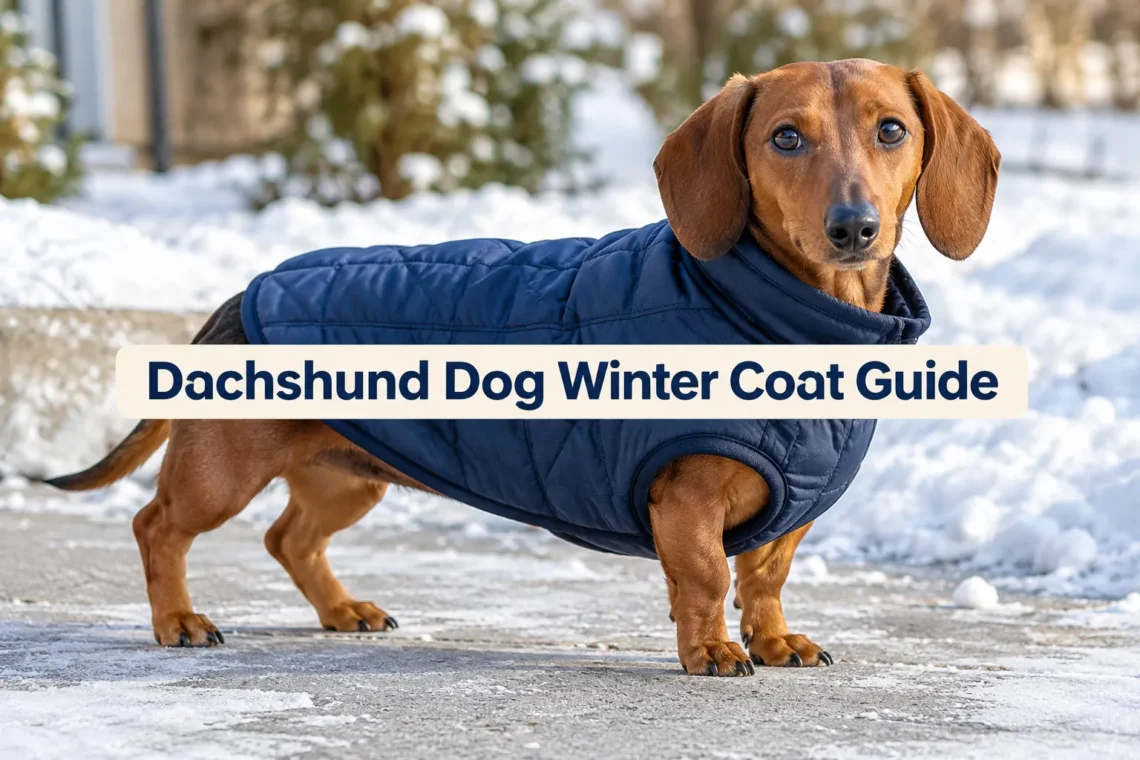
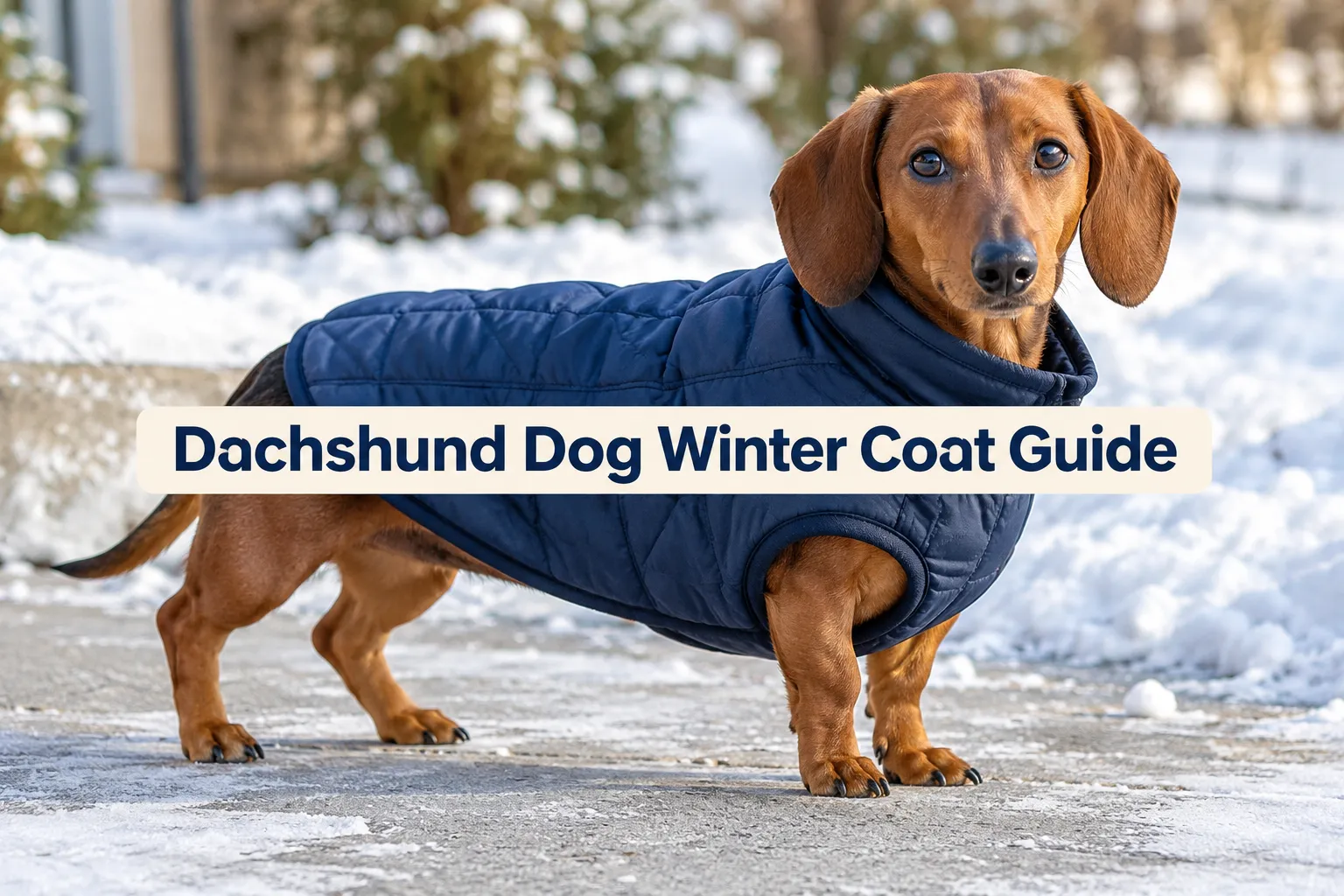
A dachshund’s belly sits just a few inches off the ground. That means snow, frost, and cold pavement touch their skin almost directly, something a Labrador or Golden Retriever never has to deal with. This Dachshund Dog Winter Coat Guide covers exactly what size and style actually fits a long body and short legs, when a coat is necessary, and which mistakes waste money.
Quick Answer
Yes, most dachshunds need a winter coat once temperatures drop below 45°F, especially smooth-coat and miniature dachshunds. Look for a coat that covers the belly, has a back length matching their specific spine length (not just “small” or “medium”), and includes leg straps so it doesn’t ride up over their long torso. Standard dog coat sizing often fails dachshunds because it’s built for proportional dogs, not low-slung, elongated ones.
Key Takeaways
- Dachshunds get cold faster than most breeds because of their low body fat, short coat (in smooth varieties), and belly proximity to cold ground.
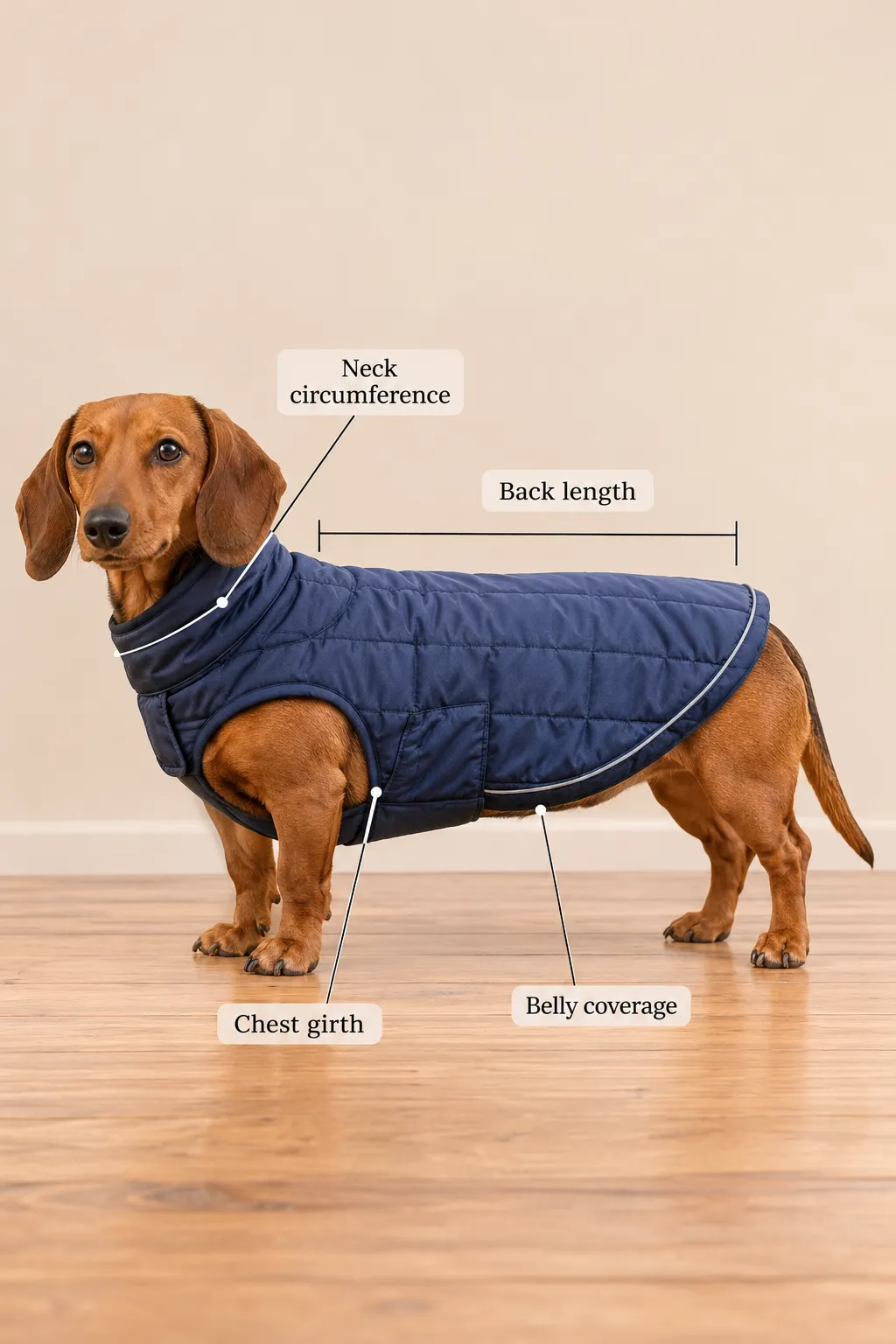
- A proper coat fit requires three measurements: neck, chest girth, and back length from base of neck to base of tail.
- Standard small-dog coat sizes usually don’t fit dachshunds well, because dachshund backs are proportionally longer than their chest girth suggests.
- Long-haired dachshunds still benefit from coats in freezing or wet conditions, just not as urgently as smooth-coats.
- Belly coverage matters as much as back coverage, since the exposed underside loses heat fastest.
- Coats should never replace supervision; dachshunds shouldn’t be left outside unattended in freezing weather even with a coat on.
- Expect to pay roughly $15 to $60 for a quality dachshund-specific winter coat, depending on insulation and brand.
- Miniature dachshunds generally need thicker insulation relative to body size than standard dachshunds, because they lose heat faster per pound.
Why do dachshunds get cold more easily
Dachshunds get cold faster than many breeds because of their short legs, low body fat percentage, and (in smooth-coat varieties) thin single-layer fur. Their long bodies also have more surface area close to cold ground and air than a compact, upright dog.
Smooth dachshunds have almost no undercoat, so they lose body heat quickly in wind or damp conditions. Wire-haired and long-haired dachshunds have a bit more natural insulation, but it’s still thinner than a husky’s double coat or a retriever’s water-resistant fur.
Small body mass is another factor. A dachshund weighs roughly 16 to 32 pounds (standard) or 11 pounds and under (miniature), and smaller bodies cool down faster relative to their size, a pattern vets commonly note across small-breed dogs, as discussed in Dachshund Winter Care Guide.
Do dachshunds actually need winter coats
Yes, most dachshunds benefit from a winter coat once outdoor temperatures drop into the 40s Fahrenheit, and a coat becomes close to essential below freezing. This applies especially to smooth-coat and miniature dachshunds, who have the least natural insulation.
Not every dachshund needs a coat every single time they go outside. A quick bathroom break on a 50°F afternoon is fine without one. But longer walks, cold mornings, or any temperature near or below freezing call for a coat, according to guidance from Do Dachshunds Need Coats and Do Dachshunds Need A Coat.
Choose a coat if: temperatures are below 45°F, there’s wind, rain, or snow, or your dachshund is a puppy, senior, or has a smooth coat.
Skip the coat if: it’s above 50°F, dry, and the walk is short.
What size winter coat does a dachshund need
A dachshund needs a coat sized by back length and chest girth, not by generic “small,” “medium,” or “large” labels. Most adult standard dachshunds need a coat with a back length between 14 and 18 inches, while miniatures typically need 10 to 14 inches.
Chest girth usually falls between 16 and 20 inches for standard dachshunds and 12 to 16 inches for miniatures. These numbers are general starting points. Every dog is a little different, so always check the brand’s specific size chart before buying, as sizing can vary between manufacturers, a point echoed in Dachshund Coats.
Common mistake: buying based on weight alone. A chunky 20-pound dachshund and a lean 20-pound dachshund can need very different back lengths.
How to measure my dachshund for the right coat size
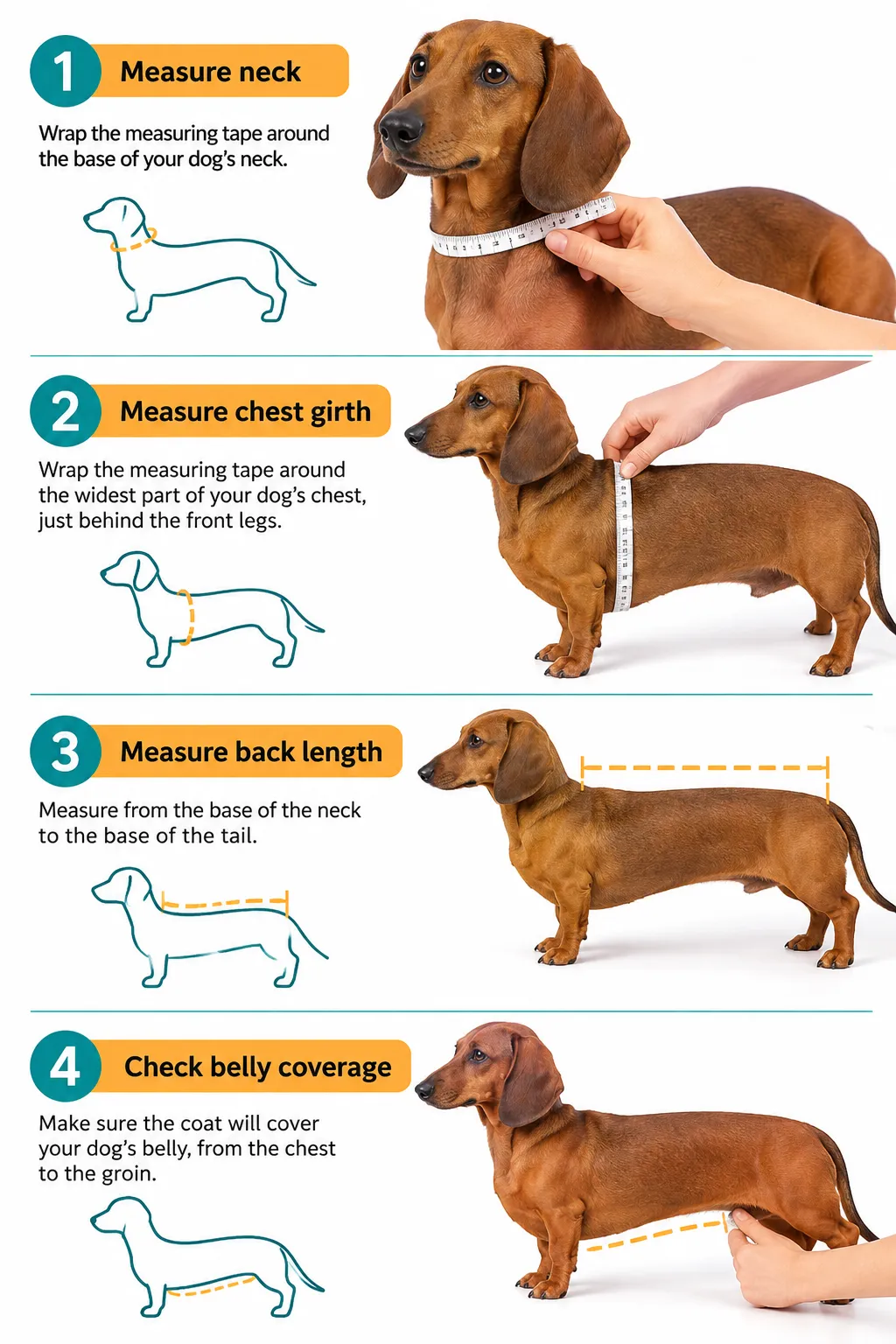
Measure three things: neck circumference, chest girth right behind the front legs, and back length from the base of the neck to the base of the tail. Use a soft fabric tape measure, not a rigid ruler.
Here’s the process I use with my own dog:
- Have your dachshund stand naturally, not sitting or stretched.
- Wrap the tape around the neck where a collar sits, note the measurement.
- Wrap the tape around the chest, just behind the front legs, at the widest point.
- Measure from the base of the neck (where it meets the shoulders) straight back to the base of the tail.
- Add half an inch of ease to each number so the coat isn’t skin-tight.
Edge case: if your dachshund is between two sizes on a brand’s chart, size up for back length and down for chest girth, since a loose chest with proper leg straps is more forgiving than a too-tight one.
Is my dachshund too small for regular dog coat sizes
Often, yes. Miniature dachshunds and even some standards fall into an awkward gap where “extra small” coats are too short in the back and “small” coats are too wide in the chest. This is the core sizing problem with dachshunds and off-the-shelf coats.
This mismatch happens because most mainstream coat brands design around breeds with proportional torsos, like terriers or spaniels. A dachshund’s back-length-to-chest-girth ratio is unusually high, so a coat that fits the chest often leaves the lower back and hips exposed.
Decision rule: if a coat’s back length is shorter than your measured back length minus one inch, skip it, even if the chest size matches.
Best winter coat brands for dachshunds
Several brands now make dachshund-specific or long-body-specific winter coats rather than generic small-dog sizing. Look for brands that publish back-length charts specifically for dachshunds or “long and low” breeds.
Options worth checking include breed-focused harness-and-coat makers such as Dachshund Harness Puffer, which designs puffer-style coats around dachshund proportions, and custom options like the waterproof builds found at Dachshund Waterproof Winter Jacket Warm. Roundups like Best Winter Coats For Dachshunds and Best Coat For A Dachshund compare several options side by side.
Choose a breed-specific brand if: standard small-dog coats have left gaps at the belly or lower back in the past.
How much do dog winter coats cost
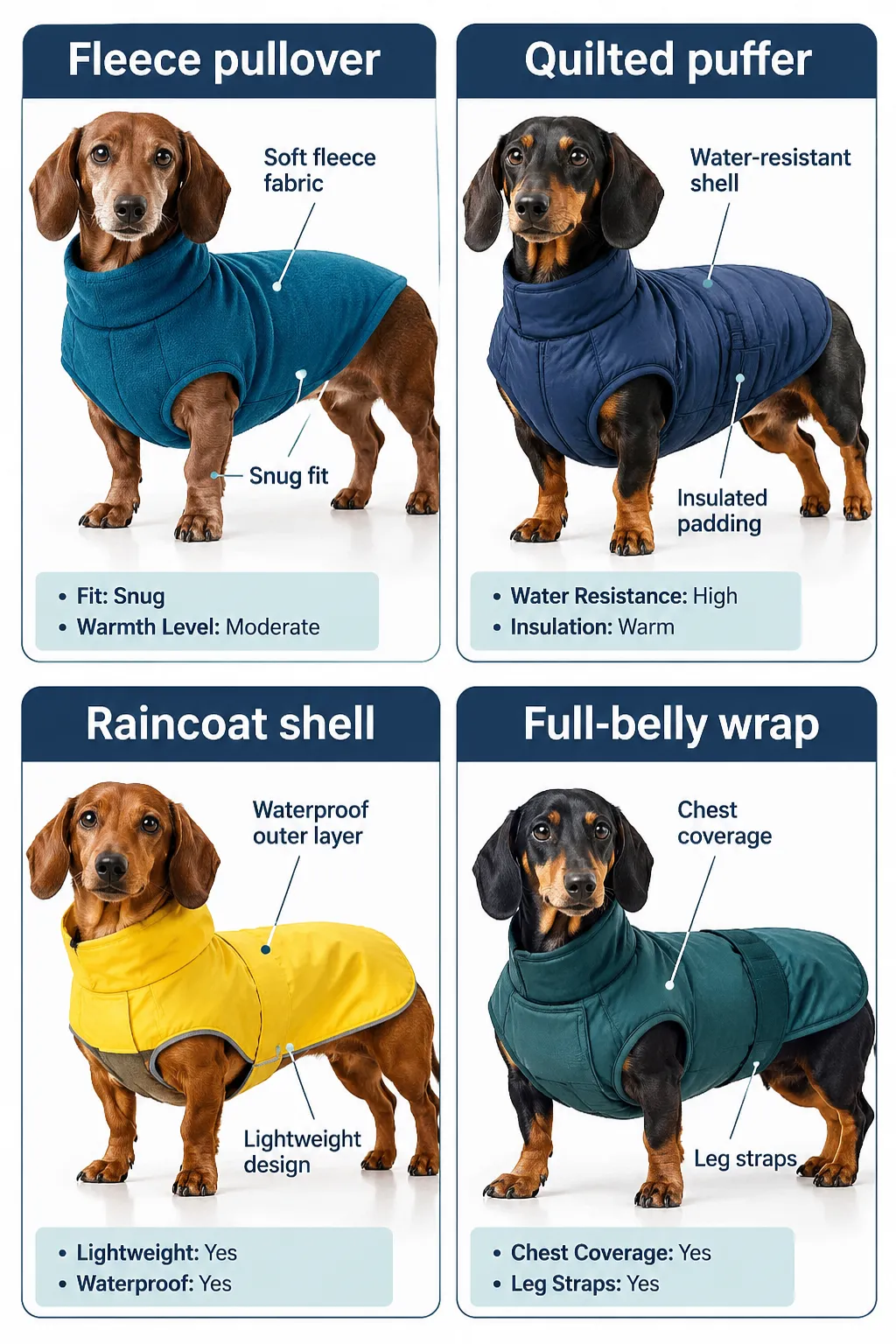
Dachshund winter coats typically run from about $15 for a basic fleece pullover to around $60 for an insulated, waterproof, breed-specific puffer coat. Custom or handmade coats can cost more.
Price generally tracks with three things: insulation quality, waterproofing, and how tailored the fit is to long-bodied breeds. A $15 generic coat might fit okay for a dry, mildly cool day. A $40 to $60 coat with sealed seams and belly coverage is worth it for anyone walking their dachshund in snow or rain regularly.
Common mistake: buying the cheapest option for a dog who’s outside often in winter. Thin fabric and poor coverage mean the coat looks fine but doesn’t actually trap heat.
Dachshund winter coat for short legs long body fit
A good dachshund winter coat fit means full belly coverage, a back panel that reaches the base of the tail, and leg straps or a underbelly strap that keeps the coat from sliding sideways on a long torso. This is the single biggest fit challenge for this breed.
Because a dachshund’s torso is so long relative to its legs, coats without a secure strap system tend to twist or slip to one side while walking. Look for:
- A belly panel, not just a back strip
- An adjustable chest strap and a separate belly or leg strap
- Leg openings that don’t rub the armpit area
- A D-ring for a leash that sits over the back, not pulling the coat sideways
Design priorities have shifted toward full-body coverage, with belly and chest protection now treated as essential rather than optional, a trend reflected in newer breed-specific releases discussed in Dachshund Coats.
When should I put a coat on my dachshund
Put a coat on once outdoor temperatures drop below 45°F, or anytime it’s wet, windy, or your dachshund is a puppy or senior. For smooth-coat dachshunds, some owners start coating at 50°F if there’s wind.
A simple rule: if you’d want a light jacket yourself, your dachshund likely needs one too, since they’re closer to the cold ground and have less insulation than you’d expect from their size.
Quick example: on a dry 48°F afternoon with no wind, a short walk is usually fine coat-free for a healthy adult dachshund. On a 35°F morning with wind, skip the coat-free walk entirely.
Can dachshunds stay outside in winter without a coat
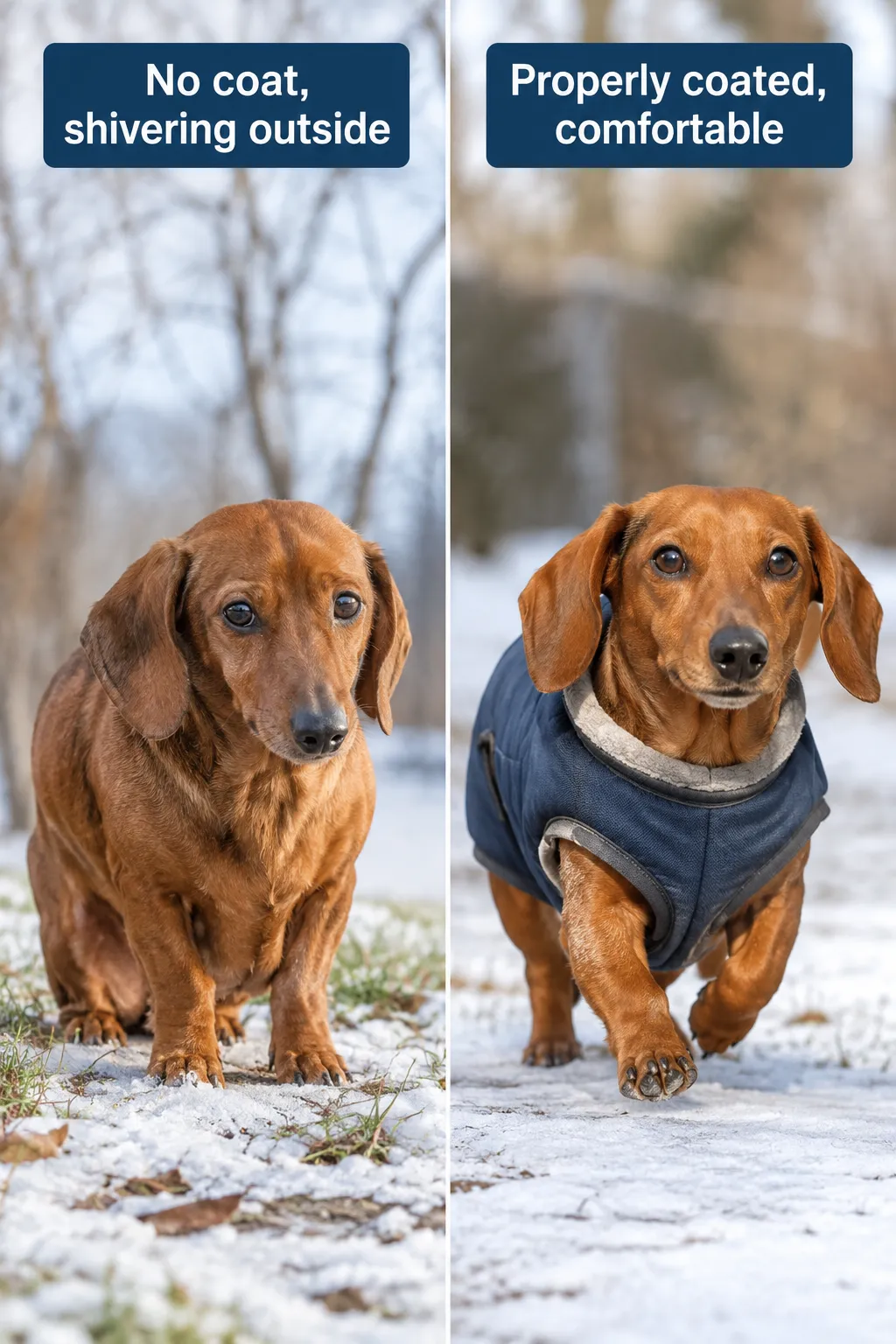
No, dachshunds should not be left outside unsupervised in freezing or near-freezing temperatures, coat or no coat. Even with a well-fitted coat, their paws, ears, and nose remain exposed and vulnerable to cold.
If you have a dachshund who spends time in a yard, bring them in well before temperatures hit freezing, and never leave them outside overnight in cold weather. For general outdoor cold-weather safety across breeds, see How To Keep Your Outside Dog Warm.
Edge case: a coat helps during active walks where the dog generates body heat through movement. It does far less for a dog sitting still outside in the cold.
Alternatives to dog coats for keeping dachshunds warm
Besides coats, dachshund owners can use dog boots, heated beds indoors, and shorter, more frequent walks in extreme cold. These aren’t replacements for a coat in freezing weather, but they help round out winter care.
- Dog boots protect paw pads from ice, salt, and frostbite risk
- Indoor heated beds or blankets help after a cold walk
- Shorter, more frequent walks reduce total cold exposure while still meeting exercise needs, a balance covered in How Long Should You Walk Your Dog
- Indoor enrichment on the coldest days keeps your dog active without the cold exposure, as outlined in Winter Pet Care Tips: Indoor Enrichment for Cold Days
- Proper walking gear for yourself and your dog, detailed in Winter Dog Walking Essentials: Gear for Cold, Dark Walks
Do long haired dachshunds need winter coats too
Yes, long-haired dachshunds still benefit from winter coats in freezing, wet, or windy conditions, though their coat offers slightly more natural insulation than smooth-coat dachshunds. Fur length alone doesn’t fully protect the belly or the thin skin near the legs.
Long-haired dachshunds also tend to collect ice balls and wet mats in snowy conditions, which can chill them faster once fur gets soaked. A waterproof outer shell helps here more than a plain fleece layer. For broader coat care on this variety, see Long Hair Dachshund Care 15 Must Know Tips For Happy Healthy Dogs.
Miniature vs standard dachshund winter coat thickness
Miniature dachshunds generally need proportionally thicker insulation than standard dachshunds, because smaller bodies lose heat faster relative to their mass. A miniature’s coat should prioritize insulation layering, while a standard’s coat has more room to balance warmth with freedom of movement.
| Factor | Miniature dachshund | Standard dachshund |
|---|---|---|
| Typical weight | Under 11 lbs | 16 to 32 lbs |
| Back length range | 10 to 14 in | 14 to 18 in |
| Insulation priority | Higher relative thickness | Moderate, balanced with mobility |
| Cold sensitivity | Higher | Moderate |
Decision rule: if you have a miniature, prioritize insulated puffer-style coats over thin fleece, even on mild winter days.
Common mistakes people make buying dog winter coats
The biggest mistake is buying by weight or breed-size label instead of actual back length and chest girth measurements. This single error causes most of the poor-fitting coats dachshund owners end up returning.
Other frequent mistakes:
- Skipping belly coverage and only checking back coverage
- Buying a coat too snug around the chest, restricting movement
- Ignoring leash access, forcing the leash to pull the coat sideways
- Choosing cotton or non-waterproof fabric for wet, snowy walks
- Not accounting for layering room if also using a sweater underneath
Coat maintenance matters too. Wash coats according to label instructions, air dry when possible to protect waterproof coatings, and check straps and Velcro periodically for wear, extending the coat’s useful life through more than one winter, as noted in general dachshund cold-weather guidance from Dachshund Cold Weather and Do Dachshunds Need Coats.
Layering and avoiding overheating indoors
Remove the coat as soon as you’re back inside, even if it means doing it right at the door. Dachshunds can overheat quickly indoors, especially in insulated puffer coats meant for outdoor cold.
If you’re layering a sweater under a shell coat for extra-cold days, make sure both layers still allow full leg movement and don’t bunch at the shoulders. Watch for panting, restlessness, or your dog trying to scratch the coat off, these are signs it’s time to remove a layer.
Frequently Asked Questions
Does every dachshund need a winter coat?
Not every single one, but most benefit from one below 45°F, especially smooth-coat, miniature, senior, or puppy dachshunds.
What’s the ideal back length for a standard dachshund coat?
Usually between 14 and 18 inches, measured from the base of the neck to the base of the tail.
Can I use a regular small dog coat instead of a dachshund-specific one?
You can try, but check the back length carefully first, since generic small-dog coats often leave the lower back and belly exposed on a dachshund.
How do I know if a coat is too tight?
If you can’t fit two fingers comfortably under the chest strap, or your dog’s movement looks restricted at the shoulders, it’s too tight.
Do dachshund coats need to be waterproof?
For snow, rain, or slush, yes. For dry, cold-only conditions, a warm fleece without waterproofing can work.
Is it safe to leave a coat on indoors?
No, remove the coat indoors to prevent overheating, especially with insulated puffer-style coats.
Do wire-haired dachshunds need coats too?
Yes, though slightly less urgently than smooth-coats, since their coarser fur offers a bit more insulation.
What should I do if my dachshund refuses to wear a coat?
Try shorter wearing sessions indoors first, pair it with treats, and choose a lighter, less restrictive style before attempting a heavier one outdoors.
Conclusion
A dachshund’s winter coat needs come down to three things: accurate back-length and chest measurements, full belly coverage, and a secure strap system that won’t slide on a long torso. Skip the generic “small dog” sizing and measure your own dog before buying anything.
Start by measuring your dachshund’s neck, chest, and back length today, then compare those numbers against a breed-specific size chart before you buy. If you’re also raising a long-haired dachshund or dealing with other seasonal care questions, our guide on 7 Reasons Dachshund Dogs Steal Hearts Everywhere They Go and House Training Dachshund cover more breed-specific basics worth knowing.