

Last updated: September 13, 2026
Quick Answer: Learning how to make chicken feet dog treats at home takes just three steps – clean the raw feet, dehydrate them low and slow until completely dry, and store in an air tight container. The result is a crunchy, single-ingredient chew packed with natural collagen, glucosamine, and chondroitin that dogs absolutely love.
Key Takeaways
- Dehydrated chicken feet are safe, nutritious dog treats when properly prepared
- The 3-step process: clean, dehydrate at 155-170°F for 12-18 hours, then cool and store
- Chicken feet are rich in glucosamine and chondroitin, supporting joint health
- Always clip the nails before giving feet to dogs
- Store finished treats in an air tight container for up to 2 weeks at room temperature
- Treats should make up no more than 10% of your dog’s daily caloric intake
- Both a dehydrator and a standard oven work well for making these at home
- An air fryer is a faster option at 180-200°F for 2-3 hours
- Supervise your dog during the first few chewing sessions
- Dogs with pancreatitis, chicken allergies, or prior GI surgery should avoid these treats
Why Dogs Love Chicken Feet
Dogs go absolutely wild for chicken feet, and it’s not hard to understand why. The texture, the smell, and the satisfying crunch all hit every instinct a dog has for a good chew.
Beyond the fun factor, chicken feet offer real nutritional benefits for dogs – they’re naturally loaded with collagen, glucosamine, and chondroitin, which support healthy joints, skin, and coat. They’re also low in fat compared to many other chews, making them a smart treat choice for most dogs.
Chicken paws are essentially cartilage and skin wrapped around small bones. When dehydrated properly, those bones become brittle and fully digestible – unlike cooked bones, which can splinter dangerously.
Are Dehydrated Chicken Feet Safe for Dogs?
Yes, dehydrated chicken feet are generally safe for healthy dogs when prepared correctly and given in appropriate amounts. The key word is “dehydrated” – the drying process makes the bones brittle in a safe, digestible way rather than the sharp, splintering way that cooked bones break.
According to veterinary guidance on chicken feet for dogs, the collagen and cartilage in chicken feet are highly digestible, and the crunchy texture can even help scrape tartar and plaque from your dog’s teeth.
Dogs that should NOT have chicken feet treats:
- Dogs with a known chicken allergy
- Dogs with pancreatitis or obesity
- Dogs with significant dental disease
- Dogs with a history of GI surgery or megaesophagus
- Very small dogs prone to gulping or choking
- Households with immunocompromised humans (due to raw poultry handling risks)
Always check with your vet if you’re unsure whether chicken feet are appropriate for your specific dog.

What Are Chicken Feet Dog Treats Made Of?
Chicken feet dog treats are made from exactly one ingredient – raw chicken feet, also called chicken paws. That’s it. No additives, no preservatives, no fillers.
Each foot is made up of skin, tendons, cartilage, and small bones. Dried chicken paws are naturally rich in glucosamine and chondroitin, the same compounds found in many joint supplements for dogs. They’re also grain-free and low in fat, which is part of why they’ve become so popular as a natural alternative to rawhide chews.
You can find raw chicken feet at:
- Asian grocery stores and markets
- Local butchers and meat shops
- Farmers markets (especially those selling backyard livestock products)
- Online meat suppliers
If you prefer not to make your own, commercial dehydrated chicken feet are widely available. A 100-count bag of air-dried feet typically runs in the mid-$30s, while a 30-pack from a major retailer lists just over $30. That said, making them at home is significantly cheaper per treat.
How to Clean Chicken Feet Before Giving Them to Dogs
Proper cleaning is the most important step in the whole process. Raw chicken feet need thorough preparation before dehydrating to remove bacteria and debris.
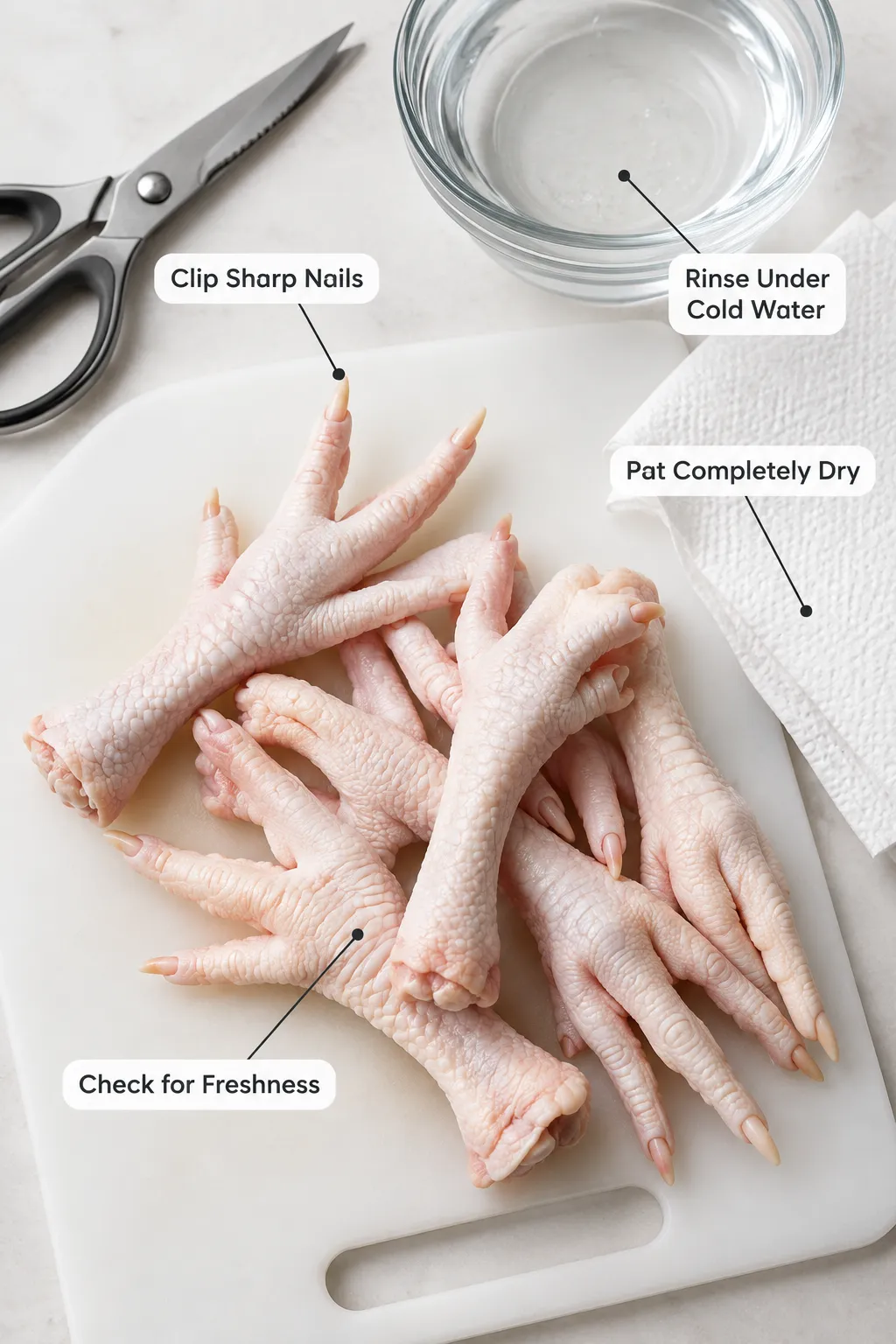
Here’s how to get feet prepared correctly, following the rinsing, using kitchen scissors to snip nails, and trimming steps that experienced DIY treat makers recommend:
Cleaning steps:
- Rinse each foot under cold running water, scrubbing gently
- Use kitchen scissors to snip off the nails – this prevents scratching your dog’s mouth or gums
- Pat each foot completely dry with paper towels
- Inspect for any discoloration or off smell – discard anything that looks questionable
- Treat your entire kitchen counter and all tools as raw poultry zones – wash and disinfect thoroughly after prep
Hygienic handling of raw chicken feet is strongly emphasized in current food safety guidance. Keep feet refrigerated or frozen until you’re ready to use them, and always thaw in the refrigerator, not on the counter.
Equipment Needed to Make DIY Dehydrated Chicken Feet
You don’t need much to make diy dehydrated chicken treats at home. Most people already have what they need in their kitchen.
Essential equipment:
- Food dehydrator (recommended) – gives the most consistent results; set to 155-170°F
- Oven (alternative) – use the lowest setting, around 170-200°F, with the door slightly propped
- Air fryer (fastest option) – 180-200°F for 2-3 hours works well for smaller batches
- Kitchen scissors – to snip nails and trim as needed
- Baking sheet or dehydrator trays – for spacing feet out evenly
- Air tight container or zip bags – for storage after drying
- Paper towels – for drying feet before dehydrating
A dehydrator is the best investment if you plan to make diy treats regularly. It circulates air evenly and maintains a consistent low temperature, which is exactly what you need for safe, completely dry results.
If you enjoy making homemade dog treats in the air fryer, check out these irresistible homemade dog treats in air fryer recipes for more ideas beyond chicken feet.
How to Make DIY Dehydrated Chicken Feet: Step-by-Step Instructions
This is the core of how to make chicken feet dog treats at home – a simple, repeatable process that produces safe, crunchy treats your dog will beg for.
Ingredients needed:
- Raw chicken feet (as many as you want to make)
- That’s it – truly just one ingredient
Instructions for making homemade dried chicken paws:
Step 1 – Clean and Prep
Rinse the raw chicken feet thoroughly under cold water. Using kitchen scissors, snip off each nail. Pat the feet prepared and rinsing-clean completely dry with paper towels.
Step 2 – Dehydrate
Arrange the feet in a single layer on your dehydrator trays or baking sheet, making sure they don’t overlap.
- Dehydrator: Set to 155-170°F (about 68-75°C) and dehydrate for 12-18 hours
- Oven: Set to the lowest temperature (around 170°F), prop the door open slightly, and bake for 6-8 hours
- Air fryer: Set to 180-200°F and air fry for 2-3 hours, checking frequently
Check periodically. The feet are done when they are completely dry, rigid, and have no soft or flexible areas at all.
Step 3 – Cool and Store
Let the finished treats cool completely on a rack before storing. Never seal warm treats – trapped moisture causes mold. Store in an air tight container.

How Long Does It Take to Dehydrate Chicken Feet for Dogs?
Dehydrating chicken feet typically takes 12-18 hours in a food dehydrator set to around 165°F. Oven drying at 170-200°F takes 6-8 hours, while an air fryer cuts it down to 2-3 hours.
The exact time depends on the size of the feet and your equipment. Chicken feet must be fully dried with no soft or squishy areas before you serve them or store them. Partially dried feet are more likely to break into problematic fragments.
Quick reference:
| Method | Temperature | Time |
|---|---|---|
| Food dehydrator | 155-170°F | 12-18 hours |
| Oven | 170-200°F | 6-8 hours |
| Air fryer | 180-200°F | 2-3 hours |
Always do a final check by trying to bend the foot. If it bends at all, it needs more time.
Should Dogs Eat Chicken Feet Raw or Cooked?
Raw or dehydrated chicken feet are the safest options – not boiled, roasted, or baked at high heat. Cooking bones at high temperatures makes them brittle in a dangerous way, causing them to splinter into sharp shards.
There’s an active debate among vets about raw versus dehydrated chicken feet. Raw feet carry a higher risk of salmonella and campylobacter. Dehydrated feet offer a middle ground – the drying process reduces (though doesn’t eliminate) bacterial risk while keeping the bones safely digestible.
For most dog owners, dehydrated is the better choice. It’s safer for both your dog and your household, especially if you have children or immunocompromised family members.
Dried Chicken Paws Are Healthy for Your Dog
Dehydrated chicken paws are genuinely one of the healthiest single-ingredient chews you can give a dog. They’re not just a tasty snack – they deliver real nutritional value.
Health benefits of dehydrated chicken feet for dogs:
- Joint support – natural glucosamine and chondroitin help maintain cartilage health
- Dental health – the hard, crunchy texture helps scrape tartar and plaque from teeth
- Collagen boost – supports skin, coat, and connective tissue
- Low fat – a lighter option compared to bully sticks or pig ears
- Fully digestible – unlike rawhide, properly dehydrated chicken bones break down safely
For dogs with joint concerns, pairing chicken feet with chicken bone broth gummies for dogs can give an extra collagen and mineral boost.
How Long Can I Store Dehydrated Chicken Feet?
Properly dehydrated chicken feet can be stored at room temperature in an air tight container for up to 2 weeks. In the refrigerator, they last up to 1 month. In the freezer, they keep well for up to 3 months.
The key is making sure the feet are completely dry before storing. Any residual moisture will cause mold. Use a glass jar or a sealed zip bag, and keep them in a cool, dry spot away from direct sunlight.
Storage guide at a glance:
- Room temperature (airtight): up to 2 weeks
- Refrigerator (sealed bag): up to 1 month
- Freezer (zip bag): up to 3 months

How Often Can Dogs Eat Chicken Feet Treats?
Chicken feet treats should stay under 10% of your dog’s daily caloric intake. A general guide based on dog size:
- Small dogs (under 9 kg): Half a small foot, once or twice weekly
- Medium dogs: One small foot, 1-2 times weekly
- Large dogs: One standard foot, up to twice weekly
Frequency and portion size should be matched to your dog’s weight and overall diet. If you’re also feeding other rich treats or supplements, reduce the frequency of chicken feet accordingly.
Chicken Feet Treats vs Other Dog Chew Alternatives
Compared to rawhide, bully sticks, and pig ears, dehydrated chicken feet hold up well. They’re single-ingredient, fully digestible, lower in fat than bully sticks, and free from the chemical processing that rawhide often involves.
According to veterinary nutrition sources, chicken feet are a natural alternative to rawhide that pose less digestive risk when properly prepared. They’re also smaller and softer than many large chews, making them appropriate for medium dogs and some smaller breeds.
For dogs who love variety, you might also enjoy making homemade beef dog chew sticks or easy homemade dog jerky treats in the oven as alternatives.
What Size Dog Can Have Chicken Feet Treats?
Medium to large dogs handle chicken feet most safely. Small dogs can have them too, but should be supervised closely and may do better with a partial foot rather than a whole one.
Matching foot size to dog size is a key safety tip from veterinary sources. Very small dogs or toy breeds may be at higher risk for gulping or choking. For these dogs, cutting the foot into smaller pieces or offering just a toe is a safer approach.
Common Mistakes When Making Chicken Feet Dog Treats
Even simple recipes have pitfalls. Here are the most common mistakes to avoid:
- Not drying completely – partially dried feet are the most common cause of problems; always check for flexibility before storing
- Skipping the nail trim – nails can scratch a dog’s mouth or throat; always snip them with kitchen scissors
- Using high heat – baking at high temperatures makes bones dangerous; always use low, slow heat
- Storing before cooling – sealing warm treats traps moisture and causes mold
- Giving too many too fast – start with one treat and monitor your dog for 24-48 hours for any digestive upset
- Buying low-quality feet – always source from reputable suppliers; fresh, clean feet make the safest treats
For more homemade treat inspiration, check out these easy 3-ingredient dog treat recipes that use simple pantry ingredients.
Chicken Feet Treats for Dogs with Sensitive Stomachs
Dogs with sensitive stomachs can often tolerate dehydrated chicken feet, but it depends on the individual dog. Start with a very small piece and wait 24-48 hours to assess tolerance.
If your dog has a sensitive stomach but loves chicken-based foods, a softer alternative is to simmer chicken feet for 40-45 minutes to make a broth, then blend the softened feet with the cooking liquid and chill in molds for a jelly-like treat. This is gentler on digestion while still delivering the joint-supporting nutrients.
Dogs with a diagnosed chicken allergy should avoid chicken feet entirely. For dogs with skin sensitivities that may be food-related, see our guide on how to treat dog skin allergies without expensive vet bills.
FAQ
How to make your own chicken feet dog treats?
To make your own chicken feet dog treats, rinse raw chicken feet under cold water, use kitchen scissors to snip off the nails, and pat them completely dry. Arrange on dehydrator trays and dehydrate at 165°F for 12-18 hours until completely rigid. Cool fully before storing in an air tight container. That’s the complete 3-step process.
How do you prepare chicken feet for dogs?
Prepare chicken feet for dogs by first rinsing them thoroughly under cold running water. Then use kitchen scissors to snip off each nail to prevent scratching. Pat the feet completely dry with paper towels before dehydrating. Always treat your kitchen surfaces as raw poultry zones and disinfect everything after prep to reduce bacterial contamination risk.
Should dogs eat chicken feet raw or cooked?
Dogs should eat chicken feet either raw or dehydrated – not boiled, roasted, or baked at high heat. High-temperature cooking makes the bones brittle and dangerous. Raw feet are digestible but carry salmonella risk. Dehydrated chicken feet are the safest middle ground for most dogs, as the low, slow drying process keeps bones safely digestible while reducing (though not eliminating) bacterial risk.
Do chicken feet make good dog treats?
Yes, chicken feet make excellent dog treats. They are single-ingredient, grain-free, low in fat, and naturally rich in glucosamine, chondroitin, and collagen that support joint health. The hard, crunchy texture also helps clean tartar from teeth. They are a safer, more digestible alternative to rawhide and are suitable for most healthy dogs when given in appropriate amounts.
Conclusion
Making chicken feet dog treats at home is genuinely one of the easiest and most rewarding things you can do for your dog’s health amp wellness. The process is simple: clean the raw chicken feet, dehydrate them low and slow until completely dry, and store them in an air tight container. Three steps, one ingredient, and a treat your dog will go absolutely crazy for.
Whether you use a dehydrator, your oven, or an air fryer, the key is patience – those 12-18 hours of drying time are what make the difference between a safe, crunchy chew and a potentially problematic one. Always snip the nails, always dry completely, and always supervise your dog the first few times.
Start with a small batch, watch how your dog responds, and adjust from there. Happy paws, happy dog.
For more homemade treat ideas, explore our guides on DIY sweet potato dog treats in the air fryer and irresistible chicken liver recipes for dogs.