Last updated: September 13, 2026
Quick Answer: Many everyday human foods are safe for dogs when served plain, fully cooked, and in small portions – including chicken, eggs, carrots, apples, and xylitol-free peanut butter. However, some common foods like grapes, onions, garlic, and chocolate are toxic to dogs and must always be avoided. The safest approach is to introduce one new food at a time and check with your vet if you’re unsure.
Key Takeaways
- Lean, plain cooked proteins like chicken, turkey, salmon, and eggs are among the best human foods dogs can eat safely.
- Dog-safe fruits include apples (seedless), bananas, blueberries, strawberries, and watermelon (no rind or seeds).
- Vegetables like carrots, green beans, sweet potatoes, and pumpkin make excellent low-calorie treats for dogs.
- Human food treats should make up no more than about 10% of a dog’s daily caloric intake.
- Toxic foods for dogs include chocolate, grapes, raisins, onions, garlic, xylitol, macadamia nuts, and alcohol – these must always be avoided.
- Always remove seeds, pits, and cores from fruits before sharing with dogs.
- Many dogs are lactose intolerant, so dairy like cheese and milk should only be given in small amounts.
- Raw or undercooked meat is not recommended for dogs due to the risk of Salmonella and other pathogens.
- Puppies have more sensitive digestive systems – introduce any new human food slowly and in very small amounts.
- When in doubt, a balanced dog food diet remains the safest foundation for your pet’s health.
What Human Foods Are Safe for Dogs to Eat?
Many human foods are safe for dogs when prepared correctly – plain, fully cooked, and served in small portions. According to vet-reviewed guidance from Pumpkin, safe fridge staples include cooked chicken, cooked salmon, eggs, apples (seedless), bananas, blueberries, carrots, green beans, pumpkin, and xylitol-free peanut butter.
The key word is “plain.” Dogs don’t need salt, butter, oil, garlic, onion powder, or any seasoning. What’s healthy human food for us can be harmful to dogs once those extras are added.
Here’s a quick overview of the 21 fridge staples that are actually dog-safe:
| Category | Safe Foods for Dogs |
|---|---|
| Proteins | Chicken, turkey, salmon, tuna, eggs, lean beef |
| Vegetables | Carrots, green beans, broccoli, sweet potatoes, pumpkin, cucumber |
| Fruits | Apples, bananas, blueberries, watermelon, strawberries |
| Grains/Other | Plain cooked rice, plain oatmeal, plain peanut butter |
| Dairy | Small amounts of plain cheese, plain yogurt |
For a deeper look at which everyday ingredients you can add to your dog’s bowl, check out this guide on what you can add to your dog’s dry food.
Safe Proteins: Can Dogs Eat Chicken, Eggs, and Fish?
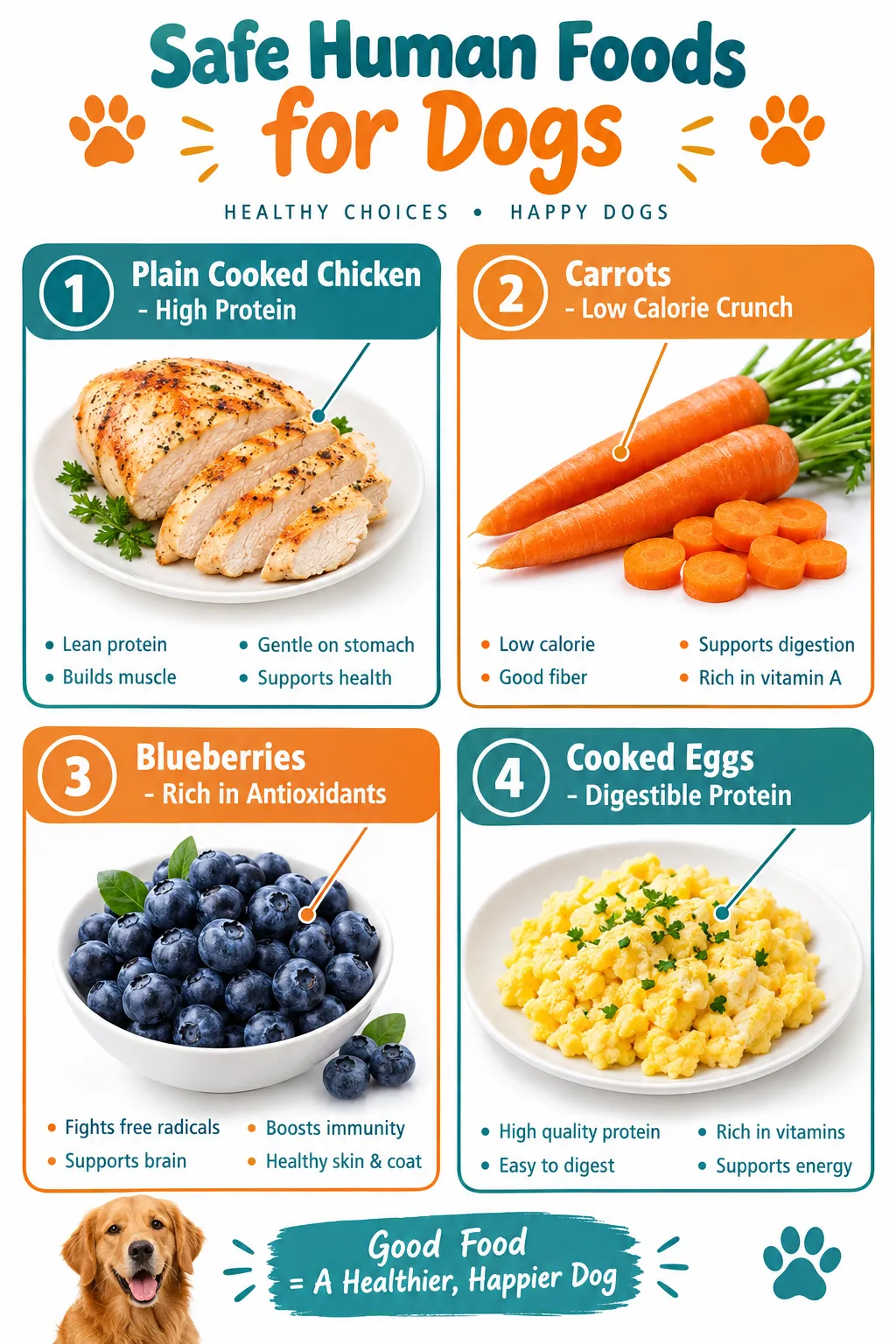
Plain cooked proteins are consistently the top-recommended human foods dogs can eat. Chicken, turkey, lean beef, salmon, tuna, and eggs are all safe for dogs when they are thoroughly cooked, boneless, and free of seasoning, sauces, and added fat.
The American Veterinary Medical Association (AVMA) specifically discourages raw or undercooked animal-source proteins for dogs due to the risk of Salmonella and other pathogens – so always make sure proteins are fully cooked before sharing.
Chicken and Turkey: Plain cooked chicken is one of the most popular human foods dogs eat. It’s a good source of protein and easy to digest. Remove all bones first – cooked bones can splinter and cause serious injury.
Eggs: Cooked eggs are a healthy, digestible protein source for dogs. Scrambled or hard-boiled eggs (no butter or salt) work well. Skip raw eggs – the AVMA’s raw diet policy reaffirmed in June 2025 advises against raw eggs for both cats and dogs.
Fish (Salmon and Tuna): Cooked salmon is high in omega-3 fatty acids, which support coat health. Plain cooked tuna is also safe in small amounts. Always serve fish fully cooked and boneless.
Ham and Pork: Plain cooked pork is technically safe in very small amounts, but ham is high in sodium and fat. It’s best to avoid ham as a regular treat for dogs.
Common mistake: Many dog owners season chicken or cook it in garlic butter before sharing. Even a small amount of garlic or onion is toxic to dogs – always cook proteins plain.
What Vegetables Can Dogs Have?
Vegetables are some of the best low-calorie, high-fiber treats you can share with dogs. Carrots, green beans, broccoli, cucumber, zucchini, cooked sweet potato, and plain cooked or canned pumpkin are all dog-safe options that support digestion and satiety.
NC State’s College of Veterinary Medicine recommends several vegetables as healthy human food treats for pets, noting they are low in calories and can be used as training rewards or kibble toppers.
Are Carrots Good for Dogs? Yes – carrots are one of the best vegetables for dogs. They’re crunchy, low-calorie, and dogs genuinely seem to like them. Raw or cooked, carrots are a healthy treat that also helps with dental health. You can cut into small sticks for a puppy or larger dogs alike.
Sweet Potatoes: Cooked sweet potatoes (plain, no butter or sugar) are rich in vitamins A, C, and fiber. They make an excellent treat for dogs. Learn more about the 7 surprising benefits of sweet potatoes for dogs.
Pumpkin: Plain canned or cooked pumpkin is a go-to for dogs with digestive issues. It’s high in fiber and vitamins. Use plain pumpkin – not pumpkin pie filling, which contains sugar and spices.
Broccoli and Green Beans: Both are safe for dogs in small amounts. Broccoli can cause gas if given in large quantities, so start small. Green beans are very low in calories and make a good diet-friendly treat for dogs that need to lose weight.
Vegetables to avoid: Onions, garlic, leeks, and chives are all toxic to dogs and should never be given, even in cooked form.
For a complete breakdown, see our guide on the best vegetables for dogs.
What About Dogs Eating Apples and Bananas? Safe Fruits Explained
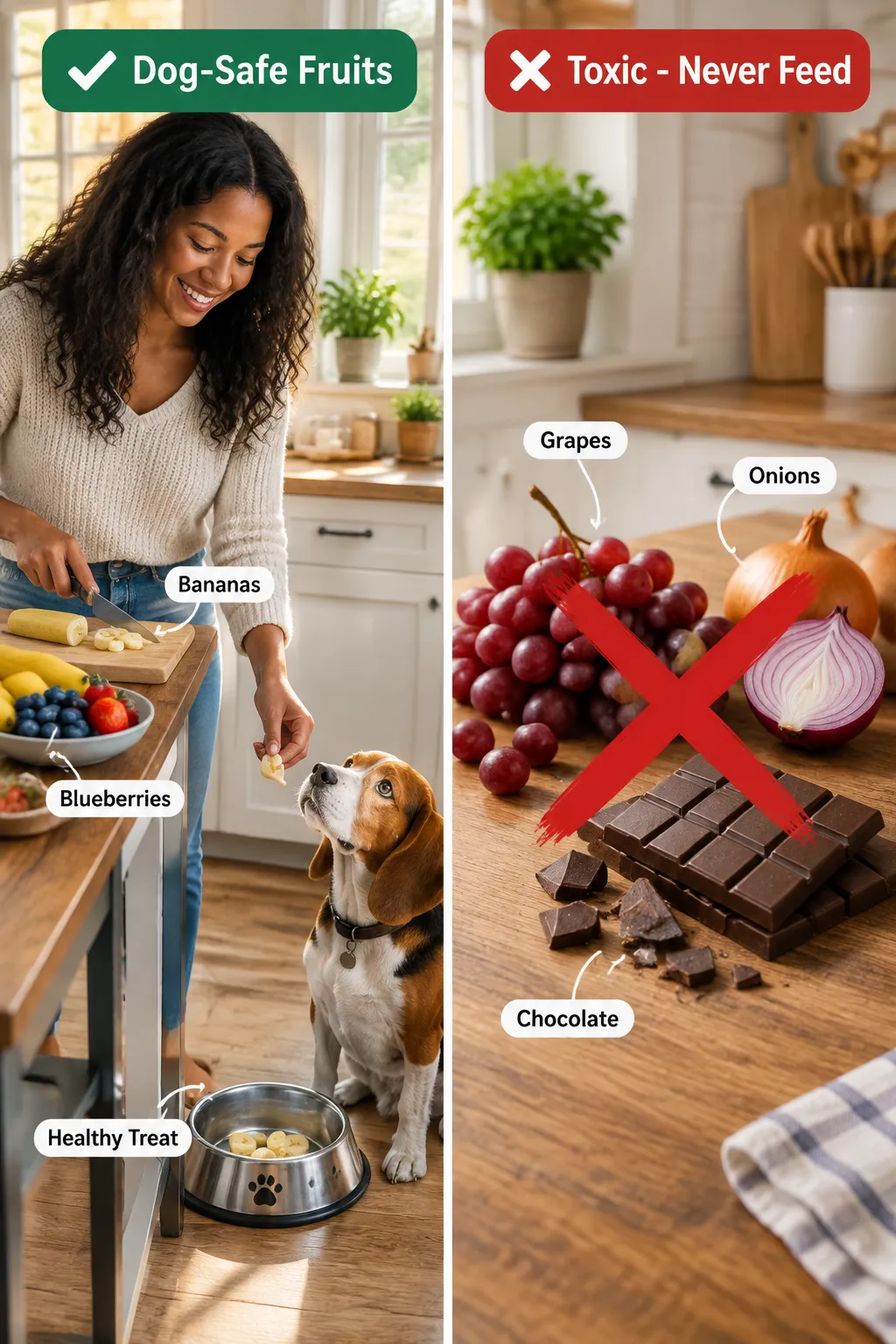
Most common fruits are safe for dogs when prepared correctly – seeds, pits, and rinds removed. Apples (seedless), bananas, blueberries, strawberries, watermelon (no rind or seeds), and peaches (no pit) are all dog-friendly fruits that provide vitamins and natural sweetness as an occasional treat.
Healthline’s vet-reviewed human foods guide emphasizes rigorous removal of seeds, cores, and pits before feeding fruit to dogs, as apple seeds contain trace amounts of cyanide and stone-fruit pits pose choking hazards.
Apples: A great source of vitamins A and C and fiber. Always remove the core and seeds before giving apple slices to dogs. Even a small amount of apple seeds can cause harm over time.
Bananas: Safe and dogs love them. Bananas are high in potassium and natural sugar, so keep portions small – especially for a puppy. Check out our detailed guide on how to safely feed bananas to dogs.
Blueberries: One of the best fruits for dogs. They’re packed with antioxidants and are small enough to use as training treats. Both cats and dogs can enjoy blueberries safely.
Watermelon: Safe for dogs when you remove the rind and seeds. It’s a hydrating, low-calorie summer treat.
Which fruits are toxic to dogs? Grapes and raisins are among the most dangerous foods for dogs – even a small amount can cause acute kidney failure. Cherries (pits contain cyanide), and citrus fruits in large amounts can also cause problems. Always check before introducing a new fruit.
Can Dogs Eat Bread, Pasta, and Whole Grains?
Plain cooked grains like rice, oatmeal, and pasta are safe for dogs in moderation – they’re low-risk energy sources but not nutritionally essential. Plain white or brown rice is especially useful for dogs with upset stomachs, and it’s a staple in the classic “chicken and rice” recovery diet.
Multiple vet-reviewed resources confirm that plain cooked rice, pasta, and oatmeal can be shared with dogs as occasional treats or meal supplements, as long as they contain no added salt, butter, or seasoning.
Can Dogs Eat Chicken and Rice? Yes – plain cooked chicken and plain cooked white rice is one of the most widely recommended bland diets for dogs recovering from digestive upset. It’s easy on the stomach and provides good protein and carbohydrates.
Bread: Plain white or wheat bread is safe for dogs in very small amounts. It has little nutritional value for dogs and is high in calories, so it shouldn’t be a regular treat. Never give dogs bread containing raisins, garlic, onions, or xylitol.
Oatmeal: Plain cooked oatmeal (no sugar or flavoring) is a good source of fiber and can be a healthy addition to a dog’s diet in small amounts. It’s especially good for older dogs with bowel irregularity.
Corn and Popcorn: Plain corn (off the cob) is safe for dogs. Plain air-popped popcorn with no salt or butter is also safe in small amounts. Never give dogs corn on the cob – the cob is a choking and intestinal blockage hazard.
Can Dogs Eat Eggs and Cheese? The Truth About Dairy for Dogs
Cooked eggs are safe and healthy for dogs. Dairy products like cheese and yogurt are “sometimes safe” – small amounts are generally fine, but many dogs are lactose intolerant and may develop digestive upset with too much dairy.
MedVet’s guidance on human foods for cats and dogs notes that small pieces of cheese can be useful for giving medications, but owners should monitor for vomiting or diarrhea and avoid high-fat cheeses in large amounts.
Cheese: Plain cheese like cheddar or mozzarella is safe for dogs in small amounts. It’s a high-value treat that dogs love. However, cheese is high in fat and calories, so use it sparingly – especially for small dogs or dogs prone to pancreatitis.
Yogurt: Plain, unsweetened yogurt with no artificial sweeteners (especially no xylitol) is safe for dogs in small amounts. It contains probiotics that can support gut health. Our apple yogurt dog gummies recipe is a great way to use yogurt as a dog treat.
Milk: Most dogs are lactose intolerant to some degree. Plain milk in small amounts is not toxic, but it can cause diarrhea and gas. It’s better to skip milk as a regular treat for dogs.
Cashews and Peanuts: Plain, unsalted, roasted cashews are safe for dogs in very small amounts. Peanuts (plain, unsalted, no shells) are also safe. Both are high in fat, so moderation is key.
Peanut Butter: One of the most popular human foods dogs love. Plain peanut butter is a good source of protein and healthy fats. Always check the label – some peanut butters contain xylitol, which is extremely toxic to dogs. Use only xylitol-free peanut butter. You can even make mini peanut butter bundt cakes for dogs as a special treat.
Coconut: Small amounts of plain coconut meat are safe for dogs. Coconut contains medium-chain triglycerides that may support skin and coat health. Read more in our guide on whether dogs can have coconut milk safely.
Honey: Pure honey in very small amounts is safe for dogs and contains vitamins and antioxidants. However, it’s high in sugar – so it should be a rare treat, not a daily one. Never give honey to puppies under one year old.
What Foods Should Dogs Never Eat? Toxic Foods to Always Avoid
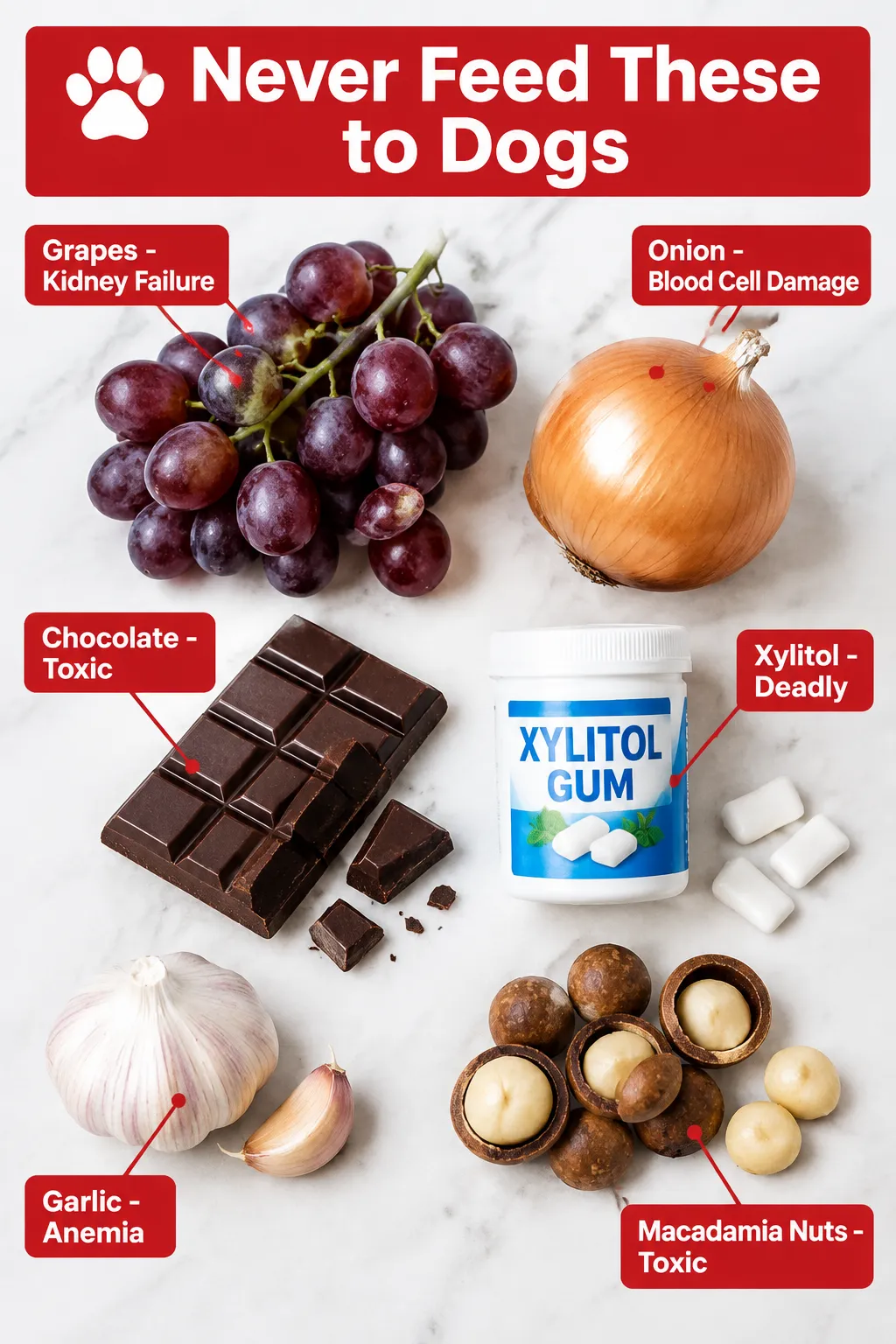
Some human foods are genuinely dangerous – even fatal – for dogs. The “never feed” list is consistent across all major veterinary sources: chocolate, grapes, raisins, onions, garlic, xylitol, macadamia nuts, alcohol, caffeine, and avocado are absolute exclusions.
AVMA’s household hazards guidance (updated September 23, 2025) and Pumpkin’s pet food safety guides both position these items as foods that should never be given to dogs under any circumstances.
Is Garlic Bad for Dogs? Yes – garlic is toxic to dogs. It belongs to the Allium family (along with onions, leeks, and chives) and can cause oxidative damage to red blood cells, leading to hemolytic anemia. Even small, repeated amounts are harmful. Garlic powder is even more concentrated and more dangerous.
Here’s a quick reference list of foods dogs should never eat:
- 🚫 Chocolate – contains theobromine, which is toxic to dogs
- 🚫 Grapes and raisins – can cause sudden kidney failure
- 🚫 Onions and garlic – toxic to dogs even in cooked form
- 🚫 Xylitol – found in sugar-free gum, some peanut butters, and baked goods; causes dangerous blood sugar drops
- 🚫 Macadamia nuts – cause weakness, vomiting, and tremors in dogs
- 🚫 Alcohol – even small amounts are toxic to dogs
- 🚫 Caffeine – coffee, tea, and energy drinks can cause heart problems
- 🚫 Avocado – contains persin, which can cause vomiting and diarrhea
- 🚫 Raw yeast dough – expands in the stomach and produces alcohol
- 🚫 Cooked bones – can splinter and cause internal injuries
For a full breakdown, see our guide on 15 everyday foods that can kill your dog.
Edge case: Some foods are safe for most dogs but problematic for specific individuals. Dogs with pancreatitis should avoid high-fat foods like cheese and peanut butter even if they’re technically “safe” for healthy dogs. Always factor in your dog’s specific health conditions.
How Much People Food Can I Give My Dog?
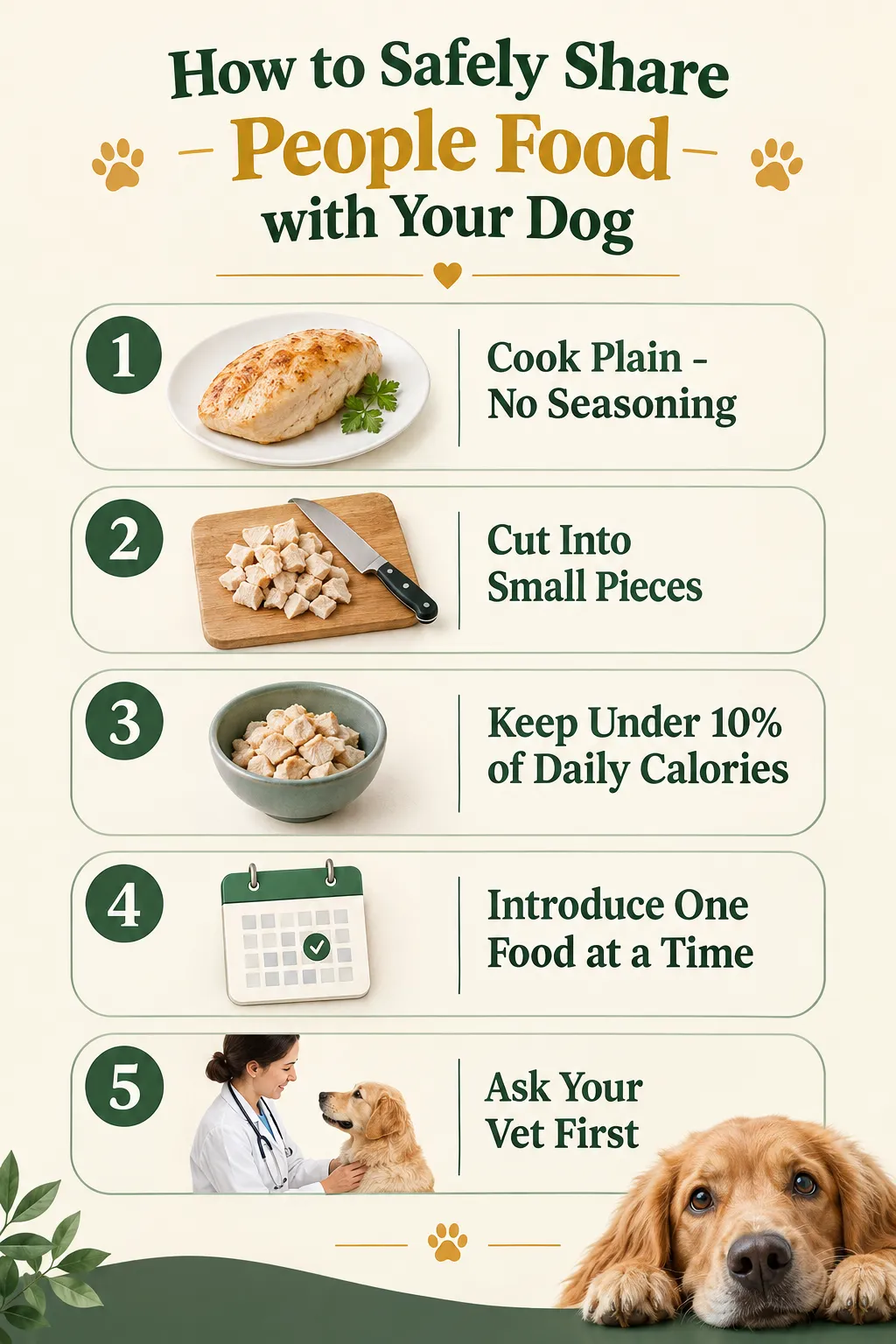
Human food treats should generally stay below about 10% of a dog’s daily caloric intake. Vet-endorsed guidance from NC State’s nutrition service recommends cutting all human food treats into bite-size pieces and serving them without salt, butter, oil, sugar, or seasoning.
For a small dog (under 20 lbs), that 10% limit might be just a few small pieces of chicken or a couple of carrot sticks per day. For larger dogs, the portion can be bigger – but it should still be a treat, not a meal replacement.
For puppies: A puppy’s digestive system is more sensitive than an adult dog’s. Introduce any new human food slowly, in very small amounts, and watch for signs of digestive upset like diarrhea or vomiting. Always check with your vet before adding human foods to a puppy’s diet.
Are there foods that are safe for some dogs but not others? Yes. Dogs with diabetes should avoid high-sugar fruits and honey. Dogs with kidney disease may need to limit high-protein human foods. Dogs with food allergies may react to chicken or eggs even though these are generally safe. A balanced dog food formulated for your dog’s life stage and health condition should always be the foundation of their diet.
For dogs with sensitive stomachs, check out these homemade dog food recipes for sensitive stomachs that use many of the same safe human foods discussed here.
Understanding Puppy Nutritional Needs vs. Adult Dogs
A puppy has different nutritional needs than an adult dog, and human foods that are fine for adult dogs may not always be appropriate in the same amounts for a young pup. Puppies need higher levels of protein, calcium, and specific vitamins to support rapid growth and bone development.
Royal Veterinary Center’s nutrition guidance notes that while many safe human foods can be introduced to puppies as small treats, the primary diet should always be a complete, balanced puppy food formulated to meet their specific developmental needs.
Plain cooked chicken, cooked eggs, mashed sweet potatoes, and plain yogurt are among the human foods a puppy can eat in very small amounts as occasional treats. Always introduce one new food at a time, wait a few days, and watch for any reaction before adding another.
Human food vs. dog food: Even the healthiest human foods don’t replace a balanced dog food. Commercial dog foods – especially those meeting AAFCO nutritional standards – are formulated to provide complete nutrition for dogs at every life stage. Human foods work best as treats, toppers, or supplements to a dog’s regular diet, not as the main meal.
Conclusion: What People Food Can Dogs Eat – The Bottom Line
The good news is that dogs can safely enjoy quite a few human foods from your fridge and pantry. Plain cooked proteins, dog-safe vegetables, most common fruits (prepared correctly), and some grains and dairy products can all be healthy treats when given in moderation.
The rules are simple:
- Always serve human food plain – no salt, garlic, onion, butter, or seasoning.
- Cut into small pieces and keep portions to under 10% of daily calories.
- Remove all seeds, pits, and cores from fruits before sharing.
- Cook all proteins fully – raw meat and eggs carry pathogen risks.
- Introduce new foods one at a time and watch for any reaction.
- Know the toxic list – chocolate, grapes, onions, garlic, xylitol, and macadamia nuts are never safe for dogs.
If you’re ever unsure whether a specific food is safe for your dog, check with your vet. And if you want to go further with healthy, vet-friendly eating for your dog, explore the 15 superfoods for dogs that vets recommend for even more ideas.
Your dog’s health and happiness are worth the extra care – and sharing the right human foods can be a wonderful way to bond with your pet every single day.
FAQ: What People Food Can Dogs Eat
What foods are toxic to dogs?
The most dangerous foods for dogs include chocolate, grapes, raisins, onions, garlic, xylitol (found in sugar-free products), macadamia nuts, alcohol, caffeine, and avocado. Even small amounts of these can cause serious health problems ranging from kidney failure to death. Always keep these foods well out of reach of your dogs and cats.
What can I feed my dog instead of dog food?
If you’re out of dog food, plain cooked chicken and white rice is the safest temporary substitute. You can also use plain cooked turkey, scrambled eggs, cooked sweet potato, or plain canned pumpkin. These human foods are easy to digest and safe for most dogs. However, a balanced dog food should always be restored as the primary diet as soon as possible.
What food cannot be given to dogs?
Dogs should never eat chocolate, grapes or raisins, onions, garlic, leeks, xylitol-containing products, macadamia nuts, alcohol, caffeinated beverages, avocado, raw yeast dough, or cooked bones. These foods are toxic to dogs and can cause severe illness or death even in small amounts. Some of these – like grapes and xylitol – are dangerous even in tiny quantities.
What are the 10 best human foods for dogs?
The 10 best human foods for dogs are: (1) plain cooked chicken, (2) cooked eggs, (3) carrots, (4) blueberries, (5) plain cooked salmon, (6) apples (seedless), (7) plain cooked sweet potatoes, (8) plain pumpkin, (9) green beans, and (10) xylitol-free peanut butter. These foods are safe, nutritious, and most dogs genuinely enjoy them as treats or food toppers.