Last updated: August 12, 2026
Quick Answer: Pug body language is a rich mix of tail curls, ear shifts, vocalizations, and theatrical flops that communicate everything from pure joy to deep stress. Because pugs have flat faces and exaggerated features, their signals can look different from other breeds – and misreading them is surprisingly common. Learning to decode pug body language makes you a better owner and strengthens your bond with your dog.
Key Takeaways
- A tightly curled tail usually signals a happy, relaxed pug – a low or uncurled tail can mean stress or illness.
- Flattened ears pressed back against the head are a clear sign your pug feels anxious or fearful.
- The dramatic side flop is almost always a comfort signal, not a health concern.
- Reverse sneezing is normal in pugs but worth monitoring if it becomes frequent or prolonged.
- Whale-eye (showing the whites of the eyes) is a stress signal that owners often miss.
- Growling during play is usually fine – context and body posture tell the full story.
- A pug leaning against your leg is one of the sweetest affection signals in the dog world.
- New owners often misread stress yawns, lip licks, and the play bow as unrelated behaviors.
- Pugs are companion dogs first – their entire behavior toolkit is designed to keep you close.
- Training and reading body language go hand in hand; a well-trained pug is easier to read.
Why Pug Body Language Is Unlike Any Other Breed
Pugs communicate differently from most dogs, and that difference matters for every owner. Their flat faces, enormous round eyes, and tightly curled tails create a unique set of signals that require a breed-specific reading guide.
A 2025 Forbes study found that people are genuinely not good at reading dog body language – even experienced dog owners misread signals regularly. For pug owners, that gap is even wider because the breed’s brachycephalic (flat-faced) anatomy compresses and alters many standard canine cues [7].
Pugs were bred in ancient China as lap dogs for emperors, and that history shows in their behavior. They are wired to watch your face, mirror your mood, and stay physically close [1]. Understanding their signals is not just fun – it’s essential for their wellbeing.
If you want a deeper dive into what makes this breed tick, our 15 pug dog facts about their wrinkly, chaotic, lovable nature is a great starting point.
The Importance of Body Language in Pugs
Canine body language is the primary way dogs communicate with humans and each other. For pugs specifically, vocalizations and physical postures carry extra weight because their facial muscles are limited by their flat skull structure [6].
The Pickwick Pugs blog on canine body language – a resource from the well-regarded Pickwick show world kennel community – notes that reading a dog’s full body (not just the face) is the only reliable way to understand what the animal is feeling [6]. Pickwick Pugs, associated with champions like GCH Hill Country Mighty Macintosh TKN and the Pickwick Peachtree Hill line, has long emphasized that even experienced show handlers can miss subtle pug cues.
Canine body language works as a system. No single signal tells the whole story – you read the tail, the ears, the eyes, the posture, and the vocalizations together [8].
Quirk 1: The Over-the-Top Curly Tail – Happy Flag or Panic Spiral?
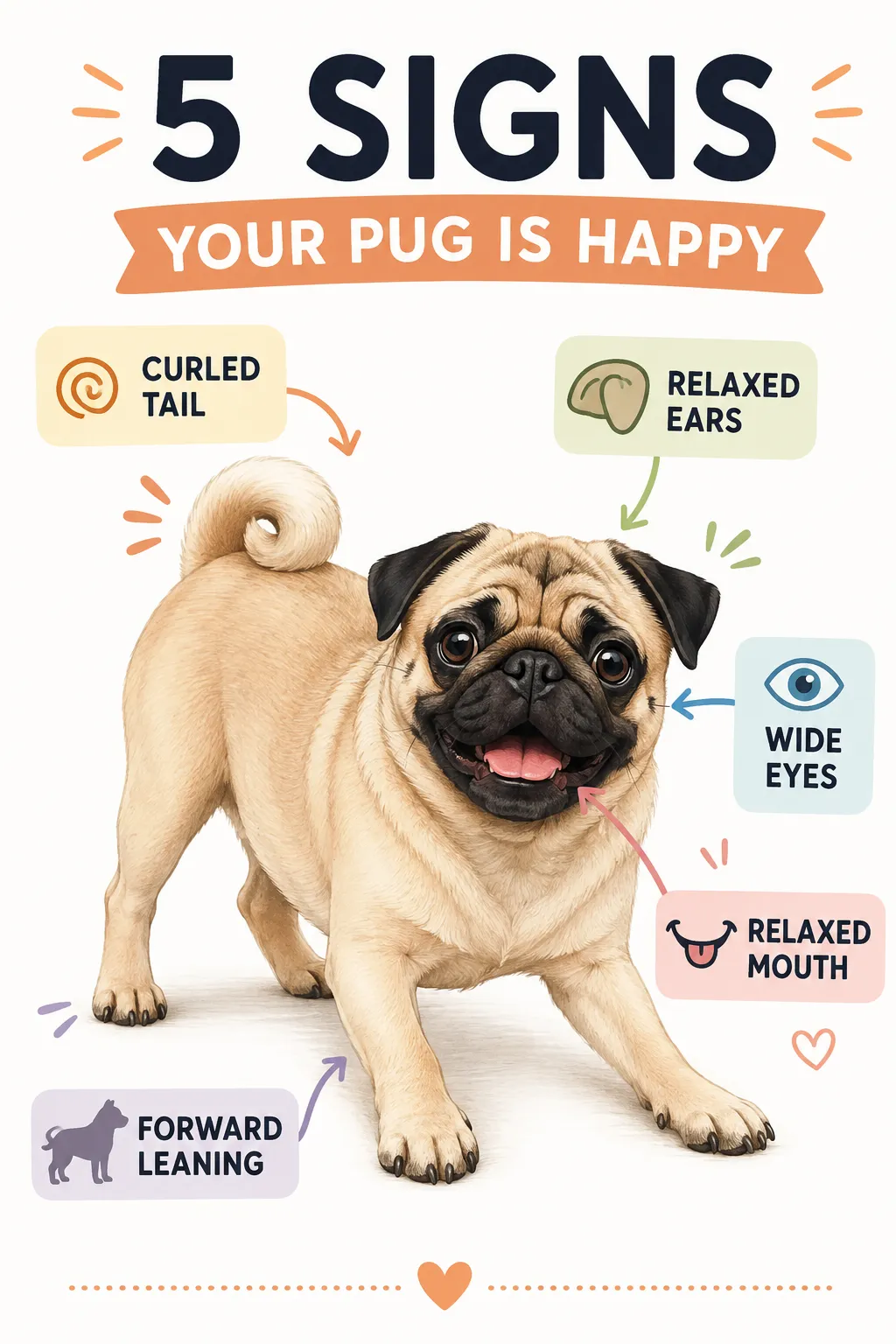
A pug’s curled tail is one of the most recognizable features of the breed, and it’s also one of the most expressive. A tight double curl sitting high over the back is the pug’s version of a smile – it signals confidence, happiness, and relaxation [2].
However, the tail position changes with mood:
- Tight curl, held high – happy, confident, content dog
- Single loose curl – relaxed but slightly uncertain
- Tail dropped or uncurled – stress, fear, pain, or submission
- Tail tucked under the body – significant fear or discomfort
According to Frank Loves Beans’ pug body language guide, a pug whose tail suddenly goes from a tight curl to a low hang is telling you something is wrong – and that change deserves attention [2].
The “panic spiral” version is when the tail uncurls completely during a stressful event like a vet visit or a loud noise. This is normal, but if the tail stays low for extended periods at home, it’s worth a vet check [4].
Quick rule: If your pug’s tail is up and curled, they’re probably ruling the household with confidence. If it drops, they need your reassurance.
Quirk 2: What Pug Ear Position Tells You About Mood
Ear position is one of the fastest mood indicators in any dog, and pugs are no exception. Because pug ears are soft and fold forward naturally, even small shifts in position carry meaning [3].
Here’s a simple breakdown:
| Ear Position | What It Means |
|---|---|
| Relaxed, folded forward | Calm and content |
| Pulled back flat against head | Fear, anxiety, or submission |
| Slightly raised or forward-tilted | Alert, curious, engaged |
| One ear up, one down | Confused or processing something new |
VCA Hospitals’ puppy body language guide confirms that ears pulled back flat are a universal canine stress signal – in pugs, this often pairs with a tucked tail and low body posture [8].
When your pug’s ears go back during training, that’s a sign you may be pushing too hard or the session is causing stress. Ease back, use positive reinforcement, and give the dog a moment to reset [5].
Quirk 3: The Huge “Pug Eyes” Stare, Whale-Eye, and Squinting Soap Opera
Pugs have enormous, round, slightly protruding eyes – and those eyes are constantly broadcasting their emotional state. This is where pug body language gets genuinely theatrical [4].
Three eye expressions every owner should know:
The Soft Stare – Relaxed, slightly squinting eyes with a loose face mean your pug is happy and comfortable. This is the “I love you” look.
The Hard Stare – Wide, unblinking, fixed gaze directed at something specific signals alertness or low-level tension. In training, this can mean your dog is about to make a decision – watch what comes next.
Whale-Eye – This is the one most owners miss. Whale-eye is when your pug turns their head slightly away but keeps their eyes on you, showing the white crescent at the edge of the eye. It’s a stress signal, not a cute quirk [6].
Pugs Beauty’s body language resource notes that whale-eye in pugs is often triggered by being held too tightly, approached too fast, or placed in an uncomfortable position [4]. If you see it, give your dog some space.
The squinting “soap opera” look – where your pug slowly blinks at you with half-closed eyes – is actually a sign of deep contentment and trust. Slow blinking back at your dog is a recognized affection signal in companion animals [9].
Quirk 4: Tail Wagging, the Play Bow, and Pug Body Posture
Pug body language during play is energetic, exaggerated, and sometimes hard to distinguish from mild aggression if you don’t know what to look for. The play bow is the clearest signal that your dog wants to have fun [8].
Play bow: Front legs stretched forward, chest low to the ground, back end up, tail wagging. This is a universal dog invitation to play – it’s never aggressive [6].
Aggressive stance: Weight shifted forward, stiff body, tail held rigid (not wagging), direct hard stare, hackles possibly raised. This is rare in pugs but can occur around food or toys [10].
The difference is in the body. A play bow has a loose, wiggly quality – the whole dog looks bouncy. An aggressive stance is stiff and still.
Tail wagging also carries nuance. A wide, full-body wag means joy. A slow, low wag can mean uncertainty. A stiff, high wag (rare in pugs given their curly tail) signals arousal or tension [2].
For owners working on dog training and play behavior, our guide on 7 powerful playtime games that secretly train your dog shows how to use these signals to reinforce good behavior during play sessions.
Quirk 5: Vocalizations – What Is Your Pug Actually Saying?
Pugs are one of the most vocal dog breeds, and their sounds range from endearing to alarming if you don’t know what’s normal. Their vocalizations are a core part of pug body language and deserve their own section [1].
Barking
Pugs don’t bark as much as some small breeds, but when they do, the bark usually means something specific. A sharp, short bark at the door is an alert. A series of yippy barks during play is excitement. A low, persistent bark at nothing visible can signal anxiety or a noise the owner can’t hear [3].
Each bark has a different pitch and rhythm – pay attention to the pattern, not just the sound.
Grunting and Snorting
Grunting is the pug’s version of casual conversation. A soft grunt when settling into your lap means contentment. A louder grunt when you stop petting them is a complaint – and a very effective one [5].
Snorting is normal given the pug’s flat face and narrow nostrils. However, frequent, labored snorting at rest can indicate breathing difficulty and should be checked by a vet [1].
Why Do Pugs Do the Reverse Sneeze?
Reverse sneezing is a rapid, repeated inhalation through the nose that sounds alarming but is almost always harmless. It’s caused by irritation or excitement triggering a spasm in the soft palate – very common in brachycephalic breeds like pugs [4].
It looks like the dog is choking or struggling to breathe. Most episodes last 10-30 seconds and stop on their own. Gently massaging your pug’s throat or briefly covering one nostril can help end the episode faster [9].
If reverse sneezing happens multiple times daily or lasts longer than a minute, mention it to your vet – it can occasionally signal an upper respiratory issue [1].
Quirk 6: Signs of Stress and Anxiety in Pug Body Language
Stress signals in pugs are often subtle and easy to dismiss as “just being a pug.” Recognizing them early prevents small discomfort from becoming a bigger behavior problem [7].
Common stress signals to watch for:
- Yawning when not tired (stress yawn)
- Lip licking or nose licking repeatedly
- Whale-eye (white crescent visible at eye edge)
- Ears pinned flat back
- Tail uncurled or tucked
- Panting when not hot or exercised
- Pacing or inability to settle
- Hiding or moving away from people
- Excessive grooming or scratching
Happy Tails Puppies’ pug behavior guide notes that pugs experiencing stress often show multiple signals at once – the combination is the key indicator [1].
Fear is a specific type of stress. A pug showing fear may freeze, try to move away, or in rare cases snap if they feel cornered. Fear-based behavior in dogs should never be punished – it makes the fear worse [10].
If your pug shows chronic stress signals at home, our resource on how to socialize a reactive dog without stress offers a calm, step-by-step method that works well for sensitive companion breeds.
How to Tell If Your Pug Is Stressed or Anxious
A stressed pug will show at least 2-3 of the signals listed above at the same time, in a context that doesn’t match normal relaxation. The key question is: does the body language fit the situation?
A pug yawning after a long walk is just tired. A pug yawning repeatedly at the vet, with ears back and tail low, is stressed. Context always matters [8].
Quirk 7: The Dramatic Side Flop – Tired or Just Being Extra?
The dramatic side flop is a pug specialty. Your dog will walk into the room, make eye contact with you, and then throw themselves onto their side with maximum theatrical flair. It’s one of the most entertaining pug body language moments you’ll witness [3].
What it actually means: Almost always comfort and trust. A dog that flops onto their side in your presence is showing they feel completely safe. It’s the canine equivalent of a contented sigh.
How to tell if it’s genuine tiredness vs. drama:
- Tired pug: flops down, closes eyes, breathing slows, doesn’t respond much to stimulation
- Dramatic pug: flops down, keeps eyes open or half-open, watches you, perks up immediately if you move toward them or pick up a treat
The dramatic flop is often paired with a grunt or a sigh – the pug’s way of making sure you noticed [5].
However, if your pug flops and seems unable to get back up, breathes heavily while resting, or appears lethargic rather than theatrical, those are signs worth a vet visit. Pugs are prone to breathing issues and joint problems that can look like laziness at first [1].
Quirk 8: What It Means When Your Pug Leans Against You
When a pug leans their full body weight against your leg or presses into your side, it’s one of the clearest affection signals in the breed. This behavior communicates trust, comfort, and a desire for closeness [2].
It can also mean:
- Seeking reassurance – in a new environment or around strangers, leaning means “I feel safer with you right here”
- Asking for attention – if the lean comes with eye contact and a slight wag, your pug is asking for pets
- Marking you – dogs use body contact as a gentle form of social bonding
The lean is different from a pug pressing against you out of anxiety. An anxious lean is accompanied by other stress signals – panting, whale-eye, or attempts to hide behind you. A relaxed lean has a loose, comfortable body [4].
Quirk 9: Why Do Pugs Tilt Their Head So Much?
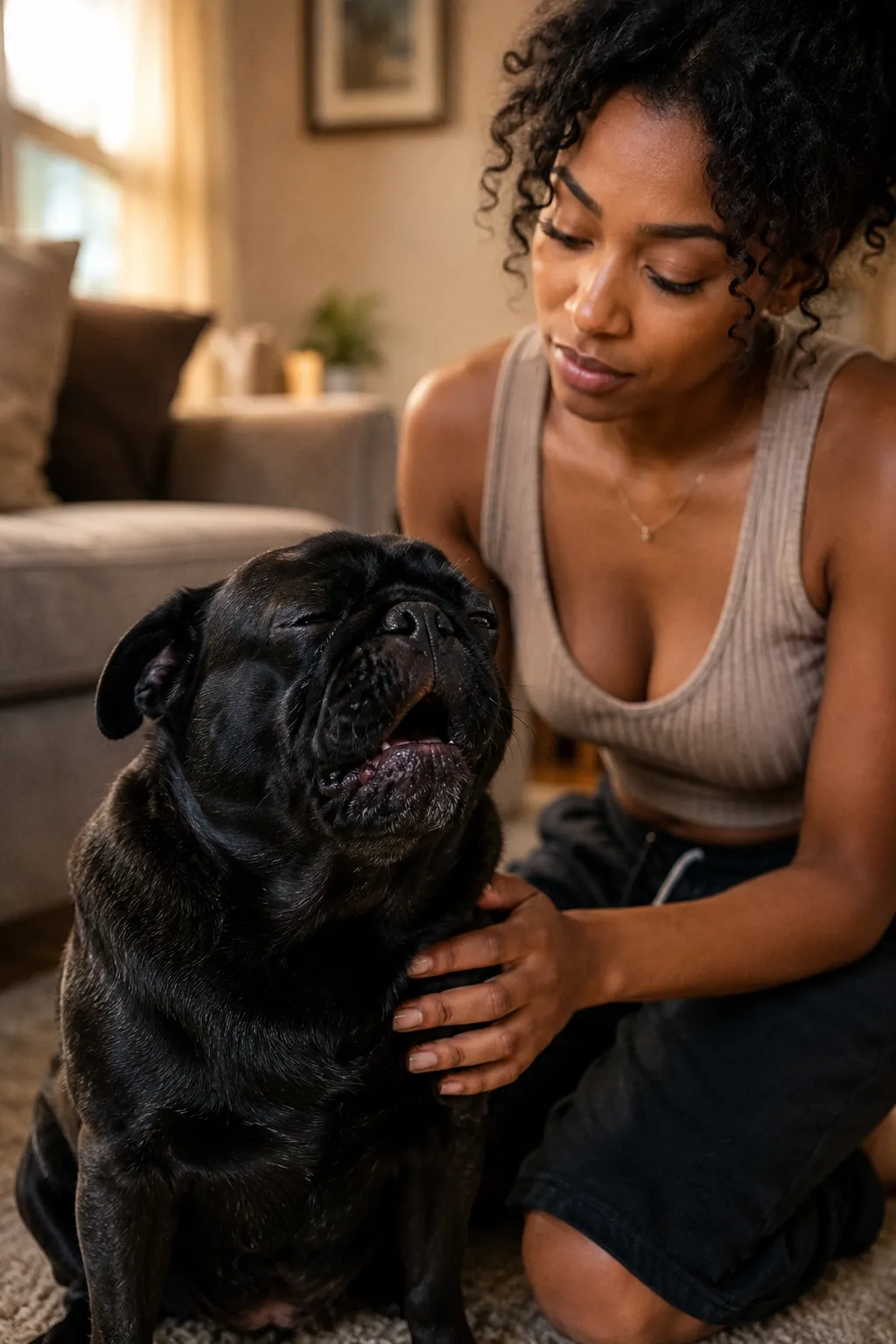
The head tilt is one of the most photographed pug behaviors, and it genuinely means something. Pugs tilt their head when they’re trying to hear or understand something better – it’s an active listening posture [3].
Pugs also tilt their head when they recognize a word or sound that matters to them (like “walk,” “treat,” or their name). The tilt helps them locate the sound source and process the information [8].
From a body language standpoint, a head tilt signals curiosity and engagement. It’s a good sign during training – it means your pug is paying attention.
However, a persistent head tilt that doesn’t go away – especially if combined with loss of balance or circling – can indicate an inner ear problem or neurological issue. That version is not dramatic pug behavior; it’s a vet visit [1].
Quirk 10: Pug Growling During Play – Normal or a Problem?
Growling during play is normal in pugs and most dogs, but it confuses a lot of new owners. The key is reading the full body, not just the sound [10].
Play growling looks like this:
- Loose, wiggly body
- Play bow posture or bouncy movement
- Tail wagging (even with a curly pug tail, you can see the movement)
- Growl is low and rhythmic, not sharp or escalating
- Dog re-engages play after growling
Concerning growling looks like this:
- Stiff, still body
- Hard stare
- Growl is sharp, high-pitched, or escalating
- Dog is guarding a resource (food, toy, spot on sofa)
- Growl is followed by a snap
The Spokesman-Review’s dog behavior coverage notes that punishing growling is one of the most common owner mistakes – growling is communication, and suppressing it removes a warning signal without addressing the underlying issue [10].
If your pug growls over food or toys consistently, that’s resource guarding and benefits from structured dog training. Our 14-day dog training plan covers exactly this kind of behavior modification in a step-by-step format.
Common Pug Body Language Mistakes New Owners Make
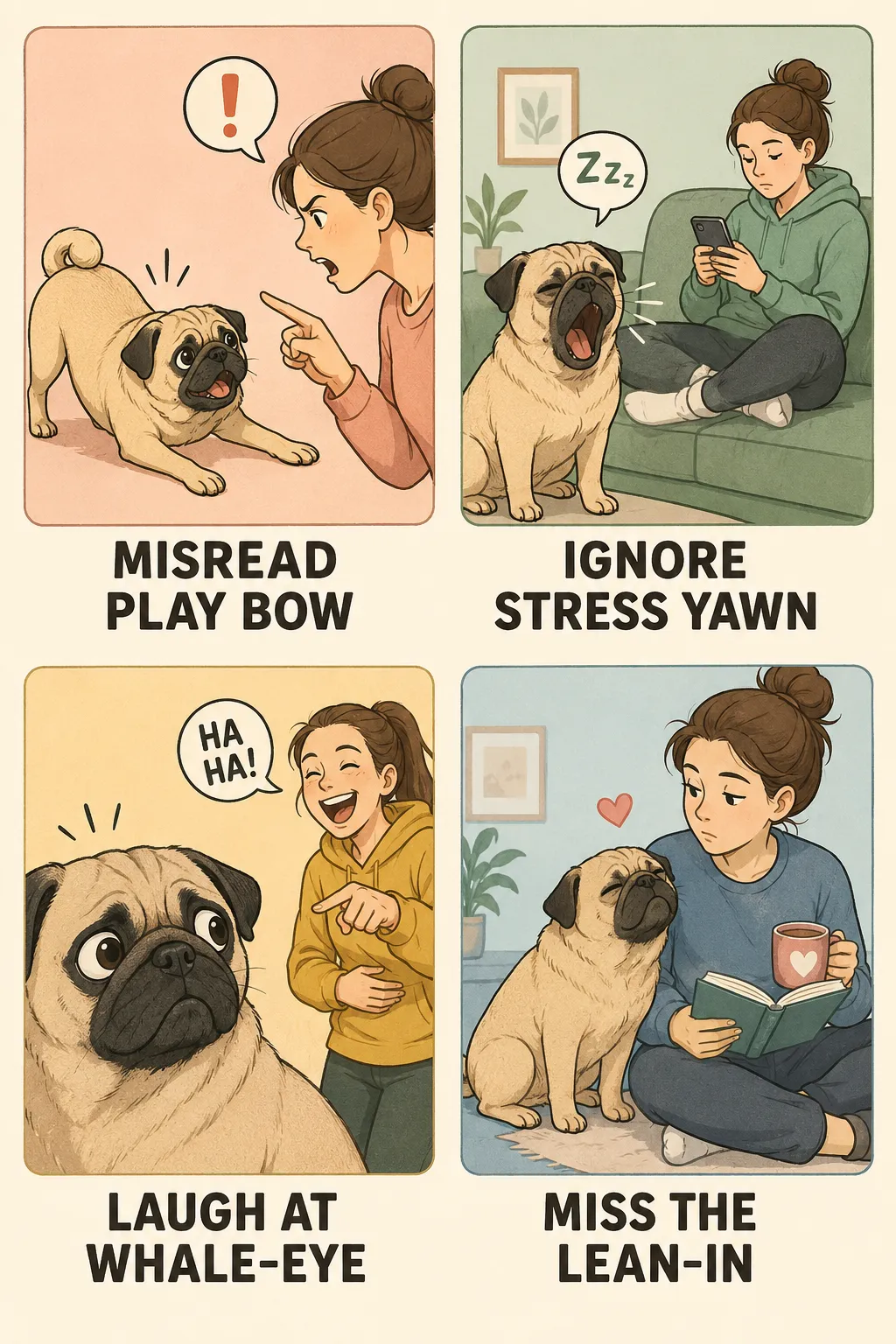
New pug owners make predictable reading errors – and knowing them in advance saves a lot of confusion. These are the most common ones [6][7].
Mistake 1: Treating every grunt as a complaint
Most pug grunts are contentment sounds. Owners who rush to fix every grunt end up reinforcing attention-seeking behavior.
Mistake 2: Missing the stress yawn
A yawn in a non-tired context is a calming signal – the pug is trying to de-escalate tension. Many owners think their dog is just bored.
Mistake 3: Laughing at whale-eye
The whites-of-the-eyes look is genuinely cute, but it’s a stress signal. Laughing and continuing the behavior that caused it teaches the pug that stress gets rewarded.
Mistake 4: Misreading the play bow as begging
When a pug bows with their front end down and back end up, they want to play – not food. Owners who respond with treats accidentally train the dog to bow for snacks.
Mistake 5: Ignoring the lean
Many owners gently push their pug away when they lean, not realizing it’s an affection and reassurance-seeking behavior. Accepting the lean (when appropriate) strengthens the bond.
Mistake 6: Panicking over reverse sneezing
New pug owners often rush to the emergency vet during a reverse sneeze episode. Understanding that it’s normal – and knowing how to help – prevents unnecessary stress for both dog and owner [9].
For owners building their knowledge base, the Pug Bible e-book concept from Pug Boxes covers breed-specific behavior in a format designed for new owners [5]. Resources like this, alongside the pugs.co.uk body language guide, give owners a solid foundation [9].
How to Tell If Your Pug Is Happy vs. Uncomfortable
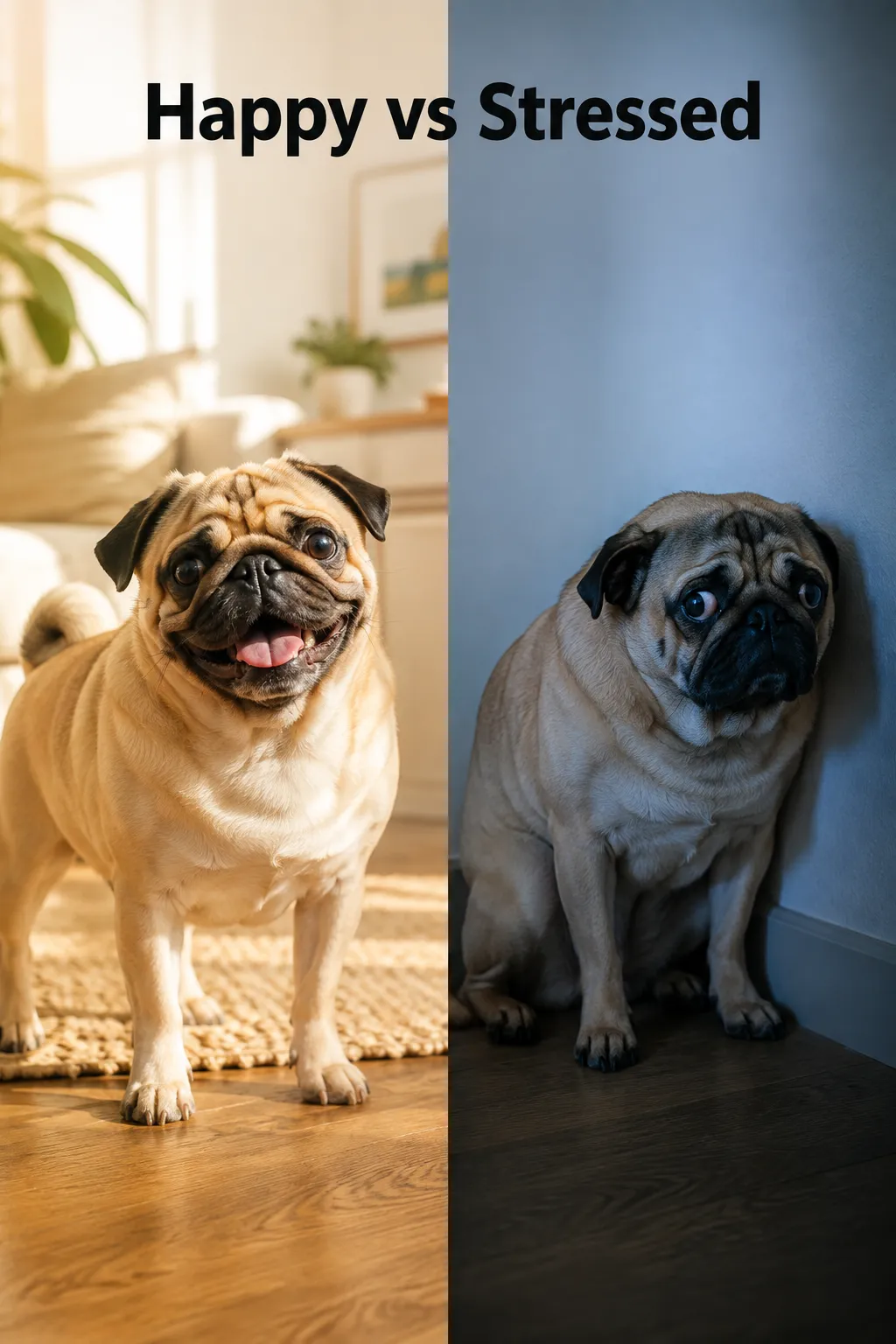
A happy pug and an uncomfortable pug can look surprisingly similar to an untrained eye. Here’s a direct comparison to help you tell them apart [2][4].
Signs your pug is happy:
- Tail curled tightly over back
- Loose, wiggly body when approaching you
- Soft, squinting eyes
- Relaxed mouth (may look like a smile)
- Playful bouncing or zoomies
- Seeking physical contact willingly
- Eating and drinking normally
Signs your pug is uncomfortable:
- Tail low or uncurled
- Body stiff or hunched
- Whale-eye or wide, tense eyes
- Ears pinned back
- Repeated yawning or lip licking
- Moving away from people or stimulation
- Reduced appetite
The Medium/Welcome to the Grumble pug communication guide puts it well: your pug is always speaking – the question is whether you’re listening [3].
For a broader look at small dog behavior patterns, our article on 15 cute small dogs that look like puppies forever covers how companion breeds like pugs communicate differently from working breeds.
Exploring Pug Breeds: Miniature, Teacup, and Standard Variations
Standard pugs, miniature pugs, and so-called teacup pugs all share the same core body language signals – but size and health status can affect how clearly those signals show [1].
The term “teacup pug” is not a recognized breed standard by the Pug Dog Club of America. Teacup and miniature pugs are typically runts or the result of breeding smaller-than-standard dogs, which can come with additional health challenges that affect behavior [1].
A miniature or teacup pug with breathing difficulties may show stress signals more frequently simply because breathing is harder for them. Their body language is the same – but the baseline stress level may be higher, and owners need to be extra attentive [4].
Standard pug behavior from established lines – including show-world kennels like Pickwick Pugs (associated with dogs like Pickwick Worship Ground Walk, Pickwick Child Hemline Out Sight TKN, and World Smile Pickwick) and GCH Hill Country Mighty Macintosh TKN from Peachtree Hill Country – tends to be more predictable because responsible breeders select for stable temperament alongside physical traits [6].
The diamond litter and other carefully planned litters from reputable breeders like Pickwick Peachtree Hill and Pickwick show world programs prioritize dogs that show calm, confident body language from puppyhood [6].
For puppy training foundations that work with any pug’s natural body language, our 15 puppy potty training tips and Labrador puppy training tips that stop bad habits offer methods that translate well to pug puppies too.
Female and Male Pug Body Language: Are There Differences?
Male and female pug body language follows the same general rules, but there are some tendencies worth knowing. Female pugs can be slightly more independent and may show more subtle stress signals – they’re less likely to escalate and more likely to simply move away [9].
Male pugs, especially unneutered ones, may show more resource-guarding behavior and more assertive body postures around other dogs. However, individual personality varies far more than sex does [5].
Baby pug body language (puppies under 12 weeks) is less nuanced – puppies communicate primarily through play signals, distress vocalizations, and proximity-seeking. The full adult signal set develops gradually through the first year [8].
Reddit discussions on pug body language (r/pugs) frequently highlight how individual pugs develop their own signature signals – one pug’s stress signal might be a specific ear twitch that their owner learns over time. This is normal and worth logging in a behavior journal [3].
FAQ: Your Pug Body Language Questions Answered
How to tell if a pug likes you?
A pug that likes you will seek out your physical presence, lean against you, make soft eye contact with relaxed squinting eyes, and wag their curly tail when you enter the room. They may also bring you toys, follow you from room to room, or press their body against yours when resting. These are all clear affection signals in pug body language.
Do pugs like being carried?
Many pugs enjoy being carried, especially if they were handled frequently as a puppy and associate it with comfort. Signs a pug likes being carried include a relaxed body, soft eyes, and no attempt to wriggle away. Signs they dislike it include stiff body, whale-eye, and persistent attempts to get down. Always respect the dog’s signals – forced carrying causes stress.
Are pugs very clingy?
Yes, pugs are one of the clingiest dog breeds. They were bred as companion dogs for centuries and are genuinely distressed by prolonged separation from their owner. A pug that follows you to every room, leans on you constantly, and vocalizes when you leave is displaying normal breed behavior – not a problem, unless the separation anxiety becomes severe enough to affect their wellbeing.
Do pugs pick a favorite person?
Pugs often do develop a clear preference for one person in a household, usually the person who feeds them, trains them, and spends the most consistent time with them. However, they are social enough to bond warmly with multiple people. The favorite person gets the most dramatic greetings, the most persistent leaning, and the most intense “pug stare” of adoration.
Conclusion: Start Reading Your Pug Like a Pro
Pug body language is a full conversation happening in real time – tail curls, ear shifts, eye expressions, vocalizations, and postures all working together to tell you exactly how your dog is feeling.
The 10 quirks covered here – from the curly tail’s mood flag to the theatrical side flop, from the reverse sneeze to the growl during play – are your starting vocabulary. The more you observe and respond appropriately, the richer that conversation becomes.
Actionable next steps:
- Start a behavior log – note your pug’s signals in different situations for two weeks. Patterns will emerge fast.
- Learn the stress signals by heart – yawn, lip lick, whale-eye, tucked tail. These are the ones most owners miss.
- Never punish growling – address the underlying cause through training instead.
- Respond to the lean – accepting your pug’s affection signals builds trust and reduces anxiety.
- Schedule a vet check if any signal (persistent tail drop, constant reverse sneezing, chronic panting) becomes a daily pattern.
For more on keeping your pug healthy and happy, check our vet-approved dog health checklist and explore brain games for dogs to keep your pug mentally stimulated alongside their emotional needs.
Your pug is already telling you everything. You just need to listen.
References
[1] Understanding The Behavior Of Your Pug What Is It Trying To Tell You – https://happytailpuppies.com/blogs/news/understanding-the-behavior-of-your-pug-what-is-it-trying-to-tell-you
[2] Understanding Pug Body Language – https://www.franklovesbeans.com/2024/05/18/understanding-pug-body-language/
[3] Your Pug Can Speak For Themself – https://medium.com/@WelcometotheGrumble/your-pug-can-speak-for-themself-8cebba7f020e
[4] Understanding Pug Body Language – https://pugsbeauty.com/understanding-pug-body-language/
[5] Understanding Pug Behavior What Your Pug’s Actions Really Mean – https://pugboxes.com/blogs/pug-life-blog/understanding-pug-behavior-what-your-pug-s-actions-really-mean
[6] Canine Body Language – https://www.pickwickpugs.com/blog/canine-body-language
[7] Study Finds People Aren’t Good At Reading Dog Body Language – https://www.forbes.com/sites/jenreeder/2025/06/09/study-finds-people-arent-good-at-reading-dog-body-language/
[8] How To Read Puppy Body Language – https://vcahospitals.com/pediatric/puppy/behavior-training/how-to-read-puppy-body-language
[9] Interpreting Your Pugs Body Language What Is She Telling You – http://www.pugs.co.uk/interpreting-your-pugs-body-language-what-is-she-telling-you/
[10] Think You Understand Your Dog Think Again – https://www.spokesman.com/stories/2025/mar/16/think-you-understand-your-dog-think-again/