Last updated: August 12, 2026
Quick Answer: Red, sore dog paws are most often caused by allergies, yeast or bacterial infections, or environmental irritants – and several safe homemade remedies for red sore dog paws can bring real relief. An apple cider vinegar soak, an oatmeal bath, or a coconut oil massage can calm itchy, inflamed paws at home. If redness persists beyond 5-7 days or your dog won’t stop licking despite treatment, a vet visit is the right next step.
Key Takeaways 🐾
- Excessive paw licking is one of the most common complaints dog owners bring to the vet – it’s almost always a sign that something is irritating the skin.
- The top causes of red sore paws in dogs include environmental allergies, food allergies, yeast infections, bacterial infections (pododermatitis), and contact irritants.
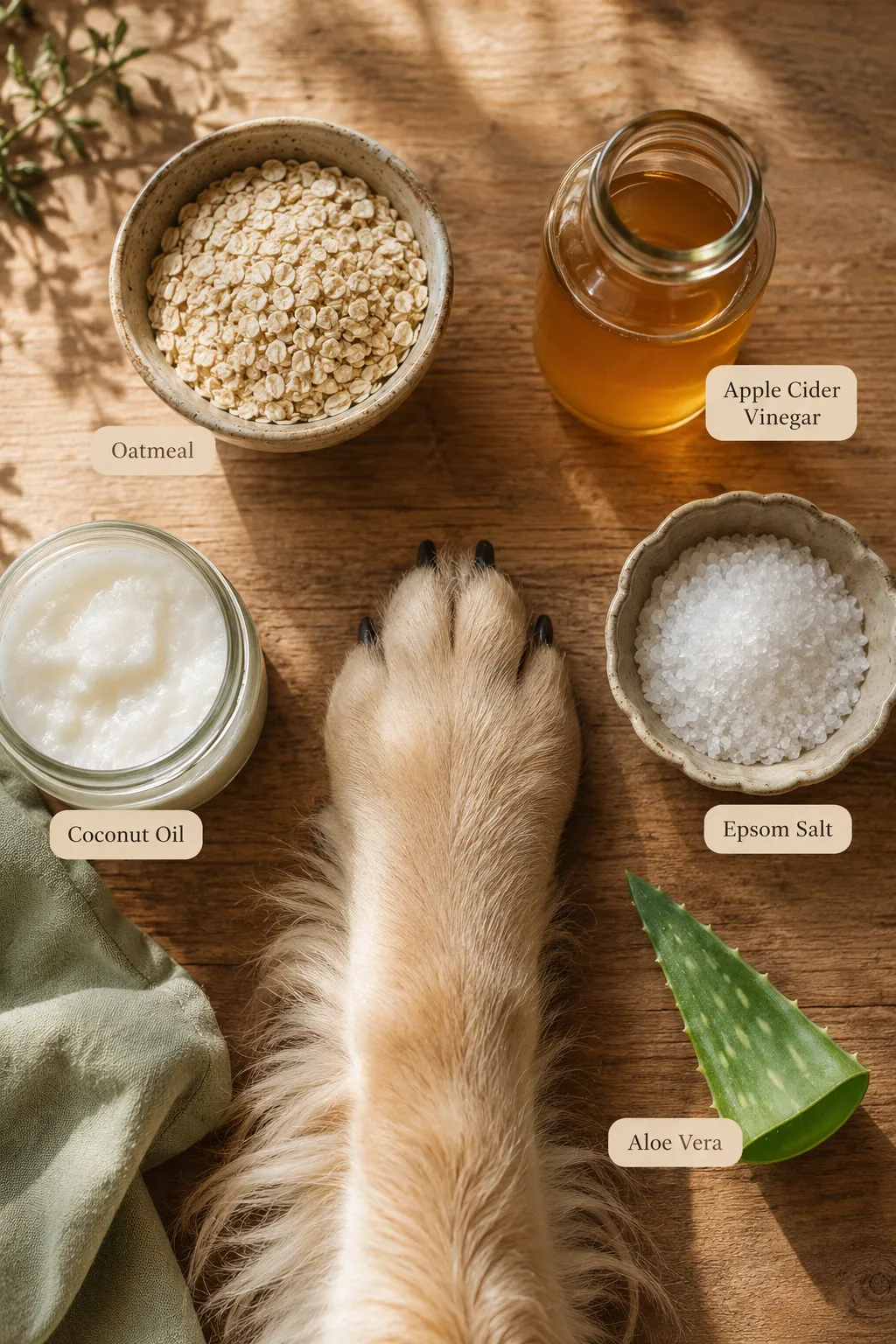
- Five safe homemade remedies – apple cider vinegar soak, oatmeal bath, coconut oil, Epsom salt soak, and aloe vera gel – can reduce redness, itching, and inflammation.
- Apple cider vinegar works best for mild yeast-related redness; oatmeal baths are ideal for dogs with dry, inflamed skin from environmental allergies.
- Never apply undiluted apple cider vinegar to broken or raw skin – it will sting and can worsen irritation.
- Home remedies help manage mild cases but are not a substitute for veterinary diagnosis when infections, open sores, or limping are present.
- Consistent paw care – rinsing after walks, drying between toes, and regular checks – is the most effective way to prevent future flare-ups.
- Dogs with food allergies may need a dietary change alongside any topical home treatment to see lasting relief.
What Causes Red Sore Paws in Dogs
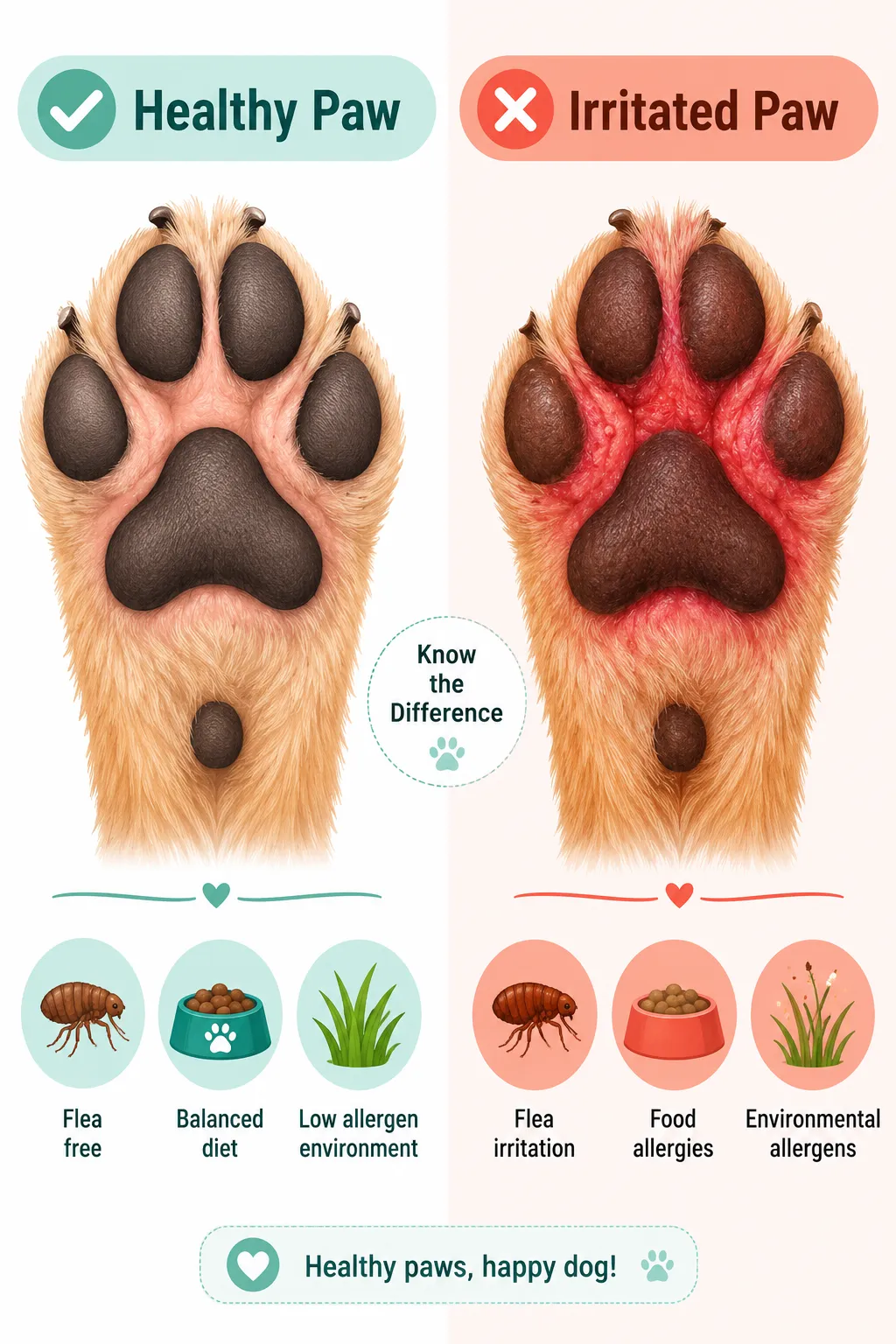
Red, sore paws in dogs are almost always caused by one of four things: allergies (environmental or food-related), infections (yeast or bacterial), physical injury, or contact with irritants. Identifying the root cause is the most important step before reaching for any homemade remedies for red sore dog paws, because the wrong treatment can make things worse.
Here’s a breakdown of the most common causes:
Environmental and Food Allergies
Environmental allergies are the number one reason dogs develop itchy paws. Grass pollen, mold, dust mites, and seasonal allergens can all trigger a reaction that shows up as redness between the toes and obsessive licking. As Julie Buzby, DVM, says, dogs with environmental allergies often show a very specific pattern – they lick their paws most intensely after outdoor walks.
Food allergies are the second major culprit. Common triggers include beef, chicken, dairy, wheat, and – in some dogs – certain wet food breeds formulas containing tuna or fish proteins. Dogs food sensitivities often show up as year-round paw redness rather than seasonal flares. Julie Buzby DVM says that if your dog’s paw licking doesn’t follow a seasonal pattern, a food allergy trial is worth discussing with your vet.
How to tell the difference:
- Seasonal redness that improves indoors = likely environmental allergies
- Year-round redness, especially with ear infections or belly redness = likely food allergy
- Redness that clears up after a dietary change = confirms dogs food sensitivity
For more on why dogs chew their paws obsessively, check out this guide on why dogs chew on their paws.
Pododermatitis – Bacterial and Yeast Infections
Pododermatitis is the veterinary term for inflammation of the skin on the paws, and it’s frequently caused by bacterial or yeast infections. Buzby DVM says the telltale sign of a yeast infection is a musty, corn-chip smell coming from the paws – often called “Frito feet.” The skin between the toes turns red, the pads may look greasy, and the dog won’t stop licking.
Bacterial infections often follow secondary to allergies or injuries. The skin breaks down from constant licking, bacteria move in, and the cycle gets worse. Red, swollen, crusty skin between the toes – sometimes with discharge – is a red flag for bacterial pododermatitis.
Diagnostic tip: If you see redness AND smell a musty odor, yeast is the likely cause. If you see redness AND pus or crusting, bacterial infection is more likely. Both need proper care, but the treatment approach differs.
For a deeper look at managing yeast-related paw issues, see our guide on dog yeast infection paws remedies.
Flea Allergy Dermatitis and Atopic Dermatitis
Flea allergy dermatitis (FAD) is a reaction to flea saliva – even a single flea bite can trigger intense itching across the whole body, including the paws. Dogs with FAD often chew their paws, base of tail, and belly simultaneously.
Atopic dermatitis is a chronic skin condition where the dog’s immune system overreacts to environmental allergens. According to VCA Animal Hospitals, atopic dermatitis affects an estimated 10-15% of dogs and is one of the most common reasons for veterinary skin consultations. Paws, ears, and belly are the most commonly affected areas.
Paw Injuries and Contact Irritants
Hot pavement, ice melt chemicals, sharp gravel, and lawn fertilizers can all cause direct physical damage to paw pads. The skin cracks, turns red, and the dog licks to soothe the pain. This is a contact irritant reaction, not an allergy – though it can look identical.
Signs of contact injury vs. allergy:
- Sudden onset after a specific walk or surface = contact injury
- Gradual worsening over days or weeks = more likely allergy or infection
- One paw affected = possible injury or foreign body (thorn, splinter)
- All four paws affected equally = systemic cause like allergy
Pain-Related Licking
Sometimes a dog licks their paws not because the paw itself is sore, but because of pain elsewhere – arthritis, a nail injury, or even anxiety. If your dog is licking one specific paw obsessively and you can’t find any visible redness or skin changes, a vet check is the right call to rule out pain-related causes.
When Does Paw Licking Become a Problem
Occasional paw licking is completely normal – dogs groom themselves. It becomes a problem when the licking is constant, obsessive, or happening at night when the dog should be sleeping. Excessive licking damages the skin, creates moisture between the toes, and sets the stage for secondary infections.
Watch for these warning signs:
- 🔴 Red or pink staining of the fur between the toes (from saliva)
- 🔴 Swollen, puffy skin between toes
- 🔴 Broken or raw skin on paw pads
- 🔴 A musty or yeasty smell from the paws
- 🔴 Limping or reluctance to walk
- 🔴 Nocturnal chewing that wakes you up
Buzby DVM says that if your dog is waking you up with obsessive nocturnal chewing of the paws, that’s a sign of significant discomfort that needs attention – not just a habit.
5 Best Homemade Remedies for Red Sore Dog Paws
These five homemade remedies for red sore dog paws are safe, affordable, and backed by solid reasoning. They work best for mild to moderate cases – redness, itching, and early-stage irritation. They are not replacements for veterinary treatment when infections or open wounds are present.
Remedy 1 – Apple Cider Vinegar Soak (Best for Yeast-Related Redness)
Apple cider vinegar is one of the most popular home remedies for itchy dog paws, and for good reason. Its mild acidity creates an environment that’s hostile to yeast and some bacteria, which makes it useful for the type of paw redness caused by yeast overgrowth.
How to use apple cider vinegar for dog paws:
- Mix 1 part raw, unfiltered apple cider vinegar with 1 part water in a shallow bowl.
- Soak your dog’s paws for 5 minutes.
- Pat dry thoroughly – moisture left between the toes makes yeast worse.
- Repeat once daily for up to 5-7 days.
Critical warning: Never apply apple cider vinegar to broken, raw, or cracked skin. The acidity will cause stinging and can damage already-irritated tissue. If your dog’s paw pads are cracked or bleeding, skip this remedy and use coconut oil or aloe vera instead.
The itchy paws relief from an apple cider vinegar soak is often noticeable within 1-2 days for mild yeast cases. For more home remedy options, see our full guide on 10 effective home remedies to stop your dog from licking its paws.
Remedy 2 – Colloidal Oatmeal Bath (Best for Dry, Inflamed, Allergy-Prone Skin)
An oatmeal bath is one of the gentlest and most effective home remedies for dogs with dry, inflamed skin caused by environmental allergies or atopic dermatitis. Oatmeal contains compounds called avenanthramides and beta-glucan, which research published in the Journal of Drugs in Dermatology confirms have anti-inflammatory and skin-barrier-supporting properties.
Oatmeal bath recipe for sore dog paws:
- Grind 1 cup of plain, unflavored rolled oats into a fine powder using a blender or food processor.
- Add the powder to a basin of lukewarm water – not hot, which worsens inflammation.
- Stir until the water turns milky.
- Soak your dog’s paws for 10 minutes.
- Rinse lightly with clean water and pat completely dry.
Choose this remedy if: Your dog has dry, flaky skin around the paw pads, redness from seasonal allergies, or skin that looks irritated but not infected. Oatmeal is safe for daily use and won’t sting even on slightly raw skin.
Remedy 3 – Coconut Oil Massage (Best for Dry, Cracked Paw Pads)
Coconut oil is safe for dogs both topically and in small amounts orally, and it’s one of the most versatile home remedies for sore paw pads. It moisturizes dry, cracked pads, has mild antimicrobial properties from its lauric acid content, and creates a protective barrier on the skin surface.
How to apply coconut oil to dog paws:
- Use organic, unrefined virgin coconut oil.
- Warm a small amount between your fingers until it melts.
- Massage gently into the paw pads and between the toes.
- Let it absorb for 5 minutes, then distract your dog so they don’t immediately lick it all off.
- Apply once or twice daily.
Coconut oil for dog paw redness is generally considered safe – it won’t cause harm if your dog licks some of it off. However, excessive consumption can cause loose stools, so use a thin layer rather than a thick coat.
Is coconut oil safe for all dogs? Yes, for most dogs. The exception is dogs with pancreatitis or very sensitive digestive systems, where even small amounts of fat can cause problems. Ask your vet if you’re unsure.
Remedy 4 – Epsom Salt Soak (Best for Swollen, Infected-Looking Paws)
Epsom salt (magnesium sulfate) has long been used to reduce swelling and draw out minor infections in both human and veterinary care. It can help soothe red, swollen paws and provide relief when pododermatitis is in its early stages.
How to use Epsom salt on dog paws:
- Dissolve 1 tablespoon of Epsom salt in 2 cups of warm water.
- Soak affected paws for 5-10 minutes.
- Rinse with clean water afterward – Epsom salt can be drying if left on the skin.
- Pat completely dry, especially between the toes.
- Use once daily, not more.
Can you use Epsom salt on dog paws at home? Yes, with one important caveat – make sure your dog doesn’t drink the water. Ingesting Epsom salt can cause digestive upset. Keep the soak shallow and supervise the entire time.
Remedy 5 – Aloe Vera Gel (Best for Immediate Soothing Relief)
Pure aloe vera gel is one of the fastest-acting home remedies for itchy paws because it cools and calms irritated skin almost immediately. It has anti-inflammatory compounds including acemannan, and it’s gentle enough to use on raw or broken skin where apple cider vinegar would be too harsh.
How to use aloe vera on dog paws:
- Use pure aloe vera gel – either from a fresh leaf or a product with no added alcohol, fragrance, or xylitol (xylitol is toxic to dogs).
- Apply a thin layer to red, irritated paw pads and between the toes.
- Let it absorb for a few minutes.
- If your dog licks it off quickly, that’s fine – pure aloe vera is not toxic to dogs in small amounts.
- Apply 2-3 times daily for best results.
Quick comparison of all five remedies:
| Remedy | Best For | Avoid If |
|---|---|---|
| Apple cider vinegar | Yeast-related redness | Broken/raw skin |
| Oatmeal bath | Dry, allergy-inflamed skin | N/A – very safe |
| Coconut oil | Cracked, dry pads | Dog has pancreatitis |
| Epsom salt | Swollen, infected-looking paws | Dog might drink the water |
| Aloe vera | Immediate soothing, raw skin | Product contains xylitol |
What’s the Difference Between Allergies and Infection Causing Sore Paws
Allergies and infections both cause red, itchy paws – but they require different treatments. Getting this distinction right is key to choosing the right home remedy or knowing when to see a vet.
Allergies cause the immune system to overreact to a trigger (pollen, food, fleas). The skin becomes inflamed and itchy, but there’s no pathogen present initially. Symptoms tend to be bilateral (both paws), seasonal or consistent, and often involve other areas like ears and belly.
Infections (bacterial or yeast) often develop secondary to allergies – the dog licks, the skin breaks down, and microorganisms move in. Signs of infection include a musty smell, discharge, crusty skin, and worsening despite allergy management.
Key diagnostic clues:
- Musty/corn-chip smell = yeast infection (try apple cider vinegar soak)
- Crusty, oozing skin = bacterial infection (needs veterinary antibiotics)
- Seasonal pattern + no odor = environmental allergies (try oatmeal bath)
- Year-round + no odor + also affects ears = food allergy (needs dietary change)
- Sudden onset after a walk = contact irritant (rinse paws, apply coconut oil)
Allergy testing – either intradermal skin testing or blood serum testing – is the gold standard for identifying specific allergens. Julie Buzby DVM says allergy testing is worth pursuing for dogs with chronic, recurring paw problems that don’t respond to basic management.
How to Stop a Dog from Licking Their Paws Obsessively
Stopping obsessive paw licking requires addressing both the underlying cause and the licking behavior itself. Treating the itch without interrupting the licking cycle often fails because the habit can persist even after the initial irritation resolves.
Practical steps to break the licking cycle:
- Apply a remedy and then distract your dog – a 10-minute walk or a puzzle toy right after treatment keeps them from immediately licking off the remedy.
- Use a soft recovery collar (E-collar) – not punitive, just a physical barrier that gives the skin time to heal.
- Clean paws after every outdoor walk – a quick rinse with plain water removes allergens and irritants before they cause a reaction.
- Dry thoroughly between the toes – moisture is the number one driver of yeast growth.
- Check for foreign bodies – a tiny thorn or grass seed between the toes can cause obsessive licking of one specific paw.
For dogs whose licking is driven by anxiety rather than physical irritation, mental enrichment and exercise can help reduce the compulsive behavior. Our guide on 10 effective home remedies to stop your dog from licking its paws covers behavioral approaches alongside physical remedies.
How Long Do Homemade Remedies Take to Work on Dog Paws
Most homemade remedies for red sore dog paws show noticeable improvement within 3-7 days for mild cases. More stubborn or chronic cases may take 2-3 weeks of consistent daily treatment.
Realistic timeline by cause:
- Contact irritant redness – often improves within 24-48 hours of removing the irritant and applying soothing remedies.
- Mild yeast-related redness – apple cider vinegar soaks typically show improvement in 3-5 days.
- Allergy-driven itchy paws – oatmeal baths and coconut oil provide symptom relief but won’t resolve the underlying allergy; expect ongoing management rather than a cure.
- Bacterial infection – home remedies alone are rarely sufficient; most bacterial pododermatitis cases need veterinary antibiotics.
When home remedies aren’t working:
If your dog’s paws are still red, swollen, or being obsessively licked after 7 days of consistent home treatment, it’s time to see a vet. Chronic or worsening symptoms suggest either an infection that needs medical treatment or an allergy that requires professional allergy management.
When Should You Take Your Dog to the Vet for Sore Paws
Home remedies are appropriate for mild redness and itching, but some situations need professional veterinary care right away. Recognizing these signs early can prevent a minor problem from becoming a serious one.
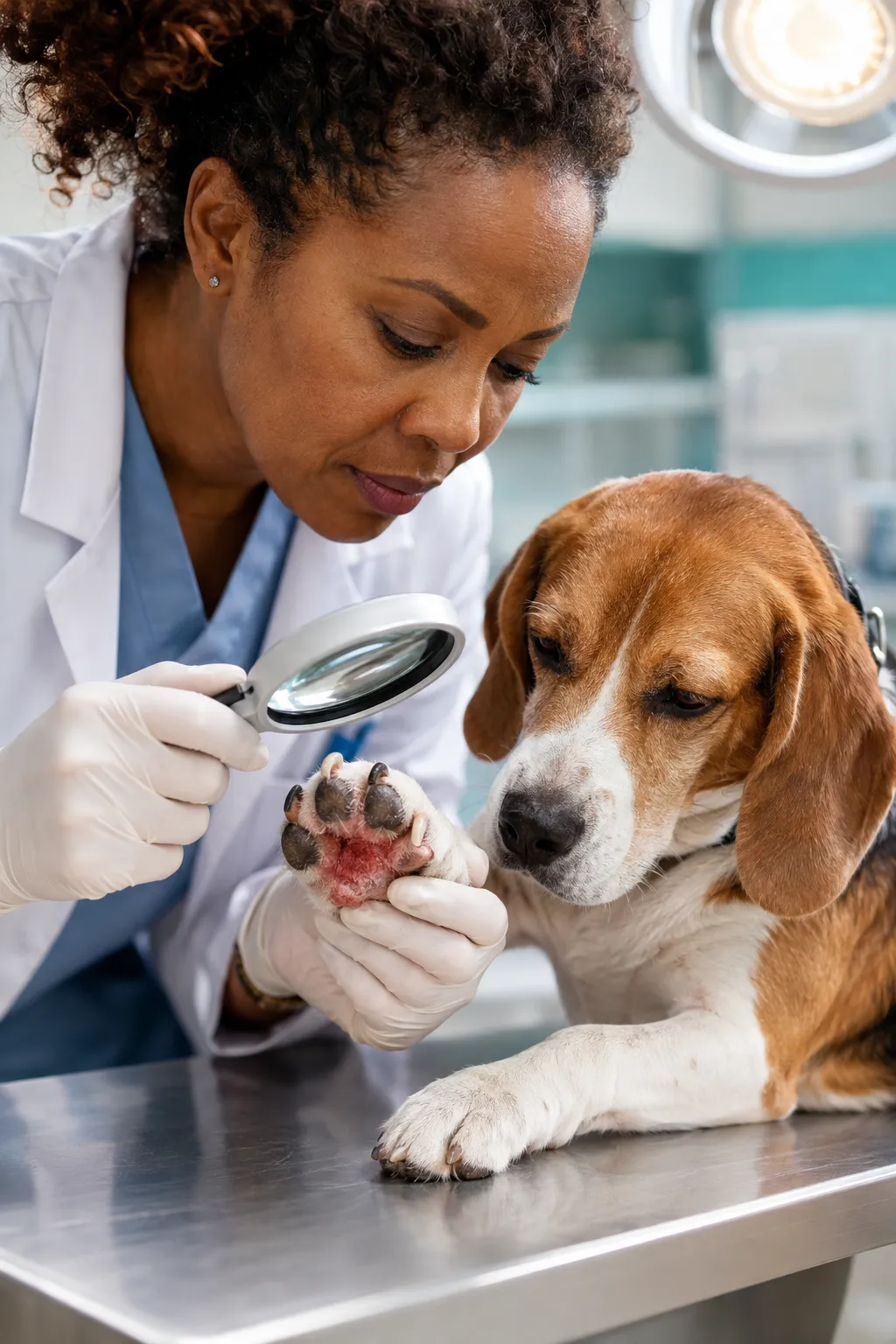
See a vet immediately if your dog shows:
- 🚨 Open sores, bleeding, or deep cracks in the paw pads
- 🚨 Pus or discharge between the toes
- 🚨 Limping or refusing to bear weight on the paw
- 🚨 Swelling that extends above the paw
- 🚨 Fever, lethargy, or loss of appetite alongside paw symptoms
- 🚨 No improvement after 7 days of home treatment
- 🚨 Symptoms spreading to other areas of the body
Oklahoma pet owners should be aware that Oklahoma Veterinary Specialists and other regional emergency veterinary clinics offer after-hours care for acute paw injuries, including snake bites, screwworm infestations, and severe contact injuries from lawn chemicals. If your dog steps on something toxic or sustains a puncture wound, don’t wait – emergency veterinary care is the right call.
How Do Veterinarians Diagnose Paw Licking Causes
A vet will typically start with a physical examination of the paws, looking at the skin between the toes, the paw pads, and the nails. They may take a skin scraping or swab to check for yeast or bacteria under a microscope. For suspected food allergies, they’ll often recommend an elimination diet trial – typically 8-12 weeks on a novel protein or hydrolyzed protein diet. For environmental allergies, allergy testing (intradermal or serum-based) can identify specific triggers.
Buzby DVM says that one of the most useful things a dog owner can do before a vet appointment is keep a simple log – noting when the licking is worst, whether it’s seasonal, and whether any specific activities or foods seem to trigger flare-ups.
Professional Treatment Options for Excessive Paw Licking
Infection treatment: Bacterial pododermatitis is typically treated with oral antibiotics for 3-6 weeks. Yeast infections may be treated with antifungal medications (oral or topical). Medicated shampoos containing chlorhexidine or miconazole are often prescribed for ongoing skin care.
Allergy management: Environmental allergies may be managed with antihistamines, Apoquel (oclacitinib), Cytopoint injections, or allergen-specific immunotherapy. Food allergies require a strict dietary change to eliminate the trigger protein. Dogs food sensitivities often improve significantly within 8-12 weeks of an appropriate elimination diet.
Pain control: If licking is pain-related, NSAIDs or other pain medications may be prescribed alongside treatment for the underlying cause.
Homemade Remedies vs. Vet Treatment – Which Is Right for Your Dog
Homemade remedies for red sore dog paws are appropriate for mild, early-stage irritation in otherwise healthy dogs. Veterinary treatment is necessary when infections are present, when symptoms are severe, or when home treatment hasn’t worked after a week.
Choose home remedies if:
- Redness is mild and your dog is still comfortable
- There’s no odor, discharge, or broken skin
- Symptoms started recently (within 1-3 days)
- You can identify a likely cause (walked on hot pavement, seasonal allergy flare)
Choose veterinary care if:
- Symptoms are severe, worsening, or have lasted more than 7 days
- You see signs of infection (odor, discharge, swelling)
- Your dog is limping or in obvious pain
- Home remedies haven’t provided relief
The honest truth is that most chronic paw licking cases need both – home remedies to manage day-to-day symptoms and veterinary guidance to address the root cause. Using homemade remedies alongside a vet-recommended treatment plan gives your dog the best of both worlds.
For a vet-approved approach to homemade paw lick remedies, see our guide on vet-approved dog licks paws remedy homemade.
Are There Any Risks to Using Essential Oils on Dog Paws
Essential oils are not recommended for use on dog paws. Many essential oils that are safe for humans are toxic to dogs – including tea tree oil, eucalyptus oil, peppermint oil, and clove oil. Dogs absorb substances through their skin and also ingest them when they lick their paws, which increases the risk of toxicity significantly.
The ASPCA Animal Poison Control Center lists tea tree oil as a known toxin for dogs, with symptoms including muscle weakness, tremors, and liver damage even at low concentrations.
Safe alternatives to essential oils for dog paw care:
- Coconut oil (safe if licked)
- Aloe vera gel (pure, no additives)
- Colloidal oatmeal preparations
- Plain vitamin E oil in small amounts
If you’ve seen a recipe online that includes lavender oil or other essential oils for dog paw care, skip it. The risks outweigh any potential benefit when safer alternatives are available.
How Often Should You Apply Homemade Paw Remedies
For most home remedies, once daily is the right frequency during an active flare-up. Applying remedies too frequently can over-hydrate the skin or disrupt the skin’s natural barrier, which can make things worse rather than better.
Recommended frequency by remedy:
- Apple cider vinegar soak – once daily, for no more than 7 consecutive days
- Oatmeal bath – once daily during flare-ups; 2-3 times per week for maintenance
- Coconut oil – once or twice daily; reduce to every other day once skin improves
- Epsom salt soak – once daily, always rinse off afterward
- Aloe vera gel – 2-3 times daily; it’s gentle enough for frequent use
The most important step after any soak or wash is thorough drying. Moisture trapped between the toes is one of the biggest contributors to yeast overgrowth and recurring infections. Pat dry with a clean towel, then let air dry for a few minutes before letting your dog walk on carpet or bedding.
Preventing Future Paw Licking Episodes
Consistent daily paw care is the most effective way to prevent red sore paws from becoming a recurring problem. Most dog owners who struggle with chronic paw issues find that a simple routine – applied every day – dramatically reduces flare-up frequency.
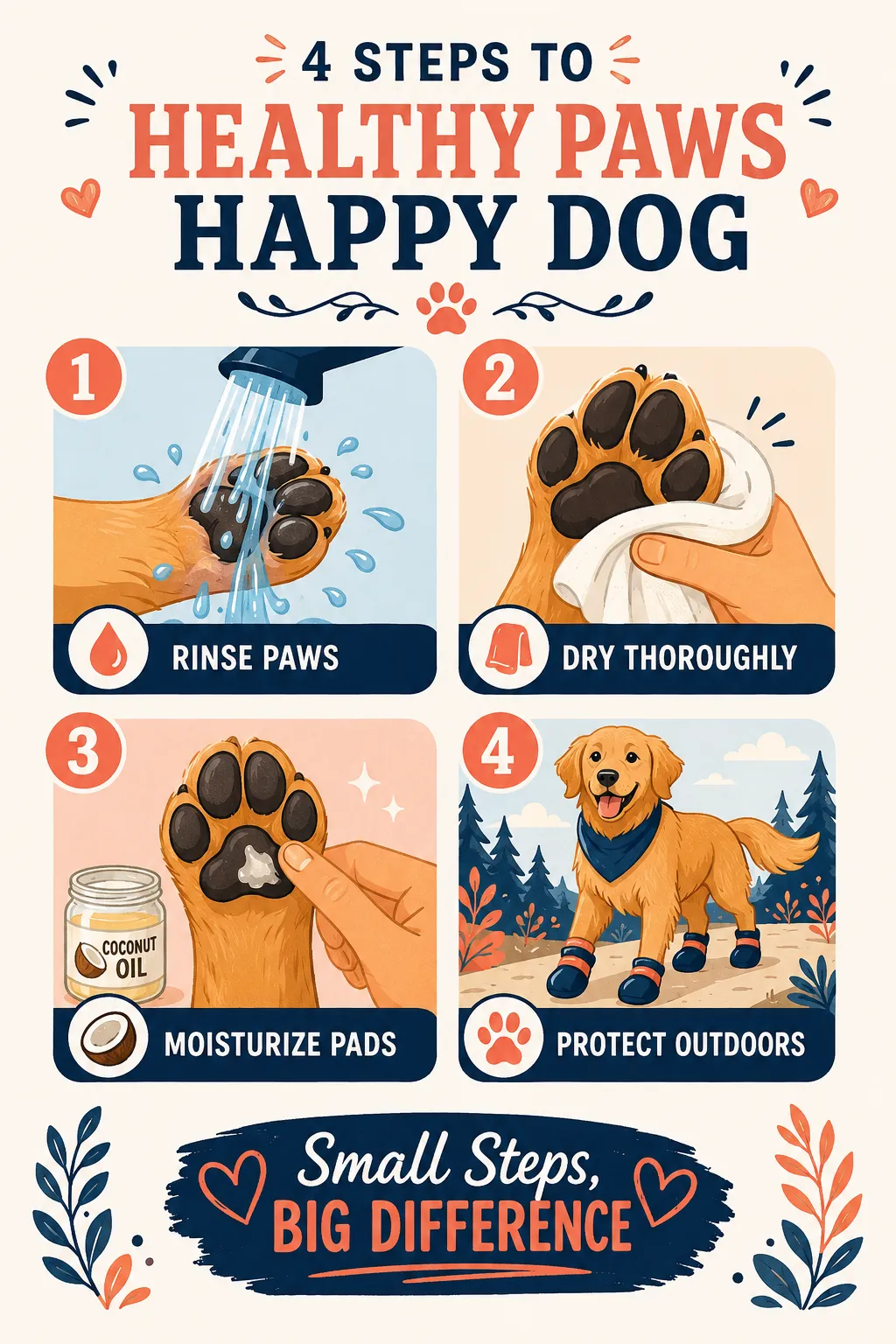
Daily paw care routine:
- Rinse paws after every outdoor walk – plain water removes pollen, mold spores, and contact irritants before they penetrate the skin.
- Dry thoroughly between the toes – use a clean towel and pay special attention to the skin folds between each toe.
- Check paw pads weekly – look for cracks, redness, foreign bodies, or early signs of infection.
- Keep fur trimmed between toes – long fur traps moisture and debris, creating ideal conditions for yeast growth.
- Apply a protective balm before walks on harsh surfaces – coconut oil or a commercial paw wax creates a barrier against hot pavement, ice melt, and rough terrain.
- Consider dog boots for dogs with severe environmental allergies or those who walk on treated surfaces regularly.
Dietary support for skin health:
Dogs with recurring skin and paw issues often benefit from omega-3 fatty acid supplementation. According to research published in Veterinary Dermatology, omega-3 fatty acids from fish oil can reduce inflammatory skin responses in dogs with atopic dermatitis. A typical dose is 20-55 mg of EPA and DHA per kilogram of body weight daily – ask your vet for the right amount for your dog’s size.
For dogs on wet food, choosing a formula with high-quality protein and added omega-3s can support coat and skin health from the inside out. Some wet food breeds-specific formulas – including those with tuna or salmon as the primary protein – provide a useful omega-3 boost alongside the coat skin journey toward healthier paws.
If you’re considering dietary changes to support your dog’s skin, our homemade dog food recipes for a sensitive stomach offer some practical starting points.
Why Specialized Veterinary Care Matters for Chronic Paw Problems
For dogs with chronic, recurring paw issues, a general vet visit is a good start – but a board-certified veterinary dermatologist offers the most thorough diagnostic workup. Specialists have access to advanced allergy testing, intradermal skin testing, and immunotherapy protocols that can address the root cause rather than just managing symptoms.
Oklahoma Veterinary Specialists and similar regional specialty practices offer dermatology consultations specifically for dogs with chronic skin and paw conditions. Buzby DVM says that dogs who have been through multiple rounds of antibiotics for recurring paw infections are often ideal candidates for a dermatology referral, since the underlying allergy driving the infection cycle may never have been properly identified.
When to ask for a referral:
- Your dog has had 3 or more paw infections in a single year
- Symptoms don’t respond to standard allergy medications
- You want allergy testing to identify specific environmental triggers
- Your dog’s quality of life is significantly affected by chronic paw licking
The sellers reviews and art coat skin journey feedback from dog owners who’ve pursued specialist care consistently highlight how much of a difference proper allergy diagnosis makes. Many owners report that after years of managing symptoms with home remedies and repeated antibiotic courses, a single dermatology consultation and allergy testing finally gave them a clear treatment plan.
FAQ – People Also Ask
How can I treat my dog’s red paws at home?
Start by identifying the likely cause – yeast, allergy, or contact irritant. For mild redness, soak your dog’s paws in a diluted apple cider vinegar solution (1 part vinegar, 1 part water) for 5 minutes, then dry thoroughly. An oatmeal bath works well for allergy-driven inflammation. Apply coconut oil or aloe vera gel to soothe and protect the skin. Repeat daily and monitor for improvement over 5-7 days.
What is the best home remedy for sore dog paws?
The best remedy depends on the cause. For yeast-related redness with a musty smell, a diluted apple cider vinegar soak is most effective. For dry, cracked pads from environmental allergies, an oatmeal bath followed by coconut oil is the top choice. For immediate soothing relief on raw or broken skin, pure aloe vera gel is the gentlest and safest option. When in doubt, oatmeal and coconut oil are the most universally safe starting points.
What can I put on my dog’s paws to help with irritation?
Pure coconut oil, colloidal oatmeal paste, and pure aloe vera gel are all safe to apply directly to irritated dog paws. Coconut oil moisturizes and has mild antimicrobial properties. Aloe vera cools and reduces inflammation quickly. Avoid products containing essential oils, alcohol, or xylitol – these can be toxic to dogs, especially since dogs lick their paws and will ingest whatever you apply. Always use products with simple, recognizable ingredients.
How do I heal my dog’s raw paws?
Raw paws need gentle care. First, clean the area with lukewarm water to remove debris. Apply pure aloe vera gel or a thin layer of coconut oil to protect and soothe the skin. Use a soft recovery collar to prevent further licking while the skin heals. Keep paws dry between treatments – moisture slows healing. If the rawness is severe, covers multiple paws, or shows signs of infection (swelling, odor, discharge), see a vet promptly. Raw skin can develop bacterial infections quickly without proper care.
Related Reading
- 10 effective home remedies to stop your dog from licking its paws
- 7 powerful dog yeast infection paws remedies
- Vet-approved dog licks paws remedy homemade you can make in minutes
- Why do dogs chew on their paws
- What to give a sick dog naturally – safe home remedies every owner should know
Conclusion
Red, sore, itchy paws are genuinely uncomfortable for your dog – and watching them lick obsessively is stressful for any owner. The good news is that most mild cases respond well to the five homemade remedies for red sore dog paws covered here: apple cider vinegar soaks, oatmeal baths, coconut oil massages, Epsom salt soaks, and aloe vera gel.
Your action plan:
- Identify the most likely cause – yeast, allergy, contact irritant, or injury.
- Choose the matching remedy – apple cider vinegar for yeast, oatmeal for allergy-driven dryness, aloe vera for raw skin.
- Apply consistently for 5-7 days and track whether symptoms improve.
- Add a daily paw-rinse routine after every walk to prevent future flare-ups.
- See a vet if symptoms worsen or don’t improve within a week, or if you see signs of infection.
Your dog’s paws carry them everywhere – they deserve the same care and attention as any other part of their health. Start with one remedy today, stay consistent, and don’t hesitate to loop in your vet when home care isn’t enough.