Last updated: September 8, 2026
Quick Answer: The 5 ways to train your disobedient dog that actually work are: switching to consistent positive reinforcement, using clicker training, addressing root causes like anxiety or boredom, adding structured daily exercise, and knowing when to call a professional. Most dogs labeled “untrainable” simply haven’t had the right method applied consistently.
Key Takeaways
- Over 70% of dog behavior problems stem from inconsistent training or unmet physical and mental needs – not stubbornness.
- Punishment-based methods can increase fear and aggression; the AVSAB recommends reward-based training as the safest and most effective approach.
- A disobedient dog is rarely a bad dog – it’s usually a dog that needs more time, clearer communication, and better support.
- Even older dogs can be retrained with patience and the right method.
- Breed-specific requirements, health conditions, and anxiety all affect how a dog responds to training.
- Most basic behavior improvements happen within 4 to 8 weeks of consistent daily practice.
- Tools like clickers, treat pouches, and hand signals can speed up results significantly.
What Causes a Dog to Be Disobedient?
A dog becomes disobedient for several reasons – and very few of them are about attitude. The most common causes include insufficient exercise, inconsistent commands, reinforcement of bad behaviors, unmet breed-specific requirements, and underlying anxiety or fear.
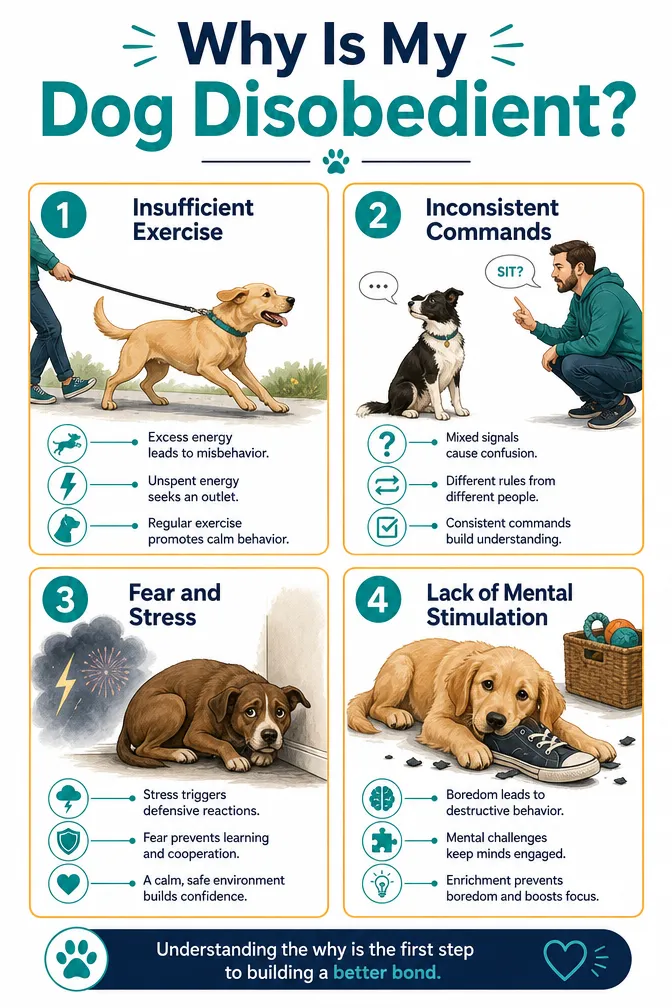
Understanding the root cause is the first step in the 5 ways to train your disobedient dog framework. Here’s a breakdown:
1. Insufficient Time and Exercise
Dogs need daily physical activity to stay calm and focused. A dog that doesn’t get enough exercise will redirect that energy into disobedient behaviors like barking, chewing, or jumping. Most medium to large breeds need at least 60 minutes of exercise per day, according to VCA Animal Hospitals.
2. Inadequate Dog Training
Many owners start training but give up too soon, or use mixed signals. A dog just learning a new command needs hundreds of repetitions before it becomes reliable. Inconsistency is the number one reason dog training fails.
3. Reinforcement of Bad Behaviors
When a dog barks and you pet it to calm it down, you’ve rewarded the barking. This is one of the most common mistakes in pet care. Dogs repeat what gets them attention or food – even negative attention counts.
4. Lack of Breed-Specific Requirements
An Australian Shepherd without a job will become an excitable disobedient handful. Herding breeds, working dogs, and high-drive dogs have specific mental and physical needs that, when unmet, produce disobedient unruly behaviors.
5. Adolescent Pup Behavior
A puppy between 6 and 18 months goes through a “teenage phase” where previously learned behaviors seem to vanish. This is normal and temporary – but it requires extra patience and consistent reinforcement. Check out our guide on 15 puppy potty training tips that actually work for more on handling this phase.
6. Anxiety, Fear, and Trauma
A dog dealing with fear or past trauma will often appear disobedient when it’s actually overwhelmed. Stress behaviors like barking, hiding, or snapping are not defiance – they’re communication. We’ll cover this more below.
Is My Dog Disobedient or Just Bored?
A bored dog and a disobedient dog look almost identical – both chew things they shouldn’t, ignore commands, and seem impossible to control. The key difference is that a bored dog’s behaviors disappear quickly once it gets adequate exercise and mental stimulation.
Ask yourself: does your dog get at least 45-60 minutes of active play or exercise daily? Does it have puzzle toys, training sessions, or enrichment activities? If the answer is no, boredom is likely the primary issue – not disobedience.
Try adding two 20-minute exercise sessions per day for one week. If the bad behaviors drop significantly, you’ve found your answer. If they persist, a deeper training or health issue may be at play. These puppy exercise ideas work for adult dogs too and are a great starting point.
How Can I Determine If My Dog Is Just Acting Like a Puppy or Is Too Excitable or Disobedient?
Puppy behavior and disobedient behavior overlap heavily, especially in dogs under two years old. A puppy that jumps, nips, pulls on the leash, and ignores the “sit” command is behaving normally for its age – not being defiant.
According to VCA Animal Hospitals, excitable disobedient behavior in young dogs is almost always a training and maturity issue, not a character flaw. The question to ask is: does your dog know what you want, or have you not yet taught it clearly?
If your dog has never been consistently taught to sit, stay, or come, it’s not disobedient – it’s untrained. Start there before labeling your dog a problem.
The 5 Ways to Train Your Disobedient Dog That Actually Work
These five methods are backed by behavioral science and recommended by veterinary professionals. Use them in combination for the best results.
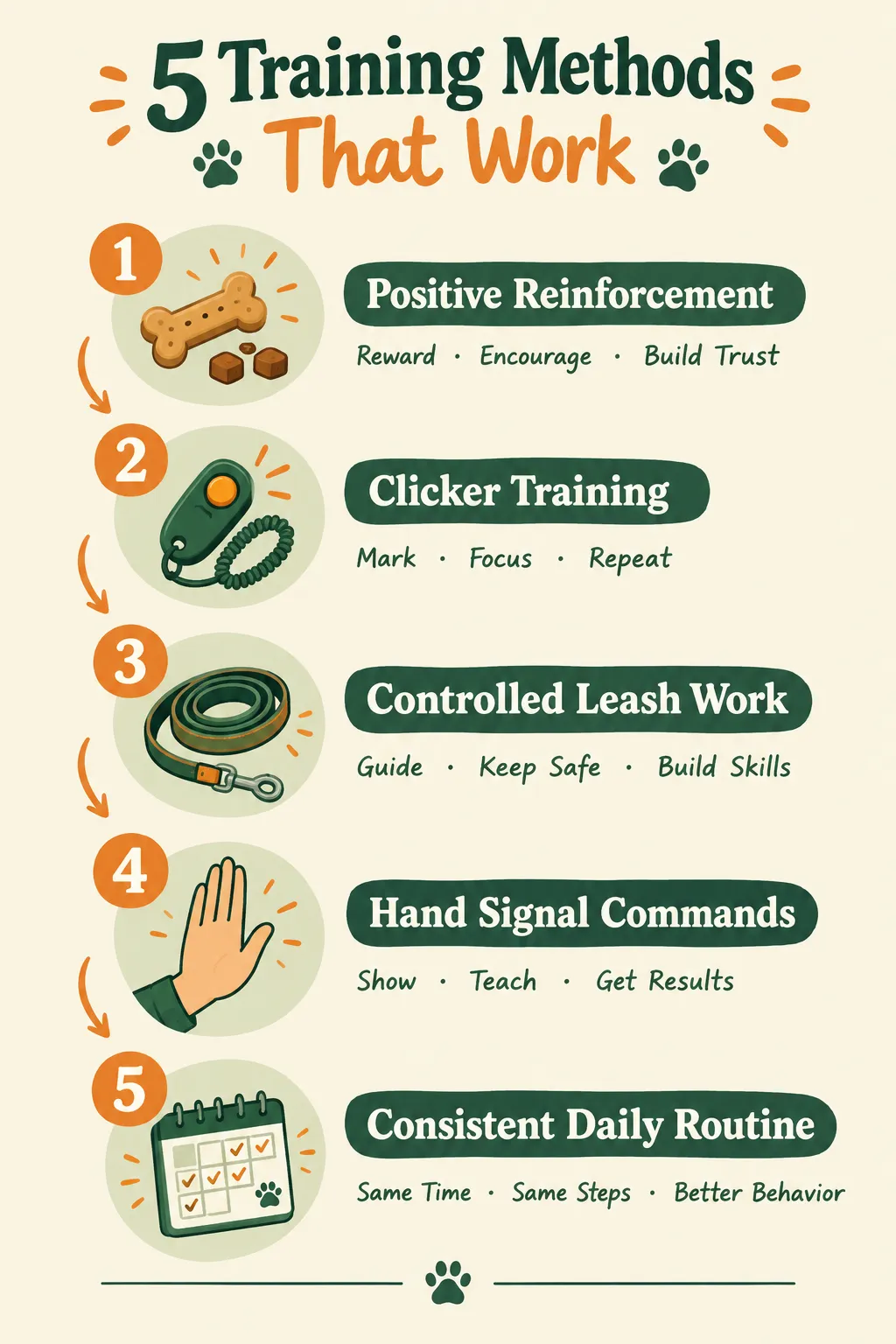
1. Switch to Consistent Positive Reinforcement
The AVSAB’s humane dog training position statement is clear: reward-based training is the most effective and least harmful method for changing dog behavior. Every time your dog does what you ask, mark it with a word like “yes” and give a treat, toy, or praise immediately.
The key word here is consistent. Every family member must use the same command words and reward the same behaviors. Mixed signals are the fastest way to create a confused, disobedient dog.
How to start:
- Pick one command to work on first – “sit” is the easiest.
- Practice for 5 minutes, three times a day.
- Reward every correct response immediately.
- Never punish an incorrect attempt – simply reset and try again.
Our guide on how to train a dog to sit walks through this in detail.
💡 If you want to fast-track this process, check out the Free Dog Training Workshop – a first-of-its-kind online program that teaches you the same methods used by service dog trainers to stop bad behaviors and build real obedience.
2. Use Clicker Training to Mark Behaviors Precisely
A clicker is a small tool that makes a sharp sound the moment your dog does something right. This precise timing helps your dog understand exactly which behavior earned the reward. Research consistently supports clicker training as one of the fastest ways to teach new behaviors and correct old ones.
Read our full breakdown on how to use a clicker for dog training to get started.
3. Add Structure With Hand Signal Commands
Dogs respond strongly to visual cues – often better than verbal ones. Pairing a hand signal with every verbal command doubles the communication channel and speeds up learning. This is especially useful for disobedient dogs that have learned to tune out your voice.
Our 8 genius hand signals to train your dog faster guide covers the most effective signals to use.
4. Build a Consistent Daily Training Routine
Short, frequent sessions beat long, occasional ones every time. A dog benefits far more from three 5-minute training sessions per day than one 30-minute session on weekends. Consistency builds habits, and habits are what turn a disobedient dog into a reliable one.
Use the same time slots each day – morning, midday, and evening work well. Keep sessions fun and end on a success. Our 14-day dog training plan gives you a ready-made schedule.
5. Address the Root Cause – Not Just the Symptom
Barking, jumping, and chewing are symptoms. The real issues are often boredom, anxiety, or unmet breed needs. Treating the symptom without addressing the cause is why so many training attempts fail.
- For a dog with separation anxiety: build independence gradually with short absences.
- For a high-energy breed: add structured exercise before training sessions.
- For a fearful dog: use desensitization and counter-conditioning techniques.
Positive Reinforcement vs. Punishment for Disobedient Dogs
Reward-based training outperforms punishment-based methods on every measurable outcome – speed of learning, retention, and dog welfare. The AVSAB position statement explicitly states that aversive methods increase fear, anxiety, and aggression in dogs.
Punishment tells a dog what NOT to do. Positive reinforcement teaches it what TO do instead. For a disobedient dog that already has behavior concerns, training with punishment can make things significantly worse.
Choose positive reinforcement if:
- Your dog is fearful, anxious, or has a history of trauma.
- You have children in the home.
- Your dog’s disobedient behaviors include growling or snapping.
- You want a lasting behavior change, not just short-term compliance.
What If My Dog Has Anxiety or Fear Issues?
A dog with anxiety or fear-based behaviors needs a different approach than a simply undertrained dog. Fear and trauma can make a dog appear disobedient when it’s actually in a state of stress that prevents learning.
Signs your dog’s disobedience may be fear-based include: trembling, tucked tail, excessive barking at specific triggers, hiding, or aggression when cornered. These dogs need slower desensitization work, not stricter commands.
For dogs with significant anxiety, speak to your vet. There are medications and therapeutic treatments available that, combined with behavior modification, can dramatically improve outcomes. Supplements, therapeutic diets, and other supportive treatments conditions can also play a role in managing anxiety alongside training. Your vet can guide you through conditions treatments conditions and whether any medications, cancer emergency protocols, or other medical conditions need ruling out first.
Preventive care wellness checkups are a smart first step – sometimes what looks like disobedience is actually a health issue. Conditions like hypothyroidism, pain from arthritis and pain, or bone and joint problems can all change a dog’s behavior. VCA Animal Hospitals recommends ruling out medical causes before labeling any dog as behaviorally disobedient.
Common Mistakes People Make When Training Disobedient Dogs
Most dog training failures come down to a handful of predictable errors. According to behavioral science sources, the most common mistakes include:
- Repeating commands: Saying “sit, sit, SIT” teaches your dog that the first command is optional.
- Delayed rewards: Timing matters. A treat given 10 seconds after the correct behavior teaches nothing useful.
- Inconsistent rules: Allowing jumping sometimes but not others creates a confused, disobedient dog.
- Training when frustrated: Dogs read your emotional state. Training while angry produces anxious, shut-down dogs.
- Skipping the basics: Owners often try to fix advanced problems without solid foundations. Start with sit, stay, and come.
Our list of 15 terrible dog training mistakes covers these in depth.
How Long Does It Take to Train a Disobedient Dog?
Most dogs show measurable improvement in basic behaviors within 2 to 4 weeks of consistent daily training. Full behavior transformation for a deeply disobedient or unruly dog typically takes 8 to 16 weeks, depending on the dog’s age, history, and the consistency of the owner.
A puppy learning basic commands for the first time may respond in days. An older dog with years of reinforced bad behaviors will take longer – but older dogs absolutely can be retrained. The idea that you “can’t teach an old dog new tricks” is simply false. Behavioral science supports that dogs of all ages retain the ability to learn new behaviors when training is reward-based and consistent.
When Should I Hire a Professional Dog Trainer?
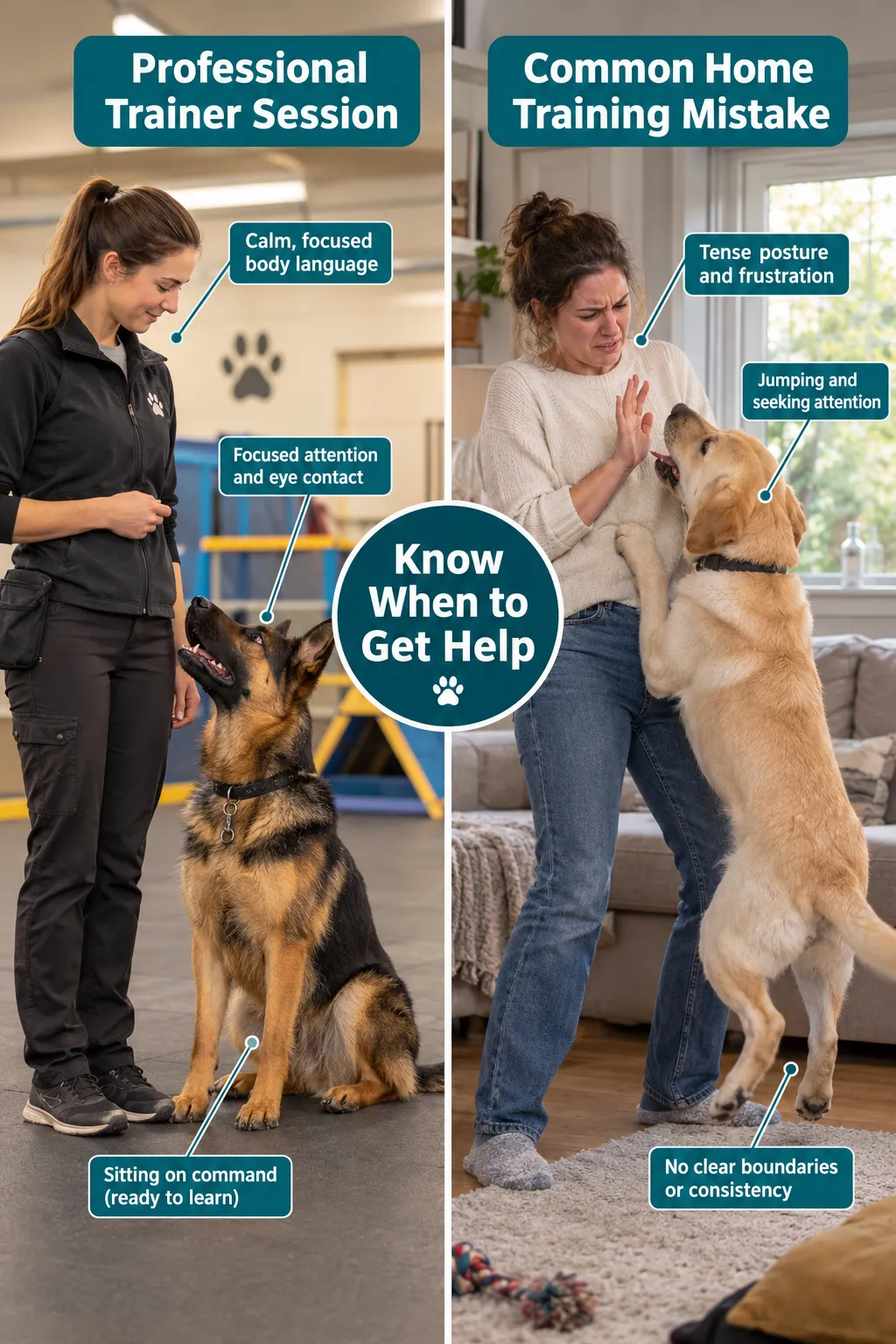
Hire a professional when your dog’s disobedient behaviors include aggression, when you’ve tried consistent training for 8+ weeks without improvement, or when anxiety or fear is clearly driving the behavior.
A certified professional dog trainer (CPDT-KA) or a veterinary behaviorist can assess your dog’s specific needs and build a customized plan. Look for trainers who use force-free, reward-based methods – this aligns with current veterinary behavior consensus.
Signs it’s time to get professional support:
- Your dog has bitten or snapped at a person or another dog.
- Barking, reactivity, or aggression is getting worse despite your efforts.
- You feel unsafe or overwhelmed handling your dog.
- Your dog has a diagnosed anxiety condition that needs therapeutic support.
💡 Before spending hundreds on private sessions, the Free Dog Training Workshop is worth trying first – it uses the same techniques professional service dog trainers use, and it’s completely free to access.
Dog Training Tools and Equipment That Help
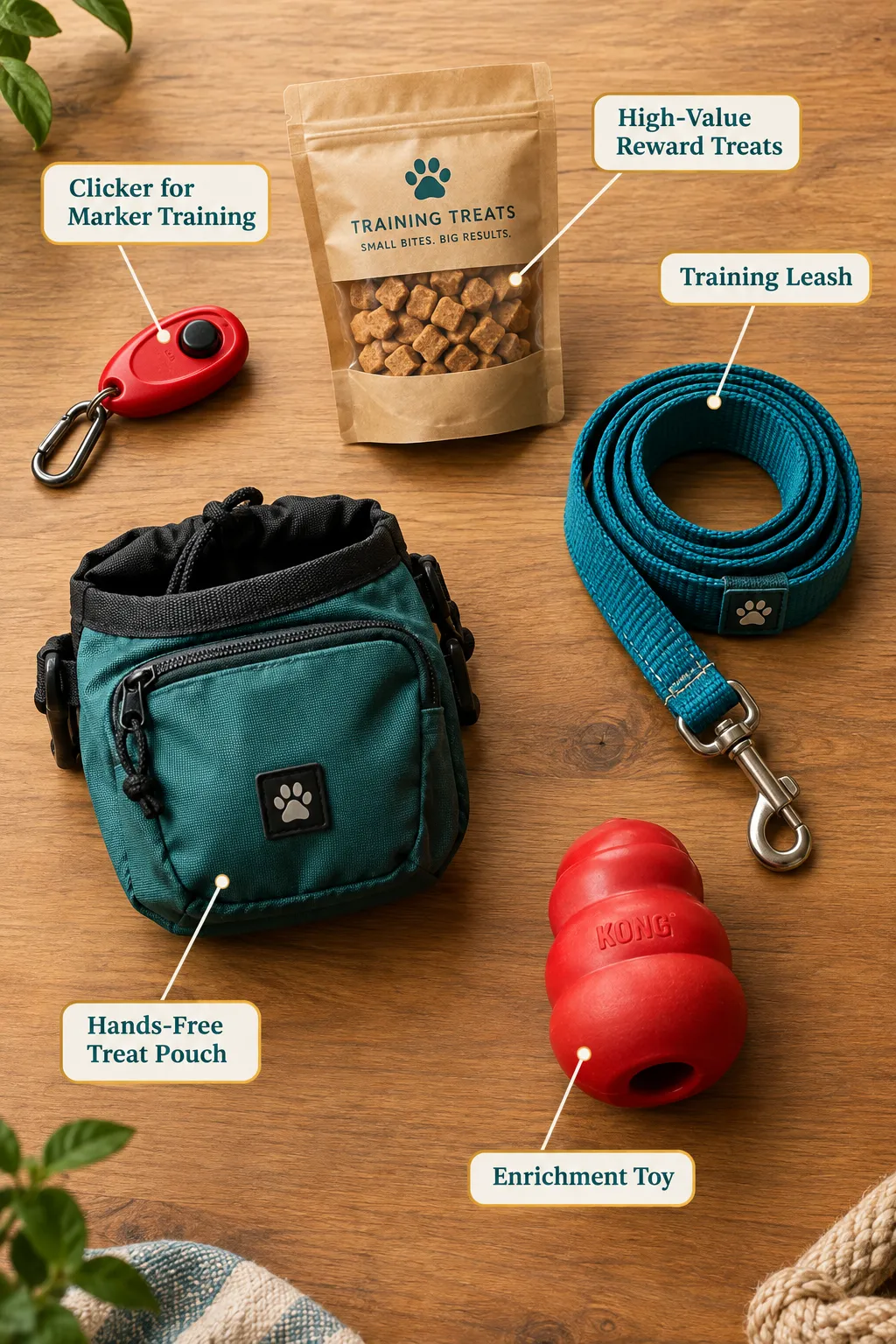
The right tools make training faster and more humane. Here’s what actually works for disobedient dogs:
| Tool | Best Use | Notes |
|---|---|---|
| Clicker | Marking correct behaviors precisely | Pair with treats initially |
| Treat pouch | Hands-free reward delivery | Use small, high-value treats |
| Standard 6-ft leash | Control during training walks | Avoid retractable leashes |
| Front-clip harness | Curbing jumping and pulling | Reduces strain on dog’s neck |
| Kong or puzzle toy | Mental stimulation and enrichment | Great for bored, disobedient dogs |
| Long line (15-30 ft) | Recall training in open spaces | Safer than off-leash for untrained dogs |
Avoid choke chains, prong collars, and shock devices. These tools can cause physical harm and worsen fear-based behaviors. The AVSAB humane dog training position statement is explicit on this point.
How to Deal With Specific Disobedient Dog Behaviors
Managing Incessant Barking
Barking is one of the most frustrating behaviors for pet owners. First, identify the trigger – is your dog barking at strangers, other dogs, or seemingly at nothing? Check out our article on why dogs bark at nothing for a deeper look.
To control barking, teach the “quiet” command using positive reinforcement. When your dog barks, calmly say “quiet,” wait for a pause, then immediately reward the silence. Repeat consistently. Never shout – it sounds like you’re barking with them.
Redirecting Chewing or Biting Behavior
Chewing is natural dog behavior – the goal is to redirect it to appropriate items. Keep chew toys accessible and interrupt inappropriate chewing with a calm “no,” then immediately offer an approved chew. Praise when they take it.
For puppy nipping, yelp sharply and withdraw attention. This mimics how littermates communicate that biting is too rough.
Curbing Jumping Behavior
Jumping is a greeting behavior that dogs use because it has worked – someone gave them attention. To stop it, turn your back completely when your dog jumps. No eye contact, no touch, no words. The moment all four paws are on the floor, immediately reward with attention and a treat.
Everyone in the household must do this every single time. Once.
Controlling Rough Play in Disobedient Dogs
Rough play that gets out of control is common in excitable disobedient dogs. Use a “time out” system – when play gets too intense, calmly remove your dog to a quiet space for 30-60 seconds. This teaches that rough play ends the fun, while calm play continues it.
Should I Use Treats or Toys for Dog Training?
Both treats and toys work – the right choice depends on your dog. Food-motivated dogs respond fastest to small, high-value treats like chicken or cheese. Play-driven dogs (many retrievers and herding breeds) may work harder for a brief game of tug than for any food reward.
Try both and observe which makes your dog’s eyes light up. That’s your primary reinforcer. Use it for the hardest behaviors and reserve lower-value rewards for easy ones.
A note on treats and diets: Use small pieces – no larger than a pea – to avoid weight gain during intensive training. If your dog has dietary restrictions or is on therapeutic diets for stomach and digestion issues, check with your vet about appropriate training treats. Skin and coat health, bone and joint muscle support, and overall wellness can all be affected by what your dog eats, so keeping food choices aligned with your pet’s health plan matters. Prevention chews and tablets, topical solutions, and other supplements therapeutic diets are all worth discussing with your vet as part of a complete care wellness plan.
How to Prevent a Puppy From Becoming a Disobedient Dog
Start training from day one. A puppy that learns sit, stay, and come before 12 weeks old has a massive head start. The socialization window (8 to 16 weeks) is the most critical time for shaping future behavior – expose your puppy to different people, sounds, surfaces, and environments during this period.
Set clear rules from the beginning and stick to them. If jumping isn’t allowed when your dog is an adult, don’t allow it as a cute puppy behavior either. Preventive care wellness habits built early are far easier than fixing problems later.
FAQ
How do you discipline a dog that won’t listen?
Stop repeating commands and start managing the environment instead. Use a leash to prevent self-rewarding behaviors, redirect attention to what you want, and reward compliance immediately. Punishment rarely works and often backfires – reward-based methods are consistently more effective. Be patient, stay consistent, and reduce distractions during training sessions until your dog builds the habit.
How to train a very disobedient dog?
Start with the basics – sit, stay, come – in a low-distraction environment. Use high-value treats, short 5-minute sessions three times daily, and mark correct behavior instantly with a clicker or a verbal “yes.” Address root causes like lack of exercise or anxiety. If progress stalls after 6 to 8 weeks of consistent effort, consult a certified professional trainer who uses force-free methods.
What are the most disobedient dog breeds?
Breeds often labeled as disobedient dogs include Siberian Huskies, Beagles, Basset Hounds, Afghan Hounds, and Chow Chows. However, “disobedient” usually means “independent” or “bred for a different job.” These dogs aren’t untrainable – they need training methods matched to their breed-specific requirements, stronger motivation, and more patience. High-energy working breeds like Border Collies can also become disobedient unruly without enough mental stimulation.
What is the hardest command to teach a dog?
“Stay” with distance and duration is consistently rated the hardest command to teach a dog reliably. It requires your dog to hold a position while you move away, add distractions, and increase time – three variables that must be built separately before combining. “Come” in high-distraction environments is a close second. Both require hundreds of repetitions and gradual progression to become truly reliable behaviors.
Conclusion
A disobedient dog is not a lost cause. In almost every case, the behaviors you’re struggling with have a clear cause – and a clear solution. The 5 ways to train your disobedient dog covered here (consistent positive reinforcement, clicker training, hand signal commands, structured daily routines, and addressing root causes) work because they align with how dogs actually learn.
Your next steps:
- Pick one problem behavior to work on first.
- Identify the likely cause (boredom, inconsistency, anxiety, or unmet breed needs).
- Start 5-minute training sessions three times a day using positive reinforcement.
- Get the whole household on the same page with commands and rules.
- Give it at least 4 weeks of consistent effort before evaluating results.
If you want a structured, proven plan to follow from day one, the Free Dog Training Workshop gives you access to the exact methods service dog trainers use – completely free, and designed for real dog owners dealing with real behavior challenges.
Your dog wants to get it right. It just needs you to show it how.