Last updated: September 8, 2026
Quick Answer: Most bad dog behavior sticks around because owners unknowingly reward it with attention, comfort, or food. Learning how to correct bad dog behavior starts with one rule – stop reinforcing what you don’t want, and consistently reward what you do want. With the right approach, most common behavior issues improve within days to weeks.
Key Takeaways
- Dogs repeat behaviors that get rewarded – even negative attention counts as a reward
- Jumping, barking, chewing, and leash pulling are the most common bad dog behaviors owners accidentally reinforce
- Positive reinforcement is the most effective and humane method recommended by the AKC and RSPCA
- Consistency across all family members is non-negotiable
- Most behavior issues can be corrected at home; some require a professional trainer or veterinary check
- Adult dogs and senior dogs can absolutely learn new habits – it just takes more patience
- The ASPCA and AKC both recommend reward-based training as the gold standard in 2026
What Are the Most Common Bad Dog Behaviors?
The most common bad dog behavior issues are jumping on people, excessive barking, destructive chewing, leash pulling, counter-surfing, and accidents indoors. These behaviors are not signs of a bad dog – they’re usually signs of an under-trained or under-stimulated dog.
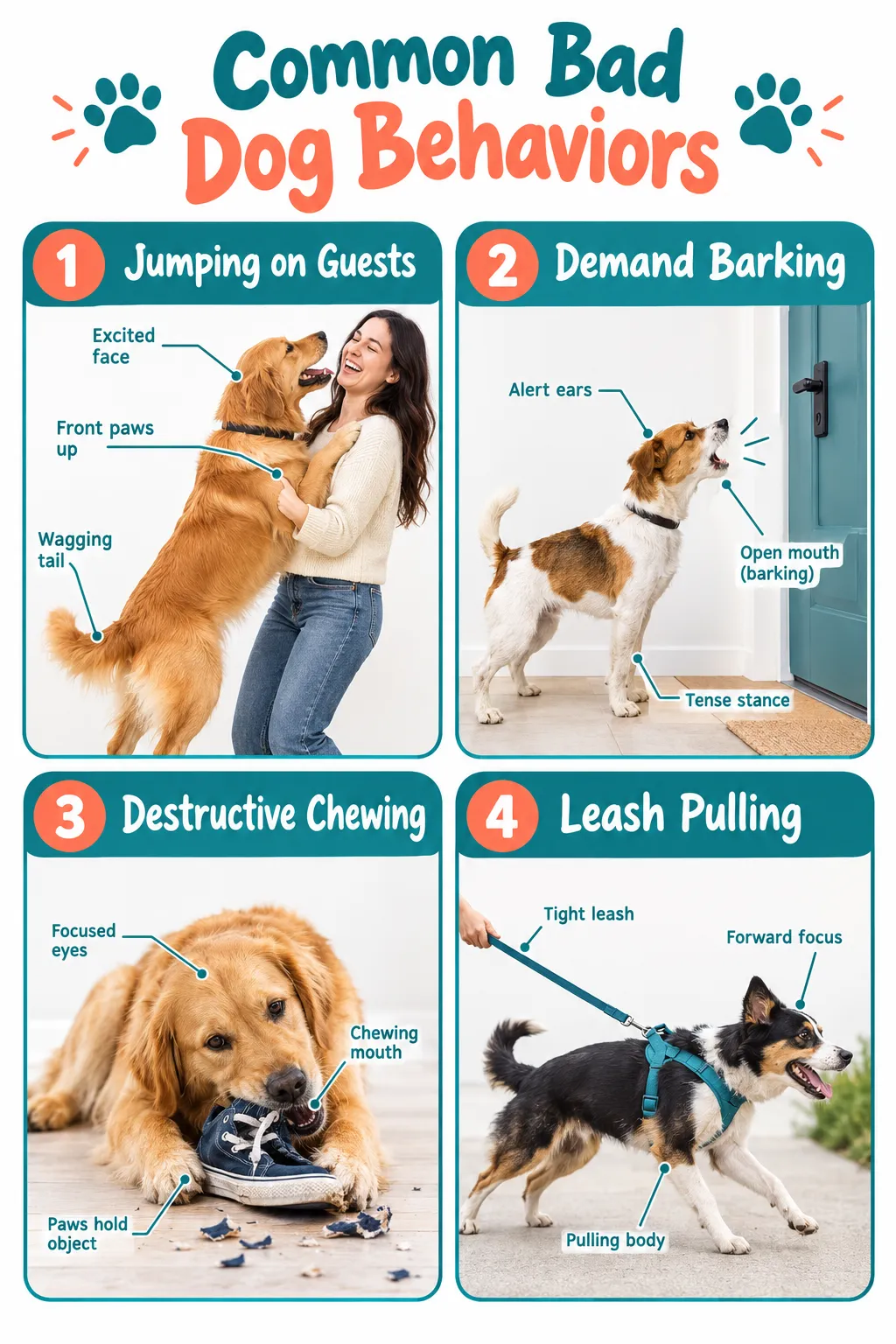
According to updated dog training guidance for 2026, the top behavior complaints from dog owners include:
- Jumping on guests and family members
- Barking at the door, strangers, or for attention
- Chewing furniture, shoes, or household items
- Leash pulling on walks
- Counter-surfing for food
- Demand whining or pawing for attention
- Pulling on the leash and ignoring recall commands
These are all normal dog behaviors – the problem is when they become habits. And habits form when dogs get rewarded for them, even accidentally.
If you’re serious about stopping these habits fast, check out this Free Dog Training Workshop – a first-of-its-kind online program that uses the same methods service dog trainers rely on to housebreak dogs and stop bad behaviors.
Am I Accidentally Rewarding My Dog’s Bad Behavior?
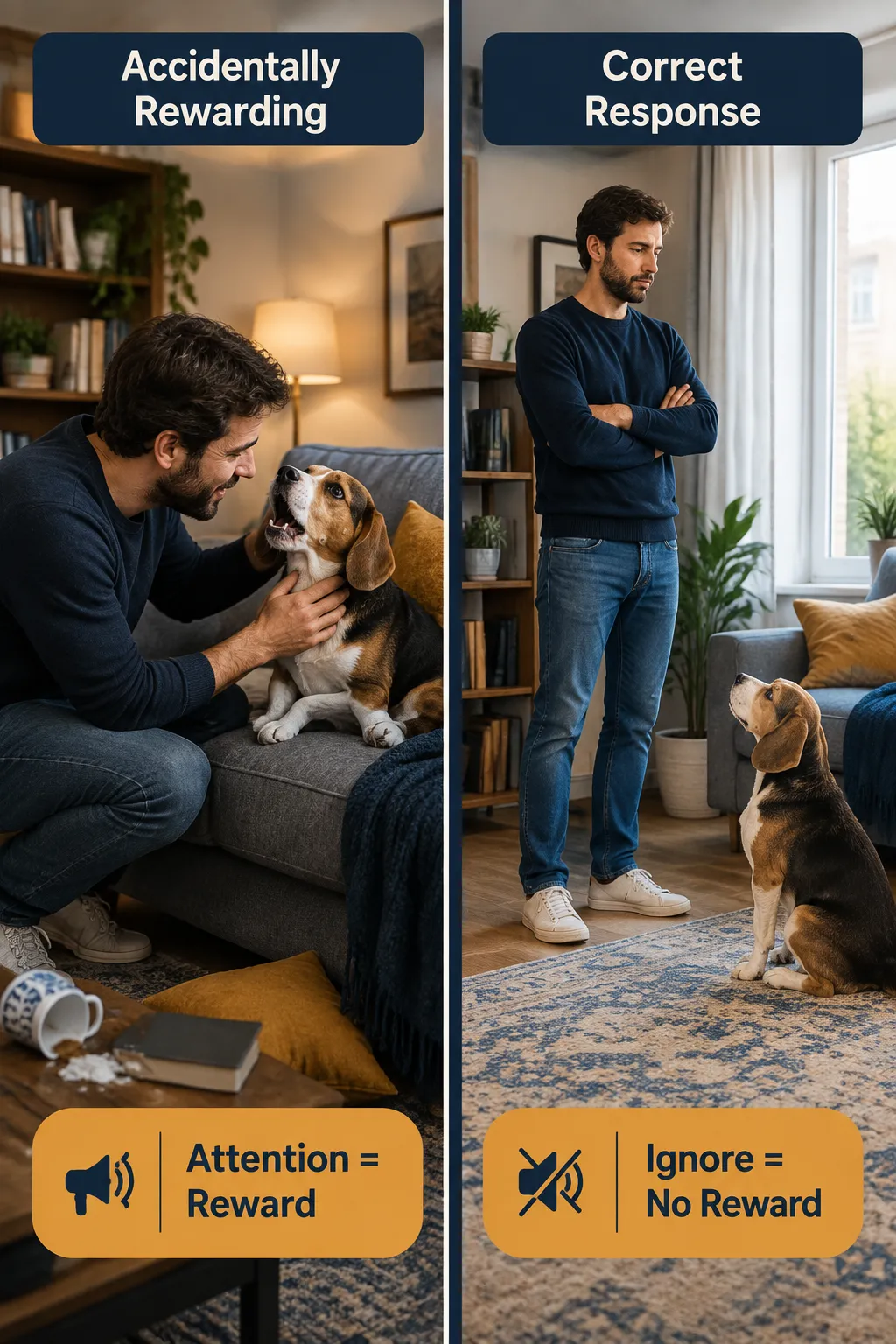
Yes – and most dog owners do this without realizing it. When a dog jumps and you push them away, say “no,” or even make eye contact, that’s still attention. To a dog, any reaction can feel like a reward.
Here are the most common ways owners accidentally reinforce bad behaviors, according to research on how owners reward bad behavior:
- Comforting a whining dog – teaches them that whining gets results
- Pushing a jumping dog away – physical contact is still contact
- Laughing at puppy chewing – signals it’s acceptable behavior
- Giving food to stop barking – directly rewards the bark
- Letting a dog in after scratching the door – reinforces the scratching
The fix is simple in theory: catch your dog being good and reward that instead. The challenge is staying consistent.
“If you like it, reinforce it. If you don’t, stop reinforcing it.” – Core principle of modern dog behavior training
Why Does My Dog Keep Jumping on People?
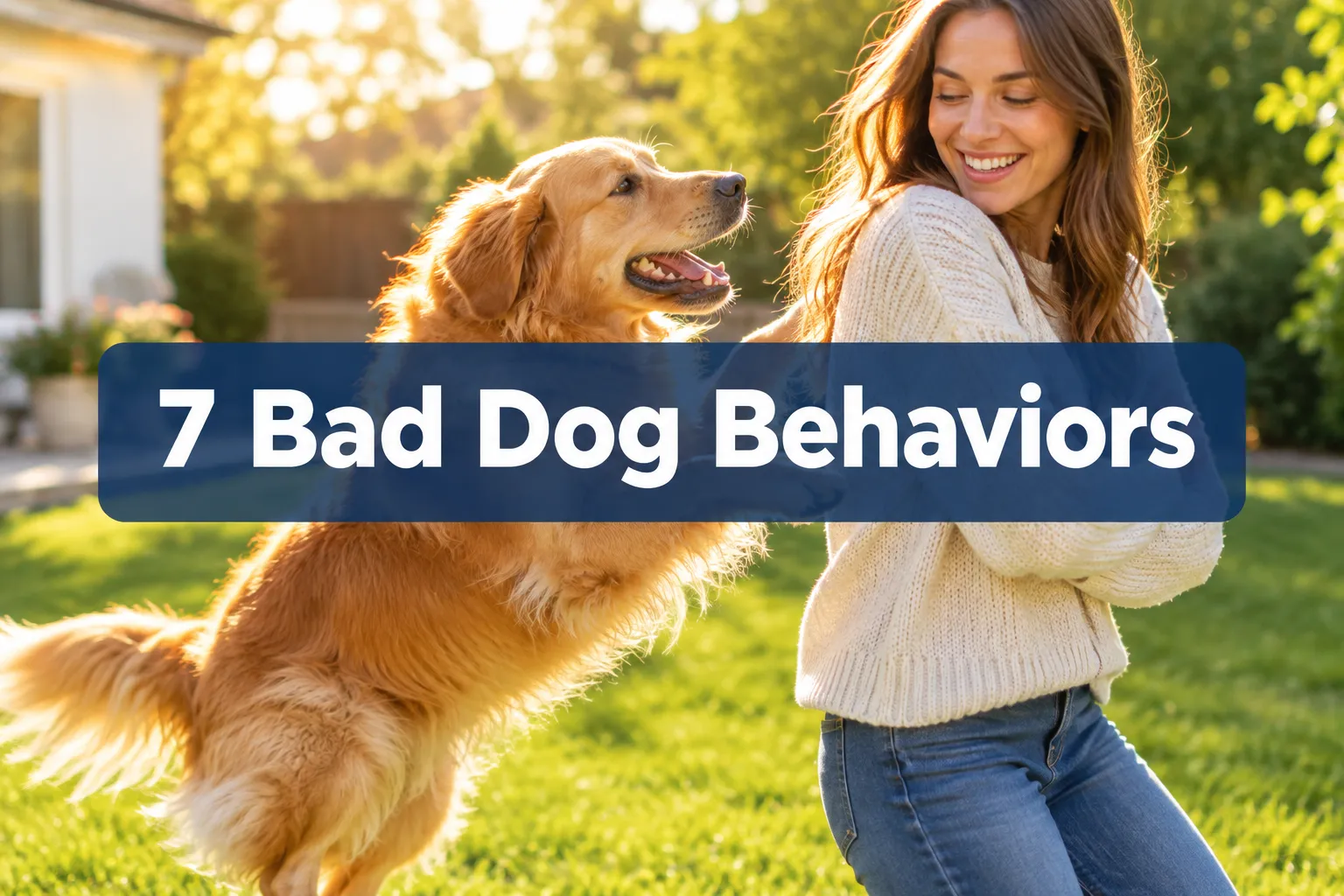
Dogs jump because it worked before – someone gave them attention, even if it was negative. Jumping is one of the most common bad dog behaviors, and it’s almost always owner-created.
The current standard approach, supported by evidence on accidentally rewarding dog jumping, is:
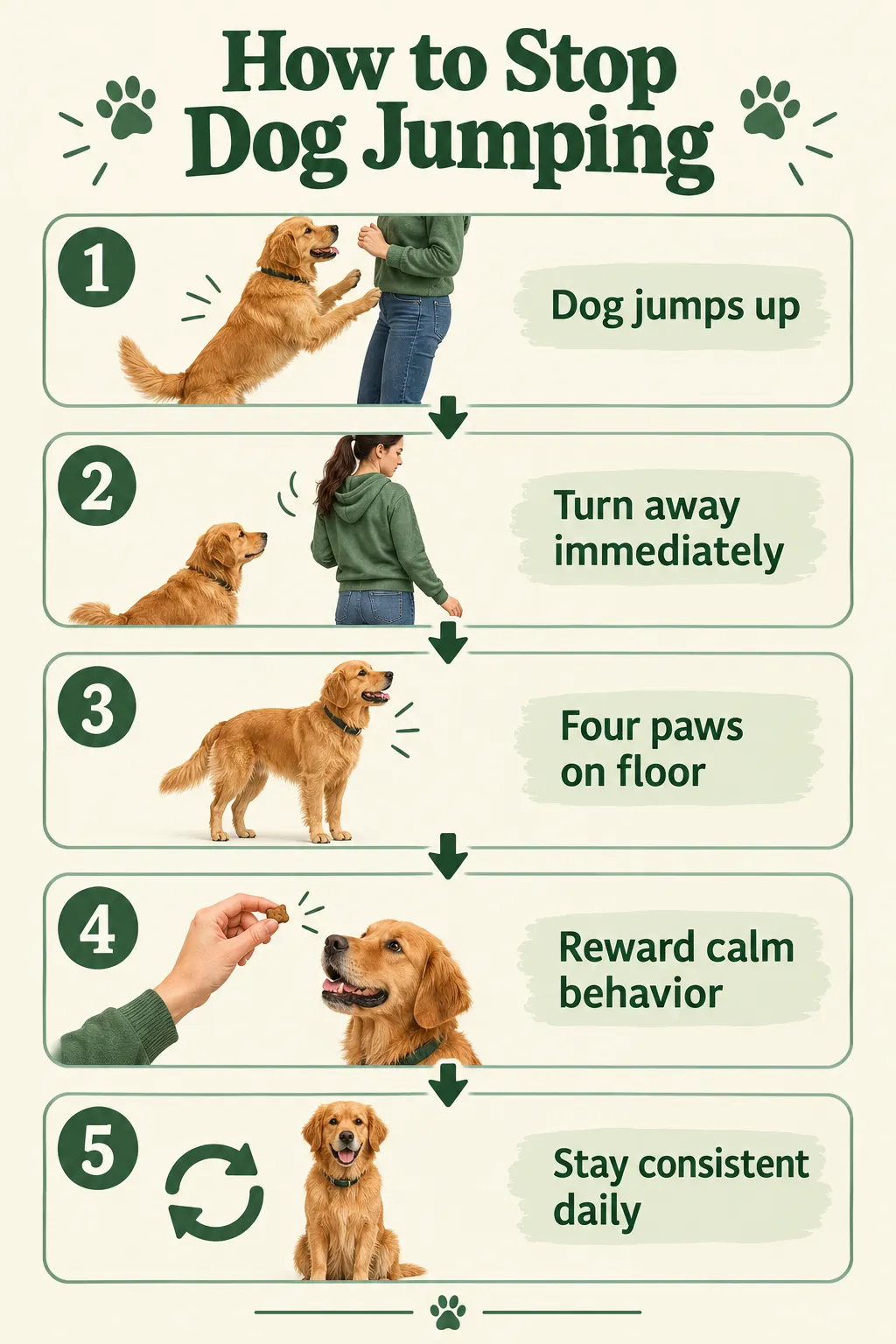
- Turn away completely the moment your dog jumps – no eye contact, no words, no touch
- Wait for four paws on the floor, then immediately reward with a treat or calm praise
- Ask for an alternative behavior like “sit” before greeting the dog
- Keep every person in the household doing the same thing – one inconsistent person will undo weeks of work
For guests, you can also use a leash or baby gate to manage the environment while training is in progress. Check out these 7 game-changing tips to keep your dog calm around visitors for a full breakdown.
Common mistake: Telling guests “it’s okay, he’s friendly” and letting them pet a jumping dog. This completely resets the training.
How to Stop a Dog from Barking Excessively
Excessive barking is one of the most frustrating bad dog behaviors, but it’s fixable. The key is to never reward the bark – not with attention, not with food, and not by giving in to what the dog wants.
The RSPCA’s training guidance recommends:
- Ignore demand barking completely when it’s safe to do so
- Mark and reward quiet moments – even a 2-second pause in barking earns a treat
- Teach a “quiet” cue by pairing the word with the moment the dog stops barking
For dogs that bark at the door or out the window, management helps too – block the view, use white noise, or redirect to a mat. Read our full guide on why dogs bark at nothing and why dogs bark at night for more context.
Also see: How to teach your dog the quiet command – a step-by-step tutorial.
What’s the Difference Between Punishment and Positive Reinforcement for Dogs?
Positive reinforcement means adding something good (a treat, praise, play) right after a behavior to make it more likely to happen again. Punishment means adding something unpleasant or removing something good to reduce a behavior. The difference matters a lot for how your dog learns and how they feel about training.
Positive reinforcement dog training in 2026 is the dominant recommendation from every major animal welfare organization – including the AKC, ASPCA, and RSPCA. Here’s why:
| Method | Effect on Dog | Long-term Result |
|---|---|---|
| Positive reinforcement | Builds confidence | Reliable, happy behavior |
| Punishment/correction | Can increase anxiety | Suppressed behavior, not learned |
| Ignoring bad behavior | Reduces attention-seeking | Behavior fades over time |
Punishment can suppress behavior in the short term, but it doesn’t teach the dog what to do instead. It also risks damaging the dog-owner relationship and can increase anxiety or aggression in some dogs.
Choose positive reinforcement if you want lasting behavior change and a dog that actually enjoys training.
How to Correct Bad Dog Behavior: Start with Structure and Basic Needs
Before jumping into training techniques, make sure your dog’s basic needs are met. A dog that’s under-exercised, bored, or anxious will struggle to learn – no matter how good your training is.
Meet these needs first:
- Daily exercise – most dogs need 30 to 60 minutes of physical activity per day, depending on breed
- Mental stimulation – try 12 brain games for dogs that boost focus and beat boredom
- Consistent feeding schedule – hunger and irregular food routines increase anxiety
- Clear rules – dogs thrive when they know what’s expected
Dog behaviour correction works best when the dog is calm, rested, and has had enough exercise to focus. If your dog is bouncing off the walls, a 20-minute walk before a training session makes a huge difference.
Also check your dog’s food quality – poor nutrition can affect energy levels and mood. See what you can add to your dog’s dry food for simple upgrades.
How Long Does It Take to Correct Bad Dog Behavior?
Most dogs show improvement in basic behaviors within 3 to 7 days of consistent training. Full habit replacement – where the new behavior becomes automatic – typically takes 3 to 8 weeks, depending on the dog’s age, breed, and how long the bad behavior has been reinforced.
Key factors that affect the timeline:
- How long the behavior has been rewarded – older habits take longer to break
- Consistency – one person breaking the rules can set back weeks of progress
- The dog’s age – puppies often learn faster, but adult dogs are absolutely capable
- Breed tendencies – some breeds are more independent or stubborn by nature
For adult dogs and senior dogs, the timeline may be longer, but positive reinforcement methods still work. The key is patience and not expecting overnight results.
If you want a structured plan, our 14-day dog training plan walks you through exactly what to do each day.
Is My Dog’s Behavior a Sign of Anxiety or Aggression?
Some bad dog behaviors are not just bad habits – they’re signs of stress, fear, or anxiety. It’s important to tell the difference before starting a training plan, because the approach is different.
Signs that behavior may be anxiety-driven (not just bad habits):
- Barking or chewing only when left alone (possible separation anxiety)
- Aggression that appears suddenly or without warning
- Excessive panting, pacing, or yawning in normal situations
- Hiding, trembling, or refusing food
Read our guide on stress signals in dogs to identify warning signs early.
If you suspect anxiety or aggression, a veterinary check is the right first step. A veterinary professional can rule out pain or medical causes – sometimes a dog acts out because something hurts. The Independence Veterinary Clinic and similar veterinary services recommend addressing health before behavior in these cases.
Services like drop off services at a veterinary clinic or veterinary behavior consultations are worth exploring for dogs with serious behavior issues. End-of-life care services also sometimes include behavior support for aging dogs.
What Mistakes Do Dog Owners Make When Training?
The biggest training mistake is inconsistency – rewarding a behavior sometimes and not others. This actually makes the behavior stronger, not weaker, because dogs learn to keep trying.
Other common mistakes:
- Repeating commands (“Sit, sit, SIT!”) – teaches the dog to ignore the first cue
- Training when frustrated – dogs pick up on your emotional state
- Sessions that are too long – 5 to 10 minutes is more effective than 30 minutes
- Punishing after the fact – dogs don’t connect punishment to something they did 10 minutes ago
- Skipping the “why” – not identifying what’s reinforcing the bad behavior in the first place
The AKC’s guidance on accidentally encouraging bad behavior specifically calls out owners who “explain” bad behavior to their dog in a soothing voice – this reads as comfort and reward to the dog.
Free Dog Training Workshop: If you keep hitting the same walls, the Free Dog Training Workshop teaches you the exact methods service dog trainers use – including how to stop bad behaviors and build the kind of obedience most owners only dream about.
Should I Use Treats or Praise to Reward Good Behavior?
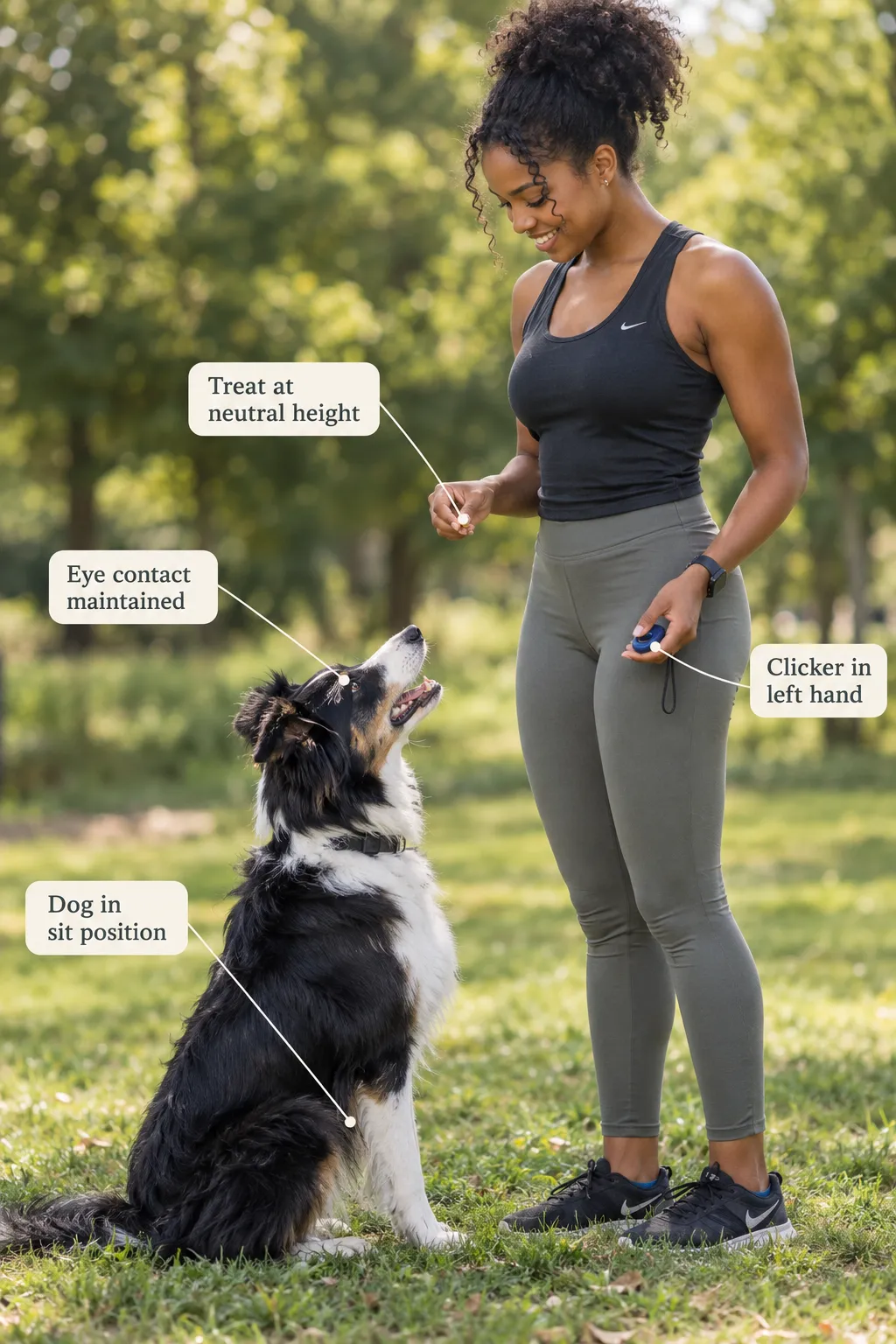
Both work – but treats are usually more effective in the early stages of training because they’re a high-value, clear signal. Praise alone can be ambiguous to a dog that’s still learning.
A good rule of thumb:
- Use treats when teaching a new behavior or breaking a bad habit
- Fade treats gradually once the behavior is reliable (every other time, then randomly)
- Use praise and play as the long-term reward once the behavior is solid
The ASPCA recommends pairing a verbal marker (like “yes!”) with the treat so the dog learns to respond to the word, not just the food. This makes it easier to reward in situations where you don’t have treats on hand.
When Should I Call a Professional Dog Trainer?
Call a professional if the behavior involves aggression, if you’ve been consistent for 4 to 6 weeks with no improvement, or if the behavior is getting worse. Some behavior issues need expert eyes.
Look for trainers who:
- Use force-free, reward-based methods (aligned with AKC and ASPCA standards)
- Are certified through the Certification Council for Professional Dog Trainers (CCPDT) or similar body
- Can provide references and explain their methods clearly
The dogsthat.com podcast covers how to find qualified help and what red flags to watch for when hiring a trainer.
For dogs showing aggression, a veterinary behaviorist is often the best first call – not a general trainer. Services like those at the Independence Veterinary Clinic or similar veterinary behavior services can provide a proper diagnosis.
If you want to get involved and advocate for animals in your community, organizations like the ASPCA work helping shelters, people, pets, investigations, and rescue efforts – and they provide resources to help pet owners find qualified services.
How to Correct Bad Dog Behavior in an Older Dog
Adult dogs and senior dogs can absolutely learn new behaviors – the idea that “you can’t teach an old dog new tricks” is a myth. The process is the same as with puppies; it just requires more patience and shorter sessions.
Tips for working with older dogs:
- Keep sessions to 5 minutes, 2 to 3 times per day
- Use high-value treats (real food often works better than kibble)
- Check for pain or health issues first – a dog that’s sore may resist handling or training
- Be patient with independence; older dogs may have deeply ingrained habits
The AKC’s Canine Good Citizen test – which covers 10 essential skills – is a great goal for adult dogs at any age. It includes sit, stay, recall, loose-leash walking, and calm behavior around other animals. Even if your dog never takes the test, training for it builds real-world manners.
FAQ
At what age do dogs behave the worst?
Most dogs hit their behavioral peak between 6 and 18 months of age – the adolescent phase. During this period, dogs have high energy, reduced impulse control, and are testing boundaries. Puppies under 6 months are easier to redirect. Dogs generally become calmer and more manageable after 2 to 3 years, though this varies by breed.
What is the 3-3-3 rule for dogs?
The 3-3-3 rule describes how a newly adopted dog typically adjusts: 3 days to decompress and feel overwhelmed, 3 weeks to learn the household routine and start showing their real personality, and 3 months to feel fully settled and secure. It’s a reminder to give rescue dogs time before judging their behavior or starting intensive training.
How to discipline a dog if they misbehave?
The most effective way to discipline a dog is to remove the reward for the bad behavior and redirect to something acceptable. Turn away from jumping, ignore demand barking, and interrupt chewing by offering a toy instead. Avoid yelling or physical correction – these can increase anxiety and make behavior worse. Reward the behavior you want to see instead.
Do dogs remember when they misbehave?
Dogs do not connect punishment to something they did more than a few seconds ago. If you come home to a chewed shoe, your dog cannot understand why you’re upset – they only experience your current emotional state, which can create confusion and anxiety. Effective correction must happen in the moment, immediately after the behavior occurs.
Conclusion
Most bad dog behavior comes back to one thing: the behavior is working for the dog. Whether it’s jumping, barking, chewing, or pulling on the leash, dogs repeat what gets results. Learning how to correct bad dog behavior is really about learning to stop rewarding what you don’t want and consistently reinforcing what you do.
Here are your next steps:
- Identify one behavior to work on first – don’t try to fix everything at once
- Find out what’s currently rewarding that behavior (attention, food, access?)
- Remove that reward completely and consistently
- Teach and reward the alternative behavior every single time
- Keep sessions short, positive, and regular
If you want a structured, proven system to get there faster, the Free Dog Training Workshop is a great place to start – it’s a first-of-its-kind online program using the same methods service dog trainers use to build real obedience.
Your dog isn’t bad. They’re just doing what works. Change what works, and you change the behavior.