Last updated: July 21, 2026
Quick Answer: DIY probiotic dog treat recipes use simple, dog-safe ingredients like plain yogurt, kefir, and pumpkin to deliver beneficial bacteria directly to your dog’s gut. They’re easy to make at home, cost far less than commercial options, and can genuinely support digestion, immunity, and skin health – especially for dogs with sensitive stomachs or after antibiotic treatment.
Key Takeaways
- 🐾 Probiotics help balance your dog’s gut microbiome, which affects digestion, immunity, and even skin health
- 🥛 Plain unsweetened yogurt and kefir are the safest, most accessible probiotic bases for homemade dog treats
- 🎃 Pumpkin puree is a great gut-supporting addition – it’s high in fiber and pairs well with yogurt
- 🧊 Frozen probiotic treats are ideal for summer and easy to batch-make in silicone molds
- 🐶 Most healthy adult dogs can have probiotic treats 2-3 times per week; always start small
- 🚫 Avoid xylitol, artificial sweeteners, grapes, raisins, and chocolate in any homemade treat
- 📦 Homemade probiotic treats last 3-5 days in the fridge or up to 3 months in the freezer
- 🐕 Puppies can have small amounts of plain yogurt-based treats, but check with your vet first
- 💰 Homemade probiotic treats cost a fraction of commercial probiotic supplements
- 🩺 If your dog has chronic gut issues, always loop in your vet before adding probiotics
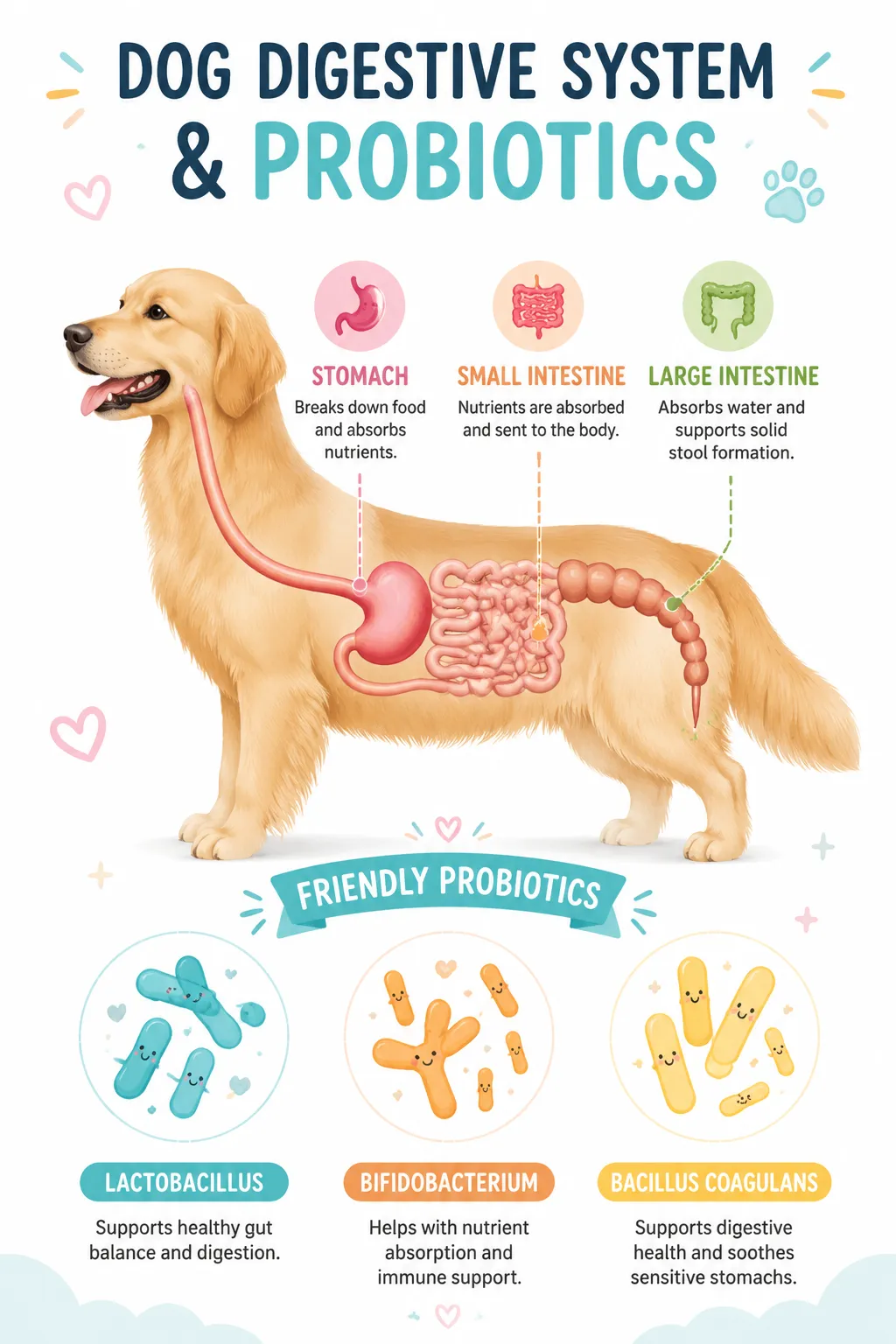
What Are Probiotics and Why Do Dogs Need Them?
Probiotics are live beneficial bacteria that support a healthy balance of microorganisms in your dog’s digestive tract. A balanced gut microbiome helps dogs digest food properly, absorb nutrients, fight off pathogens, and maintain a strong immune system.
Dogs can experience gut imbalances for many reasons – antibiotics, stress, dietary changes, illness, or even just aging. When the gut flora gets disrupted, you might notice loose stools, gas, itchy skin, or low energy.
A 2024 study published on PubMed found that probiotic and nutraceutical supplementation positively influenced both skin health and gut microbiota composition in dogs with pruritic dermatitis [1]. That’s a big deal – it suggests the gut-skin connection in dogs is very real.
The gut also plays a role in immune function. Roughly 70% of the immune system is housed in the gut (this is a well-established estimate across mammalian biology), so keeping it balanced matters beyond just digestion.
Best Probiotic Strains for Dogs
The most researched and dog-safe probiotic strains include:
- Lactobacillus acidophilus – supports digestion and reduces diarrhea
- Bifidobacterium animalis – helps with stool quality and gut transit
- Enterococcus faecium – commonly found in commercial dog probiotics
- Bacillus coagulans – a spore-forming strain that’s very stable in food
A 2025 study found that Bacillus coagulans (GBI-30, 6086) helped maintain fecal consistency and supported a balanced gut microbiome in dogs going through an abrupt diet change [3]. This makes it especially useful if you’re switching your dog’s food.
Plain yogurt and kefir naturally contain Lactobacillus strains, making them a convenient base for DIY probiotic dog treat recipes. Look for products labeled “contains live and active cultures.”
Signs Your Dog Needs Probiotics
Your dog might benefit from probiotics if you notice any of these signs:
- Frequent loose stools or diarrhea
- Excessive gas or bloating
- Vomiting after meals
- Itchy, flaky, or inflamed skin
- Dull coat or shedding more than usual
- Low energy or sluggishness after eating
- Recent antibiotic use (antibiotics wipe out good bacteria too)
- Stress-related digestive upset (travel, boarding, new pets)
If your dog shows several of these signs consistently, it’s worth talking to your vet. Probiotics can help, but chronic issues may need a proper diagnosis first. You can also check out this guide on homemade dog food recipes for a sensitive stomach for more dietary support ideas.
Can I Use Yogurt for Dog Probiotic Treats?
Yes – plain, unsweetened yogurt is one of the best and most accessible probiotic ingredients for dog treats. It contains live Lactobacillus cultures and is generally well-tolerated by most dogs in small amounts [4].
A few rules to follow:
- Always use plain, unsweetened yogurt – flavored yogurts often contain xylitol or artificial sweeteners, which are toxic to dogs
- Greek yogurt works well – it’s lower in lactose and higher in protein
- Start with small amounts – about 1 teaspoon for small dogs, 1-2 tablespoons for larger dogs
- Avoid if your dog is lactose intolerant – signs include gas, bloating, or loose stools after eating dairy
Kefir is another excellent option. It contains a wider variety of probiotic strains than yogurt and is lower in lactose, making it easier on sensitive stomachs [4].
7 DIY Probiotic Dog Treat Recipes
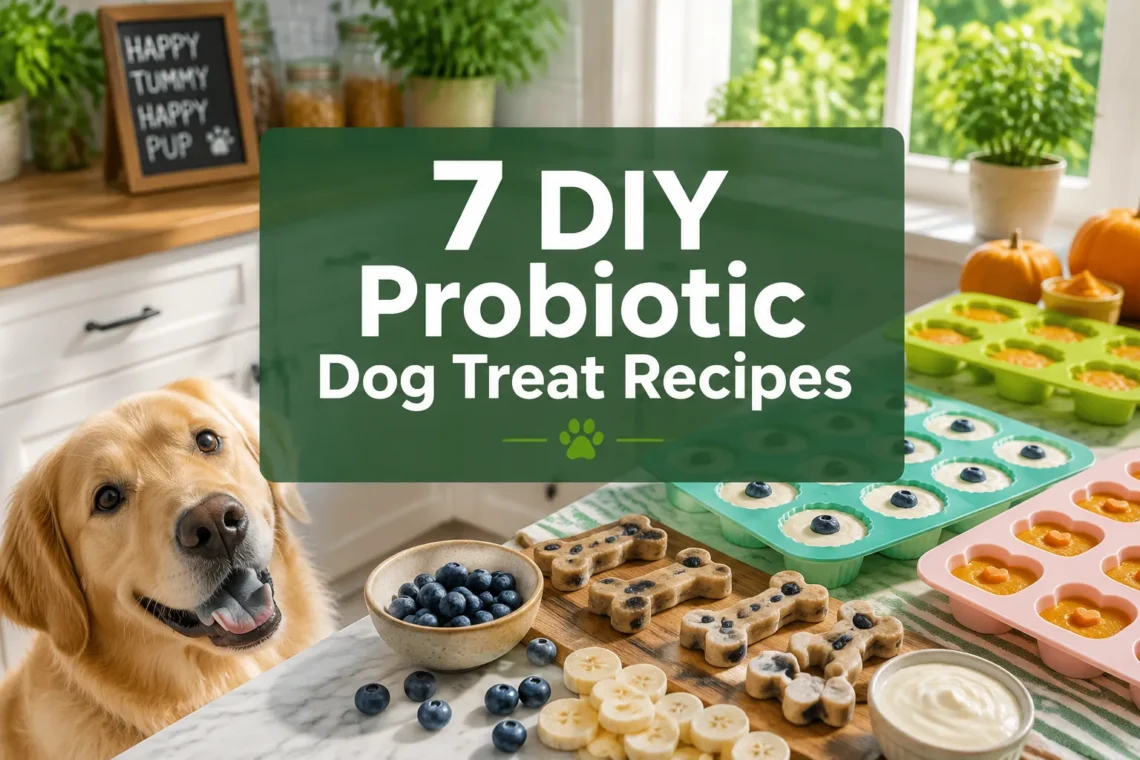
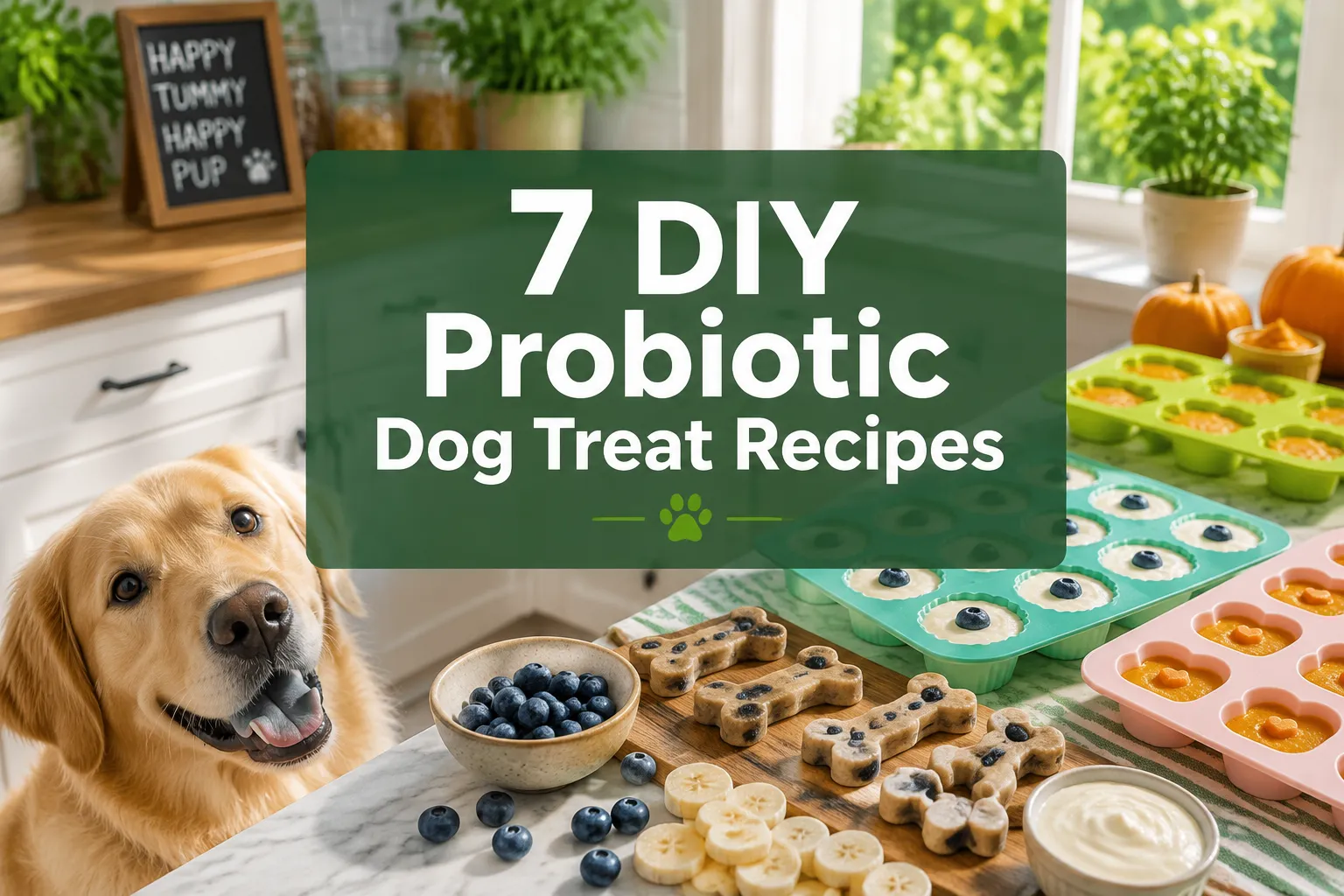
Here are seven tried-and-tested DIY probiotic dog treat recipes you can make at home. All use dog-safe ingredients and take minimal prep time.
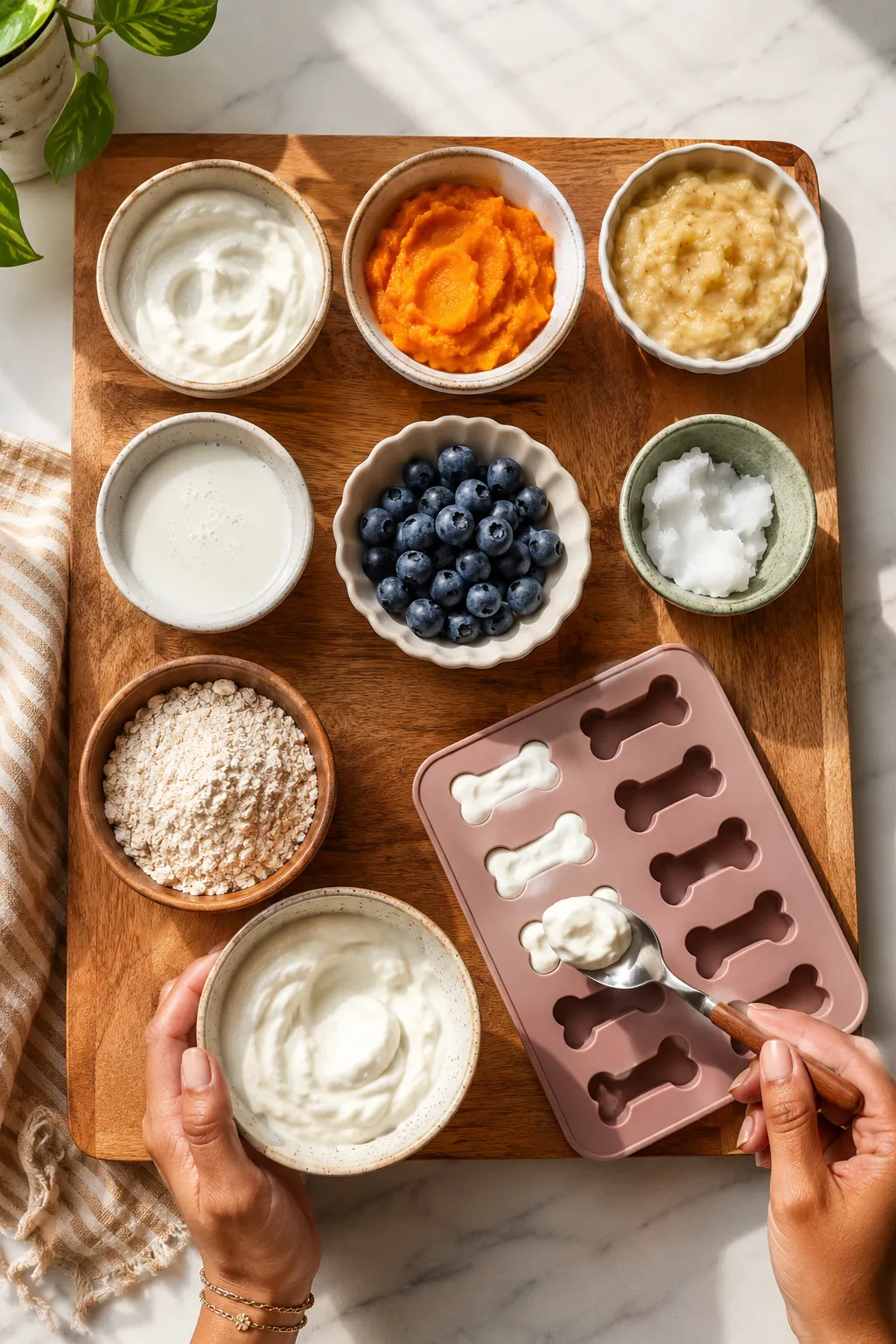
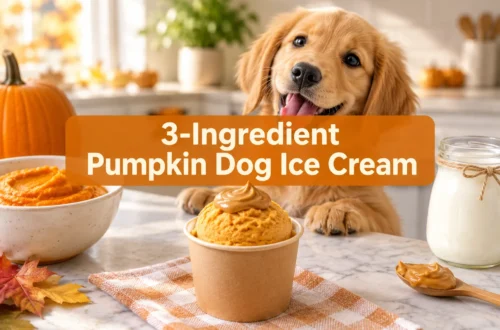
Recipe 1: Classic Yogurt and Pumpkin Frozen Bites
Ingredients:
- 1 cup plain Greek yogurt
- ½ cup plain pumpkin puree (not pie filling)
- 1 tablespoon honey (optional, for dogs over 1 year)
Instructions:
- Mix yogurt and pumpkin together until smooth.
- Spoon into silicone molds or an ice cube tray.
- Freeze for at least 4 hours.
- Pop out and serve 1-2 cubes per treat session.
Pumpkin is rich in soluble fiber, which feeds good gut bacteria and helps firm up loose stools. This is one of the most popular DIY probiotic dog treat recipes for a reason [5].
Recipe 2: Kefir and Banana Smoothie Pops
Ingredients:
- 1 cup plain kefir (unsweetened)
- 1 ripe banana, mashed
- ¼ cup blueberries
Instructions:
- Blend all ingredients until smooth.
- Pour into silicone molds.
- Freeze overnight.
Kefir provides a broader spectrum of probiotic strains than yogurt. Blueberries add antioxidants, and banana provides natural sweetness dogs love [6].
Recipe 3: Yogurt and Blueberry Paw-sicles
Ingredients:
- 1 cup plain yogurt
- ½ cup fresh or frozen blueberries
- 2 tablespoons water
Instructions:
- Blend blueberries and water into a puree.
- Layer yogurt and blueberry puree in molds.
- Freeze for 4-6 hours.
This recipe was inspired by a Chewy DIY treat guide combining yogurt, strawberries, and blueberries for a refreshing probiotic snack [6]. Blueberries are safe for dogs and packed with antioxidants.
Recipe 4: Peanut Butter and Kefir Bites
Ingredients:
- ½ cup plain kefir
- 2 tablespoons natural peanut butter (xylitol-free)
- 1 cup oat flour
Instructions:
- Mix kefir and peanut butter together.
- Stir in oat flour until a soft dough forms.
- Roll into small balls and place on a baking sheet.
- Bake at 350°F (175°C) for 12-15 minutes until firm.
- Cool completely before serving.
Always double-check your peanut butter label – xylitol is a common additive in “natural” peanut butters and it’s toxic to dogs. See our list of everyday foods that can be dangerous for dogs to stay informed.
Recipe 5: Sweet Potato and Yogurt Chews
Ingredients:
- 1 cup plain Greek yogurt
- ½ cup cooked, mashed sweet potato
- 1 egg
Instructions:
- Mix all ingredients together.
- Spread onto a parchment-lined baking sheet (about ¼ inch thick).
- Bake at 325°F (163°C) for 25-30 minutes.
- Cool, then cut into strips or squares.
Sweet potato is a prebiotic – it feeds the probiotic bacteria already in your dog’s gut. Prebiotics and probiotics work together, making this combo especially effective [4].
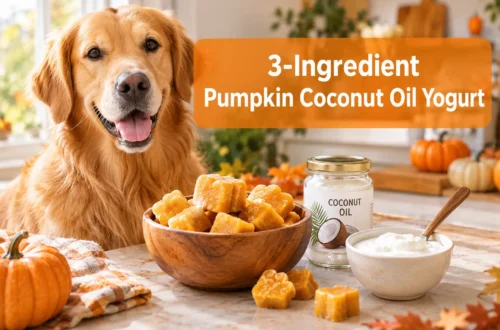
Recipe 6: Coconut Kefir and Oat Treats
Ingredients:
- ½ cup plain kefir
- ¼ cup coconut oil (melted, cooled)
- 1 cup rolled oats
- ½ cup whole wheat flour
Instructions:
- Mix kefir and cooled coconut oil.
- Add oats and flour, stir until combined.
- Drop by spoonfuls onto a lined baking sheet.
- Bake at 350°F (175°C) for 15 minutes.
- Cool completely before storing.
Coconut oil has mild antimicrobial properties and many dogs find it palatable. Keep portions small – coconut oil is high in fat and too much can cause digestive upset.
Recipe 7: Apple and Yogurt Gummies
Ingredients:
- 1 cup plain yogurt
- ½ cup unsweetened applesauce
- 2 tablespoons unflavored gelatin
Instructions:
- Warm applesauce in a small saucepan over low heat.
- Whisk in gelatin until fully dissolved.
- Remove from heat and stir in yogurt.
- Pour into silicone molds and refrigerate for 2-3 hours.
These gummies are a fun format that dogs tend to love. The gelatin also supports joint health as a bonus. For a similar treat idea, check out these chicken bone broth gummies for dogs.
Probiotic Dog Treats vs. Commercial Options – Cost Comparison
Homemade probiotic treats cost significantly less than commercial probiotic supplements or specialty treats. A single jar of plain Greek yogurt (around $4-6) can make 20-30 treat servings. Commercial probiotic dog supplements typically run $25-50 per month.
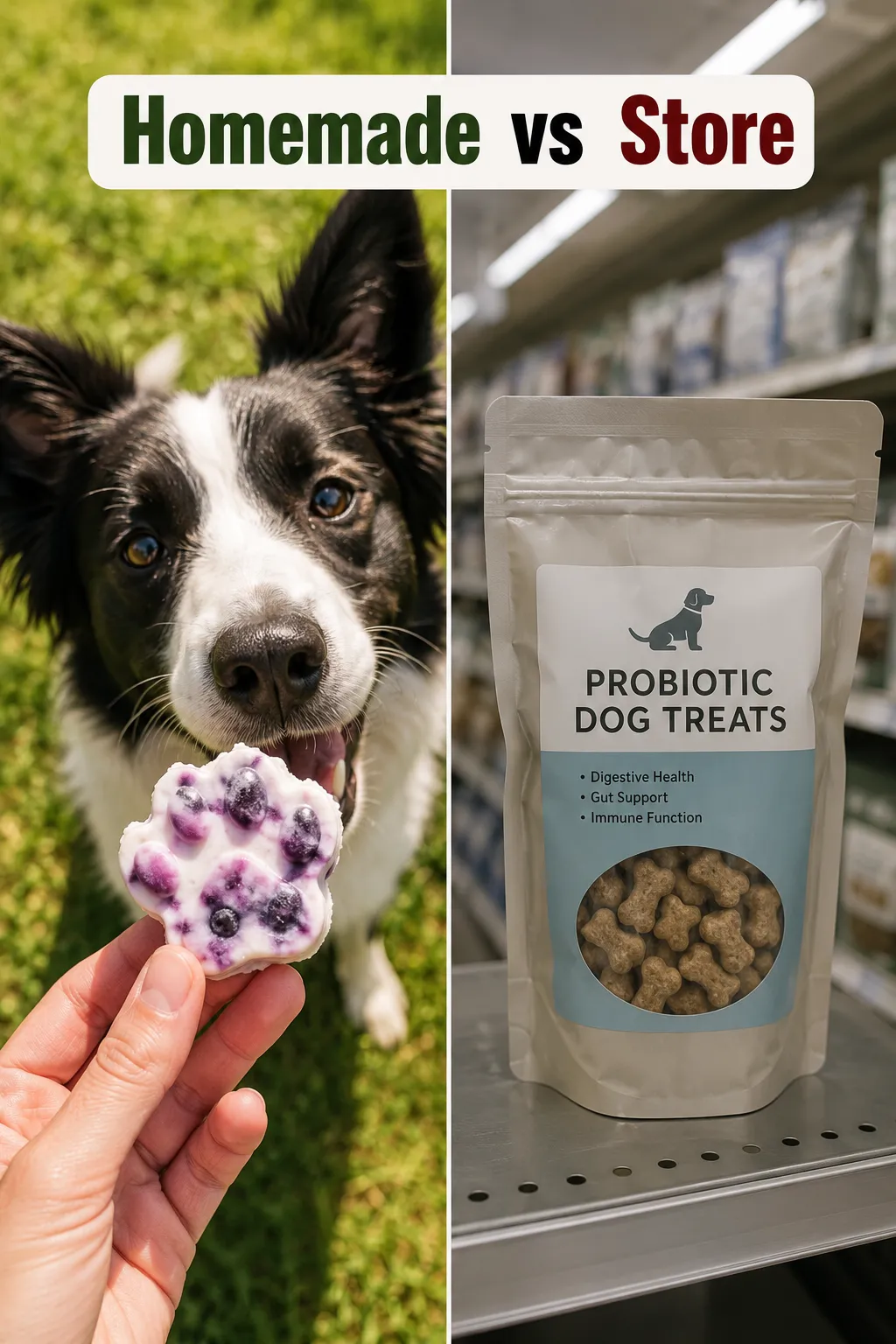
That said, commercial products offer convenience and standardized CFU (colony-forming unit) counts. If your dog has a diagnosed gut condition, your vet may recommend a specific commercial probiotic with a guaranteed potency.
For everyday gut support in healthy dogs, DIY probiotic dog treat recipes are a cost-effective and nutritious choice [5].
Key point: Homemade treats give you full control over ingredients – no fillers, no artificial preservatives, and no mystery additives.
Do Probiotic Dog Treats Actually Work for Gut Health?
Yes, with some important context. Probiotics can genuinely help dogs with digestive issues, especially during and after antibiotic treatment, dietary transitions, or stress-related gut upset [3].
A 2025 PubMed study showed that Bacillus coagulans supplementation helped maintain fecal consistency during abrupt diet changes in dogs [3]. Another 2024 study found probiotic supplementation improved gut microbiota and skin health in dogs with dermatitis [1].
However, the research also points out that not all probiotic strains work the same way. A 2020 study noted that probiotics had minimal impact on oral microbiota, suggesting effects are targeted rather than universal [2]. So probiotics are great for gut health – but don’t expect them to fix every health issue.
The key is consistency. Occasional treats help, but regular, moderate use over several weeks is when you’re more likely to see real changes in stool quality, energy, and coat condition.
How Often Should I Give My Dog Probiotic Treats?
For most healthy adult dogs, 2-3 probiotic treats per week is a reasonable starting point. If your dog tolerates them well after 1-2 weeks, you can offer them daily in small amounts.
Start slow – introduce one treat and watch for any digestive changes over 48 hours. Some dogs may experience mild gas or loose stools initially as their gut adjusts. This usually resolves within a few days.
Dosing guide by size:
- Small dogs (under 20 lbs): 1 small treat or 1 teaspoon of yogurt-based treat
- Medium dogs (20-50 lbs): 1-2 treats or 1-2 tablespoons
- Large dogs (50+ lbs): 2-3 treats or 2-3 tablespoons
Always count treat calories toward your dog’s daily intake to avoid overfeeding.
Probiotic Dog Treats for Sensitive Stomachs and Allergies
Dogs with sensitive stomachs or food allergies can often tolerate probiotic treats well, but ingredient selection matters. Stick to simple, single-ingredient bases and avoid common allergens like wheat, eggs, or dairy if your dog reacts to them.
For dairy-sensitive dogs, use coconut kefir (dairy-free) or a commercial probiotic powder mixed into a pumpkin-based treat. Pumpkin alone is gentle on the gut and works as a prebiotic to feed existing good bacteria.
If your dog has known skin allergies or itching, the gut-skin connection is worth exploring. The 2024 study mentioned earlier found that probiotic supplementation improved skin health alongside gut microbiota [1]. You can also explore our guide on how to treat dog skin allergies without expensive vet bills for more support strategies.
For dogs with chronic digestive issues, check out these homemade dog food recipes for sensitive stomachs as a complement to probiotic treats.
Can Puppies Have Probiotic Treats?
Puppies can have small amounts of plain yogurt or kefir-based treats from around 8 weeks of age, but check with your vet first – especially for very young puppies or those with health conditions.
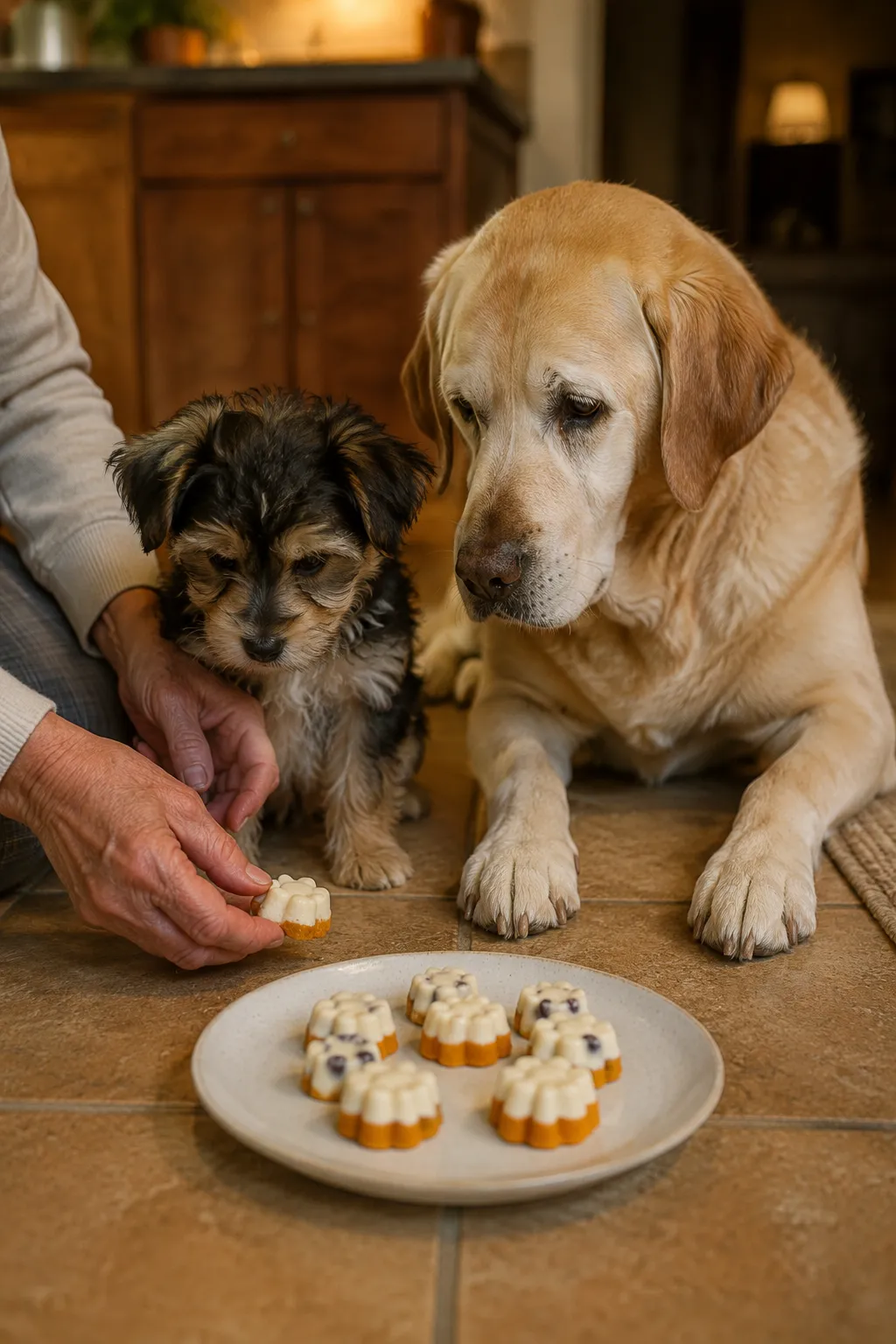
Keep portions tiny for puppies. A half-teaspoon of plain yogurt mixed into their food is a safe starting point. Avoid any treats with honey (not suitable for dogs under 1 year), xylitol, or high-fat ingredients.
Puppies have developing gut microbiomes, so probiotics can be genuinely beneficial – especially after vaccination stress or antibiotic use. Just keep it simple and plain.
What Ingredients Are Safe for Homemade Dog Treats?
Safe probiotic bases:
- Plain unsweetened yogurt (Greek or regular)
- Plain kefir (dairy or coconut-based)
- Unsweetened applesauce
- Plain pumpkin puree
Safe add-ins:
- Banana
- Blueberries
- Sweet potato (cooked)
- Oat flour or rolled oats
- Natural peanut butter (xylitol-free)
- Coconut oil (in small amounts)
Always avoid:
- Xylitol (toxic)
- Grapes or raisins (toxic)
- Chocolate (toxic)
- Artificial sweeteners
- Onion or garlic powder
- Macadamia nuts
For a full rundown of dangerous foods, see our guide on everyday foods that can harm dogs. You can also explore our best vegetables for dogs guide for more safe ingredient ideas.
How Long Do Homemade Probiotic Dog Treats Last?
Storage life depends on the format:
| Format | Refrigerator | Freezer |
|---|---|---|
| Frozen treats (yogurt-based) | 3-5 days (thawed) | Up to 3 months |
| Baked treats | 5-7 days | Up to 2 months |
| Gummies (gelatin-based) | 5-7 days | Up to 1 month |
Always store in an airtight container. Label with the date you made them. If you notice any mold, off-smell, or color change, toss them – don’t risk it.
Batch-making frozen treats on a Sunday and storing them in the freezer is the most practical approach for busy dog owners [4].
What If My Dog Won’t Eat Probiotic Treats?
Some dogs are picky, and that’s okay. Try these approaches:
- Mix it in their food – stir a spoonful of plain kefir or yogurt into their regular meal
- Try a different base – some dogs prefer kefir over yogurt, or vice versa
- Add a stronger flavor – a tiny bit of natural peanut butter or banana can make the treat more appealing
- Change the texture – if your dog ignores frozen treats, try baked ones instead
- Use a probiotic powder – mix a commercial probiotic powder (vet-approved) into a treat they already love
If your dog is generally a picky eater, you might find helpful tips in our easy 3-ingredient dog treat recipes – simple flavors often work best.
Conclusion
Making your own DIY probiotic dog treat recipes is one of the most practical and affordable ways to support your dog’s gut health in 2026. You don’t need special equipment or hard-to-find ingredients – just plain yogurt, kefir, and a few dog-safe mix-ins.
Here’s how to get started today:
- Pick one recipe from the seven above that matches what you have in your kitchen right now.
- Start small – give your dog one treat and watch for any digestive changes over 48 hours.
- Be consistent – aim for 2-3 treats per week for the first month.
- Track changes – note stool quality, energy levels, and coat condition over 4-6 weeks.
- Talk to your vet if your dog has chronic gut issues or is on medication.
Your dog’s gut health affects everything from digestion to immunity to skin condition. A few simple homemade treats each week can make a real difference – and your dog will love you for it. 🐾
FAQ
Q: Can I use flavored yogurt for dog probiotic treats?
No. Flavored yogurts often contain xylitol, artificial sweeteners, or added sugars that are harmful to dogs. Always use plain, unsweetened yogurt.
Q: How much yogurt can I give my dog per day?
For small dogs, 1 teaspoon is enough. Medium dogs can have 1-2 tablespoons. Large dogs can handle 2-3 tablespoons. These amounts apply to plain yogurt as a treat, not a meal replacement.
Q: Are probiotic treats safe for dogs on antibiotics?
Yes, and they’re especially helpful during and after antibiotic treatment, which depletes good gut bacteria. Space the probiotic treat at least 2 hours away from the antibiotic dose. Always confirm with your vet.
Q: Can I use store-bought kefir for dog treats?
Yes, as long as it’s plain and unsweetened. Avoid flavored kefir or any product with added sugar or artificial sweeteners.
Q: Do I need to add a probiotic powder to homemade treats?
Not necessarily. Plain yogurt and kefir contain live cultures naturally. However, if your dog has a specific gut condition, your vet may recommend adding a standardized probiotic powder for a guaranteed CFU count.
Q: How do I know if the probiotic treats are working?
Look for firmer, more consistent stools, less gas, improved energy after meals, and a shinier coat. These changes typically appear within 3-6 weeks of consistent use.
Q: Can I freeze yogurt directly in a Kong toy as a probiotic treat?
Yes – stuffing a Kong with plain yogurt and freezing it is a simple, effective probiotic treat that also keeps dogs mentally engaged.
Q: Are oats safe for dogs in homemade treats?
Yes. Plain rolled oats and oat flour are safe for most dogs and provide soluble fiber that supports gut health. Avoid instant oats with added flavors or sugar.
Q: What’s the difference between prebiotics and probiotics for dogs?
Probiotics are live bacteria that colonize the gut. Prebiotics are fibers (like those in pumpkin or sweet potato) that feed those bacteria. Both work best together.
Q: Can I give my senior dog probiotic treats?
Yes. Senior dogs often benefit from gut support as their digestive systems slow down. Keep portions appropriate for their size and calorie needs.
References
[1] PubMed – Effects of probiotic and nutraceutical supplementation on skin health and gut microbiota in dogs – https://pubmed.ncbi.nlm.nih.gov/38338095/
[2] PubMed – Stability of canine oral microbiota following probiotic administration – https://pubmed.ncbi.nlm.nih.gov/33062653/
[3] PubMed – Effects of Bacillus coagulans supplementation on fecal characteristics and microbiota in dogs – https://pubmed.ncbi.nlm.nih.gov/41304148/
[4] DIY Probiotic Recipes For Dogs Safe And Easy Ideas – https://heropethealth.com.au/blog/diy-probiotic-recipes-for-dogs-safe-and-easy-ideas
[5] Homemade Probiotic Dog Treats A Healthy Snack For Your Furry Friend – https://www.houndsy.com/blogs/modern-tails/homemade-probiotic-dog-treats-a-healthy-snack-for-your-furry-friend
[6] Summertime Paw Psicle DIY Dog Treat Recipe – https://www.chewy.com/education/dog/food-and-nutrition/summertime-paw-psicle-diy-dog-treat-recipe