

Last updated: August 23, 2026
Quick Answer: Homemade bacon dog treats for dogs are baked biscuits made with small amounts of cooked, unseasoned bacon mixed into dog-safe ingredients like whole wheat flour, eggs, and oats. They’re safer than feeding raw bacon, far more appealing than most store-bought snacks, and easy to make at home in under an hour. Keep portions small – treats should stay below 10% of your dog’s daily calories.
Key Takeaways 🐾
- Bacon is safe for dogs only in small amounts – use it as a flavoring agent, not the main ingredient
- Always use cooked, unseasoned bacon with no garlic, onion, or artificial seasonings
- Homemade bacon treats give you full control over sodium levels and ingredients
- Treats should make up no more than 10% of your dog’s daily calorie intake
- Dogs with pancreatitis, kidney disease, or obesity should avoid bacon treats entirely
- Homemade treats stored properly last up to 5 days at room temperature, 2 weeks refrigerated, or 3 months frozen
- Turkey bacon is a lower-fat alternative to pork bacon for dogs with sensitive stomachs
- Making treats at home is generally cheaper per treat than buying premium store-bought snacks
What Ingredients Do I Need to Make Homemade Bacon Dog Treats?
Most homemade bacon dog treats use a short list of pantry staples. The core ingredients are whole wheat flour (or a gluten-free alternative), cooked and crumbled bacon, eggs, and a liquid like low-sodium beef or chicken broth.
Here are the most common ingredient combinations used in 2026 recipes:
Base ingredients (choose one flour option):
- Whole wheat flour – most common, affordable, easy to find
- All-purpose flour – lighter texture
- Gluten-free flour blend – for dogs with grain sensitivities
Flavor and binding ingredients:
- 1-2 strips of cooked, crumbled bacon (unseasoned)
- 1 egg (binds the dough)
- Low-sodium broth or water (for moisture)
- Peanut butter (xylitol-free only!)
- Oats (rolled, not instant)
- A small drizzle of honey or coconut oil
Optional add-ins:
- Grated carrot (fiber and natural sweetness)
- Baking powder (for a lighter biscuit texture)
- Reserved bacon fat (used sparingly for extra flavor)
A classic recipe from Brown Eyed Baker (updated June 2026) combines whole wheat flour, oats, peanut butter, beef broth, honey, coconut oil, and crumbled bacon into a firm, rollable dough. The AKC’s 2026 version keeps it even simpler with gluten-free flour, eggs, and bacon baked as thin crispy bites.
If you love simple recipes, check out these 12 easy homemade dog treats made with just 2 ingredients for even quicker options.
Are Homemade Bacon Dog Treats Safe for Dogs?
Yes – homemade bacon dog treats are safe for most healthy adult dogs when made correctly and given in moderation. The key is using a tiny amount of cooked, plain bacon as a flavoring, not feeding bacon strips directly.
According to FirstVet, bacon is high in fat and sodium, which can cause digestive upset or contribute to pancreatitis if given in large amounts. By baking bacon into treats alongside flour, oats, and eggs, you dilute the fat and salt content significantly.
What makes homemade bacon treats safer than plain bacon:
- The bacon is spread across many treats, so each piece has a tiny amount
- Baking reduces some of the fat content
- You control the sodium – no added salt needed
- No artificial preservatives, colors, or flavor enhancers
What to avoid in your recipe:
- Garlic or onion (toxic to dogs)
- Xylitol in peanut butter (extremely toxic)
- Excess salt or seasoning
- Raw or undercooked bacon (salmonella risk)
Chewy’s nutrition team notes that even plain cooked bacon should be an occasional treat, not a daily food. That same principle applies to bacon-flavored treats.
What’s the Difference Between Homemade and Store-Bought Dog Treats?
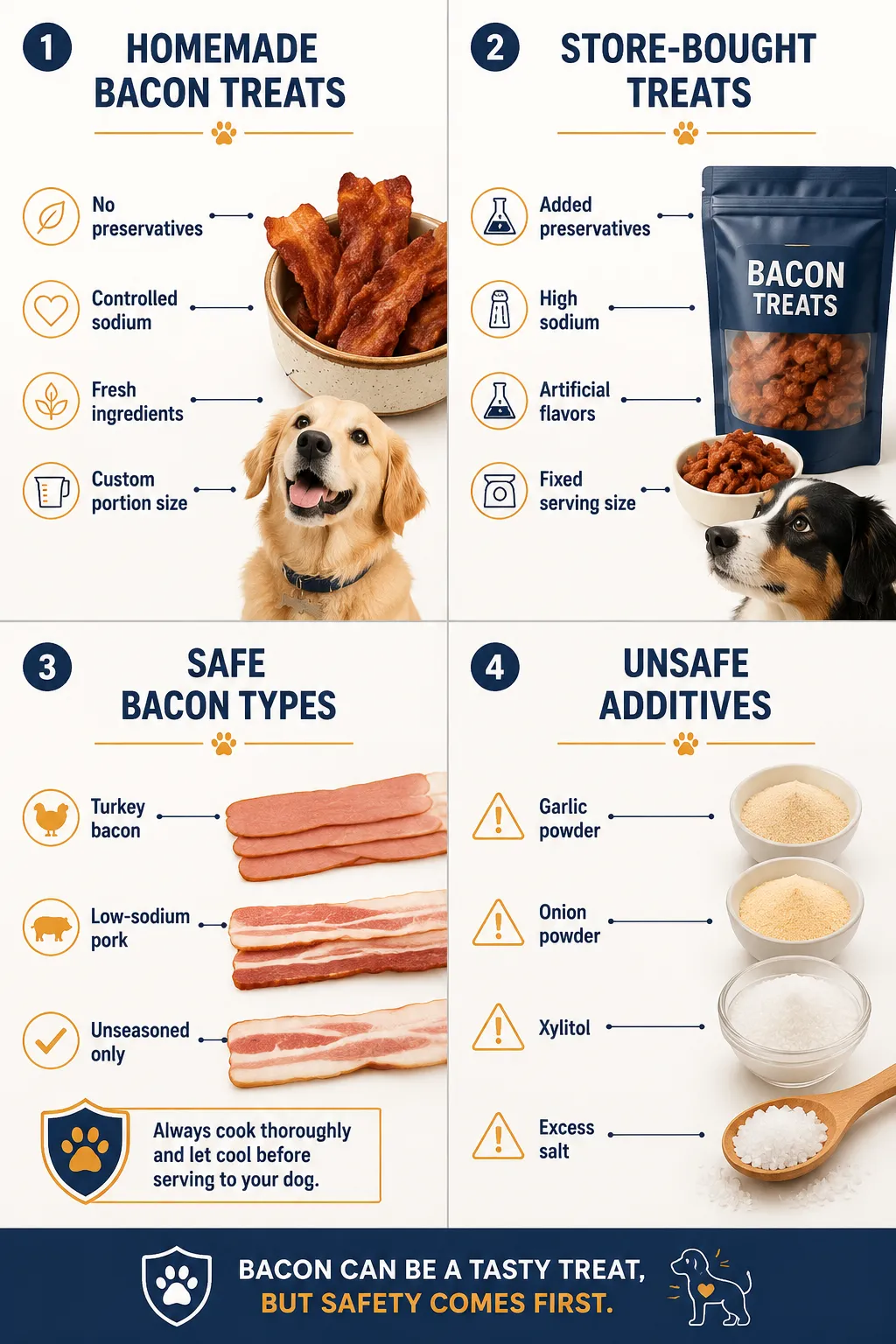
Homemade bacon treats give you full ingredient control – no preservatives, no mystery fillers, and you choose the sodium level. Store-bought treats are convenient but often contain artificial flavors, added salt, and preservatives to extend shelf life.
Here’s a quick comparison:
| Factor | Homemade | Store-Bought |
|---|---|---|
| Ingredients | You choose every one | Manufacturer decides |
| Sodium control | Full control | Often high |
| Preservatives | None needed | Common |
| Shelf life | Shorter (days-weeks) | Months to years |
| Cost per treat | Usually lower | Often higher for premium |
In 2026, some dog owners are also choosing homemade after a wave of meaty treat recalls linked to salmonella contamination in commercial products. Making treats yourself removes that uncertainty entirely.
Can I Use Any Type of Bacon for Dog Treats?
No – not all bacon is equal for dogs. Plain, cooked pork bacon (unseasoned) or turkey bacon are the best choices. Avoid any bacon that contains added spices, smoke flavoring with garlic, maple glaze, or peppered coatings.
Best bacon options for dog treats:
- Plain pork bacon – cooked crispy, drained of excess fat, crumbled
- Turkey bacon – lower in fat, good for dogs prone to weight gain
- Low-sodium bacon – best choice if available
Bacon to avoid:
- Peppered or spiced bacon
- Maple-glazed or honey-cured (high sugar)
- Bacon with garlic or onion seasoning
- Pre-packaged “bacon bits” with artificial flavoring
According to Fetch Pet’s nutrition guide, even plain bacon is high in saturated fat and sodium for dogs. That’s why using it as a flavoring in treats – rather than feeding full strips – is the smarter approach.
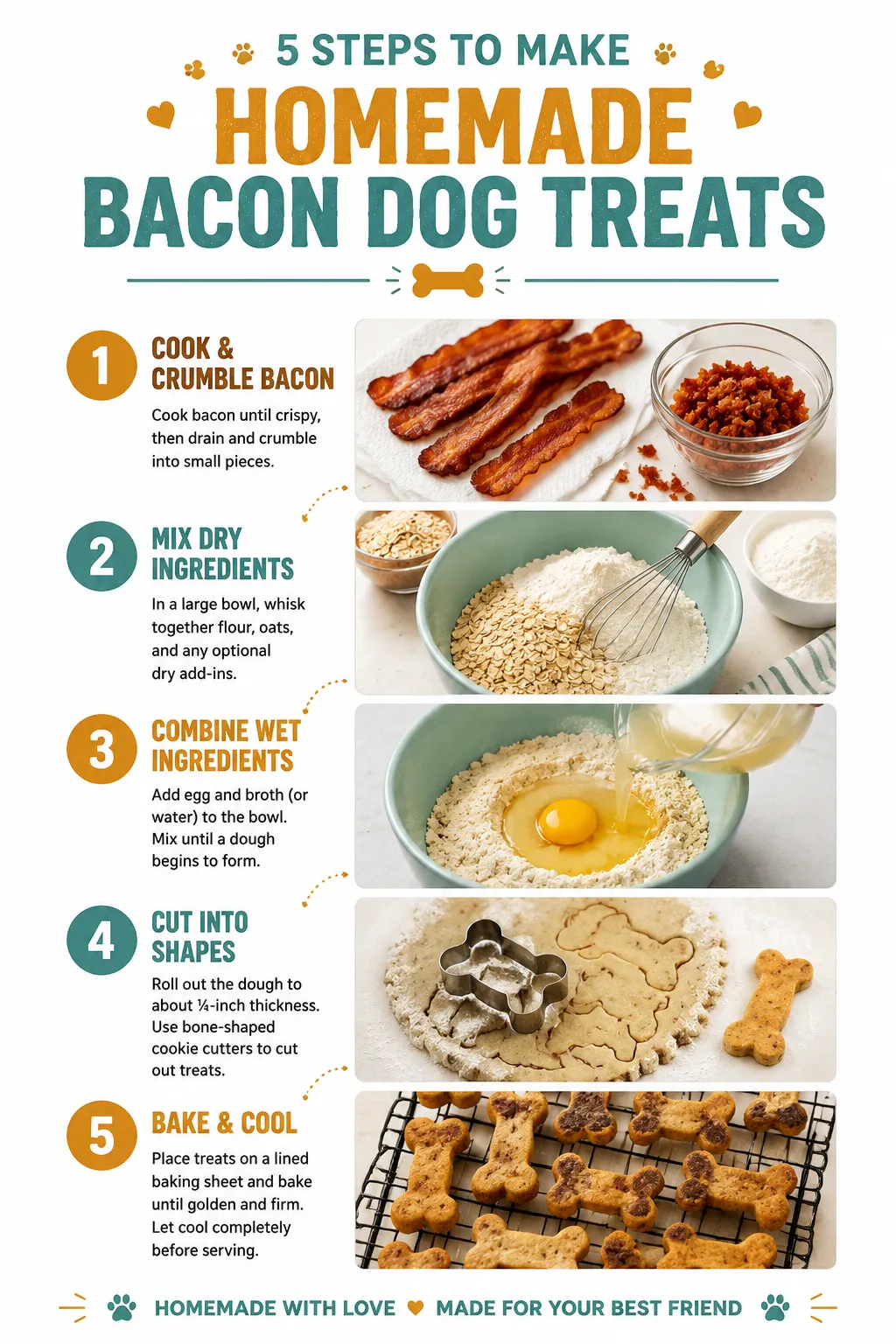
Cook the bacon until crispy, drain it on paper towels, let it cool completely, then crumble it into small pieces before mixing into your dough.
What’s the Best Way to Cook Bacon for Dog Treats?
The best method is oven-baking or pan-frying until crispy, then draining thoroughly on paper towels. Crispy bacon crumbles easily into dough and has less residual fat than soft-cooked bacon.
Step-by-step bacon prep for treats:
- Lay strips flat on a foil-lined baking sheet
- Bake at 375°F (190°C) for 15-18 minutes until crispy
- Transfer to paper towels and blot both sides
- Let cool completely (at least 10 minutes)
- Crumble into small pieces – about the size of a pea
- Reserve a small amount of the cooled bacon fat if your recipe calls for it
A recipe from Wild Wild Whisk (updated February 2026) actually uses a small amount of reserved bacon fat in the dough alongside whole wheat flour, egg, and stock – then bakes the treats twice for extra crunch. That double-bake technique also helps reduce moisture, which extends shelf life.
For a no-oven option, you can also make homemade dog treats in an air fryer – the air fryer works well for both cooking the bacon and baking the final treats.
Can I Make Bacon Dog Treats Without an Oven?
Yes – you have a few good options. An air fryer, a stovetop skillet, or a dehydrator all work for making bacon-flavored dog treats without a traditional oven.
No-oven methods:
- Air fryer – Cook bacon at 350°F for 8-10 minutes. Then use the air fryer to bake formed treat dough at 320°F for 10-12 minutes. Works great for small batches.
- Stovetop + refrigerator – Mix a no-bake dough using oats, peanut butter, crumbled bacon, and a small amount of broth. Roll into balls and refrigerate until firm. These are softer treats, not crunchy biscuits.
- Dehydrator – Best for jerky-style treats. Press thin dough strips and dehydrate at 160°F for 4-6 hours.
The air fryer method is the most popular in 2026 because it produces a crispy biscuit texture similar to oven-baked treats in a fraction of the time.
How Long Do Homemade Bacon Dog Treats Last, and How Do I Store Them?
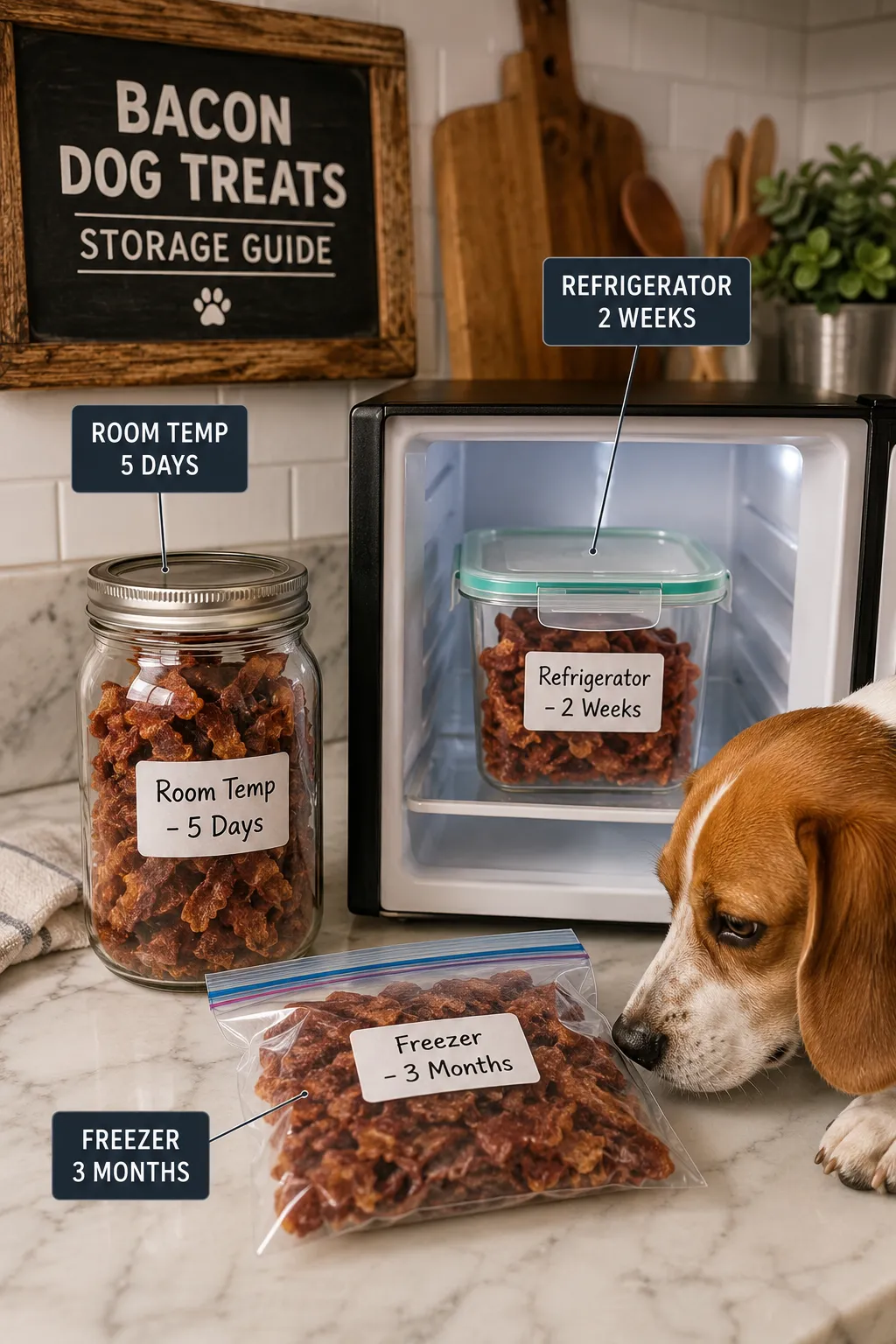
Homemade bacon treats last about 5 days at room temperature, up to 2 weeks in the refrigerator, and up to 3 months in the freezer. Because they contain no preservatives, they spoil faster than store-bought treats.
Storage guide:
| Storage Method | Container | Shelf Life |
|---|---|---|
| Room temperature | Airtight jar or tin | 3-5 days |
| Refrigerator | Sealed container | Up to 2 weeks |
| Freezer | Zip-lock freezer bag | Up to 3 months |
Tips to extend freshness:
- Let treats cool completely before storing – moisture causes mold
- Add a food-safe silica gel packet to room-temperature containers
- Freeze in single-layer portions so you can grab a week’s worth at a time
- Label bags with the date so you always know what’s fresh
PetMD’s treat safety guidelines recommend checking homemade treats for any signs of mold, unusual smell, or texture change before feeding – especially after refrigerating for more than a week.
Can Dogs With Sensitive Stomachs Eat Bacon Treats, and Are There Dogs That Shouldn’t Have Them?
Dogs with sensitive stomachs can sometimes tolerate bacon treats in very small amounts – but it depends on the cause of their sensitivity. Dogs with certain health conditions should skip bacon treats entirely.
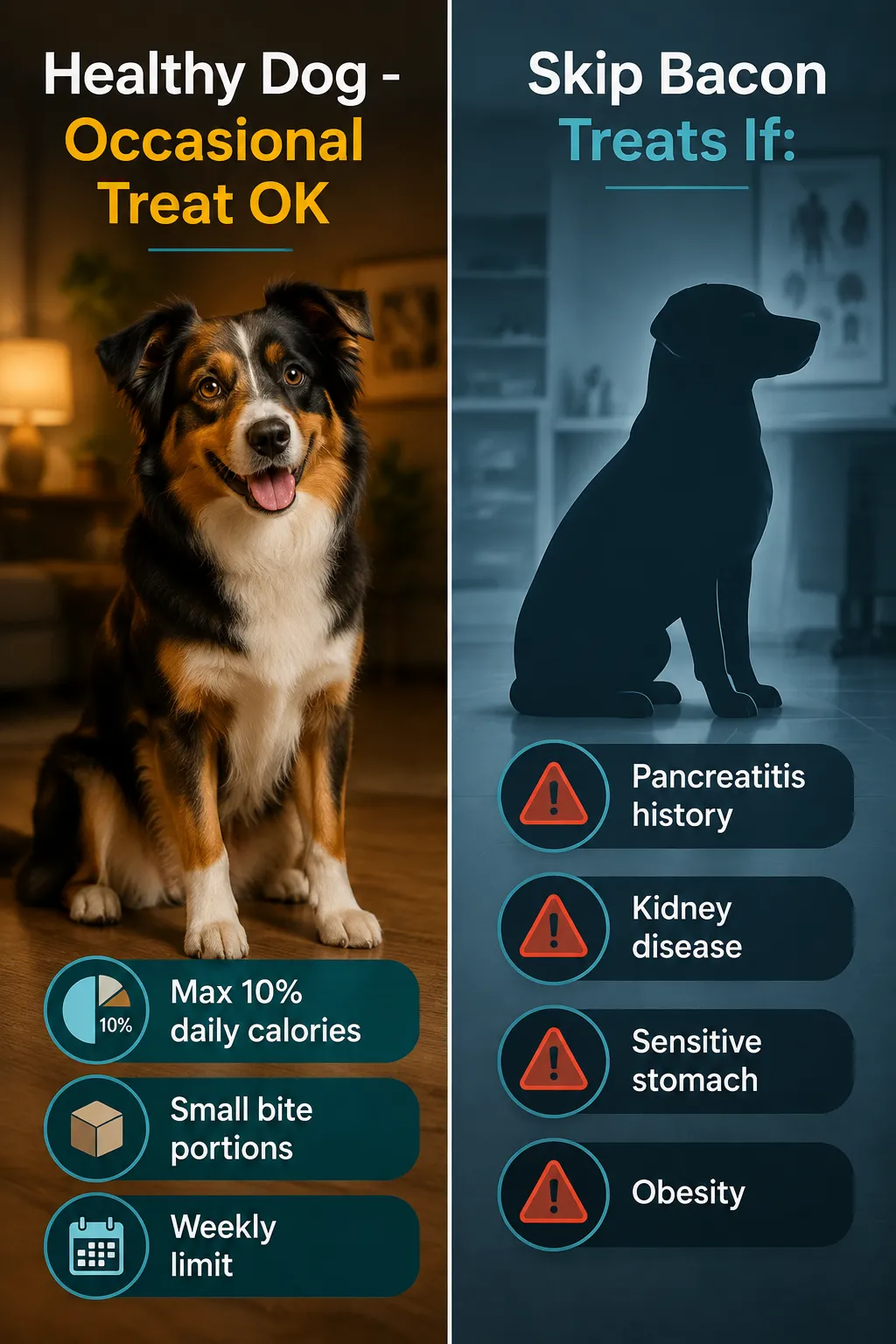
Dogs who should avoid bacon treats:
- Dogs with pancreatitis (current or history) – the fat content can trigger a flare
- Dogs with kidney disease – high sodium is dangerous for kidney function (see signs of kidney problems in dogs to know what to watch for)
- Obese dogs – extra fat calories work against weight management
- Dogs with confirmed pork allergies
- Puppies under 12 weeks – their digestive systems are still developing
Dogs with sensitive stomachs – use caution:
If your dog has a generally sensitive stomach but no diagnosed condition, try a turkey bacon version first. Turkey bacon is lower in fat and easier to digest. Start with one very small treat and watch for loose stool, vomiting, or gas over the next 24 hours.
According to WebVet’s nutrition team, dogs with a history of digestive issues should always get vet clearance before trying new high-fat foods. That’s a smart rule to follow before introducing any new treat.
How Do I Know If My Dog Is Allergic to Bacon?
A bacon allergy in dogs typically shows up within a few hours to 24 hours after eating it. Signs include itchy skin, hives, ear scratching, vomiting, diarrhea, or swollen face.
Watch for these signs after the first treat:
- Excessive scratching or paw licking
- Red, irritated skin or hives
- Vomiting or loose stool
- Ear shaking or head tilting
- Facial swelling (rare but serious – go to a vet immediately)
Pork allergies are not the most common dog food allergy, but they do exist. If you suspect a reaction, stop the treats and consult your vet. They may recommend an elimination diet to confirm the trigger.
How Often Can I Give My Dog Bacon Treats?
Most healthy adult dogs can enjoy 1-2 small bacon treats 2-3 times per week. Daily treats are fine if portions are tiny and the rest of the diet is balanced.
The 10% rule is the standard guideline: treats should not exceed 10% of your dog’s total daily calorie intake. For a 20-pound dog eating around 600 calories per day, that’s 60 calories maximum from treats.
A small homemade bacon biscuit (about the size of a quarter) contains roughly 15-25 calories depending on the recipe. That means a 20-pound dog could have 2-3 treats per day without going over budget.
Choose smaller treats if:
- Your dog is on a weight management plan
- You use treats heavily during training sessions
- Your dog already eats a calorie-dense food
For training-heavy days, break treats into halves or quarters. The smell of bacon is strong enough that even a tiny piece gets the same enthusiastic response as a full biscuit.
What’s Cheaper – Homemade or Store-Bought Dog Treats?
Homemade bacon dog treats are almost always cheaper per treat than premium store-bought options, especially when you factor in bulk ingredient costs. A single batch of 30-40 biscuits typically costs $3-6 in ingredients (estimate based on average 2026 US grocery prices for flour, eggs, and a few strips of bacon).
Premium store-bought bacon treats often run $8-15 for a similar quantity. The savings add up fast if you bake regularly.
Where homemade costs more:
- Your time (about 45-60 minutes per batch)
- Initial investment in cookie cutters or a baking sheet if you don’t own them
Where homemade saves money:
- Bulk flour and oats are cheap
- You use only 1-3 strips of bacon per batch
- No packaging markup
If you want to keep costs even lower, try pairing bacon with budget-friendly ingredients. These 7 irresistible 3-ingredient dog treats are a great starting point for simple, affordable baking.
7 Homemade Bacon Dog Treat Recipes to Try
Here are 7 tried-and-tested styles of homemade bacon dog treats for dogs that work in 2026:
1. Classic Peanut Butter-Bacon Biscuits
Whole wheat flour, oats, peanut butter (xylitol-free), beef broth, honey, coconut oil, crumbled bacon. Roll, cut into bones, bake at 350°F for 25 minutes.
2. Double-Baked Crunchy Bacon Bones
Whole wheat flour, egg, low-sodium stock, reserved bacon fat, crumbled bacon. Bake once, flip, bake again for extra crunch and longer shelf life.
3. Carrot-Bacon Soft Bites
Whole wheat flour, grated carrot, egg, crumbled bacon, low-sodium broth. Bake at 325°F for 20 minutes for a softer chew – great for senior dogs.
4. Gluten-Free Bacon Bites (AKC-Style)
Gluten-free flour blend, eggs, crumbled bacon. Roll thin, cut small, bake at 350°F for 15-18 minutes. Perfect for grain-sensitive dogs.
5. Air Fryer Bacon Puffs
Whole wheat flour, egg, peanut butter, crumbled bacon, baking powder. Air fry at 320°F for 10-12 minutes. Quick and crispy.
6. No-Bake Bacon-Oat Balls
Rolled oats, peanut butter, crumbled bacon, a splash of broth. Mix, roll into balls, refrigerate 2 hours. Soft treats, no oven needed.
7. Turkey Bacon and Pumpkin Biscuits
Whole wheat flour, canned plain pumpkin, egg, crumbled turkey bacon. Bake at 350°F for 25 minutes. Lower fat, great for sensitive stomachs. Pair this with our guide to 7 irresistible homemade dog treats with pumpkin for more pumpkin-based ideas.
FAQ
Can I use bacon grease instead of whole strips of bacon?
Yes, in small amounts. A teaspoon of cooled, strained bacon fat adds flavor to dough without adding large chunks of meat. Don’t use more than 1-2 teaspoons per batch to keep fat content low.
Can puppies eat homemade bacon dog treats?
Puppies over 3 months old can have a tiny piece occasionally, but their digestive systems are sensitive. Skip bacon treats for puppies under 12 weeks and always check with your vet first.
Is turkey bacon safer than pork bacon for dogs?
Turkey bacon is lower in fat and sodium than most pork bacon, making it a better choice for dogs prone to weight gain or digestive issues. It still needs to be plain and unseasoned.
Can I add cheese to my bacon dog treat recipe?
Yes – a small amount of low-fat shredded cheddar or parmesan works well in bacon biscuits. Avoid high-sodium cheeses and keep the total amount small.
Do I need to refrigerate homemade bacon treats?
If you’ll use them within 3-5 days and your kitchen isn’t hot or humid, room temperature in an airtight container is fine. For longer storage, refrigerate or freeze them.
My dog ignores store-bought treats but loves the smell of bacon – will these work?
Almost certainly yes. The smell of real cooked bacon is one of the strongest food motivators for dogs. Even a small amount baked into a biscuit produces a scent that most dogs find irresistible.
Can I use a dehydrator to make bacon dog treats?
Yes. Dehydrate thin pressed dough strips at 160°F for 4-6 hours for a jerky-style treat. Check out these 5 easy homemade dog jerky treats in the oven for similar technique guidance.
How do I know if a homemade treat has gone bad?
Look for visible mold, an off or sour smell, or a slimy texture. When in doubt, throw it out. Bacon’s fat content can go rancid faster than plain biscuits.
Can I make bacon treats for a dog with diabetes?
Consult your vet first. High-fat treats can affect blood sugar management. If approved, use a recipe with minimal honey or sweet add-ins and very small portion sizes.
Are homemade bacon treats okay for large breeds?
Yes, but scale the treat size up so it’s proportional. A treat the size of a quarter is fine for a Chihuahua but a large breed might get 2-3 treats of that size per session. The 10% calorie rule still applies regardless of size.
Conclusion
Homemade bacon dog treats for dogs are one of the best ways to reward a picky pup who turns his nose up at every store-bought snack. You get full control over what goes in, the sodium stays low, and the smell of real bacon means your dog will actually be excited about treat time.
Your next steps:
- Pick one recipe from the 7 above that matches your dog’s needs (sensitive stomach? Go turkey bacon and pumpkin).
- Cook and crumble 2-3 strips of plain, unseasoned bacon.
- Mix your dough, cut into small shapes, and bake.
- Store in an airtight container and use within 5 days – or freeze a batch for later.
- Keep treats to 10% of daily calories and watch for any unusual reactions the first time you try a new recipe.
If your dog has any health conditions – especially pancreatitis, kidney disease, or obesity – check with your vet before introducing bacon-based treats. For most healthy dogs, though, a small homemade bacon biscuit a few times a week is a perfectly safe and genuinely joyful addition to their routine.
Want to branch out beyond bacon? Try these 7 irresistible homemade dog treats with pumpkin or explore chicken bone broth gummy treats for dogs for a joint-supporting snack option.