
Last updated: August 2, 2026
Quick Answer: The best diy dog toothpaste recipes for bad breath use safe, natural ingredients like coconut oil, baking soda, and fresh parsley. You can make a batch in under 5 minutes, and regular brushing 2-3 times per week can noticeably improve your dog’s breath within 2-4 weeks. Never use human toothpaste on dogs – it often contains xylitol or fluoride, both of which are toxic to dogs.
Key Takeaways
- 🐾 80% of dogs show signs of dental disease by age 3, according to the American Veterinary Medical Association
- 🥥 Coconut oil is one of the safest and most effective base ingredients for homemade dog toothpaste
- 🚫 Never use human toothpaste on your dog – xylitol and fluoride are both dangerous
- 🌿 Natural ingredients like parsley, turmeric, and kelp can support dog oral health without harsh chemicals
- ⏱️ Most homemade dog toothpaste recipes take only 5 minutes prep time and store well in the fridge for 2-3 weeks
- 🦷 Brushing dog teeth 2-3 times per week is the gold standard recommended by most vets
- 💰 DIY dog toothpaste costs a fraction of store-bought products and uses ingredients you likely already have
- ✅ Always check every ingredient for dog safety before adding it to any homemade recipe
What Causes Bad Breath in Dogs?
Bad breath in dogs is almost always caused by bacteria building up on the teeth and gums. When food particles sit in your dog’s mouth, bacteria feed on them and produce sulfur compounds – that’s the stinky smell you notice when your dog goes in for a face lick.
The most common causes include:
- Plaque and tartar buildup – the #1 culprit in most dogs
- Periodontal (gum) disease – affects up to 80% of dogs over age 3
- Something your dog ate – like garbage, feces, or strong-smelling dog food
- Kidney or liver issues – a sweet or chemical smell can signal internal health problems
- Diabetes – a fruity breath smell may indicate blood sugar issues
Most of the time, bad breath in dogs is a dental hygiene issue that you can address with regular brushing and good homemade dog toothpaste. But if the smell is very strong, sudden, or smells chemical or fruity, see your vet. It could signal something beyond the teeth and gums.
Does My Dog Actually Need Toothpaste?
Yes – dogs need toothpaste (or at minimum, regular brushing) to prevent plaque and tartar from hardening on their teeth. Without it, bacteria accumulate fast, leading to gum disease, tooth loss, and even heart and kidney complications over time.
The good news is that dog toothpaste doesn’t have to come from a store. Many vet-recommended approaches support using safe, natural ingredients at home. The mechanical action of brushing is actually the most important part – the toothpaste helps by carrying antibacterial and deodorizing ingredients into the gum line while making the experience more pleasant for your dog.
Pro tip: Dogs don’t rinse and spit like we do, so every ingredient in your dog’s toothpaste must be 100% safe to swallow.
Is Human Toothpaste Safe for Dogs?
Human toothpaste is NOT safe for dogs – full stop. Most commercial human toothpaste contains either xylitol (an artificial sweetener that causes life-threatening hypoglycemia in dogs) or fluoride (toxic to dogs in even small amounts), or both.
According to the ASPCA Animal Poison Control Center, xylitol is one of the most dangerous household substances for dogs. Even a small amount can cause seizures, liver failure, or death.
Never use human toothpaste on your dog. This applies to all flavors and brands, including “natural” or “whitening” versions. Always check the label for xylitol, fluoride, and sodium lauryl sulfate before using any product near your dog’s mouth.
Best Ingredients for Homemade Dog Toothpaste
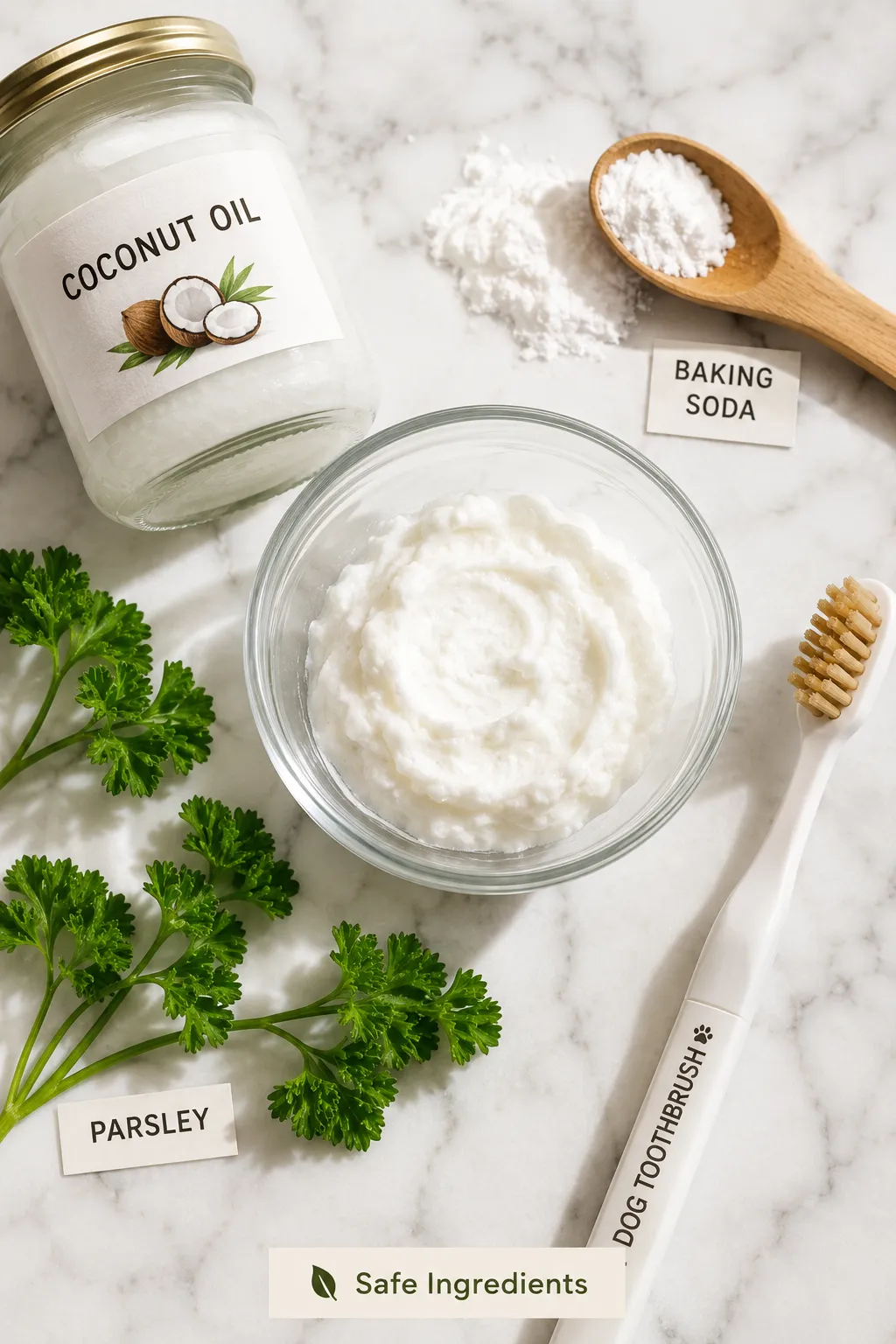
The best ingredients for homemade dog toothpaste are gentle, dog-safe, and naturally antibacterial. Coconut oil, baking soda, and parsley are the most popular choices used across dozens of trusted homemade recipes.
Here’s a breakdown of dog-friendly toothpaste ingredients:
| Ingredient | Benefit | Notes |
|---|---|---|
| Coconut oil | Antibacterial, dogs love the taste | Use unrefined, cold-pressed |
| Baking soda | Mild abrasive, neutralizes odor | Use in small amounts only |
| Fresh parsley | Natural breath freshener | Use flat-leaf, not spring parsley |
| Turmeric | Anti-inflammatory for gums | Small amounts only |
| Kelp powder | Reduces plaque buildup | Look for food-grade kelp |
| Aloe vera gel | Soothes gum inflammation | Must be food-grade, no additives |
| Beef or chicken broth | Makes brushing more appealing | Use low-sodium, no onion/garlic |
| Cinnamon | Antibacterial, mild flavor | Use very sparingly |
Ingredients to avoid in any dog toothpaste:
- Xylitol (toxic)
- Fluoride (toxic)
- Essential oils like tea tree, eucalyptus, or peppermint in high concentrations
- Hydrogen peroxide (irritating and potentially harmful)
- Garlic or onion (toxic to dogs)
- Any artificial sweeteners
Can I Use Coconut Oil in Dog Toothpaste?
Yes – coconut oil is one of the safest and most effective ingredients you can use in homemade dog toothpaste. It has natural antibacterial and antifungal properties, and most dogs actually enjoy the mild flavor, which makes brushing easier.
Research published in the Journal of Contemporary Dental Practice found that coconut oil pulling reduced Streptococcus mutans bacteria – a major cause of plaque – significantly in human subjects. While direct dog studies are limited, many vets and resources like the Whole Dog Journal recommend coconut oil as a safe base for DIY dog toothpaste.
Use unrefined, cold-pressed coconut oil for the best results. It stays solid at room temperature, which gives your homemade toothpaste a nice paste-like consistency.
Is Baking Soda Safe for Dogs’ Teeth?
Baking soda is safe for dogs in small amounts and works as a mild abrasive to help scrub away plaque. However, too much baking soda can upset your dog’s stomach, so use no more than 1/4 teaspoon per batch of toothpaste.
Some sources, including Dogs Naturally Magazine, note that baking soda is alkaline and can help neutralize the acidic environment that bacteria thrive in. That said, dogs with heart conditions or those on sodium-restricted diets should avoid baking soda toothpaste – check with your vet first.
A good rule of thumb: use baking soda as a supporting ingredient, not the main one. Pair 1 tbsp baking soda with a larger amount of coconut oil to dilute it properly.
7 Easy DIY Dog Toothpaste Recipes for Bad Breath
These diy dog toothpaste recipes for bad breath use simple, dog-safe ingredients you can find at most grocery stores. Each recipe takes about 5 minutes prep time, and most batches store in the fridge for up to 2 weeks.
🥥 Recipe 1 – Easy DIY Coconut Oil Dog Toothpaste
This is the most popular of all homemade dog toothpaste recipes, and for good reason. It’s simple, effective, and most dogs love the taste.
Ingredients:
- 2 tablespoons coconut oil (softened)
- 1/4 teaspoon baking soda
- 1/4 teaspoon dried parsley
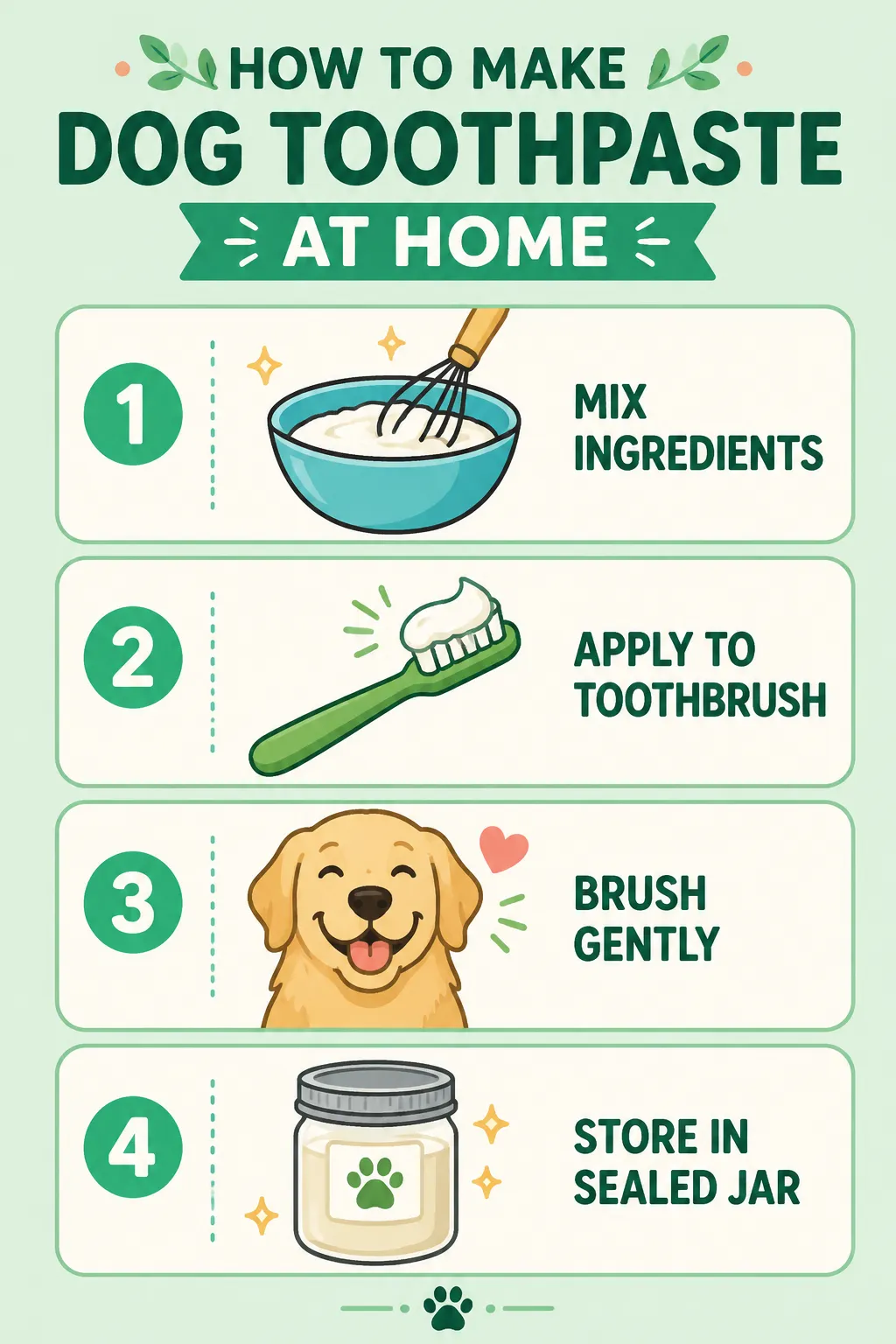
Instructions:
- Melt the coconut oil slightly if it’s very firm
- Mix all ingredients together in a small bowl
- Combine until smooth
- Store in a small sealed jar in the fridge
Prep time: 5 minutes | Makes: About 2 weeks of use
Note: This is a great starter recipe if your dog is new to brushing. The coconut flavor makes it feel like a treat.
🌿 Recipe 2 – Refreshing Minty Olive Oil Dog Toothpaste
This recipe uses olive oil as the base for dogs who don’t love coconut. The parsley gives it a naturally fresh, minty quality that helps with bad breath.
Ingredients:
- 2 tablespoons olive oil
- 1 teaspoon fresh parsley (finely chopped)
- 1/4 teaspoon baking soda
- 1 teaspoon aloe vera gel (food-grade)
Instructions:
- Mix olive oil and aloe vera gel together
- Add baking soda and combine well
- Stir in the fresh parsley
- Store in the fridge in a sealed container
Note: Aloe vera soothes the gums and can help dogs with mild gum sensitivity. Always use food-grade aloe vera with no added ingredients.
🍗 Recipe 3 – Savory Chicken Broth Dog Toothpaste
Some dogs simply won’t cooperate with brushing unless there’s something tasty involved. This chicken-flavored toothpaste is a game-changer for picky dogs.
Ingredients:
- 2 tablespoons coconut oil
- 1 tablespoon low-sodium chicken broth (no onion/garlic)
- 1/4 teaspoon baking soda
- 1/4 teaspoon dried parsley
Instructions:
- Melt coconut oil to liquid
- Mix in chicken broth slowly
- Add baking soda and parsley
- Stir until combined, then let cool slightly before use
- Store in fridge – it will firm up again when cold
Note: This recipe has a softer consistency than others. Apply small amounts to the brush and use immediately after taking it out of the fridge.
🌿 Recipe 4 – Immune-Boosting Kelp and Turmeric Dog Toothpaste
Kelp is one of the most underrated ingredients in dog oral care. Studies cited by Dogs Naturally Magazine suggest that kelp contains enzymes that break down plaque-forming biofilm. Turmeric adds anti-inflammatory support for the gums.
Ingredients:
- 2 tablespoons coconut oil
- 1/2 teaspoon kelp powder (food-grade)
- 1/4 teaspoon turmeric
- 1/4 teaspoon baking soda
Instructions:
- Combine all dry ingredients – kelp powder, turmeric, baking soda
- Mix dry ingredients into softened coconut oil
- Stir until you get a smooth paste
- Store in a small jar in the fridge
Note: Turmeric can stain light-colored fur around the mouth. Use sparingly and wipe your dog’s face after brushing.
🦴 Recipe 5 – Bone Broth Dog Toothpaste
Bone broth is packed with minerals that support healthy teeth and gums. This recipe is great for senior dogs who need extra gum care. You can use our homemade bone marrow broth recipe for dogs as the base.
Ingredients:
- 2 tablespoons coconut oil
- 1 tablespoon plain bone broth (no seasoning)
- 1/4 teaspoon baking soda
- 1/4 teaspoon dried parsley
Instructions:
- Melt coconut oil and mix with bone broth
- Add baking soda and parsley
- Combine well and store in the fridge
❄️ Recipe 6 – Cool and Calming Toothpaste for Dogs
This recipe is designed for dogs with sensitive gums or anxiety around brushing. The aloe vera gel soothes while the coconut oil cleans.
Ingredients:
- 2 tablespoons coconut oil
- 1 teaspoon food-grade aloe vera gel
- 1/4 teaspoon dried parsley
- A pinch of cinnamon (optional)
Instructions:
- Mix coconut oil and aloe vera gel together
- Add parsley and cinnamon if using
- Stir until smooth
- Apply a small amount to a soft finger brush for best results
🌾 Recipe 7 – Simple 2-Ingredient Dog Tooth Powder
Sometimes a tooth powder is easier to use than a paste, especially for dogs who resist the brush. This is the simplest of all the toothpaste recipes and works as a dry alternative.
Ingredients:
- 1 tablespoon baking soda
- 1 teaspoon dried parsley
Instructions:
- Mix baking soda and dried parsley in a small jar
- Dip a damp toothbrush into the powder
- Brush dog teeth gently
- Store in a sealed jar at room temperature
Note: This tooth powder vs toothpaste approach works well for dogs who hate the texture of paste. The powder dissolves quickly on contact with saliva.
Homemade Dog Toothpaste vs. Store-Bought Products
Homemade dog toothpaste is generally cheaper, free of unnecessary additives, and easier to customize for your dog’s taste preferences. Store-bought products from brands like Virbac C.E.T., Petrodex, and Arm and Hammer are also safe and vet-recommended, but they cost significantly more and some contain artificial flavors or preservatives.
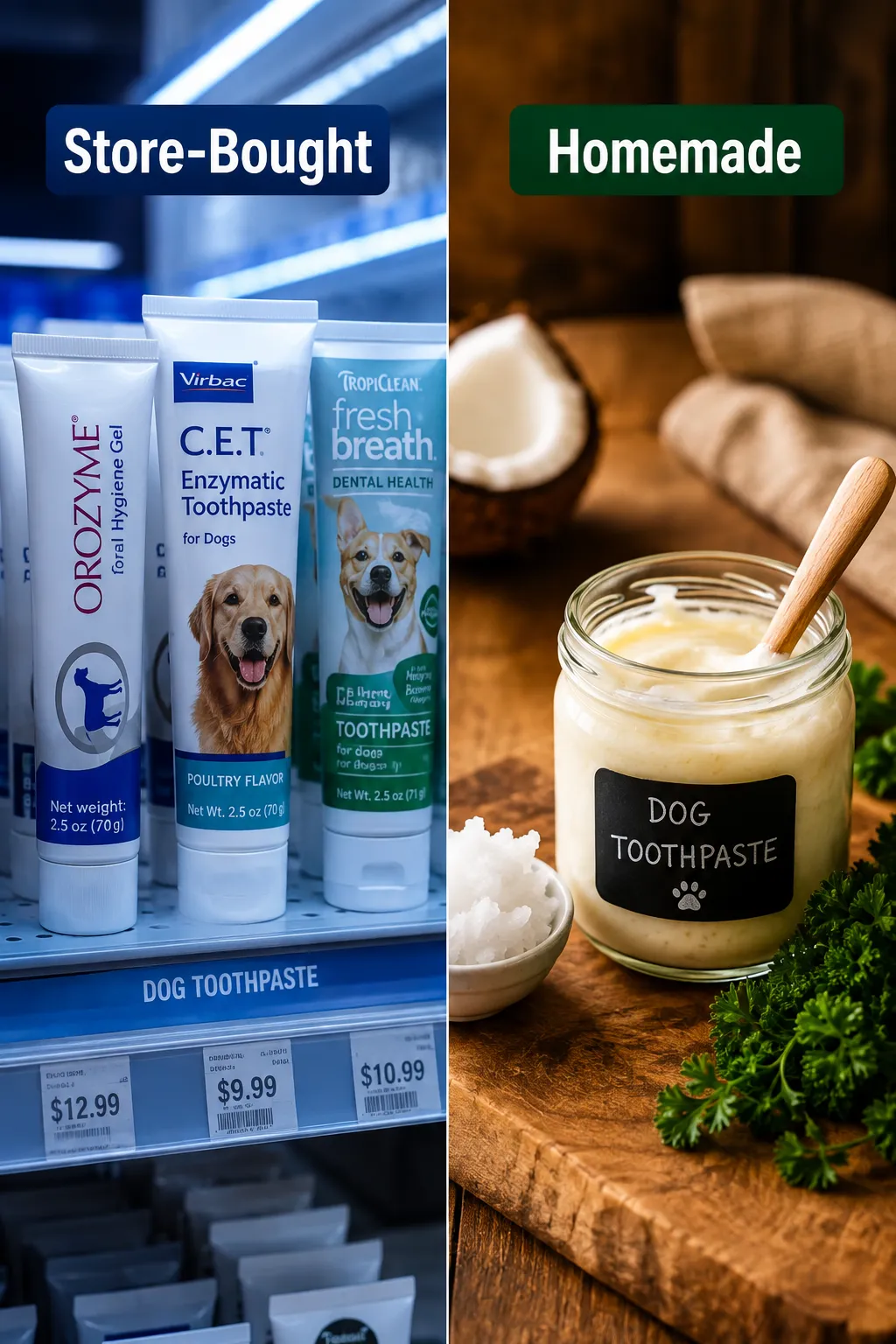
Here’s a quick comparison:
- Cost: Homemade costs roughly $0.10-0.30 per use vs. $5-15 for a tube of commercial dog toothpaste
- Ingredients: DIY gives you full control – no mystery additives
- Convenience: Store-bought is ready to use; homemade takes 5 minutes to make
- Effectiveness: Both work well when used consistently with proper brushing technique
- Shelf life: Commercial products last longer; homemade lasts 2-3 weeks in the fridge
The Whole Dog Journal and resources like Dogs Naturally Magazine both support using natural, homemade options as long as all ingredients are dog-safe. The most important factor isn’t which toothpaste you use – it’s whether you use it consistently.
For dogs with specific health conditions, always check with your vet before switching to a homemade product.
How Often Should You Brush Your Dog’s Teeth?
Vets recommend brushing your dog’s teeth at least 2-3 times per week, with daily brushing being the gold standard for preventing dental disease. Even brushing once a week is far better than never brushing at all.
According to the American Veterinary Dental College, plaque starts hardening into tartar within 24-48 hours if not removed. Once tartar forms, it can only be removed by a professional dental cleaning under anesthesia.
Brushing frequency guide:
- Daily: Best for preventing plaque and tartar buildup
- 3x per week: Good maintenance for most healthy dogs
- 1-2x per week: Better than nothing, but may not fully prevent tartar
- Never: Significantly increases risk of periodontal disease by age 3
Start slow with puppies and new dogs. Even 30 seconds of gentle brushing builds the habit. Check out our guide on what to give a sick dog naturally for more tips on natural dog health care.
How to Get Your Dog to Let You Brush Their Teeth
The biggest challenge with brushing dog teeth isn’t the toothpaste – it’s getting your dog to cooperate. Most dogs can learn to tolerate and even enjoy brushing with the right approach.
Step-by-step introduction:
- Week 1: Let your dog lick toothpaste off your finger. No brush yet.
- Week 2: Rub toothpaste on the teeth and gums with your finger.
- Week 3: Introduce a soft finger brush or dog toothbrush with toothpaste.
- Week 4: Begin brushing in short 15-30 second sessions.
- Ongoing: Gradually increase to 1-2 minutes per session.
Always end with praise and a treat. The goal is to make brushing feel like a positive experience, not a struggle. If your dog is food-motivated, savory toothpaste recipes like the chicken broth version above make a huge difference.
For dogs who are very resistant, try pairing brushing with training. Our resource on powerful hand commands for dogs can help you build the calm, cooperative behavior that makes grooming routines easier.
Does Homemade Dog Toothpaste Actually Work?
Yes – homemade dog toothpaste works, especially when used consistently with proper brushing technique. The mechanical action of the brush removes plaque, and natural ingredients like coconut oil, baking soda, and parsley provide antibacterial and deodorizing support.
A 2020 study published in the Journal of Veterinary Dentistry confirmed that regular tooth brushing is the single most effective method for controlling plaque in dogs, regardless of which toothpaste is used. The key word is “regular” – sporadic brushing won’t deliver the same results.
How long does it take to see results?
- Fresh breath: You may notice improvement within 1-2 weeks of consistent brushing
- Visible plaque reduction: Typically 3-4 weeks of regular brushing
- Gum health improvement: 4-8 weeks with consistent care
- Tartar removal: Cannot be done at home – requires professional dental cleaning
What Essential Oils Are Safe for Dogs in Toothpaste?
Most essential oils are NOT safe for dogs, and this is one area where you need to be very careful. Many popular essential oils are toxic to dogs even in small amounts.
Oils to avoid completely:
- Tea tree oil (toxic to dogs)
- Eucalyptus oil (toxic)
- Peppermint oil in high concentrations (can cause issues)
- Wintergreen oil (toxic)
- Clove oil (toxic)
Safer alternatives:
- Fresh parsley (not an oil, but a natural breath freshener)
- A tiny drop of spearmint oil (use extreme caution and very small amounts)
- Coconut oil (not technically an essential oil – and very safe)
The ASPCA’s toxic plant and substance database is the most reliable resource for checking ingredient safety. When in doubt, leave it out. Stick to the proven ingredients in the recipes above.
When to See a Vet for Dog Bad Breath
Homemade toothpaste and regular brushing can handle most cases of bad breath in dogs. But some situations require professional veterinary care.
See your vet if your dog has:
- Extremely foul or sudden-onset bad breath that doesn’t improve with brushing
- Breath that smells sweet, fruity, or chemical
- Visible broken teeth, bleeding gums, or swollen jaw
- Difficulty eating or chewing
- Excessive drooling or pawing at the mouth
- Weight loss alongside bad breath
These signs can point to periodontal disease requiring professional cleaning, kidney or liver disease, diabetes, or oral tumors – none of which can be treated with toothpaste alone.
Regular vet dental checkups (at least once a year) are part of responsible dog care. A professional cleaning every 1-3 years is often recommended for dogs prone to tartar buildup. For more on keeping your dog healthy naturally, see our guide on superfoods for dogs that vets recommend.
Tips for Making Your Own Dog Toothpaste
Making homemade dog toothpaste is easy, but a few tips will help you get better results and keep your dog safe.
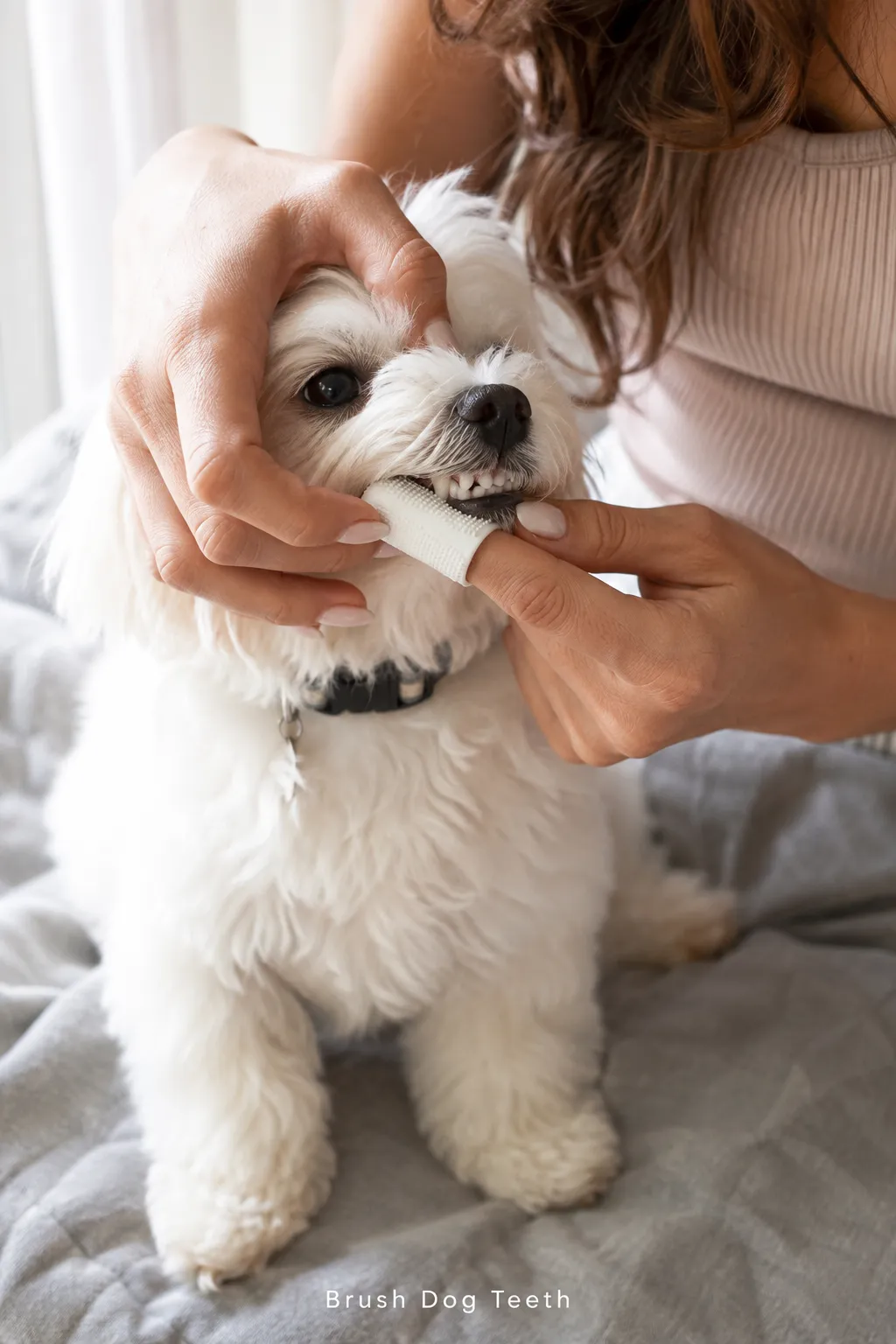
- Always use food-grade ingredients. Everything in your dog’s toothpaste will be swallowed.
- Keep batches small. Most recipes make enough for 2-3 weeks. Don’t make a huge batch that will go bad.
- Label and date your jars. It’s easy to forget when you made a batch.
- Store in the fridge. Most homemade toothpaste keeps best when refrigerated.
- Let coconut oil soften before use. Cold coconut oil can be hard to apply. Let it sit at room temperature for a few minutes.
- Never share human toothpaste. Even “natural” human toothpaste can contain xylitol or fluoride.
- Look for signs of sensitivity. If your dog shows any reaction (drooling excessively, pawing at the mouth, vomiting), stop use and consult your vet.
- Make the recipes your own. You can adjust flavors by swapping chicken broth for beef broth, or adding a tiny pinch of cinnamon for variety.
How to Remove Tartar from Your Dog’s Teeth Without Brushing
While brushing is the best method, some dogs won’t tolerate a toothbrush. There are a few alternatives that can help reduce tartar and improve oral health.
Alternatives to brushing:
- Dental chews – Products like Greenies are VOHC-accepted (Veterinary Oral Health Council) for plaque and tartar control
- Dental water additives – Added to your dog’s water bowl, these help reduce bacteria
- Raw bones – Natural chewing action scrapes plaque; always supervise and use appropriate size
- Dental wipes – Easier than a brush for some dogs; wipe along the gum line
- Kelp powder added to food – Some research supports its plaque-reducing properties
These methods work best as supplements to brushing, not complete replacements. For dogs who need a more engaging approach to health routines, try pairing dental care with brain games for dogs to build positive associations.
For a deeper look at natural dog health care at home, our easy 3-ingredient dog treat recipes also include dental-friendly options.
FAQ
What can I use to brush my dog’s teeth for bad breath?
You can brush your dog’s teeth using a soft-bristled dog toothbrush or a finger brush with homemade dog toothpaste made from coconut oil, baking soda, and parsley. These natural ingredients help neutralize odor-causing bacteria. Avoid human toothpaste entirely, as it contains xylitol and fluoride, both of which are toxic to dogs. Even brushing with water alone is better than not brushing at all.
How can I remove tartar from my dog’s teeth without brushing?
You can reduce tartar without brushing by using VOHC-accepted dental chews like Greenies, adding a dental water additive to your dog’s bowl, offering raw meaty bones under supervision, or using kelp powder sprinkled on food. Dental wipes applied along the gum line also help. These methods are less effective than brushing but can make a meaningful difference for dogs who won’t tolerate a toothbrush.
What toothpaste is good for dogs bad breath?
The best toothpaste for dogs with bad breath contains coconut oil, baking soda, and fresh parsley – all of which fight odor-causing bacteria naturally. Store-bought options like Virbac C.E.T. Enzymatic Toothpaste and Petrodex Natural Toothpaste are also safe and vet-recommended. Always choose products specifically made for dogs and check that they are free of xylitol, fluoride, and artificial sweeteners.
Can I brush my dog’s teeth with hydrogen peroxide and baking soda?
No – you should not brush your dog’s teeth with hydrogen peroxide. While baking soda alone is safe in small amounts, hydrogen peroxide can irritate your dog’s mouth and digestive system, and ingesting it may cause vomiting or more serious issues. Stick to dog-safe ingredients like coconut oil, baking soda in small quantities, and fresh parsley instead of using hydrogen peroxide.
Conclusion
Your dog’s breath doesn’t have to clear the room. With a few simple, natural ingredients and 5 minutes of your time, you can make diy dog toothpaste recipes for bad breath that actually work – and that your dog might even look forward to.
Your action plan:
- Pick one of the 7 recipes above that best fits your dog’s taste preferences
- Gather ingredients (most are already in your kitchen)
- Make a small batch and introduce it slowly using the step-by-step brushing guide
- Commit to brushing 2-3 times per week for at least 4 weeks
- Schedule a vet dental checkup if you notice any concerning signs
Consistent brushing with safe, natural ingredients is one of the simplest things you can do to support your dog’s long-term health. Dental disease is largely preventable – and it starts with a little coconut oil and a willing pup.
For more natural dog care ideas, explore our guides on homemade dog food recipes for sensitive stomachs and natural ways to keep your dog smelling fresh.





One comment on “7 DIY Dog Toothpaste Recipes That Instantly Freshen Bad Breath Naturally”
Comments are closed.