

Last updated: August 13, 2026
Quick Answer: The real reason your house smells like dog – even after cleaning – is that odor hides in five overlooked spots: pet bedding, carpets and soft surfaces, hard-to-reach wall zones, your HVAC system, and old hidden stains. Fix those five traps consistently, add a HEPA air purifier, and your home can smell genuinely fresh within a week.
Key Takeaways
- Dog odor builds up in layers across soft furnishings, floors, walls, and air systems – not just on the dog itself.
- Washing pet bedding weekly in hot water with an enzyme detergent is one of the single biggest wins.
- HEPA air purifiers with activated carbon filters actively remove odor molecules from the air, not just mask them.
- Enzymatic cleaners are the only reliable solution for old urine stains – regular cleaners leave the smell behind.
- Baking soda is a free, natural odor absorber that works well on carpets, sofas, and dog beds between washes.
- Regular grooming – bathing your dog every 4-6 weeks – cuts the amount of odor being deposited around your home.
- Diet can affect how much your dog smells; high-quality dog food with clean protein sources reduces skin odor.
- Opening windows for just 10-15 minutes daily makes a measurable difference in air freshness.
- A consistent daily-plus-weekly cleaning routine prevents micro-odors from stacking into a full “dog house” smell.
- Fragrance products alone do not eliminate dog odor – they just layer a scent on top of it.
Why Does My House Smell Like Dog Even After Cleaning?
Most dog owners clean their home regularly but still notice that persistent, hard-to-shake smell. The reason is simple: standard cleaning routines miss the five hidden odor traps where dog smell actually lives. Dog skin produces natural oils, dander, and moisture that soak into soft surfaces, settle into carpet fibers, coat walls and baseboards, and recirculate through HVAC systems – none of which a quick vacuum or surface spray addresses.
Research on pet odor removal confirms that pet smells embed themselves in porous materials at a microscopic level. That’s why your house can smell fine after a clean, then revert to smelling like dog within 24 hours – the odor source was never removed, just temporarily covered.
The five hidden traps are:
- Pet bedding and soft furnishings
- Carpets, rugs, and floor edges
- Walls, baseboards, vents, and overlooked surfaces
- Indoor air and HVAC filters
- Old hidden accidents and stains
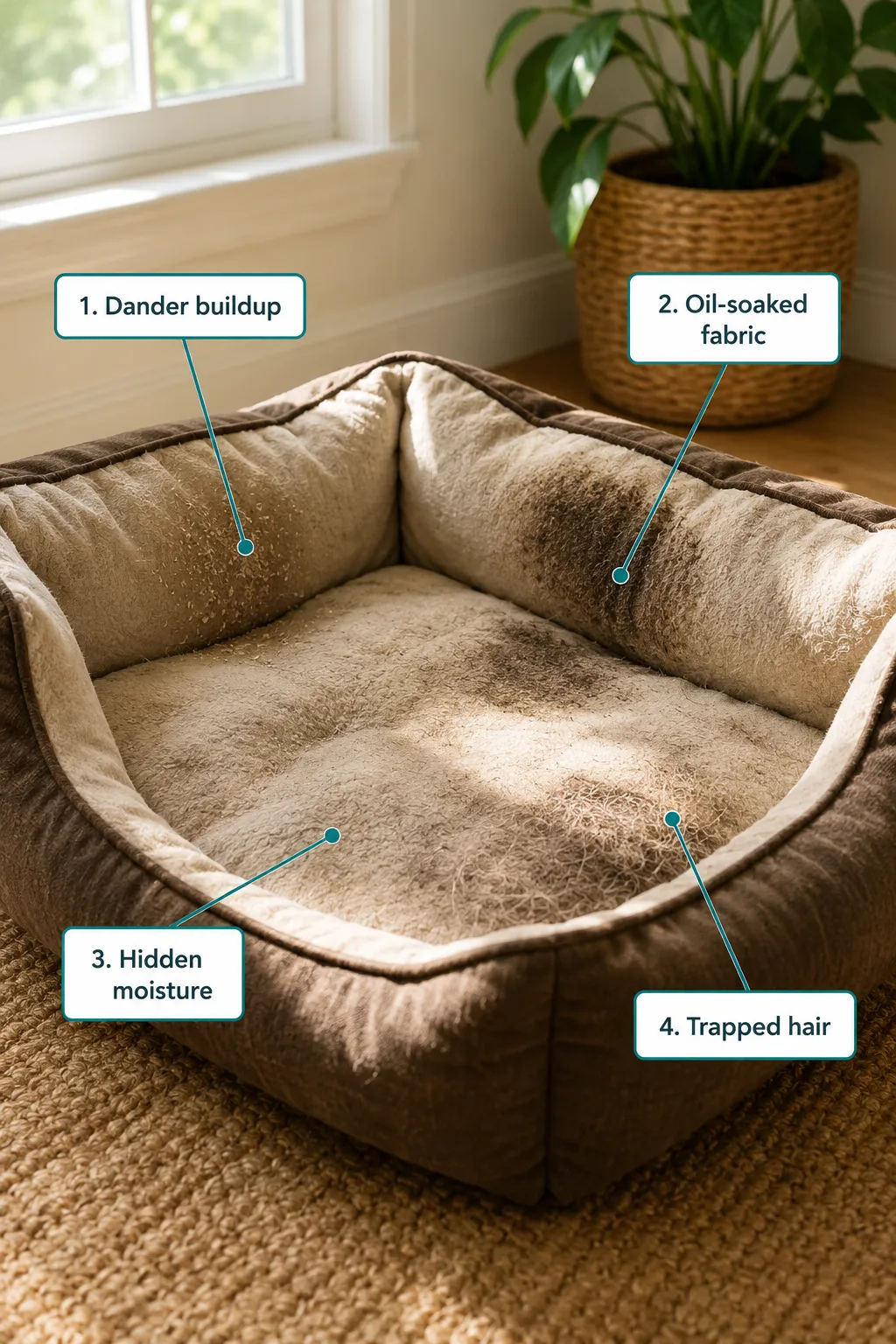
What Causes Dog Smell in a House?
Dog odor in a home comes from several biological sources, not just “dirty dog.” Understanding what you’re actually dealing with helps you target the right fix.
- Skin oils and apocrine glands: Dogs release oils and secretions through their skin continuously. These transfer to every surface they touch.
- Dander: Microscopic skin flakes float through the air and settle on every surface in the home.
- Saliva and paw moisture: When a dog licks itself or walks in from outside, moisture carries odor-causing bacteria onto floors and furniture.
- Anal gland secretions: These have a strong, distinctive smell that can linger on bedding and soft surfaces.
- Urine and fecal accidents: Even old, dried accidents continue releasing odor compounds until treated with an enzyme cleaner.
According to Good Housekeeping’s pet odor guide, the combination of these sources creates a layered odor that standard cleaning products simply can’t break down – because they don’t contain the enzymes needed to digest the organic compounds.
Trap 1 and 2 – Pet Bedding, Soft Furnishings, Carpets, and Rugs
The dog bed is ground zero for house odor. It absorbs skin oils, dander, saliva, and moisture every single day. If you don’t wash it weekly, it becomes a constant odor source radiating smell into the surrounding room.
The fix for pet bedding:
- Wash the dog bed cover and insert in hot water (at least 60°C / 140°F) every week.
- Use an enzyme-based detergent – not standard fabric softener, which just masks the smell.
- Air dry in sunlight when possible; UV light kills odor-causing bacteria naturally.
- Between washes, sprinkle baking soda on the bed, leave it for 15 minutes, then vacuum it off.
For carpets and rugs, the problem is that dog hair, dander, and oils work down into the pile and sit at the base of fibers where a regular vacuum can’t reach. The edges of rooms and the areas under furniture are especially bad – these are spots dogs like to rest against, and they rarely get cleaned.
The fix for carpets:
- Vacuum at least twice a week using a pet-specific vacuum with strong suction.
- Sprinkle baking soda on carpets before vacuuming to lift and neutralize odors naturally.
- Deep clean carpets every 2-3 months with a pet-safe enzymatic carpet cleaner.
Does professional carpet cleaning remove dog smell? Yes – but only if the cleaner uses hot water extraction combined with an enzymatic treatment. Steam alone won’t fully break down urine proteins. Always confirm the service uses enzyme-based solutions before booking.
For more detailed carpet strategies, check out this guide on how to get dog smell out of carpet.
Trap 3 and 4 – Overlooked Surfaces, Walls, Vents, and Indoor Air
Most people clean floors and furniture but completely miss the surfaces at dog height – walls, baseboards, door frames, heating vents, and radiators. Dog skin oils transfer to these surfaces every time your dog brushes past, and the odor builds up as an invisible film over months.
Cleaning experts note that walls and baseboards in high-traffic dog zones can hold as much odor as soft furnishings, yet they’re almost never included in regular cleaning routines.
The fix for overlooked surfaces:
- Wipe down walls, baseboards, and door frames monthly with a diluted white vinegar solution or a pet-safe all-purpose cleaner.
- Clean heating vents and radiator covers – these blow warm air over dust and dander, amplifying the smell.
- Wash curtains and blinds every 4-6 weeks; they trap airborne dander just like soft furniture does.
The fix for indoor air:
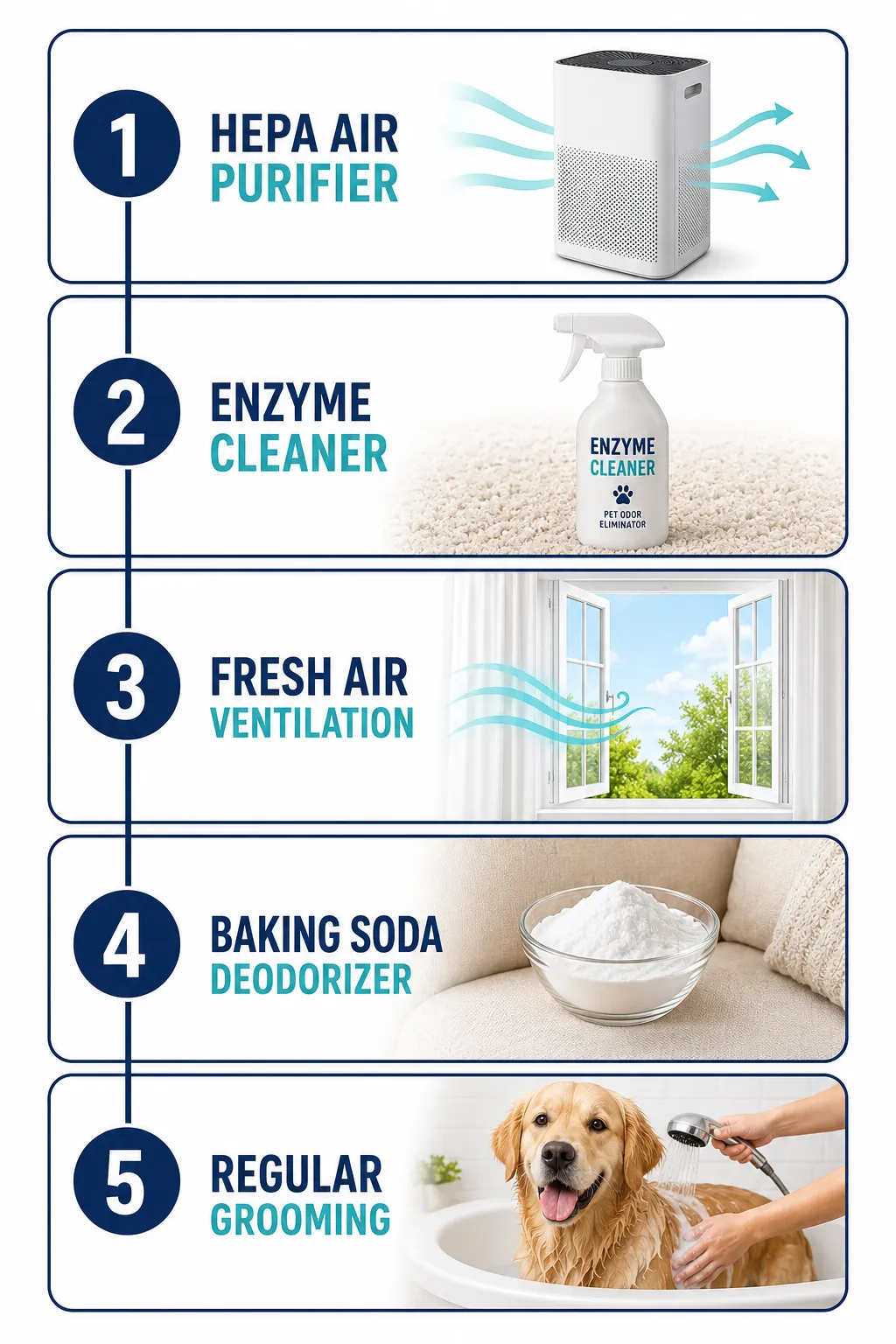
This is where most people see the biggest improvement fastest. A HEPA air purifier with an activated carbon layer doesn’t just filter particles – it actively captures odor molecules from the air.
- Choose a purifier rated for your room size; undersized units won’t keep up.
- Activated carbon is the key component for odor – HEPA alone filters particles but not smell.
- Change HVAC filters monthly if you have a dog; standard 3-month intervals let dander and odor recirculate.
- Open windows for 10-15 minutes daily to flush stale air out and bring fresh air in.
Trap 5 – Hidden Stains and Old Accidents
Old urine accidents are one of the hardest smells to get rid of in a house. Dried urine crystals are odorless when dry but release a sharp ammonia smell when they absorb humidity – which is why the smell seems to come and go.
The fix:
- Use a UV blacklight (available for under $20) to find hidden stains on carpets, baseboards, and furniture. They glow under the light.
- Apply an enzymatic cleaner directly to the stain, saturate it fully, and let it sit for at least 10-15 minutes before blotting.
- Do not use steam cleaners on urine stains – heat sets the proteins and makes the smell permanent.
According to Apartment Therapy’s dog odor guide, enzymatic cleaners are the only products that actually break down the uric acid crystals responsible for that persistent urine smell. Everything else just masks it temporarily.
For couch-specific accidents, this guide on how to clean dog pee smell out of a couch walks through the process step by step.
Best Ways to Eliminate Dog Odor From Your House – A Complete System
Knowing how to keep your house smelling good with a dog means building a routine, not just reacting to bad smells. Here’s a practical schedule that works:
Daily (5 minutes):
- Wipe down dog food and water bowls – these create greasy, smelly micro-zones fast.
- Quick vacuum of high-traffic areas.
- Open windows for at least 10 minutes.
Weekly:
- Wash the dog bed and any washable dog toys.
- Full vacuum of all floors, including edges and under furniture.
- Mop hard floors with a pet-safe enzymatic or vinegar-based solution.
- Wipe down entryways and “dog paths” – these track outdoor odors inside.
Monthly:
- Wipe walls, baseboards, and vents.
- Change HVAC filters.
- Deep clean carpets or rugs.
- Wash curtains or fabric blinds.
Home cleaning experts recommend combining daily light maintenance with deeper weekly sessions as the most effective strategy – it prevents micro-odors from stacking into the full “smelling like dog” effect that’s so hard to shift once it sets in.
For a broader list of natural strategies, our full guide on 17 genius ways to get dog smell out of your house naturally covers every method in detail.
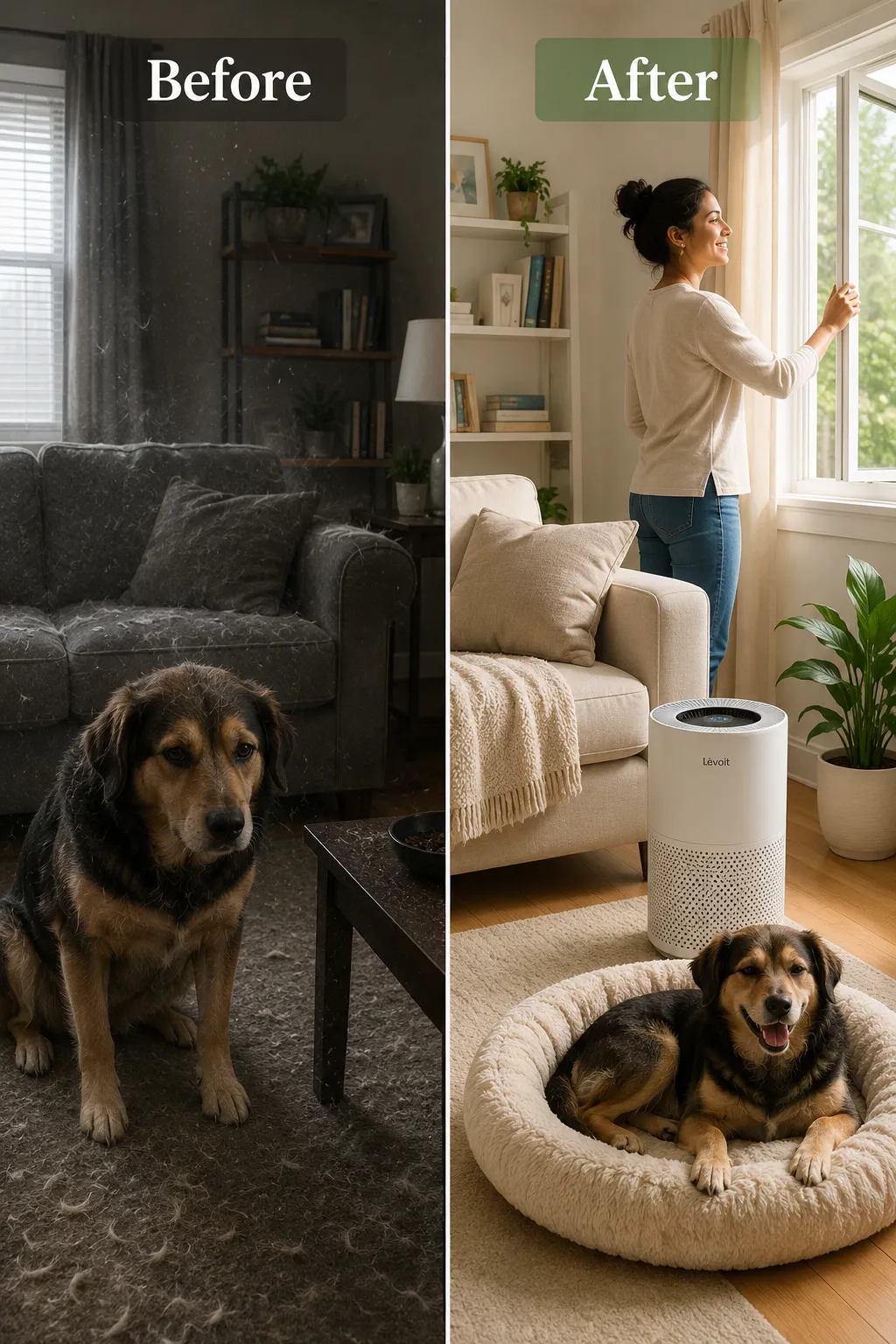
Natural Remedies for Dog Odor in Your Home
Natural odor control works well for dog owners who want to keep house smelling fresh without filling the air with synthetic fragrance. The best natural options actually neutralize odor rather than masking it.
- Baking soda: Sprinkle on carpets, sofas, and the dog bed. Leave for 15-30 minutes, then vacuum. It absorbs odor compounds directly.
- White vinegar: Diluted 1:1 with water, it’s effective for mopping hard floors and wiping surfaces. The vinegar smell fades as it dries, taking pet odor with it.
- Essential oils (used carefully): A few drops of lavender or eucalyptus oil in a diffuser can add a fresh scent – but keep diffusers out of reach of pets and ensure the room is ventilated. Many essential oils are toxic to cats and dogs if ingested or applied directly.
- Activated charcoal bags: Place these near the dog bed or in corners. They absorb airborne odors passively over weeks.
- Natural pet bed refresher sprays: Look for products with baking soda or citrus enzyme bases – these neutralize rather than cover smell.
⚠️ Important: Essential oils like tea tree, eucalyptus, and citrus can be harmful to pets in concentrated forms. Always dilute, diffuse in ventilated spaces, and keep pets away from direct contact.
How Dog Grooming and Diet Affect House Smell
Regular grooming is one of the most direct ways to reduce how much odor your dog deposits around the home. A clean, well-groomed dog simply smells less – and transfers less odor to furniture, beds, and floors.
Bathing frequency: Most dogs benefit from a bath every 4-6 weeks. Bathing more often than every 3 weeks can strip natural skin oils and actually increase odor by triggering overproduction. Pet care guidance suggests that between baths, a dry shampoo or deodorizing spray can keep odor manageable.
For DIY grooming solutions, try these 5 DIY dog deodorizing spray hacks that are safe and effective.
Can diet affect how much a dog smells? Yes – significantly. Dogs fed low-quality dog food with fillers and artificial additives often have stronger skin odor and more gas. Switching to a higher-quality dog food with clean protein sources can reduce body odor noticeably within a few weeks. Wet dog food can also contribute to stronger breath and saliva odor compared to dry food.
Does neutering or spaying reduce dog odor? Intact male dogs produce stronger hormone-driven scent markings and have more active scent glands. Neutering reduces this, and many owners report a noticeable decrease in the intensity of their dog’s natural smell after the procedure. Spaying female dogs also reduces the hormonal odor cycles associated with heat.
If your dog has persistent skin odor despite regular bathing and a good diet, it’s worth a vet check – conditions like yeast infections, allergies, or ear infections can all cause strong odor that no amount of home cleaning will fix.
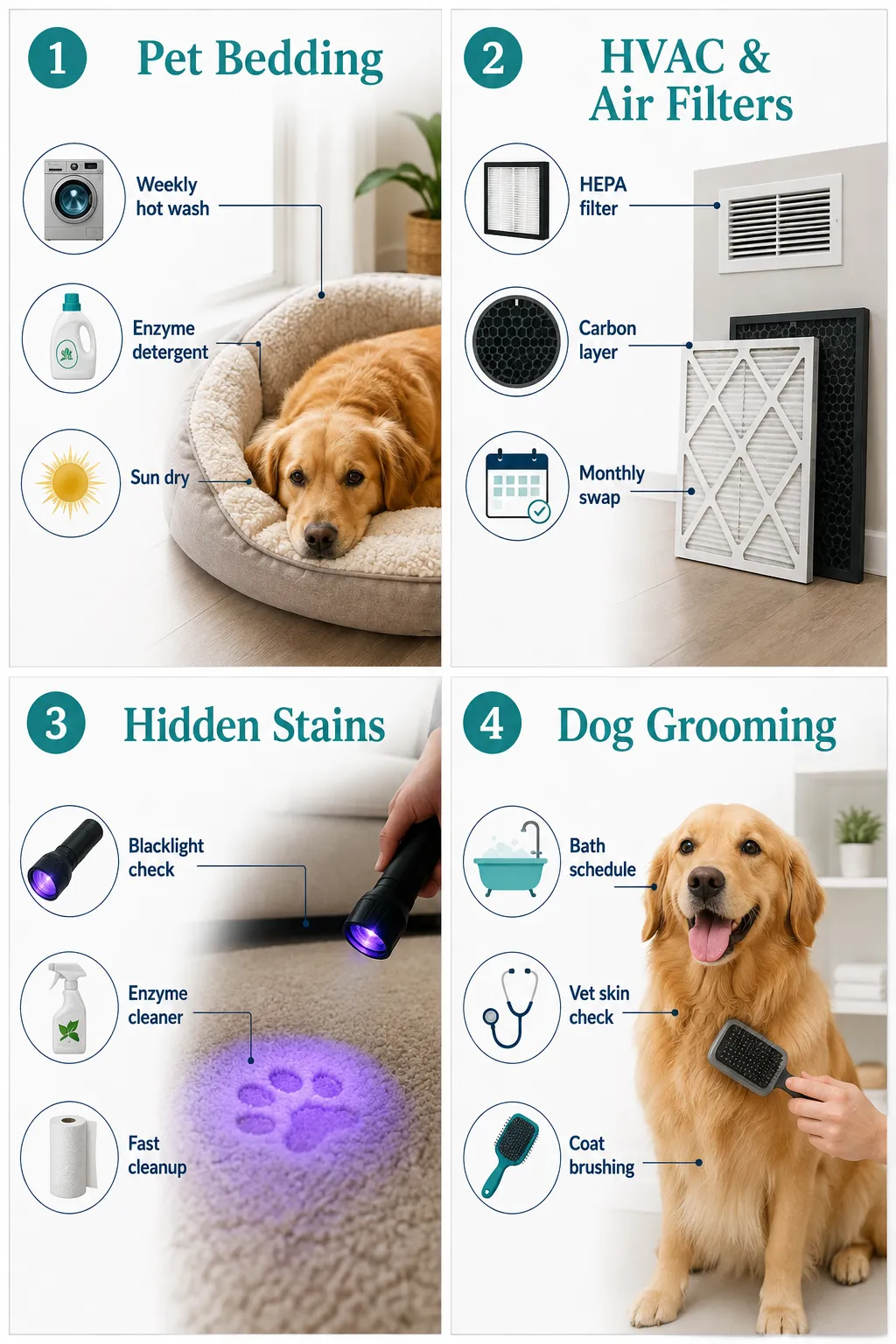
How to Keep Your House Smelling Good With a Dog – Choosing the Right Products
Not all odor products are equal. Here’s a quick guide to what actually works versus what just smells good temporarily:
| Product Type | What It Does | Best Use |
|---|---|---|
| Enzymatic cleaner | Breaks down organic odor compounds | Urine stains, accidents, food spills |
| HEPA + carbon air purifier | Filters particles and odor molecules | Continuous air freshening |
| Baking soda | Absorbs odor naturally | Carpets, beds, soft surfaces |
| Activated charcoal bags | Passive odor absorption | Corners, closets, near pet areas |
| Enzyme-based detergent | Digests odor in fabric | Washing pet bedding and dog toys |
| Scented plug-ins / aerosols | Masks odor temporarily | Not recommended as a primary solution |
The key distinction is between odor eliminators and odor maskers. Plug-ins, aerosols, and most air fresheners just add a new smell on top of the dog smell. They don’t remove anything. For a home that smells genuinely fresh – not like “dog plus lavender” – you need to eliminate the source first, then freshen.
FAQ
What’s the best way to keep your house from smelling like a dog?
The best approach combines source removal with air purification. Wash pet bedding weekly, vacuum carpets twice a week, use enzymatic cleaners on any accidents, run a HEPA air purifier with activated carbon, and groom your dog every 4-6 weeks. Fragrance products alone won’t work – you need to remove the odor, not cover it.
Will my house smell if I get a dog?
Yes, some dog smell is almost inevitable, but it doesn’t have to be strong or noticeable to guests. With weekly bedding washes, regular grooming, a good air purifier, and consistent floor cleaning, most homes with dogs smell completely normal. Low-shedding breeds and dogs fed high-quality food tend to produce less odor overall.
What is the best air freshener for a house with dogs?
The most effective option is a HEPA air purifier with an activated carbon filter – it removes odor molecules from the air rather than masking them. For supplemental freshening, baking soda-based sprays and natural pet bed refresher products work well. Avoid heavy synthetic plug-ins, which can irritate pets and simply layer scent over odor.
What is the hardest smell to get rid of in a house?
Old, dried urine is widely considered the hardest pet smell to eliminate. Uric acid crystals bond to porous surfaces and re-activate with humidity. The only effective treatment is a proper enzymatic cleaner applied generously and left to fully saturate the stain. Steam cleaning or scrubbing without enzymes typically makes it worse by spreading the crystals.
Conclusion
Knowing how to keep your house smelling good with a dog comes down to one core idea: target the source, not the symptom. Fragrance sprays and plug-ins feel like a fix but don’t address the five hidden traps – pet bedding, carpets, overlooked surfaces, indoor air, and hidden stains – where dog odor actually lives.
Your action plan starting today:
- Wash your dog’s bed this week in hot water with an enzyme detergent.
- Do a blacklight scan of carpets and furniture for hidden stains.
- Pick up an enzymatic cleaner and a HEPA air purifier if you don’t have them.
- Add a 10-minute window-opening habit to your daily routine.
- Schedule a vet check if your dog has persistent skin or ear odor despite regular grooming.
A fresh-smelling home with a dog isn’t a fantasy – it just requires knowing where the smell actually hides. Fix those five traps, stay consistent, and your home can smell clean and welcoming every day of the year, from January through December, whether it’s a rainy February or a hot August afternoon.