

Last updated: August 21, 2026
Quick Answer: Most adult dogs need between 30 minutes and 2 hours of daily exercise, depending on breed, age, size, and health. A healthy medium-breed adult dog typically thrives on about 60 minutes of mixed activity per day, split into two sessions. Puppies and senior dogs need shorter, gentler outings, while high-energy working breeds may need 90 minutes or more.
Key Takeaways
- Adult dogs generally need 30 minutes to 2 hours of daily activity – but 60 minutes is a solid everyday target for most healthy dogs.
- Breed, age, size, and health all affect how much exercise your dog truly needs.
- Puppies need short, frequent play sessions – not long walks. The popular “5 minutes per month of age” rule is a rough guide, not a hard rule.
- Senior dogs still need daily movement, but shorter, gentler outings work best.
- Mental stimulation counts as exercise – puzzle feeders, training, and sniff walks can satisfy a large part of your dog’s daily activity need.
- Signs of under-exercise include destructive chewing, restlessness, weight gain, and excessive barking.
- Signs of over-exercise include limping, prolonged fatigue, and reluctance to move after activity.
How Much Exercise Does My Dog Need Per Day?
Most adult dogs need somewhere between 30 minutes and 2 hours of physical activity every day, but the right amount depends heavily on your dog’s breed, age, size, and current health. According to the AKC, there is no single magic number – but 60 minutes of mixed daily activity is a practical starting point for most healthy adult dogs.
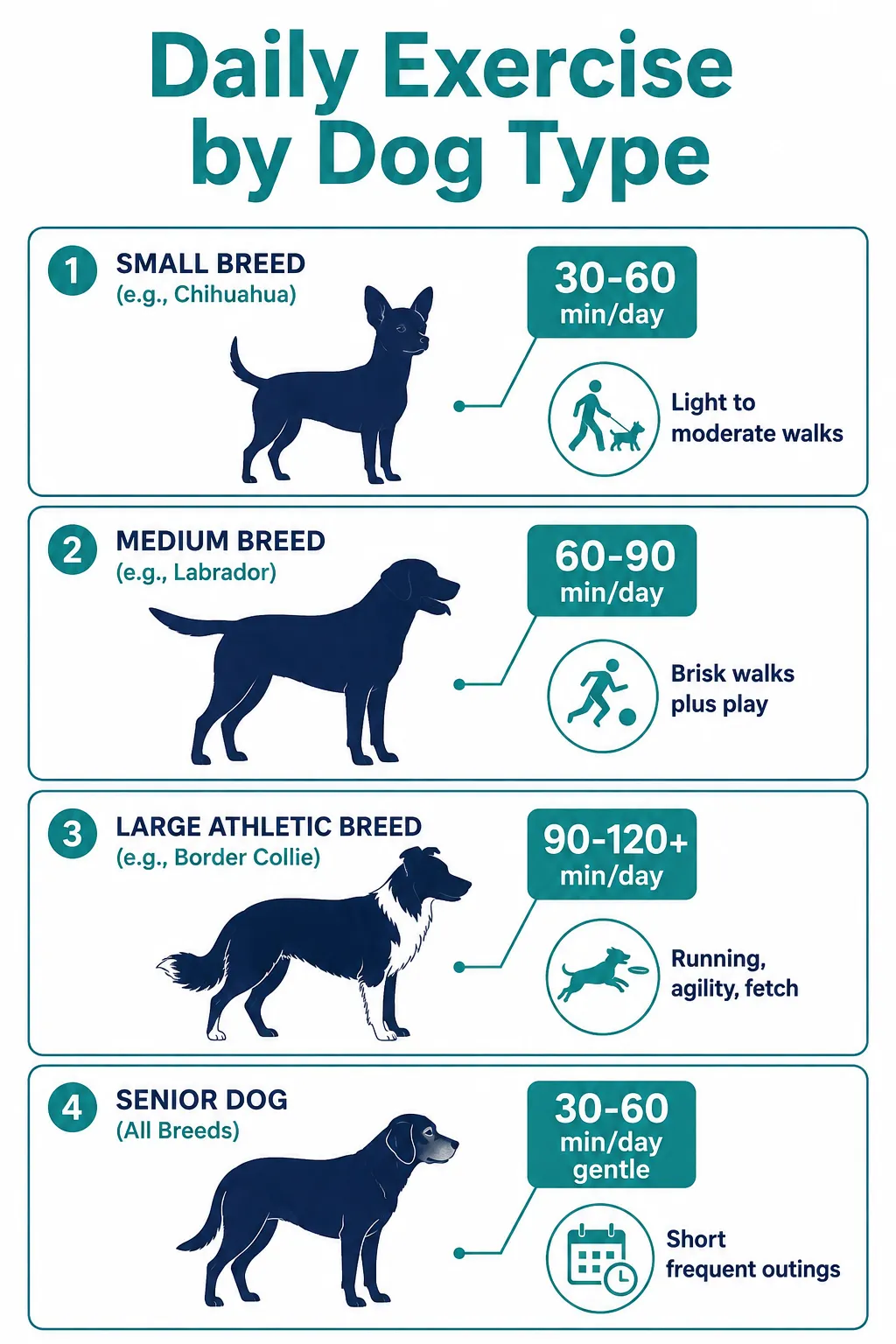
Here’s a simple breakdown by size and breed type:
| Dog Type | Daily Exercise Target |
|---|---|
| Small breeds (Chihuahua, Maltese) | 30-60 minutes |
| Medium breeds (Beagle, Cocker Spaniel) | 60-90 minutes |
| Large/athletic breeds (Labrador, Husky) | 90-120+ minutes |
| Working/herding breeds (Border Collie, Malinois) | 1-2+ hours plus mental work |
| Senior dogs | 30-60 minutes, broken into short outings |
| Puppies | Short play sessions, multiple times daily |
Keep in mind that these are starting points, not hard prescriptions. Research published via PMC notes that most breed-specific exercise guidelines are based on expert opinion rather than controlled studies, so you’ll need to watch your individual dog’s response and adjust from there.
The important thing is to get moving every day. A dog that gets consistent daily exercise is far healthier – physically and mentally – than one who gets a big weekend walk and nothing during the week.
Do Different Dog Breeds Need Different Amounts of Exercise?
Yes, breed makes a huge difference in how much exercise a dog needs. A Border Collie and a Basset Hound are both dogs, but their activity needs are worlds apart.
High-energy breeds – including working, sporting, and herding dogs like Border Collies, Siberian Huskies, Jack Russell Terriers, and Vizslas – typically need 1 to 2 hours or more of vigorous daily exercise, plus mental enrichment to avoid boredom and frustration. Check out these 15 surprising Jack Russell Terrier facts if you own one of these energetic pups.
Moderate-energy breeds – like Labradors, Golden Retrievers, and Boxers – do well with 60 to 90 minutes of daily activity, including brisk walks, fetch, and play sessions.
Low-energy or brachycephalic breeds – such as Bulldogs, Pugs, and Shih Tzus – need less intense exercise and are sensitive to heat. For these dogs, 20 to 40 minutes of gentle activity is often enough. Learn more in our guide on 15 surprising Shih Tzu facts.
Small companion breeds – like Maltese and Chihuahuas – are often underestimated. They still need daily walks and play, just in shorter bursts. See our Maltese Dogs 101 guide for breed-specific care advice.
Choose your exercise plan based on breed energy level, not just size. A small Jack Russell needs far more exercise than a large Basset Hound.
7 Surprising Signs You’re Getting It Wrong
Most owners assume their dog will simply tell them when they need more exercise – but the signs are often subtle or misread. Veterinary and behavior experts point out that under-exercise rarely looks like laziness and more often shows up as behavior problems.
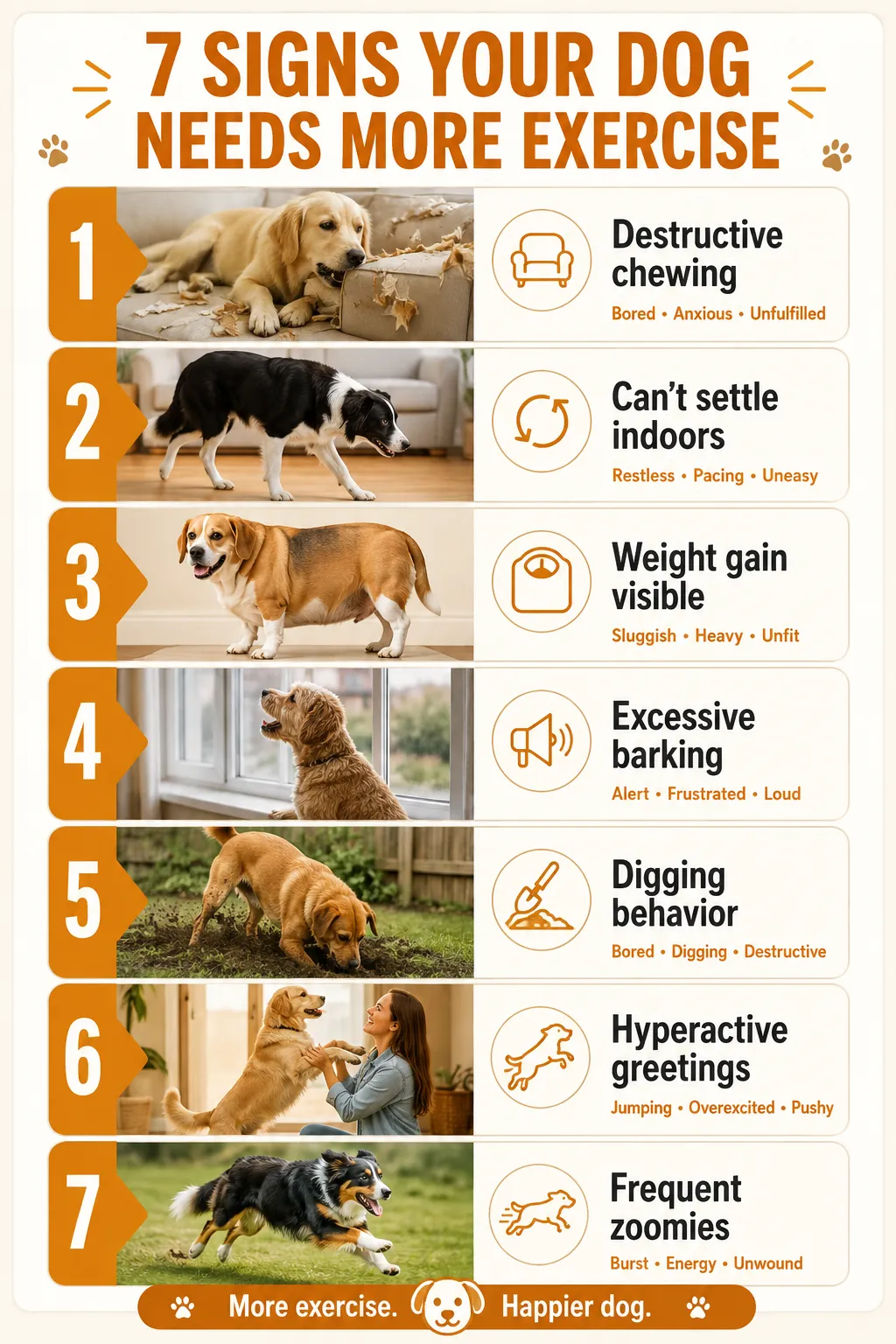
Here are the 7 signs to watch for:
Signs your dog needs MORE exercise:
- 🐾 Destructive chewing – Chewing furniture, shoes, or household items is a classic outlet for pent-up energy.
- 😤 Restlessness and inability to settle – A dog that paces, whines, or can’t relax indoors is often under-stimulated.
- ⚖️ Unexplained weight gain – If your dog’s diet hasn’t changed but they’re gaining weight, insufficient activity is a likely cause.
- 🔊 Excessive barking – Boredom-driven barking is one of the most common complaints from neighbors and owners alike.
- 🕳️ Digging – Dogs dig when they’re frustrated or bored, especially in the yard.
- 🏃 Frequent zoomies indoors – Occasional zoomies are normal, but daily bursts of frantic running indoors often signal unmet exercise needs. Read our guide on why dogs get zoomies for more context.
- 🐕 Hyperactive or jumpy greetings – If your dog goes wild every time you walk through the door, they may simply have too much stored-up energy.
Signs your dog is getting TOO MUCH exercise:
- Limping or favoring a leg after walks
- Excessive panting that doesn’t resolve with rest
- Stiffness the morning after activity
- Reluctance to move or start a walk
- Prolonged fatigue lasting many hours post-activity
If you notice any of these pain signals, check our resource on early signs of pain in dogs right away.
How Much Exercise Do Puppies Need vs. Adult Dogs?
Puppies need much less structured exercise than adult dogs, and getting this wrong can cause real harm. The PDSA’s pet health advice recommends short, frequent play sessions for puppies rather than long walks, because their growth plates are still developing and over-exercise can cause joint damage.
The popular “5 minutes per month of age” rule is widely cited, but current expert guidance treats it as a loose upper boundary rather than a strict formula. It’s non-evidence-based and can be counterproductive if applied rigidly.
What works better for puppies:
- Multiple short play sessions throughout the day (5-10 minutes each)
- Free play in a safe, enclosed area
- Basic training sessions – these count as mental exercise
- Gentle socialization walks on soft surfaces
- Plenty of rest between activity bursts
For a puppy, the goal is variety and short bursts – not distance or duration. Check out our puppy exercise ideas for 15 fun ways to keep your pup active safely.
Adult dogs (typically 1-7 years, depending on breed) can handle much more sustained activity. A healthy adult dog can comfortably manage 60 minutes or more of daily exercise, including brisk walks, running, swimming, agility, and hiking.
How Much Exercise Does a Senior Dog Need?
Senior dogs still need daily movement – stopping exercise entirely is actually harmful. The key is shifting from intensity to consistency, using low-impact activities that keep joints mobile without causing pain.
Veterinary guidance from VetVerified recommends about 30-60 minutes of gentle daily activity for most senior dogs, broken into two or three shorter outings rather than one long walk. Watch for stiffness after exercise, reluctance to get up, or changes in gait – these are signs you may need to scale back. Our guide on 9 signs of arthritis in dogs can help you spot joint problems early.
Tips for exercising senior dogs:
- Keep walks shorter but more frequent
- Choose soft surfaces like grass over pavement
- Avoid steep hills or high-impact activities like jumping
- Swimming is excellent for arthritic dogs – it’s low-impact and keeps muscles strong
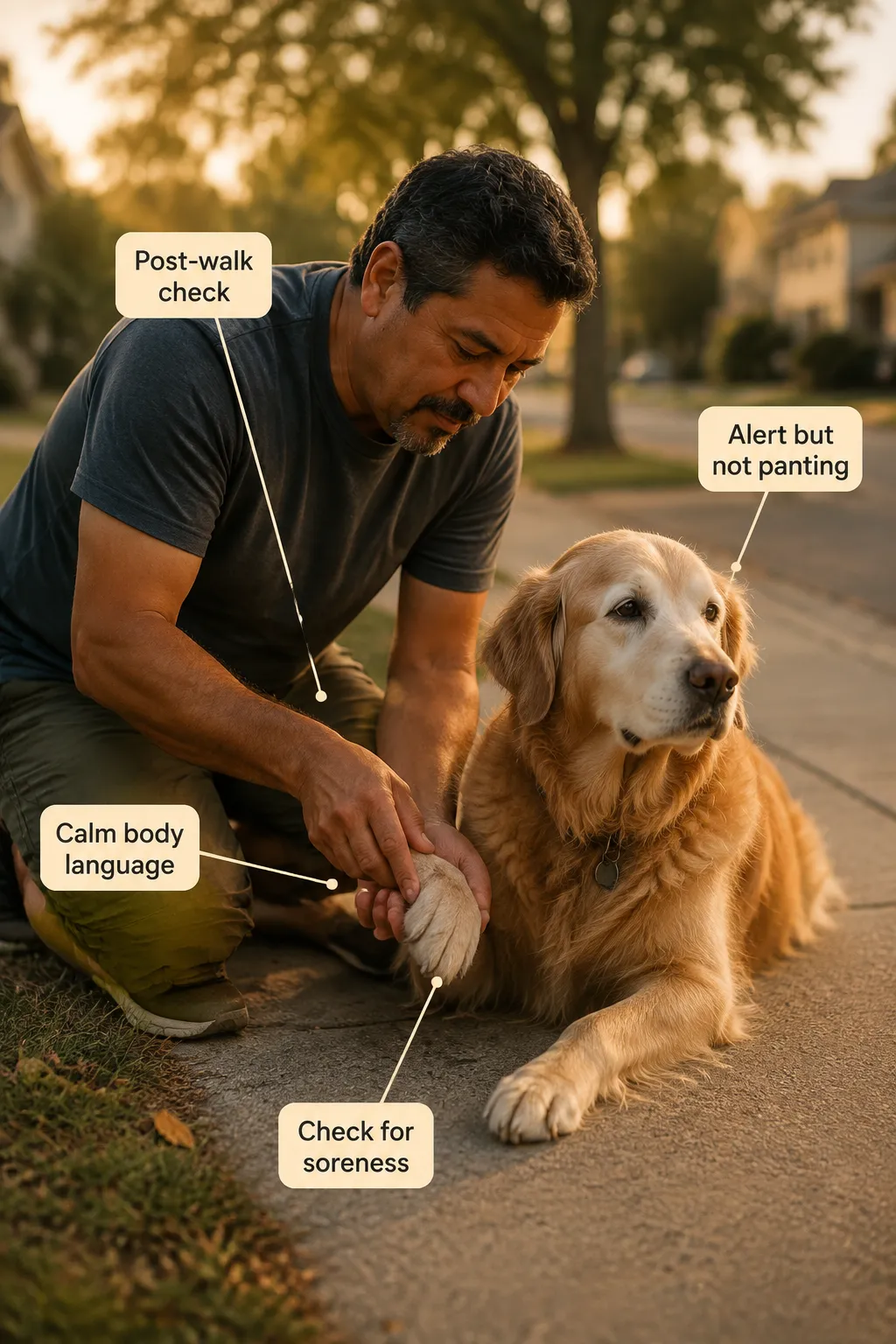
- Always check your senior dog’s comfort and recovery after activity
Important: If your senior dog seems unusually tired for many hours after a walk, or shows stiffness the next morning, that’s a signal to shorten the outing and check with your vet.
Can You Over-Exercise a Dog?
Yes, you absolutely can over-exercise a dog – and it’s more common than most pet owners realize. Purdue University’s Canine Welfare research highlights that excessive or mismatched exercise intensity can cause joint damage, heat exhaustion, and chronic fatigue, especially in puppies, brachycephalic breeds, and dogs with underlying health conditions.
Dogs most at risk of over-exercise:
- Puppies under 12 months (growth plates still developing)
- Flat-faced breeds (Bulldogs, Pugs, French Bulldogs)
- Senior dogs with arthritis or heart conditions
- Dogs returning from illness or injury
- Overweight or deconditioned dogs just starting an exercise routine
For overweight or deconditioned dogs, PetMD recommends starting with very short walks – around 5 minutes three times a day – and gradually building up to 30-45 minutes of total daily activity over several weeks.
Read our detailed guide on how long you should walk your dog for more on finding the right balance.
Different Ways to Exercise Your Dog
Physical walks are important, but they’re just one piece of the puzzle. The AKC emphasizes that mental stimulation is co-equal with physical exercise – especially for high-intelligence breeds.
Light activity (great for senior dogs, puppies, or recovery days):
- Gentle leash walks at a slow pace
- Sniff walks where the dog leads and explores
- Short training sessions (sit, stay, recall)
- Puzzle feeders and Kongs
Moderate activity (ideal for most adult companion dogs):
- Brisk daily walks (30-60 minutes)
- Fetch in the backyard or park
- Off-leash play with other dogs
- Basic agility courses
Intense activity (needed by working, sporting, and herding breeds):
- Running or jogging alongside a bike
- Swimming – a fantastic full-body workout
- Agility training and competitions
- Hiking on trails (check out resources like Dogwood Trails Animal Hospital for activity guidance)
- Structured training classes
Mental enrichment – including nosework, training, and scent games – can satisfy much of a dog’s daily exercise need. Research shows that aligning your own fitness habits with your dog’s needs improves health outcomes for both of you.
How to Exercise Your Dog in Bad Weather or Small Spaces
Bad weather and small living spaces don’t have to mean a sedentary dog. Indoor exercise and mental enrichment can cover a surprising amount of your dog’s daily activity need.
Indoor exercise ideas:
- Stair climbing (great cardio for medium and large dogs)
- Hide-and-seek with treats or toys
- Tug-of-war games
- Indoor fetch down a hallway
- Training sessions – even 10 minutes of focused training is mentally tiring
Small space tips:
- Use a GPS dog fence or SpotOn GPS dog containment system to maximize safe outdoor time in limited yards
- Rotate toys to keep things fresh
- Schedule multiple short activity bursts throughout the day rather than one long session
The key is to get creative and keep your dog’s routine consistent, even when the weather or your schedule makes outdoor walks difficult.
Exercise Safety Tips for Dogs
Exercise safety for dogs means matching the activity to the individual dog’s age, health, and fitness level. Always start new exercise routines gradually, and watch your dog carefully for signs of fatigue or discomfort.
Key safety rules:
- Always warm up with a slow walk before intense activity
- Carry water on walks longer than 20 minutes
- Avoid exercise in extreme heat – walk early morning or evening in summer
- Check paws after walks on hot pavement or rough terrain
- Never force a dog to keep going if they slow down or stop
- Get a vet check before starting a new exercise routine with a puppy, senior dog, or dog with health problems
If your dog shows signs of dehydration after exercise, act quickly – it can become serious fast.
Exercise Needs for Dogs with Health Problems
Dogs with chronic health conditions still need daily activity, but the type and intensity must be adapted to their specific situation. Always get vet advice before setting an exercise routine for a dog with a health condition.
Common conditions and exercise adjustments:
- Arthritis: Short, frequent gentle walks on soft ground; swimming is ideal
- Heart disease: Low-intensity, short walks; avoid hills and heat
- Obesity: Start with 5 minutes three times daily; build slowly
- Post-surgery recovery: Follow vet instructions strictly; leash walks only until cleared
- Respiratory issues (flat-faced breeds): Avoid heat and high-intensity activity; keep sessions short
The pdsa pet health advice platform and help amp advice resources consistently emphasize that even dogs with serious conditions benefit from some daily movement – the goal is to keep dogs active safely, not to stop exercise entirely.
How to Find More Time for Dog Exercise
Finding time to exercise your dog every day is one of the most common challenges pet owners face. The good news is that consistency matters more than duration – even 15-minute walks twice a day add up.
Practical strategies:
- Walk your dog first thing in the morning before your day gets busy
- Use your lunch break for a midday walk or play session
- Combine your own fitness routine with your dog’s exercise needs
- Hire a dog walker for days when your schedule is packed
- Use puzzle feeders and training games to add mental exercise on low-activity days
- Get the whole family involved – even kids can help with daily walks and play
A consistent daily routine – even a modest one – is far better for your dog’s health than sporadic long walks. Being a responsible dog owner means building exercise into your everyday schedule, not just when it’s convenient.
FAQ
Is a 30 minute walk enough for a dog?
For small or low-energy breeds, 30 minutes of walking per day is often sufficient, especially when combined with indoor play and mental enrichment. However, medium and large breeds, as well as high-energy dogs, typically need 60 to 90 minutes or more. A 30-minute walk is a good starting point but may not be enough on its own for active or working-type dogs.
What is the 7 7 7 rule for dogs?
The 7-7-7 rule is a socialization guideline suggesting that puppies should experience 7 different surfaces, 7 different locations, and meet 7 new people during their first weeks of life. It’s a training and socialization framework rather than an exercise formula, designed to help puppies grow into confident, well-adjusted adult dogs through varied early experiences.
Is 2 walks a day enough for a dog?
For most adult dogs, two walks per day is a great routine – especially if each walk is 20 to 30 minutes long and includes off-leash time or play. Two daily walks help maintain a healthy weight, provide mental stimulation, and support a consistent bathroom routine. High-energy breeds may still need additional activity beyond two standard walks to feel fully satisfied.
How do I know if I’m giving my dog enough exercise?
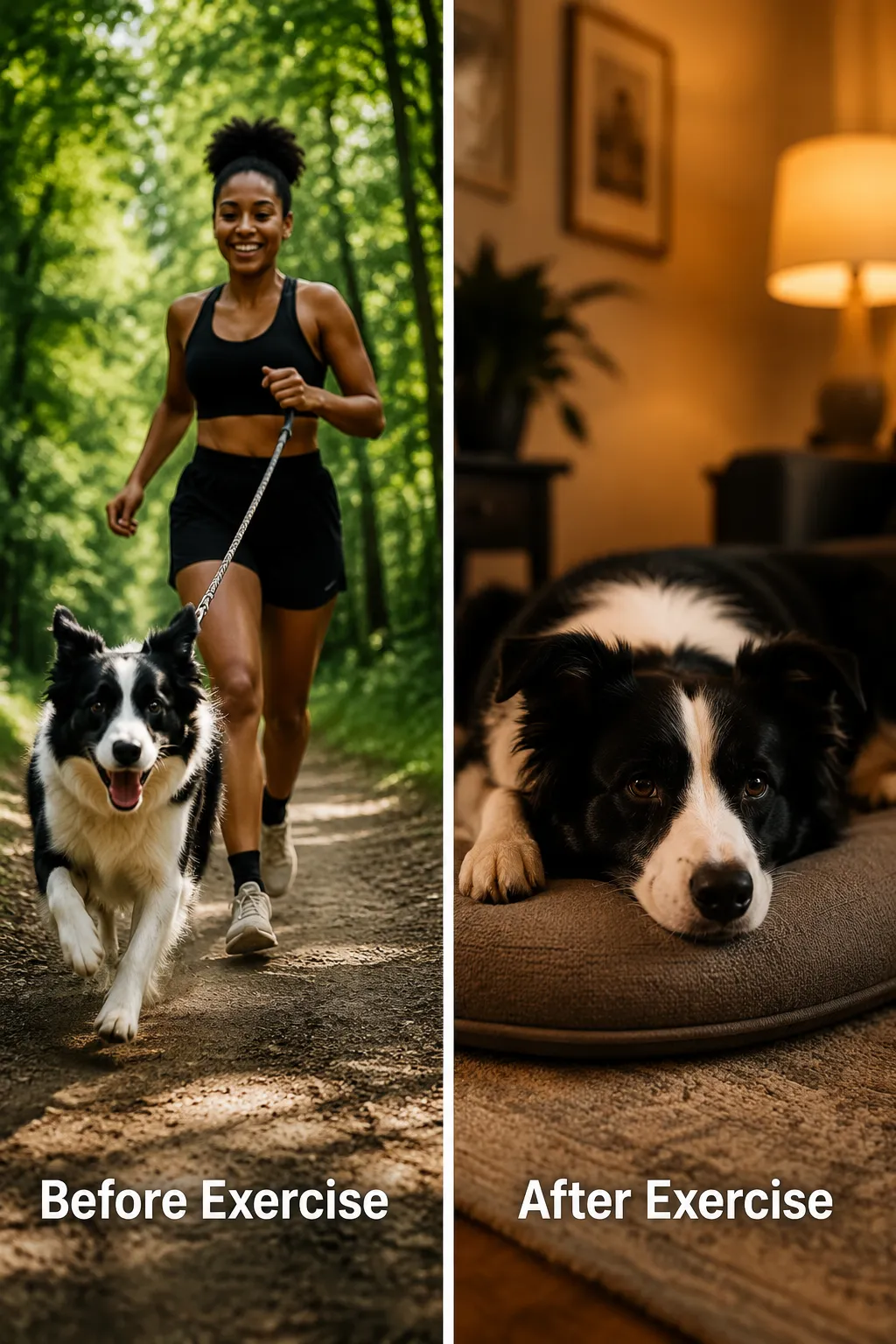
A well-exercised dog is calm indoors, maintains a healthy weight, sleeps soundly, and doesn’t engage in destructive behaviors. If your dog is restless, gaining weight, chewing things, or barking excessively, they likely need more activity. If they’re stiff, limping, or exhausted after walks, you may be doing too much. Watch your dog’s behavior and recovery as your best guide.
Conclusion
So, how much exercise does my dog need? The honest answer is: it depends on your specific dog – their breed, age, size, and health all play a role. But the practical baseline is clear: most healthy adult dogs thrive on about 60 minutes of mixed daily activity, puppies need short and frequent play sessions, and senior dogs do best with gentle, consistent movement every day.
The 7 surprising signs covered here – from destructive chewing to post-walk stiffness – are your dog’s way of telling you the balance is off. Pay attention to those signals, adjust your routine, and remember that mental enrichment counts just as much as physical walks.
Your next steps:
- Assess your dog’s current daily activity honestly
- Match your exercise plan to their breed, age, and health
- Add mental enrichment (training, puzzle feeders, sniff walks) to every day
- Watch for the signs of too little or too much exercise
- Check with your vet if your dog has any health conditions that affect their activity level
Your dog’s health, happiness, and behavior are directly tied to getting this right. Start today – even one extra 15-minute walk makes a difference.