Last updated: September 1, 2026
Quick Answer: Dogs throw up bile when their stomach is empty and bile from the small intestine flows backward, irritating the stomach lining. This is called Bilious Vomiting Syndrome (BVS). It most often happens in the early morning after a long overnight fast. The good news is that simple changes to your dog’s feeding schedule usually fix it fast.
Key Takeaways
- 🟡 Bile vomit is yellow or greenish-yellow and often foamy – it’s not the same as food vomit.
- ⏰ Most bile vomiting in dogs happens early morning on an empty stomach after a long fast.
- 🍽️ Switching from once-daily to two or three smaller meals per day is the most effective first fix.
- 🚫 Five common owner mistakes can make bile vomiting worse – including skipping meals and feeding high-fat foods.
- 🩺 Bile vomiting that happens daily, lasts more than a few days, or comes with other symptoms needs a vet visit.
- 💧 Never withhold water from a dog that has vomited bile – hydration matters.
- ✅ A small bedtime snack can prevent overnight bile buildup in many dogs.
- ⚠️ BVS is a diagnosis of exclusion – your vet must rule out other causes first.
What Is Bile and Why Do Dogs Vomit It?
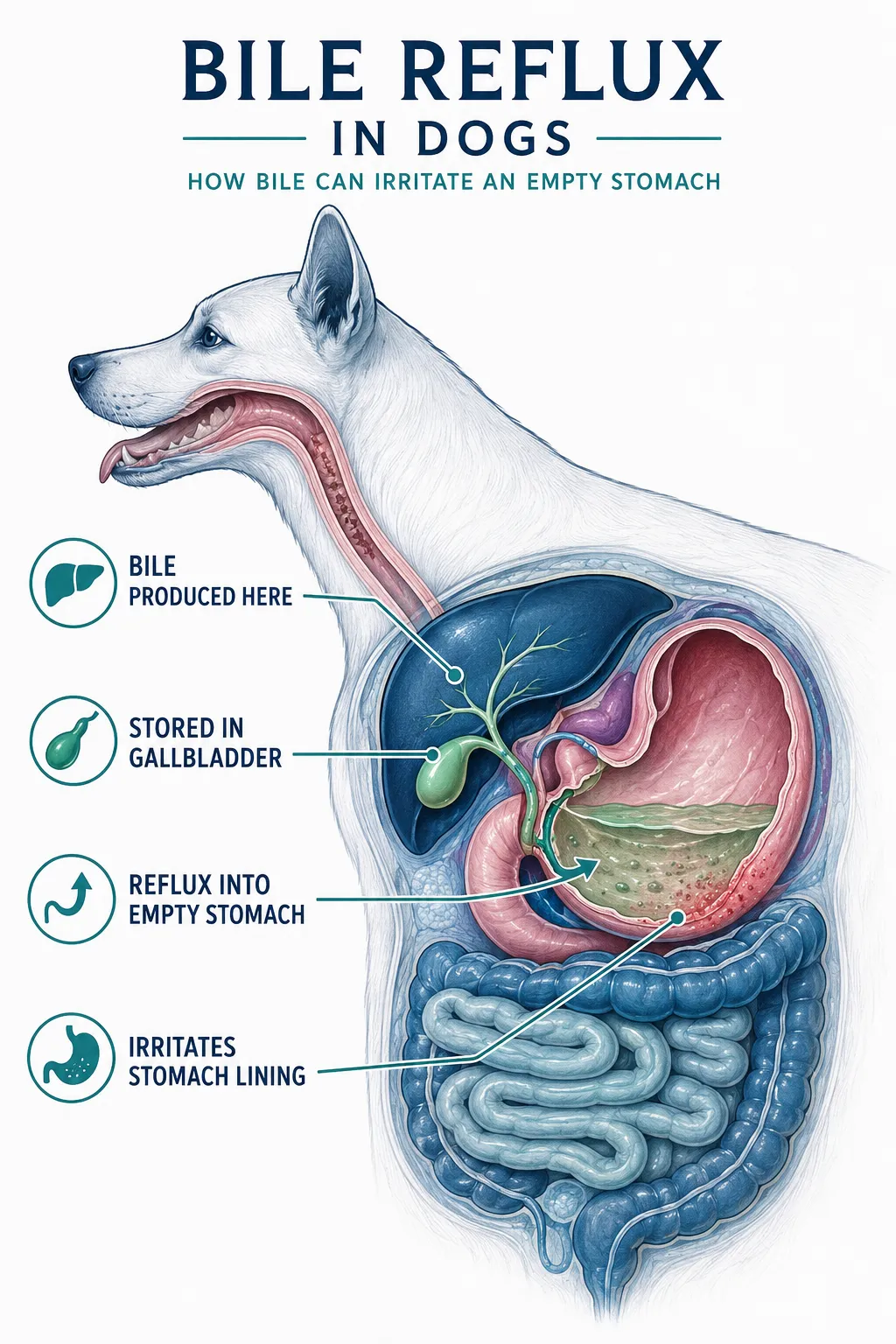
Bile is a yellow-green digestive fluid made by the liver and stored in the gallbladder. When your dog eats, bile gets released into the small intestine to help break down fats. The problem starts when the stomach stays empty too long. With no food to digest, bile can flow backward into the stomach and irritate the lining, triggering vomiting.
This backward flow is called Bilious Vomiting Syndrome, or BVS. It’s one of the most common digestive complaints vets see in otherwise healthy dogs.
The vomit usually looks bright yellow or greenish-yellow, sometimes foamy or frothy. It often has no solid food in it at all – just bile and stomach fluid.
Key facts about bile vomiting:
- It’s a reflex reaction to stomach irritation, not a sign of infection.
- It happens most in dogs fed once a day or on irregular schedules.
- It can affect any breed, age, or size of dog.
- It’s different from vomiting after eating – that usually contains recognizable food.
Why Does My Dog Throw Up Yellow Bile on an Empty Stomach?
The direct cause is simple: an empty stomach plus bile reflux equals vomiting. When your dog goes many hours without food, the stomach produces acid and bile has nothing to work on. The irritation builds until the body’s response is to expel it.
According to veterinary guidance on bilious vomiting in dogs, BVS is most common in dogs that eat only once a day or have long gaps between meals. The stomach essentially becomes its own enemy during those long empty stretches.
Some dogs are simply more sensitive to this than others. Smaller breeds and older dogs tend to show it more often, but it can happen in any dog.
Why the stomach stays empty too long:
- One meal per day feeding schedule
- Owner skips a meal or feeds late
- Dog refuses food for any reason
- Long overnight fasting period (10+ hours)
Is It Normal for Dogs to Vomit Bile in the Morning?
Yes – morning bile vomiting is the most classic pattern of BVS, and it is considered a recognized medical syndrome rather than random illness. Most dogs eat dinner around 6-7 PM and don’t eat again until morning. That’s an 8-12 hour gap, sometimes longer. By 4-6 AM, the stomach is completely empty and bile irritation peaks.
So if your dog regularly vomits yellow foam before breakfast and then seems totally fine afterward, BVS is the likely explanation. It’s not “normal” in the sense that you should ignore it, but it is a well-understood pattern with a straightforward fix.
“Dogs that vomit bile in the early morning and then act completely normal afterward are showing the textbook pattern of Bilious Vomiting Syndrome.” – University of Illinois College of Veterinary Medicine
What Causes Bile Vomiting in Dogs?
Bile vomiting in dogs has a primary cause – an empty stomach – but several factors can trigger or worsen it. Understanding these helps you figure out what’s going on with your specific dog.
Common causes and contributing factors:
| Cause | Why It Triggers Bile Vomiting |
|---|---|
| Long fasting period | Bile accumulates with nothing to digest |
| Once-daily feeding | Creates a 20+ hour gap between meals |
| High-fat diet | Slows gastric emptying, keeps stomach unsettled |
| Irregular meal times | Disrupts digestive rhythm |
| Stress or anxiety | Can affect gut motility and acid production |
| Underlying GI issues | Inflammatory bowel disease, gastritis, pancreatitis |
It’s worth noting that BVS is a diagnosis of exclusion. That means your vet needs to rule out other causes – like parasites, pancreatitis, kidney disease, or intestinal blockage – before landing on BVS as the answer. Don’t self-diagnose if your dog is vomiting frequently.
If you’re also noticing other odd behaviors, check out why dogs eat dirt – it can sometimes point to digestive issues too.
The 5 Mistakes That Make Bile Vomiting Worse in Dogs
These are the most common owner mistakes that turn an occasional bile vomit into a daily problem. Fixing even one of these can make a big difference.
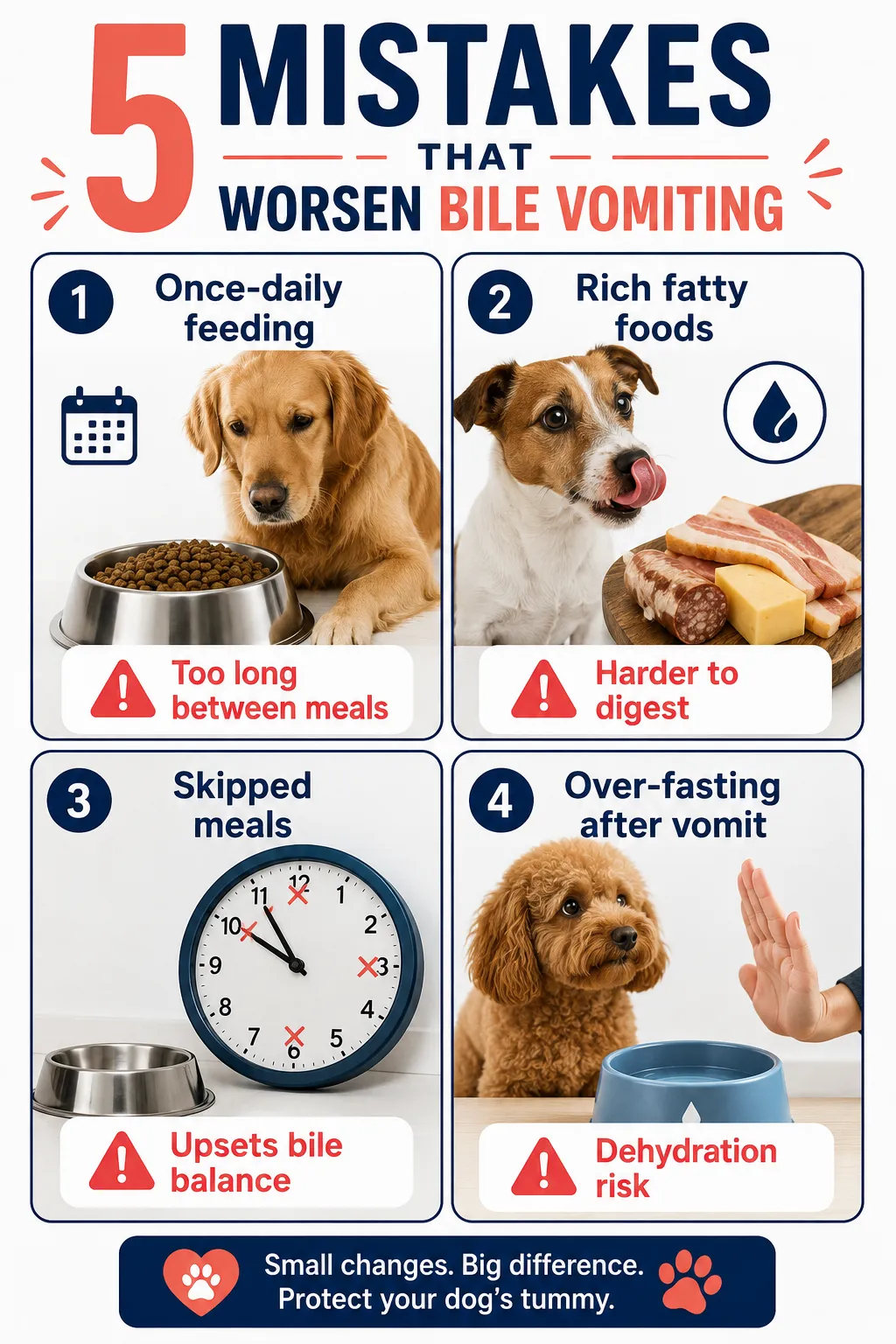
Mistake 1 – Feeding Only Once a Day
Once-daily feeding creates a massive gap between meals. If your dog eats at 7 PM and not again until 7 AM, that’s 12 hours of an empty stomach. For some dogs, that’s enough to trigger bile reflux every single morning.
Fix: Split your dog’s daily food portion into two or three smaller meals. Morning, afternoon, and evening works well. This keeps something in the stomach at all times.
Mistake 2 – Feeding High-Fat or Rich Foods
High-fat meals slow down how quickly the stomach empties. A stomach that takes longer to process food actually creates a longer window for bile irritation to set in. Rich treats, fatty table scraps, or high-fat kibble can all make BVS worse.
Fix: Choose a lower-fat, easily digestible food. Look for lean protein sources and avoid giving fatty table scraps. Check out superfoods for dogs that vets recommend for better alternatives.
Mistake 3 – Skipping Meals or Feeding Inconsistently
Dogs thrive on routine. When meal times shift by hours or meals get skipped entirely, the digestive system gets thrown off. Acid and bile production doesn’t pause just because dinner is late.
Fix: Feed at the same times every day. Set a phone alarm if needed. Consistency is one of the most powerful tools you have against BVS.
Mistake 4 – Withholding Water or Food After Vomiting
Many owners instinctively withhold food and water after their dog vomits, thinking the stomach needs rest. For bile vomiting specifically, this can backfire. Keeping the stomach empty longer just sets up the next round of vomiting.
Fix: Offer small amounts of water shortly after vomiting stops. After 1-2 hours with no further vomiting, offer a small bland meal – plain boiled chicken and rice works well. See our homemade dog food recipes for sensitive stomachs for ideas.
Mistake 5 – Ignoring Red-Flag Signs and Relying Only on Home Treatment
BVS is manageable at home in mild cases, but some owners wait too long when something more serious is going on. Vomiting bile daily for more than 3-5 days, blood in the vomit, lethargy, or a bloated belly are all signs that home treatment isn’t enough.
Fix: Know when to call the vet. More on this below.
How to Stop a Dog From Throwing Up Bile: Feeding and Home Fixes
The most effective way to stop bile vomiting in dogs is to change the feeding schedule so the stomach is never empty for too long. This single change resolves BVS in many dogs within a few days.
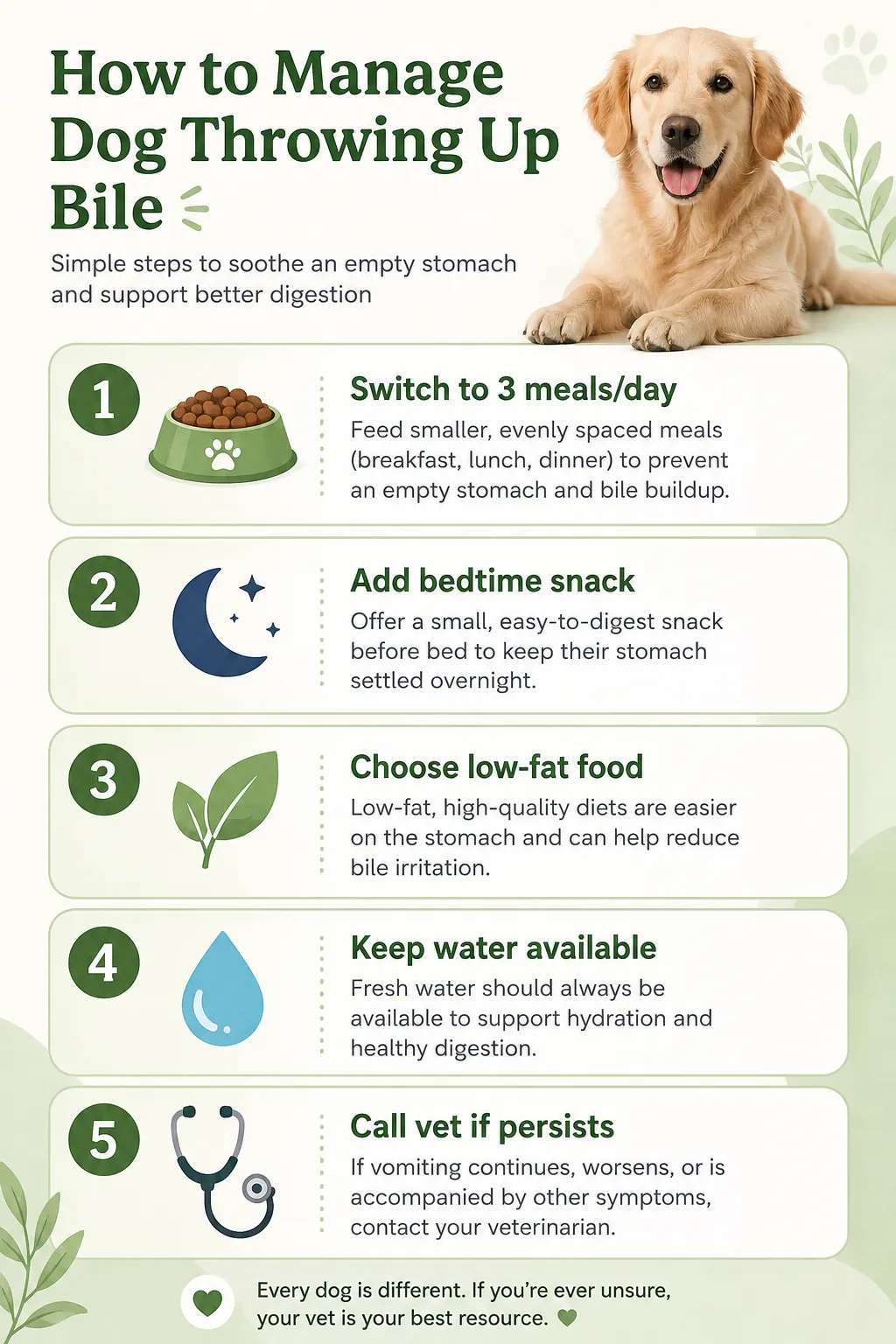
Step-by-step home management plan:
- Switch to 2-3 meals per day – divide the current daily portion, don’t increase total calories.
- Add a small bedtime snack – a small amount of plain food or a dog biscuit before bed can prevent overnight bile buildup. Veterinary sources confirm this is one of the simplest and most effective interventions.
- Choose a low-fat, easily digestible food – if your current food is high in fat, consider switching.
- Keep fresh water available at all times – hydration supports healthy digestion.
- Stick to a consistent schedule – same meal times every day.
For dogs that vomit despite these changes, a vet may recommend a short course of antacids or medications that reduce stomach acid. Never give human antacids without vet guidance – dosing matters.
You can also explore apple yogurt dog gummies that support digestion as a gut-friendly snack option.
When Should I Take My Dog to the Vet for Bile Vomiting?
Occasional bile vomiting – once every week or two in an otherwise healthy dog – can often be managed at home with feeding changes. But certain signs mean you need professional help quickly.
Go to the vet if your dog:
- Vomits bile daily or multiple times per day
- Has blood in the vomit (red or dark brown/coffee ground appearance)
- Seems lethargic, weak, or in pain
- Has a swollen or hard belly – this could be bloat, which is a medical emergency
- Is losing weight
- Has diarrhea alongside vomiting
- Shows no improvement after 3-5 days of feeding schedule changes
- Is a puppy, senior dog, or has a known health condition
As veterinary experts note, bile vomiting can sometimes signal underlying conditions like pancreatitis, kidney disease, or intestinal obstruction. If you’re also noticing other symptoms, check signs of kidney problems in dogs to see if anything matches.
Is Bile Vomiting in Dogs Serious or Dangerous?
In most cases, occasional bile vomiting from BVS is not dangerous for an otherwise healthy adult dog. It’s uncomfortable and messy, but it’s not life-threatening on its own.
However, it becomes serious when it’s frequent, when it signals an underlying disease, or when it leads to dehydration. Puppies and senior dogs dehydrate faster and need vet attention sooner.
Quick risk assessment:
- Low concern: Occasional morning vomit, dog eats normally afterward, active and happy, no other symptoms.
- Medium concern: Vomiting several times a week, mild lethargy, slight appetite change.
- High concern: Daily vomiting, blood present, pain signs, bloating, rapid deterioration.
How Long Does Bile Vomiting Last in Dogs?
With feeding schedule changes, many dogs improve within 2-5 days. If BVS is the only issue, the fix is usually fast once you remove the trigger – the long empty stomach.
If vomiting continues beyond a week despite feeding changes, that’s a signal to see the vet. Persistent vomiting suggests something beyond a simple schedule problem.
What Should I Feed a Dog That Throws Up Bile?
Feed small, frequent meals of easily digestible, low-fat food. After a vomiting episode, start with bland food – plain boiled chicken with white rice is the classic go-to. Avoid rich treats, fatty meats, or anything that slows digestion.
According to veterinary guidance on bilious vomiting, dietary adjustments are the cornerstone of BVS management. A high-fiber diet can also help some dogs by improving gut motility.
Good food choices for bile-prone dogs:
- Plain boiled chicken (no skin, no seasoning)
- White rice or plain cooked sweet potato
- Low-fat commercial dog food
- Small, frequent portions rather than one big meal
What’s the Difference Between Bile Vomiting and Regular Vomiting in Dogs?
Bile vomiting produces yellow or greenish-yellow liquid, often foamy, with no food in it. Regular vomiting after eating produces partially digested food. The timing also differs – bile vomiting typically happens on an empty stomach, often in the morning, while food vomiting usually happens within an hour or two of eating.
Quick comparison:
| Feature | Bile Vomiting | Food Vomiting |
|---|---|---|
| Color | Yellow/green, foamy | Brown, food-colored |
| Timing | Empty stomach, morning | After eating |
| Contents | Bile fluid only | Partially digested food |
| Cause | BVS, empty stomach | Eating too fast, intolerance, illness |
What Home Remedies Help Dogs That Throw Up Bile?
The most effective home remedy is also the simplest: feed more often. Beyond that, a few practical steps can help reduce bile vomiting at home.
- Small bedtime snack – a plain biscuit or small portion of food before bed helps buffer overnight stomach acid.
- Bland diet for 2-3 days – boiled chicken and rice gives the stomach a break.
- Consistent meal times – routine regulates digestive acid production.
- Fresh water always available – never restrict water after vomiting.
- Reduce fatty treats – swap high-fat snacks for lower-fat options.
Avoid giving human medications like Pepto-Bismol or antacids without vet approval. Some human meds are toxic to dogs.
Conclusion: What to Do Next
If your dog is throwing up bile, start with the simplest fix first – add a meal or a bedtime snack and see if the morning vomiting stops. Most dogs with true BVS respond quickly to feeding schedule changes alone.
Your action plan:
- ✅ Switch to 2-3 meals per day starting today.
- ✅ Add a small snack before bed.
- ✅ Choose a low-fat, easily digestible food.
- ✅ Keep water available at all times.
- ✅ Monitor for 5-7 days – if no improvement, call your vet.
- ✅ Watch for red-flag symptoms (blood, bloating, lethargy) and act immediately if they appear.
Bile vomiting is one of those dog health issues that looks scary but often has a simple solution. A small tweak to your feeding routine can make a big difference for your dog’s comfort – and your peace of mind.
Frequently Asked Questions
Q: Why does my dog throw up yellow bile every morning?
A: Your dog is likely experiencing Bilious Vomiting Syndrome. After a long overnight fast, bile refluxes into the empty stomach and causes irritation. Adding a small bedtime snack and splitting meals into 2-3 per day usually stops it within a few days.
Q: Is yellow bile vomit dangerous for dogs?
A: Occasional yellow bile vomiting in an otherwise healthy dog is not dangerous. It becomes a concern if it happens daily, contains blood, or comes with lethargy, pain, or bloating – those signs need a vet visit.
Q: Should I feed my dog after it throws up bile?
A: Yes – after 1-2 hours with no further vomiting, offer a small bland meal. Keeping the stomach completely empty will likely trigger another round of bile vomiting.
Q: Can stress cause bile vomiting in dogs?
A: Yes. Stress and anxiety can affect gut motility and stomach acid production, which may contribute to bile vomiting. It’s usually not the only cause, but it can be a factor.
Q: How many times a day should I feed a dog that throws up bile?
A: Two to three times per day is recommended for dogs prone to BVS. The goal is to keep something in the stomach at all times so bile has nothing to irritate.
Q: What does bile vomit look like in dogs?
A: It’s typically bright yellow or greenish-yellow, often foamy or frothy, and contains no solid food. It may have a slightly bitter smell.
Q: Can puppies get bilious vomiting syndrome?
A: Yes, but puppies that vomit should always be seen by a vet quickly. Puppies dehydrate faster and vomiting in young dogs can signal more serious issues.
Q: Will bilious vomiting syndrome go away on its own?
A: It may reduce if your dog’s schedule changes naturally, but it usually won’t resolve without intentional changes to feeding frequency. Most cases are easily managed with a consistent multi-meal schedule.
Q: Is it okay to give my dog antacids for bile vomiting?
A: Only under vet guidance. Some human antacids are harmful to dogs. Your vet may prescribe dog-safe options like famotidine or sucralfate for persistent cases.
Q: What breeds are most prone to bile vomiting?
A: Any breed can develop BVS, but smaller breeds and older dogs tend to be reported more often. There’s no definitive breed-specific prevalence data available