

Last updated: September 1, 2026
Quick Answer: Dogs can safely have herbs like basil, parsley, rosemary, ginger, chamomile, turmeric, dill, cilantro, peppermint, milk thistle, and oregano (in small culinary amounts only) – not the concentrated oil. These herbs offer real benefits including digestive support, anti-inflammatory effects, and fresher breath. Always start with tiny amounts, and check with your vet before adding any herb regularly to your dog’s diet.
Key Takeaways
- 🌿 Safe herbs for dogs include basil, parsley, rosemary, ginger, chamomile, turmeric, dill, cilantro, and peppermint in small amounts.
- 🚫 Toxic herbs to avoid include garlic, onions, chives, leeks, and pennyroyal mint – these can cause serious harm even in small quantities.
- 📏 Dose matters a lot – even safe herbs can cause problems if given in large amounts or as concentrated essential oils.
- 🐾 Puppies need extra caution – their systems are more sensitive than adult dogs.
- 🌱 Dried and fresh herbs are both generally safe, but dried herbs are more concentrated, so use smaller amounts.
- 💊 Herbal products are not FDA-approved drugs for pets, so product quality varies widely.
- 🩺 Vets do recommend certain herbs, but usually as food toppers or gentle supplements – not as replacements for medical treatment.
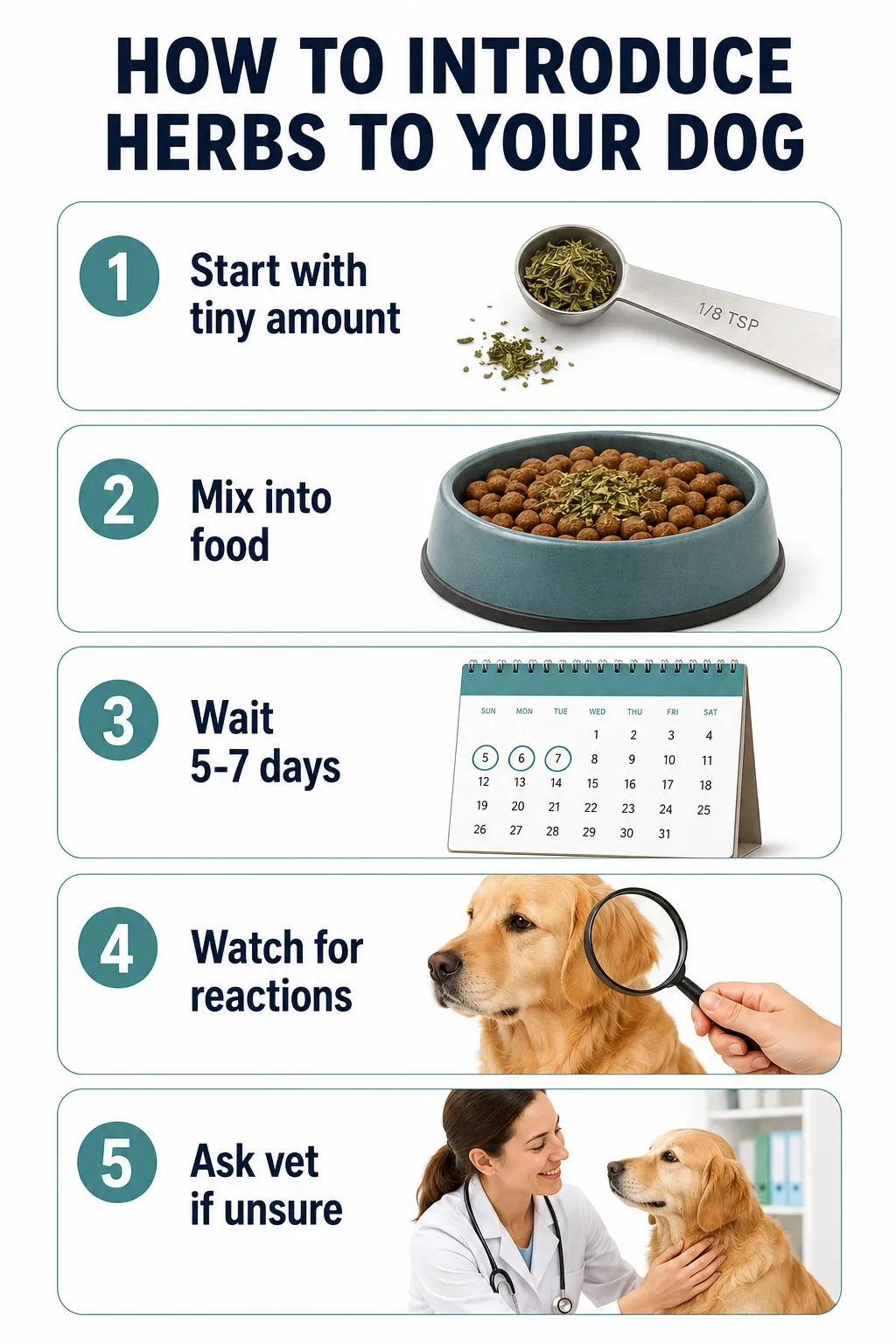
- ✅ Start low and go slow – introduce one herb at a time and watch for 5-7 days before adding more.
What Herbs Are Safe for Dogs to Eat?
Several common culinary herbs are safe for dogs in small amounts. According to veterinary herb guides for pets, herbs like basil, parsley, rosemary, chamomile, ginger, turmeric, dill, cilantro, and peppermint are non-toxic and can offer real health benefits when used correctly.
The key phrase is “small amounts.” These herbs are safe as food additions, not as concentrated oils or high-dose supplements.
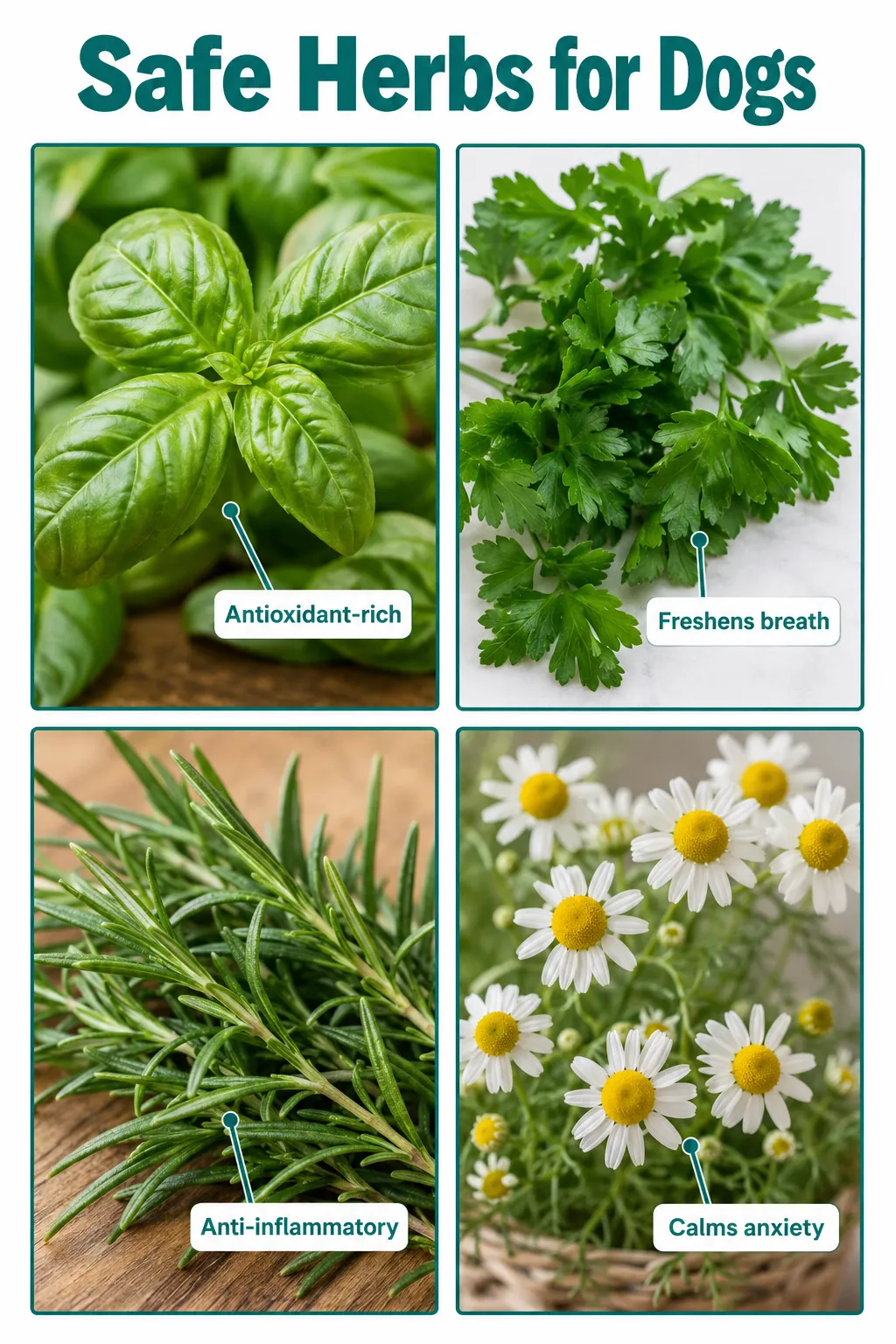
Here are 11 vet-friendly herbs worth knowing about:
| Herb | Main Benefit | Suggested Form |
|---|---|---|
| Basil | Antioxidant, anti-inflammatory | Fresh or dried leaves |
| Parsley | Freshens breath, kidney support | Fresh flat-leaf only |
| Rosemary | Antioxidant, digestive aid | Fresh or dried |
| Ginger | Nausea, motion sickness | Fresh minced or dried powder |
| Chamomile | Anxiety, digestive calm | Cooled tea or dried |
| Turmeric | Joint and inflammation support | Dried powder |
| Dill | Digestive support, breath | Fresh or dried |
| Cilantro | Antioxidant, digestive | Fresh or dried |
| Peppermint | Breath, mild nausea | Small fresh amounts |
| Milk Thistle | Liver support | Supplement (vet-guided) |
| Oregano | Antimicrobial (culinary only) | Tiny dried amounts only |
Important: Oregano essential oil is a different story – it’s too concentrated and can irritate a dog’s gut. Stick to tiny pinches of dried culinary oregano only.
If you’re already thinking about other healthy food additions for your pup, check out our guide on what you can add to your dog’s dry food for more ideas.
Which Herbs Are Toxic to Dogs – And What to Avoid Completely
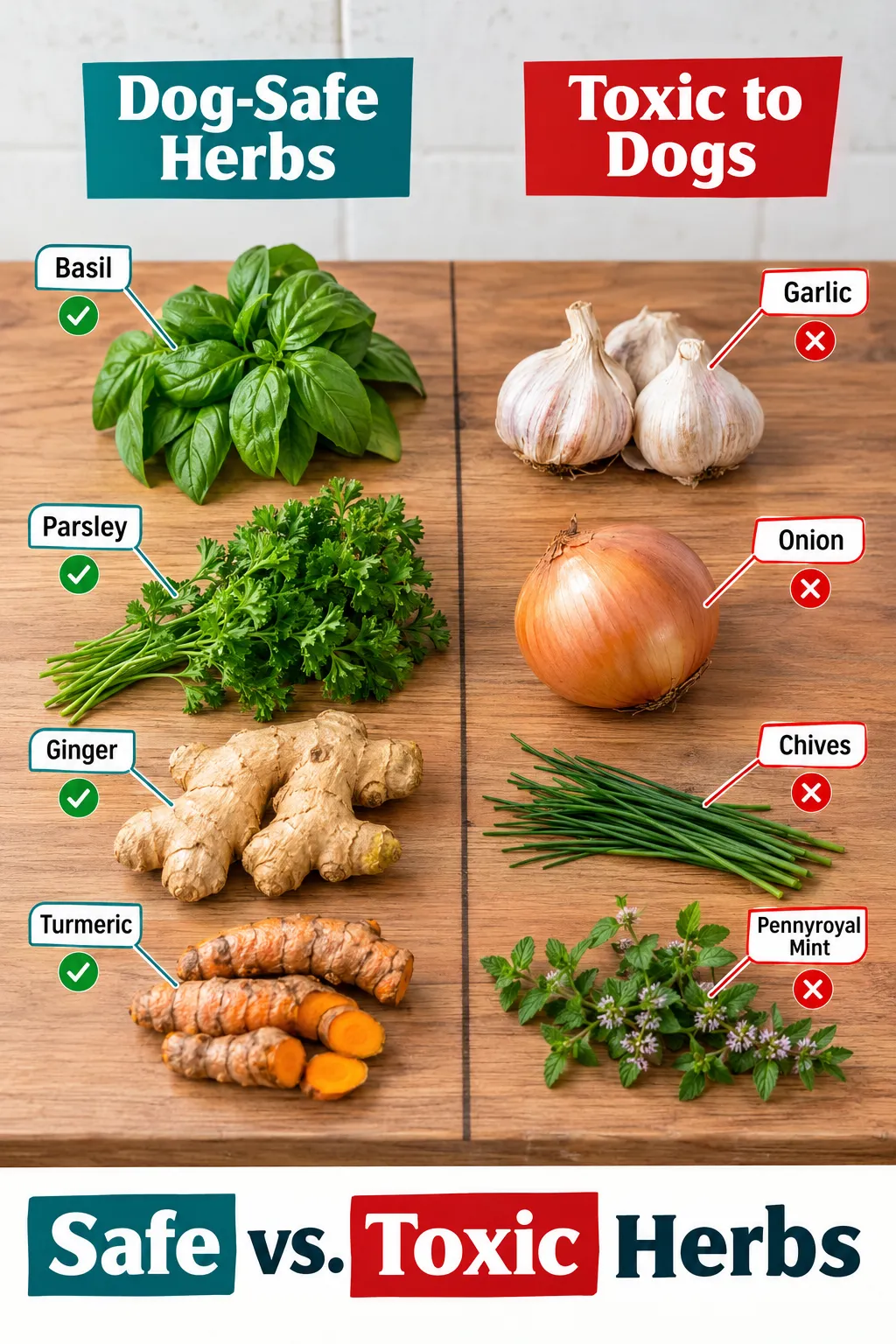
Some herbs that are perfectly fine for humans can seriously harm dogs. The most dangerous group is the allium family – garlic, onions, chives, and leeks. These cause oxidative damage to red blood cells and can lead to hemolytic anemia, even in relatively small amounts.
According to multiple veterinary safety resources, here are the herbs to keep away from your dog entirely:
- Garlic – toxic even in small doses; far more dangerous than onion for dogs
- Onions and chives – same family, same risk
- Leeks – also allium family, avoid completely
- Pennyroyal mint – this specific mint variety can cause liver damage
- Concentrated essential oils of any herb – even “safe” herbs like oregano or peppermint become harmful in oil form
A common mistake dog owners make is assuming that because something is natural or herbal, it’s automatically safe. That’s not true. Concentrated extracts and essential oils of otherwise safe herbs can cause gastrointestinal upset, liver damage, or worse.
Can Dogs Have Basil and Parsley?
Yes, both basil and parsley are safe for dogs in moderate amounts. Basil is rich in antioxidants and has mild anti-inflammatory properties. Parsley freshens breath and supports kidney function.
One important note on parsley: use flat-leaf (Italian) parsley only. Spring parsley (a different plant sometimes sold under a similar name) contains compounds that can be harmful to dogs in larger quantities. Stick to the common flat-leaf variety you’d find in any grocery store.
A pinch of either herb sprinkled over your dog’s food a few times a week is a reasonable approach. According to herb safety guides for dogs, a typical dose for parsley is about 1 teaspoon per 20 pounds of body weight, no more than a few times per week.
Herbs for Dogs With Upset Stomach
Ginger and chamomile are the two best herbs for dogs with an upset stomach. Both have solid support from veterinary resources and have been used for digestive complaints in dogs for years.
Ginger works well for nausea and motion sickness. A 2026 dosing guide suggests roughly 1/4 teaspoon of fresh minced ginger or 1/8 teaspoon of dried powder per 10 lbs of body weight, given 2-3 times daily during episodes of nausea. Use caution if your dog is on blood thinners.
Chamomile is gentle and calming for the gut. You can brew a weak chamomile tea, let it cool completely, and offer a few tablespoons 2-3 times daily for mild digestive upset. It also helps with mild anxiety, which is a bonus.
If your dog is showing signs of bloat, herbs are not the answer – that’s a vet emergency. These herbal suggestions are for mild, occasional stomach upset only.
How Much Herb Can I Give My Dog?
Less is more when it comes to herbs for dogs. The A-Z veterinary herbal guide recommends starting at the lowest possible dose and monitoring for 5-7 days before increasing.
General starting guidelines for dried herbs:
- Small dogs (under 20 lbs): 1/8 teaspoon per day
- Medium dogs (20-50 lbs): 1/4 teaspoon per day
- Large dogs (over 50 lbs): up to 1/2 teaspoon per day
These are rough guides for dried leaf forms. Fresh herbs are less concentrated, so you can use slightly larger amounts. Always introduce one new herb at a time so you can spot any reaction quickly.
Stop immediately if you notice vomiting, diarrhea, lethargy, or any unusual behavior.
Best Herbs for Dog Breath and Digestion
Parsley and peppermint are the top picks for dog breath. Both freshen breath naturally and are safe in small amounts. Many commercial dog dental treats already include parsley for this reason.
For digestion, dill and fennel (in small amounts) are solid choices. Dill in particular has a long history of use as a digestive herb and is listed as non-toxic for dogs by multiple pet health resources.
For a more complete approach to your dog’s dental health, our guide on how to remove tartar from dogs’ teeth covers what really works beyond just herbs.
Are Dried Herbs Safe for Dogs, or Just Fresh?
Both dried and fresh herbs are generally safe for dogs, but dried herbs are more concentrated. Because of this, you should use about half the amount of dried herb compared to fresh.
For example, if a recipe calls for 1/2 teaspoon of fresh basil, use about 1/4 teaspoon of dried basil for the same effect. The key risk with dried herbs is accidentally over-dosing because they pack more active compounds into a smaller volume.
One exception: avoid any dried herb blends or seasoning mixes designed for humans. These often contain garlic powder, onion powder, or salt – all of which are harmful to dogs.
Can Puppies Have the Same Herbs as Adult Dogs?
Puppies can have some of the same herbs as adult dogs, but in smaller amounts and with more caution. A puppy’s digestive system and liver are still developing, which means they’re more sensitive to any new food or supplement.
For puppies under 6 months, it’s best to avoid adding herbs to their diet unless specifically recommended by your vet. For puppies between 6-12 months, you can introduce tiny amounts of gentle herbs like basil or parsley, but keep portions very small – think a pinch, not a teaspoon.
If you’ve just brought home a new pup, our new puppy checklist covers the essentials to get you started on the right foot.
Herbs for Dogs With Anxiety or Itchy Skin
Chamomile and lavender are the two most commonly recommended herbs for dogs with anxiety. Chamomile can be given as a cooled tea (a few tablespoons at a time) for mild situational anxiety. Lavender is most effective as a diluted topical application or as aromatherapy – not ingested.
For itchy skin, chamomile tea can also be applied topically as a rinse after bathing. It has mild anti-inflammatory and soothing properties that can calm irritated skin.
If your dog is showing signs of chronic stress or anxiety, herbs alone won’t solve the problem. Check out our article on stress signals in dogs to understand what you might be missing.
Quick rule: If your dog’s anxiety or skin issues are ongoing, that’s a vet conversation – not a herbs conversation.
What’s the Difference Between Dog-Safe Herbs and Human Herbs?
The herbs themselves are often the same plants. The difference is in the dose, form, and what’s mixed with them. A small pinch of rosemary on a dog’s food is fine. A rosemary essential oil concentrate is not.
Human herbal products often contain additives, alcohol tinctures, or blended ingredients (like garlic or xylitol) that are toxic to dogs. Always check labels carefully. Veterinary herb safety guides consistently emphasize that the same herb in a different form or concentration can go from beneficial to harmful quickly.
Also worth noting: herbal products marketed for pets are not FDA-approved drugs. Under current U.S. law, they’re treated as feed ingredients, which means quality control varies. Stick to reputable brands and involve your vet when choosing any herbal supplement.
Can I Add Herbs to My Dog’s Food Daily?
Yes, for gentle culinary herbs like basil, parsley, dill, and rosemary, daily use in small amounts is generally fine for healthy adult dogs. Think of them as food toppers rather than supplements.
The herbs that need more caution for daily use are the more potent ones – turmeric, ginger, and milk thistle. These are better used periodically or under vet guidance rather than every single day long-term.
A good approach: rotate 2-3 safe herbs throughout the week rather than using the same one every day. This keeps variety in your dog’s diet and reduces the risk of any one compound building up over time.
For more ideas on making your dog’s meals more nutritious, explore our guide on what to cook for your dog daily and our roundup of superfoods for dogs that vets recommend.
Do Vets Recommend Herbs for Dogs, or Just Supplements?
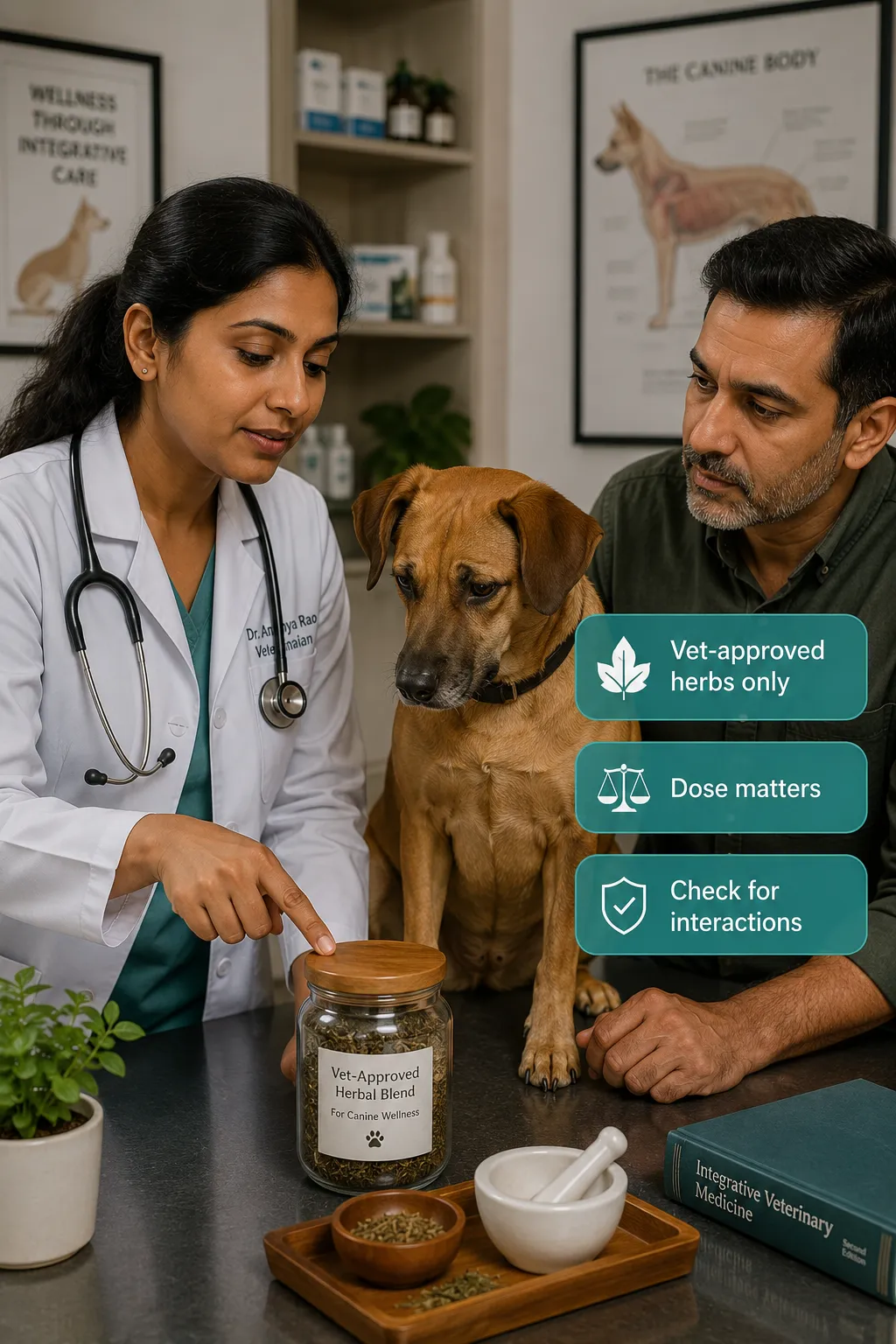
Many vets are comfortable with culinary herbs used as food additions. They’re more cautious about concentrated herbal supplements, especially those making health claims without clinical backing.
Milk thistle is one of the few herbs with actual veterinary clinical data in dogs. A 2026 review found that silybin (the active compound) was well tolerated in short-term studies in healthy dogs and may support liver health – but the review also emphasized that supplementation should happen under veterinary guidance, especially for dogs with existing liver disease.
Turmeric is widely discussed for joint support, but vets note that high doses can cause GI upset, affect blood clotting, and interact with certain medications. The general guidance is to use it at low doses (roughly 15-20 mg per pound of body weight per day) and always check with your vet if your dog is on any medication.
The bottom line: vets generally support herbs as gentle food additions but are rightly cautious about high-dose supplements without proper oversight.
FAQ
Q: Can dogs eat fresh herbs straight from the garden?
A: Yes, most dog-safe herbs like basil, parsley, and rosemary are fine fresh from the garden in small amounts. Just make sure no pesticides or fertilizers have been used on the plants.
Q: Is turmeric safe for dogs every day?
A: In small amounts (around 1/8 to 1/4 teaspoon per 10 lbs), turmeric is generally safe for daily use in healthy dogs. Avoid it if your dog has gallbladder issues, bleeding disorders, or is on blood thinners or anti-inflammatory medications.
Q: Can dogs have mint?
A: Common spearmint and peppermint are safe in very small amounts. Pennyroyal mint is toxic to dogs and should be avoided entirely.
Q: What happens if my dog eats garlic by accident?
A: A tiny accidental taste is unlikely to cause serious harm, but garlic is genuinely toxic to dogs. If your dog ate a significant amount, contact your vet or the ASPCA Animal Poison Control Center (888-426-4435) right away.
Q: Are herbal teas safe for dogs?
A: Weak, cooled chamomile tea in small amounts (a few tablespoons) is safe for most adult dogs. Avoid teas with caffeine, xylitol, or added flavors. Never give hot tea to a dog.
Q: Can I use herbs to replace my dog’s medication?
A: No. Herbs can complement a healthy lifestyle but should never replace prescribed veterinary medication. Always talk to your vet before making changes to your dog’s health routine.
Q: Is rosemary safe for dogs with epilepsy?
A: Rosemary is generally listed as safe for dogs, but some older sources suggest high amounts may lower the seizure threshold. If your dog has epilepsy, check with your vet before adding rosemary to their diet.
Q: How do I know if my dog is reacting badly to an herb?
A: Watch for vomiting, diarrhea, lethargy, excessive drooling, or changes in behavior within 24-48 hours of introducing a new herb. Stop use immediately and call your vet if you see any of these signs.
Conclusion
So, what herbs can dogs have? The short answer is: quite a few, when used thoughtfully. Basil, parsley, rosemary, ginger, chamomile, turmeric, dill, cilantro, peppermint, milk thistle, and small amounts of culinary oregano are all reasonable choices for healthy adult dogs.
The rules are simple:
- Start with a tiny amount and wait 5-7 days before increasing.
- Use culinary forms, not essential oils or concentrated extracts.
- Keep garlic, onions, chives, leeks, and pennyroyal mint away from your dog completely.
- Talk to your vet before adding any herb regularly, especially if your dog is on medication or has a health condition.
Herbs aren’t magic, but they’re a genuinely useful tool in your dog’s wellness toolkit. A pinch of parsley here, a little ginger there – small additions that can make a real difference over time.