Last updated: September 8, 2026
Quick Answer: Fun dog training games turn everyday play into structured learning. Games like Hide and Seek, the Shell Game, and DIY obstacle courses build focus, impulse control, and recall – without your dog ever realizing they’re in a training session. Even 10-15 minutes a day produces measurable behavior improvements within 2-4 weeks.
Key Takeaways
- Play-based training works because dogs learn faster when they’re having fun – stress blocks memory, and play opens it.
- You don’t need expensive equipment. A muffin tin, a few treats, and a leash are enough to start.
- Short sessions (5-15 minutes) beat long drills. Dogs, especially puppies, lose focus quickly.
- Games like “Find It” and Hide and Seek directly improve recall – one of the hardest skills to teach.
- Impulse control games (Shell Game, Wild Sits, tug with rules) reduce jumping, leash pulling, and door-bolting.
- Senior dogs and anxious dogs benefit just as much as puppies – you just adjust the intensity.
- Training games work indoors, making them perfect for rainy days or apartment living.
- Consistency matters more than duration. Three short game sessions a day beat one long weekly drill.
Why Play-Based Training Works
Play-based training works because a dog’s brain is more receptive to learning when dopamine is flowing. According to AKC training experts, games like treat hunts, puzzle setups, and obstacle challenges build focus, problem-solving, and resilience far more effectively than repetitive command drills. When your dog is having fun, they’re not just burning energy – they’re wiring new behaviors into long-term memory.
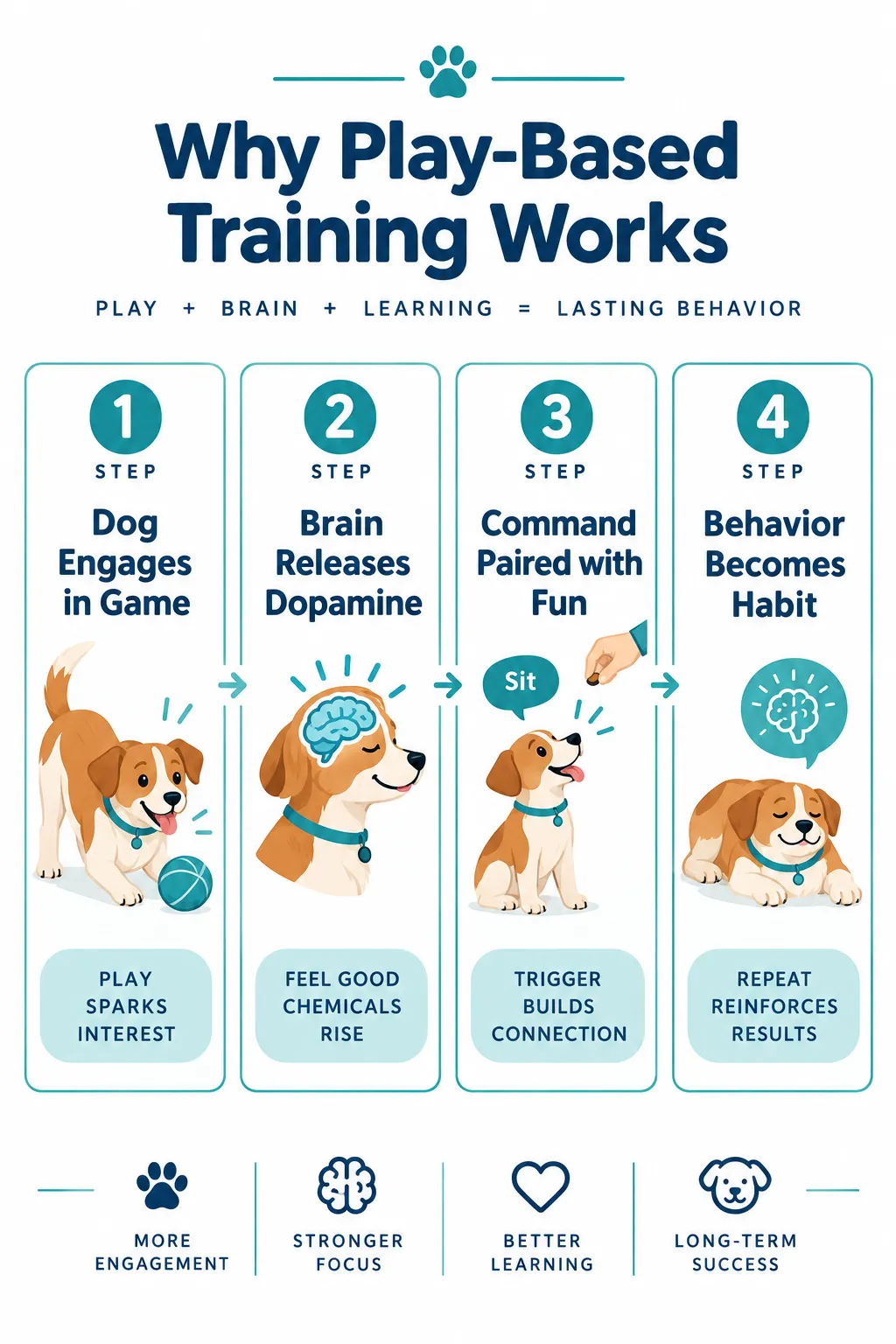
Think about it from your dog’s perspective. A stern “sit, sit, SIT” feels like pressure. But a game where sitting earns them a treat hidden under a cup? That feels like winning. The behavior is the same. The emotional experience is completely different – and that difference is everything.
Research from dog training professionals confirms that games like “Find It,” Hide and Seek, and two-toy fetch turn recall and handler focus into high-value play. Dogs start choosing to engage with their owner because the owner has become the most fun thing in the room.
The science is simple: positive experiences create positive associations. When your dog links a command to something enjoyable, they’ll respond faster, more reliably, and even under distraction.
“The goal isn’t to trick your dog into learning. It’s to make learning feel like the best part of their day.”
This is why play-based training is now considered a core part of modern training plans – not just a fun add-on. If you want to go deeper on the science, our guide on 7 powerful playtime games that secretly train your dog covers the mechanics in detail.
💡 Speaking of accelerating results: If you want to fast-track your dog’s obedience, check out this Free Dog Training Workshop – a first-of-its-kind online program using the same secret methods service dog trainers use to housebreak dogs and stop bad behaviors fast.
8 Fun Dog Training Games to Try at Home
These eight fun dog training games cover the full range of skills your dog needs – from impulse control and recall to loose leash walking and focus. Most require zero special equipment. All of them work indoors.
1. Muffin Tin Puzzle
Place small treats in a few cups of a muffin tin, then cover all the cups with tennis balls. Let your dog sniff out and remove the balls to find the reward. This game builds problem-solving skills and nose-work focus. It’s a great starting point for dogs who are new to training games because it requires no commands – just curiosity.
How to play: Start with treats in every cup. Once your dog gets confident, only fill 3 out of 6 cups. Now they have to work harder to find the reward.
2. Hide and Seek
Hide and Seek is one of the best recall games you can play with your dog. Training guides consistently recommend it as a way to make coming when called feel exciting rather than obligatory. Hide somewhere in your home, call your dog’s name once, and immediately reward them with a treat and big praise when they find you.
Why it works: Your dog learns that finding you = the best thing ever. That emotional payoff transfers directly to real-world recall situations.
How to play: Ask your dog to sit and stay (or have a family member hold them). Hide behind a door or around a corner. Call once. When they find you, make it a celebration – treats, play, happy voice. Gradually make your hiding spots harder.
3. Red Light, Green Light
This game directly targets impulse control and the “stop” command. Say “green light” and encourage your dog to move toward you. Say “red light” and ask them to sit or stay. It’s a fun way to teach dogs learn to regulate their own excitement – which is exactly what you need for door manners, leash behavior, and greeting guests calmly.
Command focus: sit, stay, come.
4. Follow Me
Put your dog on a leash and walk in unpredictable directions – left, right, sudden stops, slow circles. Every time your dog checks in with you (looks at your face or stays close), immediately reward them with a treat. This game builds the foundation for loose leash walking without any corrections.
For dogs that pull constantly, this is one of the fastest fixes available. Pair it with our full guide on leash training a dog that pulls for a complete approach.
5. Hand Zen (Leave It Game)
Hold a treat in your closed fist. Let your dog sniff, lick, and paw at your hand. The moment they back off or look away, open your hand and give them the treat. This game teaches the “leave it” command through self-discovery – your dog figures out that backing off gets them what they want.
Start here if: your dog jumps on guests, counter-surfs, or grabs food from hands.
6. Wild Sits
Walk around your living room, then randomly stop and ask your dog to sit. The moment their bottom hits the floor, reward them. Make it unpredictable – sometimes stop after 2 steps, sometimes after 20. Wild Sits teach your dog to stay tuned in to you even during movement, which directly improves leash manners and attention in distracting environments.
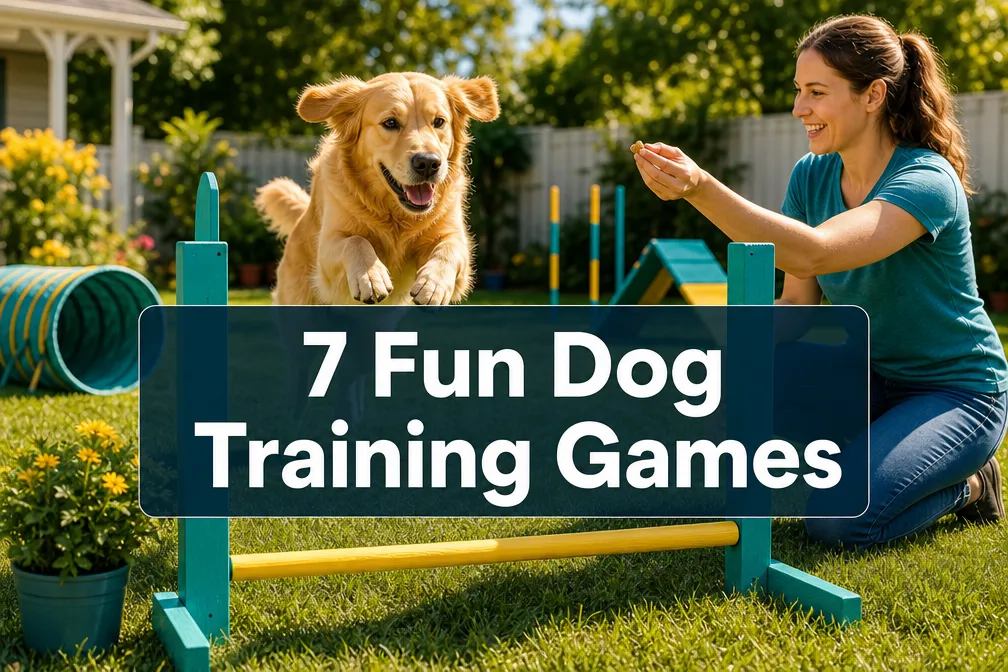
7. At-Home Obstacle Course
Set up a simple DIY obstacle course using couch cushions, hula hoops, cardboard boxes, and broomsticks balanced on books. Guide your dog through each obstacle using treats and encouragement. AKC experts highlight obstacle courses as excellent tools for building confidence, body awareness, and the ability to follow directional commands.
Obstacle ideas:
- Weave between chair legs
- Jump over a low broomstick
- Crawl under a blanket draped over chairs
- Sit on a raised platform (a stable box)
You can find more DIY enrichment ideas in our guide on DIY dog games and easy enrichment activities.
8. Fetch and Wait
Standard fetch, but with a twist. Throw the toy, but before your dog brings it back, ask them to sit or down before you throw again. This game teaches the “wait” and “drop it” commands in a high-excitement context – which is exactly when impulse control matters most.
Why it’s powerful: Impulse control games like this teach dogs to choose calm behavior even when they’re excited, which reduces jumping, leash pulling, and door-bolting in everyday life.
How Dog Training Games Improve Behavior (and When They Replace Drills)
Training games improve behavior by pairing commands with positive emotional experiences, which makes the behavior stick faster and hold up under distraction. According to goodpup.com’s training research, games that reinforce training create stronger neural pathways than repetitive drills because the dog is actively engaged rather than passively compliant.
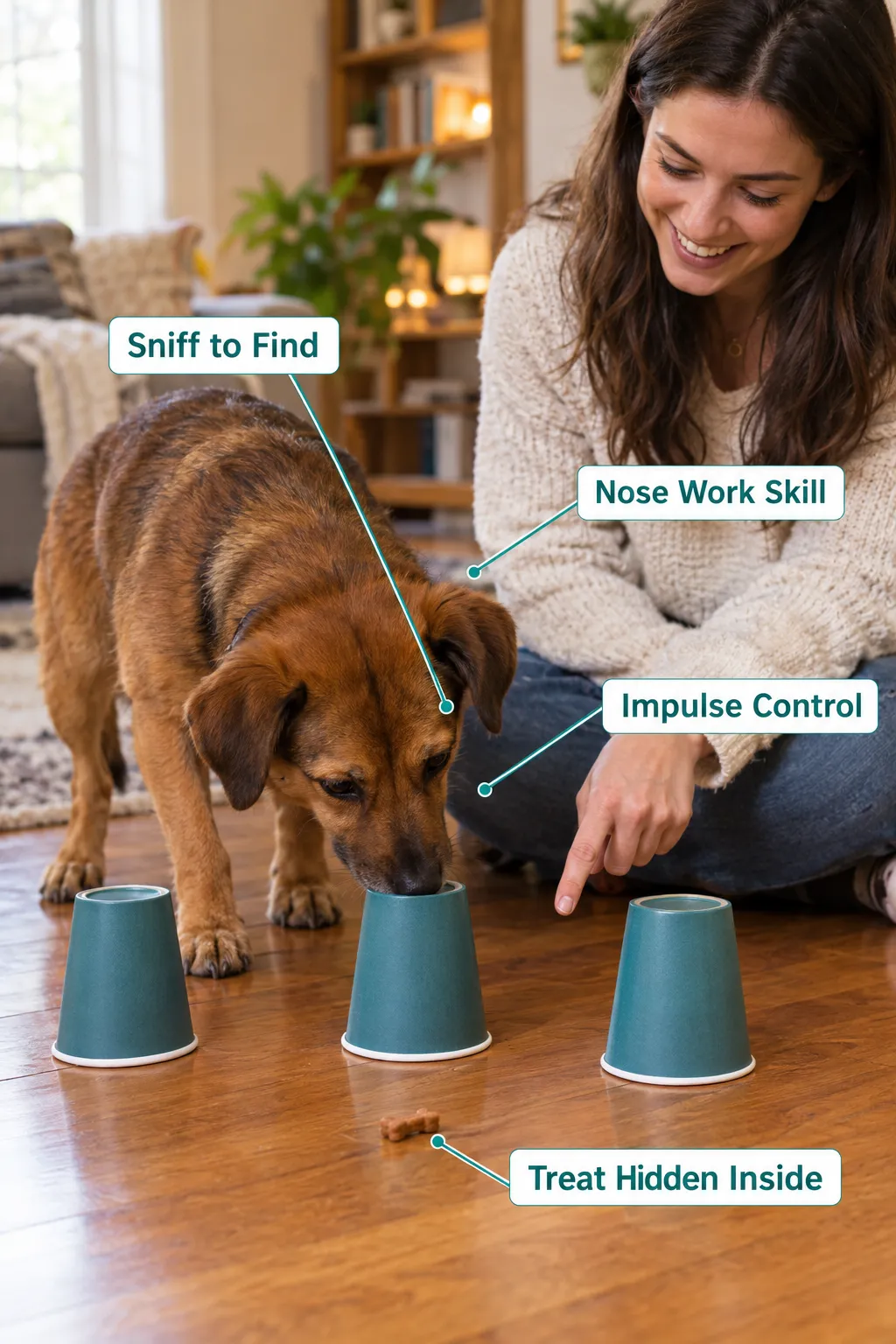
Can training games replace regular obedience training? For most pet dogs, yes – especially for foundational skills like sit, stay, come, leave it, and loose leash walking. Games cover all of these. However, if you’re working toward advanced obedience, competition, or service dog-level reliability, structured drills still have a place alongside games.
The real difference between playing and training is intention. Playing is open-ended. Training has a goal. The best approach is to play with training goals in mind – you’re having fun AND building a specific behavior at the same time.
💡 Mid-article tip: If you’re serious about stopping bad behaviors and building service-dog-level obedience at home, the Free Dog Training Workshop is worth your time – it’s free, online, and uses the exact methods professional trainers use.
Training Games for Specific Dogs: Puppies, Seniors, Anxious Dogs, and More
The best training games for puppies are short, simple, and heavily rewarded. Brain game guides for dogs recommend sessions of 10-15 minutes maximum for puppies, using games like Muffin Tin Puzzle, Hand Zen, and simple Hide and Seek. Puppies have short attention spans, so ending a session while they’re still engaged is more effective than pushing through boredom.
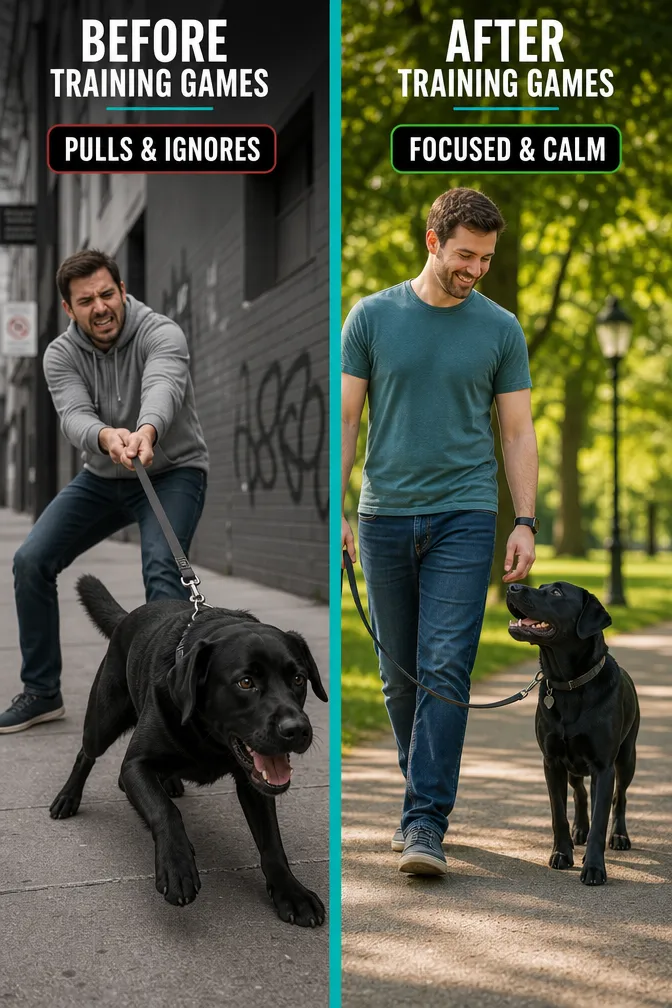
For anxious dogs: Games that involve sniffing (Muffin Tin, Find It, Hide and Seek) are especially calming. Sniffing activates the parasympathetic nervous system – it literally slows your dog’s heart rate. If your dog has anxiety, start with nose-work games before anything that involves movement or excitement. For more on managing reactive behavior, see our guide on how to socialize a reactive dog without stress.
For senior dogs: Low-impact games like Hand Zen, Muffin Tin Puzzle, and gentle Hide and Seek keep aging dogs mentally sharp without stressing their joints. Mental stimulation is just as important for older dogs as physical exercise – sometimes more so.
For aggressive dogs: Games that involve resource guarding (like tug without rules) can backfire. Start with Hand Zen and Leave It games to build impulse control first. Once your dog can disengage from high-value items on cue, tug with clear rules becomes safe and beneficial.
Small dogs vs. large dogs: The games are the same. The scale changes. A small dog’s obstacle course uses books and rolled towels. A large dog’s version uses chairs and low hurdles. Treat size should match dog size – tiny treats for small dogs so they don’t fill up before the session ends.
What equipment do you need? Almost nothing. A handful of treats, a leash, and household items cover 90% of these games. A clicker is optional but helpful – our guide on how to use a clicker for dog training explains the basics.
Common Mistakes to Avoid When Playing Dog Training Games
The most common mistake is making sessions too long. Dogs, especially puppies, lose focus after 5-15 minutes. A bored dog stops learning and starts making mistakes, which can actually reinforce bad behavior if you’re not careful.
Other mistakes to avoid:
- Repeating a command more than once. Say “sit” once. If your dog doesn’t respond, use a treat to lure them into position, then reward. Repeating commands teaches your dog to ignore the first one.
- Rewarding the wrong moment. Timing matters. You must immediately reward the correct behavior – within 1-2 seconds. A delayed treat rewards whatever your dog was doing when they got it, not what you intended.
- Skipping the reward too soon. Many owners phase out treats before the behavior is solid. Keep rewarding until the behavior is reliable in multiple environments, then gradually reduce treat frequency.
- Playing when your dog is overstimulated. A dog that’s already wound up won’t learn. Start sessions when your dog is calm, not right after a walk or play session with other dogs.
- Using games as punishment. If your dog makes a mistake, simply reset and try again. Never end a game in frustration – always finish on a win, even a small one.
For a full breakdown of what not to do, our guide on 15 terrible dog training mistakes is a great resource.
How to Build Training Games Into Your Dog’s Daily Routine
How often should you play training games? Aim for 2-3 short sessions per day, 5-15 minutes each. Structured mental challenges are now recommended as core to modern training plans – not optional extras. Daily consistency beats occasional marathon sessions every time.
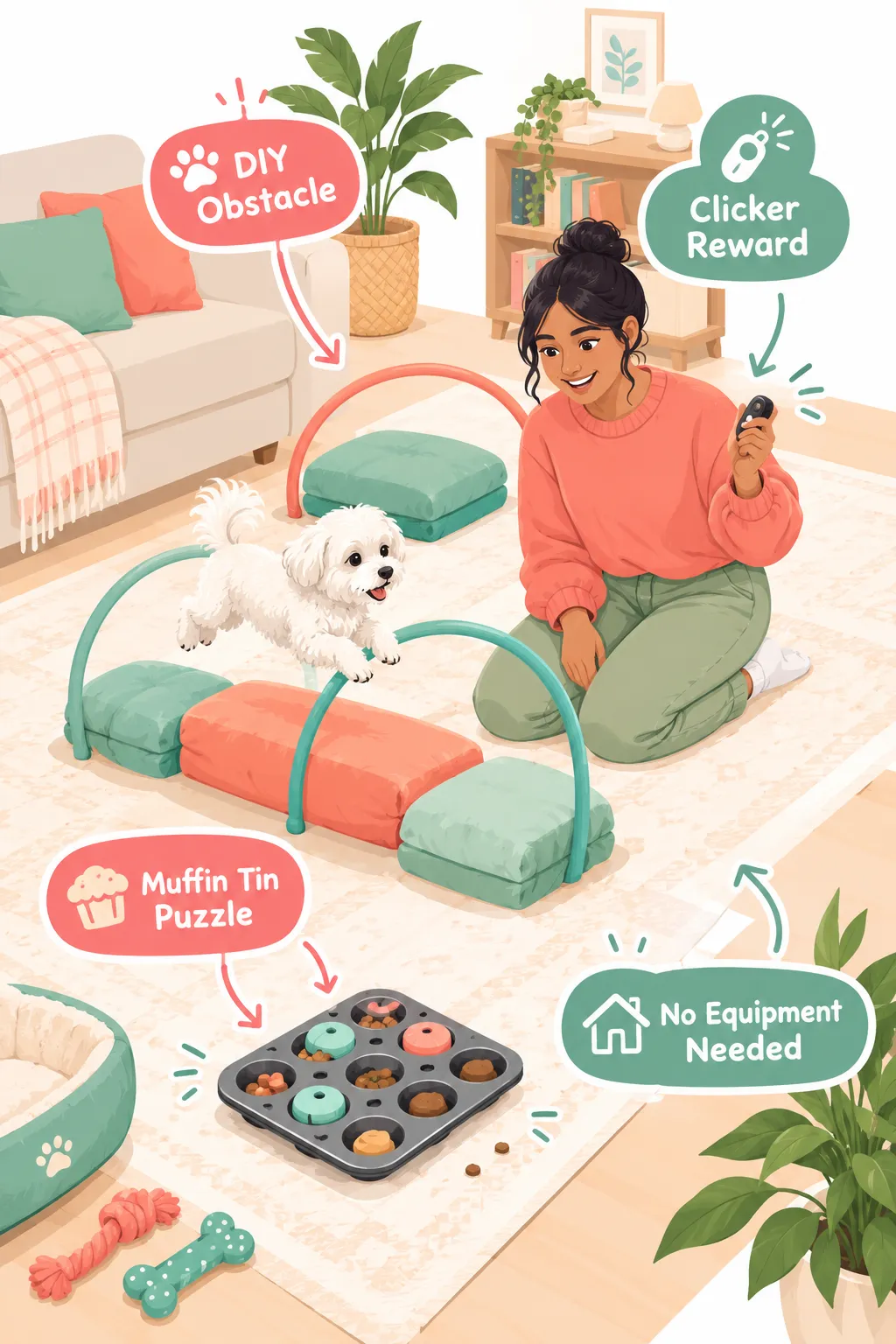
A simple daily structure:
| Time | Game | Duration | Skill |
|---|---|---|---|
| Morning | Muffin Tin Puzzle | 5 min | Focus, nose work |
| Midday | Wild Sits or Follow Me | 10 min | Leash manners, attention |
| Evening | Hide and Seek or Fetch and Wait | 10 min | Recall, impulse control |
How long does it take to see results? Most dog owners notice improved attention and responsiveness within 1-2 weeks of daily game sessions. Solid behavior changes – like reliable recall or calm leash walking – typically take 3-6 weeks of consistent play-based training.
How to know if your dog isn’t interested in training games: If your dog walks away, sniffs the ground, or seems distracted, the treat value might be too low. Try higher-value rewards like small pieces of chicken or cheese. Also check the environment – too many distractions make learning impossible at first. Start indoors, then move outside once the behavior is solid.
For a structured approach to building these habits over time, our 14-day dog training plan maps out exactly how to progress week by week.
FAQ: Fun Dog Training Games
What is the 3-3-3 rule in dog training?
The 3-3-3 rule describes the adjustment period for a newly adopted dog: 3 days to decompress, 3 weeks to learn your routine, and 3 months to feel fully at home. During training, it’s a useful reminder to give your dog time to settle before expecting reliable behavior. Starting fun dog training games during the first 3 weeks helps build trust and routine faster.
What is the 7 7 7 rule for dogs?
The 7 7 7 rule is a socialization guideline for puppies: expose them to 7 different surfaces, 7 different locations, and 7 different people before they’re 7 weeks old (or as early as safely possible). It’s designed to build confidence and reduce fear responses. Training games played in varied environments naturally support this goal by making new situations feel fun rather than threatening.
How to make dog training fun?
Make dog training fun by turning commands into games with clear rewards. Use high-value treats, keep sessions short (5-10 minutes), celebrate every win with enthusiastic praise, and vary the games so your dog stays curious. Games like Hide and Seek, the Shell Game, and Wild Sits feel like play to your dog while building real obedience skills. The key is to always end on a positive note.
What are some good games to play in a group dog training class?
Great group dog training class games include Red Light Green Light (builds impulse control and stop cues), Follow the Leader (loose leash focus), and recall relays where handlers take turns calling their dog across the room. The Shell Game works well in groups too – each handler plays independently while dogs stay focused on their own owner. These games teach dogs to work around distractions, which is exactly what group classes are designed for.
Conclusion: Let the Fun Dog Training Games Begin
Training your dog doesn’t have to feel like homework – for you or for Fido. The eight fun dog training games in this guide cover every core skill your dog needs: recall, impulse control, loose leash walking, focus, and problem-solving. And they all work indoors, require minimal equipment, and take less than 15 minutes at a time.
Your next steps:
- Pick one game from this list and try it today. Start with the Muffin Tin Puzzle or Hand Zen if your dog is new to training games.
- Keep treats small and sessions short. End while your dog is still engaged.
- Build up to 2-3 short sessions per day. Consistency is everything.
- Once your dog is solid on one game, add another. Progress naturally.
Check out our guide on 12 brain games for dogs that boost focus and beat boredom for even more ideas to keep your dog mentally sharp.
💡 Ready to take it further? The Free Dog Training Workshop is a free online program that teaches you the exact methods service dog trainers use – covering everything from housebreaking to stopping bad behaviors to building rock-solid obedience. It’s the fastest way to get results beyond what games alone can achieve.
Your dog is ready. Now it’s your turn to play.