
Last updated: September 10, 2026
Quick Answer: High protein low carb homemade dog food is a fresh-ingredient meal approach that prioritizes real meat, eggs, and low-starch vegetables over grain-heavy kibble. It supports lean muscle, healthy weight, and stable energy in most adult dogs. Always consult a veterinary nutritionist before switching, and add a vet-approved supplement blend to cover any nutritional gaps.
Key Takeaways
- Dogs thrive on protein from real whole-food sources like chicken, beef, salmon, and eggs
- Most commercial kibble contains 30-60% carbohydrates – far more than dogs need
- Research from Texas A&M University found that the majority of homemade dog diets are nutritionally incomplete without proper planning
- Supplements are non-optional for homemade diets – calcium, omega-3s, and a vitamin-mineral blend are the minimum
- High protein low carb meals are especially beneficial for overweight dogs, diabetic dogs, and active working breeds
- Puppies, pregnant dogs, and dogs with kidney disease need different formulas – not all dogs suit this approach
- Homemade dog food typically costs between $2-$5 per day for a medium dog, depending on ingredients
- Cooked homemade dog food stays fresh in the fridge for 3-4 days; frozen portions last up to 3 months
- Avoid onions, garlic, grapes, xylitol, and cooked bones – these are dangerous in any homemade recipe
- Always transition slowly over 7-10 days to avoid digestive upset
What Are the Benefits of High Protein Low Carb Dog Food?
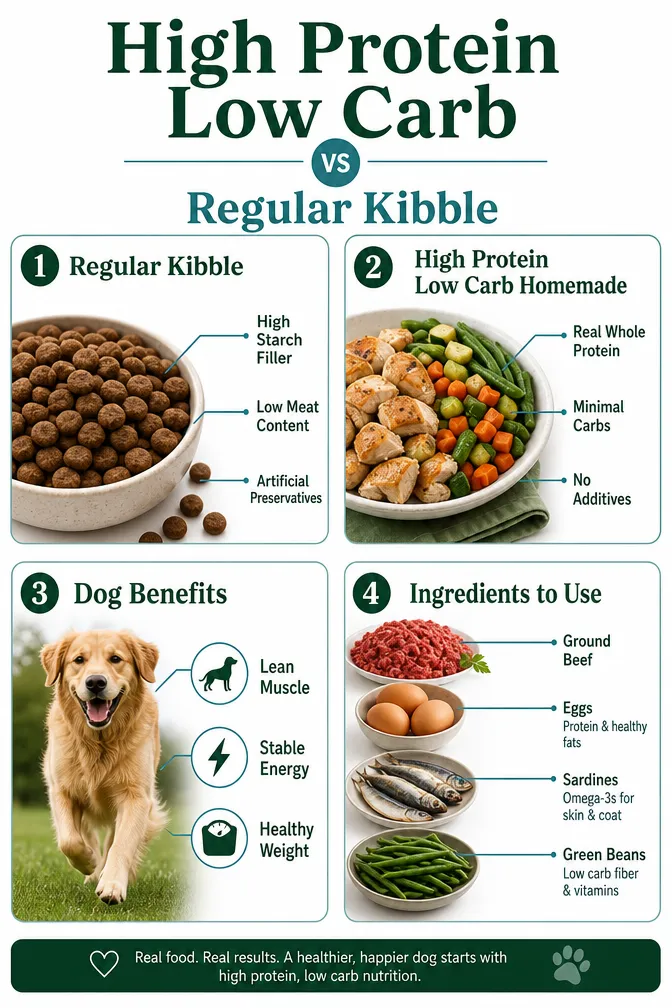
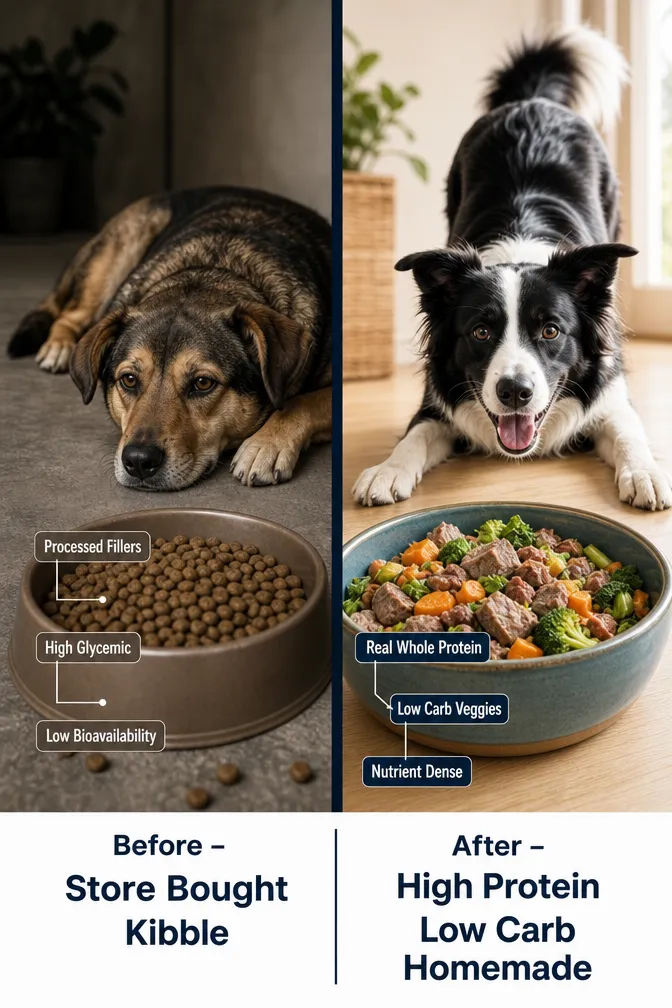
High protein low carb homemade dog food supports lean muscle mass, healthier body weight, and more stable blood sugar compared to carb-heavy kibble. Dogs are facultative carnivores, meaning their digestive systems are built to process protein and fat efficiently.
Here’s what the research and veterinary community consistently point to as the main benefits:
- Lean muscle maintenance – Dietary protein provides the amino acids dogs need to build and repair muscle tissue
- Weight management – Lower carb intake reduces excess calorie storage as fat
- Stable energy – Protein and fat provide slower, more sustained energy than starchy carbs
- Better coat and skin – High-quality animal proteins supply the fatty acids and amino acids that support skin health
- Reduced inflammation – Whole-food ingredients avoid the artificial additives and fillers found in many commercial foods
According to Dog Food Advisor’s high protein dog food guide, protein-rich diets are particularly valuable for active dogs, working breeds, and dogs recovering from illness or surgery.
How Much Protein Does My Dog Actually Need Daily?
Most adult dogs need protein to make up roughly 18-25% of their daily calorie intake at minimum, but active dogs and working breeds often do better at 25-35%. Puppies need even more – closer to 22-32% of calories from protein to support growth.
A practical way to think about it: for a 30-pound adult dog eating around 700 calories per day, you’d want at least 35-50 grams of protein daily from whole-food sources.
Protein needs vary by:
- Age (puppies need more than seniors)
- Activity level (working dogs need significantly more than couch dogs)
- Health status (dogs recovering from illness may need extra protein)
- Body weight goals (weight-loss dogs benefit from higher protein to preserve muscle)
For a deeper look at daily feeding amounts, check out this guide on how much food to feed your dog daily.
Is Homemade Dog Food Better Than Store-Bought?
Homemade dog food can be better than store-bought, but only when it’s properly balanced. The key word is “can.” A well-designed homemade diet with the right protein sources, vegetables, and supplements beats most commercial kibble for ingredient quality. But a poorly designed homemade diet is worse than even average kibble.
According to the Pet Evidence Project’s review of home-cooked diets, homemade diets offer real advantages in ingredient transparency and palatability, but nutritional completeness is the biggest challenge for home cooks.
Homemade wins when:
- You use whole-food protein sources (not scraps)
- You add a vet-approved supplement blend
- You follow a recipe reviewed by a veterinary nutritionist
Store-bought wins when:
- You don’t have time to balance recipes properly
- Your dog has complex medical needs requiring precise formulation
- Budget is very tight and ingredient quality would suffer
What Ingredients Should I Avoid in Homemade Dog Food?
Some common human foods are toxic to dogs and must never appear in any homemade recipe. This is non-negotiable regardless of how “natural” the ingredient seems.
Never use these:
- 🚫 Onions and garlic (all forms – raw, cooked, powdered)
- 🚫 Grapes and raisins
- 🚫 Xylitol (artificial sweetener found in many foods)
- 🚫 Macadamia nuts
- 🚫 Chocolate and caffeine
- 🚫 Cooked bones (they splinter and cause internal injuries)
- 🚫 Avocado (contains persin, toxic to dogs)
- 🚫 Raw yeast dough
For a complete breakdown, see this list of everyday foods that can kill your dog – it covers 15 common kitchen items that are dangerous for dogs.
Also limit or avoid:
- High-oxalate vegetables like spinach (in large amounts)
- Excess liver (safe in small amounts, but too much causes vitamin A toxicity)
- High-sodium ingredients like deli meats or canned goods with added salt
How Do I Make Sure Homemade Dog Food Is Nutritionally Balanced?
Nutritional balance requires more than just adding meat and vegetables. According to AskAVet’s 2025 balanced homemade dog food guide, every homemade diet needs a reliable source of calcium, essential fatty acids, and a broad-spectrum vitamin-mineral supplement.
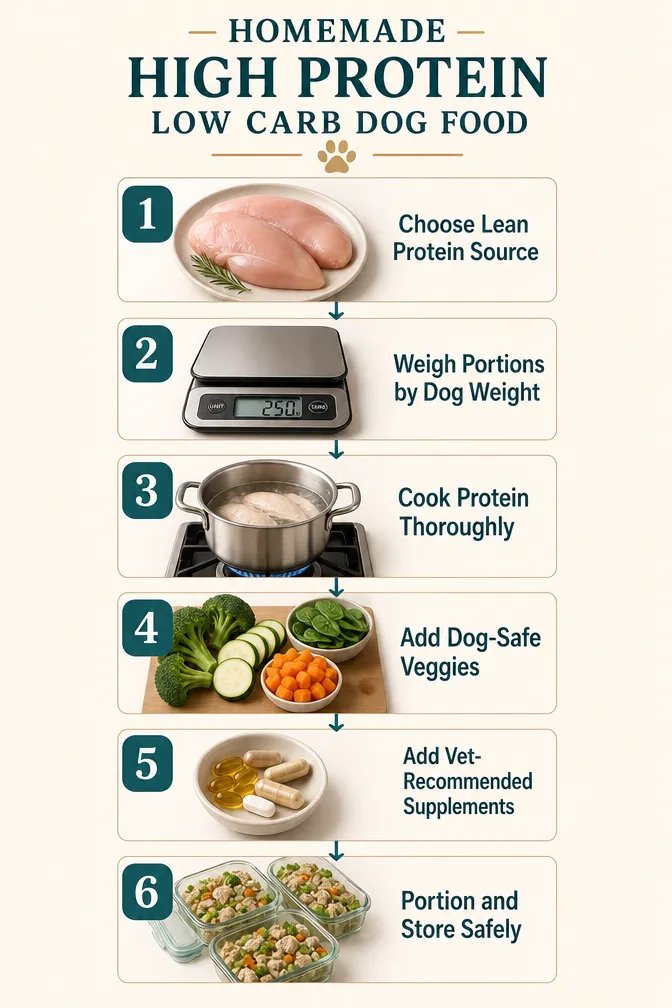
The core framework for a balanced high protein low carb homemade dog food meal:
- Protein source – 50-70% of the recipe (chicken, beef, turkey, salmon, eggs)
- Organ meat – 5-10% (liver, kidney – adds critical micronutrients)
- Low-carb vegetables – 20-30% (green beans, zucchini, broccoli, kale, cauliflower)
- Calcium source – Eggshell powder or bone meal (critical if not feeding raw meaty bones)
- Supplement blend – A vet-approved vitamin-mineral mix
For a detailed look at what vitamins to add, this guide on vitamins to add to homemade dog food covers the essentials clearly.
The Bestie Paws nutritionally complete homemade dog food guide also recommends having any long-term homemade recipe reviewed by a board-certified veterinary nutritionist (DACVN) at least once.
Can All Dogs Eat High Protein Low Carb Diets, or Just Some?
Most healthy adult dogs do well on high protein low carb homemade food, but certain dogs should not follow this approach without veterinary supervision. This is one of the most important distinctions to understand before switching.
Good candidates:
- Healthy adult dogs (1-7 years)
- Overweight dogs needing weight loss
- Active or working breeds
- Dogs with food sensitivities to grains or fillers
Dogs who need a modified or different approach:
- Puppies – Need higher calcium-to-phosphorus ratios and more calories per pound; a standard adult recipe can cause skeletal problems
- Pregnant or nursing dogs – Calorie and nutrient needs increase dramatically
- Dogs with kidney disease – May need restricted protein, not high protein
- Dogs with certain liver conditions – Protein processing can be impaired
- Senior dogs (8+) – Often still benefit from higher protein, but may need softer textures and adjusted portions
If your dog is a senior, check out these homemade dog food recipes for senior dogs that are designed specifically for their needs.
The 7 High Protein Low Carb Homemade Dog Food Recipes
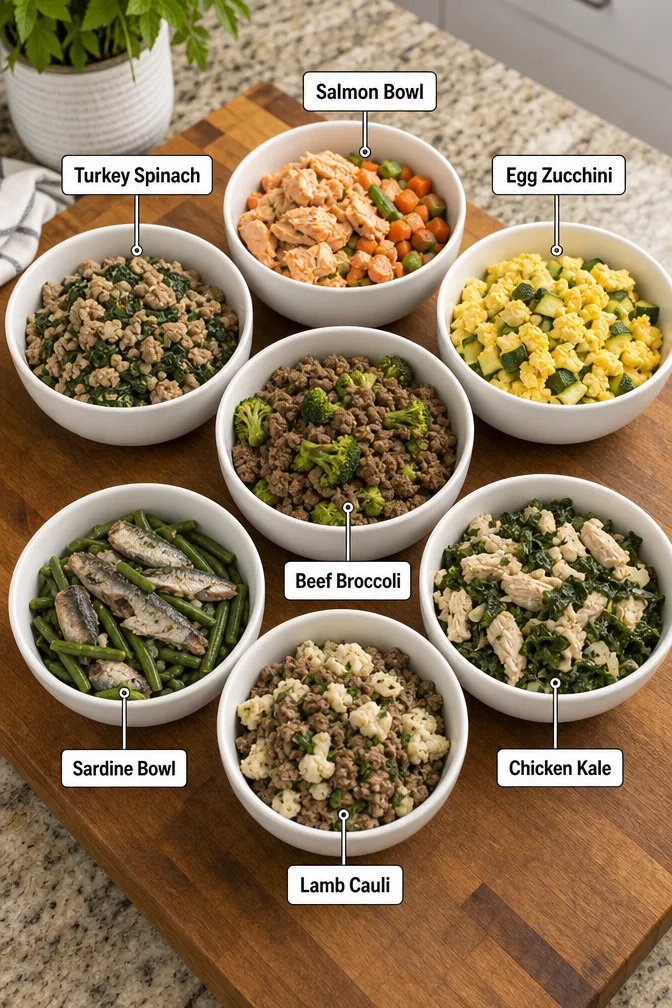
These seven recipes follow the core framework: high-quality animal protein, minimal starchy carbs, dog-safe vegetables, and a supplement base. Each serves as a starting point – adjust portions based on your dog’s weight and activity level.
Recipe 1: Ground Beef and Broccoli Bowl
- 300g lean ground beef (cooked)
- 100g broccoli florets (steamed)
- 1 tbsp fish oil
- Eggshell powder (calcium source)
- Vitamin-mineral supplement per label
Recipe 2: Baked Salmon with Green Beans
- 250g salmon fillet (baked, no seasoning)
- 120g green beans (steamed)
- 1 tsp coconut oil
- Calcium supplement
Recipe 3: Chicken Thigh and Zucchini Stew
- 300g boneless chicken thighs (cooked)
- 100g zucchini (diced, steamed)
- 30g chicken liver (cooked)
- Eggshell powder
Recipe 4: Turkey and Cauliflower Mash
- 280g ground turkey (cooked)
- 100g cauliflower (steamed and mashed)
- 1 tbsp flaxseed oil
- Vitamin-mineral supplement
Recipe 5: Egg and Kale Scramble
- 4 whole eggs (scrambled, no butter)
- 80g kale (lightly steamed)
- 50g ground beef (cooked)
- Calcium source
Recipe 6: Sardine and Spinach Mix
- 200g canned sardines in water (drained)
- 80g baby spinach (lightly wilted)
- 1 tsp olive oil
- Supplement blend
Recipe 7: Lamb and Asparagus Bowl
- 280g ground lamb (cooked)
- 100g asparagus (steamed, chopped)
- 30g beef liver (cooked)
- Eggshell powder and vitamin blend
For more recipe inspiration, the 7 homemade dog food recipes with beef liver collection is a great companion resource.
What Supplements Do I Need to Add to Homemade Dog Food?
Supplements are non-optional for any homemade diet. Research published in Frontiers in Animal Science confirms that homemade diets without supplementation consistently fall short on key micronutrients.
The core supplements for high protein low carb homemade dog food:
| Supplement | Why It’s Needed | Common Source |
|---|---|---|
| Calcium | Balances phosphorus from meat | Eggshell powder, bone meal |
| Omega-3 fatty acids | Skin, coat, inflammation | Fish oil, sardines |
| Vitamin D | Bone health, immune function | Supplement blend |
| Vitamin E | Antioxidant, cell protection | Supplement blend |
| Zinc | Skin, immune, thyroid | Supplement blend |
| Iodine | Thyroid function | Supplement blend |
| B vitamins | Energy metabolism | Organ meats + supplement |
A broad-spectrum supplement like Rx Vitamins for Pets or Balance IT (formulated with a vet) covers most bases. Always follow dosing instructions based on your dog’s body weight.
Is High Protein Low Carb Good for Dogs With Sensitive Stomachs?
High protein low carb homemade food can actually be excellent for dogs with sensitive stomachs, as long as you choose easy-to-digest proteins and introduce new ingredients slowly. The absence of artificial additives, fillers, and grain-based starches removes many common irritants.
Best proteins for sensitive dogs: boiled chicken breast, white fish, turkey, and eggs. These are lean, gentle on digestion, and rarely trigger reactions.
For dogs with diagnosed digestive issues, the 7 homemade dog food recipes for a sensitive stomach guide offers targeted recipes designed around digestive comfort.
Avoid for sensitive stomachs:
- Rich meats like lamb or duck when first starting out
- High-fat cuts (can trigger pancreatitis in prone dogs)
- Cruciferous vegetables in large amounts (can cause gas)
How Much Does It Cost to Make Homemade Dog Food vs Buying It?
Making high protein low carb homemade dog food typically costs between $2 and $5 per day for a medium-sized dog (around 30-40 lbs), depending on protein choices and your local ingredient prices. Premium commercial fresh-food brands often run $6-$12 per day for the same size dog.
Budget-conscious options like ground turkey, eggs, canned sardines, and chicken thighs keep costs lower without sacrificing protein quality. For more ideas, the homemade dog food recipes on a budget resource has practical cost-saving strategies.
Cost-saving tips:
- Buy proteins in bulk and freeze in weekly portions
- Use chicken thighs instead of breasts (cheaper, more nutrient-dense)
- Canned fish (sardines, mackerel in water) is affordable and high in omega-3s
- Grow or buy seasonal vegetables in larger quantities
How Long Can Homemade Dog Food Stay Fresh, and Can I Freeze It?
Cooked homemade dog food stays safe in the refrigerator for 3-4 days when stored in an airtight container. For longer storage, freeze individual portions in zip-lock bags or silicone molds – frozen homemade food stays good for up to 3 months.
Food safety rules for high-meat diets:
- Always cook proteins to safe internal temperatures (165°F for poultry, 160°F for ground beef)
- Cool food completely before refrigerating or freezing
- Label containers with the date prepared
- Thaw frozen portions in the fridge overnight, not on the counter
- Never refreeze thawed food
Meal prepping in bulk is one of the biggest time-savers for homemade feeding. Cook a full week’s worth on Sunday, refrigerate 3-4 days’ worth, and freeze the rest.
What Are Common Mistakes People Make With Homemade Dog Food?
The most common mistake is treating homemade dog food like human meal prep – focusing on fresh ingredients while ignoring the nutritional math. A bowl of chicken and vegetables looks healthy but is missing calcium, iodine, vitamin D, and several other nutrients dogs need daily.
The top mistakes to avoid:
- Skipping supplements – The single biggest error; whole foods alone don’t cover all micronutrients
- No calcium source – An all-meat diet without calcium causes bone disease over time
- Too much liver – Safe in small amounts (5-10% of diet), but excess causes vitamin A toxicity
- Not varying proteins – Rotating proteins helps cover a broader amino acid and micronutrient profile
- Feeding the same recipe forever – Nutritional needs shift with age, weight, and health status
- Ignoring portion size – Even healthy food causes weight gain if overfed
According to Bestie Paws’ vet-approved homemade dog food recipes guide, having a recipe reviewed by a veterinary nutritionist at least once significantly reduces the risk of long-term deficiencies.
Do Puppies Need Different Homemade Food Than Adult Dogs?
Yes, puppies have significantly different nutritional needs than adult dogs and should never eat a standard adult high protein low carb recipe without modification. Puppies need more calcium, phosphorus, and total calories per pound of body weight to support rapid bone and muscle development.
For puppy-specific homemade feeding, the 10 fresh puppy food recipes guide covers age-appropriate formulas in detail.
Key differences for puppy homemade food:
- Higher calcium-to-phosphorus ratio (critical for skeletal development)
- More frequent feeding (3-4 times daily vs 1-2 for adults)
- Higher calorie density per serving
- Softer textures for smaller mouths and developing teeth
FAQ
Q: What is the best protein source for homemade dog food?
Chicken, beef, turkey, salmon, and eggs are all excellent choices. Rotating between at least 2-3 protein sources weekly gives your dog a broader amino acid profile and reduces the risk of developing sensitivities.
Q: Can I feed my dog raw meat in these recipes?
Raw feeding is a separate approach with its own food safety risks, including bacterial contamination. The recipes in this article use cooked proteins, which are safer for most households. If you’re interested in raw feeding, consult a veterinary nutritionist first.
Q: How do I transition my dog from kibble to homemade food?
Transition over 7-10 days. Start with 75% kibble and 25% homemade, then shift to 50/50 by day 4, then 25% kibble by day 7, and fully homemade by day 10. A slow transition prevents digestive upset.
Q: Do I need to add grains to homemade dog food?
No. Dogs don’t require grains. Low-carb vegetables provide fiber and micronutrients without the high glycemic load of rice or oats. Some dogs with very high energy needs may benefit from small amounts of complex carbs, but it’s not a requirement.
Q: Is high protein low carb homemade dog food safe for senior dogs?
Generally yes, and many senior dogs actually benefit from higher protein to prevent muscle loss. However, seniors with kidney disease may need protein restricted – always check with your vet before switching an older dog’s diet.
Q: How much should I feed my dog per day on a homemade diet?
A general starting point is 2-3% of your dog’s ideal body weight per day in food. A 40-pound dog would eat roughly 0.8-1.2 pounds of food daily. Adjust based on body condition – reduce if gaining weight, increase if losing too much.
Q: Can I add bone broth to homemade dog food?
Yes, unsalted bone broth is a great addition. It adds flavor, supports joint health, and encourages picky eaters. Check out this homemade bone marrow broth recipe for dogs for a simple version.
Q: What vegetables are lowest in carbs for dog food?
Green beans, zucchini, cucumber, broccoli, cauliflower, kale, asparagus, and spinach (in small amounts) are all low in digestible carbs and safe for most dogs.
Conclusion
Switching to high protein low carb homemade dog food is one of the most meaningful changes you can make for your dog’s long-term health – but it requires more planning than just swapping kibble for chicken and broccoli.
Your action steps:
- Talk to your vet first – Especially if your dog has any health conditions
- Pick 2-3 starter recipes from the seven above and gather ingredients
- Order a vet-approved supplement blend before you start cooking
- Transition slowly over 7-10 days
- Monitor your dog’s weight, coat, and energy over the first 4-6 weeks
- Consult a veterinary nutritionist (DACVN) at least once to review your recipe rotation
The goal isn’t perfection from day one. It’s a steady move toward fresher, more intentional nutrition that your dog can actually benefit from. Start simple, stay consistent, and adjust as you learn what works best for your specific dog.