Last updated: September 11, 2026
Quick Answer: Dogs like to cuddle because of deep-rooted pack instincts, brain chemistry, and genuine emotional attachment to their owners. When your dog snuggles up to you, it triggers a release of oxytocin – the bonding hormone – in both of you. It’s not just warmth-seeking behavior. It’s a biological and emotional need that has evolved over thousands of years of living alongside humans.
Key Takeaways
- 🐾 Cuddling releases oxytocin in both dogs and humans, deepening the bond between them.
- 🐾 Dogs evolved from pack animals that slept close together for warmth, safety, and social bonding.
- 🐾 Not all dogs enjoy cuddling equally – breed, personality, and early life experiences all play a role.
- 🐾 A dog that cuddles only with you is showing a strong sign of trust and attachment.
- 🐾 Dogs often cuddle more in the evening or when they feel anxious or scared.
- 🐾 Cuddling too much can sometimes reinforce anxiety, so reading your dog’s body language matters.
- 🐾 Some dogs that don’t naturally cuddle can be gently trained to enjoy close contact.
- 🐾 Cuddling is genuinely good for a dog’s mental health – it lowers stress hormones like cortisol.
- 🐾 The difference between a dog cuddling and just sitting nearby is physical contact and seeking behavior.
- 🐾 Excessive, sudden cuddling can sometimes signal pain, illness, or emotional distress.
Why Do Dogs Like to Cuddle With Their Owners
Dogs cuddle with their owners because you are their safe base. You represent food, protection, warmth, and emotional security – everything a dog’s pack instincts are wired to seek out.
Research into dog snuggling behavior shows that physical closeness between dogs and humans triggers measurable increases in oxytocin – the same “bonding hormone” released between mothers and infants. This isn’t a coincidence. Dogs have co-evolved with humans for roughly 15,000 years, and in that time, they’ve developed a unique ability to form emotional bonds with people that mirror human attachment.
Before domestication, wolves and early dogs slept in tight groups. Staying close meant staying warm and staying alive. That instinct didn’t disappear – it just transferred from the pack to you.
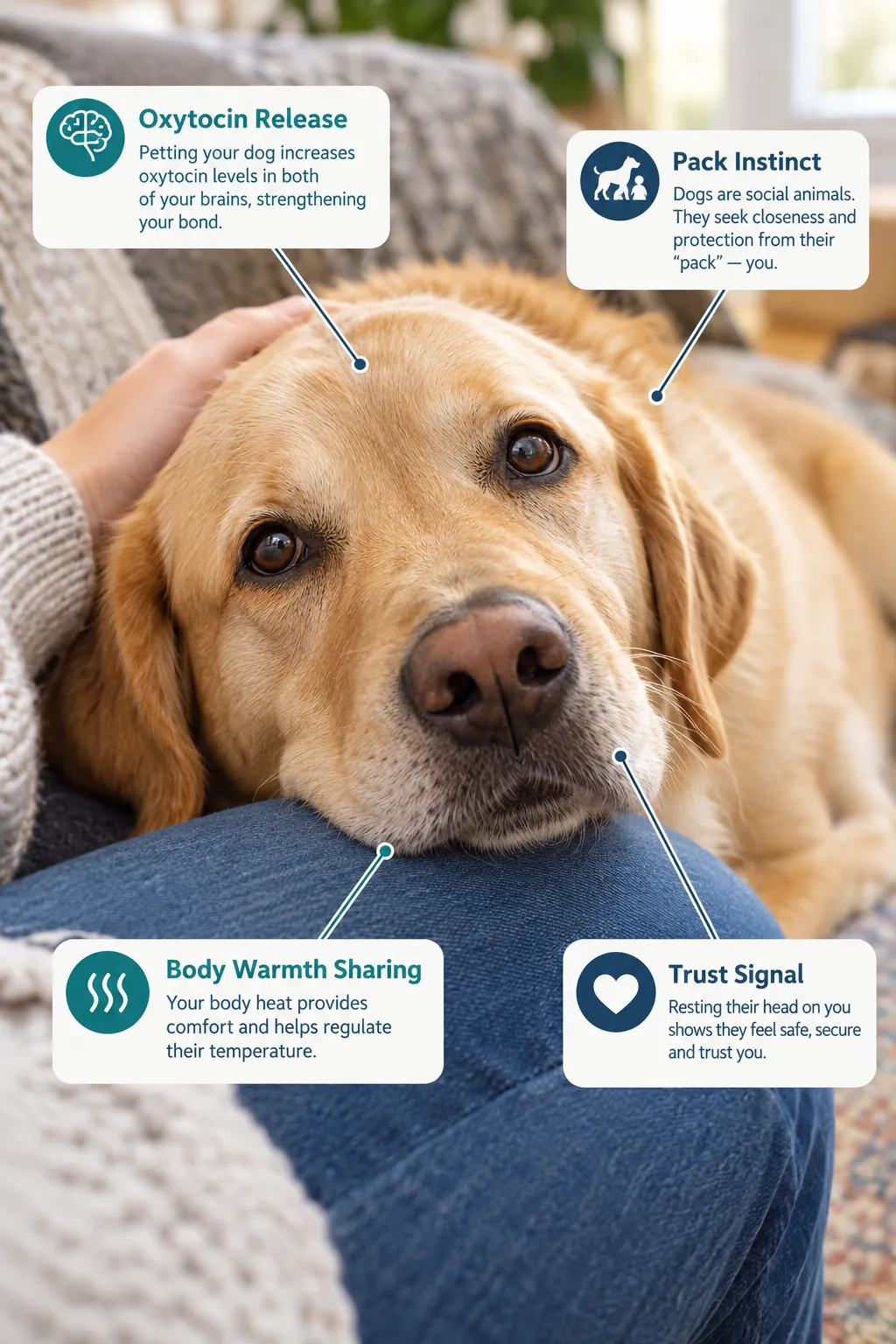
So when your dog presses against your leg on the couch, they’re not just being cute. They’re doing what thousands of years of evolution trained them to do: stay close to the ones they trust.
You might also notice your dog staring at you with soft eyes during a cuddle session. That gaze actually deepens the oxytocin loop even further, creating a feedback cycle of bonding between you both.
Is Dog Cuddling a Sign of Love or Just Comfort
It’s both – and the science backs that up. According to dog behavior experts, cuddling serves a dual purpose: emotional bonding and physical regulation. Dogs don’t separate “love” from “comfort” the way humans sometimes do.
When your dog cuddles you, they’re communicating:
- Trust – you are safe to be physically close to
- Attachment – you are their preferred social companion
- Regulation – your body warmth and heartbeat help calm their nervous system
Think of it like this: a dog that cuddles is choosing you. They could sleep anywhere in the house. They pick you.
“Dogs seek contact comfort the same way human infants seek proximity to caregivers – it’s attachment behavior, not just convenience.” – Behavior science perspective, supported by dog cuddling research
What Does It Mean When a Dog Wants to Cuddle All the Time
A dog that constantly seeks physical contact is usually showing strong attachment – but it can occasionally signal something else. Most of the time, it simply means your dog loves being near you and feels most secure in your presence.
However, watch for these patterns:
- Sudden increase in clinginess – this can signal pain, illness, or anxiety
- Cuddling paired with trembling or panting – may indicate stress or a health issue (see why dogs pant)
- Refusing to leave your side at all – could point to separation anxiety
If your dog has always been a big cuddler, that’s likely just their personality. If the behavior changed suddenly, a vet check is worth it.
Do All Dog Breeds Like to Cuddle Equally
No – breed matters a lot here. Some dogs were selectively bred for close human companionship, while others were bred for independent work.
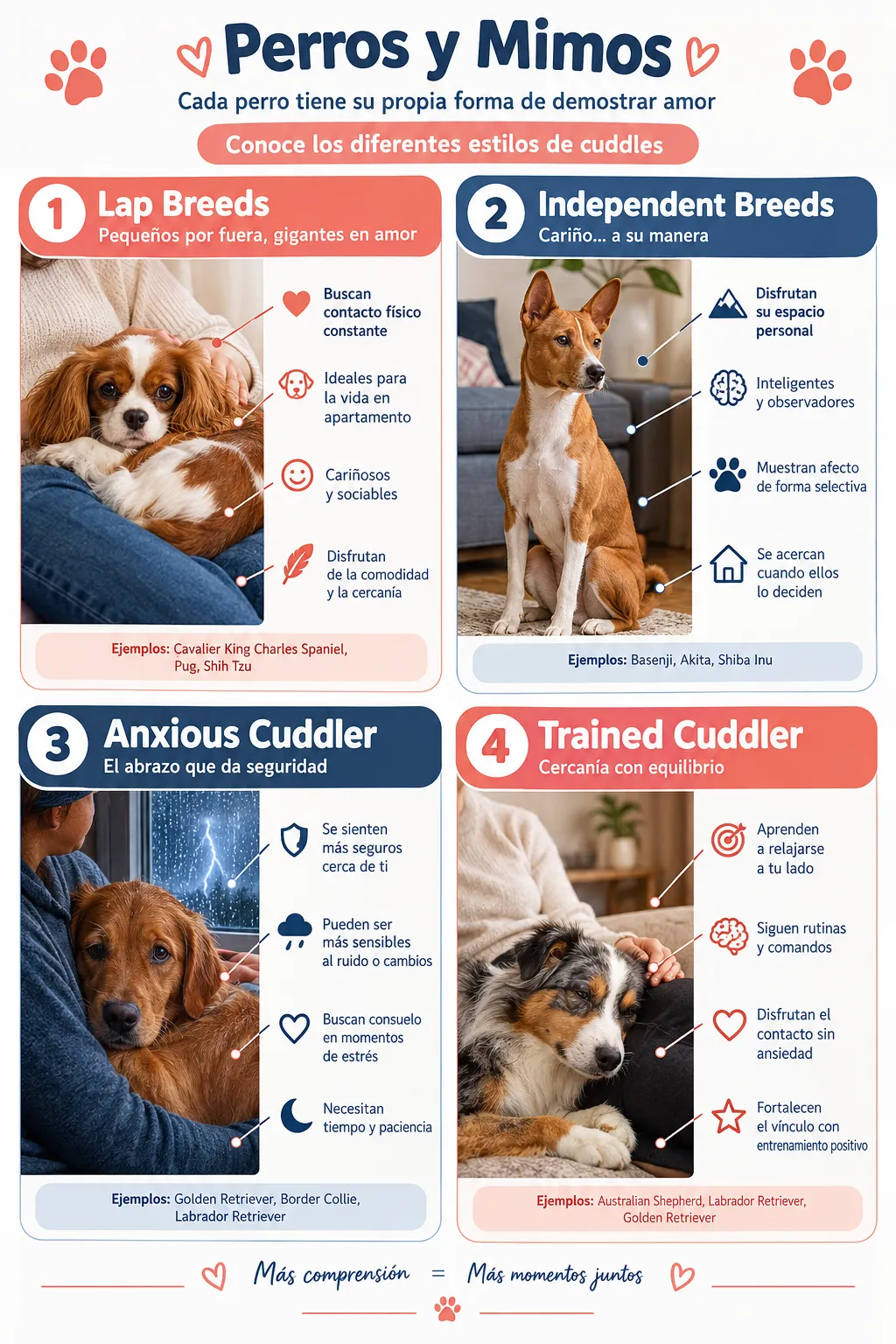
Breeds that tend to love cuddling:
- Cavalier King Charles Spaniels
- Maltese (learn more about Maltese dog traits)
- Golden Retrievers
- Labrador Retrievers
- Pugs
- Havanese
Breeds that tend to prefer more independence:
- Basenjis
- Chow Chows
- Shiba Inus
- Afghan Hounds
- Some Huskies (though individual personalities vary widely)
That said, individual personality, early socialization, and life history often matter more than breed alone. A rescue dog with a difficult past may take months to warm up to cuddling, regardless of breed.
Why Do Dogs Cuddle More at Certain Times of Day – and When They’re Anxious
Dogs tend to cuddle most in the evening and during stressful events. This is a direct reflection of their energy cycles and emotional state.
In the evening, your dog’s activity level drops and their need for social closeness increases. Dog behavior studies note that dogs mirror human routines closely, so when you wind down on the couch, your dog naturally wants to join you.
During anxiety triggers – thunderstorms, fireworks, unfamiliar visitors – dogs seek physical contact because it genuinely lowers their stress. Your body acts as a co-regulator for their nervous system. The warmth and steady heartbeat of a calm human actually helps reduce cortisol levels in dogs.
This is why many dogs become “velcro dogs” during fireworks season. It’s not manipulation – it’s biology.
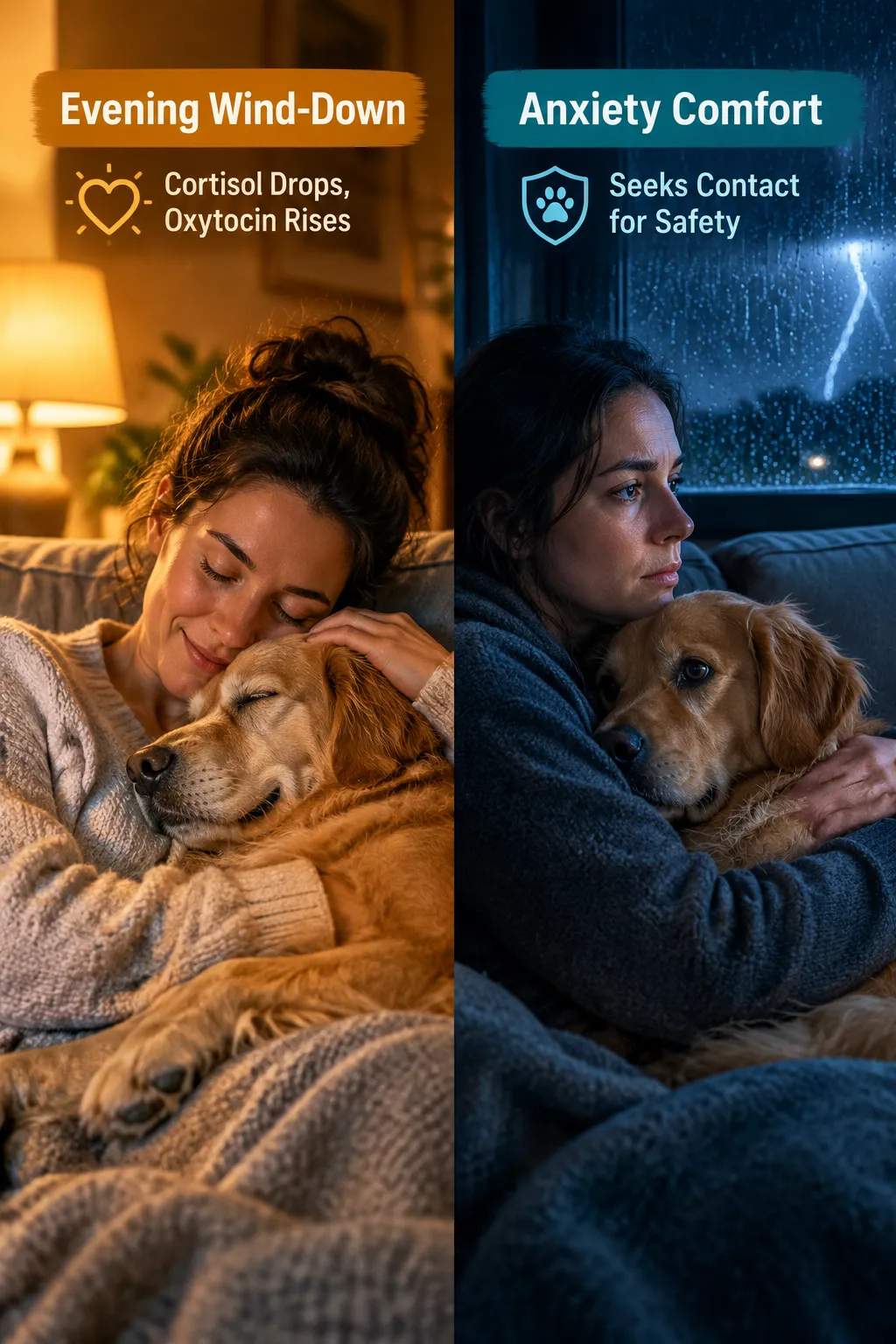
Quick rule: If your dog cuddles more during stressful events, lean into it. Comforting an anxious dog does NOT reinforce fear – it provides genuine relief.
Why Does My Dog Cuddle With Me but Not Other People
Your dog has chosen you as their primary attachment figure. Research on dog bonding behavior confirms that dogs form hierarchical attachments, much like children do with caregivers. You’re their “secure base.”
This selectivity is actually a compliment. It means:
- You’ve consistently provided safety, food, and positive interaction
- Your scent and voice are deeply familiar and calming to them
- They associate you specifically with positive emotional experiences
Dogs may also avoid cuddling with people who move too quickly, speak loudly, or have unfamiliar scents. It’s not personal – it’s sensory.
If you want your dog to warm up to other family members, encourage those people to feed, walk, and play with the dog regularly. Trust is built through consistent, positive interaction over time.
Is It Bad to Cuddle Your Dog Too Much
For most dogs, no – cuddling is healthy and beneficial. But there are a few situations where too much physical closeness can become a problem.
When cuddling is fine:
- Your dog initiates contact and seems relaxed
- They can also settle comfortably alone
- Cuddling is one of many ways you interact
When to be cautious:
- Your dog panics when you stop cuddling or move away
- They can’t self-soothe at all without physical contact
- Cuddling is the only way they calm down
Dog welfare experts note that dogs need to develop some capacity for independent calm. If cuddling has become the only coping tool, it’s worth working with a trainer to build your dog’s confidence and self-regulation skills.
What’s the Difference Between Cuddling and Just Sitting Near Your Dog
Cuddling involves active physical contact – your dog pressing against you, resting their head on you, or seeking to be held. Sitting nearby is proximity without contact.
Both are positive social behaviors, but they communicate different things:
| Behavior | What It Signals |
|---|---|
| Pressing against you | Strong attachment, seeking warmth or comfort |
| Resting head on lap | Trust, affection, attention-seeking |
| Sitting close but not touching | Companionship, mild social bonding |
| Lying in the same room | Comfort in your presence, lower-intensity bonding |
The key difference is initiation and contact. A dog that seeks you out and makes physical contact is expressing a stronger need for connection than one that simply shares the room.
Can You Train a Dog to Cuddle – and Why Some Dogs Hate It
Yes, you can encourage cuddling in dogs that don’t do it naturally, but you can’t force it. And some dogs genuinely prefer independence – that’s okay too.
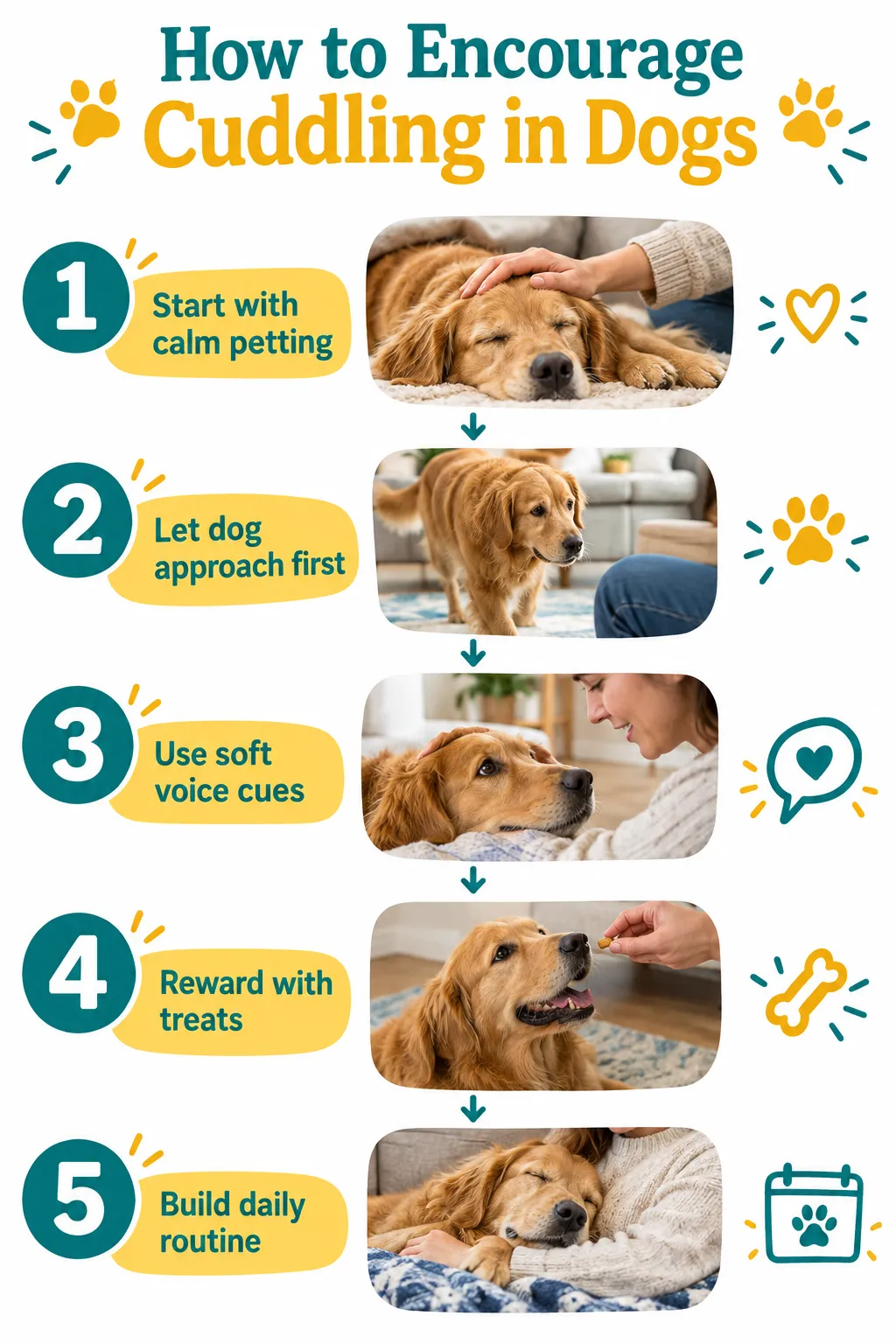
To gently encourage cuddling:
- Let your dog approach first – never pull them into your lap
- Start with calm petting sessions on the floor at their level
- Use a soft, low voice to create a relaxed atmosphere
- Reward calm closeness with treats and gentle praise
- Build a daily routine – dogs thrive on predictable positive experiences
Why some dogs dislike cuddling:
- They were not well-socialized to human touch as puppies
- They have a naturally independent temperament (often seen in working breeds)
- Past trauma or negative experiences with handling
- Physical discomfort – early signs of pain in dogs can make touch feel unpleasant
Never force a dog to cuddle. A dog that tolerates unwanted contact is not a happy cuddler – they’re just compliant. Consent matters here.
Is Cuddling Good for a Dog’s Mental Health
Yes – and the benefits are well-documented. Physical closeness between dogs and humans has been shown to reduce cortisol (the stress hormone) and increase oxytocin in dogs. This directly supports emotional wellbeing.
Regular cuddling can:
- Reduce anxiety and fear responses
- Strengthen the dog-human bond
- Provide a sense of security and predictability
- Help dogs recover faster from stressful events
The benefits go both ways. Human studies consistently show that petting a dog lowers blood pressure and reduces stress in people too. It’s a genuinely mutual exchange.
What Does Excessive Cuddling Behavior Mean in Dogs
Excessive cuddling – especially when it’s a new or sudden behavior – can be a signal worth paying attention to.
Dog behavior resources highlight that a dog who suddenly becomes unusually clingy may be:
- In pain or feeling unwell – dogs often seek comfort when something hurts
- Experiencing heightened anxiety – new environments, schedule changes, or loud noises
- Responding to your emotional state – dogs are remarkably sensitive to human stress (see 11 things dogs know before humans do)
- Showing early signs of cognitive changes – older dogs sometimes become clingier as part of aging
If the behavior is new and persistent, rule out a health issue first. A vet visit is always a reasonable first step when behavior changes suddenly.
Conclusion
So, why do dogs like to cuddle? The answer runs deeper than simple affection. It’s a mix of ancient pack instincts, brain chemistry, emotional attachment, and genuine trust. When your dog chooses to curl up next to you, they’re doing something that evolution, neuroscience, and thousands of years of human-dog history all support.
Actionable next steps for dog owners:
- Read your dog’s body language – a relaxed, soft body during cuddling means they’re enjoying it
- Let your dog initiate – this builds genuine trust rather than tolerance
- Create a daily wind-down routine – a calm evening cuddle session supports your dog’s mental health
- Watch for sudden changes – new clinginess deserves a vet check
- Don’t force it – if your dog prefers independence, respect that and find other ways to bond
The cuddle on your couch tonight? It’s not just cute. It’s connection.
Frequently Asked Questions
Why do dogs like to cuddle so much?
Dogs cuddle because of pack instincts, oxytocin release, and genuine emotional attachment. Physical closeness is how dogs communicate trust and feel safe.
Do dogs cuddle to show love?
Yes. Cuddling is one of the clearest ways a dog expresses affection and attachment to their owner. It’s both emotional and biological.
Why does my dog cuddle with me but not my partner?
You are likely your dog’s primary attachment figure. Dogs form hierarchical bonds based on who feeds, walks, and spends the most consistent time with them.
Is it okay to let your dog sleep in bed with you?
For most owners and dogs, yes. As long as your dog is healthy and the arrangement doesn’t disrupt sleep for either of you, co-sleeping is a natural extension of their cuddling instinct.
Why does my dog cuddle me more when I’m sad?
Dogs are highly sensitive to human emotional cues. They detect changes in your scent, voice, and body language and often respond with increased physical closeness as a form of comfort.
Can cuddling too much make a dog anxious?
It can if cuddling becomes the only way a dog self-regulates. Dogs that can’t settle without constant contact may develop separation anxiety. Balance closeness with encouraging independent calm.
Why do dogs cuddle right before they sleep?
It’s a deeply instinctive behavior rooted in pack sleeping habits. Curling up close before sleep is how dogs signal safety and prepare for rest.
What does it mean if my dog suddenly stops cuddling?
A sudden change in cuddling behavior – either more or less – can signal a health issue, pain, or emotional stress. If it’s persistent, consult your vet.
Do puppies cuddle more than adult dogs?
Often yes, because puppies are more dependent and still learning to regulate their emotions. As dogs mature, their cuddling habits are shaped by personality, breed, and socialization.
Is cuddling good for rescue dogs?
Yes, but patience is key. Rescue dogs may need time to build trust before they’re comfortable with close physical contact. Let them set the pace.