

Last updated: September 11, 2026
Quick Answer: Most dogs can safely eat grains like brown rice, oats, barley, quinoa, millet, and corn when they are cooked plain and served in appropriate portions. Grains are not harmful to dogs unless a specific allergy or sensitivity exists. According to Purina’s nutrition guidance, grains provide carbohydrates, fiber, protein, and essential vitamins that support a balanced canine diet.
Key Takeaways 🐾
- 11 grains are widely considered safe for dogs: brown rice, white rice, oats, barley, quinoa, millet, sorghum, bulgur, wild rice, wheat, and corn.
- 5 preparations to avoid: raw/uncooked grains, bread with toxic add-ins, heavily seasoned grain dishes, corn on the cob, and grain-based human snacks with xylitol or raisins.
- Grains are not fillers – they supply digestible carbs, B-vitamins, fiber, and minerals.
- Grain-free diets are not automatically healthier and have been linked to canine dilated cardiomyopathy (DCM) in some dogs.
- Always serve grains cooked and plain – no salt, butter, or sauces.
- Limit grains to roughly 10% of daily caloric intake for most dogs.
- Dogs with confirmed grain allergies should avoid wheat and other trigger grains – but this is a minority of dogs.
- Puppies can eat the same safe grains as adult dogs, but in smaller portions.
What Grains Are Safe for Dogs to Eat
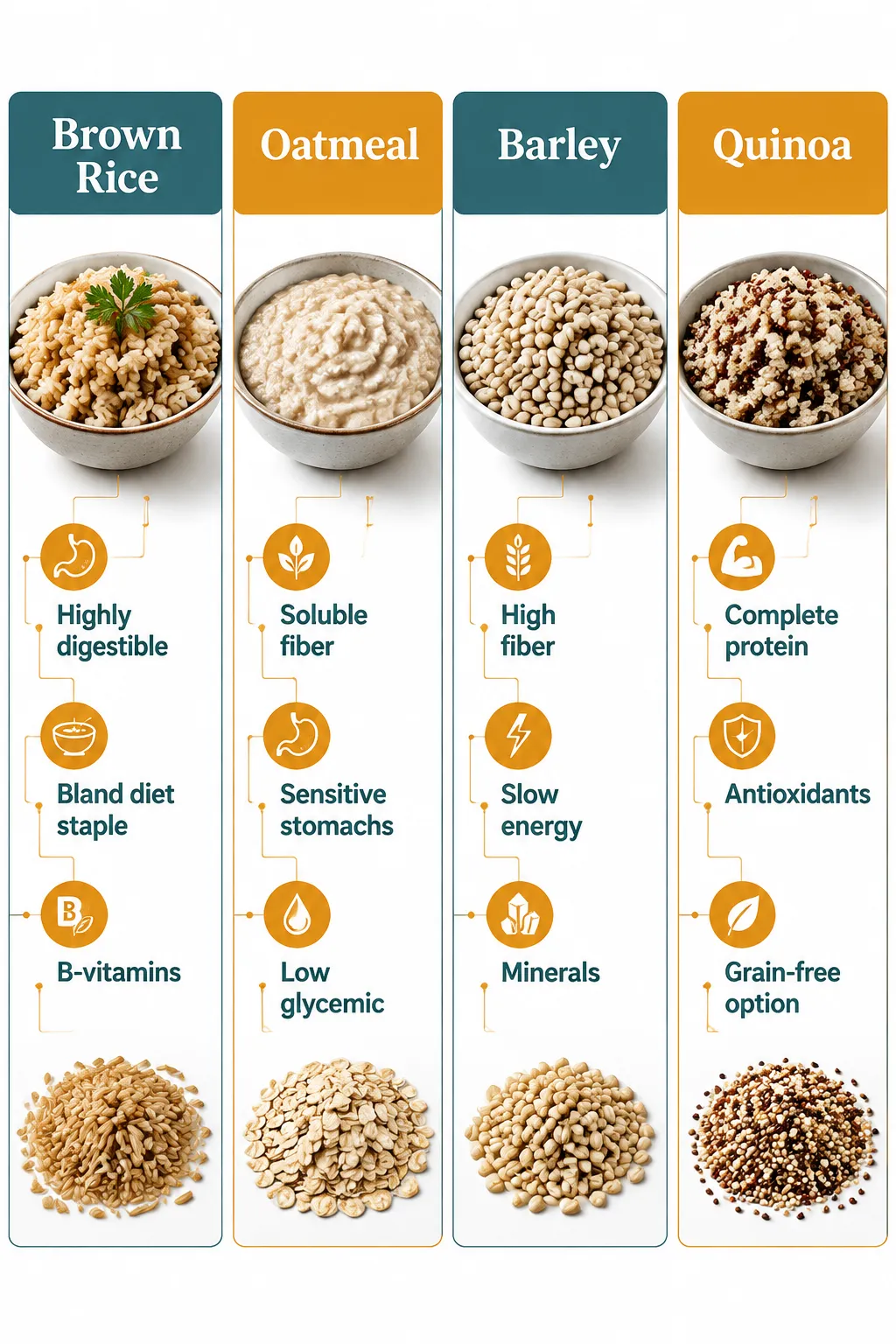
Dogs can safely eat at least 11 grains when prepared correctly. These grains are confirmed as safe by veterinary nutrition experts and appear consistently across major pet health resources.
Here are the 11 safe grains for dogs:
| Grain | Key Benefit | Best Served As |
|---|---|---|
| Brown Rice | Highly digestible, B-vitamins | Cooked, plain |
| White Rice | Easy on upset stomachs | Boiled in water |
| Wild Rice | Antioxidants, fiber | Cooked, plain |
| Oats/Oatmeal | Soluble fiber, sensitive stomachs | Plain cooked oatmeal |
| Barley | Slow-release energy, minerals | Cooked whole barley |
| Quinoa | Complete protein, antioxidants | Cooked, rinsed |
| Millet | Gluten-free, easy to digest | Cooked, plain |
| Sorghum | High fiber, low glycemic | Cooked, plain |
| Bulgur | Fiber, B-vitamins | Cooked, plain |
| Wheat | Protein, energy | Cooked or in dog food |
| Corn | Protein, carbs, antioxidants | Cooked kernels only |
For a broader look at what dogs can and cannot eat, check out this guide on what dogs can eat and not eat.
Can Dogs Eat Rice and Oats
Yes – rice and oats are two of the most recommended grains for dogs. Both are gentle on digestion and widely used in veterinary bland diets.
Rice (brown or white) is a staple in home-cooked dog meals. Brown rice is higher in fiber and nutrients, while white rice is easier to digest and ideal for dogs with upset stomachs. Always boil rice in plain water with no seasonings.
Oatmeal is rich in soluble fiber, which helps dogs with sensitive or irregular digestion. It also contains B-vitamins and minerals. Serve it cooked and plain – never with sugar, milk, or flavored packets.
“Oatmeal is one of the best grains for dogs with sensitive stomachs because the soluble fiber helps regulate digestion without causing irritation.”
If you enjoy making homemade meals for your dog, these peanut butter oatmeal chew sticks for dogs are a vet-approved way to use oats as a treat.
Can Dogs Have Wheat and Barley
Both wheat and barley are safe for most dogs, though wheat deserves a closer look.
Wheat is nutritious and commonly found in commercial dog foods. It provides protein, carbohydrates, and energy. However, wheat accounts for roughly 13% of documented food allergies in dogs, making it one of the more common grain allergens. It is still safe for the majority of dogs – just watch for signs of sensitivity.
Barley is an excellent grain for dogs. It is high in fiber, provides slow-release energy, and is packed with minerals like selenium and magnesium. It is also lower on the glycemic index than white rice, which makes it a good choice for dogs prone to blood sugar spikes.
Both grains should be cooked and served plain.
Is Corn Bad for Dogs
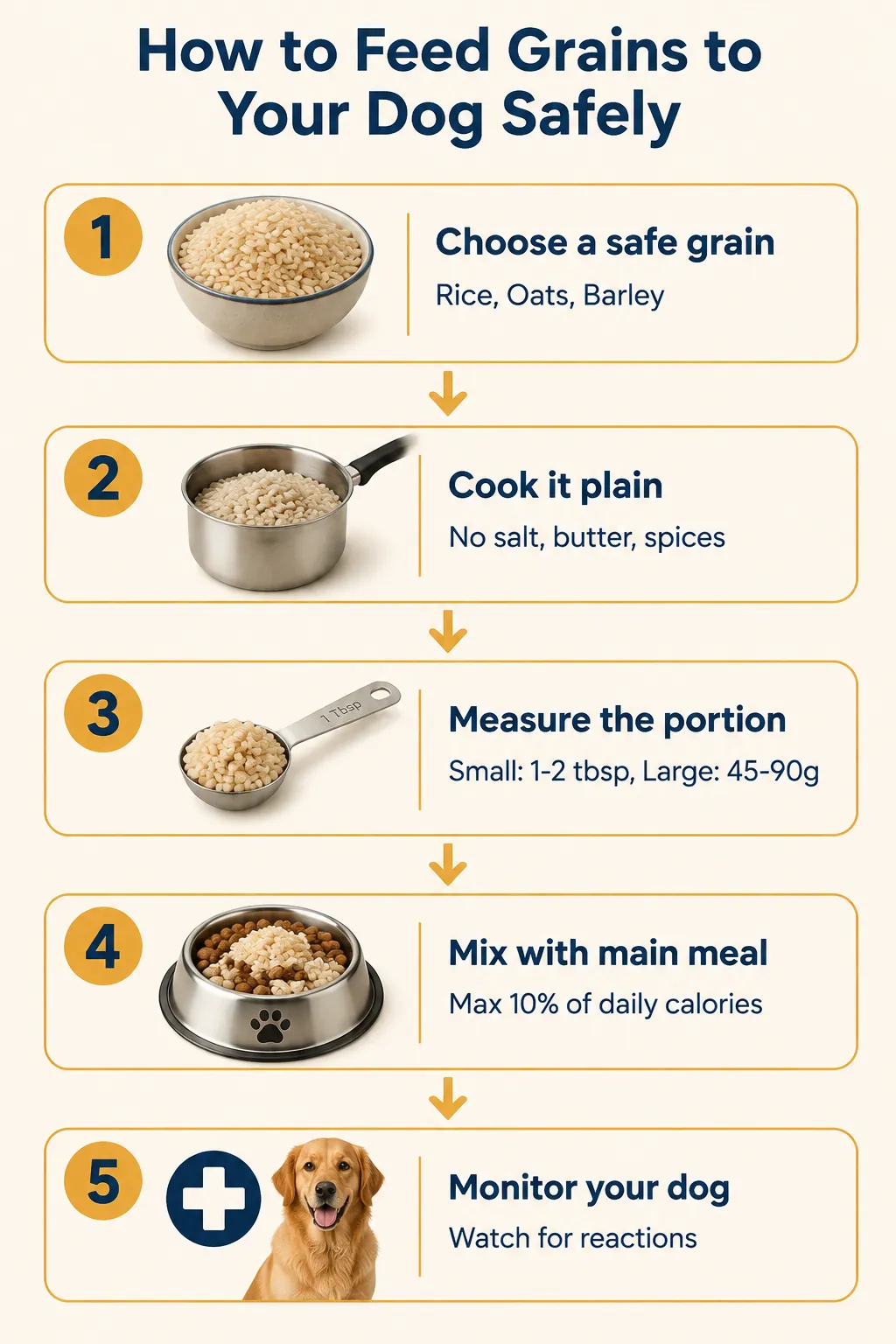
Corn is not bad for dogs – it is actually a nutritious grain when served correctly. Corn provides protein, carbohydrates, antioxidants, and fiber, making it far more than a filler ingredient.
The key rules for corn:
- ✅ Cooked corn kernels – safe and nutritious
- ✅ Corn as an ingredient in dog food – fine for most dogs
- ❌ Corn on the cob – dangerous, can cause intestinal blockage
- ❌ Buttered or salted corn – avoid entirely
Individual dogs may still have corn sensitivities, so introduce it gradually and watch for digestive changes.
Which Grains Should Dogs Avoid
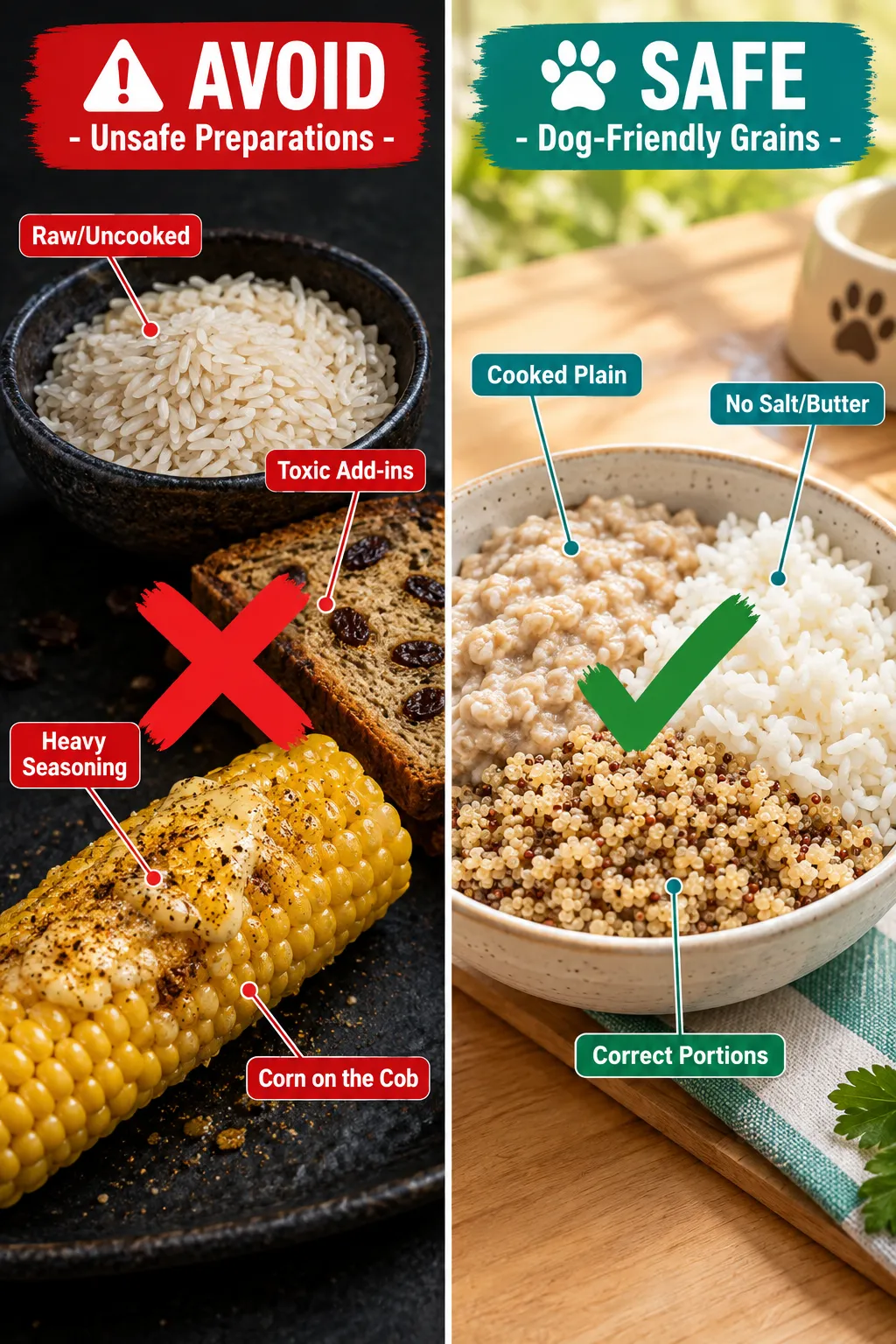
The grains to avoid are less about the grain itself and more about how it is prepared or what it contains. Several expert sources highlight these five as the main ones to skip:
- Raw or uncooked grains – Poor digestibility and can cause stomach upset. Always cook grains before serving.
- Bread with toxic add-ins – Bread containing raisins, xylitol, chocolate, or macadamia nuts is dangerous. Even small amounts of xylitol can be life-threatening.
- Heavily seasoned grain dishes – Rice pilaf, flavored oatmeal, or pasta with garlic and onion are all off-limits. Garlic and onion are toxic to dogs.
- Corn on the cob – The cob itself is a choking and blockage hazard, even if the kernels are fine.
- Grain-based human snacks – Crackers, cereals, granola bars, and flavored rice cakes often contain sugar, salt, artificial sweeteners, or other harmful additives.
How Much Grain Should I Feed My Dog
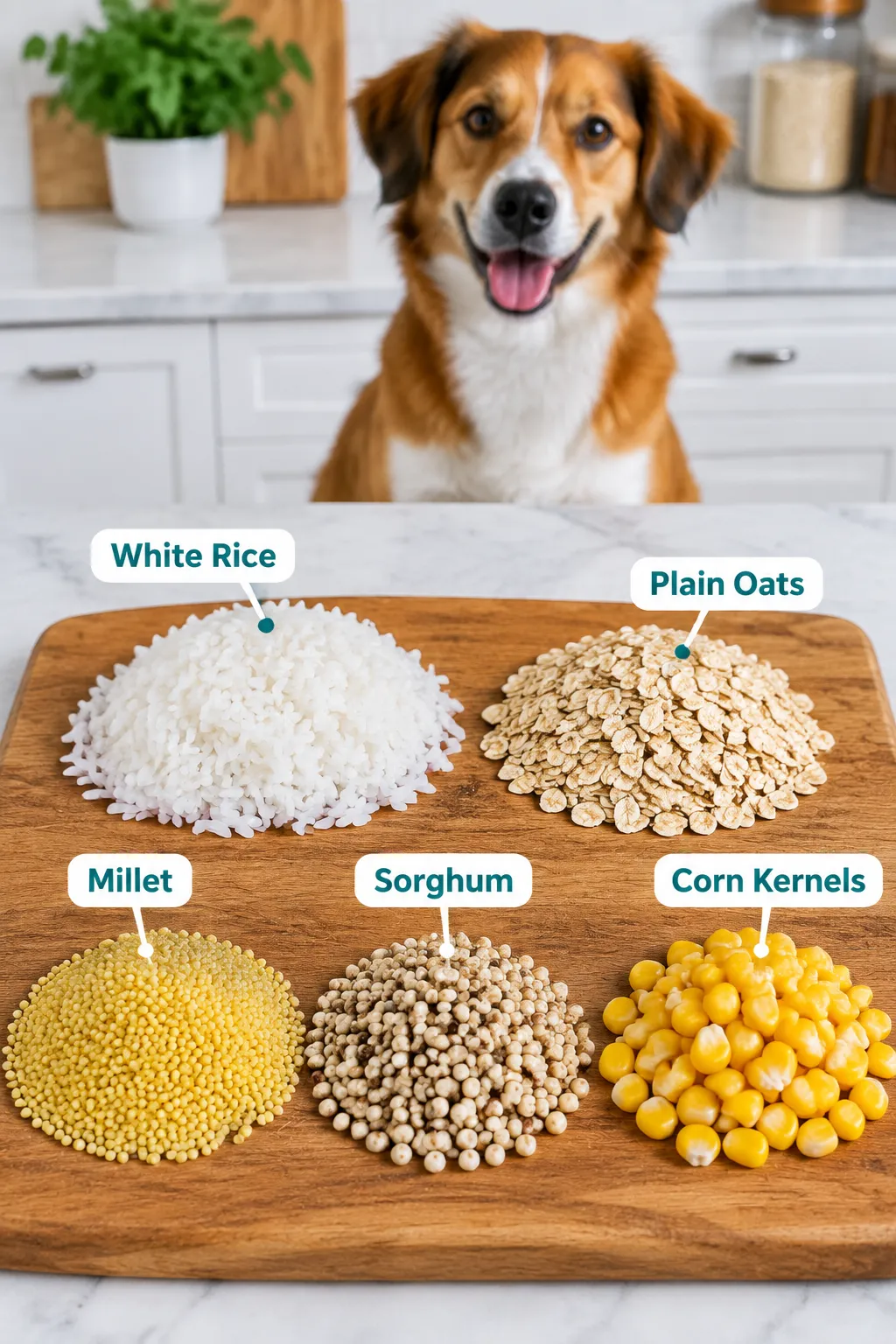
Grains should complement a balanced diet, not dominate it. A practical guideline is the “rule of 10” – grains should make up no more than 10% of your dog’s total daily caloric intake.
Suggested serving sizes per meal:
- Small dogs (under 10 kg) – about 1 to 2 tablespoons of cooked grains
- Medium dogs (10-25 kg) – about 2 to 4 tablespoons of cooked grains
- Large dogs (over 25 kg) – about 45 to 90 grams of cooked grains
These are general estimates. The right amount depends on your dog’s size, activity level, age, and overall diet. Always adjust based on your vet’s guidance, especially if your dog has a health condition.
For ideas on how to add grains and other wholesome ingredients to your dog’s meals, see what to add to your dog’s dry food.
Are Grains Necessary in Dog Food
Grains are not strictly necessary, but they are beneficial for most dogs. A 2025 nutrition review found grains to be healthy and arguably essential for many dogs, countering the common myth that they are cheap fillers or allergy triggers.
Grains supply:
- Digestible carbohydrates for energy
- Dietary fiber for gut health
- B-vitamins and minerals
- Plant-based protein (especially quinoa)
- Essential fatty acids
Dogs who genuinely need to avoid grains are those with a confirmed grain or wheat allergy, or dogs on specialized veterinary diets. For everyone else, grains are a healthy part of the diet.
Grain-Free vs Grain-Inclusive Dog Food
Grain-free diets are not automatically healthier. In fact, the FDA investigated a potential link between certain grain-free boutique diets and canine dilated cardiomyopathy (DCM) – a serious heart condition. Veterinary experts now recommend grain-inclusive diets for most dogs unless a specific medical reason exists.
Choose grain-inclusive if:
- Your dog has no diagnosed grain allergy
- You want a well-researched, balanced diet
- Your dog has a history of heart issues
Consider grain-free only if:
- Your vet has confirmed a grain allergy through testing
- Your dog is on a specialized elimination diet
Do not switch to grain-free based on marketing claims alone. Talk to your vet first.
Best Grains for Dogs With Allergies
For dogs with sensitivities, the best options are naturally gluten-free grains that are less likely to trigger reactions.
Top picks for sensitive or allergic dogs:
- Millet – gluten-free, easy to digest, gentle on the gut
- Sorghum – gluten-free, high fiber, low allergen potential
- Quinoa – technically a seed, but often grouped with grains; gluten-free and protein-rich
- Brown rice – widely tolerated, rarely allergenic
- Oats – generally well-tolerated, though some dogs with wheat sensitivity may also react to oats
Avoid wheat, barley, and rye if your dog has a confirmed gluten sensitivity. Always introduce new grains one at a time so you can identify any reactions.
For more on managing food sensitivities, see this guide to vet-approved safe foods for French Bulldogs – a breed known for digestive sensitivities.
Can Puppies Eat the Same Grains as Adult Dogs
Yes, puppies can eat the same safe grains as adult dogs. The grains themselves are not age-restricted. However, puppies have smaller stomachs and higher protein needs, so grains should make up an even smaller portion of their diet compared to adults.
Stick to easily digestible options like plain cooked white rice or oatmeal when introducing grains to puppies. Avoid anything heavily fibrous until their digestive systems are more mature.
Always check with your vet before making significant changes to a puppy’s diet.
Are Whole Grains Better Than Refined Grains for Dogs
Whole grains are generally better than refined grains because they retain more fiber, vitamins, and minerals. Brown rice, for example, has more nutrients than white rice because the bran layer is intact.
That said, refined grains like white rice are not harmful – they are just lower in fiber. White rice is actually preferred in bland diets for sick dogs because it is easier to digest.
Choose whole grains for everyday feeding to maximize nutritional value.
Choose refined grains (like white rice) when your dog has an upset stomach or digestive issues.
If your dog is recovering from illness, see what to give a sick dog naturally for more home-care tips.
Do All Dogs Digest Grains the Same Way
No – individual dogs vary in how well they digest grains. Factors that affect grain digestion include breed, age, gut health, and whether any food sensitivities exist.
Most dogs digest cooked grains very well. Research confirms that properly cooked grains are highly digestible for dogs, with digestibility increasing significantly when grains are cooked versus raw.
Senior dogs or those with digestive conditions may do better with softer, well-cooked grains like oatmeal or white rice. Active or working dogs may benefit from the sustained energy of barley or sorghum.
For senior dogs specifically, check out these homemade dog food ideas for senior dogs that incorporate healthy grains.
What Happens if a Dog Eats Unsafe Grains
If a dog eats a grain prepared with toxic add-ins – like xylitol, raisins, onion, or garlic – the reaction can range from digestive upset to a medical emergency.
Signs to watch for after eating unsafe grain foods:
- Vomiting or diarrhea
- Lethargy or weakness
- Loss of appetite
- Swollen abdomen (possible blockage from corn cob)
- Tremors or collapse (if xylitol was involved)
If your dog ate something containing xylitol, raisins, or large amounts of garlic or onion, contact your vet or an emergency animal poison control line immediately. Do not wait for symptoms to appear.
Raw grains typically cause milder issues like gas, bloating, or loose stools rather than a true emergency.
FAQ
Can dogs eat oatmeal every day?
Yes, in small amounts. Plain cooked oatmeal is safe for daily feeding as a supplement, but it should not replace a balanced meal. Stick to the 10% calorie rule.
Is quinoa safe for dogs?
Yes. Quinoa is one of the best grain-like foods for dogs because it is a complete protein and is gluten-free. Rinse and cook it plain before serving.
Can dogs eat pasta?
Plain cooked pasta is generally safe in small amounts. Avoid pasta with sauces, garlic, onion, or cheese.
What grains can dogs eat if they have a wheat allergy?
Dogs with wheat allergies can safely eat rice, oats (in most cases), millet, sorghum, and quinoa – all of which are naturally wheat-free.
Is corn a filler in dog food?
No. Corn is a nutritious ingredient that provides protein, carbohydrates, antioxidants, and fiber, not just empty calories.
Can dogs eat bread?
Plain white or wheat bread is not toxic in small amounts, but it offers little nutritional value. Bread with raisins, xylitol, nuts, or fruit is dangerous and must be avoided.
How do I introduce a new grain to my dog?
Start with a small amount mixed into their regular food. Watch for digestive changes over 2 to 3 days before increasing the portion.
Is brown rice or white rice better for dogs?
Brown rice is more nutritious for everyday feeding. White rice is better for dogs with upset stomachs due to its easier digestibility.
Can dogs eat corn tortillas or chips?
Plain corn tortillas in very small amounts are not toxic, but chips are high in salt and fat – avoid them entirely.
Are grains linked to allergies in dogs?
Grains can cause allergies, but they are not the most common trigger. Proteins like beef and chicken are more frequent allergens. Wheat accounts for roughly 13% of food allergies in dogs – a minority but worth noting.
Can dogs eat raw oats?
It is better to cook oats before serving. Raw oats are harder to digest and may cause gas or bloating.
What is the safest grain for a dog with a sensitive stomach?
Plain cooked white rice or plain oatmeal are the gentlest options for dogs with sensitive digestion.
Conclusion
Understanding what grains can dogs eat comes down to three simple rules: choose from the 11 safe options, always cook them plain, and keep portions moderate.
Grains like brown rice, oats, barley, quinoa, and millet are not just safe – they actively support your dog’s energy, digestion, and overall health. The grains to avoid are mostly about preparation, not the grain itself. Raw grains, toxic bread add-ins, and heavily seasoned dishes are the real risks.
Your next steps:
- Pick one safe grain – brown rice or plain oatmeal are great starting points.
- Cook it plain in water with no salt, butter, or seasoning.
- Serve a small portion alongside your dog’s regular meal (start with 1 tablespoon for small dogs).
- Watch for any digestive changes over a few days.
- If your dog has a known allergy or health condition, check with your vet before adding new foods.
Grains can be a genuinely nutritious part of your dog’s diet – as long as you keep it simple and serve them right. 🐶