Last updated: September 15, 2026
Quick Answer: The best homemade dog food recipes for a shiny coat are built around omega-3-rich proteins like salmon or sardines, complex carbs like sweet potato, leafy greens, and a drizzle of healthy oil. This combination – called the “Glow Bowl” method – delivers the fatty acids, vitamins, and minerals that directly feed your dog’s skin and hair follicles. Most dog owners start seeing visible coat improvements within 6 to 8 weeks of consistent feeding.
Key Takeaways
- Omega-3 fatty acids from salmon, sardines, and flaxseed oil are the single biggest driver of a glossy coat.
- The “Glow Bowl” formula is: protein + complex carb + leafy green + healthy oil + a targeted supplement.
- Most dogs show visible coat improvement within 6 to 8 weeks of switching to nutrient-dense homemade meals.
- A vet or veterinary nutritionist should review your recipe before you fully replace commercial kibble.
- Dogs with dull coats often have deficiencies in zinc, biotin, or essential fatty acids – all fixable through food.
- Homemade dog food can cost more per meal than budget kibble, but it is often comparable to premium commercial diets.
- Always add a canine multivitamin or balanced supplement blend to homemade meals to prevent nutritional gaps.
- Dogs with skin allergies often do best on single-protein, limited-ingredient Glow Bowls.
- Raw diets can improve coat health, but they carry food safety risks and require careful balancing.
- Never include onions, garlic, grapes, raisins, or xylitol in any homemade dog food. Check our list of everyday foods that can kill your dog before you start.
What Ingredients Make a Dog’s Coat Shiny and Healthy
The key ingredients for a shiny dog coat are omega-3 fatty acids, zinc, biotin, vitamin E, and quality protein. These nutrients work directly on the skin barrier and hair follicles, producing a coat that looks glossy and feels soft.
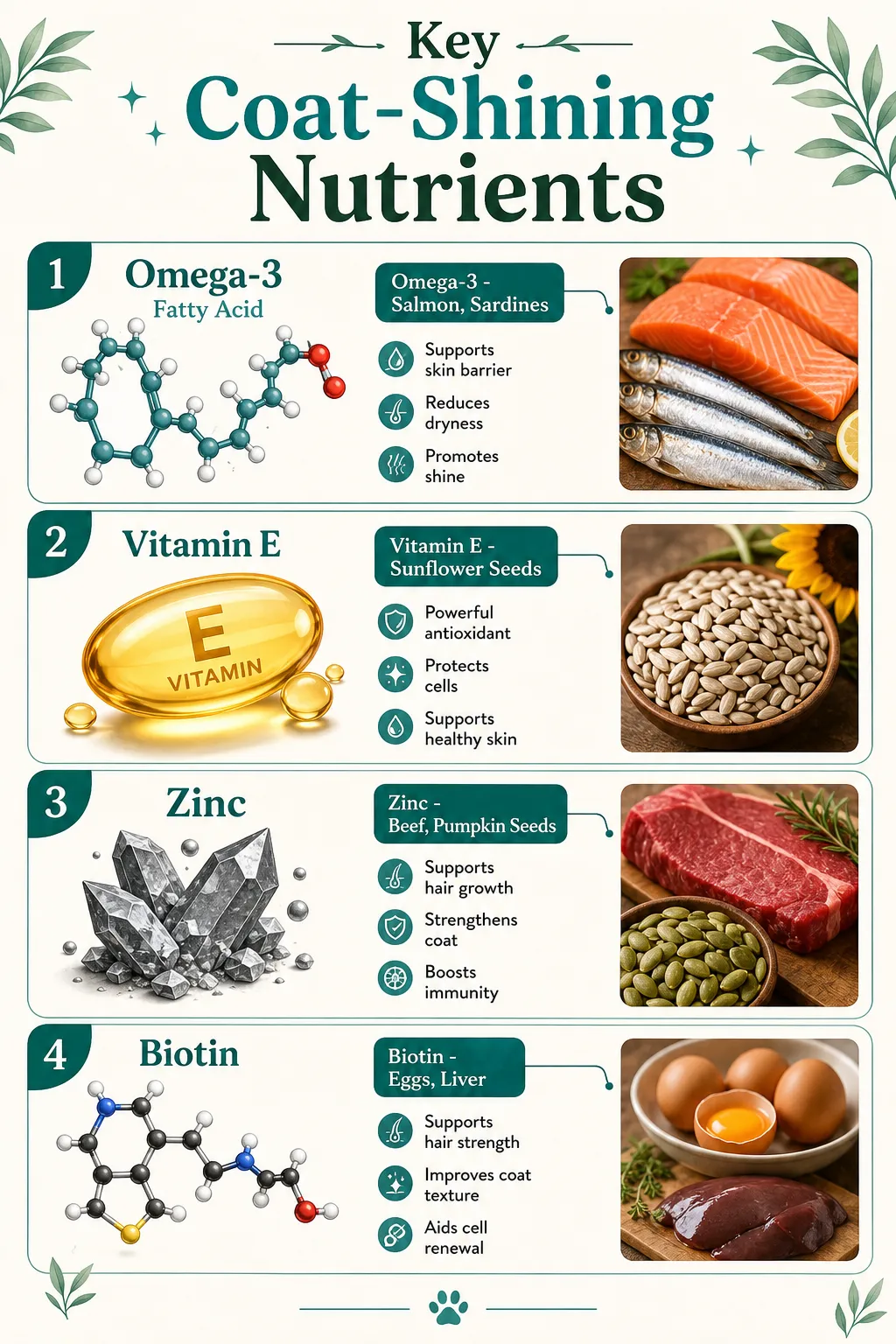
Here is a breakdown of the top coat-building ingredients:
| Ingredient | Key Nutrient | Why It Helps |
|---|---|---|
| Salmon | Omega-3 (EPA/DHA) | Reduces inflammation, adds gloss |
| Sardines (in water) | Omega-3, Vitamin D | Feeds hair follicles |
| Eggs | Biotin, protein | Strengthens hair shaft |
| Sweet potato | Beta-carotene, fiber | Supports skin cell turnover |
| Spinach / kale | Vitamin E, iron | Antioxidant protection |
| Flaxseed oil | ALA omega-3 | Moisturizes skin from inside |
| Pumpkin seeds | Zinc | Reduces shedding |
| Chicken liver | Biotin, B vitamins | Promotes healthy skin |
According to research on real-food ingredients for a glossy coat, omega-3 and omega-6 fatty acids are the most consistently supported nutrients for skin and coat health in dogs.
Common mistake: Many owners focus only on protein and skip healthy fats entirely. A lean chicken breast with no oil added will not produce the same coat results as salmon or chicken with flaxseed oil drizzled on top.
What Is the “Glow Bowl” Method?
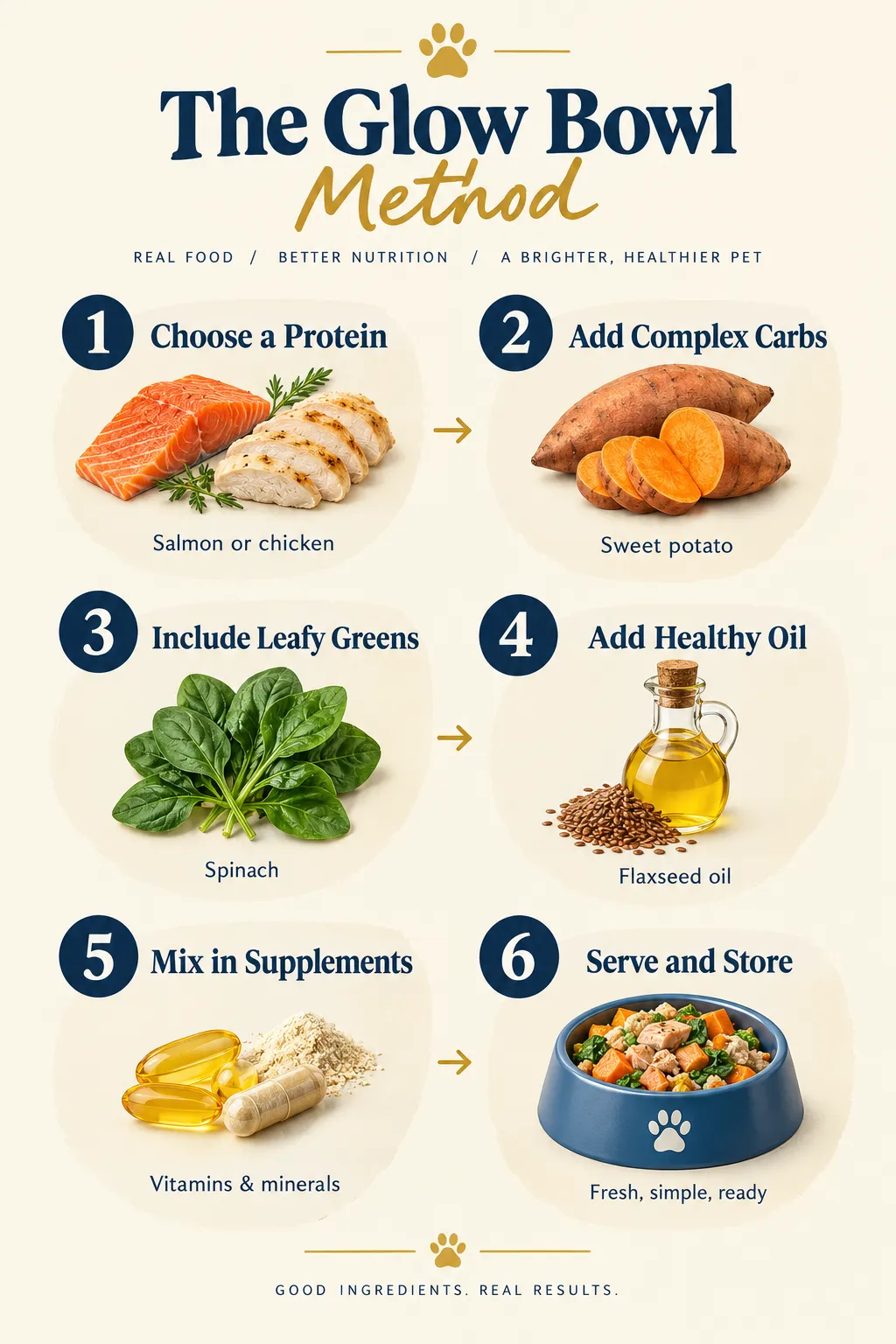
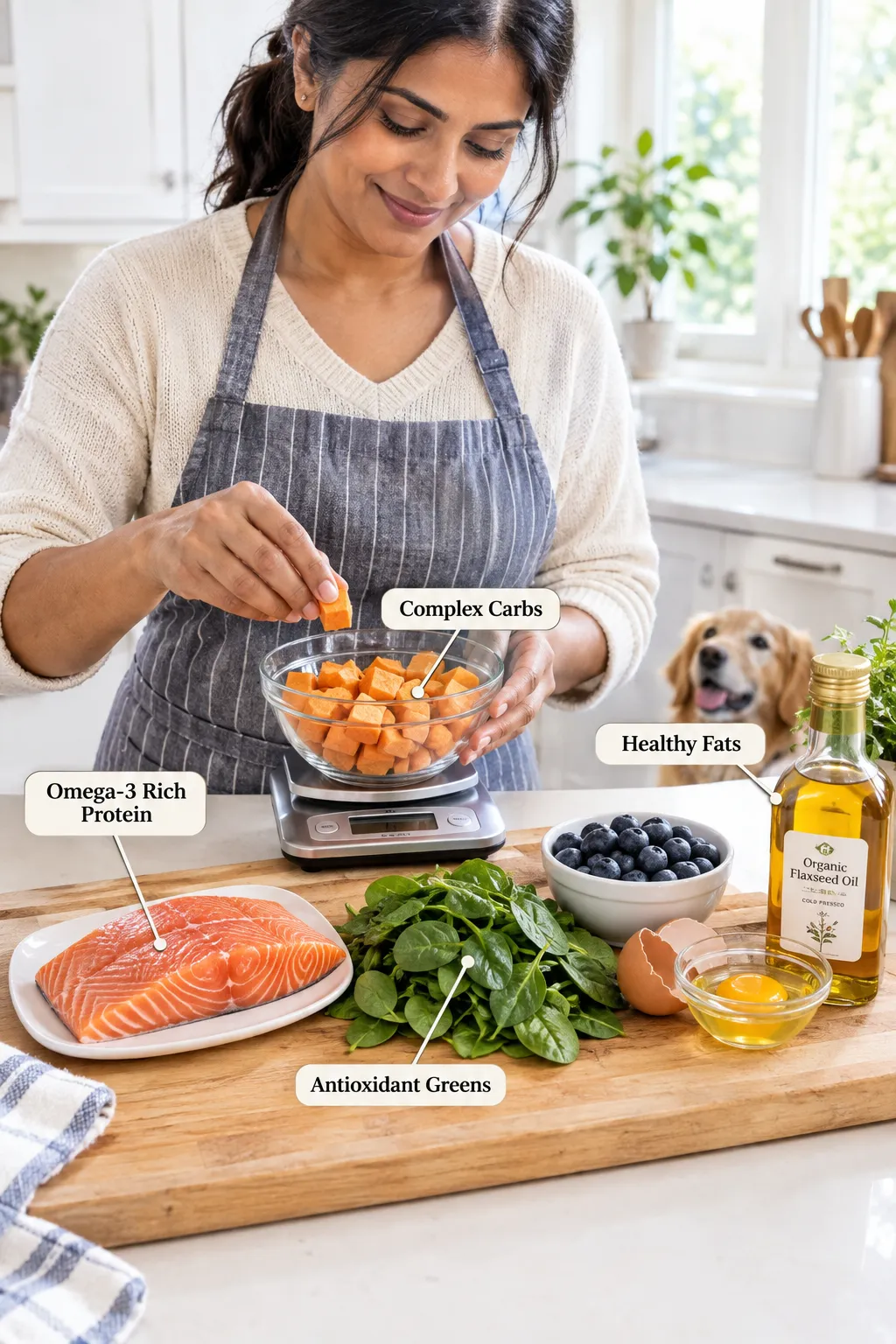
The “Glow Bowl” method is a simple framework for building homemade dog meals that specifically target coat health. Each bowl follows a repeatable pattern so you always hit the right nutrient targets.
The Glow Bowl formula:
- Protein base (50% of the bowl) – fatty fish, chicken, turkey, or beef
- Complex carbohydrate (25%) – sweet potato, brown rice, or oats
- Leafy green or vegetable (15%) – spinach, kale, zucchini, or carrots
- Healthy fat (5-10%) – flaxseed oil, fish oil, or coconut oil
- Supplement – canine multivitamin or omega-3 capsule
This method is flexible. You can rotate proteins and vegetables week to week while keeping the structure the same. That variety also helps prevent nutritional gaps.
7 Homemade Dog Food Recipes for a Shiny Coat
These recipes follow the Glow Bowl framework. Adjust portions based on your dog’s weight – a general guide is roughly 2 to 3% of body weight in food per day. For precise amounts, check our guide on how much food to feed your dog daily.
Recipe 1 – Salmon and Sweet Potato Glow Bowl 🐟
This is the gold-standard coat recipe. Salmon delivers EPA and DHA omega-3s directly, while sweet potato adds beta-carotene and fiber.
Ingredients:
- 150g cooked salmon (boneless)
- 100g cooked sweet potato (mashed)
- 50g steamed spinach
- 1 tsp flaxseed oil
- 1/4 tsp canine multivitamin powder
Mix together and serve at room temperature. For more salmon-based ideas, see our salmon and sweet potato dog food recipes.
Recipe 2 – Chicken and Sweet Potato Glow Bowl 🍗
Chicken is one of the most digestible proteins for dogs and pairs perfectly with sweet potato for a balanced coat-supporting meal. Vet-approved homemade dog food recipes consistently include chicken and sweet potato as a reliable base combination.
Ingredients:
- 150g cooked chicken breast (shredded)
- 100g cooked sweet potato
- 50g steamed kale
- 1 tsp fish oil
- 1 hard-boiled egg (chopped)
For more chicken-based recipes, see our homemade dog food recipes with chicken and brown rice.
Recipe 3 – Sardine and Oat Bowl 🐟
Sardines are one of the most omega-3-dense, affordable proteins you can use. Oats provide soluble fiber that supports gut health – and a healthy gut means better nutrient absorption for the coat.
Ingredients:
- 1 can sardines in water (drained, ~100g)
- 80g cooked rolled oats
- 50g grated zucchini (raw or lightly steamed)
- 1 tsp coconut oil
Recipe 4 – Turkey and Flaxseed Glow Bowl 🦃
Turkey is a lean, hypoallergenic protein that works well for dogs with mild sensitivities. Adding flaxseed oil keeps the omega-3 content high without using fish. Turkey with coconut oil is another popular combination that supports skin moisture.
Ingredients:
- 150g cooked ground turkey
- 100g cooked brown rice
- 50g steamed carrots
- 1 tsp flaxseed oil
- 1/4 tsp kelp powder (for iodine and minerals)
Recipe 5 – Beef and Pumpkin Glow Bowl 🥩
Beef provides zinc and iron, both important for reducing excessive shedding. Pumpkin adds fiber and beta-carotene. This is a great option for dogs who are bored of fish-based meals. For a similar approach, check out our beef and pumpkin dog food recipe.
Ingredients:
- 150g cooked lean ground beef
- 80g cooked pumpkin puree (plain, no spices)
- 50g steamed green beans
- 1 tsp olive oil
- 1 egg yolk (raw or cooked)
Recipe 6 – Chicken Liver and Egg Biotin Bowl 🥚
Chicken liver is one of the richest natural sources of biotin, which directly strengthens the hair shaft and reduces brittleness. This recipe is especially useful for dogs with dull, dry coats.
Ingredients:
- 100g cooked chicken liver (boiled, not fried)
- 100g cooked sweet potato
- 1 hard-boiled egg (chopped)
- 50g steamed spinach
- 1 tsp flaxseed oil
Note: Liver is nutrient-dense. Keep it to no more than 5% of your dog’s total weekly food intake to avoid vitamin A excess.
Recipe 7 – Salmon and Flaxseed Allergy-Friendly Bowl 🌿
This is a limited-ingredient recipe designed for dogs with food sensitivities. Single-protein, no common allergens, and loaded with omega-3s. Dog food recipes combining salmon and flaxseed are particularly well-regarded for coat health.
Ingredients:
- 150g cooked salmon (boneless)
- 100g cooked quinoa
- 50g steamed zucchini
- 1 tsp flaxseed oil
- 1/4 tsp canine vitamin E supplement
Best Homemade Dog Food for Dull Coat Problems
A dull coat is almost always a sign of nutritional deficiency – most often a lack of omega-3 fatty acids, zinc, or biotin. The fix is straightforward: add the missing nutrients through food before reaching for expensive supplements.
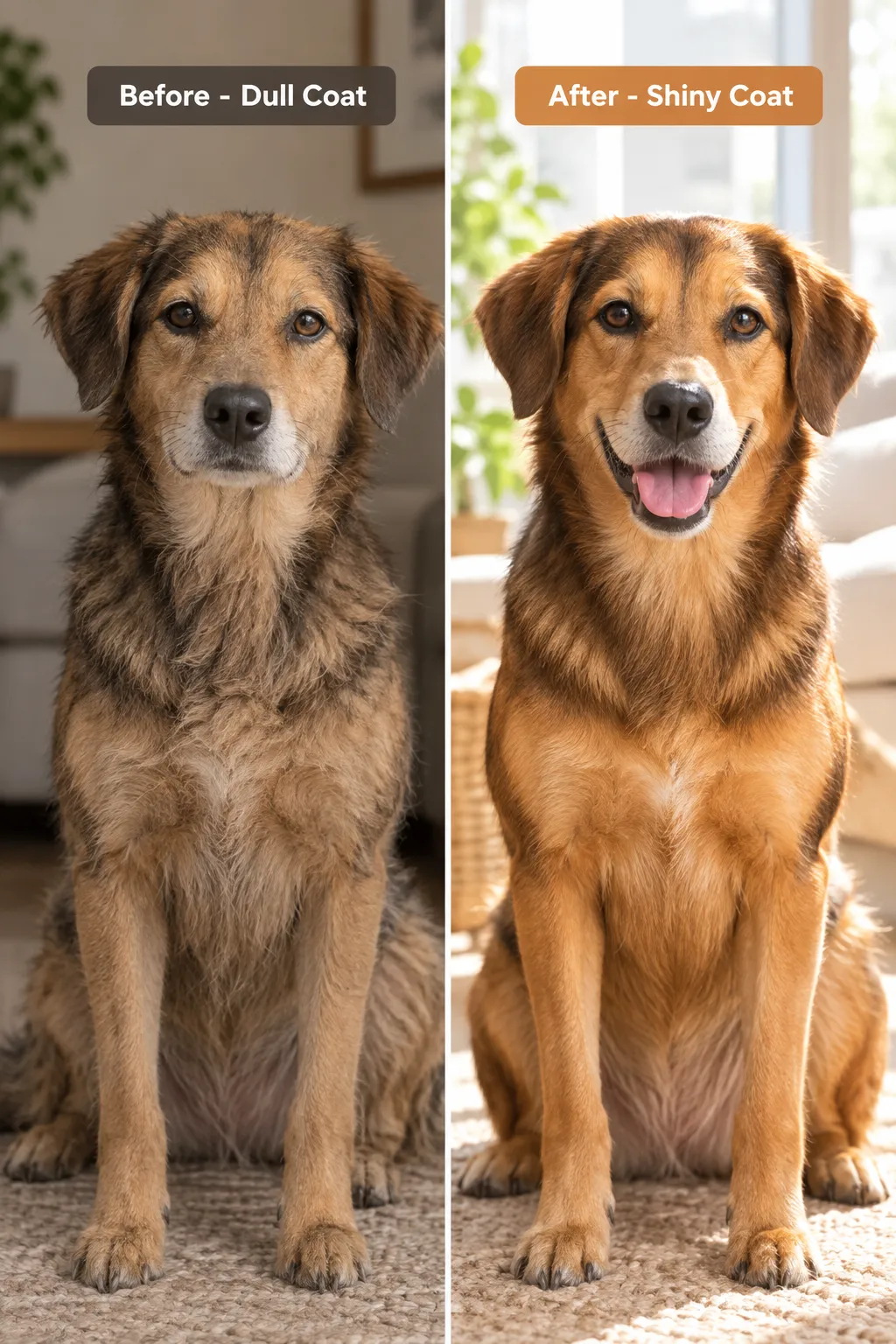
Signs your dog’s dull coat is diet-related:
- Coat looks dry or brittle, not just dirty
- Excessive shedding beyond seasonal norms
- Flaky skin or dandruff alongside the dullness
- Coat improved temporarily after a vet visit or diet change
Start with Recipes 1 or 6 above. Both target the most common deficiencies. If the coat does not improve after 8 weeks, ask your vet to check for thyroid issues or parasites, which can also cause coat problems regardless of diet.
How Much Omega-3 Should I Add to Homemade Dog Food
For coat health, most veterinary nutritionists recommend roughly 20 to 55 mg of combined EPA and DHA per kilogram of body weight per day as a general starting point. However, exact dosing should be confirmed with your vet, as needs vary by dog size, health status, and existing diet.
Practical options for adding omega-3 to a Glow Bowl:
- Fish oil capsule: 1,000 mg capsule for a medium dog (25 kg) is a common starting dose
- Canned sardines in water: one small can provides roughly 1,000 to 1,500 mg of omega-3
- Flaxseed oil: 1 teaspoon per 10 kg body weight (provides ALA, which dogs convert less efficiently than EPA/DHA)
- Fresh salmon: a 150g serving provides approximately 2,000 to 3,000 mg of omega-3
According to omega-3 rich recipes for shiny coats, fatty fish is the most bioavailable source of omega-3 for dogs compared to plant-based alternatives.
Edge case: Too much omega-3 can thin the blood. If your dog is on any medication or has a clotting disorder, check with your vet before adding fish oil supplements.
What Vitamins and Minerals Do I Need to Add to Homemade Dog Food
Homemade dog food is not nutritionally complete on its own without added supplements. The most commonly missing nutrients in home-cooked dog meals are calcium, iodine, vitamin D, and zinc.
Essential supplements for homemade dog food:
- Calcium – add eggshell powder (1/2 tsp per 450g of food) or a canine calcium supplement
- Iodine – a pinch of kelp powder covers this
- Vitamin D – a canine multivitamin or a small amount of fatty fish covers this
- Zinc – pumpkin seeds and beef naturally provide zinc; a multivitamin tops it up
- Canine multivitamin – the easiest single solution to cover all micronutrient gaps
“A balanced homemade diet requires more planning than opening a bag of kibble, but the payoff in coat quality and energy is often visible within weeks.” – common feedback from dog owners who switch to fresh feeding.
If you want to explore what you can safely add to existing kibble, see our guide on what to add to your dog’s dry food.
Can Homemade Dog Food Replace Commercial Kibble Completely
Yes, homemade dog food can fully replace commercial kibble – but only if the recipe is nutritionally balanced and complete. A partial switch (mixing homemade with kibble) is a safer starting point for most owners.
The key risks of going fully homemade without guidance:
- Calcium-to-phosphorus imbalance (can damage bones over time)
- Vitamin D deficiency (especially in dogs with limited sun exposure)
- Iodine deficiency (affects thyroid function)
Choose full replacement if: you are working with a board-certified veterinary nutritionist who has reviewed your recipes.
Choose partial replacement if: you are new to home cooking for dogs and want to improve coat health without the complexity of balancing every nutrient from scratch.
For easy-to-digest full-replacement ideas, see our 11 easy-to-digest homemade dog food recipes.
Do I Need a Vet’s Approval Before Switching to Homemade Dog Food
Yes – you should always consult your vet before making a full dietary switch. This is especially important for puppies, senior dogs, pregnant dogs, and any dog with a health condition.
A vet visit before switching lets you:
- Rule out underlying health issues causing coat problems
- Get a baseline weight and bloodwork to track progress
- Get supplement recommendations tailored to your dog’s size and age
For senior dogs with additional health needs, see our homemade dog food for senior dogs guide.
How Long Does It Take to See Results From Homemade Dog Food
Most dog owners notice visible coat improvement within 6 to 8 weeks of consistent feeding. Full results – including reduced shedding and maximum gloss – typically take 3 to 4 months.
This timeline reflects the natural hair growth cycle in dogs. New hair grows from follicles that are now being fed better nutrients, so you are waiting for old hair to shed and new, healthier hair to grow in.
What to watch for week by week:
- Weeks 1-2: Improved skin hydration, less flaking
- Weeks 3-4: Coat starts to feel softer to the touch
- Weeks 6-8: Visible shine and reduced shedding
- Months 3-4: Full coat transformation with consistent feeding
Is Homemade Dog Food More Expensive Than Store-Bought
Homemade dog food is generally more expensive than budget kibble but comparable to premium commercial fresh-food brands. The cost depends heavily on your protein choices.
Rough cost comparison (estimate for a 25 kg dog per day):
- Budget kibble: low cost per day
- Premium kibble: moderate cost per day
- Homemade Glow Bowl with chicken: moderate cost per day
- Homemade Glow Bowl with salmon: higher cost per day
- Premium fresh-food delivery service: highest cost per day
Ways to reduce cost:
- Buy salmon and sardines in bulk or on sale
- Use chicken thighs instead of breast (cheaper and fattier – better for the coat)
- Batch cook and freeze portions for the week
- Rotate between cheaper proteins (turkey, eggs, sardines) and pricier ones (salmon)
Homemade Dog Food for Picky Eaters With Coat Issues
Picky eaters often respond better to homemade food than kibble because fresh food smells and tastes more appealing. The trick is introducing new ingredients gradually.
Tips for picky dogs:
- Warm the food slightly (body temperature) to enhance aroma
- Start with your dog’s favorite protein and build from there
- Add a small amount of homemade dog gravy over the bowl to increase palatability
- Introduce new vegetables one at a time, mixed into familiar food
- Keep portions consistent – hungry dogs are less picky
For dogs that are both picky and have sensitive stomachs, see our homemade dog food recipes for a sensitive stomach.
Homemade Dog Food for Dogs With Allergies and Skin Problems
Dogs with food allergies often have both coat and skin problems simultaneously. The best approach is a limited-ingredient, single-protein Glow Bowl that eliminates common allergens.
Common allergens to avoid in sensitive dogs:
- Beef (one of the most common triggers)
- Chicken (second most common)
- Dairy
- Wheat and gluten-containing grains
Best proteins for allergic dogs: salmon, turkey, duck, rabbit, or venison.
Recipe 7 (Salmon and Flaxseed Allergy-Friendly Bowl) above is specifically designed for this. For dogs with paw licking alongside skin issues – often a sign of allergies – see our vet-approved remedy for dogs that lick their paws.
According to dog food guidance for shiny coats and healthy skin, eliminating common allergens while maintaining omega-3 intake is the most effective dietary approach for dogs with both skin and coat problems.
Can Raw Dog Food Improve Coat Health Faster
Raw diets can improve coat health, and some owners report faster results than with cooked food. However, raw feeding carries real risks – bacterial contamination, parasites, and nutritional imbalance – that make it unsuitable for every household.
Raw feeding works best if:
- You have no immunocompromised people in the household
- You source meat from reputable suppliers
- You follow a nutritionally balanced raw recipe reviewed by a vet
Cooked Glow Bowls are better if:
- You have young children or elderly family members at home
- Your dog has a compromised immune system
- You are new to homemade dog food
The coat benefits of raw vs. cooked food are largely driven by the same nutrients – omega-3s, zinc, and biotin. You can achieve the same coat results with cooked recipes by keeping cooking temperatures low (gentle steaming or light boiling) to preserve more nutrients.
Common Mistakes People Make With Homemade Dog Diets
The most common mistake is feeding an unbalanced diet long-term without added supplements. Other frequent errors include using toxic ingredients by accident and overfeeding liver or organ meat.
Top mistakes to avoid:
- No calcium source – leads to bone density problems over months
- Too much liver – causes vitamin A toxicity if fed daily in large amounts
- Skipping supplements – even a well-varied diet misses some micronutrients
- Using toxic ingredients – onion, garlic, grapes, and xylitol are dangerous
- Inconsistent feeding – coat improvements require consistent nutrition, not occasional Glow Bowls
- Not adjusting for life stage – puppies and seniors have different nutrient needs than adult dogs
FAQ
Q: Can I feed my dog a Glow Bowl every day?
Yes. The Glow Bowl recipes above are designed for daily feeding. Rotate proteins and vegetables weekly to ensure nutritional variety and prevent boredom.
Q: How do I store homemade dog food?
Store cooked dog food in an airtight container in the fridge for up to 4 days, or freeze in portions for up to 3 months. Thaw overnight in the fridge before serving.
Q: Is coconut oil good for a dog’s coat?
Coconut oil contains medium-chain fatty acids that can support skin moisture, but it is not a significant source of omega-3. Use it as a supplement alongside fish oil, not as a replacement.
Q: Can I add fish oil capsules to homemade dog food?
Yes. Pierce a fish oil capsule and squeeze it over the food. A 1,000 mg capsule is a common starting dose for medium-sized dogs, but confirm the right amount with your vet.
Q: What is the fastest way to improve a dog’s dull coat?
Switch to a salmon-based Glow Bowl with added flaxseed oil immediately. This delivers the highest concentration of coat-supporting omega-3s in a single meal. Expect visible improvement within 6 to 8 weeks.
Q: Can puppies eat Glow Bowl recipes?
Puppies have different calcium and protein needs. Adapt these recipes with a vet’s guidance before feeding to puppies under 12 months. See our fresh puppy food recipes for age-appropriate options.
Q: Do I need to cook the vegetables?
Light steaming is best. It improves digestibility without destroying heat-sensitive vitamins. Avoid boiling vegetables for long periods, as this leaches nutrients into the water.
Q: Can I use canned salmon instead of fresh?
Yes. Canned salmon in water (no salt added) is a convenient and affordable alternative to fresh. Drain the liquid before adding to the bowl.
Q: How do I know if my dog’s coat improvement is from food or grooming?
Track both variables separately. Keep grooming consistent and only change the diet. If the coat improves, the food is working. If it does not improve after 8 weeks, consult your vet.
Q: Is a shiny coat always a sign of good health?
Generally yes, but not always. Some dogs have naturally shinier coats than others due to breed genetics. A sudden loss of shine in a previously glossy coat is a more reliable health signal than comparing your dog to another breed.
Conclusion
A dull coat is almost always a fixable problem, and the fix starts in the food bowl. The “Glow Bowl” method gives you a repeatable, flexible framework for building homemade dog food recipes for a shiny coat – without needing a nutrition degree to get it right.
Your action plan:
- Pick one recipe from the seven above and try it this week.
- Add a canine multivitamin and an omega-3 source to every batch.
- Take a photo of your dog’s coat today and again at 8 weeks.
- Book a quick vet check-in before going fully homemade.
- Rotate proteins weekly to keep nutrition varied and your dog interested.
The investment in fresh, real food pays off in a coat you will want to show off at the dog park. Start with Recipe 1 (Salmon and Sweet Potato) – it is the simplest and most effective place to begin.