Last updated: September 19, 2026
Quick Answer: To clean dog pee out of wood floors, blot the urine immediately with paper towels, then clean with a diluted white vinegar solution, cover with baking soda overnight, and follow up with an enzyme-based cleaner. Acting fast is critical – urine that soaks into the wood or seams causes permanent staining and odor that no surface cleaner can fix.
Key Takeaways
- Blot, never scrub – scrubbing pushes urine deeper into wood pores and seams
- Speed matters – fresh urine cleaned within minutes rarely causes permanent damage
- Enzyme cleaners are the gold standard for removing dog urine smell permanently, not just masking it
- Baking soda overnight pulls odor molecules out of the wood after you’ve cleaned the surface
- Vinegar alone won’t cut it for old or soaked-in urine – you need a proper enzyme treatment
- Black stains mean uric acid has reacted deep in the wood – those boards may need replacement
- Never pour liquid into plank seams – pooled liquid swells boards and pushes urine deeper
- Bleach can damage wood finishes – only use it in specific, manufacturer-approved situations
- Your dog’s nose is your best quality check – if they keep sniffing the spot, odor remains
- Repeat accidents in the same spot signal a training issue, not just a cleaning one
The 7-Step Method: How to Clean Dog Pee Out of Wood Floors
The fastest, most effective sequence combines immediate blotting, a vinegar clean, baking soda deodorizing, and enzyme treatment. Each step builds on the last – skip one and you’re likely to end up with lingering smell.
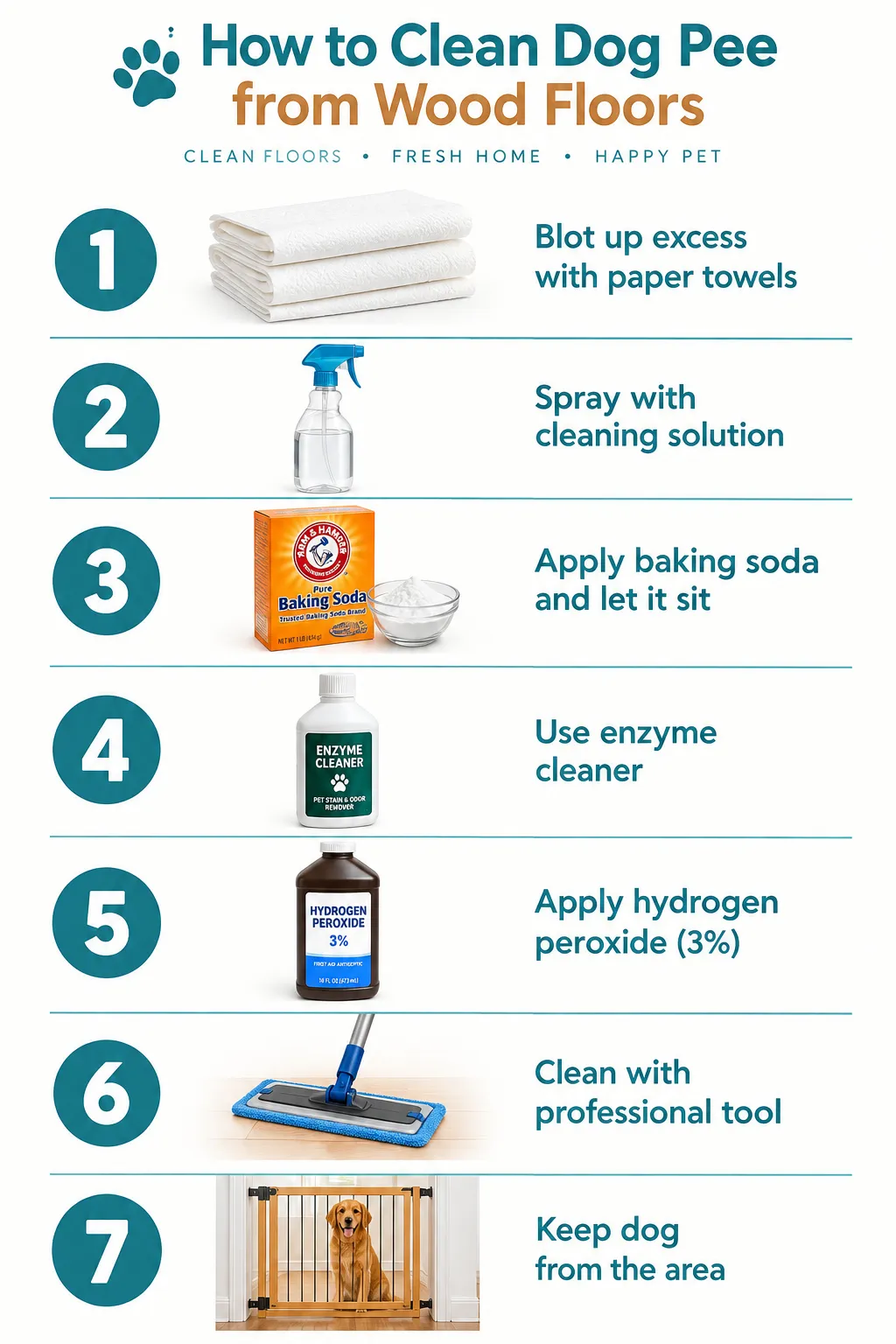
Here’s the full sequence:
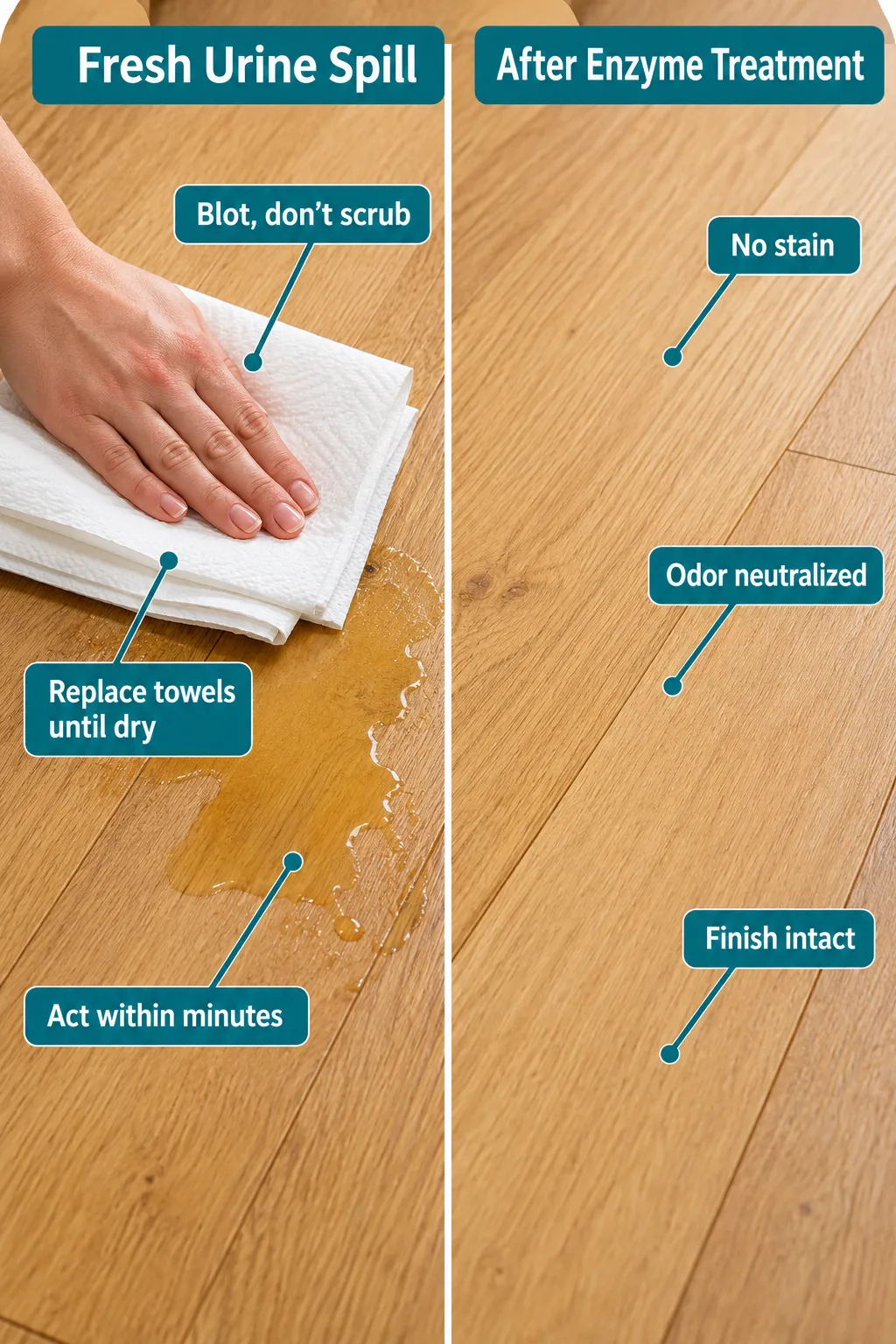
Step 1 – Blot immediately. Press paper towels or a thick cloth firmly onto the puddle. Don’t rub. Replace towels and keep pressing until the area feels dry to the touch. According to the AKC, this immediate blotting step is the single most important action you can take.
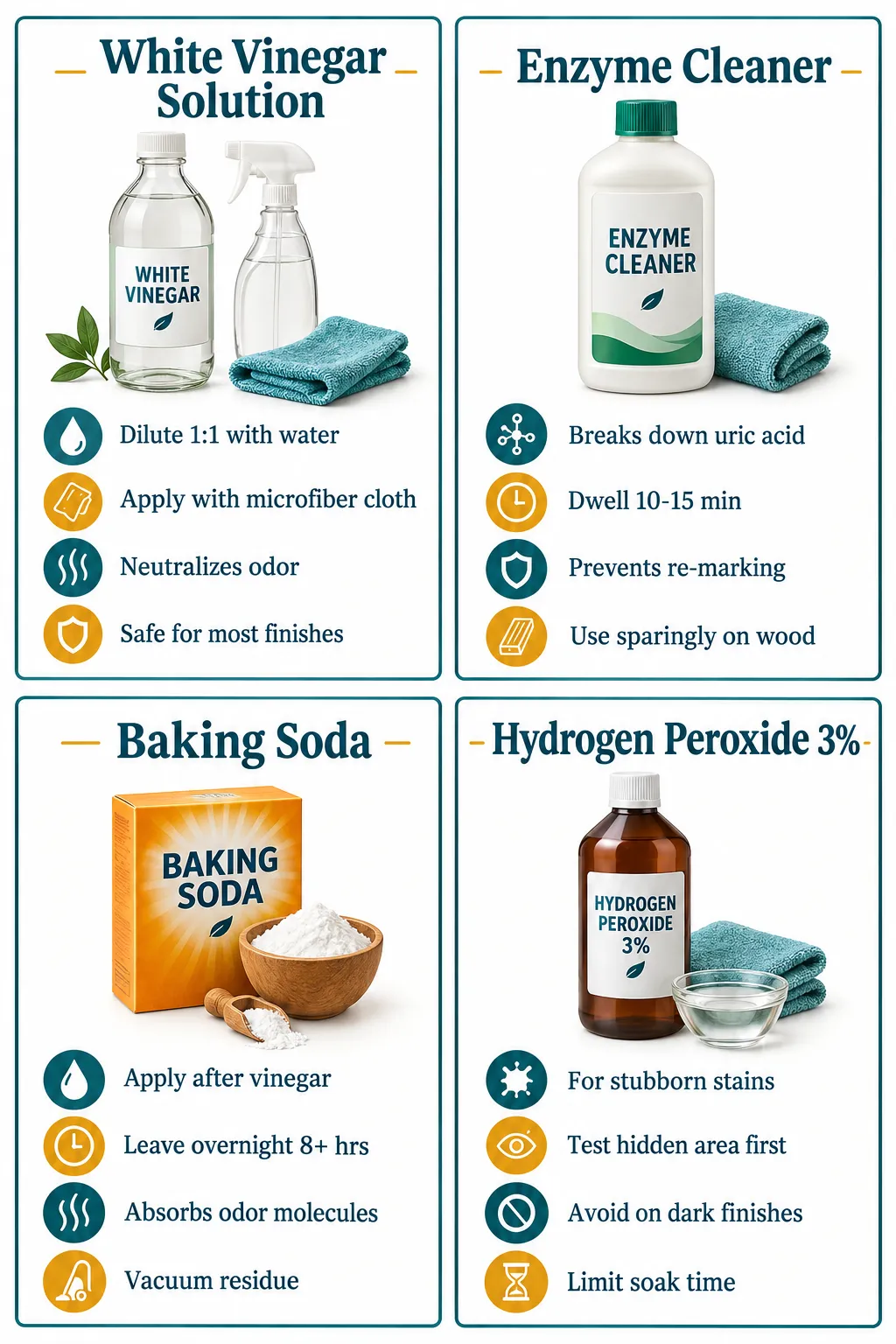
Step 2 – Apply a diluted vinegar solution. Mix equal parts white vinegar and water (or 1/2 cup vinegar in 1 gallon of warm water for a lighter touch). Dampen a microfiber cloth – don’t pour it on the floor. Wipe the area, let it sit 5-10 minutes, then wipe dry. Housekeepup’s guide on removing pet urine smell from hardwood floors recommends this conservative ratio to neutralize odor without over-wetting the wood.
Step 3 – Cover with baking soda overnight. Once the vinegar solution has dried, sprinkle a generous layer of baking soda over the spot. Leave it for at least 8 hours. Vacuum or sweep it up in the morning.
Step 4 – Apply an enzyme cleaner. Dampen a cloth with an enzyme cleaner labeled safe for finished wood. Lay it over the spot and keep it damp for the full dwell time (usually 10-15 minutes). Don’t let it dry out mid-treatment – enzyme action stops when the surface dries.
Step 5 – Use 3% hydrogen peroxide for stubborn stains. Soak a paper towel with 3% hydrogen peroxide and lay it over the stain for up to 10 minutes. Always test in a hidden spot first, especially on darker floors.
Step 6 – Assess for deep damage. If smell or staining remains after all five steps above, the finish or wood itself may be compromised. This is the point to call a professional.
Step 7 – Address the behavior. Clean floors stay clean only when accidents stop. More on this below.
What’s the Best Way to Clean Dog Urine From Wood Floors
The best approach is a layered one – no single product does everything. Blotting removes the liquid, vinegar neutralizes the initial odor, baking soda absorbs remaining molecules, and enzyme cleaner breaks down the uric acid crystals that cause the persistent smell.
The most common mistake is skipping straight to a spray cleaner without blotting first. That just spreads the urine around.
“Any residual smell can trigger repeat marking – confirming odor removal by observing whether the dog continues to sniff the spot is a practical final check.” – NerdClean, pet urine on hardwood floors guide
One thing to always check: your flooring manufacturer’s care instructions. Bruce Hardwood’s pet odor guidance recommends confirming which cleaners are safe for your specific finish before applying anything.
How Do I Remove Dog Pee Smell From Hardwood Permanently
Permanent odor removal requires breaking down uric acid crystals, not just masking them. Regular cleaners and air fresheners can’t do this – only enzyme-based products can.
Here’s why the smell keeps coming back: urine contains uric acid, which binds tightly to wood fibers. When the floor gets humid or warm, those crystals reactivate and release odor again. Enzyme cleaners contain biological compounds that actually digest the uric acid.
For permanent results:
- Apply the enzyme cleaner correctly – keep it damp for the full dwell time
- Repeat the treatment over several days if the dog keeps returning to sniff the spot
- Use your dog’s behavior as a test – if they’re still investigating the area, odor remains
- If smell persists after multiple treatments, the urine may have soaked past the finish into the wood itself
For more ways to tackle persistent pet smells throughout your home, check out these 17 genius ways to get dog smell out of your house naturally.
Can Dog Urine Damage Wood Floors
Yes – dog urine can cause serious, sometimes permanent damage to wood floors. The longer it sits, the worse the damage.
Fresh urine on a sealed, finished floor usually causes no lasting harm if cleaned within minutes. But urine that soaks in causes:
- Finish clouding or peeling from the acidic and alkaline compounds in urine
- Wood discoloration ranging from light yellowing to deep gray-black staining
- Board cupping or warping if liquid seeps into seams and reaches the subfloor
- Structural damage to the subfloor itself in severe or repeated cases
Triangle Floor’s analysis of pet urine damage on hardwood notes that black stains – where uric acid has chemically reacted deep in the wood fibers – often cannot be fixed by refinishing alone and may require full board replacement.
Enzymatic Cleaner vs Vinegar for Dog Pee on Wood
Use both – but at different stages. Vinegar is good for fresh accidents and initial odor control. Enzyme cleaners are necessary for deep or old urine odor.
| Situation | Best Choice |
|---|---|
| Fresh accident, just happened | Vinegar solution first, then enzyme cleaner |
| Dried urine, mild smell | Enzyme cleaner directly |
| Old stain, strong persistent smell | Enzyme cleaner, repeated over several days |
| Surface odor only, no staining | Vinegar + baking soda overnight |
| Stubborn stain after cleaning | 3% hydrogen peroxide (test first) |
Vinegar works by temporarily neutralizing the ammonia in urine. It doesn’t break down uric acid crystals. Angi’s guide on getting rid of pet urine odor from hardwood floors recommends using vinegar as a first-pass cleaner, then following with an enzyme product for complete odor removal.
One important note: apply enzyme cleaners with a damp cloth rather than spraying directly onto the floor. Excess liquid on wood is always a risk.
How Long Does Dog Urine Smell Last in Wood
Without treatment, dog urine smell in wood can last for months or even years. The uric acid crystals don’t break down on their own.
With proper cleaning using enzyme products, most fresh accidents are fully odor-free within 24-48 hours. Old or deeply soaked urine may take several treatment cycles over a week or more.
Factors that affect how long the smell lasts:
- How quickly the accident was found and cleaned
- Whether urine soaked past the finish into raw wood
- The type of wood and finish (unfinished or worn floors absorb more)
- Humidity levels – warmth and moisture reactivate dried uric acid crystals
What If Dog Pee Has Soaked Into the Subfloor
If urine has reached the subfloor, surface cleaning alone won’t remove the smell. You’ll need to address the subfloor directly.
Signs urine has reached the subfloor:
- Strong smell even after thorough surface cleaning
- Soft or spongy spots when you walk on the floor
- Visible black staining at plank edges or seams
- Boards that have cupped, warped, or separated
At this point, the affected hardwood boards usually need to be removed to access and treat the subfloor. ECO-CLN’s guide on cleaning dog urine from hardwood floor seams and edges stresses that pooled liquid in seams is one of the fastest paths to subfloor damage – which is exactly why you should never pour cleaner directly onto the floor.
This is a job for a professional flooring contractor in most cases.
Best Products to Clean Dog Urine From Wood Floors
The most effective products for cleaning dog urine from wood floors fall into three categories: enzyme cleaners, pH-neutral wood-safe cleaners, and natural household options.
Enzyme cleaners (best for odor removal):
- Look for labels that say “safe for hardwood” or “finished wood”
- Apply with a cloth, not a spray bottle aimed at the floor
- Popular options include Nature’s Miracle Hardwood Floor Cleaner and Rocco & Roxie
Natural household options:
- White vinegar diluted 1:1 with water (initial clean)
- Baking soda (overnight deodorizing)
- 3% hydrogen peroxide (stubborn stains – test first)
What to avoid:
- Steam cleaners – heat and moisture damage wood finishes
- Ammonia-based cleaners – smell similar to urine and can encourage re-marking
- Undiluted bleach – damages most wood finishes (more on this below)
If you’re also dealing with urine smells on furniture, the same enzyme-first approach applies – see this guide on how to clean dog pee smell out of a couch.
Can I Use Bleach on Wood Floors for Dog Accidents
Bleach is generally not recommended for wood floors and can damage most finishes. Use it only as a last resort and only if your floor manufacturer explicitly allows it.
Clorox’s guidance on removing urine stains from hardwood floors specifies that a general disinfecting mix is 1/2 cup bleach per gallon of water, and a stronger parvovirus-killing solution uses about 1/2 cup bleach in 3/4 gallon water. However, even Clorox’s own guidance notes these solutions can harm wood finishes.
When bleach might be considered:
- Confirmed exposure to parvovirus or another serious pathogen
- Unfinished wood or concrete subfloor (after board removal)
- Your flooring manufacturer explicitly permits diluted bleach
When to skip bleach entirely:
- Finished or sealed hardwood (the default for most homes)
- Engineered wood or laminate floors
- Any situation where enzyme cleaners haven’t been tried first
Does Baking Soda Remove Dog Urine Smell From Wood
Baking soda helps significantly with odor but doesn’t fully remove it on its own. It works best as a follow-up to vinegar or enzyme cleaning, not as a standalone treatment.
How to use it correctly:
- Clean and dry the area first with vinegar solution or enzyme cleaner
- Sprinkle a thick, even layer of baking soda over the spot
- Leave for at least 8 hours – overnight is ideal
- Vacuum up with a soft brush attachment, then sweep any residue
Baking soda absorbs odor molecules from the surface. It can’t break down uric acid crystals deep in the wood, which is why it works best in combination with an enzyme cleaner.
How to Clean Dog Pee From Laminate vs Real Hardwood
The cleaning steps are similar, but laminate requires even more caution around moisture. Both surfaces need fast action and minimal liquid.
Real hardwood:
- Can sometimes be sanded and refinished if damage is deep
- More forgiving of light enzyme cleaner application
- Black stains may require board replacement
Laminate:
- Has no finish layer to protect the core – liquid penetrates faster
- Cannot be sanded or refinished
- Swells and buckles more quickly than solid hardwood
- Must be dried even faster – blot within seconds if possible
- Severely damaged laminate planks must be replaced entirely
For both floor types, RenHardwood’s guide on saving hardwood floors from pet urine emphasizes that immediate action and minimal moisture are the two rules that apply across every floor type.
What to Do If Your Dog Keeps Peeing in the Same Spot on Wood Floor
Repeat accidents in the same spot almost always mean residual odor is still present – your dog can smell uric acid traces that you can’t. The solution is more thorough odor removal, not just repeated cleaning.
Steps to break the cycle:
- Re-treat the spot with enzyme cleaner, keeping it damp for the full dwell time
- Cover with baking soda overnight and vacuum
- Check whether your dog still sniffs the area after treatment
- If they do, repeat the enzyme treatment
- Temporarily block access to the area with a gate or furniture while treating
Beyond the cleaning, the behavior itself may need addressing. If your dog is regularly having accidents indoors, it’s worth revisiting their training. These 15 puppy potty training tips that actually work are a solid starting point, and this 14-day dog training plan can help reset habits for dogs of any age.
How to Tell If Wood Floor Damage From Dog Pee Is Permanent
Some urine damage can be reversed with cleaning or refinishing. Other damage is permanent without board replacement.
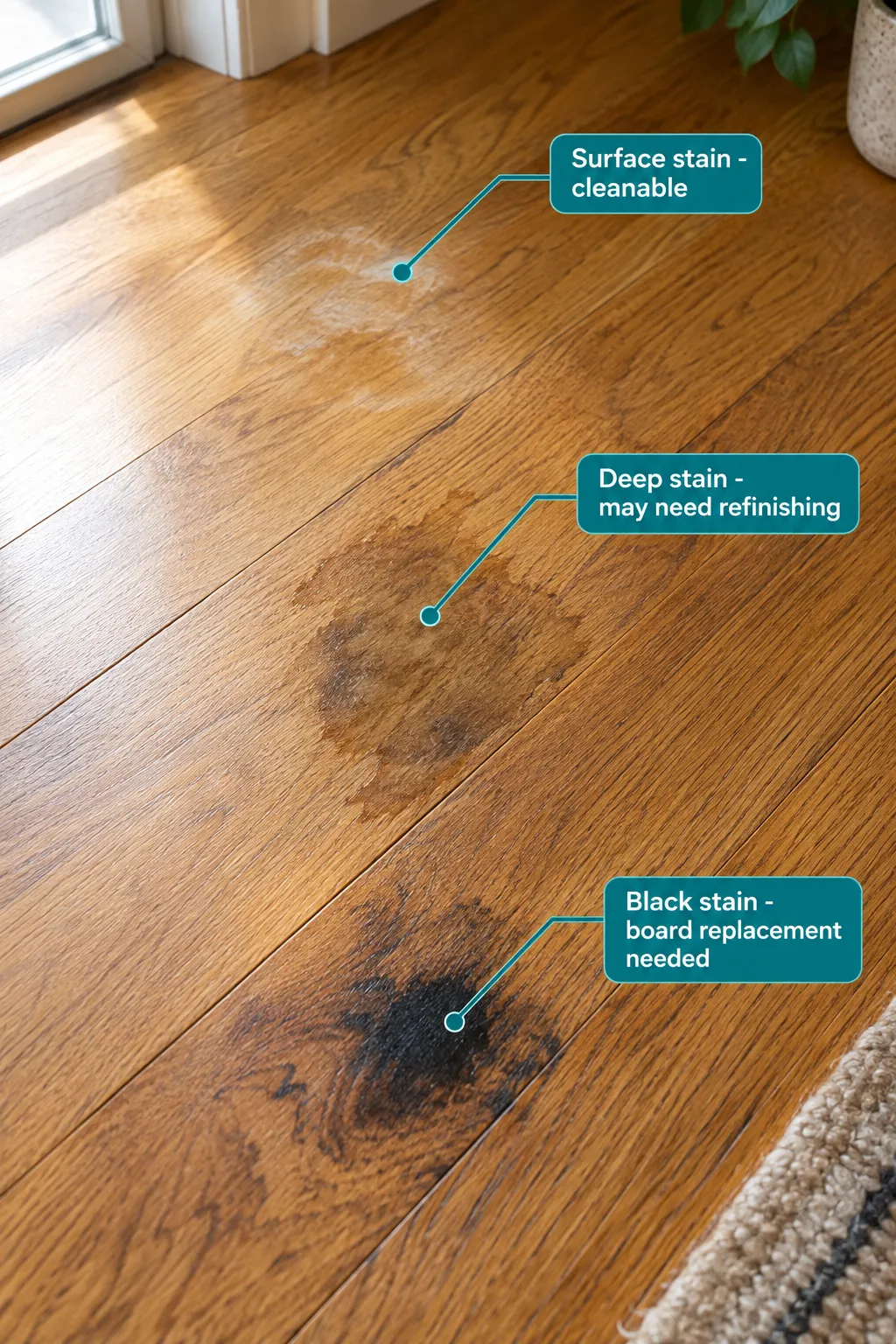
Here’s how to read the signs:
| Damage Type | Appearance | Can It Be Fixed? |
|---|---|---|
| Surface stain | Light yellow or amber discoloration | Yes – cleaning or light refinishing |
| Finish damage | Cloudy, peeling, or dull patches | Yes – refinishing |
| Mid-wood stain | Dark gray or brown discoloration | Sometimes – sanding and refinishing |
| Deep black stain | Black marks at or below wood surface | Usually requires board replacement |
| Subfloor damage | Soft spots, cupping, warping | Board removal + subfloor repair |
Black stains are the clearest sign of permanent damage. They form when uric acid reacts chemically with the wood’s tannins deep in the fibers. Oxalic acid bleaching is sometimes used by professionals to lighten these stains before refinishing, but this is not a DIY first step.
If you’re seeing cupping (boards curving upward at the edges) or soft spots, call a flooring professional before attempting any further cleaning.
Professional Dog Urine Removal From Wood Floors – What It Costs
Professional treatment is worth considering when DIY methods have failed or when damage is visible. Costs vary widely based on the extent of damage.
Rough cost estimates (these vary by region and contractor):
- Professional deep cleaning/enzyme treatment: $100-$300 for a typical room
- Sanding and refinishing (surface damage): $3-$8 per square foot (estimate)
- Board replacement (localized): $200-$600+ per affected area, depending on wood type and labor
- Subfloor repair + board replacement: $500-$2,000+ for significant damage
Get at least two quotes and ask specifically whether the contractor has experience with pet urine damage – it’s a different job than standard refinishing.
Also dealing with urine smells in other areas of your home? This guide on how to remove old dog urine stains from carpet covers the carpet-specific approach.
How to Prevent Dog Pee From Staining Wood
Prevention is simpler than cleanup. A few habits make a big difference.
- Seal your floors. A quality polyurethane finish gives you a critical window of time before urine penetrates the wood.
- Use area rugs in high-traffic dog zones. Easier to clean and replace than hardwood.
- React immediately. Keep paper towels and a spray bottle of diluted vinegar accessible.
- Watch for early signs of accidents. Sniffing, circling, or squatting near the floor are your cues to intervene.
- Maintain your dog’s bathroom schedule. Regular outdoor breaks reduce the chance of indoor accidents significantly.
For dogs that are still learning, consistent training is the best long-term floor protector. These 7 powerful playtime games that secretly train your dog can reinforce good habits without making training feel like a chore.
Frequently Asked Questions
Q: How do I know if I’ve fully removed the dog urine smell from my wood floor?
A: The most reliable test is your dog’s behavior. If they still sniff or circle the spot after cleaning, odor remains. Human noses often miss low-level uric acid traces that dogs detect easily.
Q: Can I use a steam mop to clean dog urine from hardwood?
A: No. Steam mops force heat and moisture into wood pores and seams, which can damage the finish, warp boards, and actually push urine deeper into the wood.
Q: How long should I leave enzyme cleaner on the wood floor?
A: Typically 10-15 minutes, but follow the product label. The key is keeping the area damp for the entire dwell time – enzyme action stops when the surface dries out.
Q: Is it safe to use hydrogen peroxide on dark hardwood floors?
A: Use it with caution. Always test in a hidden area first. Hydrogen peroxide can lighten darker finishes if left on too long. Limit contact time to 10 minutes and dry thoroughly.
Q: My dog peed on the same spot three times this week. What’s wrong?
A: Residual urine smell is almost certainly the cause. Dogs are wired to mark where they smell urine. Thorough enzyme treatment to fully eliminate the odor – confirmed by your dog no longer sniffing the spot – should break the cycle.
Q: Can I mix vinegar and baking soda together to clean dog pee?
A: They cancel each other out chemically when mixed. Use vinegar first, let it dry, then apply baking soda separately. They work better in sequence than combined.
Q: Will pet insurance cover dog urine damage to hardwood floors?
A: Standard pet insurance covers veterinary costs, not property damage. Homeowner’s or renter’s insurance may cover some floor damage, but pet-related damage is often excluded. Check your specific policy.
Q: How do I clean dog urine from unfinished hardwood floors?
A: Unfinished wood absorbs urine almost instantly and is much harder to clean. Enzyme cleaner applied quickly is your best option, but deep staining is likely. Sealing or finishing the floor is the best long-term solution.
Q: Does the type of wood affect how badly urine damages the floor?
A: Yes. Softer woods like pine absorb urine faster than harder woods like oak or maple. Unfinished or worn-finish floors of any species are far more vulnerable than well-sealed floors.
Q: How do I get rid of dog urine smell in wood floors that’s been there for years?
A: Old, set-in urine is the hardest to remove. Multiple enzyme treatments over several days are the starting point. If the smell persists, the finish likely needs to be stripped and the wood sanded before re-treating and refinishing.
Conclusion
Cleaning dog pee out of wood floors doesn’t have to mean permanent damage or lingering smell – if you act fast and use the right sequence.
The 7-step method works: blot immediately, clean with diluted vinegar, deodorize with baking soda overnight, treat with an enzyme cleaner, and escalate to hydrogen peroxide or professional help if needed. The key is addressing both the liquid and the uric acid crystals – one step without the other leaves the job half done.
Your action plan:
- Keep paper towels, a diluted vinegar spray, and an enzyme cleaner within easy reach
- Act within minutes of any accident
- Use your dog’s nose as your quality check – re-treat if they keep sniffing
- If you see black staining, cupping, or soft spots, call a flooring professional
- Address the root cause with consistent training to prevent repeat accidents
The sooner you act, the better your floors will look – and smell.