Last updated: November 2, 2026
Quick Answer
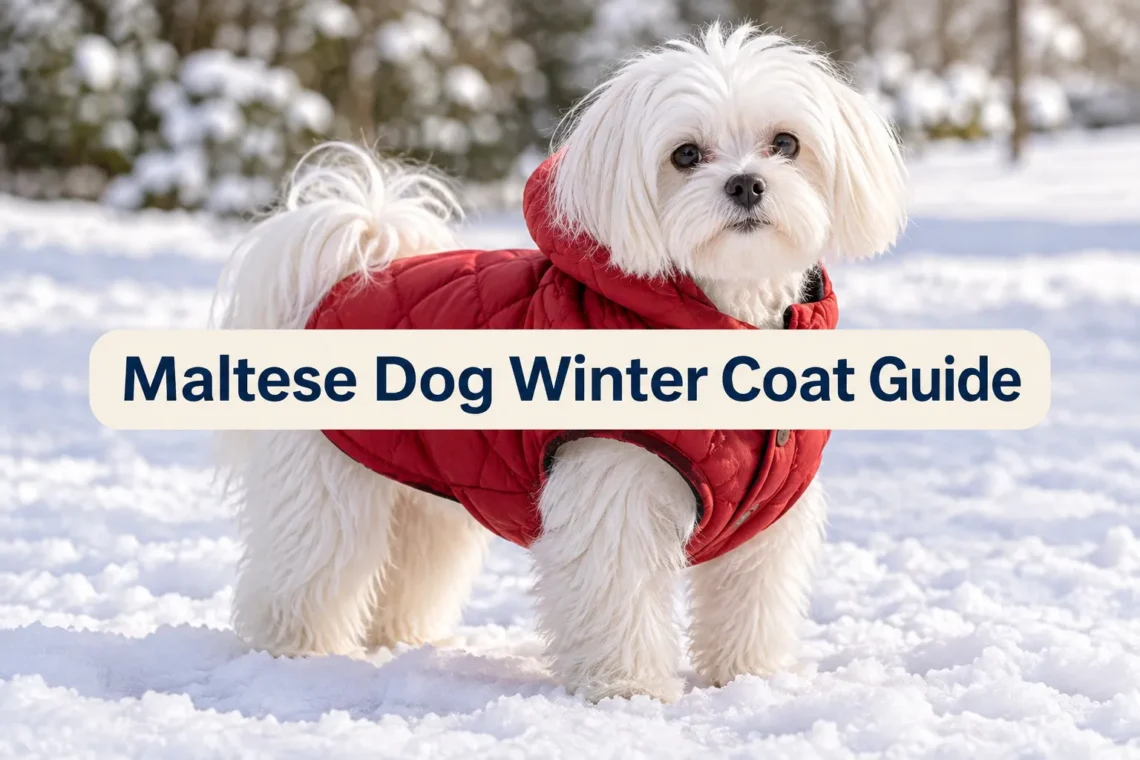
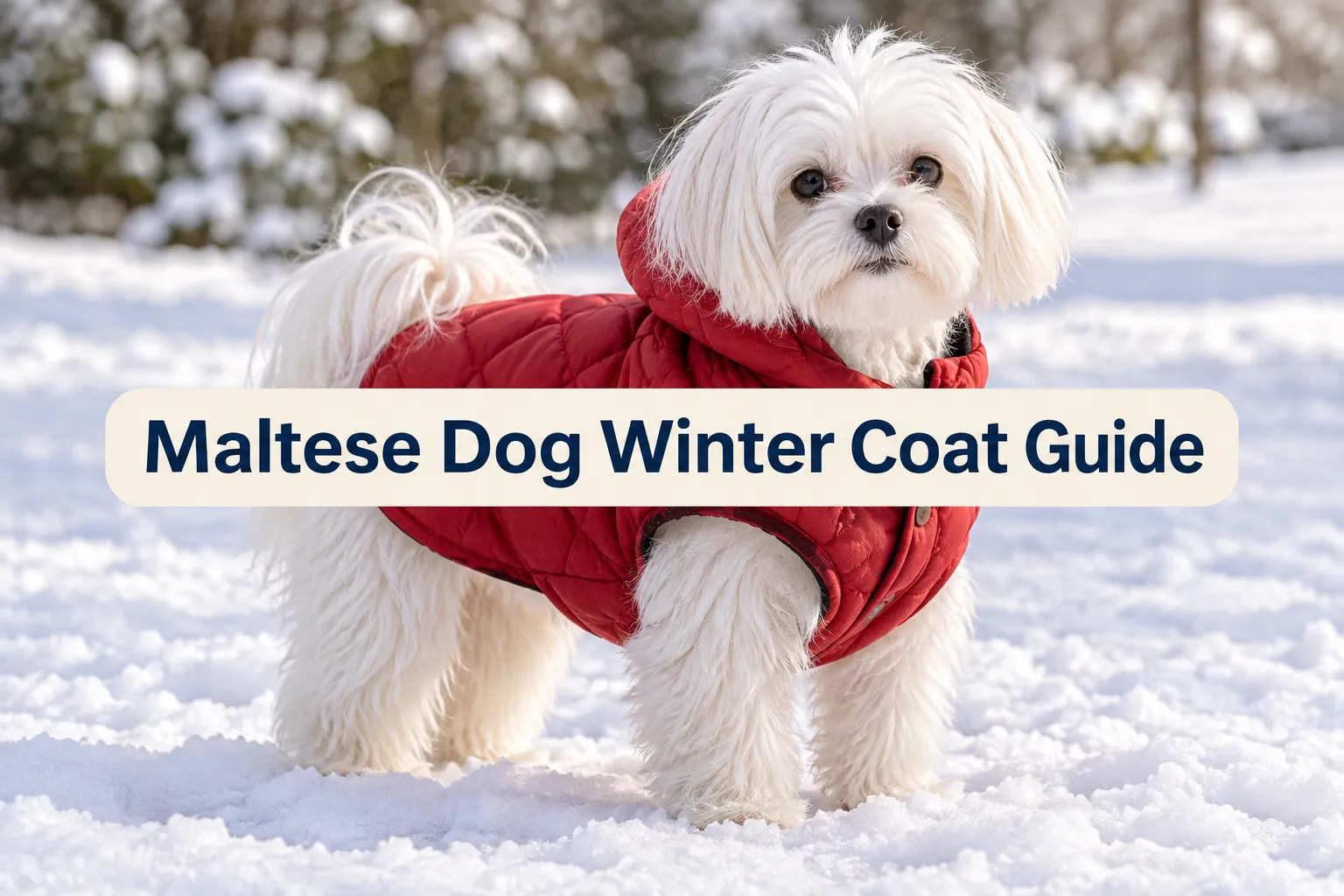
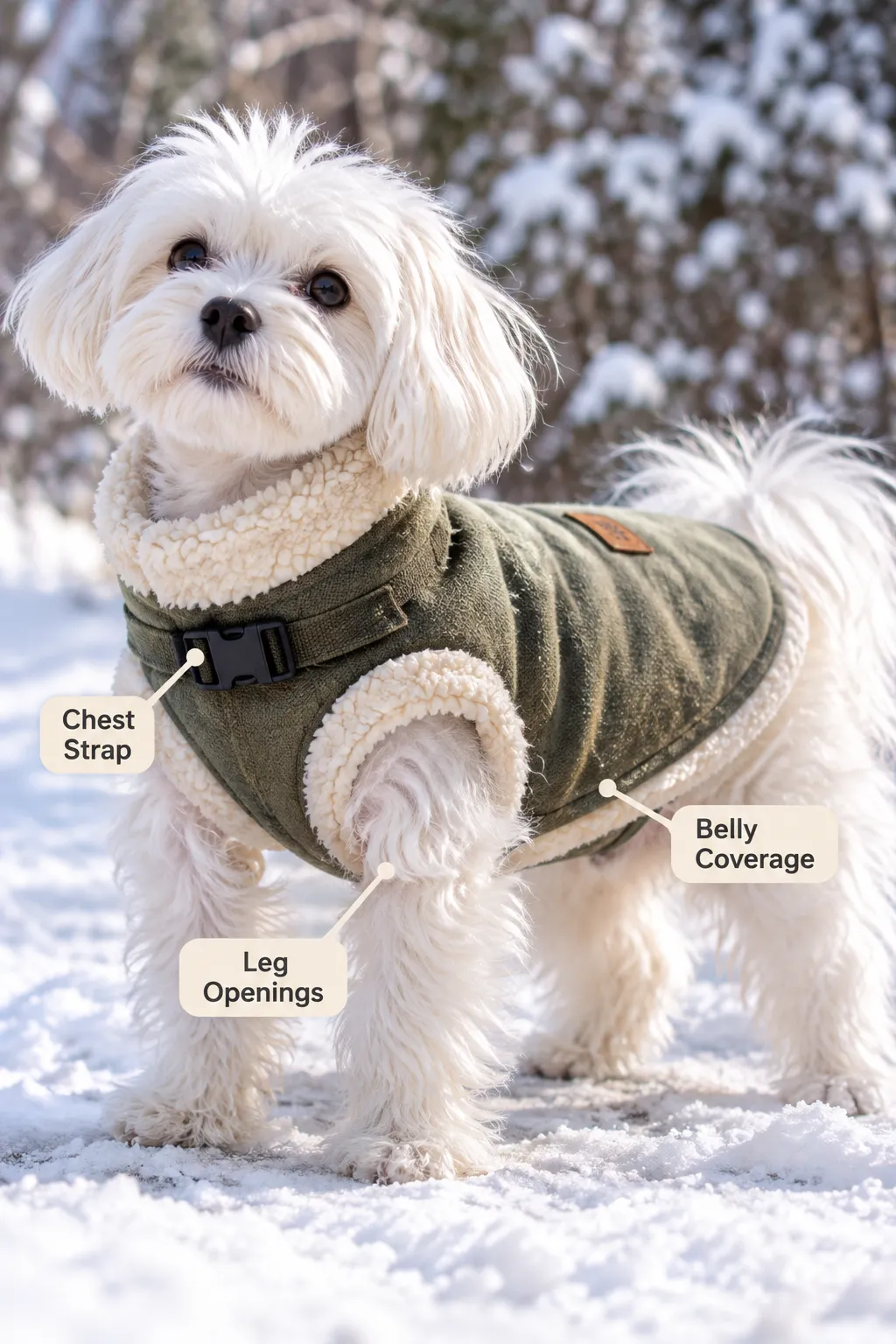
Most Maltese dogs need a winter coat once temperatures drop below 45°F, because their single-layer white coat offers almost no insulation against wind or wet cold. Choose a coat that covers the chest and belly, fits snugly without restricting movement, and pick fleece for dry cold or a waterproof shell for snow and rain. This Maltese Dog Winter Coat Guide walks through sizing, fit, and the mistakes most owners make.
Key Takeaways
- Maltese dogs have a single coat layer, not a double coat, so they lose body heat fast in cold weather (Cornell Riney Canine Health Center).
- A coat becomes a good idea below roughly 45°F, and a near-must below freezing for small or short-haired breeds (AccuWeather).
- Measure neck, chest, and back length before buying – sizing charts vary a lot between brands.
- Fleece works for dry, cold days; waterproof shells matter for snow, slush, or rain.
- Boots help protect paws from ice melt and salt, but aren’t mandatory for every walk.
- Never leave a coat on an unsupervised or sleeping dog for long stretches.
- Puppies, seniors, and arthritic Maltese dogs need extra warmth and shorter outdoor time.
- A wet coat is worse than no coat – always dry it out between walks.
Do Maltese Dogs Actually Need Winter Coats
Yes, most Maltese dogs benefit from a winter coat because their long white hair looks thick but doesn’t trap heat the way a double coat does. Breeds like Siberian Huskies have dense undercoats built for cold; the Maltese does not.
Veterinarians at Cornell’s Riney Canine Health Center note that small and short-coated dogs lose heat quickly outdoors in winter conditions (Cornell). A Maltese’s low body mass and small size mean less internal heat to spare, which is why owners of this breed often reach for extra layers before other dogs need them.
If you own a small white dog with a silky coat, treat winter gear as standard equipment, not an accessory. Compare this to general advice on dog winter clothing by breed to see how coat needs differ across sizes.
What Temperature Should a Maltese Wear a Coat
A Maltese should generally wear a coat once temperatures fall below 45°F, and definitely below freezing. Wind and wet conditions lower the effective temperature further, even if the thermometer reading looks mild.
The American Veterinary Medical Association recommends limiting outdoor exposure and dressing small dogs appropriately in cold weather (AVMA). Rules of thumb that work well for Maltese owners:
- Above 45°F: usually fine without a coat for short walks.
- 32-45°F: light coat recommended, especially with wind.
- Below 32°F: coat plus limited outdoor time, 10-15 minutes max.
- Below 20°F: skip extended walks entirely; stick to quick bathroom breaks.
Watch your dog’s behavior too. Shivering, lifting paws off the ground, or trying to turn back toward the house are signs it’s too cold, coat or not (Dogster).
How to Measure Your Maltese for the Right Coat Size
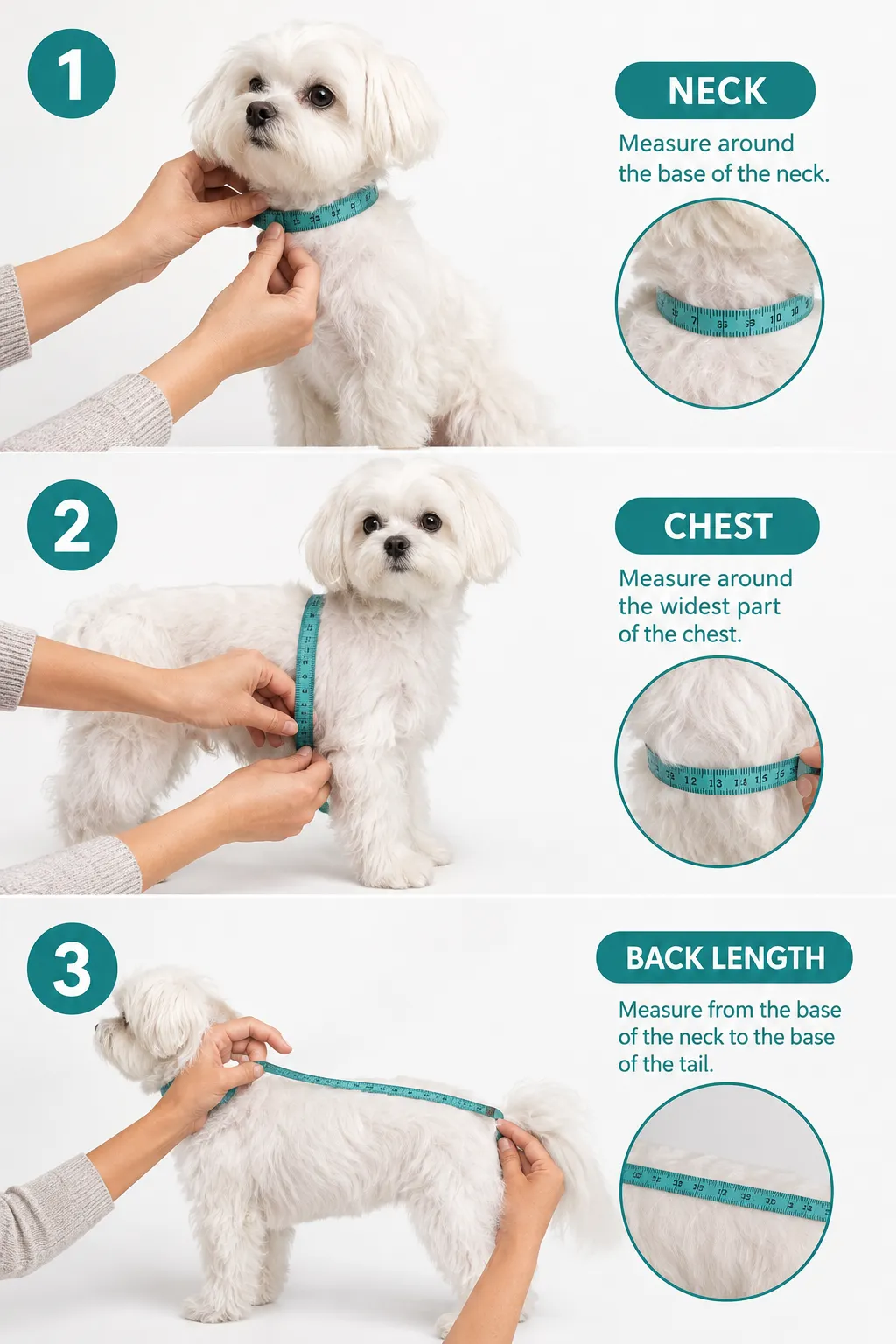
Measure three points: neck circumference, chest girth behind the front legs, and length from the base of the neck to the base of the tail. These three numbers solve 90% of fit problems before you ever order a coat.
Steps to get accurate numbers:
- Stand your Maltese on a flat surface and keep them calm.
- Wrap a soft tape measure around the neck, leaving two finger-widths of slack.
- Measure chest girth at the widest point, just behind the front legs.
- Measure back length from collar to tail base.
- Compare all three numbers against the brand’s size chart, not a generic “small” label.
A common mistake is buying by weight alone. Two Maltese dogs at the same weight can have very different chest shapes, so a coat sized “small” from one brand may run tight or loose compared to another (AKC).
Maltese Winter Coat vs Sweater Which Is Better
A winter coat wins over a sweater for actual cold protection because coats usually include wind and water resistance, while sweaters mainly add a thin warm layer. Use a sweater indoors or on mild days, and save the coat for real winter weather.
Here’s a quick side-by-side:
| Feature | Sweater | Winter Coat |
|---|---|---|
| Wind resistance | Low | Moderate to high |
| Water resistance | None | Often yes |
| Best use | Indoor/mild outdoor | Snow, rain, cold wind |
| Bulk | Lightweight | Heavier, more coverage |
If your Maltese already wears sweaters as a fashion habit, that’s fine for daily comfort, but don’t substitute a sweater for a real coat on a snowy walk.
Best Affordable Maltese Winter Coats Under $50
Budget-friendly coats for Maltese dogs are widely available, and price doesn’t always predict quality. Look for a fleece lining, a chest strap that doesn’t dig into the armpits, and machine-washable fabric rather than focusing only on brand name.
What to prioritize when shopping on a budget:
- Adjustable Velcro straps (fit changes as hair grows or gets trimmed).
- Reflective trim for visibility on dark winter evenings.
- Simple pull-over design if your dog resists complicated clasps.
- Washable fabric since mud and slush happen constantly in winter.
Skip coats with zippers near the belly on male dogs, since they can pinch or irritate sensitive skin. A $25-$40 fleece-lined coat from a pet store often performs just as well as pricier options for everyday winter outings.
My Maltese Refuses to Wear a Coat What Can I Do
Start with short, positive sessions indoors before ever stepping outside in the coat. Pair the coat with treats, let your dog wear it for just a few minutes at a time, and build up gradually.
Practical steps that work for most reluctant dogs:
- Let the dog sniff and investigate the coat first.
- Drape it loosely without fastening, reward, then remove.
- Fasten it for one minute indoors, reward, remove.
- Gradually extend wear time over several days.
- Only take the coat outside once your dog is calm wearing it inside.
If your Maltese still fights every coat, try a different style, since some dogs dislike over-the-head designs but tolerate a wrap-style coat that fastens underneath instead.
Waterproof or Fleece Lined Coat for Maltese
Choose a waterproof shell for snow, rain, or slush, and choose fleece for dry, cold air. Many higher-quality coats combine both: a water-resistant outer shell with a soft fleece lining inside.
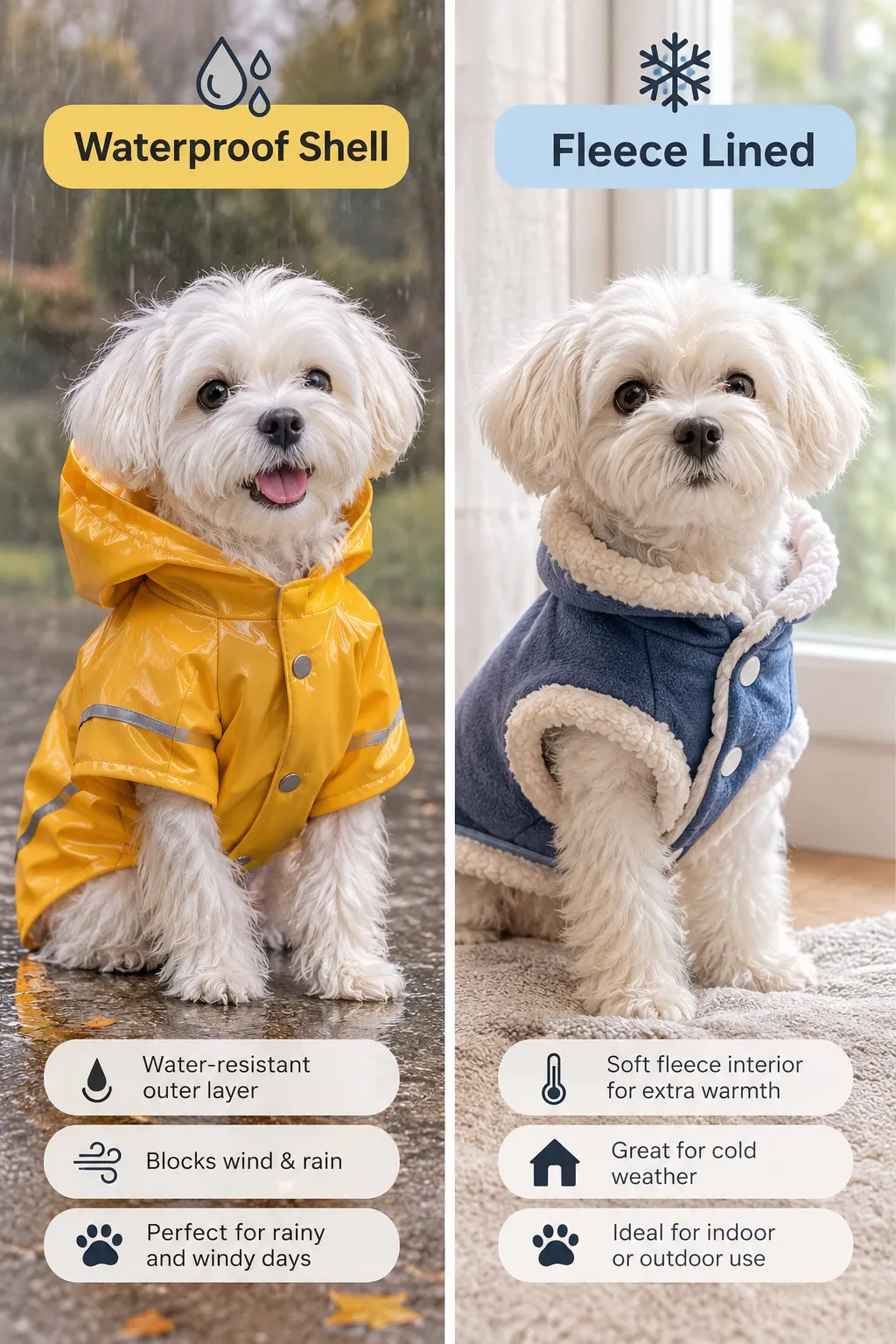
- Waterproof shell: best for wet winter walks, prevents the coat from soaking through and chilling the dog from within.
- Fleece lined: best for crisp, dry cold, adds warmth without extra bulk.
- Combo coats: most versatile, slightly pricier, good for owners dealing with unpredictable winter weather.
A soaked coat is actually worse than no coat at all, since wet fabric pulls heat away from the body (Country Living). Always dry a coat fully before the next walk.
Should Maltese Dogs Wear Boots With Their Coat
Boots are optional but genuinely useful for Maltese dogs walking on ice, rock salt, or deep snow. They protect paw pads from chemical de-icers and painful ice buildup between the toes.
Not every walk requires boots. Use them when:
- Sidewalks are treated with salt or chemical de-icer.
- Snow is deep enough to pack into the paw hair.
- Your Maltese has long foot hair that collects ice balls easily.
If boots aren’t available, a quick paw wipe with a warm damp cloth after each walk removes salt and ice residue just as well in a pinch.
How Long Can a Maltese Safely Wear a Coat
A Maltese can safely wear a coat for the length of a walk or outdoor errand, generally up to a couple of hours, but coats shouldn’t stay on all day indoors. Extended wear can trap moisture, mat fur, or cause skin irritation.
Take the coat off once your dog comes back inside and has warmed up. Check underneath regularly for:
- Matting or tangled hair under straps.
- Skin redness, especially around the armpits and neck.
- Dampness that needs drying before the next use.
Common Mistakes People Make Choosing Dog Winter Coats
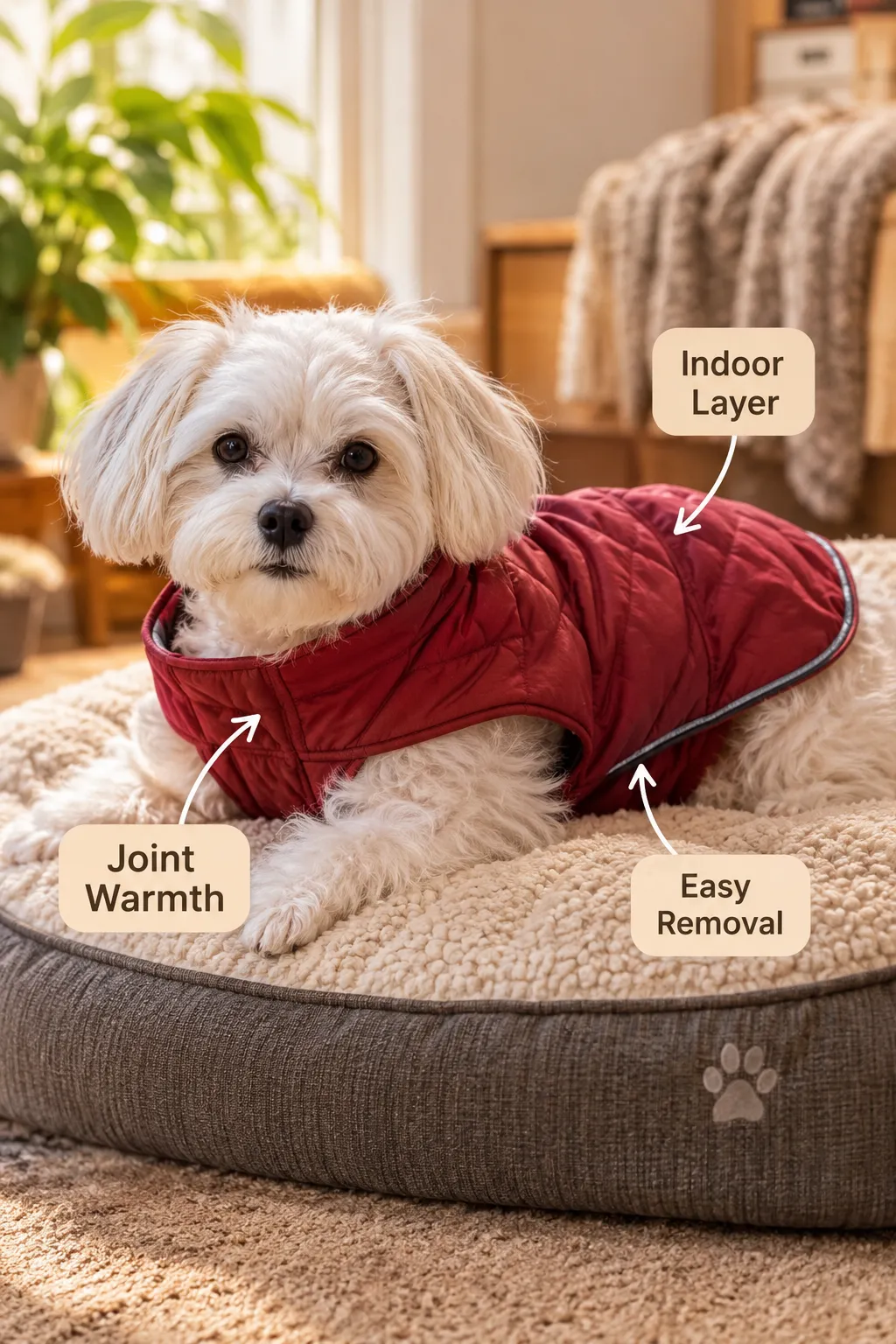
The most common mistake is buying a coat that only covers the back while leaving the belly exposed, which defeats much of the warmth benefit for a low-bodied breed like the Maltese. Coverage matters more than thickness in many cases.
Other frequent mistakes:
- Choosing a size based on breed average instead of actual measurements.
- Ignoring strap placement that rubs or restricts shoulder movement.
- Forgetting water resistance and ending up with a soaked, cold dog.
- Leaving tags or hardware that irritate sensitive underbellies.
The AKC’s winter gear guidance emphasizes fit over fashion, a good rule for any small-breed coat shopping trip.
Can Maltese Sleep in Their Winter Coat
No, it’s best not to let a Maltese sleep in a winter coat. Coats can trap heat unevenly, bunch up uncomfortably, or cause skin issues overnight when there’s no supervision.
Remove the coat before bedtime and rely on a warm blanket or heated bed instead if your home runs cold at night. This also gives you a chance to check skin and coat condition daily, catching any irritation early.
Indoor vs Outdoor Coats for Maltese Dogs
Outdoor coats need wind and water resistance, while indoor coats or sweaters only need to add light warmth for a dog lounging in a cool house. Don’t use a bulky outdoor coat as everyday indoor wear, since it can overheat a small dog near a heater or fireplace.
- Outdoor coat: insulated, weather-resistant, worn only during walks or yard time.
- Indoor layer: thin sweater or vest, useful in drafty homes or for senior dogs with thinner coats.
Think of the outdoor coat and indoor sweater as two separate tools, not interchangeable items.
Are All Maltese Dogs Cold Sensitive or Just Some
Most Maltese dogs run cold-sensitive due to their single coat type and small body size, but sensitivity varies with age, health, and individual hair thickness. Puppies and seniors feel cold faster than healthy adult dogs.
Factors that increase cold sensitivity:
- Very young puppies with underdeveloped temperature regulation.
- Senior Maltese dogs, especially those with arthritis or thyroid issues.
- Recently groomed or shaved dogs with shorter hair than usual.
- Underweight dogs with less natural fat insulation.
For arthritic or senior Maltese dogs, cold worsens joint stiffness, so a warm coat plus shorter outdoor sessions matters more than for a younger, healthy adult (VioVet).
Maltese Coat Sizing Chart and Fit Guide
A good Maltese coat fits snugly around the neck and chest, allows full leg movement, and covers the belly without dragging on the ground. Use your three measurements (neck, chest, back length) against the specific brand’s chart rather than a generic “toy breed” label.
General Maltese sizing reference (varies by brand):
| Size | Neck | Chest | Back Length |
|---|---|---|---|
| XS | 8-10 in | 12-14 in | 8-10 in |
| S | 10-12 in | 14-16 in | 10-12 in |
| M | 12-14 in | 16-18 in | 12-14 in |
Petmaltese.com notes that proper winter care for this breed includes attention to both grooming and gear fit, since a Maltese’s long hair can bunch under a tight coat and cause matting (PetMaltese). Explore options with adjustable straps if your dog’s measurements fall between sizes.
One quick note for anyone shopping online: if a Google Anfrage wird verifiziert message pops up while you search for coats, don’t panic, it just means your request wird verifiziert, and in wenigen Sekunden you can fortfahren. No need to aktualisiere diese Seite nicht weiter than once; just weiter browsing, skip past any autocomplete suggestions, and the results available for dog clothes will load normally.
Grooming and Accessories That Boost Winter Warmth
Hair length and grooming choices directly affect how much natural warmth your Maltese retains, separate from any coat. Letting the coat grow slightly longer in winter adds a bit of extra insulation compared to a close summer trim.
Pair grooming adjustments with a solid winter outfit for maximum comfort:
- Keep hair trimmed around paw pads only, not the whole leg, for better traction and warmth.
- Use a leave-in conditioner to prevent dry, brittle winter coat and skin.
- Add a nose balm if you notice cracking during cold, dry spells.
- Combine a coat with DIY accessories like a crochet dog hat for extra ear and head warmth on very cold days.
For comparison, Westie owners face a different challenge, since a Westie winter coat needs to accommodate a denser double coat underneath, while Maltese owners can often coat skip on milder days thanks to lighter grooming needs. Readers curious about breed-specific facts can also check our 15 adorable Maltese facts and 11 surprising Maltese truths for more background on this breed’s unique coat biology.
Conclusion
A Maltese Dog Winter Coat Guide comes down to three things: measure carefully, match the coat to the actual weather, and watch your dog for cold stress signs even while bundled up. Fit beats fashion every time, and a slightly boring beige coat that fits right will keep your dog warmer than a trendy one that gaps at the belly.
Start by measuring your Maltese this week, pick one waterproof or fleece option based on your local winter, and introduce it gradually if your dog is hesitant. For more breed-specific winter prep, check our broader dog winter clothing guide and our tips on keeping outdoor dogs warm for additional cold-weather strategies.
FAQ
Do Maltese dogs actually need winter coats?
Yes, because their single-layer coat provides little insulation, most Maltese dogs benefit from a coat once temperatures drop below 45°F.
What temperature should Maltese wear a coat?
Generally below 45°F, and a coat becomes more important below freezing, especially with wind or wet conditions.
How do I measure my Maltese for the right coat size?
Measure neck circumference, chest girth behind the front legs, and back length from neck to tail base, then compare against the specific brand’s size chart.
Maltese winter coat vs sweater, which is better?
A coat is better for real cold protection since it usually adds wind and water resistance; a sweater works fine indoors or on mild days only.
Can Maltese sleep in their winter coat?
No, remove coats before bedtime to avoid skin irritation, uneven heat trapping, and matting overnight.
Should Maltese dogs wear boots with their coat?
Boots help on salted sidewalks or deep snow but aren’t required for every walk; a quick paw wipe can substitute in mild conditions.
Are all Maltese dogs cold sensitive or just some?
Most are cold-sensitive due to their coat type, but puppies, seniors, and recently groomed or underweight dogs feel cold faster than healthy adults.