

Last updated: November 15, 2026
Quick Answer
Dog training at home works best with short, reward-based sessions of five to ten minutes, repeated one to three times a day, using nothing more than small treats and a quiet room. Over seven days, you can teach a dog their name, sit, stay, come, settling on a mat, and loose-leash basics, as long as you stay consistent and reward the behavior the moment it happens.
Key Takeaways
- No gear needed: treats and a quiet space are enough to start dog training at home.
- Keep sessions short: 5 to 10 minutes, a few times daily, beats one long drawn-out session.
- Reward within 1 to 2 seconds of the behavior so your dog connects the dots.
- Positive reinforcement is the method recommended by major humane organizations today.
- This plan works for puppies and adult dogs, though timelines may shift slightly.
- Mild reactivity can sometimes improve at home, but true aggression needs a professional.
- Progress shows up as faster responses and fewer repeats needed, not perfection.
- Every household member should use the same words and hand signals.
A dog that won’t sit for a treat on day one can often sit reliably by day four. I’ve seen it happen with my own rescue, a nervous shepherd mix who wouldn’t even make eye contact at first. That’s the appeal of dog training at home: it doesn’t require a facility, a certification, or expensive tools. It requires a pocket of treats, a patient voice, and about ten minutes of your day.
This guide lays out a full seven-day plan for dog training at home, built around positive reinforcement and zero special equipment. I’ll also answer the questions beginners ask most: how long sessions should be, what to do when your dog won’t listen, and whether this works for adult dogs, reactive dogs, or multiple dogs at once.
What’s the difference between positive reinforcement and punishment-based dog training
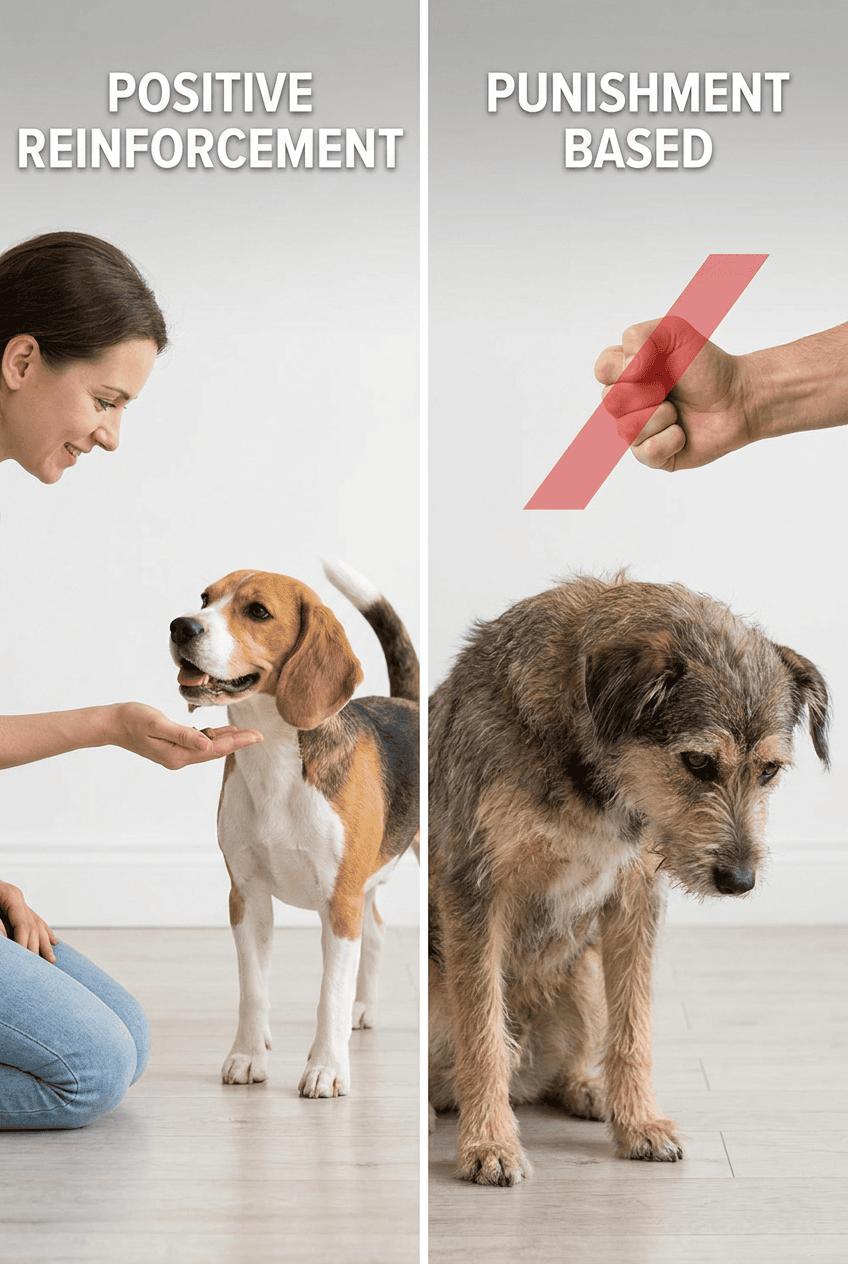
Positive reinforcement rewards the behavior you want, while punishment-based training tries to stop unwanted behavior through corrections or discomfort. Major humane organizations now recommend positive reinforcement as the default approach for home training because it builds trust and reduces welfare risks tied to aversive methods.
With positive reinforcement, you mark the good behavior (a “yes,” a click, or praise) and follow it with a treat or toy within a second or two. The dog learns that sitting, for example, makes good things happen, as outlined in SPCA’s positive training protocol.
Punishment-based methods, like yanking a leash or using shock collars, try to suppress behavior through discomfort. Welfare experts and behavior consultants increasingly advise against this approach, noting it can increase fear and anxiety instead of teaching the dog what to do instead, according to CCPDT’s behavior change guidance.
Choose positive reinforcement if: you want a dog that offers behaviors willingly and trusts you. Common mistake: punishing a dog for not listening, which usually just teaches the dog to avoid you, not to obey you.
Can I train an adult dog or is this plan only for puppies
Yes, this plan works for adult dogs as well as puppies. Adult dogs often learn new cues just as fast as puppies, sometimes faster, because they have longer attention spans.
- Puppies: shorter attention spans, so keep sessions closer to 5 minutes.
- Adult dogs: can usually handle 10-minute sessions and may already know some cues from past homes.
- Senior dogs: adjust for mobility; skip exercises that require fast movement.
If you’re starting with a puppy, pairing this plan with house training routines for a specific breed like Dachshunds or a German Shepherd puppy potty schedule helps cover both potty and obedience basics together.
Why won’t my dog listen to me during training sessions
Dogs often “won’t listen” because the environment is too distracting, the reward isn’t valuable enough, or the dog doesn’t understand what’s being asked yet. This is rarely stubbornness; it’s usually a training setup issue.
Common reasons include:
- Too many distractions, start in a quiet room, not the backyard with birds flying by.
- Low-value treats, plain kibble may not be exciting enough for a new skill.
- Unclear cues, saying “sit” five different ways confuses the dog.
- Session fatigue, after a few minutes, focus drops off fast.
Edge case: if a dog never responds even to high-value treats in a quiet room, rule out pain, hearing issues, or vision problems with a vet before assuming it’s a training problem.
Wait, place correctly below.
How much does professional dog training cost compared to doing it yourself
Professional dog training sessions and group classes typically cost more than DIY home training, which mainly costs the price of treats. DIY training at home with a clear plan can accomplish the same basic obedience goals as many beginner group classes, according to Whole Dog Journal’s DIY training overview.
- DIY at home: cost of treats, maybe a treat pouch, your time.
- Group classes: moderate cost, benefit of socialization with other dogs.
- Private trainer: highest cost, best for reactive or aggressive dogs.
Decision rule: choose DIY if your dog is friendly, healthy, and the goals are basic manners. Choose a professional if there’s aggression, severe fear, or you’re not seeing progress after consistent effort.
What treats should I use when training my dog at home
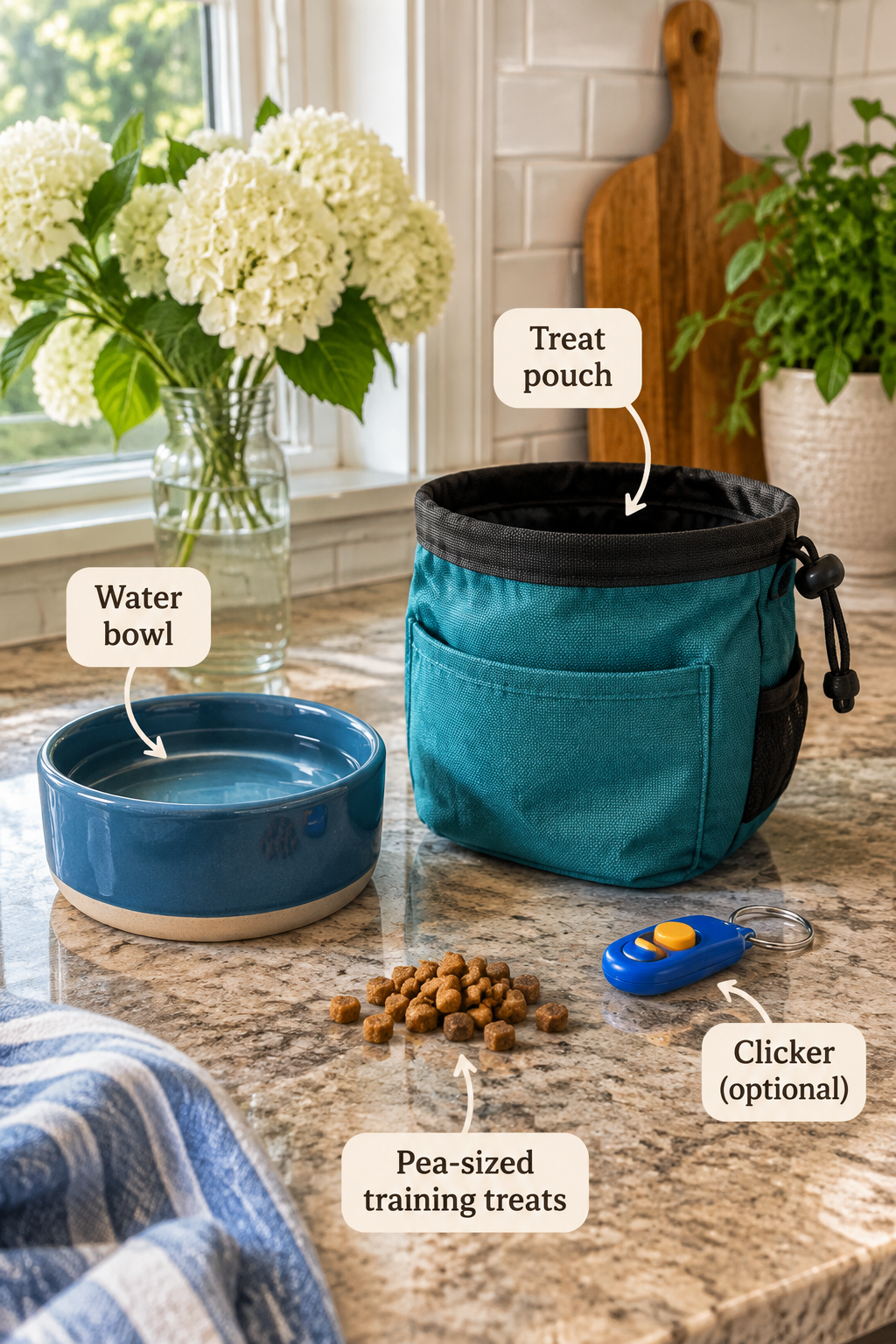
Use small, soft, high-value treats that your dog can eat in one bite without stopping to chew. Pea-sized pieces work best so the dog stays focused rather than pausing the session to finish a big snack.
Good options include small pieces of cooked chicken, cheese, or store-bought training treats. You can also make your own, like these pumpkin dog treats or Greek yogurt treats, which are easy to portion into tiny pieces.
Common mistake: using big biscuits that take 20 seconds to chew. That kills the rhythm of a session where rewards need to land within a second or two of the behavior.
Is clicker training really necessary or can I skip it
Clicker training is optional, not required, for dog training at home. A clicker can make the timing of rewards more precise, but a clear verbal marker like “yes” works fine for most beginners.
If you want the extra precision, our guide on how to use a clicker for dog training walks through the basics. If you’d rather skip buying anything, a short, consistent word said in the same upbeat tone does the same job.
Choose a clicker if: you like structure and want crisp timing, especially for tricks. Skip it if: you want to start today with zero shopping.
Can you train an aggressive or reactive dog at home safely
Mild reactivity, like barking at the doorbell or pulling toward other dogs, can often improve with structured home training. True aggression involving biting or serious threats needs professional help, not a DIY plan.
For reactive dogs, start training in the calmest area of the home, far from triggers, and build up slowly. Our guide to training a reactive dog and tips on socializing a reactive dog without stress go deeper into this.
Edge case: if your dog has bitten someone or shows intense aggression toward family members, stop DIY efforts and contact a certified behavior professional right away.
How many minutes a day should I actually train my dog
Five to ten minutes per session, repeated one to three times a day, is the sweet spot recommended across current training guidance. This beats one long 30-minute session, which usually leads to frustration for both of you.
A November 2026 plan from a pet insurance provider found that a single simple behavior, like “sit,” rewarded the instant it happens, taught in 10-minute daily sessions, is enough for beginners to see real progress, per Pumpkin’s 10-minutes-a-day training guide.
Our related 10-minute dog training session guide breaks this down further if you want a deeper dive on timing.
What are the most common mistakes people make when training dogs
The most common mistakes are inconsistent cues, rewarding too late, training in distracting places too soon, and expecting fast results without repetition. Each one slows progress but is easy to fix once you spot it.
- Mixed signals: one person says “down,” another says “lay down.”
- Slow rewards: waiting 5+ seconds breaks the connection between action and reward.
- Skipping repetition: a dog needs dozens of reps, not three, to really learn a cue.
- Training when tired or stressed: both the dog and the owner need patience for sessions to work.
If your dog seems especially stuck, our post on stubborn dog training tips covers extra troubleshooting.
Is this plan suitable for all dog breeds or just certain ones
This plan’s core structure, short sessions with positive reinforcement, works across breeds, but pacing and focus areas should match the dog’s energy level and traits. Expert guidance stresses individualizing training to the dog’s breed, age, health, and environment rather than a one-size-fits-all script.
- High-energy breeds (like Australian Shepherds or German Shepherds): add short play breaks between reps.
- Independent breeds: may need more patience and higher-value treats.
- Small breeds: keep sessions gentle; some get overwhelmed by too much repetition at once.
For breed-specific plans, check our guides on Australian Shepherd training tips or German Shepherd obedience training.
How do I know if my dog is actually learning and progressing
Progress shows up as faster responses, fewer repeated cues, and the dog holding a behavior longer each day, not as perfect obedience right away. By day 4 or 5, most dogs respond to a cue the first time it’s said, rather than needing it repeated three times.
Signs of real learning:
- Dog responds without a hand gesture, just the word.
- Dog holds “stay” a few seconds longer each day.
- Dog offers the behavior even when you’re not holding a visible treat.
Quick example: if your dog sat only after three repeats of “sit” on Monday but sits on the first try by Thursday, that’s real progress, even if it’s not flawless yet.
What should I do if my dog seems bored or frustrated during training
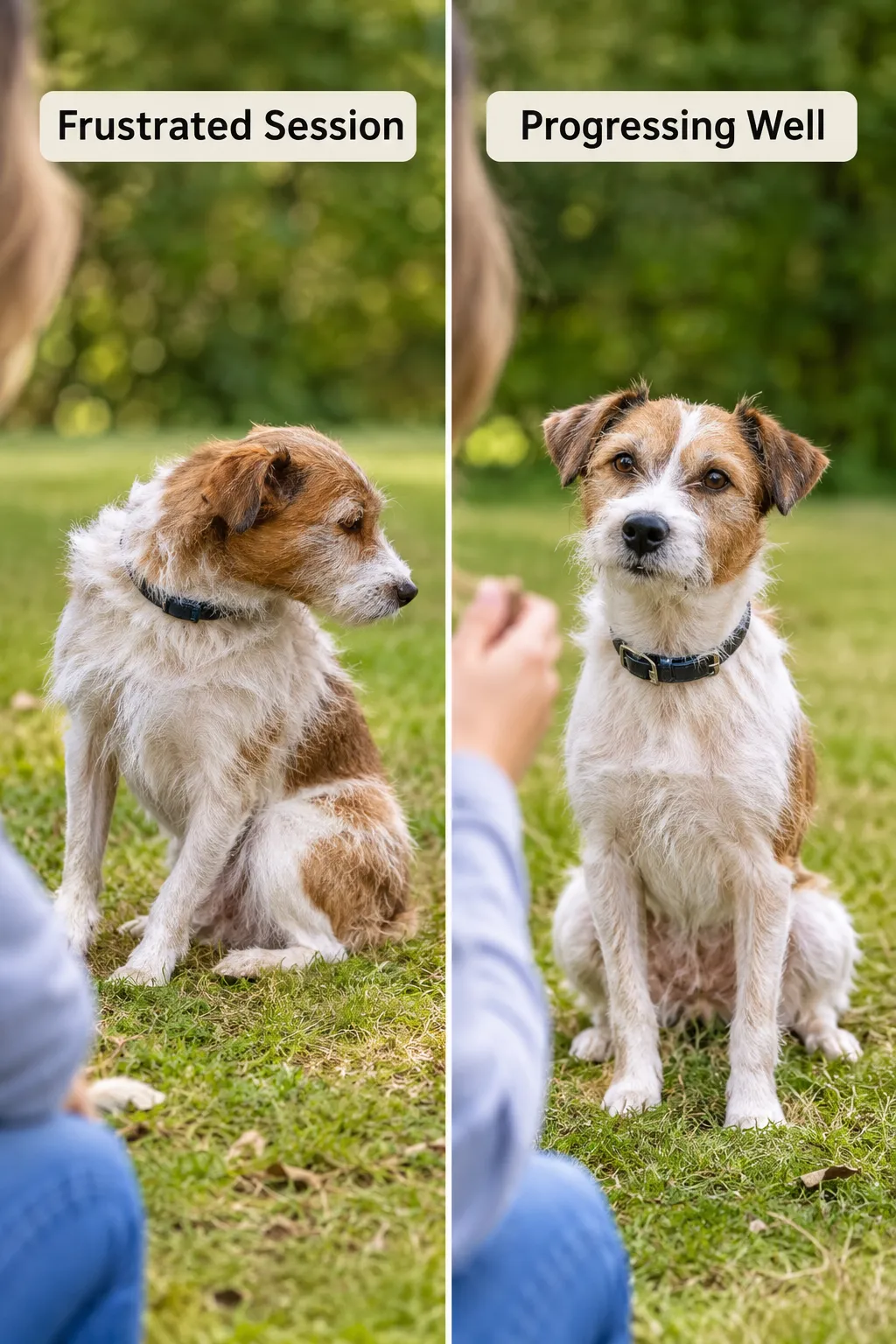
Stop the session, end on an easy win, and come back later rather than pushing through frustration. Boredom or frustration usually means the session ran too long or the task jumped ahead too fast.
- Shorten the session to 3 to 5 minutes next time.
- Go back one step to an easier cue the dog already knows.
- Add a short game break, like our fun dog training games, to reset enthusiasm.
Common mistake: continuing a session past the point where your dog is engaged, which teaches them that training equals tedium.
Can you train multiple dogs at the same time in your home
You can train multiple dogs in the same household, but it’s usually more effective to train each dog individually at first, then practice together once each dog knows the cue. Training together too early often causes both dogs to get distracted by each other.
- Start one-on-one sessions in separate rooms if possible.
- Once each dog reliably knows “sit” or “stay,” practice together with both on leash.
- Reward each dog individually to avoid one dog resource-guarding treats from the other.
How long before I see real results from the 7-day plan
Most beginners notice a dog reliably responding to one or two cues, like sit and come, within the first week, with more polish building over the following weeks. This 7-day plan is a strong starting point, not a finish line.
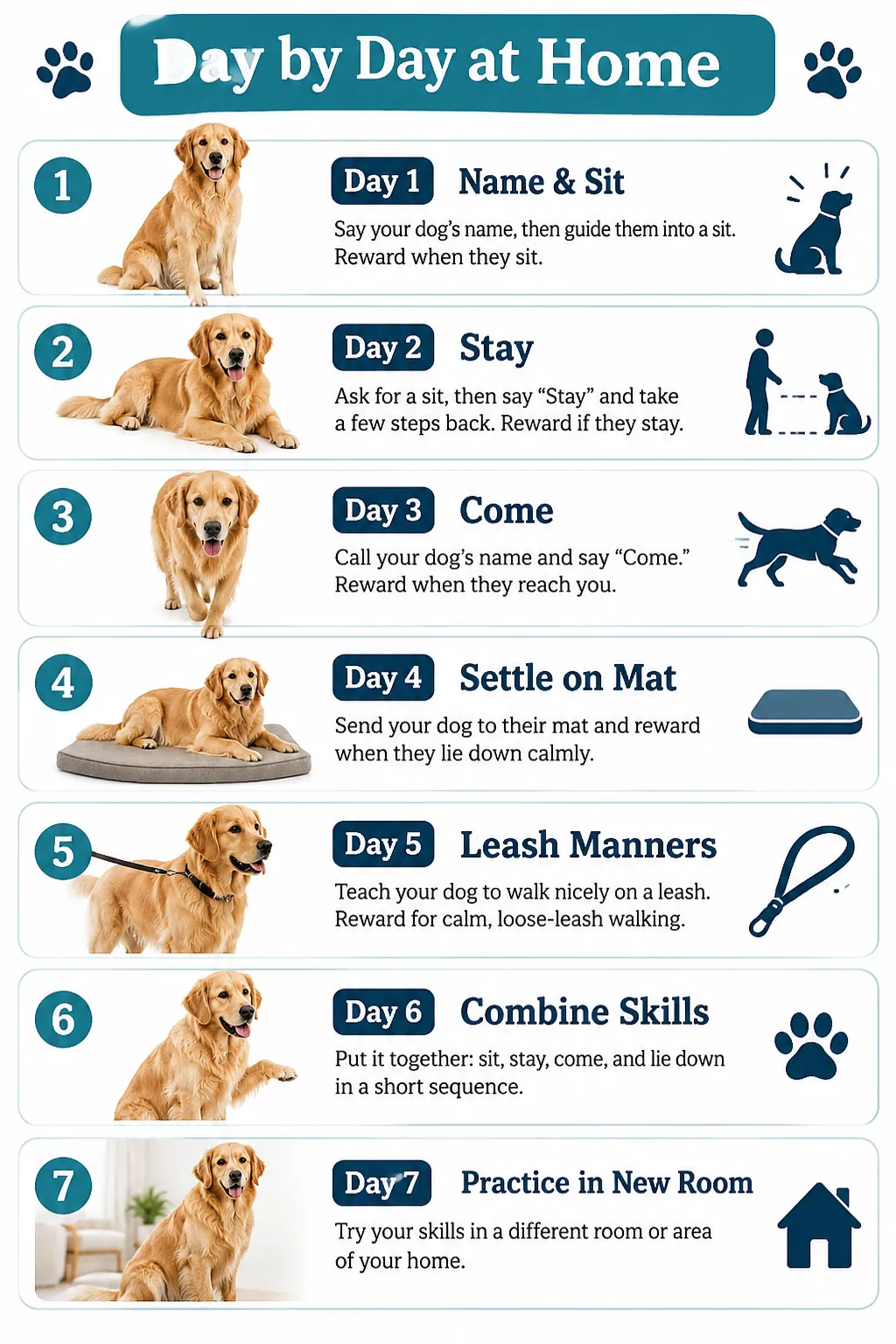
Here’s a simple day-by-day structure to follow:
| Day | Focus | Goal |
|---|---|---|
| 1 | Name recognition, mark & reward | Dog looks at you when named |
| 2 | Sit | Dog sits on cue in quiet room |
| 3 | Stay | Dog holds sit for 3-5 seconds |
| 4 | Come | Dog comes when called from a few feet away |
| 5 | Settle on a mat | Dog lies down and relaxes on cue |
| 6 | Loose-leash basics | Dog walks without pulling for short stretches |
| 7 | Combine & generalize | Practice all cues in a new room |
For a longer runway after this week, our 14-day dog training plan and its companion post on 7 powerful habits extend this same approach.
FAQ
Do I need a treat pouch for dog training at home?
No, a treat pouch is convenient but not required. Pockets or a small bowl on a counter work fine for beginners.
Can I use toys instead of treats?
Yes, for dogs that are more motivated by play than food, a favorite toy can work as the reward, as long as it’s given right after the behavior.
What if my dog only listens when I have a visible treat?
Start hiding the treat in a pocket or pouch earlier in training so the dog learns to respond to the cue itself, not just the sight of food.
Should I train before or after meals?
A little before meals is often best, since mild hunger makes treats more motivating, but don’t train a dog that’s starving or overly excited.
Is it too late to start training an older dog?
No. Adult and senior dogs can learn new cues; sessions just might need to be gentler and shorter depending on mobility.
How do I stop my dog from jumping on guests?
Teach and reward an alternative behavior, like sitting for greetings, rather than only saying “no,” which doesn’t teach the dog what to do instead.
Can kids help with training sessions?
Yes, older kids can help under supervision, using the same cues and reward timing as adults to keep things consistent.
What should I do if my dog ignores every cue outside the house?
Go back to a quieter area and rebuild the cue there before expecting the same performance outdoors; skills need to be re-taught in new settings.
Conclusion
Dog training at home doesn’t need fancy gear, a yard, or a trainer’s certificate. It needs short sessions, good treats, clear cues, and a little patience stacked over seven days. Start with name recognition and sit on day one, build toward stay, come, and settling on a mat, and finish the week practicing in a new room to lock in the skills.
If you hit a wall, like an aggressive reaction or no progress at all, that’s your cue to bring in a certified professional. For everything else, the plan in this guide is enough to get a dog from zero cues to real, reliable responses in a week. Grab some treats, pick a quiet corner of your home, and start today.