

Last updated: November 24, 2026
Quick Answer
Baby golden retrievers go through more change in their first 12 weeks than at any other point in their lives. They move from blind, deaf newborns to curious, mouthy, trainable puppies who are ready to leave their mother around 8 weeks old. Expect rapid weight gain, a critical socialization window, early potty training struggles, and a puppy who needs about 18-20 hours of sleep a day.
Key Takeaways
- Golden retriever puppies are usually considered “babies” from birth through about 12-16 weeks, when rapid physical and behavioral growth slows down.
- Most breeders send puppies home around 8 weeks, never earlier than 7-8 weeks.
- The socialization window runs roughly from 3 to 14 weeks and closes fast, so early exposure matters more than most owners realize.
- Puppies this age need 3-4 small meals a day and sleep 18-20 hours total.
- Nipping and mouthing are normal at this stage and respond well to redirection, not punishment.
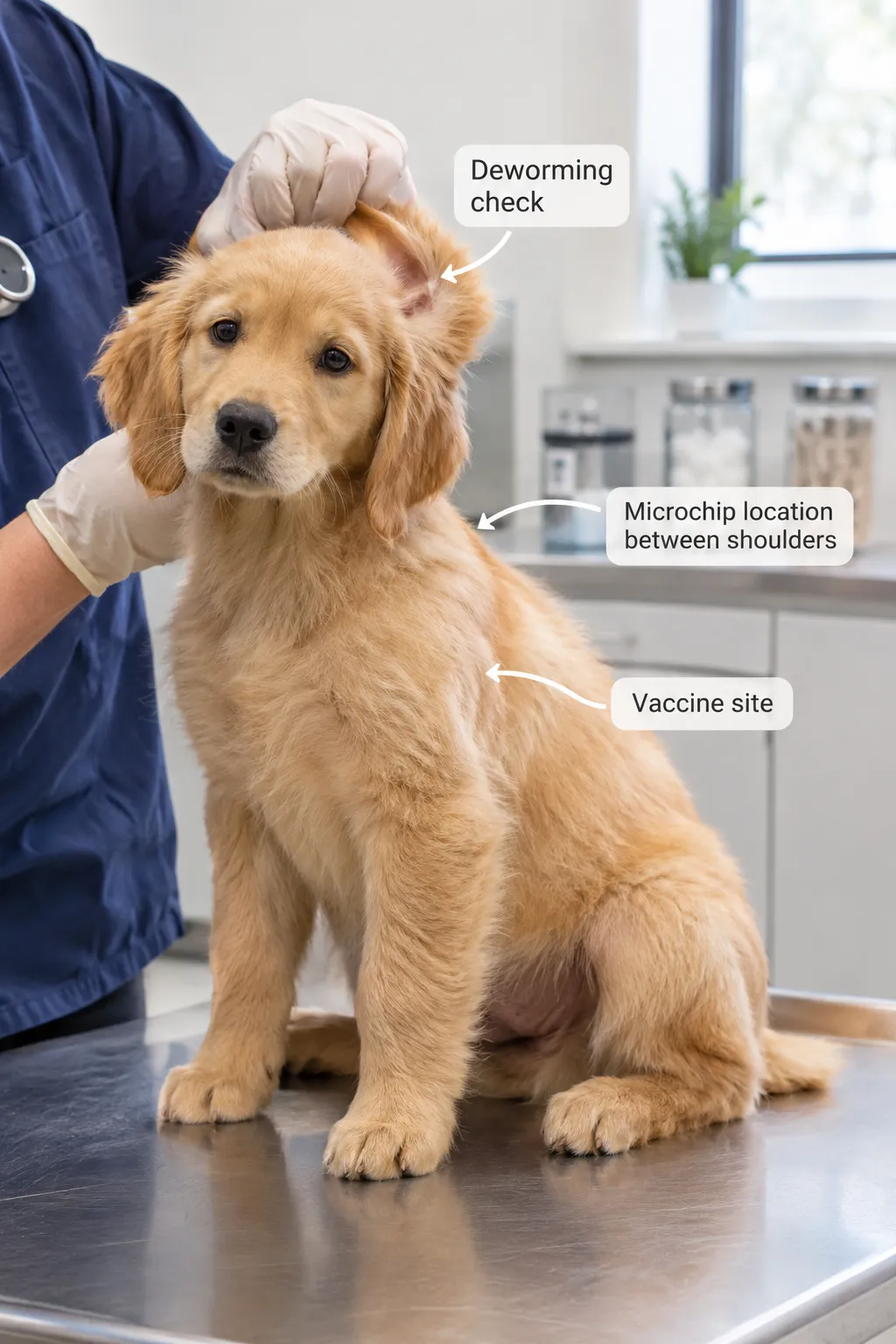
- Full vaccine series and deworming typically continue through 16 weeks, not just the puppy’s first shot.
- A yard is nice but not required. A fenced area or regular leash walks work fine once vaccines are complete.
What age is considered a baby golden retriever
A baby golden retriever is generally any puppy from birth up to about 12 weeks old, though many people stretch the “puppy” label through 6 months. The first 12 weeks cover the newborn, transitional, and early socialization stages, which is why breeders and vets treat this window as its own category.
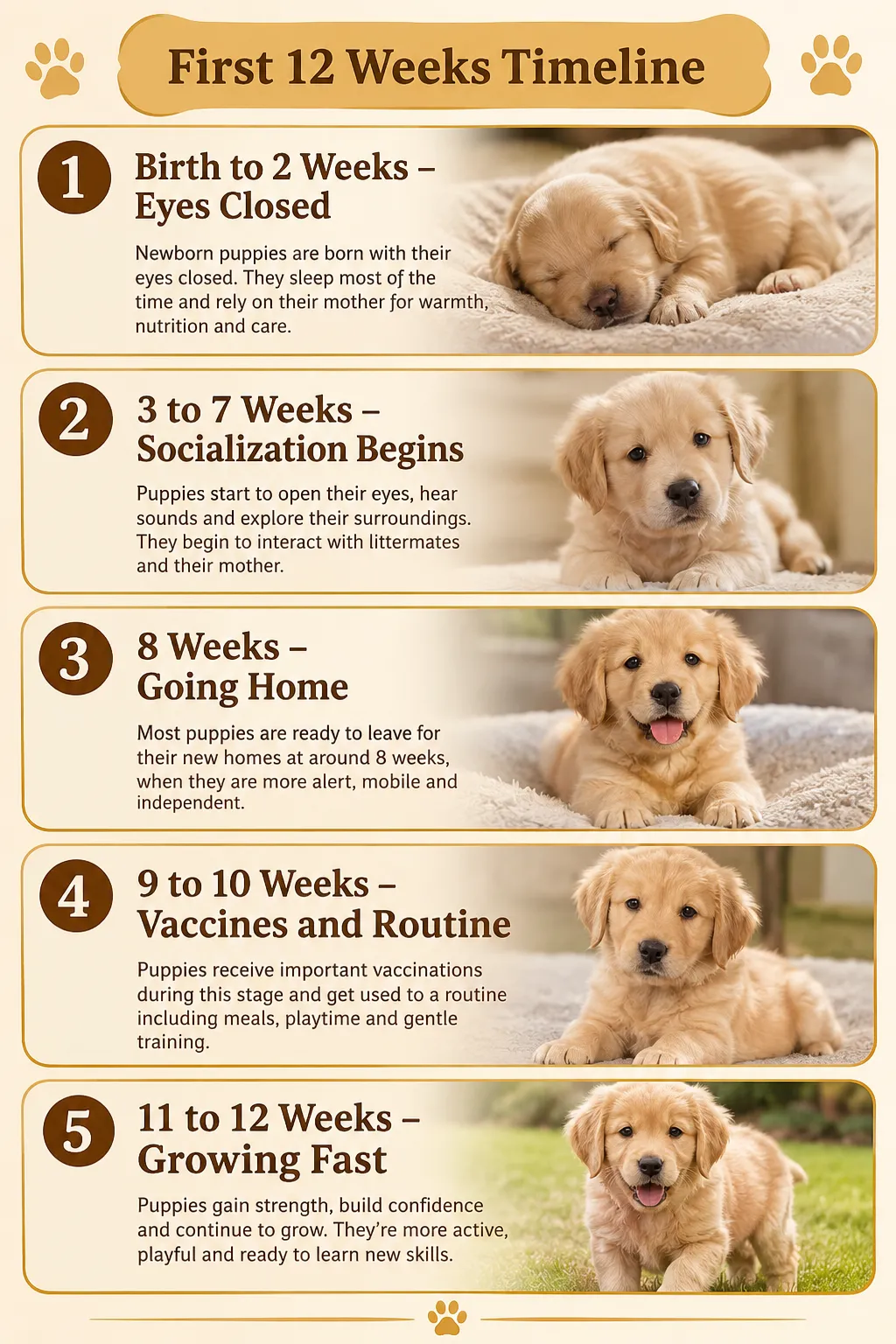
During weeks 0-2, puppies are blind and deaf and depend entirely on their mother. Eyes and ears open around week 2-3. By week 3, puppies start walking and reacting to sound and light, according to puppy development guidance from Dallas Texas Golden Retriever. From 8 to 12 weeks, the puppy you bring home starts to look and act like a small dog instead of a helpless newborn.
Decision rule: if your puppy is under 7 weeks old, it should not be going home yet. Reputable breeders keep litters together until at least 8 weeks for a reason tied directly to the socialization research below.
How much do golden retriever puppies cost
Golden retriever puppies from a reputable breeder commonly cost between $1,500 and $3,500, though well-bred field or show lines can run higher. Price depends on pedigree, health testing of the parents, and location.
Beyond the purchase price, budget for:
- First-year vet visits and vaccines
- Spay or neuter surgery
- Crate, bed, food, and basic gear
- Puppy training classes
Common mistake: choosing the cheapest puppy available without asking about hip, elbow, and heart health clearances on the parents. Golden retrievers are prone to hip dysplasia and certain cancers, so a lower upfront price can mean higher vet bills later.
What supplies do I need for a golden retriever puppy
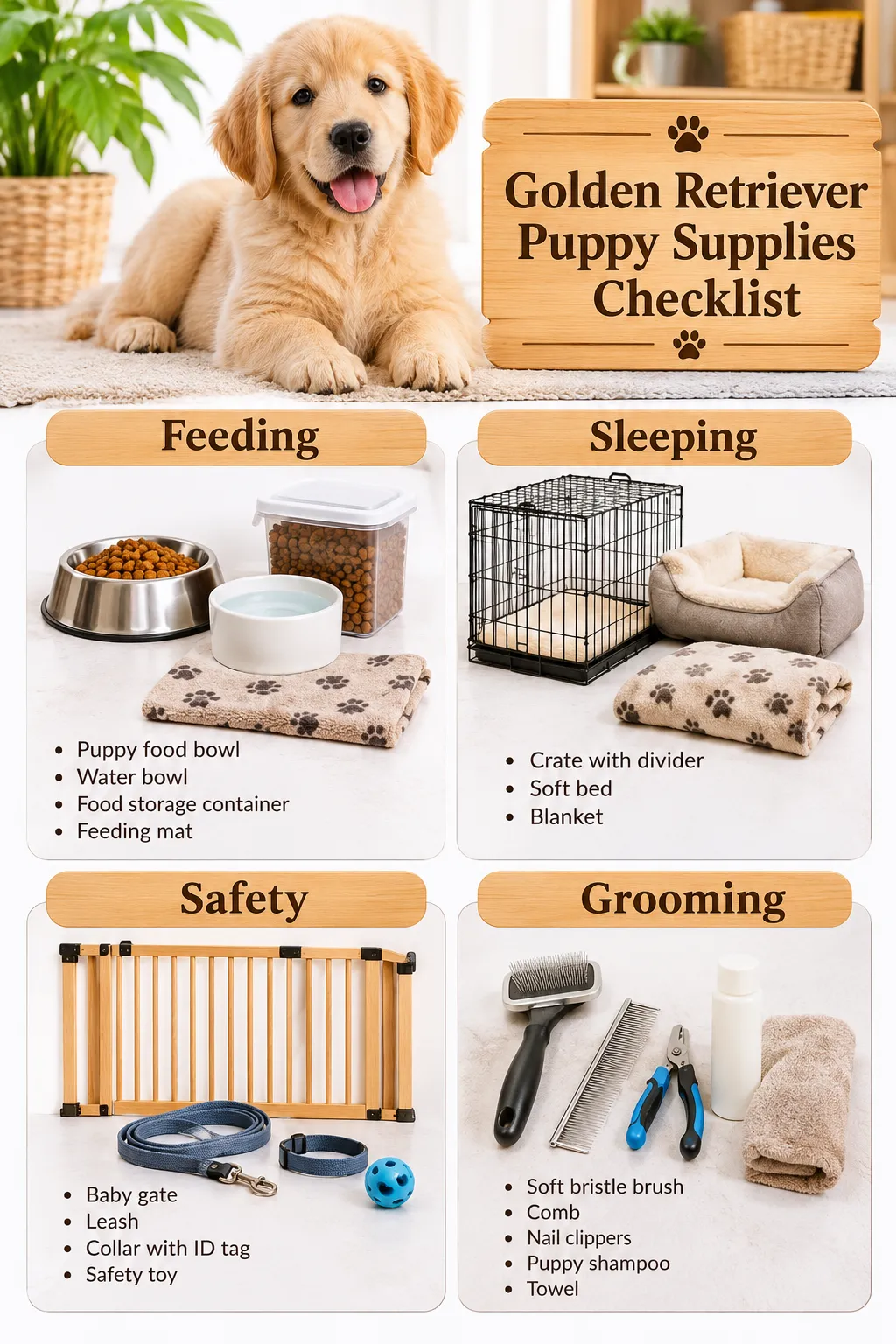
You need a crate, puppy food, a leash and flat collar, food and water bowls, basic grooming tools, and puppy-safe chew toys before your golden retriever comes home. Getting these ready in advance makes the first few days calmer for everyone.
A practical starter list:
- Crate with a divider panel so it grows with the puppy
- Puppy-specific food matched to large-breed growth needs
- Soft slicker brush for the dense double coat that starts coming in early
- Baby gates to block stairs and off-limit rooms
- Enzymatic cleaner for inevitable accidents
- Chew toys in a few textures, since teething starts around 3-4 months
If you’re also comparing low-shedding breeds for other household members, see our guide to large hypoallergenic dog breeds, though golden retrievers themselves shed year-round and aren’t hypoallergenic.
How to potty train a golden retriever puppy
Potty training a golden retriever puppy works best with a consistent schedule, frequent outdoor trips, and praise timed to the exact moment the puppy goes outside. Most puppies this age can’t hold their bladder for more than 2-3 hours.
Steps that actually work:
- Take the puppy out first thing in the morning, after every meal, after naps, and after play.
- Pick one potty spot outside and walk there every time.
- Praise or give a small treat within seconds of the puppy finishing, not after walking back inside.
- Watch for sniffing, circling, or sudden stillness, which usually signal an accident is coming.
- Clean indoor accidents with an enzymatic cleaner so the smell doesn’t invite a repeat.
Edge case: some puppies regress around 10-12 weeks as teething and growth spurts distract them. That’s normal and not a sign training has failed.
How often should I feed my golden retriever puppy
Golden retriever puppies between 8 and 12 weeks should eat 3-4 small meals a day of a large-breed puppy formula. Free feeding isn’t recommended because it makes potty training harder and can contribute to uneven growth, per golden retriever puppy care guidelines.
A rough schedule looks like:
- Breakfast early morning
- Lunch around midday
- Dinner early evening
- Optional small snack before bed, depending on age and vet advice
What’s the best food for golden retriever puppies
The best food for a golden retriever puppy is a large-breed puppy formula that controls calcium and calorie density to support slower, steadier bone growth. Golden retrievers are a large breed prone to joint problems, so regular puppy food formulated for small breeds isn’t ideal.
Look for:
- A label stating “large breed puppy” or AAFCO growth formula for large breeds
- Named meat as the first ingredient
- A feeding chart matched to your puppy’s current weight, not guesswork
Talk to your breeder or vet before switching foods in the first 12 weeks since sudden diet changes cause stomach upset. For broader guidance on what’s safe across dog life stages, our article on what dogs can and cannot eat is a useful reference.
Why is my puppy not eating or sleeping well
A golden retriever puppy who skips meals occasionally or naps erratically is often fine, but persistent refusal to eat or sleep can signal stress, teething pain, or illness. Context matters more than a single skipped meal.
Common explanations:
- New environment stress in the first few days home
- Overtiredness, which paradoxically makes puppies cranky and unable to settle, similar to overtired human babies
- Teething discomfort starting around 3-4 months
- Illness, especially if paired with vomiting, diarrhea, or lethargy
Puppies this age need roughly 18-20 hours of sleep daily, according to puppy care resources from Sunryz Golden Retrievers. If a puppy skips two meals in a row, seems withdrawn, or has diarrhea along with low appetite, call your vet rather than waiting it out.
How to stop golden retriever puppies from biting and nipping
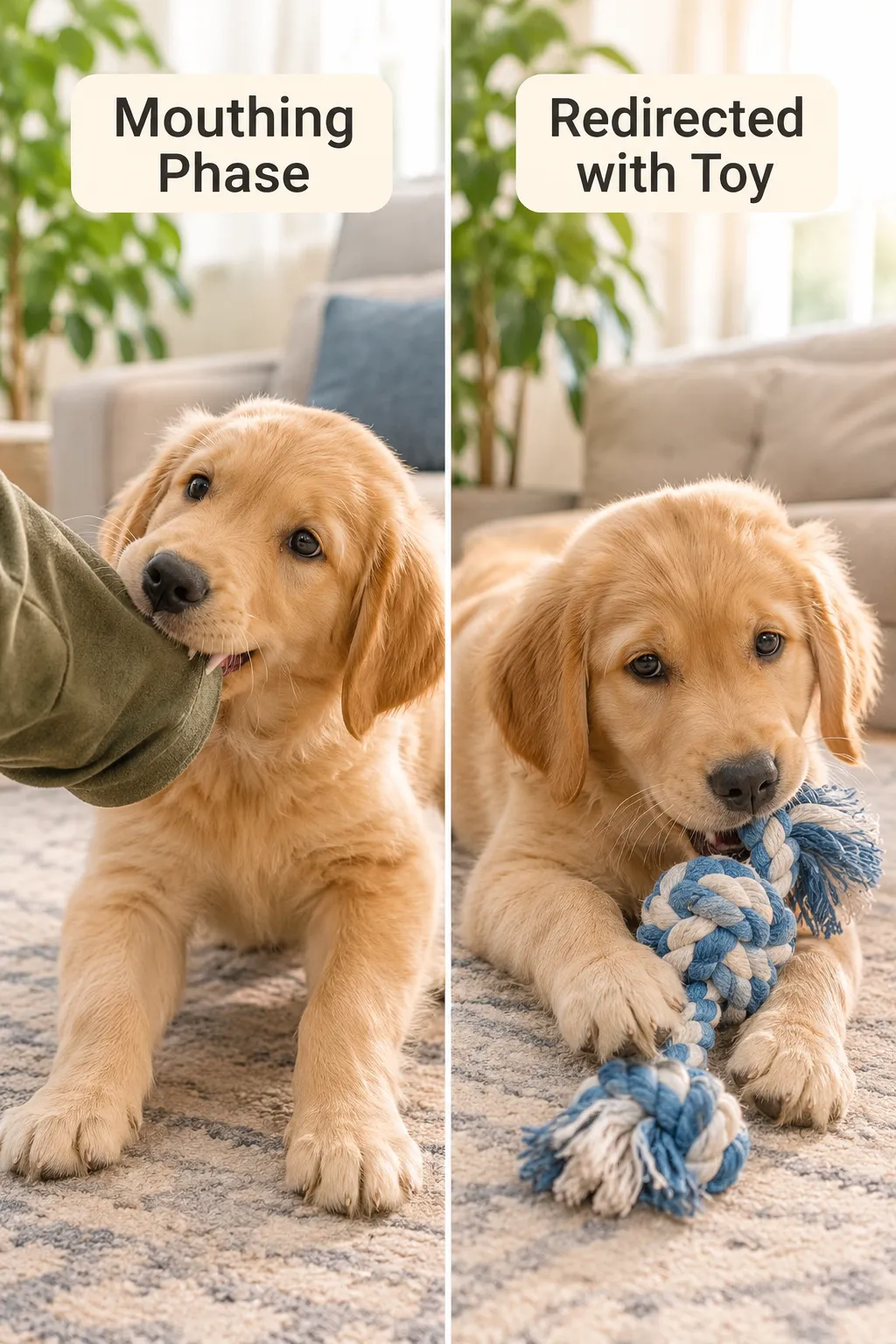
Golden retriever puppies bite and nip because they’re teething and learning bite inhibition, not because they’re aggressive. Redirecting the behavior toward appropriate toys works far better than punishment.
What helps:
- Offer a chew toy the instant teeth touch skin
- Yelp softly like a littermate would, then pause play for a few seconds
- Avoid rough hand-wrestling games that encourage biting hands
- Keep play sessions short since overtired puppies bite more
Common mistake: yelling or hitting a puppy for mouthing. This usually increases fear-based biting instead of reducing it.
When can golden retriever puppies go outside safely
Puppies can start supervised outdoor exposure in a clean yard right away, but public spaces with unknown dogs should wait until the full vaccine series is complete, usually around 16 weeks. This balance matters because the socialization window closes fast, yet disease exposure is a real risk before vaccines finish.
According to the American Veterinary Medical Association’s review of socialization research, vets increasingly recommend starting socialization classes after the first or second vaccine round rather than waiting for full completion, as long as the environment is controlled and other dogs are verified healthy.
Practical approach:
- Carry your puppy into pet-friendly stores before full vaccination
- Host friends and their healthy, vaccinated dogs at your home
- Save the dog park for after the full vaccine series
Are golden retrievers good for first time dog owners
Yes, golden retrievers are widely considered one of the best breeds for first-time owners because of their trainability, friendly temperament, and tolerance for mistakes. They’re forgiving of a learning-curve owner in ways some stubborn or high-drive breeds aren’t.
That said, they’re not low-maintenance:
- They need daily exercise, not just a backyard to wander in
- Their coat requires regular brushing to manage shedding
- They’re prone to separation-related stress if left alone too long
Decision rule: choose a golden retriever if you can commit to daily walks and training time. Choose a lower-energy breed, like those discussed in our Maltese pros and cons guide, if your schedule is tighter.
Golden retriever puppies vs Labrador puppies
Golden retriever and Labrador puppies are similar in size and temperament but differ in coat care, energy expression, and trainability style. Both are excellent family dogs, so the choice often comes down to coat maintenance and personal preference.
| Trait | Golden Retriever Puppy | Labrador Puppy |
|---|---|---|
| Coat | Longer, feathered, more brushing needed | Short, dense, less brushing |
| Energy | High, often calmer indoors | High, often more active indoors |
| Shedding | Heavy, seasonal | Heavy, year-round |
| Trainability | Very high, eager to please | Very high, food-motivated |
| Size at 12 weeks | Roughly 15-20 lbs | Roughly 15-22 lbs |
Do golden retriever puppies need a yard
No, a yard isn’t required for a golden retriever puppy, though access to safe outdoor space makes daily exercise easier. Apartment living works fine with consistent walks and playtime.
What matters more than a yard:
- Daily walks once vaccines allow it
- Mental stimulation through training and puzzle toys
- Supervised play, whether that’s in a yard, a park, or a hallway game of fetch
Common mistakes when raising a golden retriever puppy
The biggest mistakes owners make are under-socializing during the critical window, skipping crate training, and feeding adult dog food too early. Each of these has outsized effects precisely because the puppy is changing so fast.
Other frequent errors:
- Letting the puppy free-roam the house before it’s reliably potty trained
- Skipping vet-scheduled deworming and vaccine boosters, which typically continue through 16 weeks per golden retriever puppy care guidelines
- Expecting adult-level obedience from a 10-week-old brain
- Over-exercising a growing puppy, which can stress developing joints
When should I start training my golden retriever puppy
You should start basic training the day your puppy comes home, around 8 weeks old. Simple commands like “sit,” name recognition, and crate comfort can begin immediately, using short, reward-based sessions.
Early training priorities, roughly in order:
- Name recognition and eye contact
- Crate as a safe, positive space, not punishment
- Sit and come, using treats and praise
- Leash walking indoors before outdoor walks begin
- Basic bite inhibition through redirection
According to breeder-based timelines like those from Mountain Reign Retrievers’ week-by-week guide, many breeders begin light handling, crate exposure, and sound desensitization even before puppies leave for their new homes, which gives new owners a head start once the puppy arrives at 8 weeks.
Conclusion
Bringing home a baby golden retriever means committing to a fast-moving few months: vet visits, feeding schedules, potty training, and more sleep for the puppy than you’d expect. Start supplies and a feeding plan before pickup day. Book the first vet visit within a few days of bringing the puppy home. Begin gentle training and socialization immediately, and don’t wait for full vaccination to start safe, controlled exposure to new people and places. The effort in these 12 weeks sets the pattern for the next 12 years.