

Last updated: November 24, 2026
Quick Answer
The best dog training tips for a new puppy in month one focus on bonding, routine, and name recognition, not formal obedience work. Keep sessions to two or three short bursts a day, around five minutes each, use positive reinforcement only, and start potty breaks on a schedule tied to your puppy’s age in months. Socialization can begin at home immediately and expand once your vet clears outside exposure.
Key Takeaways
- Month one is about routine, bonding, and name response, not commands.
- Potty breaks should follow roughly one hour of bladder control per month of age.
- Keep training sessions short: two to three sessions daily, about five minutes each.
- Positive reinforcement works better than punishment for puppies, according to veterinary behavior groups.
- Start socialization early at home, then expand to public settings once your vet approves.
- Avoid common first-month mistakes like inconsistent schedules and over-long crate time.
- Full reliability on basic commands usually takes most of the first year.
A friend of mine brought home an eight-week-old beagle mix last spring and tried to teach “stay,” “down,” and “shake” all in the first week. By day four, the puppy was overwhelmed, nipping more, and barely responding to its own name. That’s the trap. The first month isn’t a sprint toward tricks. It’s about building a foundation the rest of the training will stand on.
This guide walks through exactly what to do in the first 30 days, broken into real questions new owners ask, with no filler and no guessing. If you want a structured push toward faster results, you can also check out a free online workshop that shows the same methods used by professional service dog trainers to housebreak puppies and stop bad behavior fast – you can join it here, which pairs well with the steps below.
What’s the best age to start training a puppy
You can start training the moment a puppy comes home, usually around eight weeks old. Early sessions should be light: name recognition, gentle handling, and simple routines rather than formal commands.
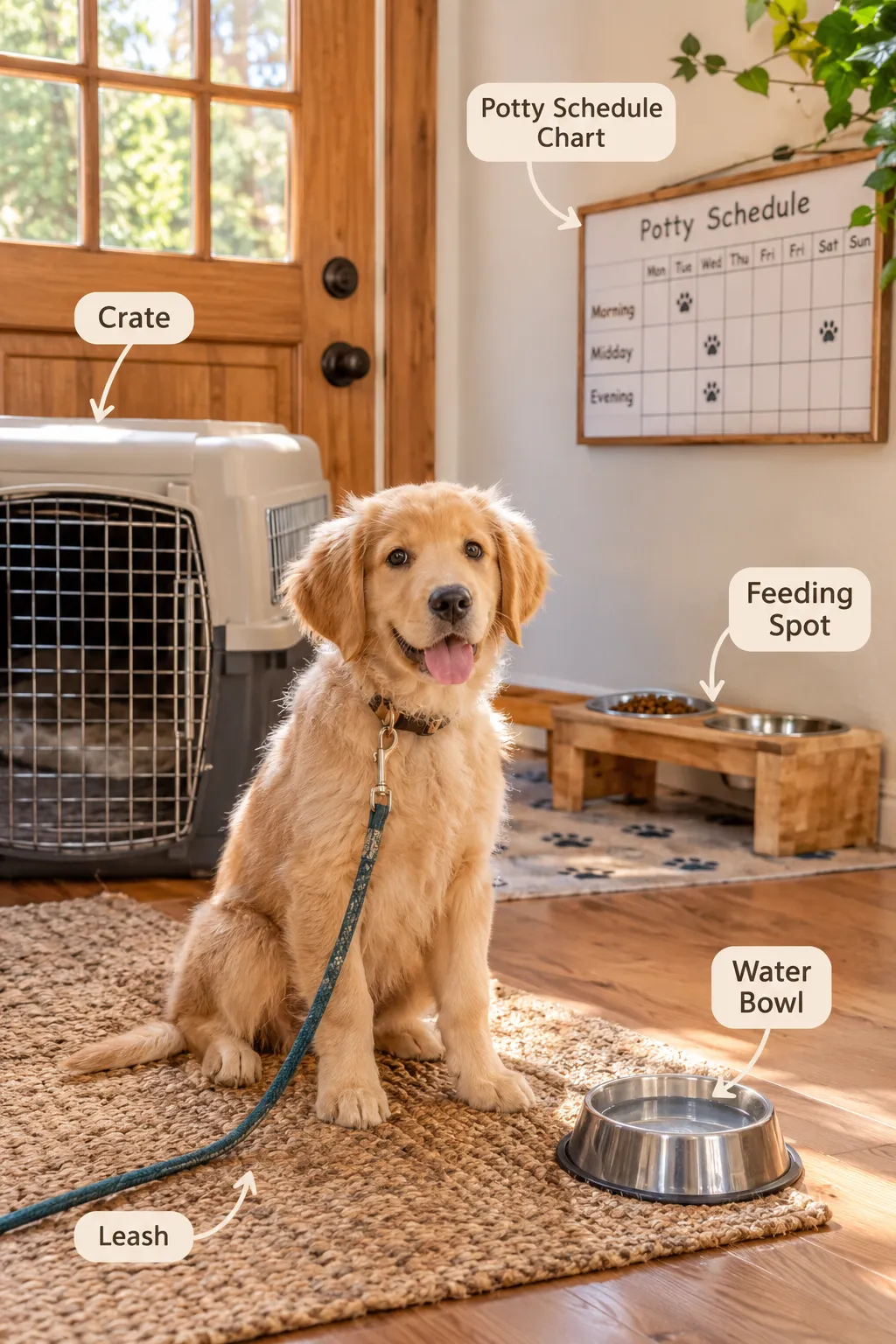
Veterinary behavior groups note that the critical socialization window closes around twelve to fourteen weeks of age, which means waiting until six months is too late for the most important social learning. The AVSAB puppy socialization position statement recommends starting exposure to new people, sounds, and experiences as early as the first week home, as long as it’s done safely.
A good rule: start the day you bring the puppy home, but keep expectations tiny. Name response and a calm crate routine are plenty for week one.
How long does it actually take to potty train a puppy
Most puppies need about four to six months of consistent work to be reliably potty trained, though the first month sets the pattern. A common guideline is roughly one hour of bladder control for every month of age, so an eight-week-old puppy needs a bathroom break about every two hours during the day.
Here’s a simple first-month schedule:
- Take your puppy out first thing in the morning, after every meal, after naps, and after play.
- Match crate time to the one-hour-per-month rule, and don’t exceed it.
- Use the same door and the same cue word every time.
- Reward immediately after your puppy goes outside, not after walking back inside.
If accidents happen indoors, that’s normal in month one. Clean thoroughly and tighten the schedule rather than adding punishment. For a deeper walkthrough, see this complete potty training guide for fast, stress-free results.
Positive reinforcement vs punishment based training which works better
Positive reinforcement works better than punishment for puppies, and major veterinary behavior organizations recommend against dominance-based or punishment-heavy methods. The AVSAB position on humane training states that reward-based methods produce better outcomes and fewer behavior problems long term.
Punishment can suppress a behavior temporarily but often increases fear, anxiety, or even aggression. A puppy that gets scolded for a potty accident may just learn to hide when it needs to go, which makes house training harder, not easier.
Choose positive reinforcement if you want a puppy that offers behaviors willingly instead of one that only avoids punishment. This approach also builds trust faster, which matters a lot in the first month when your puppy is still learning that you’re safe.
Why is my puppy biting me during training
Puppy biting during training is almost always normal mouthing tied to teething, overstimulation, or play, not aggression. It’s one of the most common issues owners run into between eight and sixteen weeks.
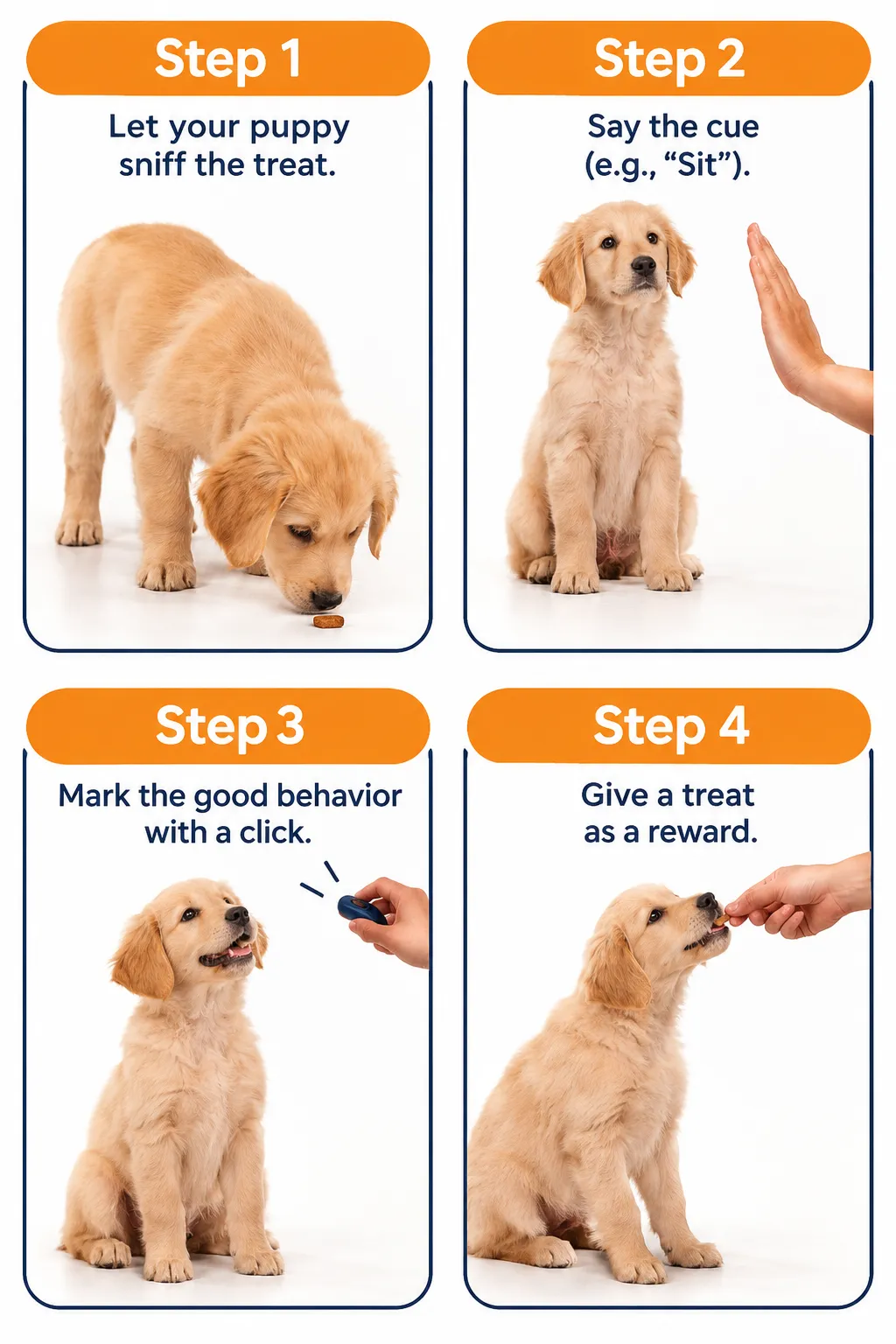
To manage it:
- Redirect to a chew toy the instant teeth touch skin.
- End the session calmly if biting escalates, rather than yelling.
- Keep sessions short so your puppy doesn’t get overtired and mouthy.
- Offer frozen washcloths or appropriate chew items during teething weeks.
If biting seems unusually hard or frequent, a dedicated resource like this guide on training tips that work when “no” doesn’t can help, along with this breakdown of the one mistake most new owners make with puppy biting.
Do I really need to hire a professional dog trainer
No, you don’t need a professional trainer for basic first-month work, but one can help if you’re seeing aggression, extreme fear, or no progress after consistent effort. Group puppy classes are also valuable for safe, structured socialization once your vet clears attendance.
Consider a trainer if:
- Your puppy shows fear-based growling or snapping.
- You’ve tried consistent methods for two to three weeks with zero progress.
- You want structured guidance without guessing at technique.
If budget or scheduling makes in-person classes hard, the free workshop mentioned earlier walks through the same housebreaking and obedience techniques service dog trainers use, and you can access it here as a no-cost starting point before deciding if you need one-on-one help.
How much does puppy training cost
Costs vary widely depending on format. Group puppy classes, private sessions, and online programs all have different price points, and costs depend heavily on your location and the trainer’s experience. Rather than quote a specific number that may not hold true in your area, call two or three local trainers or classes to compare, and ask what’s included (number of sessions, class size, take-home materials).
Common puppy training mistakes I should avoid
The biggest first-month mistakes are inconsistent potty schedules, overly long crate time, no agreed house rules among family members, and trying to teach too many commands at once. These mistakes slow progress more than almost anything else new owners do.
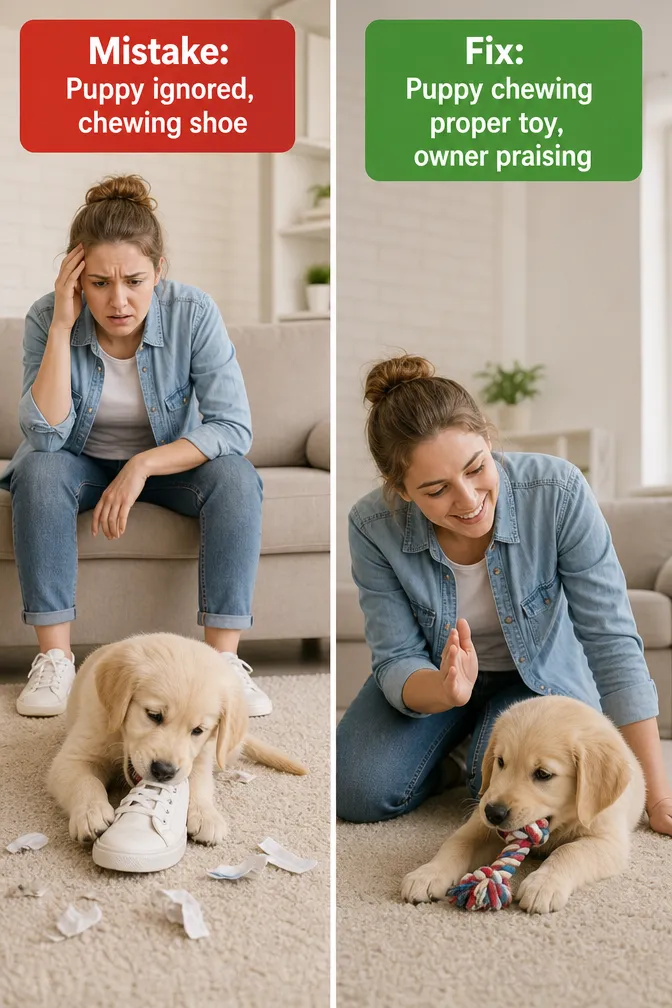
Quick fixes:
- Write down the potty schedule and stick to it, even on weekends.
- Agree with everyone in the house on rules (furniture, feeding, commands) before day one.
- Limit crate stretches to the one-hour-per-month-of-age guideline.
- Teach one or two skills at a time, not five.
For setup mistakes beyond training, this new puppy checklist covering must-have supplies and common errors is worth a look before week one even starts.
Is puppy training different for large breed dogs
Yes, large breed puppies need the same early routine but with extra attention to joint-safe exercise and impulse control, since their size makes pulling, jumping, and mouthing harder to manage as they grow. Training the basics early matters more with large breeds because a 70-pound dog that jumps on guests is a bigger problem than a 10-pound one.
Breed-specific guides can help here, like this one on Labrador puppy training tips that stop bad habits early or German Shepherd obedience training.
What commands should I teach my puppy first
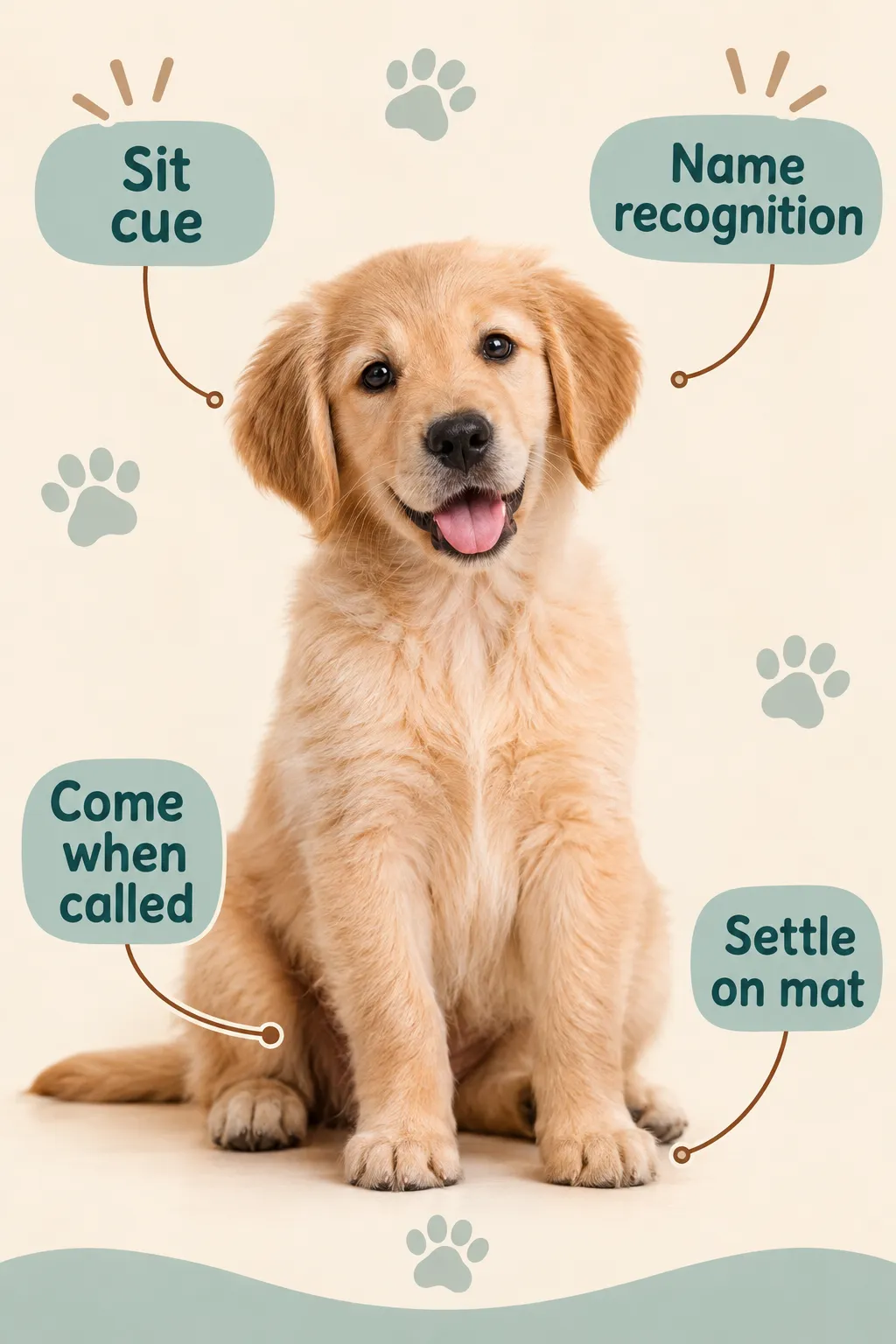
The first commands should be name recognition, sit, and a simple release word, paired with routine cues like sitting before meals. Recent training timelines agree that month one is about impulse control basics, not a long list of tricks.
Priority order for month one:
- Name recognition (turns head when called)
- Sit (used before meals, leash, and doors)
- A release word (“okay” or “free”)
- Come, in short distances indoors only
Save down, stay, and leash walking for month two and beyond. For a broader command list once you’re ready to expand, see 9 top commands for smart daily training.
How many times a day should I train my new puppy
Two to three short sessions a day, around five minutes each, is the recommended amount for young puppies. Puppies have short attention spans, and longer sessions usually backfire through frustration or overtiredness.
A simple daily layout:
- Morning: five minutes on name and sit, right after a potty break.
- Midday: five minutes of handling and gentle socialization.
- Evening: five minutes reinforcing whatever felt shaky earlier.
End every session on a win, even a small one, so your puppy stays eager for the next round.
My puppy won’t listen to me what am I doing wrong
If your puppy isn’t listening, the most common causes are sessions that are too long, rewards that aren’t motivating enough, or inconsistent cues between family members. Check these first before assuming your puppy is being stubborn.
Troubleshooting checklist:
- Are you using the exact same word every time? (“Sit” vs “sit down” confuses puppies.)
- Is the treat actually high-value, or just regular kibble?
- Is the environment too distracting for this stage of training?
- Is your puppy overtired, hungry, or needing a potty break?
Puppies this young aren’t ignoring you on purpose. They’re usually missing a piece of consistency somewhere in the setup.
Are some dog breeds harder to train than others
Yes, some breeds are more independent or bred for tasks that don’t require constant human direction, which can make early training feel slower. Breeds developed for guarding or scent work, for example, may need more patience than breeds bred to work closely with people.
This doesn’t mean those breeds can’t learn fast. It means the training style may need adjusting. Short, varied, reward-heavy sessions tend to work across nearly every breed, including famously independent ones.
Can you train a puppy without using treats
Yes, but food rewards tend to speed up learning significantly in the first month, which is why most reward-based programs lean on them early. Toys, praise, and play can work as rewards too, especially for puppies that are more toy-motivated than food-motivated.
If you’d rather avoid treats long term, start with them now to build the behavior, then fade them out gradually once the cue is reliable. Cutting rewards too early in month one usually causes behaviors to fall apart.
How is training a puppy different from training an adult dog
Puppy training in month one focuses on foundational habits and bonding, while adult dog training often focuses on correcting existing habits or adding advanced skills. Puppies also have shorter attention spans and smaller bladders, which shapes the whole schedule.
An adult rescue, by contrast, may already know commands but need trust-building first. If you’re working with an adult dog instead of a puppy, this guide on rescue dog training tips that build trust first covers that different starting point well.
FAQ
Is eight weeks too young to start training?
No. Light training like name recognition and gentle handling can start the day your puppy comes home.
How long until my puppy knows basic commands?
Expect weeks of practice for consistency, and most trainers agree full reliability takes most of the first year.
Should I crate my puppy at night in month one?
Yes, with breaks timed to the one-hour-per-month-of-age guideline, adjusted as needed for very young puppies.
What if my puppy forgets a command the next day?
Normal. Puppies need repetition across many short sessions, not one perfect lesson.
Can I socialize my puppy before vaccines are finished?
You can start at home immediately; outside exposure should wait for your vet’s guidance based on your puppy’s vaccine schedule.
Do all puppies bite during training?
Most do to some degree, since it’s tied to teething and play, and it typically fades with consistent redirection.
Conclusion
Start small this week: pick one command, one potty schedule, and one house rule everyone in your home agrees on. Write the schedule down and stick to it for seven days before judging progress. If biting, potty accidents, or ignoring you feel overwhelming by week two, that’s a normal bump, not a sign of failure.
For a structured push through these exact steps, the free workshop covering the same methods professional service dog trainers use for housebreaking and obedience is worth the hour – check it out here. Pair it with a simple daily checklist, and month one will set up everything that follows.