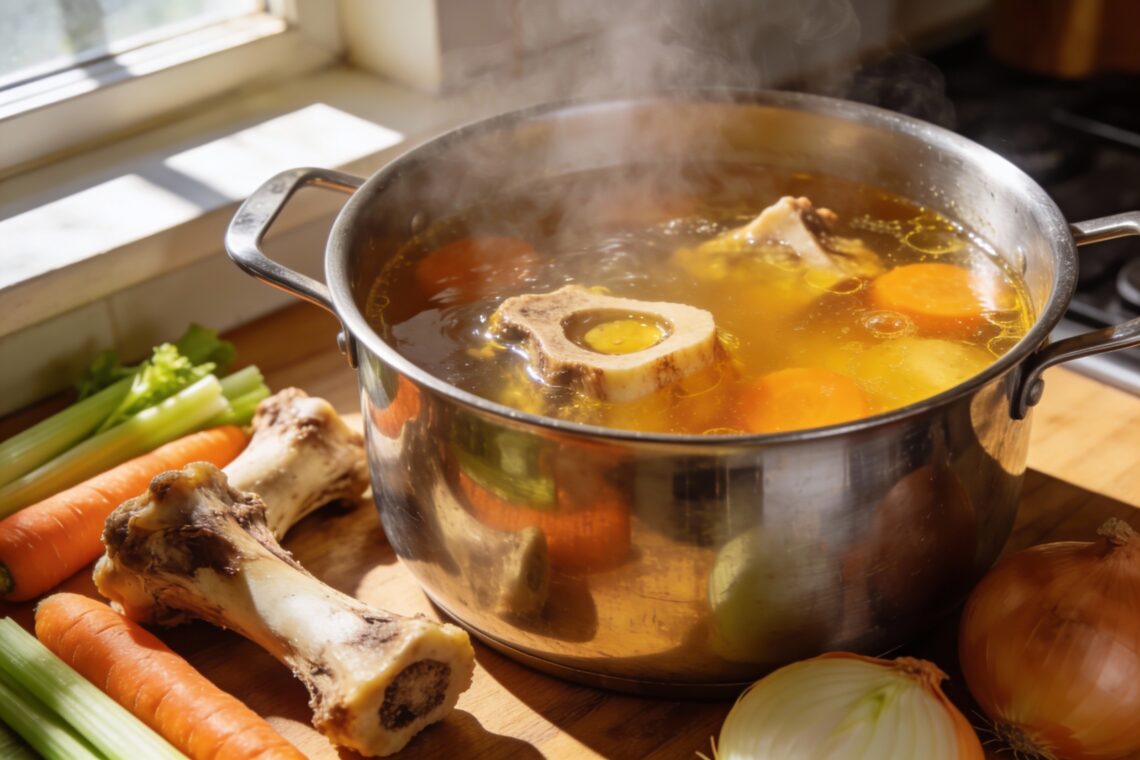
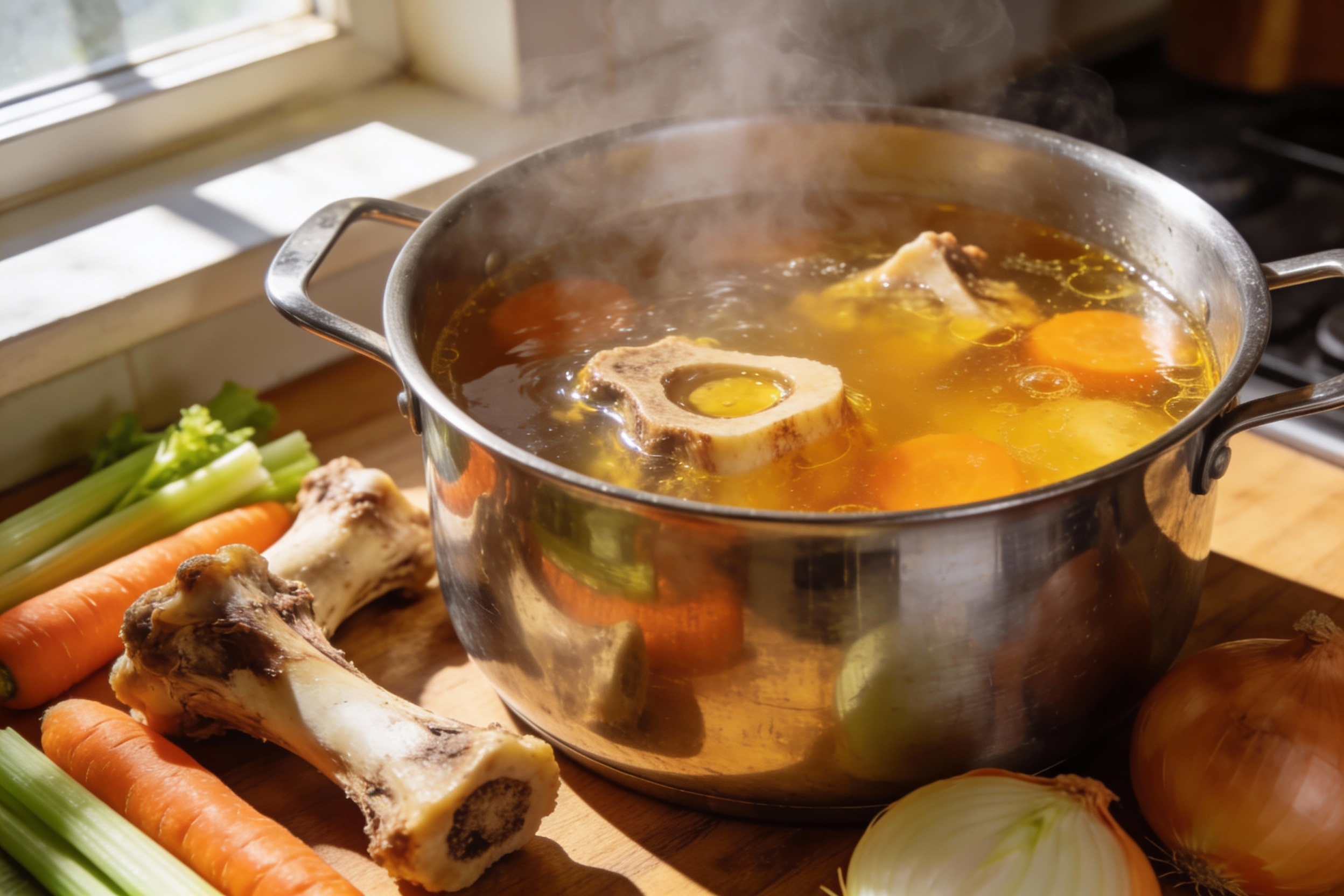
You want your dog to glow like a shiny coconut in the sun? Make bone marrow broth. It’s cheap, ridiculously simple, and dogs go feral (in a classy way) for it. Think collagen, minerals, hydration, and flavor your pup won’t turn down. If you can simmer water, you can do this. And yes, your dog will start staring at the pot like it owes them money.
Why Bone Marrow Broth Rocks for Dogs
Bone broth isn’t just fancy soup water. It’s loaded with collagen, gelatin, amino acids (like glycine and proline), and minerals (calcium, magnesium, phosphorus) that support joints, gut health, skin, and hydration. That’s a lot of goodness for something that costs less than your latte. Got a picky eater? Spoon some broth over kibble and watch the transformation. Dealing with a senior dog who moves like creaky floorboards? The extra joint support helps. Stomach feeling fussy? Broth is gentle and soothing. It’s the doggy version of a warm hug, minus the awkward pat.
What You Need (Budget-Friendly and Easy)
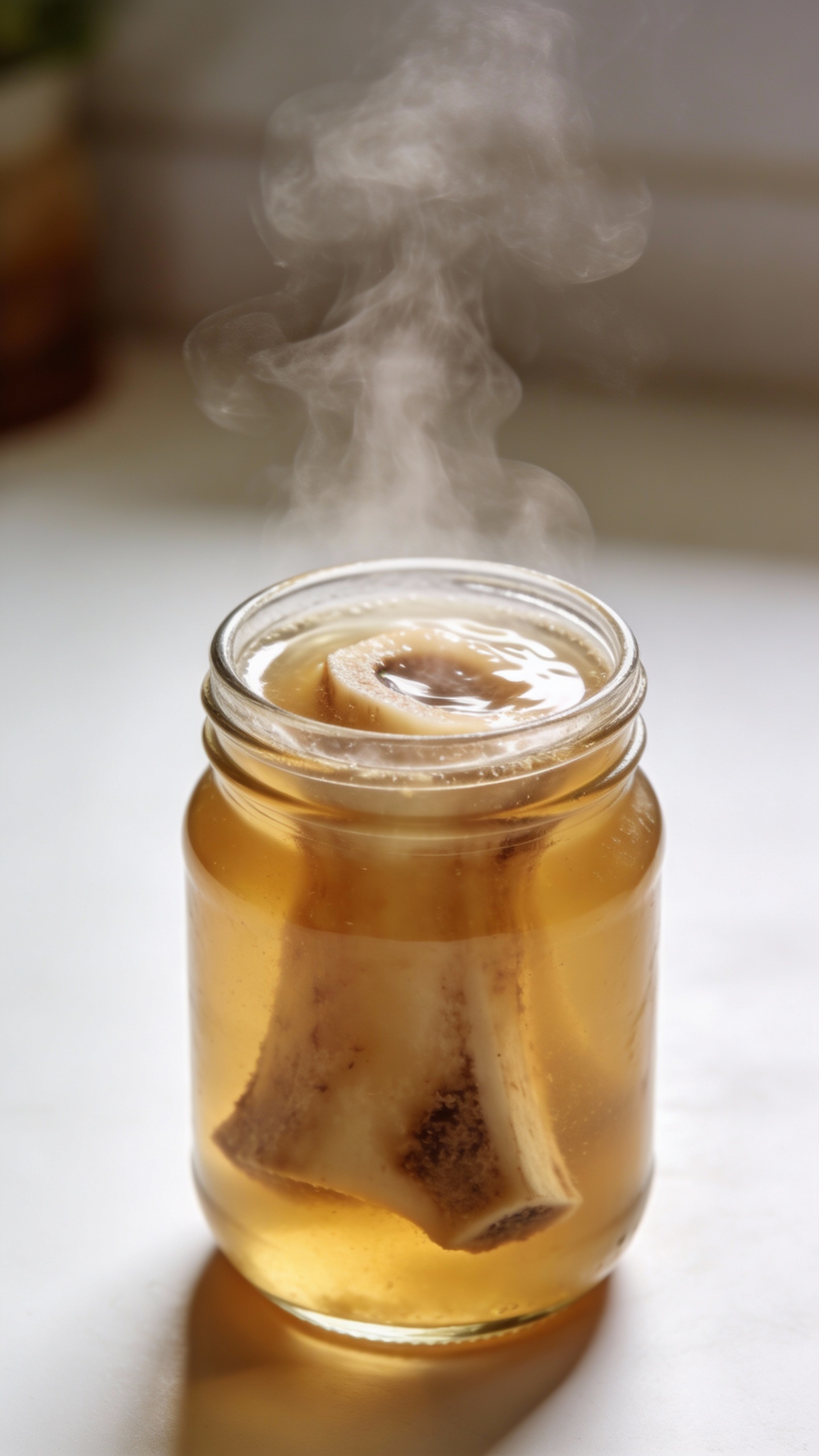
You don’t need anything exotic. Grab this:
- 2–3 pounds beef marrow bones (or knuckles, joints, oxtail, turkey necks, chicken feet—go for joints + collagen-heavy parts)
- 1–2 tablespoons apple cider vinegar (helps pull minerals from bone)
- Water to cover everything by 2–3 inches
- Optional add-ins: celery, parsley stems, a chunk of carrot, a piece of kelp, turmeric
Skip onions, garlic, chives, and leeks. They’re not dog-friendly. Also ditch salt, seasoning mixes, and oil. Your dog doesn’t need your rosemary sea salt masterpiece.
Step-by-Step: Homemade Bone Marrow Broth
This process is low effort, high payoff. Your slow cooker or a big stockpot works great.
- Blanch or roast the bones (optional but nice). For super clean broth: blanch bones in boiling water for 5 minutes, then rinse. For deeper flavor: roast at 400°F (205°C) for 25–30 minutes until browned. IMO, roasting makes your house smell like a steakhouse, which is a win.
- Load the pot. Add bones, splash in vinegar, toss in optional veggies (no onions!), and cover with water by a few inches.
- Simmer low and slow. Bring to a gentle simmer, then drop heat to low. Cook 8–24 hours on the stove, or 12–24 hours in a slow cooker. Skim off foam or fat if you want cleaner broth.
- Strain. Pull out bones and bits. Strain through a fine sieve. Chill in the fridge overnight.
- Defat and gel. Lift off the fat cap (save a little for flavor if your dog tolerates fat). The broth should jiggle like Jell-O. That wiggle = collagen power.
- Store smart. Keep in the fridge up to 5 days or freeze in silicone trays/containers for 3 months.
Instant Pot Shortcuts
Pressure cooker fan? Cook on High for 2 hours, natural release for 20 minutes. You’ll still get solid gelatin and massive flavor, fast.
How to Serve It (Without Overdoing It)
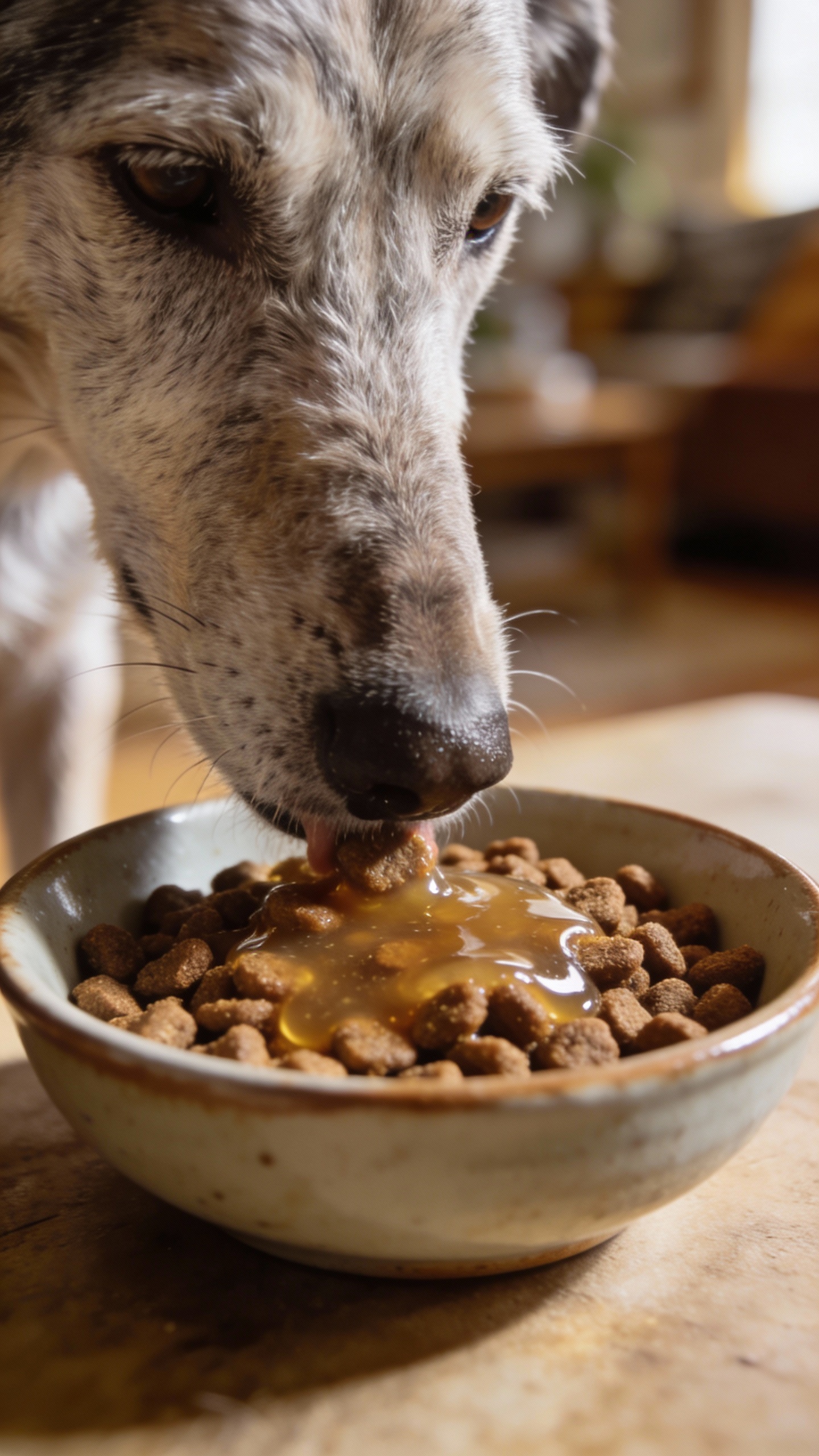
Start small, especially if your dog has a sensitive stomach. Don’t turn dinner into a broth flood right away.
- Toy/small dogs: 1–2 tablespoons per meal
- Medium dogs: 1/4–1/3 cup per meal
- Large/giant dogs: 1/2–3/4 cup per meal
Pour over kibble, mix with raw or cooked food, or serve warm on its own. Warm broth makes dogs think you spent hours cooking just for them. Technically you did, but we won’t tell them you binge-watched while it simmered.
Training Hack
Freeze broth in silicone molds and use as high-value summer treats. Instant hydration + tail wagging = win.
Keep It Safe: Bones, Fat, and Salt
Let’s keep the vibes good and the vet bills low:
- Never feed cooked bones. They splinter. Always strain well.
- Don’t add salt. Dogs don’t need it, and too much sodium dehydrates.
- Skim excessive fat. Too much can trigger tummy trouble. If your dog has pancreatitis history, go extra lean and keep portions small.
- Start slow. New foods can cause soft stools if you go from zero to Gordon Ramsay overnight.
Why Marrow Bones Specifically?
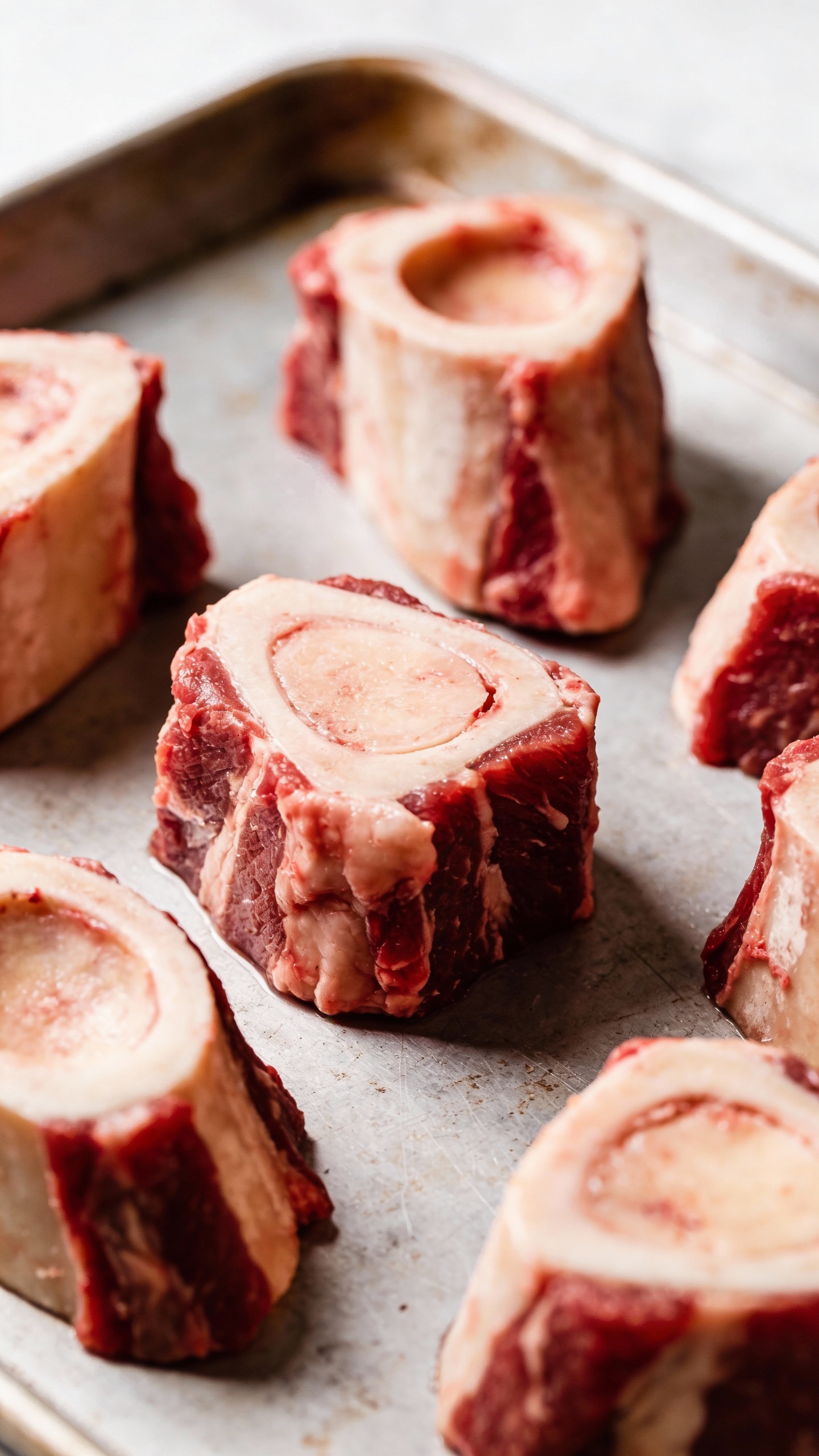
Marrow bones carry rich fat and flavor. They also bring micronutrients like iron, vitamin A, vitamin K2 (amounts vary), and that jelly-like gelatin dogs thrive on. Knuckle and joint bones add even more collagen, which strengthens joints and supports healthy nails, skin, and coat. FYI, I like a 50/50 mix of marrow bones + knuckles for the best gel.
Gelatin: The “Magic” You Can See
When broth cools and turns jiggly, you’ve extracted loads of collagen and glycosaminoglycans. That’s what helps cushion joints and soothe the gut lining. No jiggle? No panic. It’s still nutritious—just simmer longer next time or add more jointy bones.
Cost-Saving Tips (Because You’re Smart)
– Ask your butcher for dog bones, soup bones, or trim. They’re usually cheaper. – Save veggie scraps like carrot ends and parsley stems in the freezer. Toss them in when you make broth. – Use chicken feet or turkey necks for an ultra-jelly, very affordable batch. – Reboil: after the first strain, add fresh water and go again for a “second brew.” It’ll be lighter but still useful.
Flavor Boosters Dogs Actually Love

Keep it simple, but if you want to flex:
- Parsley for fresh breath
- Turmeric with a pinch of black pepper for bioavailability (tiny amounts!)
- Kelp flakes for trace minerals (micro amounts—iodine adds up)
- Ginger sliver for tummy support
IMO, the classic is best for daily use. Use add-ins as special editions.
FAQs
How often can I give my dog bone broth?
Daily works for most dogs in modest portions. Think of it as a topper or treat, not a full meal. If your dog has specific health issues, check with your vet first, especially for kidney, heart, or pancreas concerns.
Can puppies have bone broth?
Yes, in small amounts. Puppies benefit from hydration and gentle nutrition, but keep it simple—no extra salt or heavy fat. Start with a tablespoon and watch how they handle it.
What if my broth doesn’t gel?
Still useful! It just means you extracted less collagen. Next time, add more joint bones (knuckles, feet), simmer longer, and keep heat low. A splash of vinegar at the start helps pull minerals.
Can I use store-bought broth?
You can, but read labels like a hawk. Most human broths contain salt, onion, garlic, or “natural flavors” that don’t belong in a dog bowl. Look for unsalted, pet-specific broths if you go this route.
Is bone marrow too fatty for dogs?
Marrow carries fat, which adds flavor and calories. For healthy dogs, a bit is fine. For sensitive or pancreatitis-prone pups, skim the fat cap after chilling and serve smaller portions. Listen to your dog’s gut—literally.
Can I add this to a raw or home-cooked diet?
Absolutely. It pairs well with raw or cooked food and supports digestion. Just keep portions balanced and avoid turning meals into soup unless you’re boosting hydration on purpose.
Conclusion
Bone marrow broth hits the sweet spot: cheap, powerful, and drool-worthy. You toss bones and water in a pot, walk away, and come back to a liquid gold your dog will worship. Use it to upgrade meals, fuel joint health, and sneak in hydration—without blowing your budget. Try a batch this week and prepare for intense staring sessions every time you open the fridge. FYI, that’s your dog saying, “Best. Human. Ever.”