

Last updated: August 25, 2026
Quick Answer: Yes, most healthy adult dogs can eat plain, unsweetened Greek yogurt in small amounts. It offers real nutritional perks like protein, calcium, and probiotics. But portion size matters, and some dogs – especially those with lactose intolerance or dairy allergies – should skip it entirely. Always check the label for xylitol before offering any yogurt to your dog.
Key Takeaways
- Plain, unsweetened Greek yogurt is safe for most healthy adult dogs in moderation
- Greek yogurt has less lactose than regular yogurt, making it easier on sensitive stomachs
- It provides protein, calcium, and live probiotic cultures that can support digestion
- Xylitol (an artificial sweetener in some yogurts) is toxic to dogs – always read labels
- Flavored yogurts (vanilla, strawberry, honey) often contain added sugars or sweeteners – avoid them
- Stick to 1 teaspoon for small dogs and up to 1-2 tablespoons for large dogs per serving
- Puppies, dogs with pancreatitis, and dogs with known dairy allergies should avoid Greek yogurt
- Greek yogurt is a treat, not a medical treatment – it won’t replace a vet-prescribed probiotic
Is Greek Yogurt Safe for Dogs to Eat?
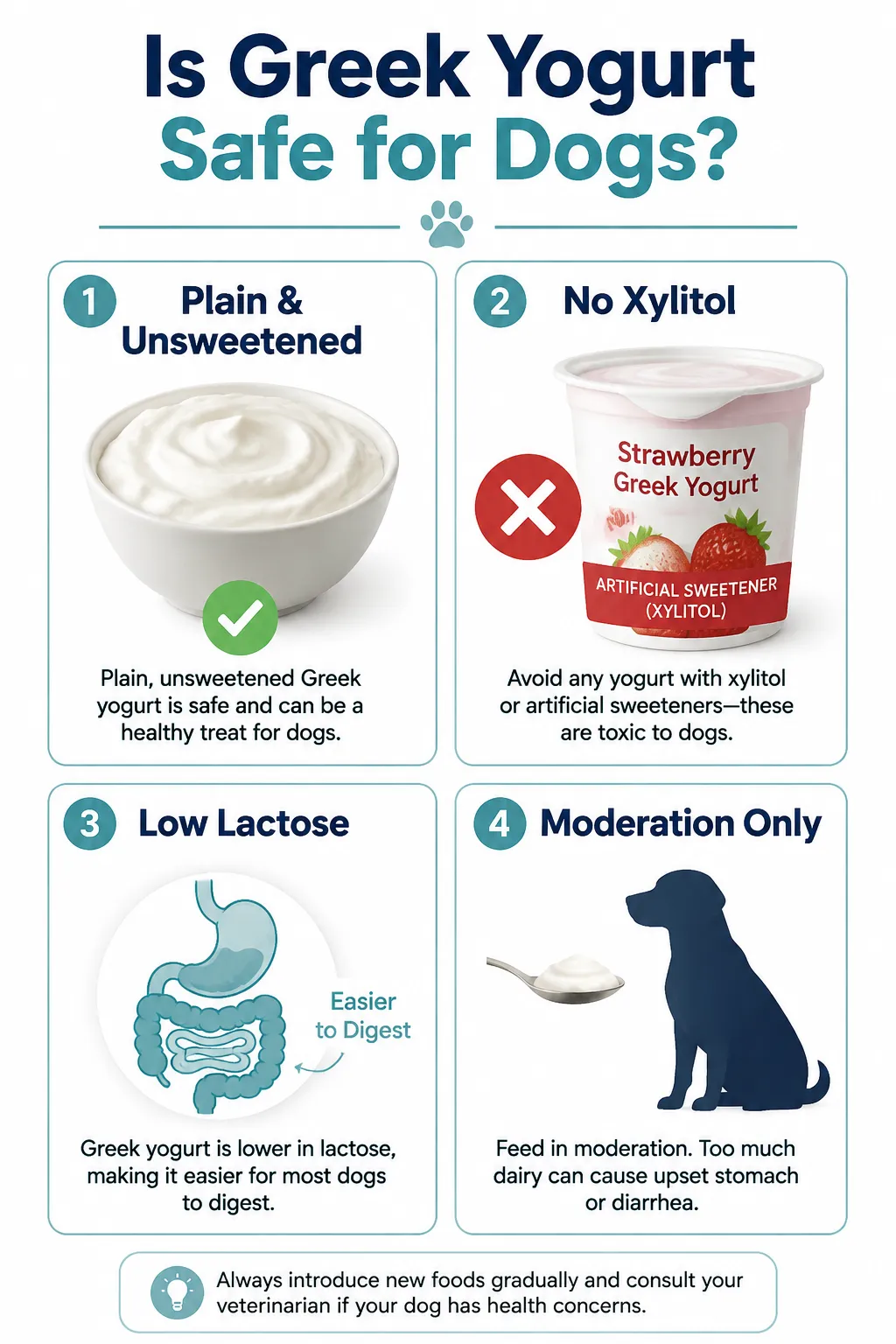
Yes, plain Greek yogurt is generally safe for dogs. Most healthy adult dogs can tolerate small amounts without any problems, thanks to Greek yogurt’s lower lactose content compared to other dairy products.
The key word is “plain.” According to PetMD’s guide on dogs and yogurt, the safest choice is always plain, full-fat or low-fat Greek yogurt with no added sweeteners, flavors, or fruit mix-ins. The moment you introduce flavored varieties, the risk of harmful additives – including xylitol – goes up significantly.
Who should avoid it:
- Dogs with diagnosed lactose intolerance
- Dogs with a known dairy or milk protein allergy
- Dogs with pancreatitis or a history of it
- Puppies under 8 weeks
- Dogs on restricted-calorie diets
What Are the Benefits of Greek Yogurt for Dogs?
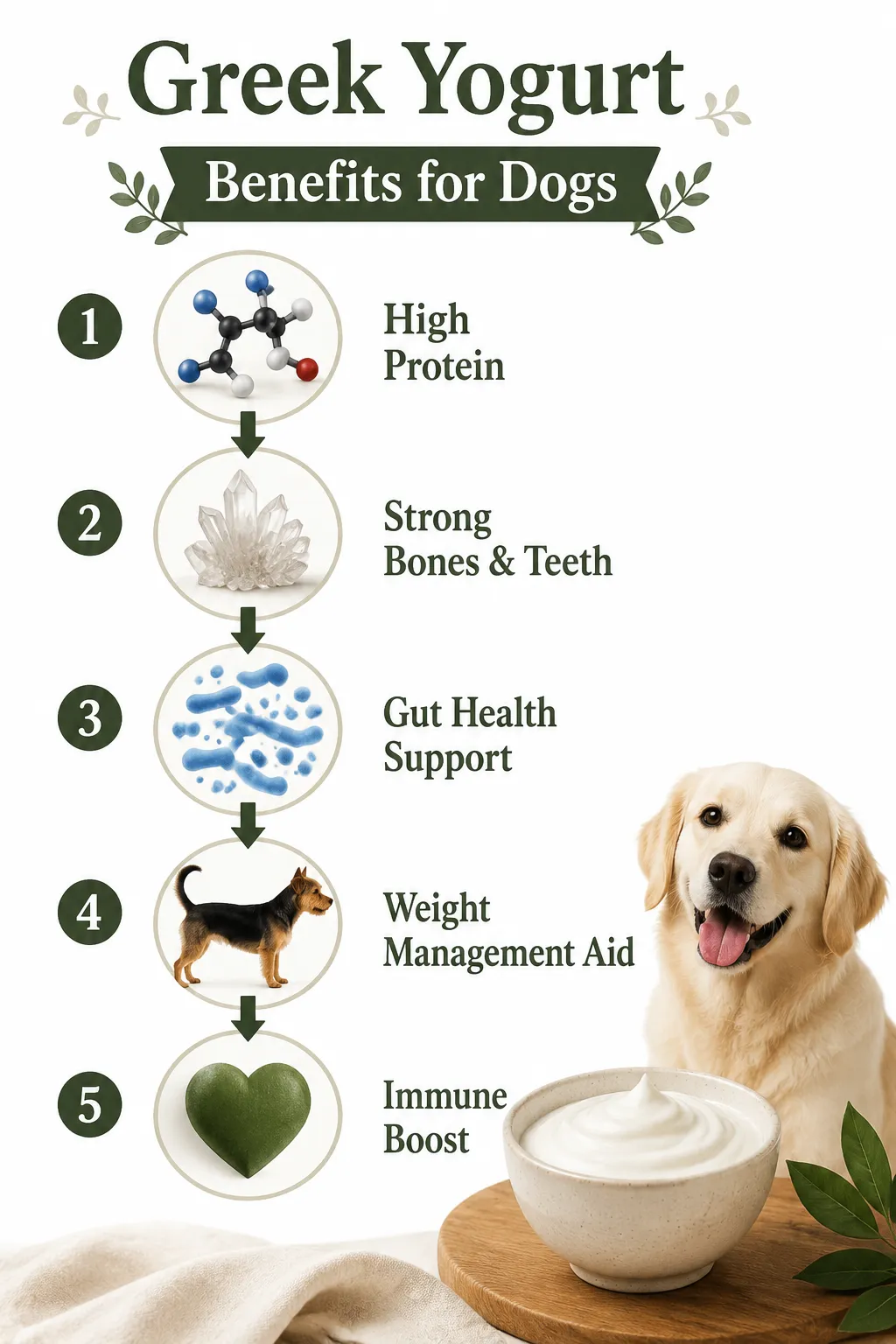
Greek yogurt offers several genuine nutritional benefits for dogs when fed correctly. It’s not a superfood, but it’s a solid occasional treat with real value.
Here are 7 benefits worth knowing:
- High protein content – Greek yogurt is strained, which concentrates its protein. Protein supports muscle maintenance and energy.
- Calcium for bones and teeth – Calcium is essential for skeletal health, especially in growing dogs and seniors.
- Live probiotic cultures – Strains like Lactobacillus acidophilus can support gut flora balance, per Outward Hound’s overview of Greek yogurt for dogs.
- Lower sugar than regular yogurt – Less sugar means fewer empty calories and less risk of weight gain.
- Phosphorus – Works alongside calcium to support healthy bones and kidney function.
- Pill-hiding ability – The thick texture makes it a popular vehicle for hiding medication.
- Mental enrichment – Frozen in a Kong or lick mat, Greek yogurt keeps dogs mentally stimulated.
For more ideas on nutrient-rich dog treats, check out our guide to 9 surprisingly easy homemade dog treats with Greek yogurt.
Does Greek Yogurt Help Dogs with Digestion and Upset Stomach?
Greek yogurt can help mildly with digestion, but it’s not a cure for serious stomach issues. The live bacterial cultures in plain Greek yogurt may support a healthy gut microbiome, which can ease minor digestive upset.
Rover’s guide on Greek yogurt for dogs notes that the probiotics in Greek yogurt are real but modest – they’re not a substitute for a veterinarian-recommended probiotic supplement if your dog has a diagnosed digestive condition.
When Greek yogurt might help:
- Mild gas or bloating from a diet change
- After a course of antibiotics (to help restore gut bacteria)
- As a bland, gentle treat during mild stomach upset
When to call your vet instead:
- Vomiting lasting more than 24 hours
- Bloody stool or diarrhea
- Lethargy combined with digestive symptoms
If your dog is showing signs of discomfort, check our article on 10 early signs of pain in dogs every owner should recognize before reaching for the yogurt.
Greek Yogurt vs Regular Yogurt for Dogs – Which Is Better?
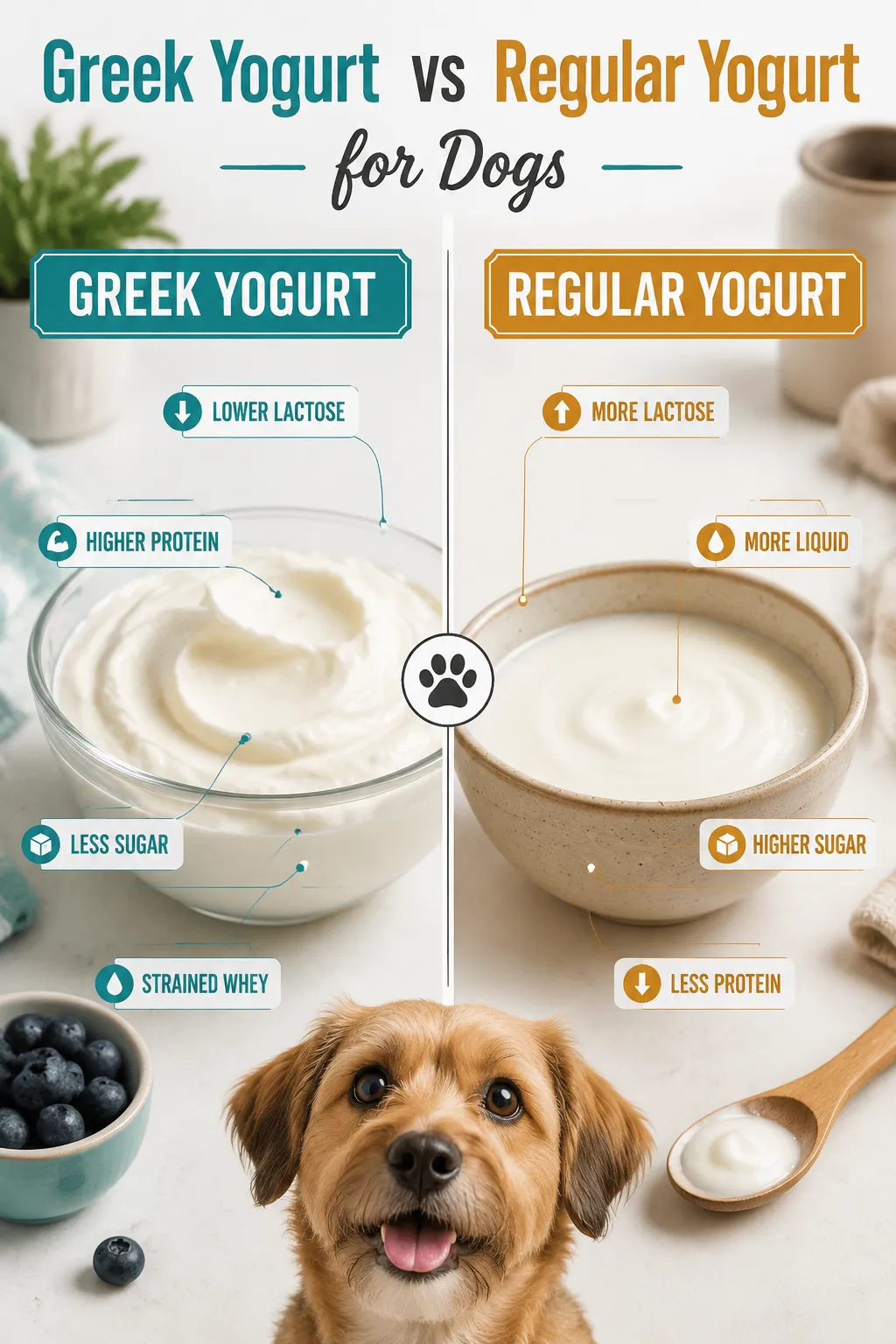
Greek yogurt is generally the better choice for dogs compared to regular yogurt. The straining process removes much of the liquid whey, which reduces lactose content and concentrates protein.
Here’s a quick comparison:
| Feature | Greek Yogurt | Regular Yogurt |
|---|---|---|
| Lactose content | Lower | Higher |
| Protein | Higher | Lower |
| Sugar | Lower | Higher |
| Texture | Thick, creamy | Thinner, more liquid |
| Best use for dogs | Treat, pill hider, Kong filler | Occasional treat only |
According to Purina’s feeding guidance on yogurt for dogs, the lower lactose level in Greek yogurt makes it a smarter pick for dogs who are mildly sensitive to dairy but not fully intolerant.
How Much Greek Yogurt Can I Give My Dog?
Less is more. Greek yogurt should be a small treat, not a meal supplement. Overfeeding can cause digestive upset, weight gain, or even pancreatitis in prone dogs.
General serving guidelines:
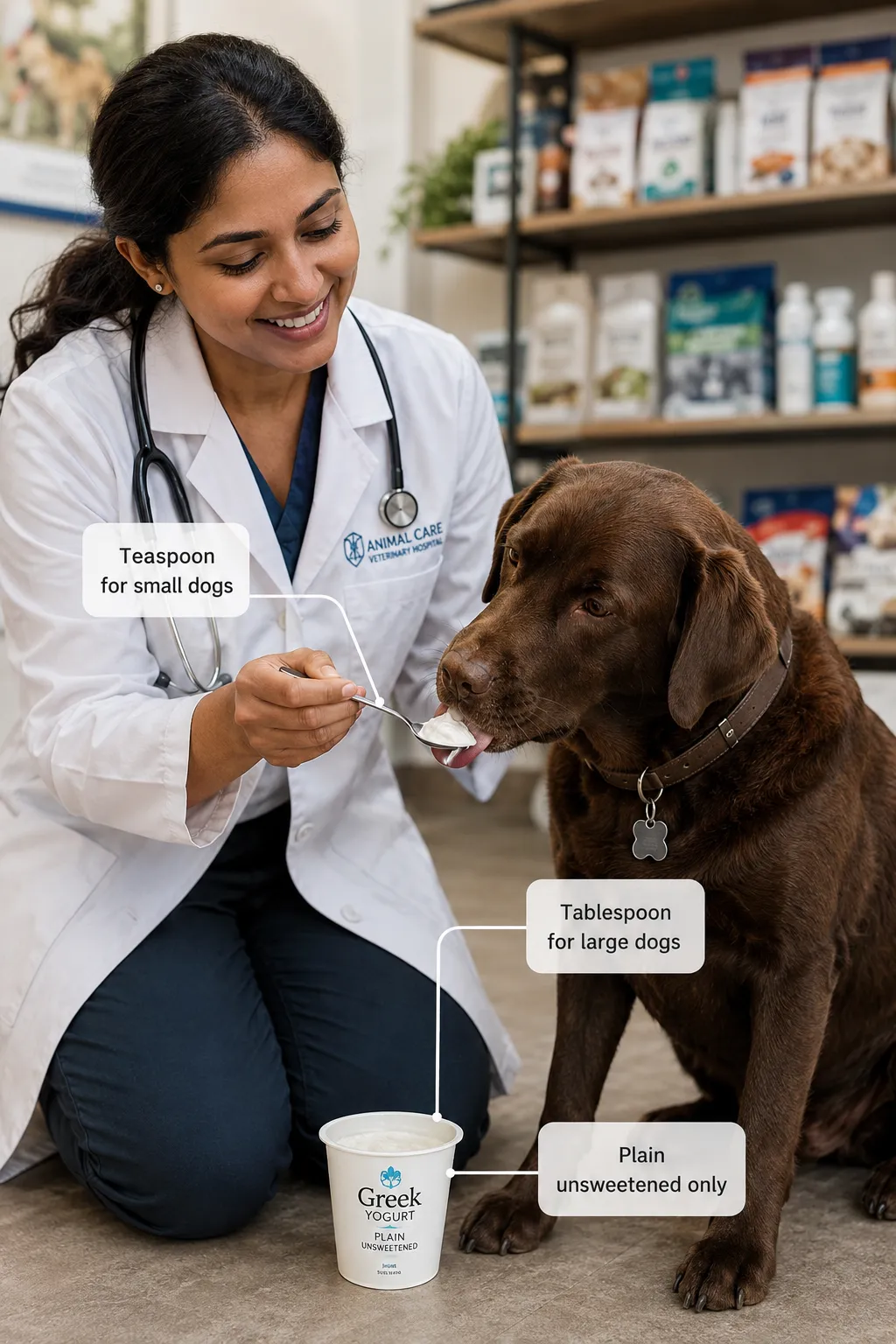
- Small dogs (under 20 lbs): 1 teaspoon per serving, max 2-3 times per week
- Medium dogs (20-50 lbs): 1 tablespoon per serving, 2-3 times per week
- Large dogs (50+ lbs): Up to 2 tablespoons per serving, 2-3 times per week
These are estimates based on general treat guidelines – treats should make up no more than 10% of a dog’s daily caloric intake. For personalized advice, see how much food you should feed your dog daily.
Common mistake: Giving Greek yogurt daily as a probiotic supplement. It’s a treat, and daily dairy – even in small amounts – can cause loose stools in many dogs over time.
Can Dogs Be Allergic to Greek Yogurt?
Yes, some dogs are allergic or sensitive to dairy proteins, and Greek yogurt can trigger a reaction. This is separate from lactose intolerance – a dairy allergy involves an immune response to milk proteins like casein.
Signs of a dairy allergy or sensitivity in dogs include:
- Itchy skin, paws, or ears
- Hives or skin redness
- Vomiting or diarrhea after eating
- Excessive gas
Chewy’s nutrition guide on yogurt for dogs recommends introducing Greek yogurt in very small amounts the first time and watching for any reaction over 24-48 hours before making it a regular treat.
If your dog shows any of the above signs, stop feeding Greek yogurt and consult your vet. You can also review our guide on stress signals in dogs to learn how to read your dog’s body language when something feels off.
Is Plain Greek Yogurt Better Than Flavored for Dogs?
Absolutely – plain Greek yogurt is the only type you should give your dog. Flavored yogurts are a real risk.
Here’s why flavored yogurt is a problem:
- Xylitol – A sugar substitute found in some “light” or “sugar-free” yogurts. It’s highly toxic to dogs and can cause rapid blood sugar drops and liver failure, even in small amounts.
- Artificial sweeteners – Other sweeteners like sorbitol can cause digestive upset.
- Added sugars – Vanilla, strawberry, and honey flavors add unnecessary sugar and calories.
- Fruit pieces – Some fruits like grapes are toxic to dogs.
Always read the ingredient label before offering any yogurt. If you see xylitol, erythritol, or any artificial sweetener listed, keep that yogurt away from your dog entirely.
Speaking of honey – if you’re wondering about whether dogs can have raw honey, that’s worth reading before you mix anything into your dog’s yogurt.
Can Puppies Eat Greek Yogurt?
Puppies can eat small amounts of plain Greek yogurt once they’re fully weaned and eating solid food – generally after 8 weeks of age. However, puppies have more sensitive digestive systems than adult dogs, so caution is needed.
Start with a very small amount (half a teaspoon) and watch for loose stools or stomach upset. If your puppy tolerates it well, occasional small servings are fine as a treat.
Avoid giving Greek yogurt to very young puppies still nursing, or to puppies with known digestive issues.
Is Greek Yogurt Good for Dogs with Lactose Intolerance?
This depends on the degree of intolerance. Greek yogurt has significantly less lactose than milk or regular yogurt because the straining process removes much of the lactose-containing whey. For mildly lactose-sensitive dogs, small amounts may be tolerated.
But for dogs with true, diagnosed lactose intolerance, even the reduced lactose in Greek yogurt can cause gas, bloating, and diarrhea. In those cases, it’s better to skip dairy entirely and look for a dedicated canine probiotic supplement instead.
According to Dog Notebook’s breakdown of plain Greek yogurt for dogs, the safest approach for sensitive dogs is to test a tiny amount first and observe carefully.
What Happens If My Dog Eats Too Much Greek Yogurt?
Too much Greek yogurt can cause several problems, ranging from mild to serious.
Mild effects (usually resolve within 24 hours):
- Loose stools or diarrhea
- Gas and bloating
- Mild stomach cramping
More serious effects (require vet attention):
- Pancreatitis – especially in dogs prone to it. The fat content in full-fat Greek yogurt can trigger inflammation of the pancreas.
- Weight gain over time if fed regularly in large amounts
- Vomiting that persists beyond a few hours
If your dog got into a large container of plain Greek yogurt, monitor them for 24 hours. If they ate flavored yogurt with xylitol, contact your vet or an emergency animal poison control line immediately.
Greek Yogurt for Senior Dogs – Benefits Worth Knowing
Senior dogs can benefit from Greek yogurt’s protein and calcium content, which support muscle mass and bone density – two things that naturally decline with age.
The probiotic cultures may also help older dogs with sluggish digestion or age-related gut changes. Many senior dogs deal with constipation or irregular digestion, and a small amount of Greek yogurt a few times a week can offer gentle support.
That said, senior dogs are also more likely to have conditions like kidney disease, pancreatitis, or diabetes that make Greek yogurt inappropriate. Always check with your vet before adding it to a senior dog’s diet. For more on caring for older dogs, see our guide on how to care for senior dogs.
Best Greek Yogurt Brands for Dogs
There’s no single “dog-approved” brand, but the criteria are simple. Look for:
- Plain, unsweetened – No flavors, no fruit, no vanilla
- No artificial sweeteners – Especially no xylitol
- Live active cultures listed – Look for Lactobacillus strains on the label
- Full-fat or 2% – Avoid fat-free versions, which sometimes use more additives to compensate for texture
Popular human brands like Fage Total Plain, Chobani Plain, and Stonyfield Organic Plain all meet these criteria as of 2026. Always verify the current ingredient list, as formulations can change.
Conclusion
So, can dogs eat Greek yogurt? Yes – with the right type, the right amount, and the right dog. Plain, unsweetened Greek yogurt is a safe and genuinely nutritious occasional treat for most healthy adult dogs. It brings real benefits: protein, calcium, probiotics, and a texture dogs tend to love.
The risks are real too. Xylitol in flavored yogurts is a serious danger. Overfeeding can cause digestive upset or pancreatitis. And dogs with dairy allergies or lactose intolerance should avoid it altogether.
Your action steps:
- Check your yogurt label for xylitol and artificial sweeteners before sharing any with your dog
- Start with a small amount (half a teaspoon) the first time
- Watch for loose stools, itching, or vomiting over 24-48 hours
- Keep servings small and occasional – not daily
- Ask your vet if your dog has any health conditions that might make dairy risky
Want to go further? Try making your own dog-safe frozen treats with our homemade dog treats with Greek yogurt guide, or explore the full picture of what dogs can and cannot eat for a broader reference.
Frequently Asked Questions
Can dogs eat Greek yogurt every day?
It’s better to offer Greek yogurt 2-3 times per week rather than daily. Daily dairy can cause loose stools in many dogs over time, and the extra calories can add up.
Is non-fat Greek yogurt safe for dogs?
It can be, but check the label carefully. Non-fat versions sometimes contain artificial sweeteners like xylitol to compensate for the missing fat. If the ingredient list is clean, it’s fine in small amounts.
Can I put Greek yogurt in my dog’s Kong?
Yes – plain Greek yogurt is one of the best Kong fillers. Freeze it for a longer-lasting enrichment treat that also keeps dogs cool in warm weather.
How do I know if my dog is lactose intolerant?
Signs include gas, bloating, loose stools, or diarrhea within a few hours of eating dairy. If you see these after a small test amount of Greek yogurt, your dog likely has some degree of lactose sensitivity.
Can dogs eat Greek yogurt with honey?
Plain Greek yogurt with a tiny drizzle of raw honey is generally safe for healthy adult dogs in very small amounts. However, honey is high in sugar and should be used sparingly. Read more in our guide on whether dogs can have raw honey.
Is Greek yogurt a good probiotic for dogs?
It provides some probiotic benefit, but research on Greek yogurt as a probiotic for dogs suggests the bacterial strains in human yogurt may not colonize a dog’s gut as effectively as species-specific canine probiotic supplements. It’s a helpful bonus, not a medical replacement.
Can large dogs eat more Greek yogurt than small dogs?
Yes. Larger dogs can handle up to 1-2 tablespoons per serving, while small dogs should stay at 1 teaspoon. Scale to body weight and always start small.
What should I do if my dog ate flavored Greek yogurt?
Check the label immediately for xylitol. If xylitol is listed, contact your vet or an emergency animal poison control line right away. If the yogurt was just sweetened with regular sugar and your dog ate a small amount, monitor for digestive upset and call your vet if symptoms appear.
Can Greek yogurt help a dog with diarrhea?
A small amount of plain Greek yogurt may help mild cases by supporting gut bacteria. However, veterinary guidance from PetCare Medical recommends consulting a vet for diarrhea that lasts more than 24 hours or is accompanied by other symptoms.
Is Greek yogurt safe for dogs with kidney disease?
Not necessarily. Greek yogurt contains phosphorus, which can be problematic for dogs with kidney disease. If your dog has kidney issues, check our article on signs of kidney problems in dogs and consult your vet before adding any dairy to their diet.