
Last updated: July 21, 2026
Quick Answer: Chicken bone broth gummy treats for dogs are soft, gelatin-based snacks made from slow-simmered chicken bones and collagen-rich broth. They deliver natural glucosamine, collagen, and amino acids that support joint cartilage, reduce stiffness, and improve mobility – especially in senior or large-breed dogs. Most dogs see noticeable improvement in comfort and movement within 4 to 8 weeks of daily use.
Key Takeaways
- 🐾 Chicken bone broth gummy treats for dogs are one of the easiest ways to deliver natural joint support through food
- 🦴 Bone broth contains naturally occurring glucosamine and collagen – two nutrients that protect and rebuild joint cartilage
- ✅ Most healthy adult dogs and seniors can safely enjoy these treats daily
- 🐶 Puppies over 8 weeks can have small amounts, but check with your vet first
- ⏱️ Results typically show within 4 to 8 weeks of consistent daily feeding
- 🏠 Homemade versions give you full ingredient control; store-bought options are more convenient
- ⚠️ Watch for onion, garlic, or xylitol in commercial broths – these are toxic to dogs
- 💰 Store-bought bone broth dog treats range from roughly $10 to $30 per bag
- 🤧 Dogs with chicken allergies should use beef or turkey bone broth alternatives instead
- 🌿 Bone broth gummies work best as part of a broader joint health routine that includes exercise and a balanced diet

What Is Bone Broth for Dogs and Why Is It Good for Joints?
Bone broth for dogs is a nutrient-dense liquid made by slowly simmering animal bones – usually chicken, beef, or turkey – in water for 12 to 24 hours. This long cooking process pulls collagen, gelatin, glucosamine, chondroitin, and minerals directly out of the bones and into the broth.
For joint health specifically, these nutrients matter a lot.
Collagen is the main structural protein in joint cartilage. As dogs age, their bodies produce less of it, which leads to stiffness and pain. Bone broth delivers a bioavailable form of collagen that the body can actually use.
Glucosamine and chondroitin are compounds that help maintain the cushioning between joints. They’re found naturally in cartilage and connective tissue – exactly the parts that get broken down during long cooking.
Glycine and proline are amino acids in bone broth that support tissue repair and reduce inflammation at the cellular level.
When you turn that broth into gummy treats, you’re just adding gelatin (which is itself a collagen source) to set the liquid into a chewy, dog-friendly format. It’s a smart way to deliver joint nutrition in a form dogs actually want to eat.
“Bone broth is one of the most bioavailable sources of joint-supporting nutrients you can give a dog. It’s food as medicine in the truest sense.” – common sentiment among integrative veterinary nutritionists
For more on natural foods that support dog health, check out the secret behind 15 superfoods for dogs that vets wish every owner knew.
Do Bone Broth Gummies Actually Help with Dog Joint Pain?
Yes, bone broth gummies can genuinely help with dog joint pain – but they work best as a daily supplement, not a one-time fix. The key is consistency.
The joint-supporting compounds in bone broth (collagen, glucosamine, glycine) work by gradually replenishing what the body loses over time. They don’t act like pain medication. Instead, they support the underlying tissue that makes joints comfortable in the first place.
A few things to understand:
- They reduce inflammation naturally. Glycine in bone broth has anti-inflammatory properties that can ease swelling around joints.
- They support cartilage repair. Collagen peptides provide the raw material the body uses to maintain and rebuild cartilage.
- They improve mobility over time. Many dog owners report their senior dogs moving more freely and showing less hesitation on stairs after several weeks of consistent use.
The honest caveat: bone broth gummies are a nutritional supplement, not a veterinary treatment. If your dog has severe arthritis or is limping noticeably, see your vet. These treats work best as a preventive tool or a complement to veterinary care.
For dogs showing early discomfort, you might also find value in learning about 10 healing massage points for dogs to relieve stress, pain and tension naturally.
7 Irresistible Chicken Bone Broth Gummy Treats for Dogs
Here are seven tried-and-tested recipes and product styles that dog owners love in 2026. I’ve included both homemade and store-bought options so you can choose what fits your lifestyle.
1. Classic 3-Ingredient Chicken Bone Broth Gummies
The simplest version: chicken bone broth, unflavored gelatin, and a splash of turmeric. Pour into silicone molds, chill for two hours, done.
This is the recipe most vets point to when recommending homemade joint treats. It’s clean, cheap, and dogs go crazy for it. See the full step-by-step in this 3-ingredient dog snack guide that vets wish more owners knew about.
2. Turmeric and Ginger Bone Broth Gummies
Add 1/4 teaspoon of ground turmeric and a pinch of fresh ginger to your base broth before setting. Both are natural anti-inflammatories with solid research behind them.
Important: Keep turmeric amounts small. Large quantities can cause digestive upset in some dogs.
3. Blueberry Bone Broth Gummies
Blend a small handful of fresh blueberries into the broth before adding gelatin. Blueberries add antioxidants that fight free radical damage in joint tissue.
This combo is especially popular for senior dogs because it layers two types of joint protection into one treat.
4. Pumpkin and Bone Broth Gummies
Stir two tablespoons of plain pumpkin puree into the broth mixture. Pumpkin adds fiber for digestion and beta-carotene for immune support.
Great choice for dogs with sensitive stomachs who need joint support without digestive disruption.
5. Fish Oil Bone Broth Gummies
Add one pump of salmon oil or a broken-open fish oil capsule to the broth before setting. Omega-3 fatty acids from fish oil are clinically recognized for reducing joint inflammation in dogs.
This is one of the most powerful combinations you can make at home.
6. Apple and Bone Broth Gummies
A small amount of unsweetened apple puree (no seeds, no core) blended into the broth adds natural sweetness that picky dogs love. It also provides quercetin, a natural anti-inflammatory compound.
7. Commercial Chicken Bone Broth Gummy Treats
For owners who prefer convenience, several reputable pet brands now sell ready-made bone broth gummies. Look for products that list real chicken bone broth as the first ingredient, contain added glucosamine or collagen, and are free from artificial preservatives, onion, garlic, and xylitol.
For a deeper look at healthy homemade treat options, see these chicken bone broth gummies for dogs your pup will absolutely love.
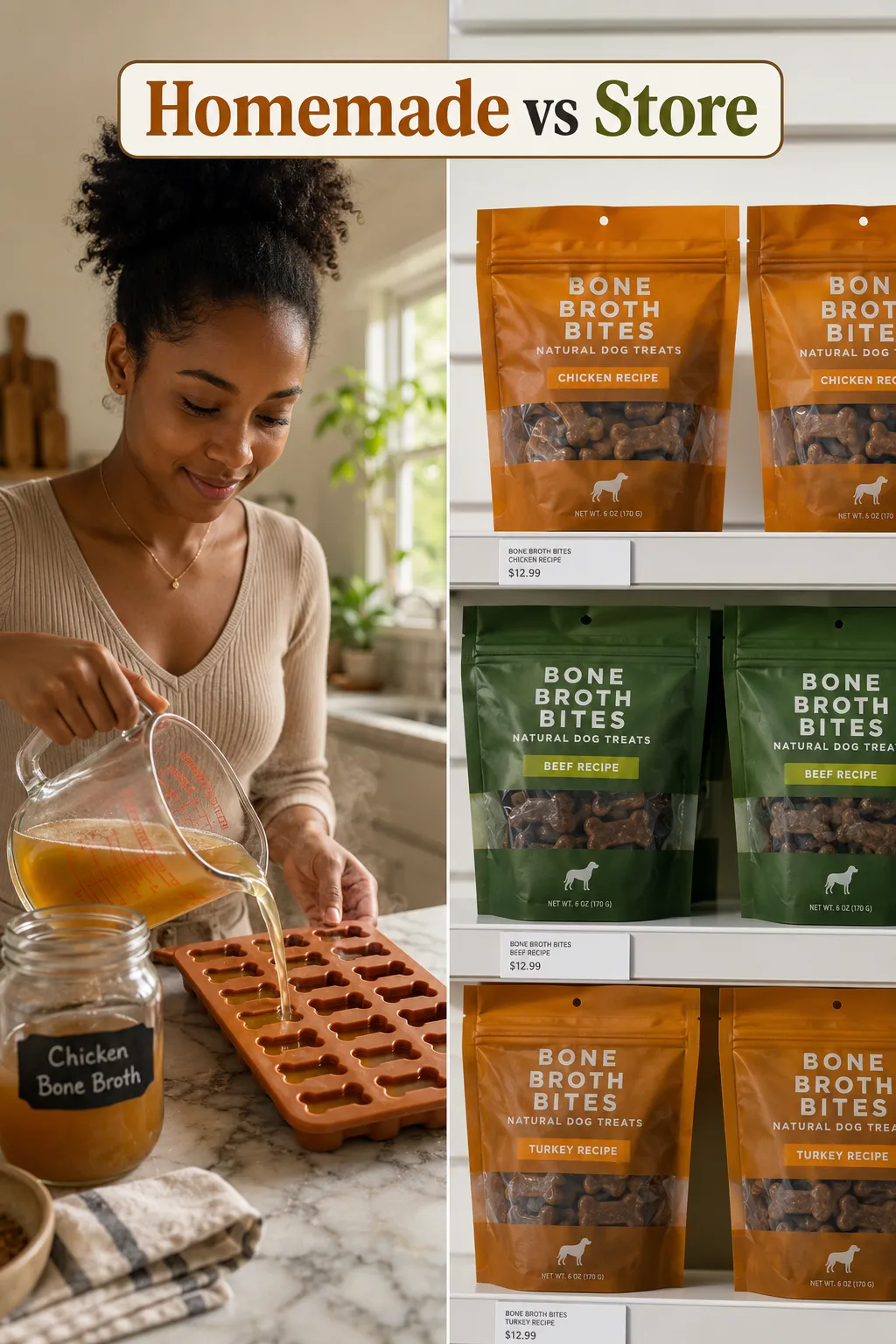
Homemade vs Store-Bought Bone Broth Dog Gummies: Which Is Better?
Both options work, but the right choice depends on your time, budget, and your dog’s specific needs.
Homemade bone broth gummies give you complete control over ingredients. You know exactly what’s in them, you can adjust for allergies, and they’re significantly cheaper per treat. The main downside is time – making a proper bone broth takes 12 to 24 hours.
Store-bought options are convenient and consistent. Good commercial products often include added glucosamine, chondroitin, or collagen peptides that are harder to replicate at home. The downside is cost and the risk of low-quality ingredients in cheaper brands.
| Factor | Homemade | Store-Bought |
|---|---|---|
| Ingredient control | Full control | Depends on brand |
| Cost per treat | Very low | Moderate to high |
| Time required | 12-24 hrs active prep | Minutes |
| Added supplements | You add them | Often included |
| Shelf life | 5-7 days refrigerated | Weeks to months |
Choose homemade if you have time, want full ingredient transparency, or your dog has multiple allergies.
Choose store-bought if you need convenience, want standardized dosing, or want guaranteed glucosamine content.
For a great homemade broth base to start with, try this homemade bone marrow broth recipe for dogs.
How Much Bone Broth Gummy Treats Should I Give My Dog Daily?
The right serving size depends on your dog’s weight and the specific product or recipe you’re using. There’s no universal standard, but here are practical guidelines most vets and pet nutritionists recommend.
General daily guidelines by dog size:
- Small dogs (under 20 lbs): 1 small gummy treat per day
- Medium dogs (20 to 50 lbs): 1 to 2 gummy treats per day
- Large dogs (50 to 90 lbs): 2 to 3 gummy treats per day
- Giant breeds (over 90 lbs): 3 to 4 gummy treats per day
Treats should make up no more than 10% of your dog’s total daily calorie intake. If you’re using a commercial product, always follow the label’s weight-based dosing instructions.
Start low. When introducing bone broth gummies for the first time, start with half the recommended amount for the first week. This lets your dog’s digestive system adjust and helps you spot any sensitivities early.
Common mistake: Giving too many treats because the dog loves them. More is not better here. Excess gelatin and protein can cause loose stools.
Are Bone Broth Gummies Safe for All Dog Breeds and Ages?
Bone broth gummies made with safe, dog-appropriate ingredients are generally safe for most healthy adult dogs regardless of breed. However, there are a few important exceptions.
Breeds with no special concerns: Most dogs – from Beagles to German Shepherds to Labrador Retrievers – tolerate chicken bone broth gummies well.
Breeds to watch more carefully:
- Dogs prone to pancreatitis (like Miniature Schnauzers and Cocker Spaniels) should have low-fat broth with fat skimmed off the top
- Breeds with known food sensitivities should be introduced slowly
By age:
- Puppies (8 weeks to 1 year): Small amounts are generally fine, but check with your vet first. Puppies have different nutritional needs and their digestive systems are still developing.
- Adult dogs (1 to 7 years): Ideal candidates, especially active or large breeds
- Senior dogs (7+ years): These are the dogs that benefit most. Joint support becomes increasingly important as dogs age.
Dogs with health conditions: Always check with your vet before adding any new supplement if your dog has kidney disease, liver issues, or is on medication.

What to Look for When Buying Bone Broth Gummies for Dogs
Not all commercial bone broth dog treats are created equal. Here’s what to check before buying.
Look for these on the label:
- ✅ Real chicken bone broth listed as the first ingredient
- ✅ Added glucosamine or collagen peptides
- ✅ Short, recognizable ingredient list
- ✅ No artificial colors, flavors, or preservatives
- ✅ NASC (National Animal Supplement Council) quality seal
Avoid these ingredients:
- ❌ Onion or garlic (toxic to dogs)
- ❌ Xylitol (extremely toxic)
- ❌ Excessive sodium (over 100mg per treat for small dogs)
- ❌ Unnamed “meat by-products”
- ❌ Corn syrup or added sugars
Price range to expect: Quality commercial bone broth dog treats typically cost $12 to $28 per bag in 2026. Very cheap options (under $8) often use diluted broth or low-quality gelatin. You don’t need to buy the most expensive product, but mid-range is usually the sweet spot for quality.
Can Puppies Have Bone Broth Gummy Treats?
Yes, puppies can have small amounts of chicken bone broth gummy treats once they’re past 8 weeks old – but with some caution.
Bone broth itself is safe and even beneficial for puppies. It provides hydration, minerals, and amino acids that support healthy development. The key is keeping portions very small (half a small gummy or less) and making sure the recipe contains no added salt, onion, garlic, or spices.
What to avoid for puppies specifically:
- High-sodium broths
- Recipes with turmeric in large amounts
- Commercial treats designed only for senior dogs (these may have concentrated glucosamine levels not suited for growing joints)
When to start: Many breeders and holistic vets suggest introducing plain bone broth to puppies as early as 8 weeks as a food topper. Gummy form is fine once they’re eating solid food confidently.
If you’re new to puppyhood, our new puppy checklist with must-have supplies and tips covers everything you need to get started right.
Bone Broth Dog Treats Side Effects or Risks
Bone broth gummies are low-risk for most dogs, but there are a few side effects worth knowing about.
Common mild side effects:
- Loose stools when first introduced (usually resolves in 3 to 5 days)
- Increased thirst if the broth is higher in sodium
- Mild gas in dogs with sensitive stomachs
Less common but important:
- Allergic reaction to chicken (itching, hives, digestive upset) – switch to beef or turkey broth if this happens
- Weight gain if treats are given in excess of the 10% daily calorie rule
- Digestive upset from too much gelatin at once
Serious risks (from unsafe ingredients only):
- Onion and garlic cause red blood cell damage in dogs
- Xylitol causes rapid, life-threatening blood sugar drops
- Excess sodium can cause salt toxicity in small dogs
The treats themselves are not the risk. The risk is always in what’s added to them. Stick to clean recipes and reputable brands.
If your dog shows signs of an allergic reaction, see our guide on how to treat dog skin allergies without expensive vet bills.
Bone Broth Gummies for Dogs with Allergies or Sensitive Stomachs
Dogs with chicken allergies or sensitive stomachs can still benefit from bone broth gummies – they just need a different protein source.
For chicken-allergic dogs: Use beef bone broth, turkey bone broth, or venison bone broth as the base. The joint-supporting nutrients (collagen, glucosamine, glycine) are present in all bone broths regardless of the animal source.
For sensitive stomachs: Keep the recipe simple. Stick to plain broth and unflavored gelatin. Avoid add-ins like turmeric, ginger, or fruit until you know your dog tolerates the base treat well.
Pumpkin is your friend here. Adding a tablespoon of plain pumpkin puree to the recipe helps soothe the digestive tract and adds fiber that firms up loose stools.
For more ideas on feeding dogs with digestive sensitivities, see these 7 homemade dog food recipes for a sensitive stomach that actually work.
How Long Does It Take to See Results from Bone Broth Dog Treats?
Most dog owners report visible improvement in their dog’s mobility and comfort within 4 to 8 weeks of consistent daily use. Some dogs – especially those with mild joint stiffness – show changes as early as 2 to 3 weeks.
What you might notice first:
- More willingness to go up stairs
- Less hesitation when getting up from lying down
- More energy and playfulness on walks
- Reduced limping after exercise
Why it takes time: Collagen and glucosamine work by gradually rebuilding joint tissue. This is a slow biological process. You won’t see overnight results, but the changes tend to be lasting when you maintain consistency.
Factors that speed up results:
- Starting with a dog that has mild to moderate joint issues (not severe arthritis)
- Combining treats with regular low-impact exercise like swimming or leash walks
- Pairing with other joint-supporting foods like omega-3 rich fish
Factors that slow results:
- Obesity (extra weight puts more stress on joints)
- Irregular or inconsistent feeding
- Underlying conditions that need veterinary treatment

Alternatives to Bone Broth Gummies for Joint Support in Dogs
Bone broth gummies are a great option, but they’re not the only way to support your dog’s joints naturally.
Other effective options:
- Fish oil supplements – Omega-3 fatty acids (EPA and DHA) from salmon or sardine oil are among the most well-researched natural anti-inflammatories for dogs. Many vets recommend these alongside bone broth.
- Green-lipped mussel – A shellfish-based supplement rich in omega-3s and glycosaminoglycans. Often found in commercial joint supplements.
- Glucosamine and chondroitin tablets – Available as standalone supplements. Useful if you want a more precise, measured dose than broth provides.
- Turmeric/curcumin supplements – Natural anti-inflammatory. Works best in combination with other joint nutrients.
- Low-impact exercise – Swimming and controlled leash walking maintain joint mobility without stress. Don’t underestimate this one.
- Weight management – Reducing excess body weight is one of the most effective ways to reduce joint stress in dogs.
For senior dogs especially, combining several of these approaches gives the best results. Check out our guide on 7 best homemade dog food for senior dogs to boost energy and joint health for a full nutritional approach.
Frequently Asked Questions
Can I use store-bought chicken broth instead of homemade bone broth?
No – regular store-bought chicken broth is not the same as bone broth. It lacks the collagen and glucosamine that come from long-simmered bones. Always use actual bone broth, or make your own.
How do I store homemade bone broth gummies?
Keep them in an airtight container in the refrigerator for up to 7 days. You can also freeze them in individual portions for up to 3 months.
What’s the best gelatin to use for dog gummies?
Use unflavored, unsweetened gelatin powder (like Knox brand) or grass-fed beef gelatin. Avoid flavored gelatins and any product containing xylitol or artificial sweeteners.
Can bone broth gummies replace joint supplements my vet prescribed?
No. Bone broth gummies are a nutritional supplement, not a replacement for veterinary medication. Always consult your vet before changing or stopping prescribed treatments.
My dog won’t eat the gummies. What can I do?
Try warming the treat slightly in your hand before offering it – this releases the broth aroma. You can also crumble it over their regular food as a topper.
How much gelatin do I use per cup of broth?
A standard ratio is 1 tablespoon of unflavored gelatin powder per 1 cup of bone broth for a firm gummy texture. Use 2 teaspoons for a softer texture.
Are chicken feet good for making bone broth for dogs?
Yes – chicken feet are one of the best sources of natural collagen and glucosamine for bone broth. They’re inexpensive and widely available at butchers and Asian grocery stores.
Can I add vegetables to the bone broth gummies?
Yes, but be careful. Safe additions include carrots, celery, and parsley. Never add onion, garlic, leeks, chives, or grapes – these are toxic to dogs.
Do large breeds need more bone broth gummies than small breeds?
Yes. Larger dogs have bigger joints under more load, so they benefit from larger portions. Follow the weight-based guidelines in the dosing section above.
Are there vegan alternatives to bone broth gummies for dogs?
Plant-based broths don’t contain the same collagen or glucosamine as bone broth. If you need a bone-free option, look for veterinary-grade glucosamine supplements instead.
Conclusion
Chicken bone broth gummy treats for dogs are one of the simplest, most natural ways to support your dog’s joint health – whether you make them at home or pick up a quality product from the store.
The key nutrients in bone broth (collagen, glucosamine, glycine) genuinely support joint cartilage and reduce inflammation over time. They’re not magic, but they work when used consistently.
Here’s what to do next:
- Start simple. Try the classic 3-ingredient recipe first – chicken bone broth, gelatin, and a pinch of turmeric.
- Dose by weight. One to two small gummies per day for most dogs is a great starting point.
- Give it 4 to 8 weeks. Be patient and consistent before judging results.
- Watch for sensitivities. Introduce slowly and monitor for any digestive changes.
- Combine with other joint support. Fish oil, regular exercise, and a balanced diet make bone broth gummies even more effective.
Your dog doesn’t need a complicated supplement routine. Sometimes the most effective support comes from the simplest, most natural ingredients – and a treat they actually love eating makes the whole thing easy.