

Last updated: September 28, 2026
Quick Answer
Yes, dogs can have honey, but only plain honey, only in tiny amounts, and only occasionally. Healthy adult dogs can usually handle a small taste, but honey is not safe for puppies under about 12 to 18 months, diabetic dogs, or dogs with weakened immune systems. It should never replace real veterinary care for coughs, wounds, or digestive issues.
Key Takeaways
- Can dogs have honey? Yes, in small amounts, for healthy adult dogs only.
- Stick to about half a teaspoon for small dogs and up to one teaspoon for large dogs, and not every day.
- Puppies and dogs with weak immune systems should avoid raw honey because of botulism spore risk.
- Honey is high in sugar, so diabetic and obese dogs should skip it entirely.
- Honey offers only minor, unproven benefits for coughs, allergies, or digestion.
- Medical-grade honey is used by vets for wound care, but kitchen honey is not a substitute.
- Always choose plain honey with no xylitol, added sugar, or flavorings.
- Watch for vomiting, diarrhea, or allergic reactions and stop if they happen.
Is Honey Have Safe for Dogs to Eat?
Plain honey is generally safe for healthy adult dogs when given in small, occasional amounts. It is not toxic, but it is also not something your dog needs in their daily diet.

Vet-authored guidance calls honey non-toxic but unnecessary for a complete, balanced canine diet, and it should stay in the “occasional treat” category rather than a regular food, according to Webvet’s veterinary nutrition guidance.
My own dog once dipped his nose straight into an open honey jar on the counter. He was fine, just sticky, but I only let it happen once, and I never made it a habit after that.
Choose honey if:
- Your dog is a healthy adult with no diabetes or obesity
- You are offering it as an occasional treat, not a daily habit
- You are using plain, unflavored honey
Skip honey if:
- Your dog is a puppy, senior with health issues, or immunocompromised
- Your dog has diabetes or is already overweight
- The product contains added sweeteners or flavors
A common mistake is treating honey like a health food and drizzling it over meals regularly. That turns an occasional treat into a steady sugar habit, which works against your dog’s health rather than for it.
What Are the Benefits of Honey for Dogs?
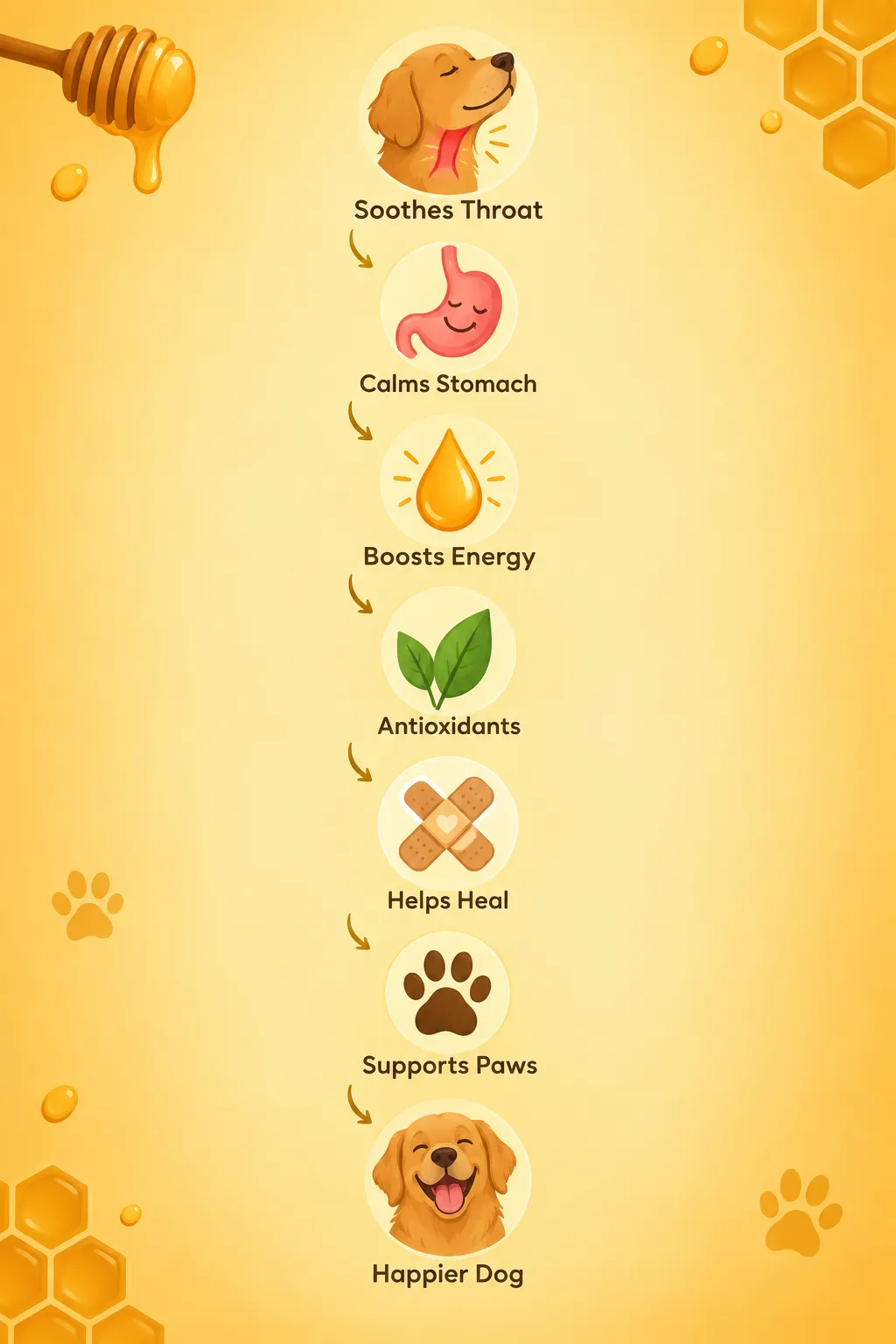
Honey may offer small perks like mild antioxidants, a soothing effect on a scratchy throat, and trace minerals, but the evidence in dogs is limited and the benefits are modest at best.
Forbes Advisor frames honey as offering only minor benefits and recommends checking with your vet before using it for allergies or coughs, rather than treating it as a home remedy on its own, according to Forbes Advisor’s pet care guidance.
Here are the seven benefits owners ask about most:
- Mild antioxidant content from natural plant compounds in honey
- Soothing texture that may calm a scratchy throat
- Quick energy from natural sugars, useful in very rare cases
- Trace minerals like small amounts of calcium and iron
- Mild antimicrobial properties, mainly relevant in medical-grade forms
- Possible digestive comfort in tiny amounts for some dogs
- A low-risk treat option compared to many processed dog snacks
Does Honey Help With Dog Cough?
Honey may soothe a mild, occasional cough the same way it can soothe a human throat, but it does not treat the underlying cause of coughing in dogs. If your dog has a persistent cough, that is a vet visit, not a honey spoon.
The Dodo notes honey “can actually be super healthy” for some dogs, but only in small amounts and never as the main treatment for a health issue, according to The Dodo’s dog nutrition coverage. Kennel cough, heart disease, and allergies can all cause coughing, so a vet check matters more than a home remedy.
Does Honey Help Dog Digestion?
A tiny amount of honey may settle a mildly upset stomach for some dogs, but it can just as easily cause diarrhea in others, especially in larger doses. It is not a reliable digestive aid.
Chewy’s nutrition team warns that too much honey can lead to digestive issues like diarrhea rather than relief, so it should never be your first response to a dog with stomach problems, according to Chewy’s pet nutrition guide. If your dog has ongoing digestive trouble, our guide on what to give a sick dog naturally covers safer, vet-approved options.
Can Puppies Have Honey?
No, puppies should not have raw honey. Their immune systems are not developed enough to safely handle the bacterial spores that can sometimes be present in honey.
Can Honey Cause Botulism in Dogs?
Yes, raw honey can occasionally contain Clostridium botulinum spores, which cause botulism, a rare but serious illness. Adult dogs with mature immune systems usually process these spores without issue, but puppies and immunocompromised dogs cannot.
The AKC and PetMD both specifically warn against feeding raw honey to puppies and dogs with weakened immune systems because of this botulism spore risk, a rule repeated across nearly every current veterinary source, according to PetMD’s veterinary nutrition guide and the AKC’s expert advice on honey.
Edge case: if your puppy is close to 12 to 18 months and otherwise healthy, ask your vet before introducing even a small taste. There is no rush to start.
How Much Honey Can I Give My Dog?
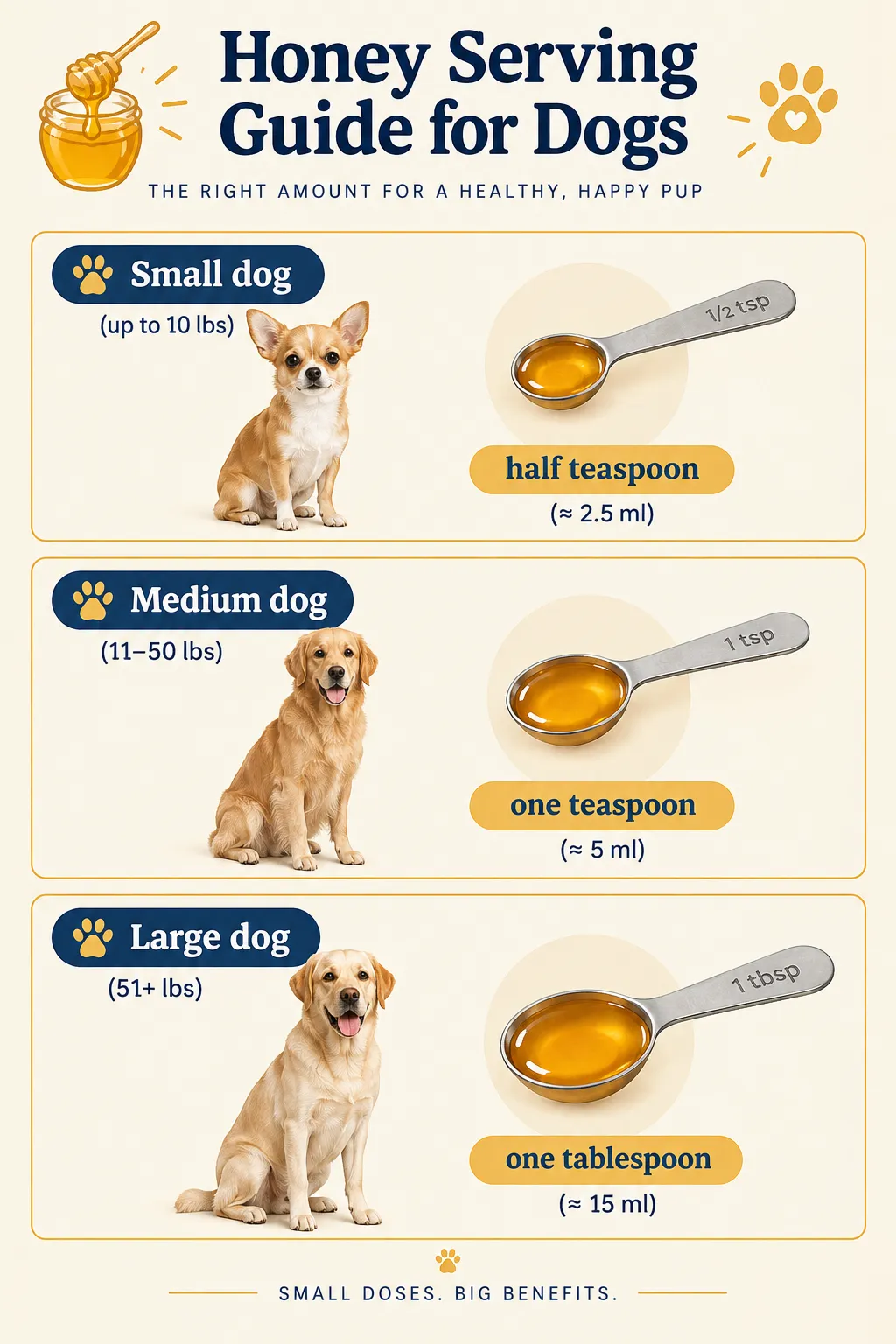
For healthy adult dogs, the safe range is about half a teaspoon per day for small dogs and up to one teaspoon for larger dogs, and not every single day.
One teaspoon of honey contains roughly 12.76 calories and 3.4 grams of sugar. That sounds small, but treats overall should stay under 10% of your dog’s daily calories, a rule reinforced across current pet nutrition guidance.
| Dog size | Suggested serving | Frequency |
|---|---|---|
| Small (under 20 lbs) | About 1/4 to 1/2 teaspoon | A few times a week at most |
| Medium (20 to 50 lbs) | About 1/2 teaspoon | A few times a week at most |
| Large (over 50 lbs) | Up to 1 teaspoon | A few times a week at most |
Common mistake: measuring honey by “a little drizzle” instead of an actual teaspoon. Eyeballing it almost always means more sugar than intended.
Is Raw Honey Safe for Dogs?
Raw honey is generally safe for healthy adult dogs in small amounts, but it carries a higher botulism spore risk than pasteurized honey, which is why it is specifically off-limits for puppies and immunocompromised dogs.
If you’re weighing raw versus processed options in more depth, our dedicated piece on the hidden dangers of raw honey for dogs breaks down the differences further.
Best Type of Honey for Dogs
The best choice is plain, unflavored honey with no added sugar, syrup, or artificial sweeteners. Read the label every time, even on products marketed for pets.
Australian veterinary guidance stresses that dogs should only eat plain honey, since flavored honey products can hide fats, salts, or other additives that create new risks beyond the honey itself, according to Nine’s veterinary explainer on honey. Regional guidance from Australia similarly stresses checking labels for xylitol, an artificial sweetener that is acutely toxic to dogs, according to Safe For Dogs’ ingredient guidance.
Honey for Dogs With Allergies
Honey is sometimes suggested as a home remedy for seasonal allergies, but there is no strong evidence in dogs that it reduces allergic reactions. In rare cases, honey can actually trigger an allergic reaction, especially in dogs sensitive to pollen or bee products.
If your dog has known food sensitivities, it’s worth reviewing our broader breakdown of what dogs can and cannot eat before adding anything new, including honey.
Quick example: a dog with grass pollen allergies flaring up in spring is not a good candidate for a “let’s try honey” experiment, since local pollen traces in honey could theoretically make symptoms worse, not better.
What Happens if a Dog Eats Too Much Honey?
Too much honey usually causes an upset stomach, with symptoms like vomiting, diarrhea, or bloating showing up within a few hours. In dogs with diabetes or obesity, repeated overfeeding can also worsen blood sugar control and weight gain over time.

Even small amounts can occasionally cause stomach upset in sensitive dogs, and pet owners should stop giving honey at the first sign of intolerance, according to Chewy’s nutrition team.
If your dog raided the honey jar: watch closely for six to twelve hours. Mild vomiting or loose stool usually resolves on its own. Repeated vomiting, lethargy, or a swollen belly means a call to your vet.
Can Dogs With Diabetes Have Honey?
No, dogs with diabetes should not have honey. Its pure sugar content can spike blood glucose and destabilize insulin management, undoing the careful work of a diabetic diet plan.
Purina’s feeding guidance specifically advises against routinely feeding honey, noting that its sugar-heavy profile carries more risk than benefit, especially for dogs with underlying conditions like diabetes, according to Purina’s feeding advice on honey. With roughly 59% of U.S. dogs already overweight or obese, most pets simply don’t have the calorie room for sugary extras like honey.
Honey vs Other Natural Remedies for Dogs
Honey is one of many “natural remedy” options owners reach for, but it is rarely the best tool for the job compared to alternatives suited to a specific problem.
| Remedy | Best for | Watch out for |
|---|---|---|
| Honey | Occasional treat, mild throat soothing | High sugar, not for puppies or diabetics |
| Plain pumpkin | Digestive regularity | Only unsweetened, plain puree |
| Bone broth | Hydration, appetite support | Watch sodium content |
| Plain yogurt | Gut-friendly bacteria | Must be free of xylitol and added sugar |
Decision rule: choose pumpkin for tummy trouble, bone broth for a dog that won’t drink or eat, and skip honey unless you just want an occasional, small sweet treat. For more everyday-safe options, check our list of superfoods vets recommend for dogs.
When Should You Not Give Honey to Dogs?
Never give honey to puppies under about 12 to 18 months, diabetic dogs, obese dogs, or dogs with compromised immune systems. Also avoid it if your dog has ever shown any sensitivity to bee products.
Skip honey any time you’re using it to “treat” a real medical issue like chronic coughing, wounds, or ongoing digestive problems. Medical-grade honey has genuine use in vet-supervised wound care, but that is a professional treatment, not a kitchen remedy, according to broader veterinary wound-care coverage.
Common mistake: applying kitchen honey directly to a cut or wound at home. That is not the same as sterile, medical-grade honey used in clinics, and it can introduce bacteria instead of helping.
If you’re ever unsure whether a food is safe, our guide to foods dogs can and cannot eat is a good first stop before offering anything new, and it pairs well with our notes on safe fruits like apples and blueberries as lower-sugar treat alternatives. You might also compare honey against cinnamon as an occasional dog-safe spice when looking for variety.
Frequently Asked Questions
Can dogs have honey every day?
No. Honey should stay an occasional treat, not a daily addition, because of its sugar and calorie density.
Is a spoonful of honey too much for a small dog?
Yes, a full spoonful is likely too much for a small dog. Stick to about a quarter to half teaspoon instead.
Can dogs have honey on their paws for licking?
It’s not recommended. Small amounts eaten are one thing, but coating paws encourages excess licking and mess without any real benefit.
Does local honey help dog allergies?
There’s no strong evidence supporting this in dogs, and it hasn’t been proven to reduce pet allergy symptoms.
Can senior dogs have honey?
Healthy seniors with no diabetes or weight issues can usually have a small amount occasionally, but check with your vet first given age-related health risks.
Is manuka honey better for dogs?
Manuka honey has stronger antimicrobial properties, but it’s mainly relevant for medical-grade topical wound care, not for everyday feeding.
What if my dog is allergic to bees?
Avoid honey entirely, since it comes from bees and could trigger a reaction in sensitive dogs.
Can honey replace sugar in homemade dog treats?
In tiny amounts, yes, but the treat should still be portioned as an occasional indulgence, not a regular snack.
Conclusion
So, can dogs have honey? Yes, but only as a small, occasional treat for healthy adult dogs, never as a daily habit or a home remedy for real health problems.
Keep servings tiny, choose plain honey, and skip it entirely for puppies, diabetics, and dogs with weakened immune systems. When in doubt, talk to your vet before adding anything new to your dog’s diet, honey included.
Next time you’re tempted to share a spoonful, measure it, watch how your dog reacts, and remember that a little goes a long way with this one.