
Last updated: October 4, 2026
Quick Answer
Learning how to train a Jack Russell Terrier comes down to short, high-energy reward sessions that outsmart the dog’s prey drive instead of fighting it. Most owners see real change in 2 to 4 weeks using 5-10 minute sessions, heavy-value treats, and a strict “ignore the chase, reward the check-in” rule. Punishment backfires on this breed almost every time.
Key Takeaways
- Jack Russells are bred hunters, not pets built for patience, so their “stubbornness” is really intense focus pointed at the wrong thing.
- Positive reinforcement works roughly 40% faster than punishment-based methods for this breed, according to a 2026 training data summary.
- Three to four sessions of 5-10 minutes daily beat one long 30-minute drill every time.
- A reliable recall on a long line can be life-saving around traffic, squirrels, and other dogs.
- Crate training and clear household rules prevent this confident breed from “running the house.”
- Adult Jack Russells absolutely can be trained; age isn’t the obstacle, consistency is.
- First-time owners can succeed with this breed, but only with a real exercise and training plan in place before day one.
What makes Jack Russell terriers so hard to train?
Jack Russells aren’t hard to train because they’re dumb. They’re hard to train because they’re smart, fast, and bred for a job that has nothing to do with sitting still.
This breed was developed to chase foxes into dens, think independently underground, and make split-second decisions without a human around. That instinct didn’t disappear just because the dog now lives on a couch.
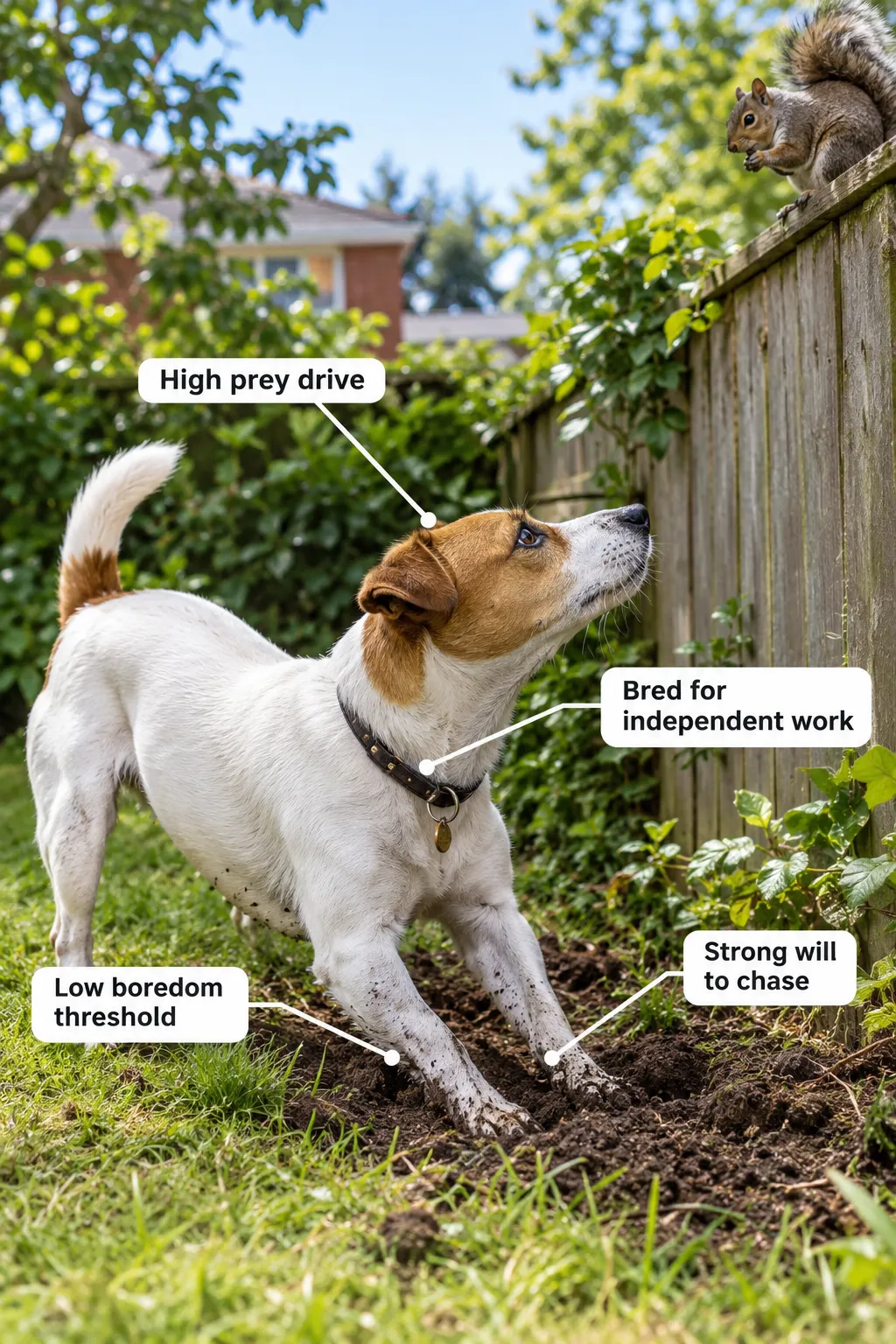
A squirrel, a skateboard, or a sudden noise can override every command you’ve taught in seconds. That’s not defiance. That’s thousands of years of breeding kicking in.
Decision rule: if your Jack Russell “forgets” commands only around movement or small animals, you’re dealing with prey drive, not stubbornness, and the fix is redirection training, not more repetition.
Positive reinforcement vs punishment for Jack Russells
Positive reinforcement is the clear winner for this breed, and it’s not close. Veterinary behavior organizations now treat reward-based training as the standard approach for Jack Russells, as outlined in a 2026 training guide that cites the American Veterinary Society of Animal Behavior’s recommendation for positive reinforcement as the primary method.
Punishment-heavy corrections tend to make Jack Russells shut down, avoid their handler, or get defensive, according to veterinary sources updated in 2026. That’s the opposite of what you want from a dog this independent.
Treats and rewards that actually work:
- Small pieces of real chicken, cheese, or hot dog (high-value, fast to eat)
- A squeaky toy for dogs more motivated by play than food
- Praise paired with physical touch, used right after the behavior, not seconds later
If you want a deeper dive into reward timing, our guide on positive reinforcement dog training breaks down the exact mechanics that make treats work faster.
I’ll be honest here: the fastest shortcut I’ve found for owners stuck on the basics is a free dog training workshop built around the same reward-based methods professional service dog trainers use, and it covers housebreaking and stopping bad habits step by step, which saves a lot of trial and error with a breed this sharp.
“Reward-based training isn’t the gentle option for Jack Russells. It’s the fast one.”
The 7 training tricks that actually work on stubborn Jacks
These seven tricks target the exact behaviors that make Jack Russells feel “untrainable”: chasing, pulling, barking, and ignoring recall.
| Trick | What it fixes | Session length |
|---|---|---|
| Check-in game | Prey drive chasing | 5 minutes |
| Mat settle | Can’t relax at home | 3-5 minutes |
| Long-line recall | Won’t come when called | 5-10 minutes |
| Stop-and-stand leash | Pulling on walks | Full walk |
| Flirt pole redirect | Excess energy, chasing | 5-10 minutes |
| “Enough” bark cue | Excessive barking | 2-3 minutes |
| Crate den time | Household boundaries | Ongoing |
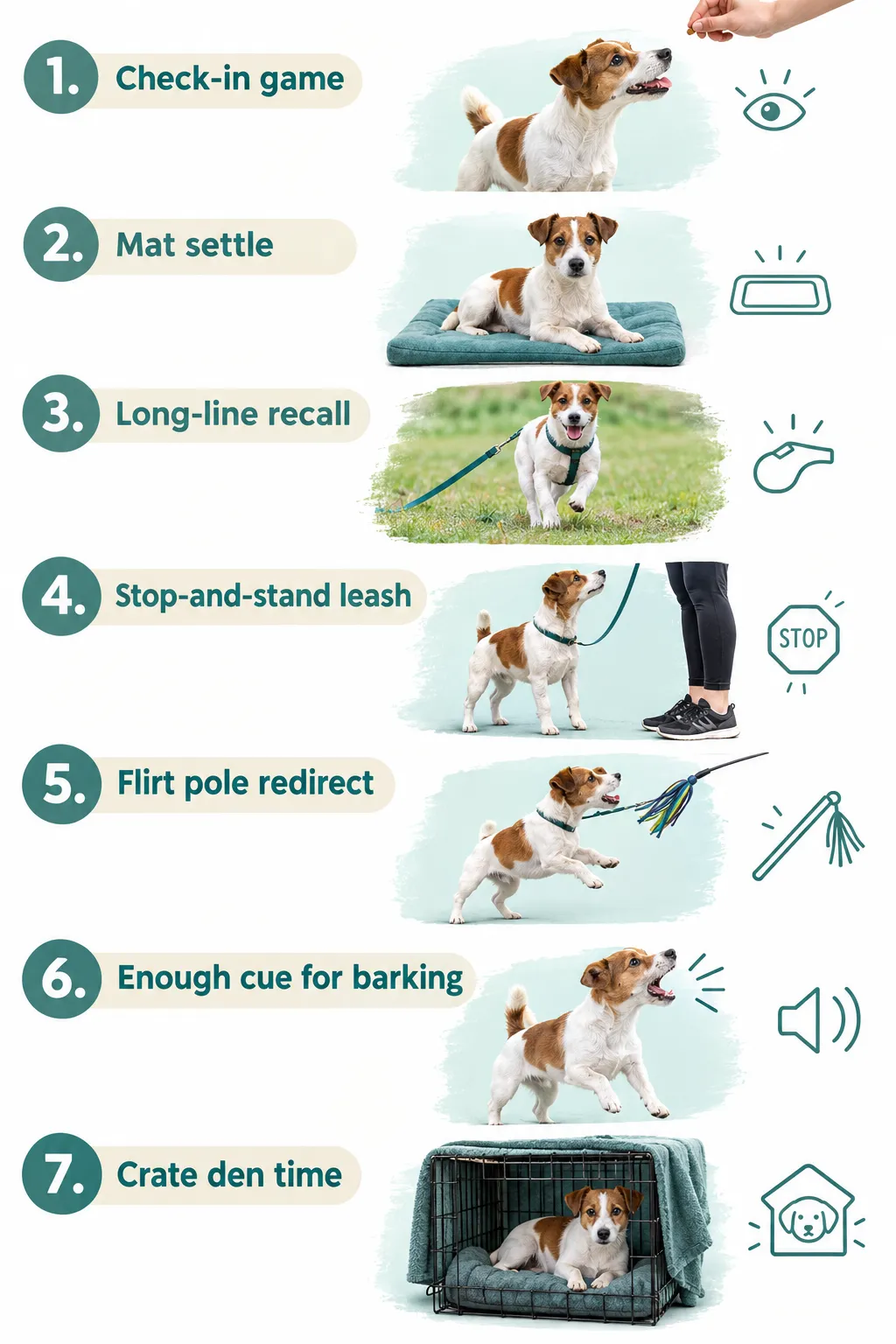
1. The check-in game. Before your dog locks onto a squirrel, say its name and reward any glance back at you. A 2026 step-by-step guide describes this redirect as one of the most effective ways to interrupt chase instinct before it starts.
2. Mat settle. Ask for a few seconds of stillness on a mat, reward it, then stretch the duration. An August 2026 training guide for busy terriers recommends building this slowly rather than expecting instant calm.
3. Long-line recall. Practice “come” on a 15-foot line in a low-distraction yard, then add distractions gradually. Never call your dog for something it hates, like nail trims, or the cue loses its value.
4. Stop-and-stand leash work. When the leash tightens, stop walking and wait for slack before moving again. This teaches the dog that pulling literally gets it nowhere.
5. Flirt pole redirect. A flirt pole burns off prey drive in a controlled way. Pair it with our list of brain games for dogs to rotate mental and physical outlets.
6. The “enough” bark cue. Reward quiet the instant barking stops, and pair it with gradual exposure to common triggers like passing cars.
7. Crate den time. A crate gives your Jack Russell a safe space and protects your home when you can’t supervise directly, according to a 2026 breed handbook.
How long does it take to train a Jack Russell terrier?
Most owners see noticeable progress in 2 to 4 weeks with daily short sessions, though full reliability around heavy distractions can take several months. Basic cues like sit, stay, and come usually click fastest because they don’t compete directly with prey drive.
Compared to other terriers, Jack Russells aren’t necessarily harder to train, they’re just more motivated to test boundaries and chase moving objects. A structured plan like our 14-day dog training plan can give you a realistic timeline to measure progress against.
Edge case: dogs with little early socialization often take longer, since they haven’t built the “check in with human” habit yet.
My Jack Russell won’t listen to commands, what should I do?
Stop repeating the command louder and check three things first: energy level, distraction level, and reward value. A tired, under-exercised Jack Russell physically cannot focus the way a well-exercised one can.
Common mistakes that cause this:
- Training only in the living room, never around real distractions
- Using low-value treats like dry kibble for a high-stakes command
- Long 20-30 minute sessions that bore the dog into checking out
- Inconsistent rules between family members
If recall specifically is the problem, our guide on training a puppy to come when called walks through the exact sequence that builds reliability.
Can you train an adult Jack Russell, or is it too late?
No, it’s not too late. Adult Jack Russells can absolutely learn new behaviors; they just need consistency applied earlier in the process since they may already have a habit to unlearn.
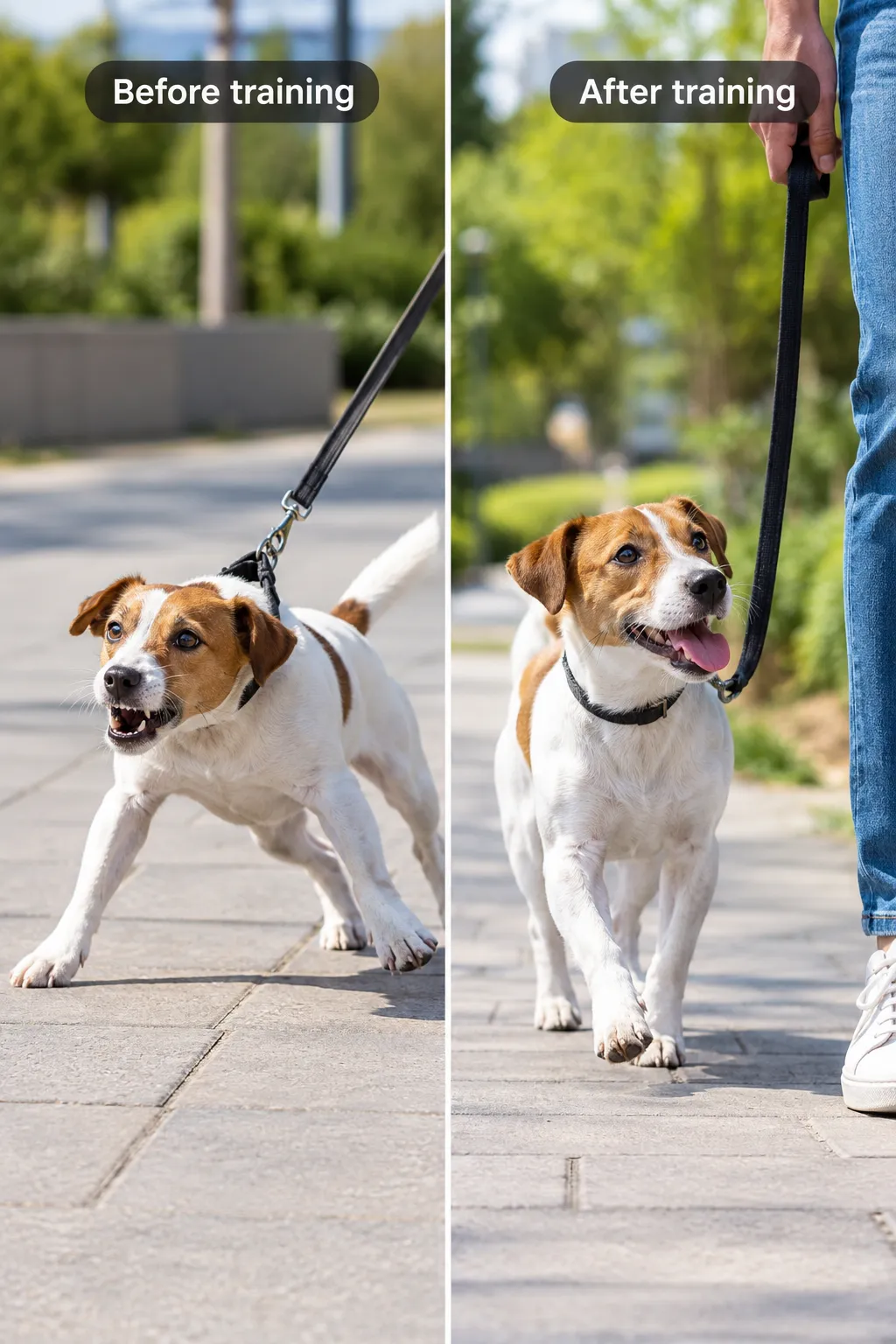
The training methods don’t change much between puppies and adults. What changes is patience on your end, since an adult dog has had more time to practice the wrong behavior. Start with the same short, reward-based sessions and expect slightly slower initial progress.
Jack Russell training classes near me: cost and alternatives
Group obedience classes typically run in multiple-week blocks and give your dog controlled exposure to other dogs and people, which is valuable for a breed this reactive to movement. Costs vary widely by location and trainer experience, so check with local certified trainers for current rates in your area.
Choose a class if: your dog struggles specifically with other dogs or strangers.
Choose at-home training if: the main issues are recall, pulling, or barking, since those train faster in familiar settings without added distraction.
If budget or scheduling makes classes tough right now, the free online dog training workshop covers housebreaking and obedience basics using service-dog training methods, which works as a solid no-cost starting point before committing to paid classes.
How much exercise do Jack Russells need before training, and how do I handle aggression?
Jack Russells generally need significant daily physical and mental exercise before training sessions will stick, since pent-up energy makes focus nearly impossible. A 2026 training guide notes that an under-exercised Jack Russell simply cannot concentrate, no matter how good your technique is.
For aggression during training specifically:
- Stop the session immediately if growling or snapping appears
- Identify the trigger (resource guarding, overstimulation, fear)
- Switch to calmer, lower-arousal exercises like the mat settle
- Consult a certified behaviorist if aggression persists beyond a few sessions
Pairing structured exercise with games works well. Our playtime games that secretly train your dog article shows how to combine the two without extra time investment.
Is a Jack Russell right for first-time dog owners?
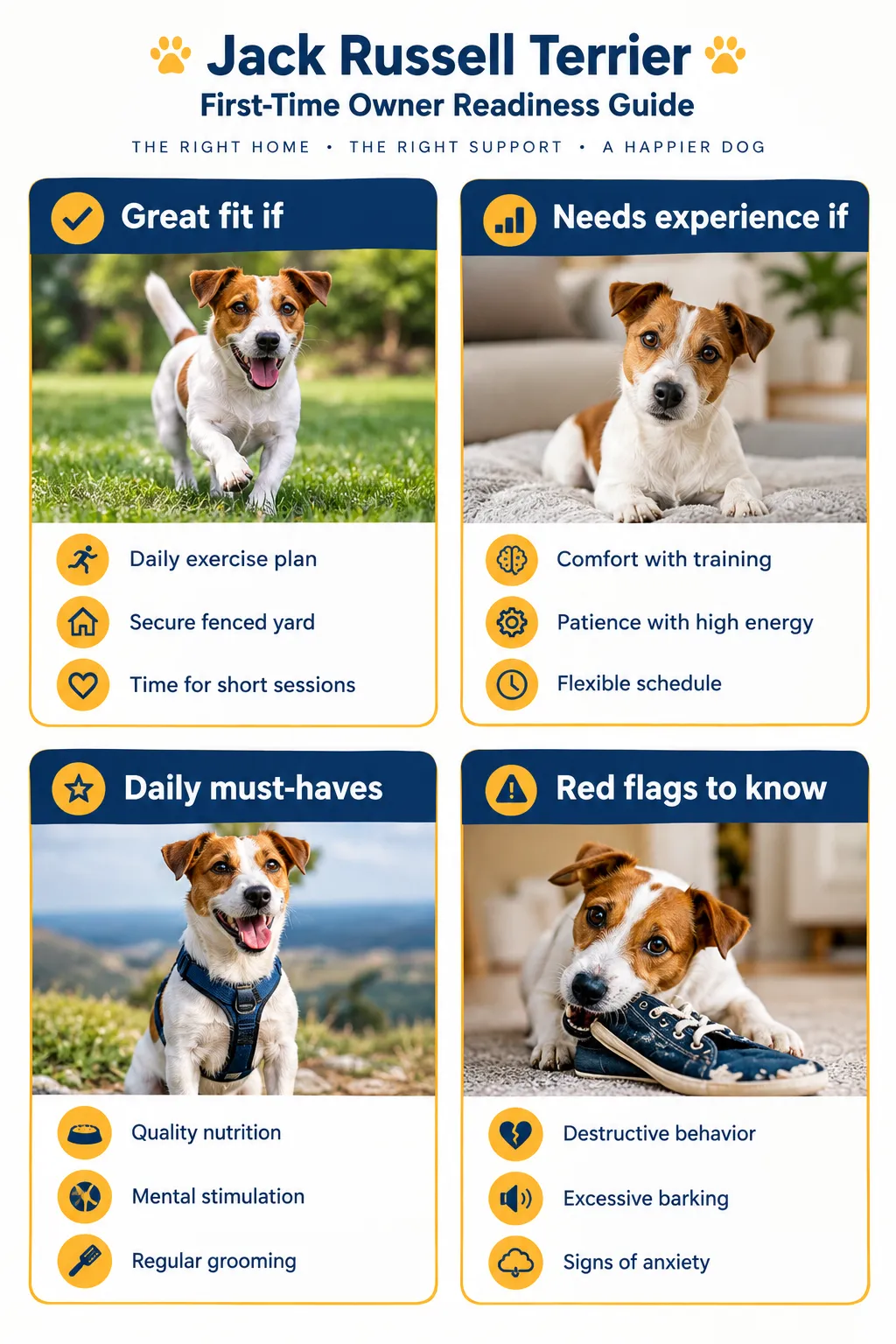
Jack Russells can work for first-time owners, but only ones who commit to daily exercise and short structured training from week one. This isn’t a breed that thrives on minimal effort.
Pros:
- Highly trainable with the right method
- Affectionate and loyal once bonded
- Compact size fits many living situations
Cons:
- High exercise and mental stimulation needs
- Strong prey drive requires secure fencing
- Can be vocal if under-stimulated
As for whether they train better with men or women, there’s no verified evidence that sex of the handler matters. What matters is tone, consistency, and reward timing, not gender. Learning more about the breed’s quirks first helps; our surprising Jack Russell Terrier facts piece is a good starting point before adopting.
FAQ
Is a Jack Russell the most stubborn terrier breed?
Not necessarily. Jack Russells are independent and high-drive, but breeds like the Cairn Terrier or Fox Terrier show similar levels of determination.
What age should I start training a Jack Russell puppy?
Start socialization and basic cues around 8-10 weeks once your vet clears the puppy for outside exposure.
Can Jack Russells be off-leash trained?
Yes, but only after a rock-solid recall has been proofed around heavy distractions, including other animals.
Do Jack Russells bark a lot?
They can, especially when bored or under-exercised, but the “enough” cue combined with daily exercise reduces this significantly.
Should I use a shock collar on a stubborn Jack Russell?
No. Aversive tools tend to increase mistrust and resistance in this breed rather than solve the root behavior.
How many training sessions per day does a Jack Russell need?
Three to four sessions of 5-10 minutes each works better than one long session.
Are Jack Russells good with kids?
Often yes, especially when raised together, but their high energy means supervision matters with very young children.
Conclusion
Training a stubborn Jack Russell isn’t about breaking its spirit, it’s about giving that spirit something better to do than chase squirrels. Short reward-based sessions, a solid recall, and consistent household rules solve most of the “stubborn” behavior people struggle with.
Start small this week: pick one trick from the list above, like the check-in game, and practice it for five minutes, three times a day. For a complete step-by-step system that mirrors professional methods, the free dog training workshop walks through housebreaking and obedience training using the same approach used to train service dogs, which is a solid next step once you’ve got the basics down.