Last updated: October 21, 2026
Quick Answer
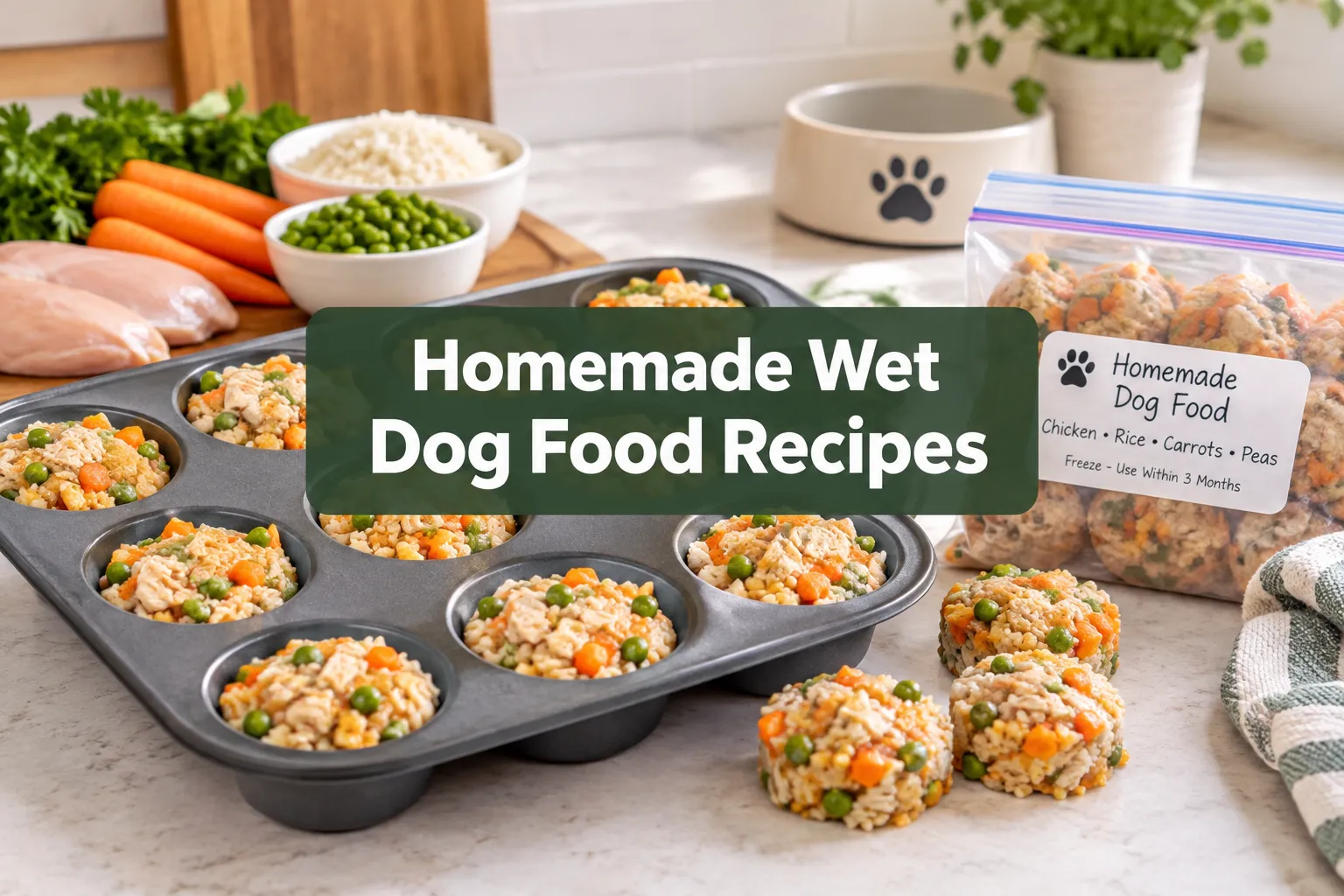
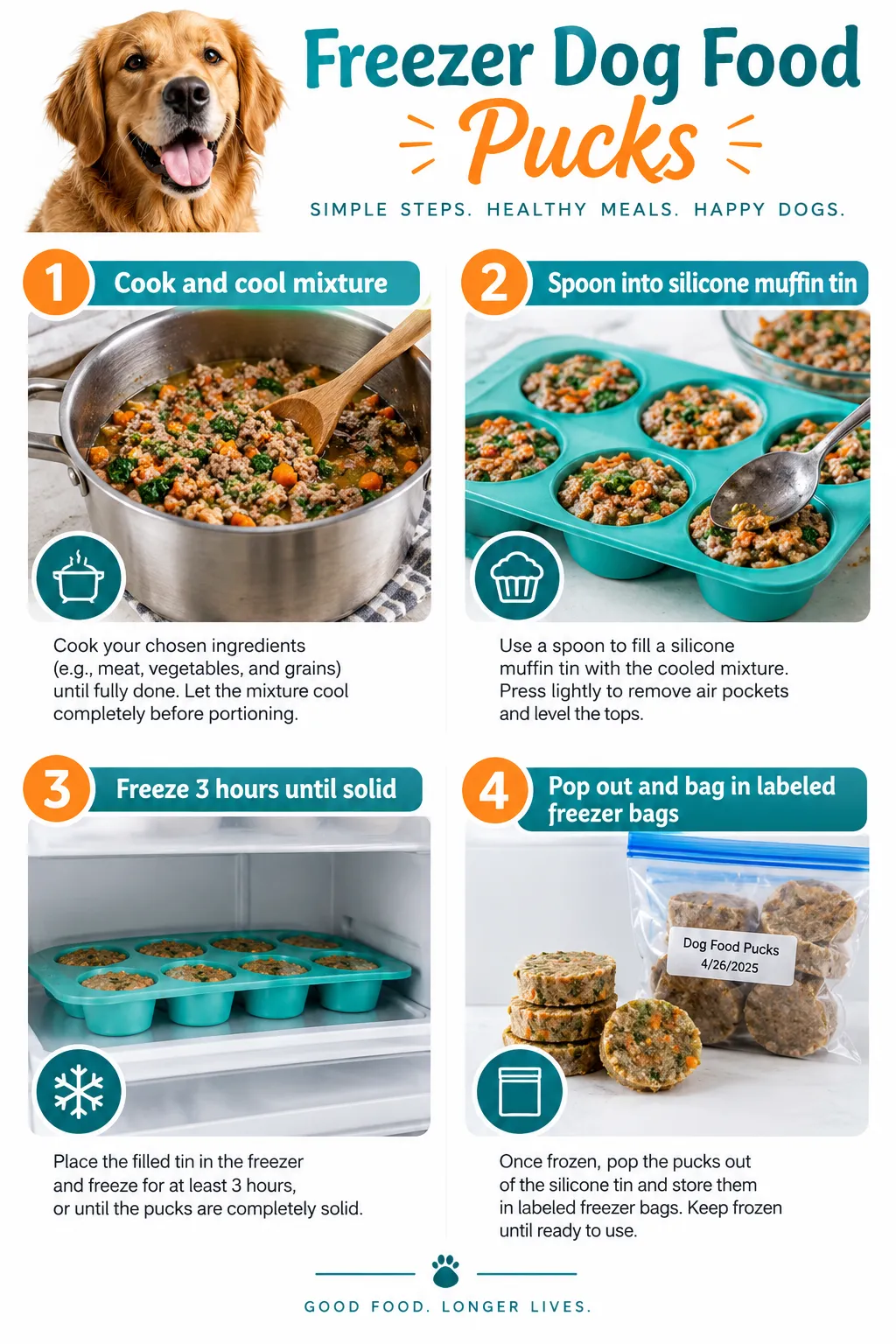
Homemade wet dog food recipes work best when you batch-cook once, portion the mixture into a muffin tin, freeze until solid, then pop the pucks into labeled freezer bags. This gives you pre-measured, nutrient-dense meals that thaw fast and cut down daily cooking time. Most pucks stay good in the freezer for about 2 to 3 months when stored properly.
Key Takeaways
- A muffin tin turns one big batch of homemade dog food into perfectly portioned, freezer-ready pucks.
- Cooked chicken, beef, or turkey combined with rice, vegetables, and a nutrient blend makes a balanced base.
- Freeze pucks for about 3 hours until solid, then transfer to airtight bags to prevent freezer burn.
- Homemade dog food should move from stovetop or Instant Pot to the fridge or freezer within 2 hours of cooking.
- Most complete homemade diets need an added vitamin and mineral blend to be nutritionally balanced.
- Thaw pucks in the fridge overnight, never at room temperature, and never refreeze thawed food.
- Puppies can usually start wet or soft homemade food around 3 to 4 weeks as a transition food, but always confirm with your vet.
- A veterinary nutritionist should review any homemade recipe meant as a dog’s main diet, not just an occasional topper.
I got into homemade dog food the way a lot of people asked me to: I had a dog, and I had an Instant Pot gathering dust, and I thought making my own food would be a crazy weekend project. Then it became a weekly habit. Now I batch-cook once and freeze the rest, and my freezer looks like a bakery tray of dog food pucks instead of cupcakes.
This guide covers everything you need to make homemade wet dog food recipes that are actually balanced, safe, and easy to reheat, using nothing fancier than a muffin tin and a little planning.
What Ingredients Should I Include in Homemade Dog Food
A balanced homemade dog food recipe needs a protein, a cooked carb, a non-starchy vegetable, and a fat source, plus a vitamin and mineral blend. Skip any single ingredient and the recipe stops being complete over time.
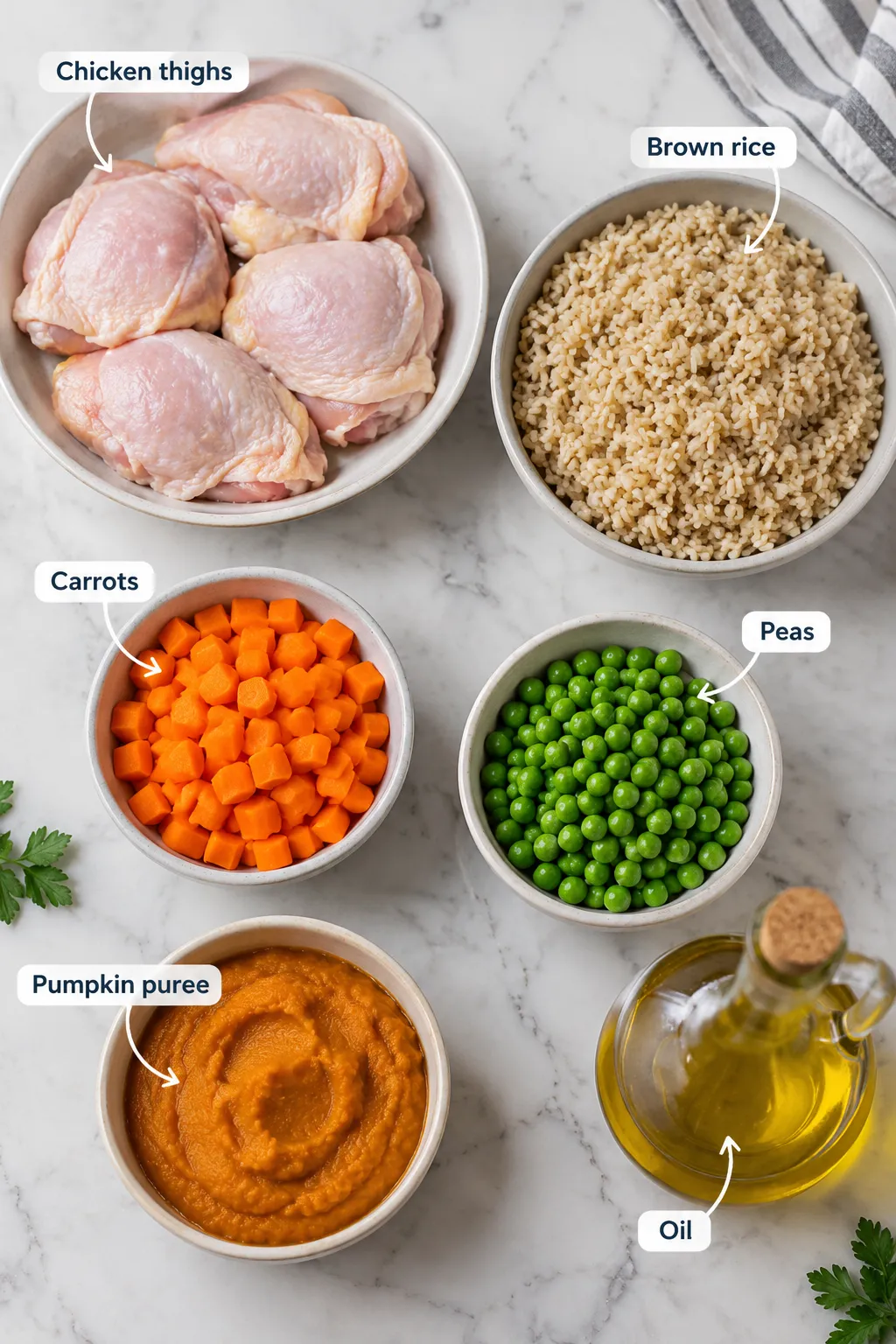
Here’s a simple breakdown of what each category does:
- Protein (about 40-50% of the mix): chicken, beef, turkey, or fish give amino acids dogs need for muscle and coat health.
- Carbohydrate (about 25-30%): brown rice, whole wheat macaroni, or sweet potato add digestible energy.
- Vegetables (about 15-20%): carrots, green beans, pumpkin, or peas add fiber and micronutrients.
- Fat source: a splash of oil, like fish or omega algae oil, supports skin and coat.
- Nutrient blend: a diy nutrient blend chicken, beef, or turkey formula fills vitamin and mineral gaps that meat and veggies alone can’t cover.
Make sure you’re not just tossing in “healthy” people food and calling it done. Dogs need specific ratios, not just variety.
How Long Do Frozen Dog Food Pucks Last in the Freezer
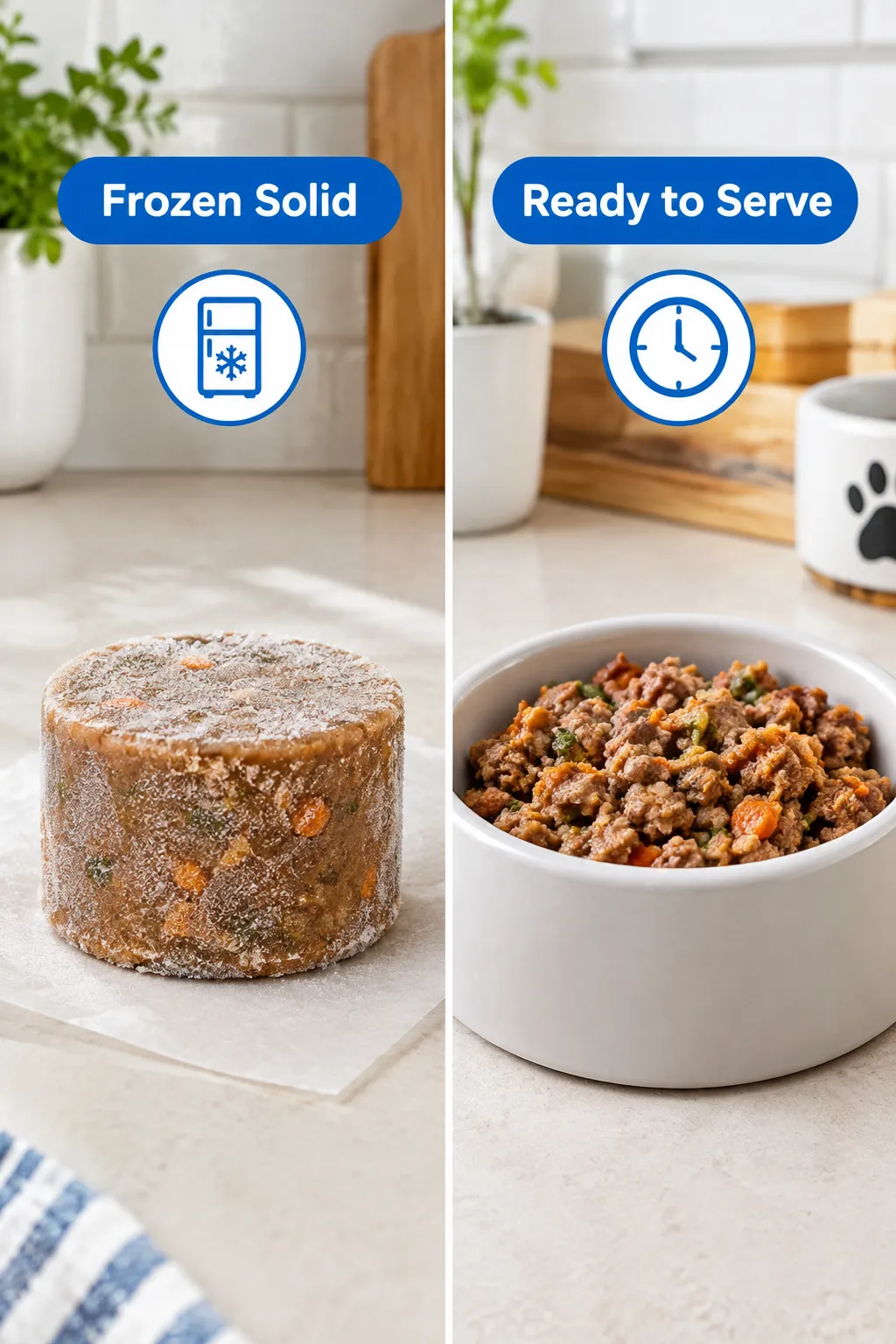
Frozen dog food pucks generally stay safe and nutrient-rich for about 2 to 3 months in a freezer kept at 0°F (-18°C), according to pet food storage guidance updated in 2026. After that window, quality and texture start to drop even if the food is technically still safe.
Some sources note properly packaged homemade dog food can last a bit longer, but best quality is optimal within roughly three months. To get the most out of a batch-cook session:
- Cool the cooked mixture completely before portioning.
- Press it into a silicone muffin tin for even pucks.
- Freeze about 3 hours until solid, as several 2026 recipe guides recommend.
- Pop pucks out and transfer to labeled, airtight freezer bags.
- Remove excess air from each bag to minimize freezer burn.
Write the recipe name and prep date on every bag. First in, first out keeps you from feeding dog food that’s past its date old and quietly losing nutrients.
Is Homemade Dog Food Nutritionally Balanced for Dogs
Most homemade dog food is not automatically balanced, even when it looks healthy on paper. Studies cited by a Texas A&M-linked veterinary nutrition report found that a large share of homemade diets reviewed were missing key nutrients or had mineral ratios off from what dogs actually need.
That’s not meant to scare you off homemade cooking. It just means a bowl of chicken, rice, and green beans, while tasty, usually lacks enough calcium, zinc, and certain vitamins on its own. A yourself nutrient blend or commercial vitamin mix closes that gap. Adding a balanced homemade dog food blend designed for long-term feeding, not just an occasional treat, is the difference between a fun recipe and an actual diet.
Creating Safe and Balanced Homemade Dog Food Recipes
Safe, balanced homemade dog food recipes combine a cooked protein, a cooked carb, dog-safe vegetables, a fat source, and a nutrient blend in the right ratios, cooked to proper temperatures and cooled quickly. Skipping any one piece turns a decent recipe into an incomplete one.
A reliable Instant Pot dog food routine looks like this:
- Brown the protein (chicken, beef, russet potato, or turkey) first for flavor and food safety.
- Add rice, whole wheat macaroni, or sweet potato along with water or low-sodium broth.
- Pressure cook until the meat reaches 165°F (74°C) internally, a temperature standard echoed across 2025-2026 veterinary food safety guidance.
- Stir in a diy nutrient blend chicken or turkey formula once the pot cools slightly.
- Cool fully, then portion into a muffin tin.
If you love batch cooking, check out related recipes like heartwarming homemade dog food recipes with chicken or a chicken and brown rice dog food recipe for starting formulas you can adapt into pucks.
Common Mistakes to Avoid When Feeding Homemade Diets
The most common mistake is feeding a tasty recipe long-term without a nutrient blend, which leaves gaps in calcium, zinc, and vitamin D. Another frequent error is letting cooked food sit at room temperature too long before refrigerating or freezing it.
Other mistakes worth flagging:
- Leaving food out too long: cooked dog food should go into the fridge or freezer within 2 hours, or within 1 hour if the room is above 90°F (32°C), per food safety guidance for pet owners.
- Refreezing thawed pucks: this raises bacterial risk and should be avoided according to multiple 2026 storage guides.
- Skipping the nutrient blend entirely: this is the top reason homemade diets fail long-term.
- Using toxic vegetables: onions, garlic, and raw potato skins have no place in a dog bowl, something covered in this list of everyday foods that can kill your dog.
- Guessing portions: feeding by eyeballing it instead of checking a daily feeding amount guide.
What Vegetables Are Toxic to Dogs When Making Homemade Food
Onions, garlic, chives, and raw potatoes are toxic to dogs and should never go into a homemade dog food recipe. Even small amounts cooked into a sauce can cause problems over repeated meals.
Safe vegetable choices include carrots, green beans, pumpkin, peas, and sweet potato, all of which show up often in balanced recipes. Avoid grapes, onions, wild mushrooms, and anything from the allium family entirely. If you’re unsure about an ingredient, it’s worth a quick check against a vet-approved list of safe foods before it goes into the pot.
Is Homemade Dog Food Better Than Kibble or Wet Dog Food Brands
Homemade dog food can match or beat commercial dry food and wet dog food brands in freshness and ingredient control, but only when the recipe is balanced. Kibble has the advantage of guaranteed nutrient completeness by design, while homemade meals need a nutrient blend to reach the same bar.
Choose homemade if you want fresher ingredients, fewer fillers, and control over protein sources. Choose commercial dry food or wet dog food brands if you want guaranteed balance without extra supplementation. Many owners land in the middle, mixing a homemade topper into dry food, which you can read more about in what to add to your dog’s dry food.
Do I Need to Add Supplements to Homemade Dog Food Recipes
Yes, almost every homemade dog food recipe meant as a full diet needs an added vitamin and mineral blend to be nutritionally complete. Meat and vegetables alone rarely supply enough calcium, trace minerals, or certain vitamins.
A diy nutrient blend chicken, beef, or turkey formula, plus an algae oil bundle for omega-3s, covers most of the common gaps. For more on which vitamins matter most, see this guide on vitamins to add to homemade dog food.
How Much Homemade Dog Food Should I Feed My Dog Daily
Daily amounts depend on your dog’s weight, activity level, and the calorie density of the recipe, generally starting around 2-3% of body weight in food per day. A 40-pound dog might eat roughly 1 to 1.5 pounds of homemade wet food daily, split across two meals.
Check a feeding amount calculator or guide and adjust based on your dog’s weight trend over a few weeks. Thin dogs need more; dogs gaining too much need less.
Can Puppies Eat Homemade Wet Dog Food
Puppies can eat homemade wet dog food once they’re transitioning off milk, usually around 3 to 4 weeks for soft mush, with fully homemade meals introduced closer to 8 weeks under veterinary guidance. Puppy nutrient needs differ from adult dogs, especially for calcium and phosphorus ratios.
If you’re building puppy-specific meals, fresh puppy food recipes are a safer starting point than adapting adult recipes without adjustment.
Should I Cook Dog Food or Is Raw Better
Cooking dog food reduces bacterial risk and is the safer default for most home kitchens, while raw diets carry higher risk of pathogens like salmonella without careful sourcing and handling. Cooked wet food, including muffin tin pucks, is easier to store and reheat consistently.
Choose cooked if you want lower food safety risk and simpler batch cooking. Choose raw only if you’ve worked with a veterinary nutritionist and have strict sourcing and handling practices in place.
Can I Use a Muffin Tin to Portion Out Dog Food
Yes, a standard or silicone muffin tin is one of the easiest tools for portioning homemade dog food into consistent, freezer-ready pucks. Silicone tins release frozen pucks more easily than metal ones.
Several 2026 how-to articles on freezing homemade dog food highlight silicone trays for exactly this reason, noting they produce consistent meal sizes for multi-dog households. For small dogs, aim for smaller 2-4 tablespoon pucks to cut down on waste.
How Do I Thaw Frozen Dog Food Pucks Before Feeding
Thaw frozen dog food pucks in the refrigerator overnight, or in short microwave bursts if you’re short on time, but never at room temperature. Room-temperature thawing lets bacteria multiply quickly on moist, high-protein food.
Expert-reviewed storage guides from 2026 recommend thawing only what your dog will eat within 3 to 4 days, and never refreezing leftovers. Pull pucks the night before a meal and let them thaw in a covered bowl in the fridge.
How Much Does It Cost to Make Homemade Dog Food Versus Commercial
Homemade dog food often costs more per pound than mass-market kibble but can be cheaper than premium fresh or raw commercial brands, depending on protein choice and bulk buying habits. Chicken and rice recipes tend to be the most budget-friendly option.
If cost is a concern, check out homemade dog food recipes on a budget for cheaper protein and carb combinations that still work well in muffin tin pucks.
What Are the Best Proteins to Use in Homemade Dog Food
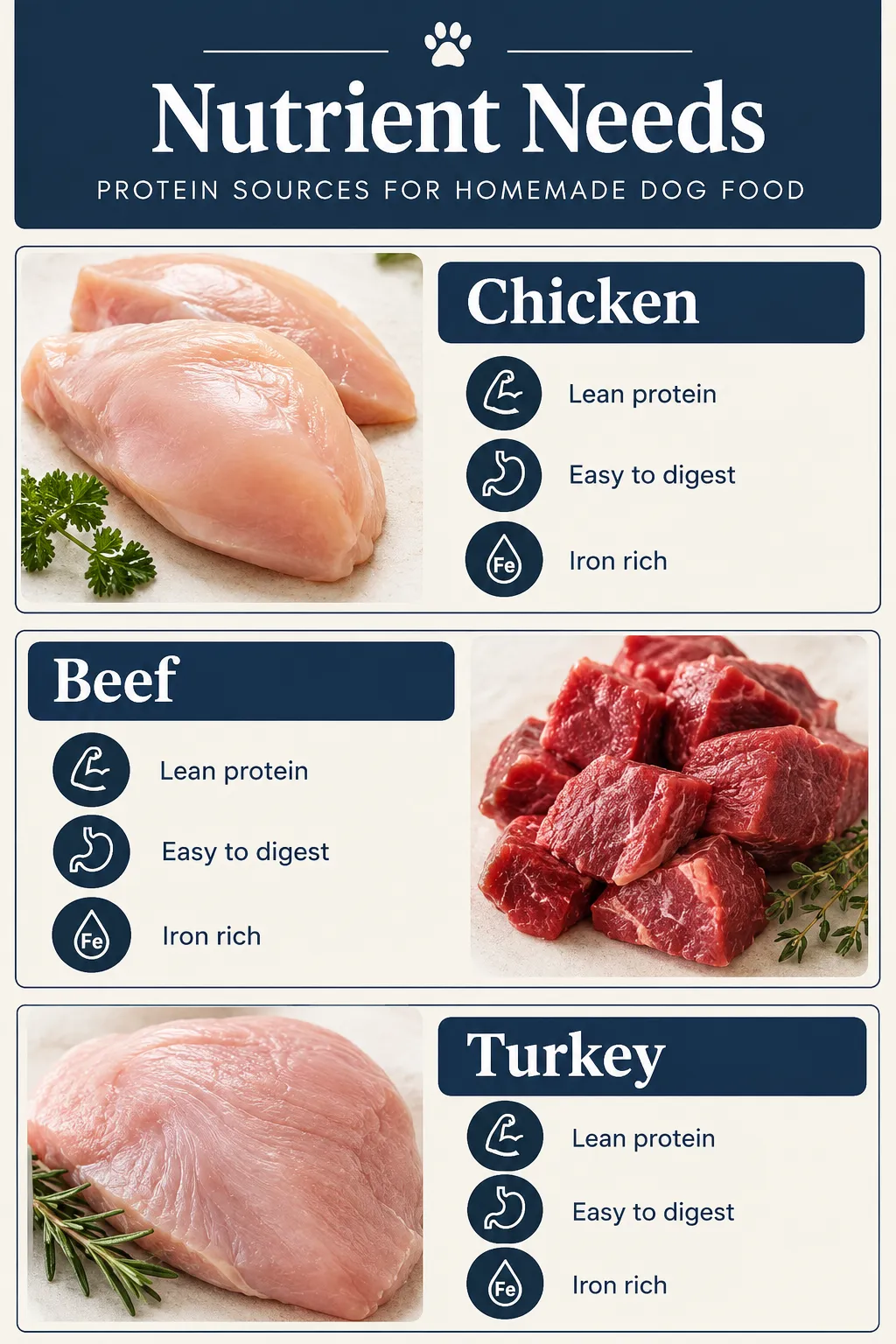
Chicken, turkey, and beef are the most commonly used proteins in balanced homemade dog food recipes, each offering a slightly different nutrient profile. Chicken is lean and gentle on digestion, beef brings more iron, and turkey sits somewhere in between.
For recipe ideas by protein, see beef liver dog food recipes or ground turkey crockpot dog food for variations you can freeze the same way.
FAQ
What age can puppies start eating wet food?
Puppies can usually start soft or wet food around 3 to 4 weeks as they wean off milk, transitioning to full wet meals closer to 8 weeks. Always confirm timing and recipe with your veterinarian since puppy nutrient needs differ from adult dogs.
How long does homemade dog food last?
Homemade dog food lasts about 2 to 3 days in the refrigerator and about 2 to 3 months in the freezer at 0°F (-18°C) for best quality. Label every batch with the date so you rotate stock and avoid feeding food past its safe window.
What can I make at home for my dog to eat?
You can make simple recipes like chicken and rice with carrots and green beans, beef and sweet potato, or turkey with whole wheat macaroni and pumpkin. Add a nutrient blend to any recipe meant as a regular meal, not just an occasional topper.
What can I add to my dog’s wet food?
You can add cooked vegetables like pumpkin or green beans, a splash of fish or algae oil, bone broth, or a vitamin and mineral blend to boost nutrition. Avoid onions, garlic, and heavily seasoned human leftovers.
Conclusion
Homemade wet dog food recipes don’t have to mean cooking every single day. Batch-cook once, press the mixture into a muffin tin, freeze it into pucks, and you’ve got weeks of balanced meals ready to thaw. Add a proper nutrient blend, watch your portion sizes, and follow safe cooling and freezing times, and your dog gets fresher food with way less daily effort from you. If you’re planning to make homemade food a long-term diet rather than an occasional treat, loop in your vet or a veterinary nutritionist to double-check the recipe’s balance before you commit to it full time.