Last updated: November 2, 2026
Quick Answer
Potty training puppy in winter takes patience, a shoveled outdoor spot, short no-play bathroom trips, and backup indoor pads for extreme weather. Most puppies take 4 to 6 months to become reliably house trained, and cold, dark, snowy days often slow that timeline because puppies avoid unfamiliar textures and freezing temperatures underfoot.
Key Takeaways
- Keep a small, consistently cleared patch of ground near the door as the designated potty spot.
- Business-only trips (no play) cut down time spent in the cold and sharpen the puppy’s focus.
- Small and young puppies lose heat fast and may need boots, coats, and very short outings.
- Puppy pads or indoor grass patches are a reasonable backup during blizzards or ice storms, not a long-term swap.
- A consistent verbal cue like “go potty” speeds up learning, even in distracting winter conditions.
- Adjust timing toward warmer, brighter parts of the day when possible.
- Clean any indoor accidents with an enzymatic cleaner so the puppy doesn’t return to that spot.
A puppy born in October can hit the coldest, darkest stretch of the year right in the middle of housetraining, and that timing is brutal. Snow on paws, wind in the face, and a strange crunchy texture underfoot are enough to make even a food-motivated puppy plant all four feet and refuse to budge. Potty training puppy in winter is genuinely harder than doing it in May, and that’s not just a feeling owners have, it’s backed by how training experts describe seasonal housetraining setbacks.
This guide walks through nine practical tips for cold, dark, snowy days, plus answers to the questions real owners search for most when their puppy won’t cooperate once the temperature drops.
Is it harder to potty train a puppy when it’s cold outside
Yes, cold weather genuinely slows potty training because puppies dislike unfamiliar snow and ice under their paws and because owners tend to rush trips outside, which cuts down on the repetition puppies need to learn. Training organizations note that winter requires owners to double down on supervision rather than ease off it.
Cold air also means shorter outdoor windows, less daylight for supervision, and puppies who’d rather stay curled up by the heater. According to the American Kennel Club’s potty training guide, consistency and frequent trips to the same spot remain the backbone of success no matter the season, but winter makes consistency harder to maintain.
Common mistake: rushing the puppy outside, letting it sniff for ten seconds, then pulling it back in because of the cold. That’s not enough time for most puppies to actually go.
How long does it actually take to potty train a puppy in winter
Most puppies need 4 to 6 months of consistent training to be reliably house trained, and winter conditions can stretch that timeline by several weeks if trips outside become inconsistent or rushed. Some breeds and individual puppies take up to a year.
Factors that extend the winter timeline:
- Fewer outdoor repetitions because owners avoid the cold
- Puppy refusing to eliminate on snow or ice
- Shorter daylight hours reducing supervision windows
- Indoor accidents going unnoticed in a busy household during holiday season
Decision rule: if your puppy is under 12 weeks old and temperatures are regularly below freezing, expect training to take longer than average and plan for more frequent, shorter trips rather than fewer long ones.
Why do puppies take longer to potty train in winter
Puppies take longer to potty train in winter mainly because cold paws, unfamiliar snow texture, and shorter outdoor sessions all reduce the number of successful outdoor eliminations they experience. Fewer successes means fewer chances to reinforce the right behavior.
Veterinary and training sources point out that puppies associate feelings of discomfort, like icy wind or wet paws, with the outdoor potty spot itself, which can create reluctance over time. The fix is building positive associations early with brief, upbeat trips and consistent rewards, something Chewy’s guide to house training in winter emphasizes directly.
My puppy won’t go outside in the snow, what should I do
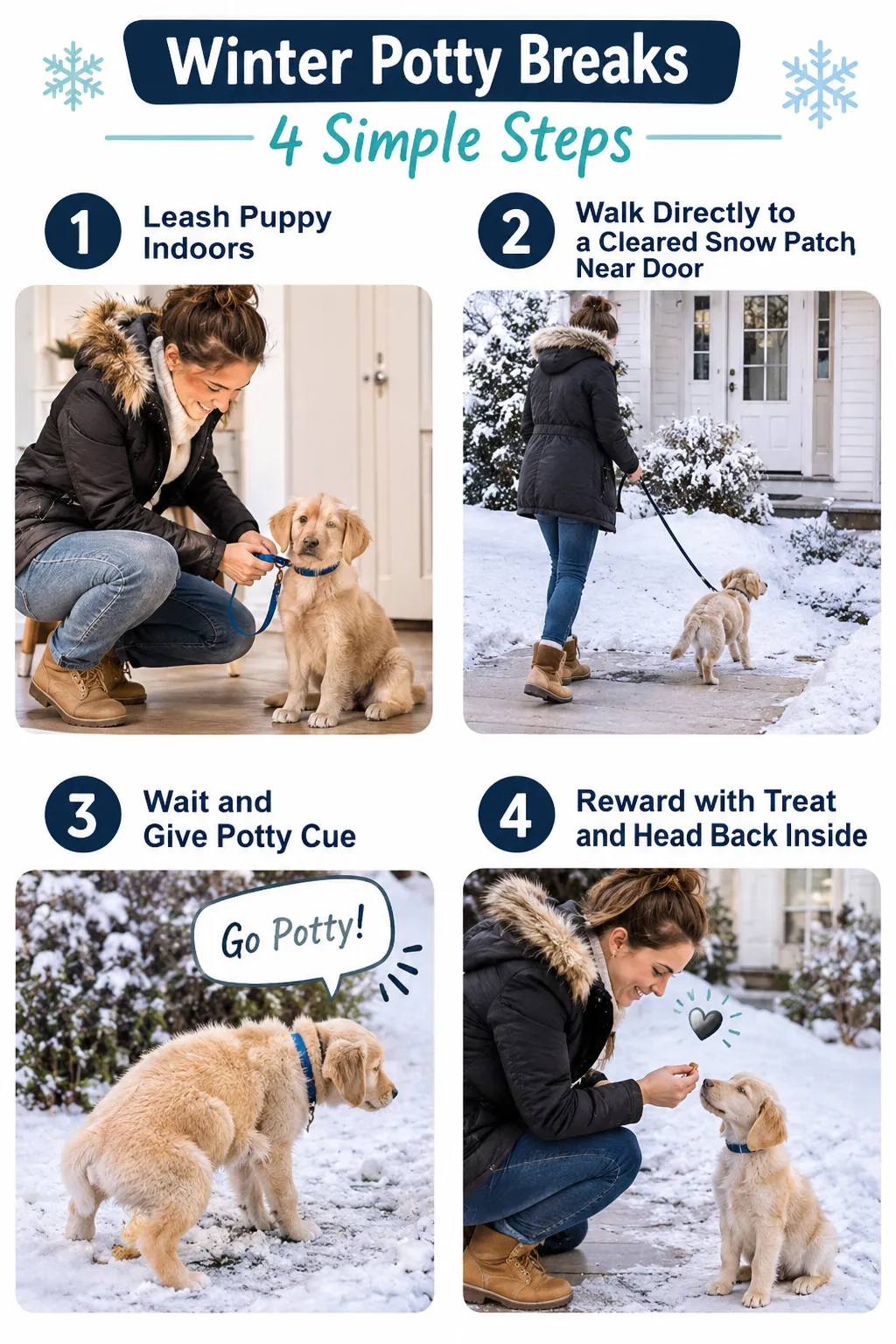
If your puppy refuses to go outside in the snow, shovel a small clear patch near the door, carry or walk the puppy directly to that spot, and use a consistent cue word while waiting calmly for elimination. Avoid forcing the puppy into deep, unfamiliar snow.
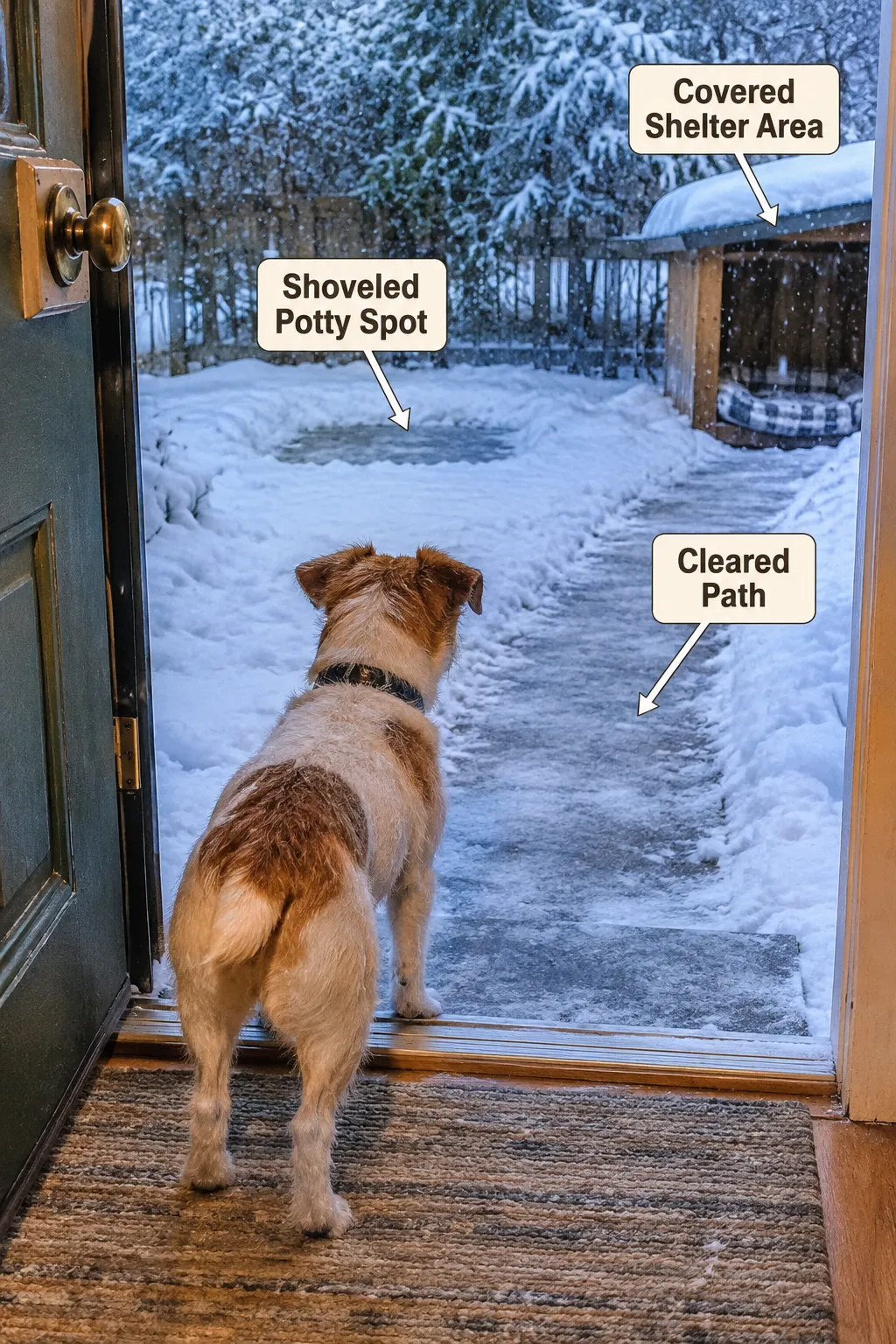
This is one of the most searched frustrations, right alongside “potty training puppy in winter reddit” threads full of owners sharing the same struggle. A few fixes that consistently work:
- Clear a path and a small square of bare ground, not the whole yard
- Use treats tossed onto the cleared spot to build a positive first association
- Try a covered porch or carport as a sheltered potty zone
- Keep a consistent schedule so the puppy isn’t surprised by sudden cold trips
Vetstreet’s winter potty training tactics suggest that puppies often just need one small familiar patch, not an entire cleared yard, to feel comfortable going.
Best indoor potty training options for puppies during winter
Puppy pads, indoor grass patches, and litter boxes designed for dogs are reasonable short-term options during blizzards, ice storms, or extreme cold snaps. They should be treated as a backup, not a permanent replacement for outdoor training.
Veterinary newsletters note that owners can slow the pace of outdoor housetraining during severe weather and lean more on indoor pads until conditions improve, while still keeping the outdoor spot ready for when it’s safer to transition back. For step-by-step setup ideas, our apartment potty training method covers indoor systems that work well in small spaces too.
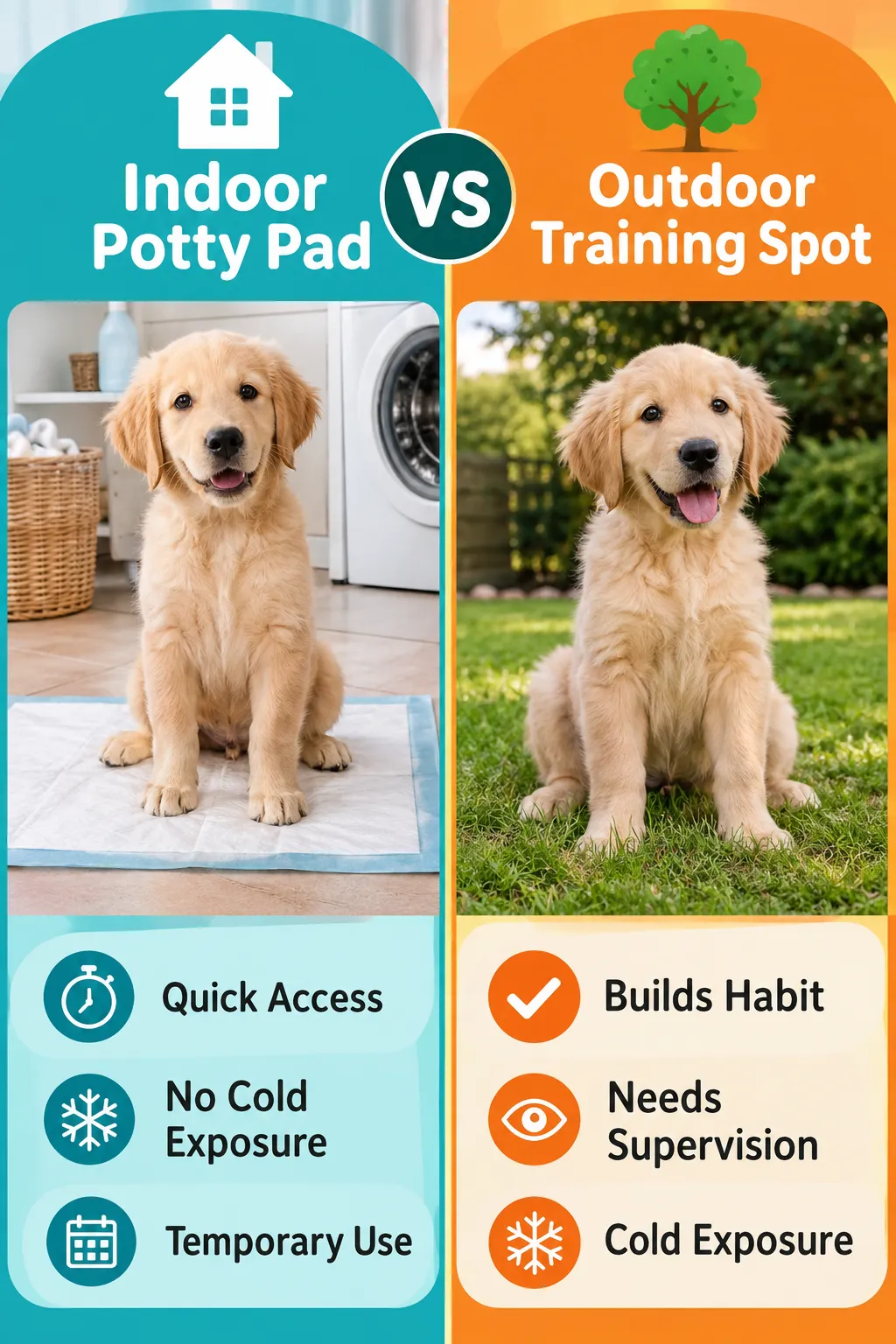
Puppy pads vs outdoor training which works better in winter
Outdoor training builds the long-term habit you actually want, but puppy pads prevent accidents and discomfort during genuinely unsafe weather. The best approach uses pads temporarily while still taking the puppy outside whenever conditions are safe enough.
| Factor | Puppy Pads | Outdoor Training |
|---|---|---|
| Safety in extreme cold | Safer, no exposure | Risky below certain temps |
| Builds permanent habit | No, needs phase-out | Yes, long-term goal |
| Best for | Blizzards, tiny breeds | Daily routine, most weather |
| Downside | Can become a crutch | Requires owner to brave cold |
If you go the pad route, read about transitioning fully to training a dog to potty outside once the worst weather passes.
How often should a puppy go outside to pee in cold weather
Young puppies generally need to go outside every 1 to 2 hours during the day, plus right after eating, sleeping, or playing, and cold weather doesn’t reduce that need, it just makes each trip more of a challenge. Skipping trips because it’s cold usually leads to more accidents, not fewer.
Try shifting key trips to the warmest, brightest parts of the day, such as midday, rather than pre-dawn or late-night outings when wind chill is worst. MetLife Pet Insurance’s winter training tips back this scheduling adjustment as a practical way to improve success rates.
Do I need to buy special boots or gear for winter potty training
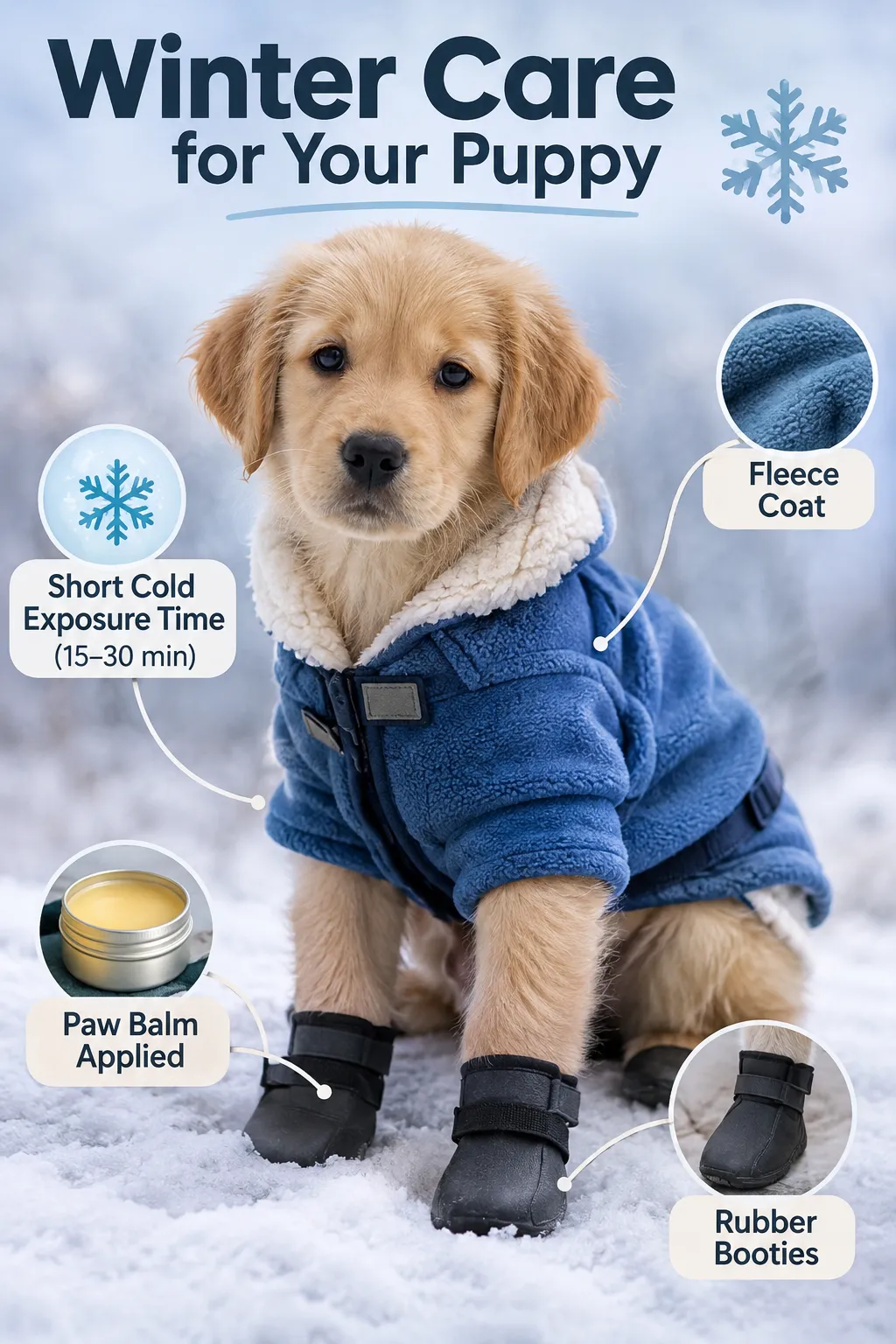
Boots and coats aren’t mandatory for every puppy, but they genuinely help small breeds, short-haired dogs, and very young puppies that lack enough body fat or coat insulation to handle freezing temperatures for even short trips. Snow boots also protect paws from ice and salt.
If your puppy constantly lifts paws, shivers, or refuses to walk on snow, gear is worth trying. Our dog winter clothes guide breaks down coats, sweaters, and boots by breed so you can pick gear sized correctly.
My puppy’s paws are sore from cold salt and snow
Sidewalk salt, ice balls between toe pads, and prolonged cold exposure can all cause sore, cracked paws in puppies, and the fix is rinsing paws after every outdoor trip plus applying a dog-safe paw balm. Booties prevent most of this damage outright.
Check paws after every walk for redness, cracking, or small ice clumps. If you notice limping or excessive licking, that’s a sign of irritation, not stubbornness. Related paw care advice in our chihuahua paw care guide applies to small breeds of any kind dealing with winter sidewalks.
Common mistakes people make potty training puppies in winter
The biggest mistake is rushing outdoor trips so much that the puppy never actually has time to go, which just leads to an indoor accident minutes later. Other mistakes include skipping trips entirely during cold snaps and letting the yard become one giant unshoveled potty zone instead of one consistent spot.
Other frequent errors:
- Turning outdoor potty time into playtime, which distracts the puppy from the task
- Forgetting to clean indoor accidents with enzymatic cleaner, leaving scent cues behind
- Giving up on a cue word because “it’s too cold to train properly”
- Not adjusting feeding schedule, so the puppy needs to go at the worst possible hour
What age is too young to potty train a puppy outside in winter
There’s no fixed age that’s “too young,” but very young puppies under 12 weeks, or small-breed puppies under 5 pounds, lose body heat fast and should only go outside for brief, supervised trips in freezing weather. Keep outdoor time short and use indoor backups between trips.
If you’re raising a cold-sensitive breed, our guide on German Shepherd puppy potty training and our general stubborn puppy potty training tips both cover age-appropriate pacing that applies well beyond one breed.
How do you keep a puppy comfortable and safe going potty in the cold
Keep trips short, shelter the potty spot from wind, dress thin-coated or small puppies in gear, and reward quickly so the puppy learns the fastest route to a treat is going potty, not stalling. Comfort drives cooperation in cold weather far more than commands do.
A simple comfort checklist:
- Keep outdoor time under 5 minutes for very cold days
- Choose a wind-sheltered spot, like near a fence or under an overhang
- Dress appropriately for breed size and coat type
- Reward immediately after elimination, every single time
Is potty training different in winter versus summer
Yes, winter potty training usually requires shorter, more frequent trips, extra gear, and more patience, while summer allows longer outdoor sessions and faster habit building because puppies aren’t fighting cold or unfamiliar textures. The core method, consistency and rewards, stays the same in both seasons.
The main seasonal differences come down to exposure time and motivation. A puppy that happily lingers outside in July might flatly refuse to step onto frozen grass in January, which is exactly why flexible scheduling and sheltered spots matter so much this time of year.
Can you use potty training pads alongside outdoor training in winter
Yes, many owners successfully use pads indoors during severe weather while still taking the puppy outside whenever conditions allow, as long as the pad doesn’t become the only option offered. Mixing both approaches is common and workable during transitional winter months.
Just be consistent about which option you offer at which times, otherwise the puppy gets confused about where “potty” is actually supposed to happen.
FAQ
When should I take my puppy outside to potty?
Take your puppy outside first thing in the morning, after every meal, after naps, after play sessions, and roughly every 1 to 2 hours during the day. In winter, aim trips toward the warmest daylight hours when possible to improve cooperation.
Why is it so hard to potty train small dogs?
Small dogs have tiny bladders, lose body heat fast in cold weather, and often dislike snow or ice underfoot, all of which reduce successful outdoor trips. Their small size also makes accidents harder to notice indoors, which slows overall progress.
What temperature is too cold for puppies?
Most puppies struggle once temperatures drop below 20°F, especially small or short-haired breeds, and outdoor time should be limited to quick bathroom breaks only. Watch for shivering, lifting paws repeatedly, or refusing to walk as clear signs it’s too cold.
Which dog breed is the most difficult to potty train?
Small breeds like Dachshunds, Chihuahuas, and other toy breeds are commonly cited as among the hardest to potty train due to tiny bladders and stubborn temperaments. Certain independent-minded breeds also take longer regardless of size.
Conclusion
Potty training puppy in winter is slower than warm-weather training, but it’s not a lost cause. A shoveled potty spot, short no-play trips, the right gear for small or young puppies, and a sensible backup plan for brutal weather will get most puppies through the season without major setbacks.
Stay consistent with your cue word, reward fast, and don’t let one bad snowstorm week derail months of progress. By spring, most puppies trained through winter are more resilient and reliable than ones who skipped the hard months entirely.