

Last updated: November 19, 2026
Quick Answer
Yes, long hair Border Collies shed year-round, with two heavier seasonal “coat blow” periods in spring and fall. They aren’t extreme shedders compared to some double-coated breeds, but their longer fur makes loose hair more noticeable around the house. Regular brushing, the right tools, and a predictable seasonal routine keep indoor hair manageable.
A rough-coated Border Collie lying on a hardwood floor can leave more visible tufts than her smooth-coated littermate, even though both dogs are dropping roughly the same amount of fur. That’s the real story behind do long hair Border Collies shed: it’s less about how much and more about how visible it is.
Key Takeaways
- Long hair (rough coat) Border Collies are moderate, not extreme, year-round shedders.
- They shed in a similar pattern to short hair Border Collies, but loose fur shows up more because the hair is longer.
- Expect two bigger “coat blow” seasons: spring (roughly March to June) and fall (roughly September to November).
- Winter shedding is usually lighter since the dog is holding onto its dense undercoat for warmth.
- Brush 1-2 times a week normally, and daily during heavy seasonal sheds.
- Use a slicker or pin brush plus an undercoat rake, not a bladed de-shedding tool.
- Never shave a Border Collie’s double coat to “fix” shedding, it can damage the coat’s natural insulation.
- Diet, hormones, and indoor heating/lighting can all shift shedding patterns slightly.
How much do long hair Border Collies shed compared to short hair
Long hair and short hair Border Collies shed about the same amount of fur overall, but the long coat makes it far more visible. Both coat types share the same double-coat structure, so the shedding mechanism underneath is nearly identical.
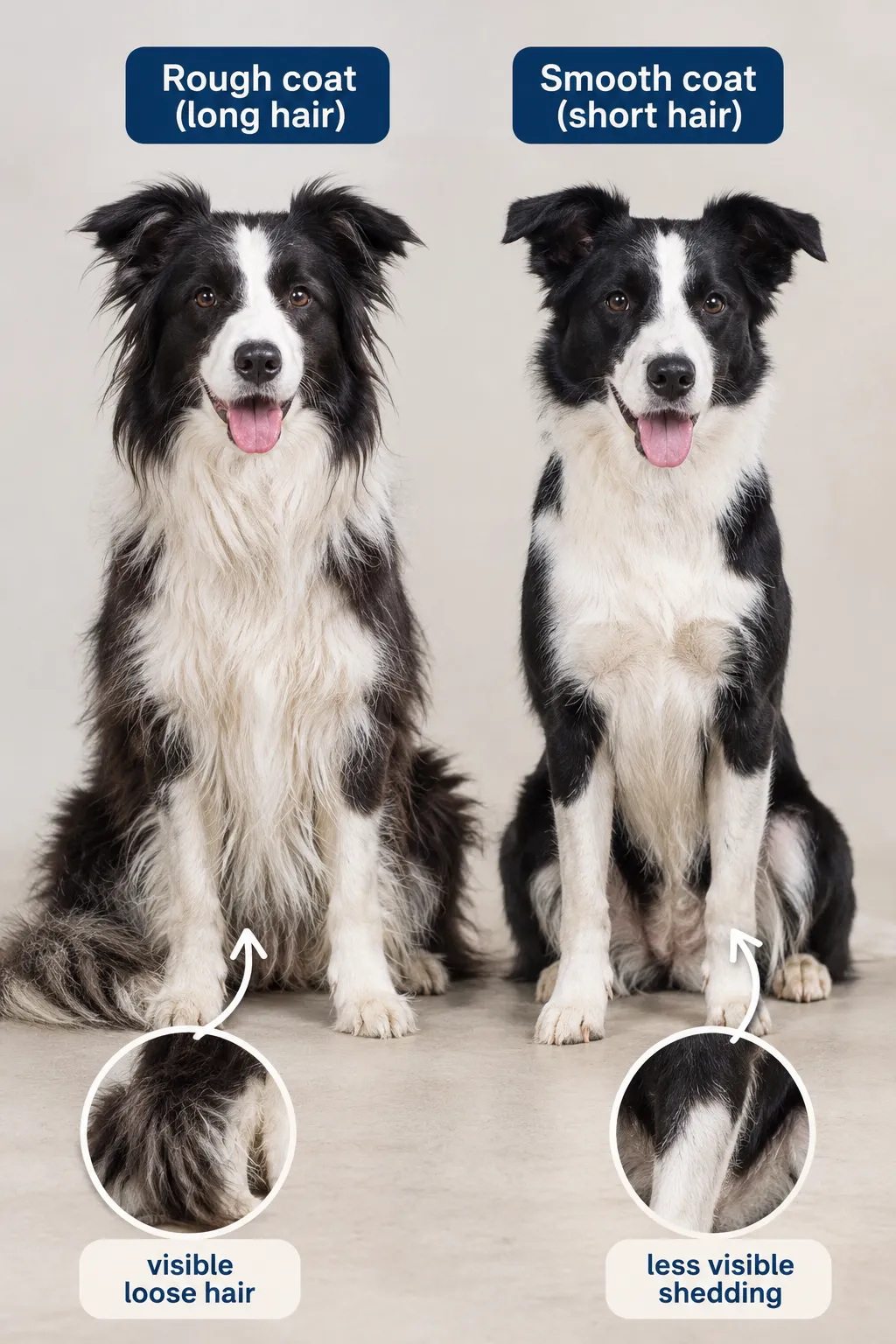
Rough coats have a medium-length topcoat and a dense undercoat, which is classified as moderate shedding year-round rather than extreme. Smooth coats shed the same type of hair, just in shorter strands that are easier to miss on carpet or clothing.
Here’s a quick side-by-side:
| Feature | Long hair (rough) | Short hair (smooth) |
|---|---|---|
| Coat structure | Double coat, medium topcoat + undercoat | Double coat, shorter topcoat |
| Shedding volume | Similar | Similar |
| Visibility of shed hair | High (longer strands, more noticeable) | Lower |
| Grooming time needed | More | Less |
| Matting risk | Higher, especially behind ears, armpits, legs | Lower |
Choose a long hair Border Collie if you don’t mind more frequent brushing. Choose short hair if you want less visible shedding and lower grooming time, both still shed similarly underneath.
When do Border Collies blow their coat
Border Collies typically “blow coat” twice a year: a heavier shed in spring and a lighter one in fall. This is separate from the light, constant shedding that happens all year.
The spring coat blow usually runs about 4 to 6 weeks between March and June, as the dog drops its thick winter undercoat. The fall shed is shorter, around 3 to 4 weeks between September and November, and generally lighter as the dog grows in a denser coat for winter.
A common mistake is assuming heavy shedding in March means something is wrong. In most cases, it’s just a normal spring blow.
Why do Border Collies shed more in winter (and do they actually)
Border Collies don’t usually shed more in winter, they actually tend to shed less because they’re holding onto a thick undercoat for warmth. The confusion comes from the coat-building process that happens in fall, right before winter.
As days get shorter in autumn, rising melatonin levels trigger the growth of a denser undercoat that insulates against cold. Once that winter coat is in place, shedding typically becomes lighter through December to March, though some loose hair is still completely normal.
If your dog seems to be shedding heavily in the dead of winter, check for other causes like dry indoor heat, skin irritation, or diet changes rather than assuming it’s a normal seasonal pattern.
Do Border Collies shed year round or just seasonal
Border Collies shed both year-round and seasonally. There’s a constant light shed happening every day, layered with two bigger seasonal coat blows.
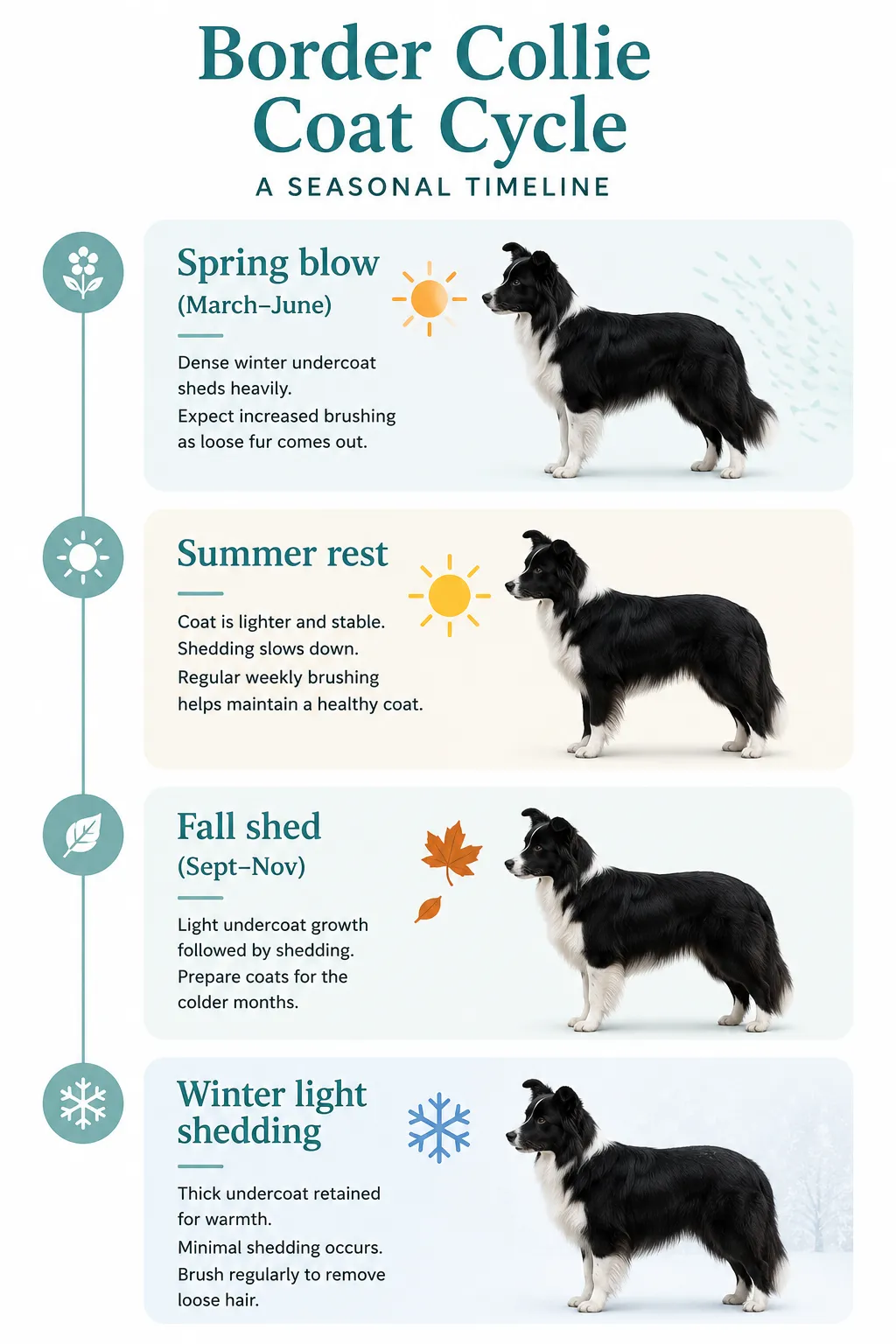
Indoor living can blur this pattern further. Dogs kept mostly inside under artificial light and stable temperatures often shed in more of a continuous low-level trickle rather than two dramatic dumps, especially long-haired dogs. This is one reason some indoor Border Collies seem to shed “constantly” rather than in obvious waves.
If your dog lives mostly indoors with central heating, expect a steadier year-round shed with only mild spikes around the usual seasonal transition months.
What’s the difference between coat blowing and normal shedding
Normal shedding is a light, steady loss of individual hairs happening every day. Coat blowing is a concentrated period where the dog drops a large portion of its undercoat over several weeks.
During normal shedding, you’ll notice a few hairs on clothes or furniture. During a coat blow, you’ll see clumps of undercoat coming out when you brush, visibly thinner topcoat in spots, and noticeably more hair around the house even without touching the dog.
Edge case: if you see actual bald patches or skin showing through rather than just thinning fur, that’s not a normal coat blow. Patchy hair loss or skin irritation is worth a vet visit.
Best brush for de-shedding a long hair Border Collie
The best combination for a long hair Border Collie is a slicker or pin brush for the outer coat plus an undercoat rake for the dense undercoat underneath. These two tools work together rather than replacing each other.
- Slicker or pin brush: works through the topcoat, removes surface tangles, and smooths feathering on the legs and tail.
- Undercoat rake: reaches down to the dense undercoat and pulls out dead fur during a coat blow.
- Avoid bladed “de-shedding” tools: grooming guides warn that blades can cut into and damage the protective topcoat instead of just removing loose undercoat.
Choose a rake if you’re mid-shed and need to pull volume out fast. Choose a slicker brush for regular maintenance and finishing touches.
How often should you groom a shedding Border Collie
Groom a long hair Border Collie at least once or twice a week during normal periods, and daily during heavy seasonal sheds. Winter usually calls for a middle-ground routine.
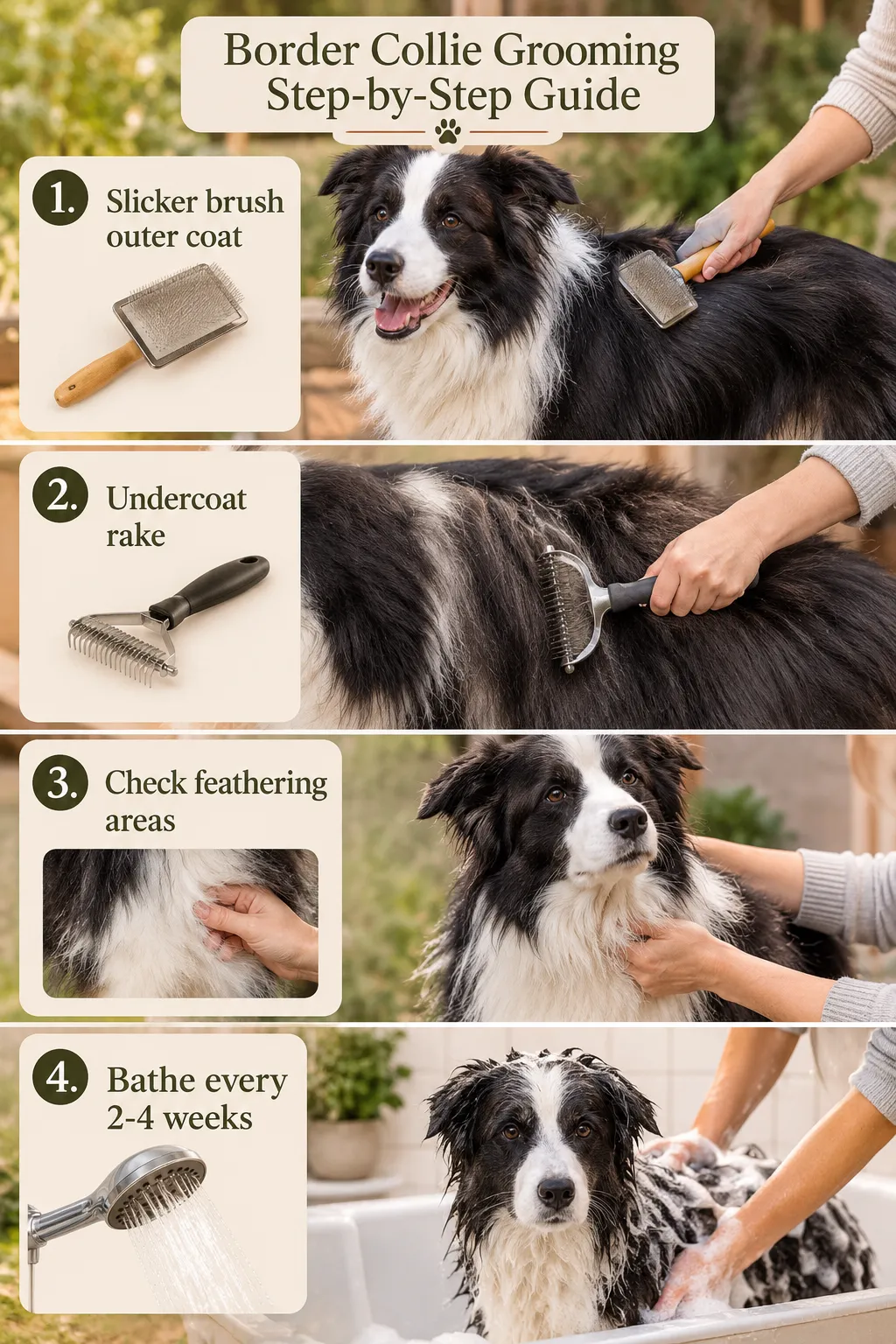
A practical schedule looks like this:
- Spring coat blow (roughly April-June): daily undercoat raking, plus a bath every 2 to 4 weeks.
- Summer: lighter maintenance, about twice a week.
- Fall coat blow (roughly October-November): daily raking again, slightly lighter than spring.
- Winter: 2 to 3 brushing sessions per week, with extra mat checks after wet or snowy walks.
Common mistake: skipping grooming in winter because shedding looks lighter. The undercoat can still mat underneath, especially after a wet walk, which is why light but consistent brushing still matters. If you’re prepping for cold walks, our winter dog walking essentials guide covers gear that helps keep coats drier.
Can you reduce Border Collie shedding with regular grooming
Yes, consistent grooming significantly reduces the amount of loose hair that ends up on your floors and furniture, even though it won’t stop shedding altogether. Brushing removes dead hair before it falls out on its own.
Short, frequent sessions work better than occasional marathon grooming days. A quick body check a few times a week, with more thorough brushing during seasonal blows, keeps hair from building up and matting. For general shedding control beyond Border Collies, our guide on how to stop a dog from shedding so much has more cross-breed tips, and if you want a deeper dive, see how to reduce dog shedding.
Mistake to avoid: brushing only the back and ignoring friction zones like behind the ears, armpits, and under a harness. These spots mat fastest and shed the most once tangled.
Are long hair Border Collies harder to maintain than short hair
Long hair Border Collies do require more grooming time than short hair ones, mainly because of matting risk and visible shedding, not because they shed more fur overall. The underlying double coat biology is the same.
Choose long hair if you enjoy the grooming routine and don’t mind more frequent brushing and occasional mat-checking around feathered areas. Choose short hair if you want a lower-maintenance routine with less visible hair around the house.
Either way, neither coat type should be shaved to cut down on maintenance. Shaving a double coat can damage its structure and impair its ability to insulate against heat and cold.
Can diet affect how much a Border Collie sheds
Diet can affect coat health and shedding intensity, though it won’t eliminate normal seasonal shedding. A nutrient-poor diet often shows up as a duller coat and more breakage, which can look like extra shedding.
Feeding a complete diet with adequate protein and healthy fats supports a stronger topcoat and less breakage. If you’re looking for coat-supporting meal ideas, check out homemade dog food recipes for a shiny coat.
Edge case: a sudden increase in shedding paired with dull fur or flaky skin is worth mentioning to your vet, since it could point to a diet gap or an underlying health issue rather than normal seasonal shedding.
Is there a Border Collie coat type that sheds less
Neither coat type sheds meaningfully less than the other; the rough and smooth coats shed in a similar underlying pattern. The visible difference comes down to hair length, not shedding volume.
If reduced visible shedding matters most to you, a smooth coat will likely feel more manageable day to day. But if you’re drawn to Border Collies generally and want to learn more about the breed before choosing a coat type, our Border Collie facts guide is a good starting point.
Are Border Collies good for people with allergies
Border Collies are not considered hypoallergenic, and both coat types produce dander and loose hair that can trigger allergies. Long hair coats can trap more dander in the fur temporarily, though regular brushing (ideally outdoors) helps reduce what circulates indoors.
If allergies are a serious concern, it may be worth exploring breeds bred specifically for lower shedding and dander. Our guide to large hypoallergenic dog breeds that don’t shed like you’d expect covers some lower-allergen alternatives.
Best tools to manage Border Collie hair on furniture and clothes
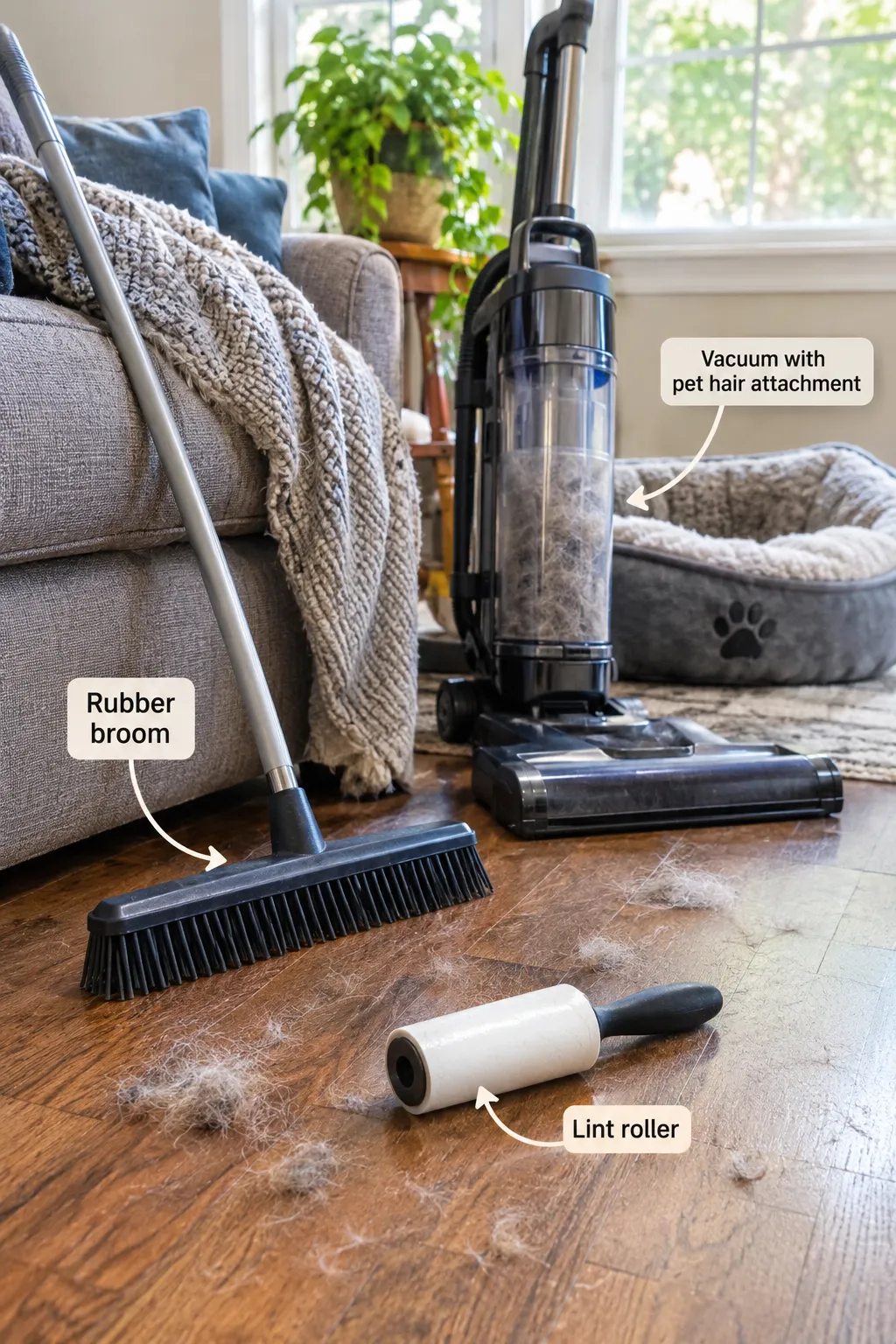
A rubber broom, a strong vacuum with a pet-hair attachment, and a good lint roller handle most of the hair that escapes brushing sessions. These tools work on different surfaces, so using more than one covers your whole home.
- Rubber broom: pulls embedded hair out of carpet fibers better than a standard broom.
- Vacuum with pet-hair attachment: best for couches, car seats, and dog beds.
- Lint roller or pet hair sponge: quick fix for clothes before you leave the house.
Keep a lint roller by the door if you’re regularly hosting guests who might be sensitive to pet hair. If you want to minimize how much hair your dog tracks in from outside, pairing grooming with a routine from our winter pet care tips for indoor enrichment can help keep your dog calmer and cleaner indoors during cold months.
What mistakes do people make when dealing with Border Collie shedding
The most common mistakes are shaving the coat, using bladed de-shedding tools, and only grooming during obvious shed seasons. All three can make shedding and coat health worse, not better.
- Shaving the coat: removes the natural insulation layer and can lead to uneven regrowth.
- Bladed de-shedding tools: can cut the protective topcoat instead of just removing undercoat.
- Grooming only in spring and fall: lets mats build up in friction zones during the “quiet” months, which then worsens shedding once hair gets tangled.
- Ignoring hormonal shedding in females: breed-club sources note females often blow coat after each heat cycle, roughly twice a year, which can be mistaken for an abnormal pattern.
If you’re also managing an active, high-energy Border Collie alongside shedding season, our Australian Shepherd training tips guide covers overlapping care needs for similar working breeds.
FAQ
Do long hair Border Collies shed more than short hair ones?
No, both shed a similar amount. Long hair just makes the shed fur more visible around the house.
How long does a Border Collie’s seasonal coat blow last?
Spring coat blow typically lasts 4 to 6 weeks, while the fall shed usually lasts 3 to 4 weeks and is lighter.
Should I shave my Border Collie to reduce shedding?
No. Shaving can damage the double coat’s structure and reduce its ability to insulate against heat and cold.
What’s the best brush for a long hair Border Collie?
A slicker or pin brush for the outer coat, paired with an undercoat rake for the dense undercoat underneath.
How often should I bathe a Border Collie during a coat blow?
Roughly every 2 to 4 weeks during heavy shedding periods, using a gentle shampoo and drying the coat fully.
Is heavy shedding in winter normal?
Not usually. Winter shedding is typically lighter since the dog is retaining its undercoat for warmth. Heavy winter shedding may point to dry indoor air or another underlying cause.
Are Border Collies hypoallergenic?
No. Both coat types produce dander and shed hair that can trigger allergies in sensitive people.
Can diet reduce shedding?
A balanced diet supports coat health and can reduce excess breakage, but it won’t stop normal seasonal shedding entirely.
Conclusion
Long hair Border Collies shed about the same as their short hair counterparts, the fur is just more noticeable because it’s longer. Expect two seasonal coat blows each year, lighter shedding in winter, and a steady light shed the rest of the time.
Your best move is a consistent grooming routine: a slicker brush and undercoat rake, weekly sessions in normal months, daily brushing during spring and fall coat blows, and never a razor near that double coat. Pair that with the right indoor cleanup tools, and the fur on your floors becomes a minor chore instead of a daily battle.