Last updated: August 7, 2026
Quick Answer: Using hand signals to train your dog speeds up learning because dogs are naturally wired to read body language. You can teach your dog 8 core signals – sit, come, stay, heel, down, drop, spin, and high five – in short daily sessions. Most dogs begin responding consistently within 1 to 3 weeks of practice.
Key Takeaways
- Dogs process visual cues faster than verbal commands, making hand signals a powerful training tool
- You can use hand signals alongside verbal cues or as a standalone method
- Every dog breed can learn hand signals, including older dogs
- Consistency is the single biggest factor in how fast your dog responds
- Deaf dogs rely entirely on hand signals and learn them just as well as hearing dogs
- Short 5-minute training sessions work better than long, exhausting ones
- High-value treats speed up the learning process significantly
- Always pair a new signal with a reward at first, then fade the treat gradually
Why Should You Teach Your Dog Hand Signals?
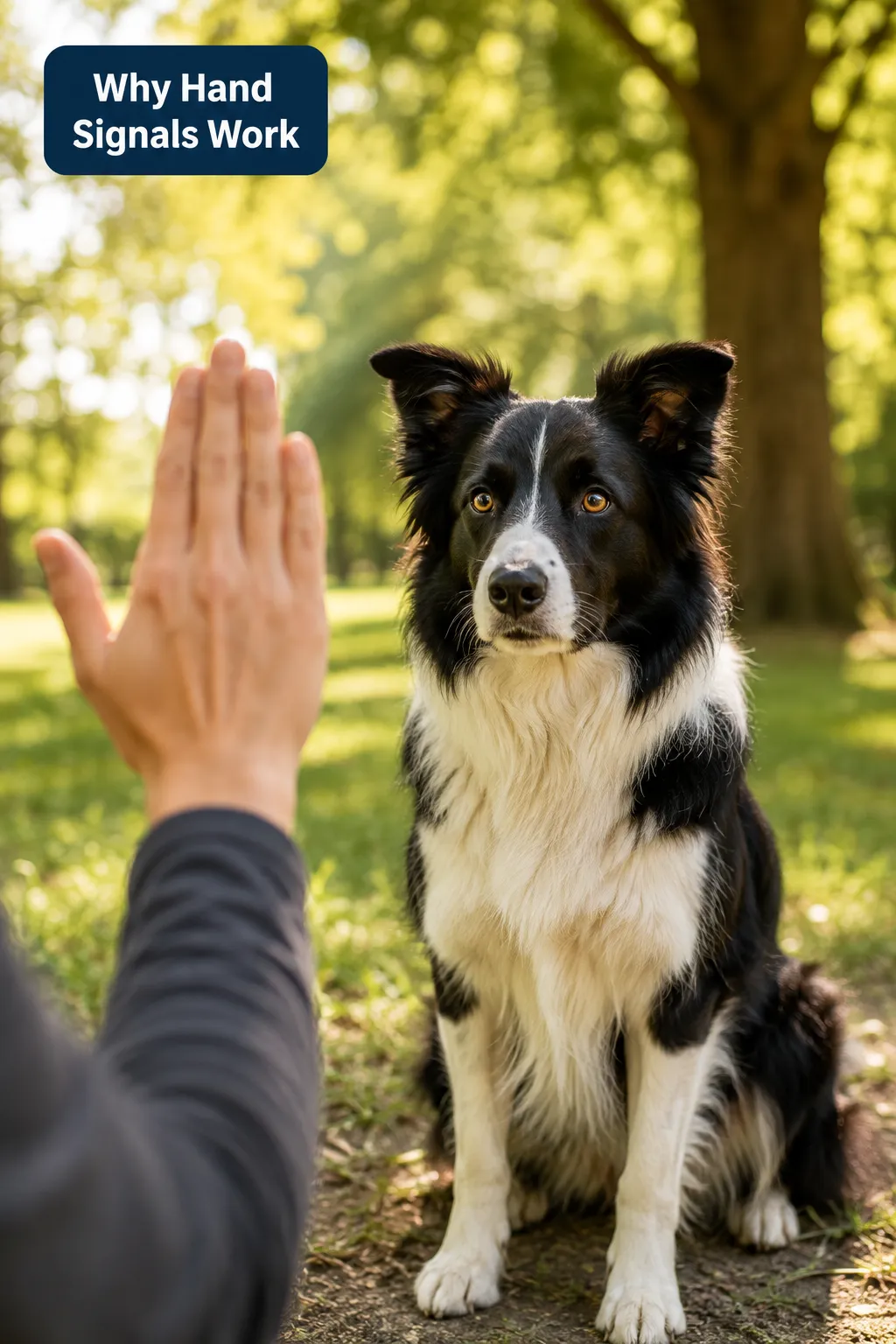
Dogs are visual communicators by nature. Long before they lived with humans, wild dogs and wolves relied on body posture and visual cues to coordinate with their pack. Using hand signals to train your dog taps directly into that instinct.
Research published by Applied Animal Behaviour Science found that dogs respond to human gestures – including pointing and hand movements – more reliably than to voice alone. This means your dog is already paying close attention to what your hands are doing, whether you realize it or not.
Here are the biggest reasons to add signals to your training amp behavior toolkit:
- Noise-free communication – Useful in quiet environments, at a distance, or during leash walking in busy areas
- Faster responses – Visual signals cut through distractions better than verbal cues
- Stronger focus – Your dog learns to watch you closely, which builds better overall behavior
- Essential for deaf dogs – Hand signals are the only reliable communication method for dogs with hearing loss
- Works at a distance – You can direct your dog from across a room or yard without raising your voice
If you’re struggling with training, this free workshop explains simple techniques you can start using today.
Hand Signals vs. Verbal Commands: Which Is Better for Dog Training?
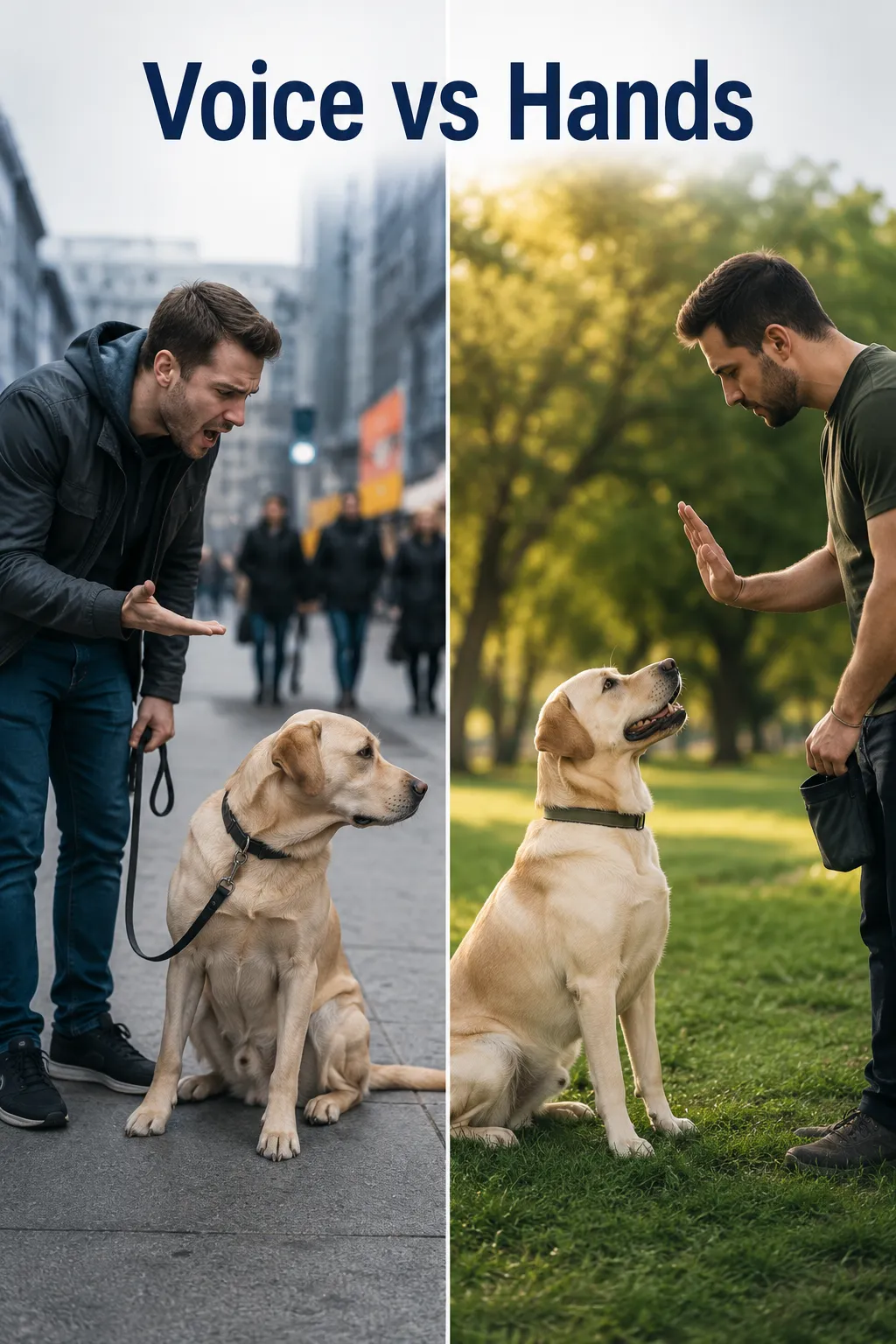
Neither is strictly better – the best approach combines both. Dogs can learn to respond to a verbal cue, a hand signal, or both at the same time. However, many trainers and Pupford-certified coaches recommend introducing the hand signal first, then layering in the verbal cue once the dog understands the behavior.
Why? Because dogs default to watching your body. If your verbal cue and your body language conflict, your dog will almost always follow your body. Teaching the signal first removes that confusion.
When to use signals only:
- Your dog is across the yard or in a noisy space
- You’re working with a deaf or hard-of-hearing dog
- You want to reinforce focus during leash walking
When to use both:
- Early in training, to help your dog connect the word and the gesture
- In new environments where your dog might miss one cue but catch the other
For a deeper look at pairing signals with verbal cues, check out these 10 dog training hand signals you can use to train without saying a word.
How to Teach Hand Commands for Dogs: The Basic Method
Teaching hand signals follows a simple 3-step process that works for any dog, any age, and any cue.
Step 1 – Lure with the hand
Hold a treat in your hand and use the movement of your hand to guide your dog into the position you want. For example, to teach sit, hold the treat above your dog’s nose and move your hand back. Your dog’s rear will naturally lower.
Step 2 – Mark and reward
The moment your dog performs the behavior, mark it with a “yes!” or a clicker, then give the treat. This tells your dog exactly which behavior earned the reward.
Step 3 – Fade the treat, keep the signal
Once your dog is reliably following the hand movement, stop holding the treat in that hand. Use the same signal, but deliver the treat from your other hand or a treat pouch. This is how the hand signal becomes the cue rather than just a lure.
Pro tip: Keep training sessions to 5 minutes or less. Short, frequent sessions get faster results than long ones that tire your pup out.
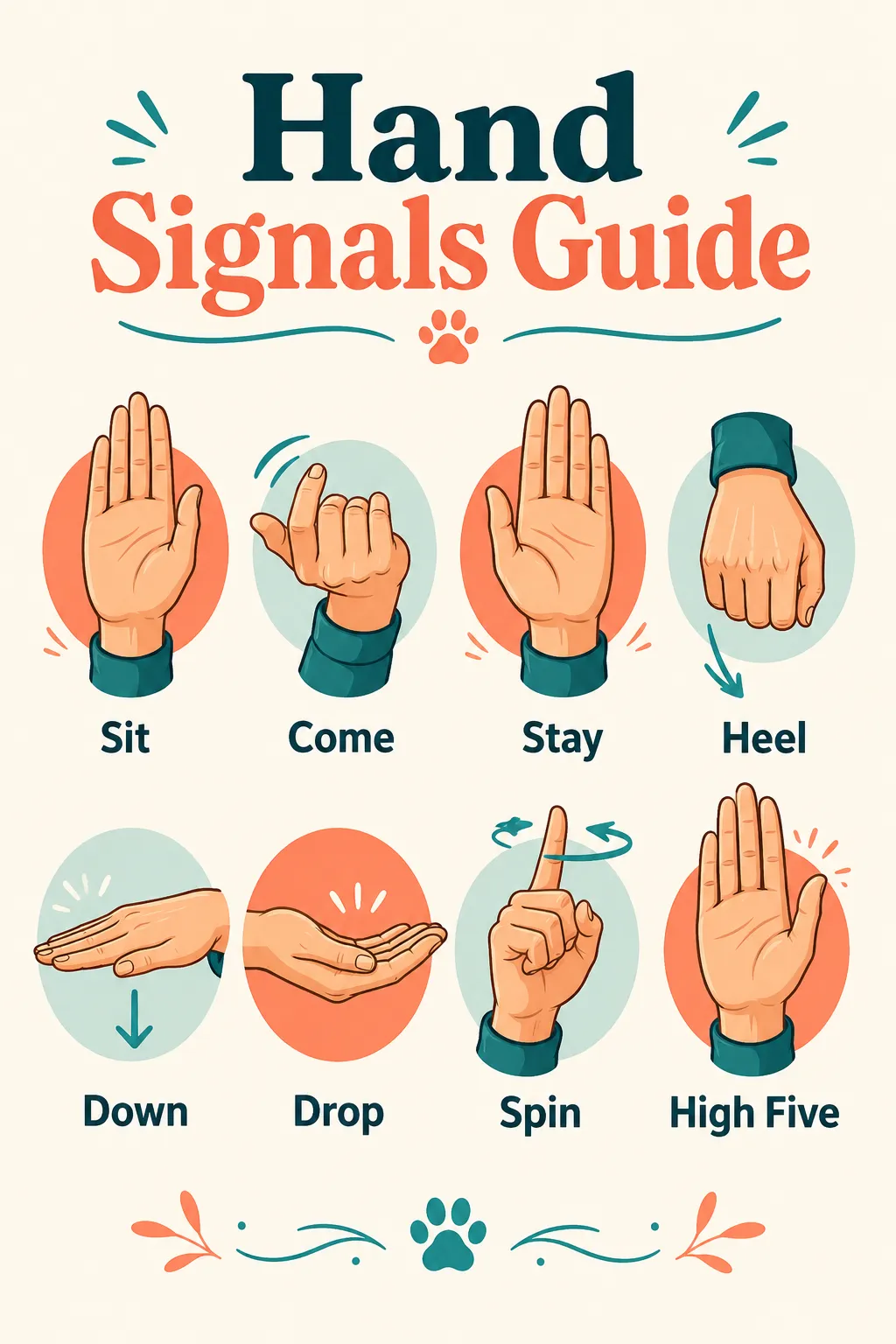
The 8 Best Hand Signals for Dog Training
These are the signals every dog should know. Each one is practical, easy to teach, and recognized by trainers and organizations like the American Kennel Club as foundational behaviors.
1. Sit
Signal: Hold your arm out with palm facing up, then raise your hand upward toward your shoulder.
This is usually the first signal dogs learn. Hold a treat in your raised hand to lure the behavior at first. Once your dog sits reliably, you can use the same upward motion without the treat. You can also train a dog to sit using this exact luring technique.
2. Come
Signal: Extend one arm out to your side, then sweep it across your body to tap your opposite shoulder.
This is one of the most important cues for safety. Practice it on a long leash first so you can guide your dog back to you if they don’t respond. Reward generously every single time – coming to you should always feel like the best decision your dog makes. For more help, see how to train a puppy to come when called.
3. Stay
Signal: Hold your arm out straight toward your dog, palm flat and facing them – like a “stop” gesture.
Start with just 1 to 2 seconds of stay before rewarding. Gradually increase the duration. The key is to release your dog before they break the stay on their own, so they learn that the signal – not their impatience – ends the behavior.
4. Heel
Signal: Pat your left thigh with your left hand, then hold your hand at your hip as you walk.
Heel means your dog walks calmly beside you rather than pulling ahead. This signal is especially useful during leash walking in busy areas. If your dog pulls, stop walking and wait. The moment they return to your side, pat your thigh and reward.
5. Down (Lay Down)
Signal: Hold your arm out in front of you at shoulder height, then lower it slowly toward the ground, palm facing down.
Lure your dog’s nose toward the ground with a treat in your lowered hand. Once their elbows touch the floor, mark and reward. You can find a full breakdown of how to teach your dog to lay down step by step.
6. Drop or Leave It
Signal: Point your index finger toward the ground with a short, firm downward flick.
This signal is about safety as much as behavior. Use it when your dog picks up something they shouldn’t. Pair it with a high-value treat swap – your dog drops the item, and something even better appears in your hand.
7. Spin
Signal: Hold your index finger up and rotate it in a small circle, moving in the direction you want your dog to turn.
Spin is a fun signal that builds body awareness and keeps training sessions engaging for your pup. Lure the full rotation with a treat at nose level, then fade the treat once your dog follows the circular finger motion reliably.
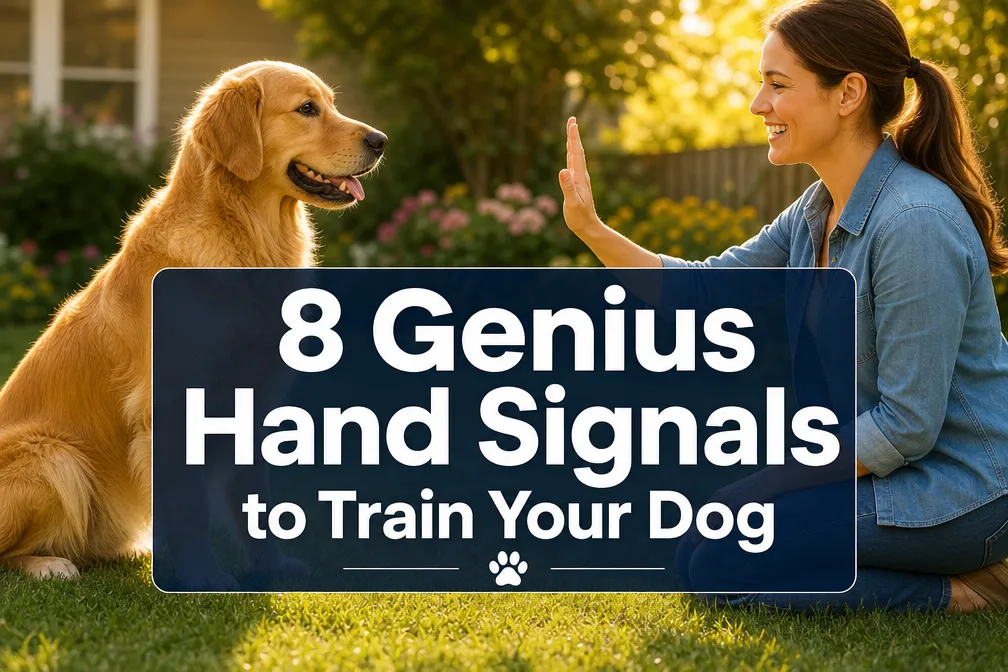
8. High Five
Signal: Hold your open palm up at your dog’s chest height and wait for them to raise their paw to meet it.
High five is a crowd-pleaser and a great way to build confidence in shy dogs. Start by rewarding any paw lift, then gradually shape it into a full paw-to-palm touch. You can also teach your dog to shake hands as a related skill.
Can You Teach an Old Dog Hand Signals?
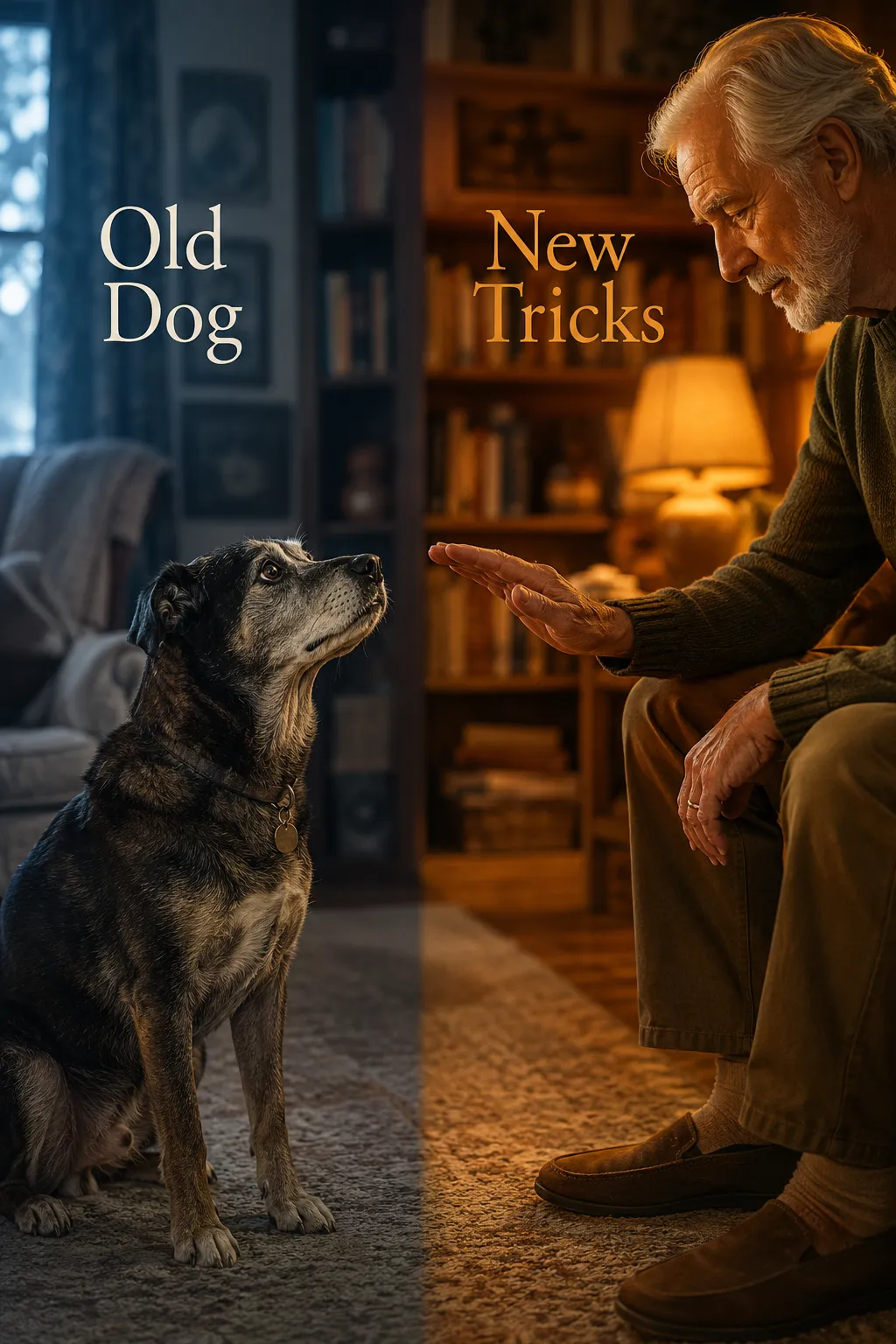
Yes – older dogs learn hand signals just as effectively as puppies, though they may need slightly more repetition. The idea that old dogs can’t learn new tricks is a myth. Dogs retain the ability to form new associations throughout their lives, according to veterinary behaviorists at the ASPCA.
The main difference with older dogs is patience. An adult dog may have years of existing habits, so new signals need more consistent reinforcement before they stick. Use extra-high-value treats like small pieces of chicken or cheese to get and hold your dog’s attention.
Tips for training older dogs:
- Keep sessions even shorter – 3 to 5 minutes maximum
- Work in a low-distraction environment first
- Use treats your dog goes wild for, not just standard kibble
- Don’t punish confusion – just reset and try again
How Long Does It Take to Train a Dog With Hand Signals?
Most dogs begin responding to a new hand signal within 5 to 10 training sessions when food rewards are used consistently. According to Psychology Today’s animal behavior coverage, dogs can learn a new association in as few as 3 to 5 repetitions under ideal conditions – though reliable, generalized behavior takes longer.
A realistic timeline looks like this:
| Stage | Timeframe |
|---|---|
| Dog recognizes the signal | 3 to 7 sessions |
| Dog responds reliably at home | 1 to 2 weeks |
| Dog responds in new environments | 3 to 6 weeks |
| Behavior is solid without treats | 4 to 8 weeks |
The biggest variable is how consistent you are. Daily 5-minute sessions beat weekly 30-minute sessions every time.
Hand Signals for Dogs With Hearing Loss or Deaf Dogs
Hand signals are not just helpful for deaf dogs – they are essential. A dog that cannot hear verbal cues depends entirely on visual communication. Many deaf dogs live full, well-trained lives using hand signals as their primary language.
The training process is identical to hearing dogs. The only difference is that you can’t use a verbal marker like “yes!” – instead, use a thumbs-up gesture or a visual flash (like a small flashlight) as your marker signal.
Organizations like the Deaf Dog Education Action Fund provide free resources for owners training deaf dogs with hand signals. Many deaf dogs actually out-perform hearing dogs in focus because they’ve learned to watch their owner constantly.
If you’re struggling with training, this free workshop explains simple techniques you can start using today.
Why Won’t My Dog Respond to Hand Signals?
If your dog isn’t responding to hand signals, the most common reasons are inconsistency, distraction, or a signal that’s too subtle to read clearly. Dogs need the same signal every single time – if your “sit” signal varies between sessions, your dog genuinely can’t tell what you’re asking.
Troubleshooting checklist:
- Is your signal clear and consistent? Make it larger and more distinct
- Is the environment too distracting? Start training in a quiet room with no other dogs or people around
- Are your treats motivating enough? If your dog isn’t food-motivated in that moment, they won’t work for low-value treats
- Are you asking too much too soon? Break the behavior into smaller steps
- Is your dog stressed? Check for stress signals in dogs that might be blocking focus
One common mistake: people move on to new signals before the first one is solid. Make sure your dog responds correctly at least 8 out of 10 times before adding a new cue.
What If My Dog Only Responds to Treats and Not Hand Signals?
This is actually a normal stage in training – it means your dog understands the behavior but hasn’t yet transferred the response to the signal alone. The fix is to fade the treat from the signal hand gradually.
Here’s how to do it:
- Give the signal with an empty hand
- If your dog responds, immediately reach for a treat from your pocket or a pouch and reward
- Repeat 10 to 15 times per session
- Your dog will learn that the signal predicts the treat, even when the treat isn’t visible in your hand
Avoid waving treats in front of your dog before giving the signal – this teaches them to wait for the treat to appear rather than respond to the signal itself. For more on reward-based methods, see these 15 fun dog training tricks that use the same approach.
Do All Dog Breeds Learn Hand Signals Equally Well?
All dog breeds can learn hand signals, but some breeds pick them up faster due to their history of working closely with humans. Border collies, German shepherds, Labrador retrievers, and golden retrievers tend to be highly attuned to human body language and may learn signals faster.
Breeds that were developed to work more independently – like hounds, terriers, and some northern breeds – may take a bit more patience. This doesn’t mean they can’t learn. It means you may need higher-value treats and shorter sessions to keep them engaged.
Breed-specific tips:
- High-energy breeds (huskies, Jack Russells): burn off energy before training so they can focus
- Scent-driven breeds (beagles, basset hounds): train in low-odor environments
- Independent breeds (Akitas, Chow Chows): build a strong bond first – check out 9 genius ways to bond with your new dog
Common Mistakes People Make When Teaching Hand Signals
Most training problems come down to a handful of repeatable errors. Knowing them in advance saves weeks of frustration.
- Changing the signal – Even small variations confuse your dog. Pick one motion and use it every time
- Repeating the signal multiple times – Give the signal once, wait 3 to 5 seconds, then reset. Repeating teaches your dog to ignore the first signal
- Skipping the mark – Without a clear marker (word or click), your dog doesn’t know which part of their behavior earned the treat
- Training when your dog is tired or full – A tired or full dog has no motivation to work
- Moving too fast – Rushing to new signals before old ones are solid creates a shaky foundation
Also worth noting: your dog’s behavior in a training session is about what’s happening right now, not about obedience or stubbornness. If your dog isn’t responding, something in the environment or the training setup needs to change.
How to Get Your Dog to Focus on Your Hands During Training
Getting your dog to watch your hands is the foundation of all signal-based training. Start with a simple focus exercise: hold a treat near your face, say “watch me,” and reward the moment your dog makes eye contact. Once your dog is reliably looking at your face, they’ll naturally track your hand movements.
You can also use hand targeting – teach your dog to touch their nose to your open palm on cue. This exercise builds hand-focus directly and is a great warm-up before any training session. See 15 powerful hand commands for dogs for a full breakdown of targeting exercises.
Browse by Need: More Training Resources
Looking for specific training help? Here’s where to go next:
- Leash pulling: Leash training a dog that pulls
- Basic commands: Top 10 dog commands to transform your pup’s behavior fast
- Settling down: The calm dog method
- Recipes and treats: 5 crockpot dog food recipes vet-approved and dog recipes for food-motivated training rewards
You can also shop bundles of training treats and chews from brands like Taste of the Wild, which offers dry food, wet food, and grain-free recipes formulated to support health nutrition for active dogs. Browse by need – whether you’re looking for dry food, wet food, grain-free recipes, or chews – to find the right reward treats that amp up your dog’s motivation during sessions. Support recipe recommendations and health nutrition tips are also available through virtual pet park communities and Pupford’s free dog training course resources.
FAQ: People Also Ask
What hand signals to use for dog training?
The most useful hand signals for dog training are sit (palm up, raise hand), down (palm down, lower hand toward floor), stay (flat palm facing dog), come (sweep arm across body), heel (pat thigh), drop or leave it (point finger down), spin (rotate index finger in a circle), and high five (open palm raised). These cover the core behaviors every dog needs and are recognized by organizations like the AKC.
What are the 7 commands to train a dog?
The 7 foundational commands most trainers recommend are: sit, stay, come, down, heel, leave it, and no (or off). These commands cover safety, control, and basic manners. Many trainers add “watch me” as an eighth command to build focus. Each can be taught with a hand signal, a verbal cue, or both together for the strongest response.
What is the 3 3 3 rule for dog training?
The 3-3-3 rule is a guideline for newly adopted dogs: give them 3 days to decompress, 3 weeks to learn your routine, and 3 months to feel fully at home. During the first 3 days, avoid heavy training and let your dog settle. After 3 weeks, begin consistent training sessions. By 3 months, most dogs are ready to learn more advanced behaviors and signals.
How do I say “I love you” in dog language?
Dogs don’t process words the way humans do, but you can communicate affection through slow blinking (a sign of relaxed trust), soft eye contact, calm body language, and gentle physical contact. Mirroring your dog’s relaxed posture and speaking in a soft, low tone also signals safety and affection. Spending focused one-on-one time – like a training session or a walk – is one of the clearest ways to show your dog you care.
Conclusion
Hand signals to train your dog are one of the most effective tools you can add to your training routine in 2026. They work with your dog’s natural instinct to watch your body, they cut through distractions better than verbal commands, and they’re essential for dogs with hearing loss.
Start with the sit signal today. Five minutes, a handful of treats, and a consistent hand motion is all it takes to begin. Once your dog gets it, add one new signal per week. Within a month, you’ll have a dog that responds clearly, watches you closely, and doesn’t need you to repeat yourself.
The key is consistency – same signal, same reward, every single session.
If you’re struggling with training, this free workshop explains simple techniques you can start using today.