Last updated: September 6, 2026
Quick Answer: DIY dog dental treats are homemade chews and biscuits made with breath-freshening herbs like mint and parsley, plus fibrous vegetables that mechanically scrape plaque as your dog chews. They are easy to make at home with no special equipment, cost far less than commercial options, and work best as part of a routine that also includes regular brushing and professional dental cleanings.
Key Takeaways
- Fresh mint and parsley are the top natural breath-fresheners for dogs and are safe in small amounts
- Fibrous veggies like carrots and sweet potatoes help remove plaque through mechanical chewing action
- Most DIY dog dental treats need only a bowl, a baking sheet, and basic pantry ingredients
- Never use xylitol, grapes, raisins, or macadamia nuts in any homemade dog treat
- Dental treats are an adjunct to brushing – not a replacement for professional dental cleanings
- Treat size matters: small breeds need thinner, smaller chews; large breeds can handle bigger, denser sticks
- Puppies can have dental treats, but choose softer textures to protect developing teeth
- Freeze-based treats (like mint froyo bites) are great for hot days and sensitive gums
- Most homemade dental treat recipes cost under $5 per batch
- Store treats in an airtight container in the fridge for up to 1 week, or freeze for up to 3 months
What Are Dental Treats for Dogs and Do They Actually Work?
Dental treats for dogs are chews, biscuits, or frozen bites designed to reduce plaque and tartar buildup while freshening breath. They work through two main mechanisms: the physical scraping action of chewing a firm or fibrous treat, and the breath-neutralizing properties of ingredients like mint and parsley.
The honest answer is that they help, but they are not magic. Research-backed dental guides consistently show that chewing firm treats does reduce surface plaque, especially when treats have a slightly rough or fibrous texture. However, dental treats alone will not reach every surface of a dog’s teeth the way a toothbrush does.
Think of dental treats the way you think of chewing gum for humans – useful between brushings, but not a substitute for the real thing. For dogs with bad breath caused by gum disease or infection, a vet visit is always the right first step.
What makes a dental treat actually work:
- Firm or chewy texture that creates friction against tooth surfaces
- Fibrous ingredients (carrots, sweet potato) that act like a natural scrub
- Breath herbs (mint, parsley) that neutralize odor compounds
- Adequate chewing time – soft treats dissolve too fast to do much cleaning
Best Ingredients for Homemade Dog Dental Treats
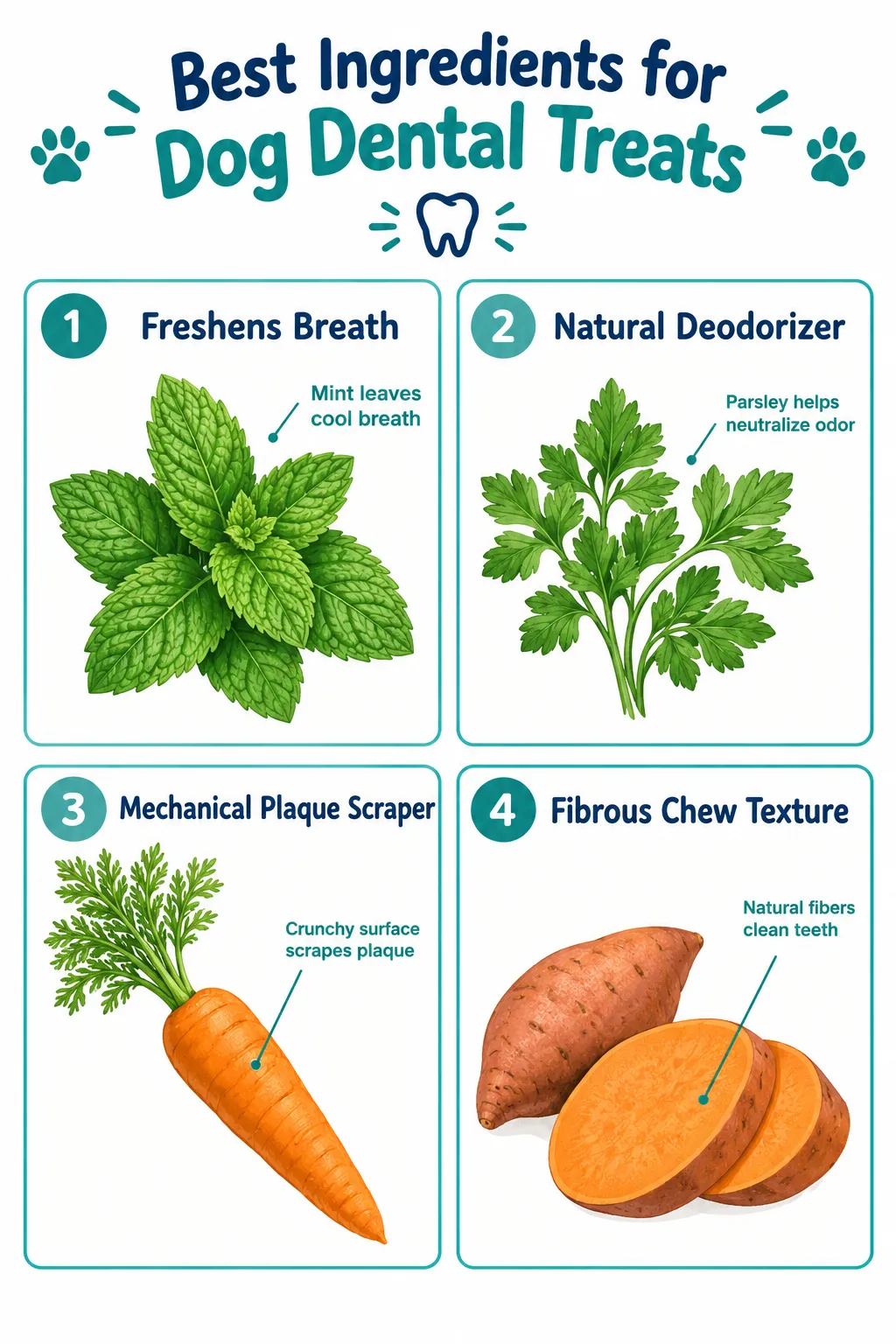
The best ingredients for homemade dog dental treats combine breath-freshening herbs with fibrous, mildly abrasive foods and a safe binder to hold everything together. According to animal wellness sources, the most effective combinations use fresh mint, parsley, and crunchy vegetables as the core.
Here is a breakdown of the top ingredients and what each one does:
Breath Fresheners:
- Mint – contains chlorophyll and natural compounds that neutralize odor; safe for dogs in small amounts
- Parsley – a classic natural deodorizer used in dog-friendly recipes for decades; rich in chlorophyll
- Coconut oil – antimicrobial properties may help reduce oral bacteria
Mechanical Cleaners:
- Carrots – naturally crunchy and fibrous; great for scraping surface plaque
- Sweet potato – when dehydrated, creates a chewy texture that works against tartar
- Celery – high water content and fibrous strings act like a gentle tooth scrub
Binders and Bases:
- Whole wheat flour, oat flour, chickpea flour, or brown rice flour
- Eggs (for structure)
- Plain unsweetened yogurt or pumpkin puree (for moisture and palatability)
Functional Add-ins (optional):
- Turmeric (anti-inflammatory)
- Brewer’s yeast (B vitamins, mild flavor dogs love)
- Gelatin (for chewy texture in frozen treats)
For more ideas on simple, dog-safe ingredient combinations, check out these easy 3-ingredient dog treat recipes that use pantry staples you likely already have.
9 DIY Dog Dental Treats: Easy Recipes to Make at Home
These recipes cover every style – baked, frozen, dehydrated, and no-bake – so you can find the right treat for your pup’s preferences and your schedule. Each one uses ingredients known to support dental health in dogs.
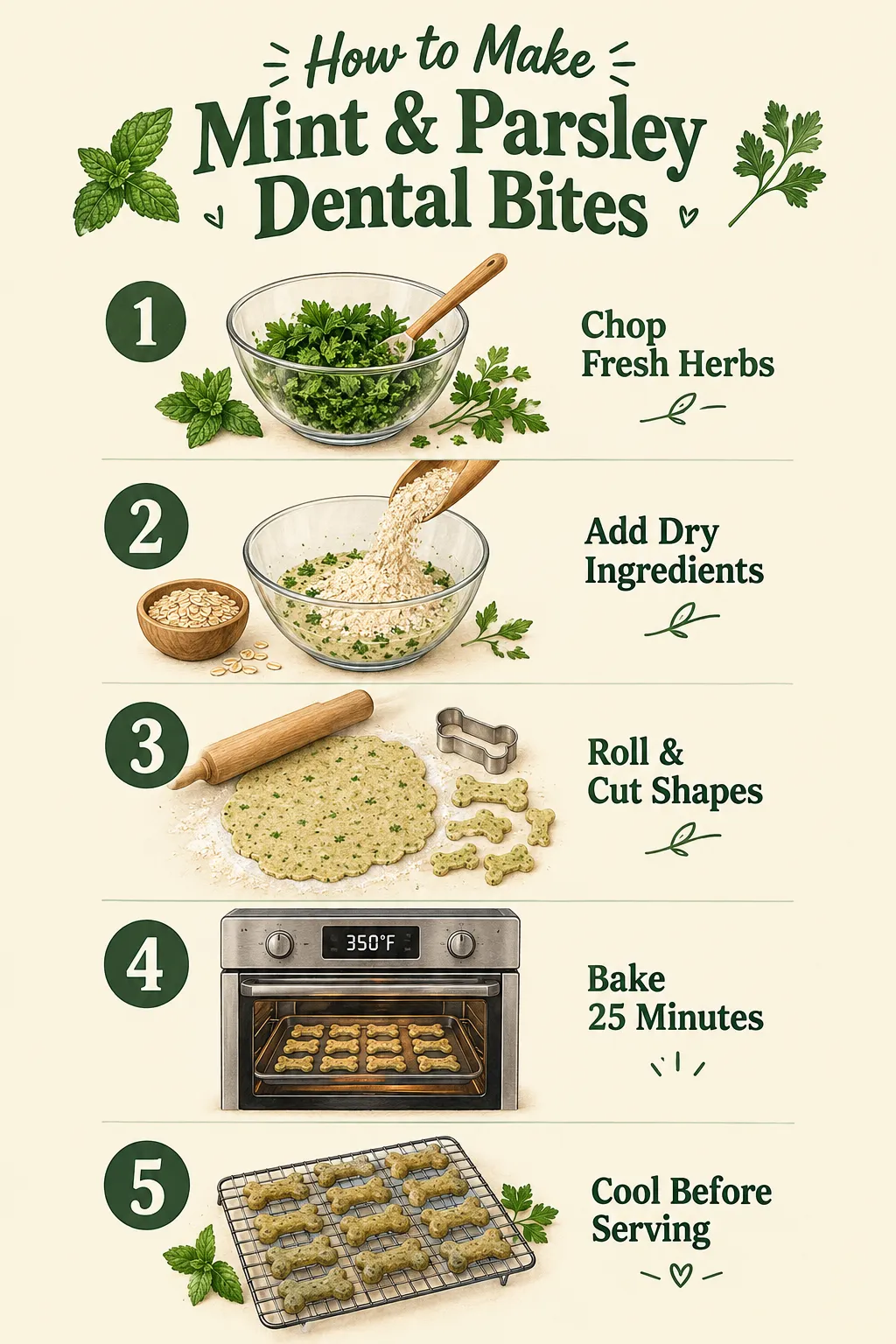
Recipe 1: DIY Doggie Breath Mints (Baked)
A classic baked dental treat that every dog parent should have in their rotation. Mix 2 cups oat flour, 1/4 cup fresh chopped parsley, 2 tablespoons fresh chopped mint, 1 egg, and 1/3 cup water into a dough. Roll out to about 1/4 inch thick, cut into small bone shapes, and bake at 350°F for 25 minutes until firm. Let cool completely before serving.
These are great for daily use and keep well in an airtight container for up to a week.
Recipe 2: Pumpkin and Apple Doggie Mint Treats (Baked)
Pumpkin adds digestive support while apple provides natural sweetness (remove all seeds and core first – apple seeds contain trace cyanide). Mix 1.5 cups whole wheat flour, 1/2 cup pumpkin puree, 1/4 cup unsweetened applesauce, 2 tablespoons chopped mint, and 1 egg. Roll, cut, and bake at 350°F for 20-25 minutes. Once cooled, store in the fridge.
Recipe 3: No Bake Homemade Dog Treats
No bake options are perfect when you want to make treats fast. Combine 1 cup oat flour, 3 tablespoons coconut oil (melted), 2 tablespoons fresh parsley, and 2 tablespoons plain Greek yogurt. Mix into a dough, roll into small balls, and refrigerate for 1 hour until firm. These are softer than baked treats, so they work well for older dogs or any pup with sensitive teeth.
For more no-bake ideas, see these 12 easy no-bake dog treat recipes using simple, dog-safe ingredients.
Recipe 4: Homemade Fresh Breath Pup Treats (Baked)
This recipe from Dogtopia’s dental treat guide uses a combination of mint, parsley, and coconut oil for a triple-action approach to bad breath. Mix 2 cups brown rice flour, 1/4 cup each of chopped mint and parsley, 2 tablespoons coconut oil, 1 egg, and 1/4 cup water. Knead, roll thin, cut into shapes, and bake at 325°F for 30 minutes. The lower temperature makes them slightly denser, which is better for mechanical plaque removal.
Recipe 5: Frozen Homemade Dog Treats – Mint Froyo for Fresh Breath
Frozen treats are a bucket list item for any dog parent during summer. Blend 1 cup plain Greek yogurt, 1 tablespoon fresh mint, 1 tablespoon chopped parsley, and 1/4 cup mashed banana. Pour into ice cube trays or silicone molds and freeze for at least 4 hours. Once frozen, add them to your pup’s treat list for hot days.
These are especially good for dogs with inflamed gums since the cold helps soothe discomfort.
Recipe 6: Dehydrated Sweet Potato Chews
Sweet potato chews are one of the most popular DIY dental treats and for good reason. Simply peel a large sweet potato, slice it into 1/4-inch strips, and bake at 250°F for 2-3 hours until chewy but not brittle. Dogtopia recommends this exact method for achieving the right chewy consistency that helps scrape tartar. No additives needed – the natural fiber does the work.
You can also make these in an air fryer. Check out these DIY sweet potato dog treats air fryer recipes that take under 15 minutes.
Recipe 7: Frozen Mint and Parsley Fresh-Breath Bites
Similar to the froyo recipe but firmer. Mix 1 cup low-sodium chicken broth, 2 tablespoons fresh parsley, 1 tablespoon fresh mint, and 1 teaspoon coconut oil. Pour into small silicone molds and freeze solid. These are a great add to any dog’s treat rotation because the cold temperature slows melting and extends chew time, giving the herbs more contact time with teeth and gums.
Recipe 8: Crunchy Celery and Coconut Chews
Celery is underrated as a dental ingredient. Its fibrous texture and high water content make it a natural tooth cleaner. Finely chop 3 stalks of celery and mix with 1.5 cups chickpea flour, 2 tablespoons coconut oil, 1 egg, and 1/4 cup water. Knead into a firm dough, roll into sticks about the size of a finger, and bake at 375°F for 20-25 minutes until golden and firm. These crunchy chews are great for active chewers.
As Wildebeest’s homemade dental treat recipes note, firm baked sticks provide more mechanical cleaning than soft treats because dogs have to work harder to break them down.
Recipe 9: Peanut Butter Dental Sticks (Baked)
Peanut butter makes any treat irresistible to dogs. Use only xylitol-free peanut butter – this is non-negotiable. Mix 2 cups whole wheat flour, 1/2 cup xylitol-free peanut butter, 1 egg, 1/4 cup water, 2 tablespoons chopped parsley, and 1 tablespoon mint. Roll into thick sticks and bake at 350°F for 25-30 minutes until golden brown and firm. The density of these sticks makes them excellent for active chewing and plaque removal.
For a tested version of this style, see these peanut butter oatmeal chew sticks for dogs that are vet-approved and pup-tested.
What Ingredients Are Toxic in Homemade Dog Treats?
Several common kitchen ingredients are dangerous or even fatal to dogs – knowing this list is essential before you make any homemade treat. The most important rule: always check every ingredient before it goes into a recipe.
Never use these in any homemade dog treat:
| Ingredient | Why It’s Dangerous |
|---|---|
| Xylitol (artificial sweetener) | Causes rapid insulin release; can be fatal |
| Grapes and raisins | Cause acute kidney failure |
| Macadamia nuts | Cause weakness, vomiting, tremors |
| Onions and garlic | Damage red blood cells |
| Chocolate | Contains theobromine, toxic to dogs |
| Nutmeg | Causes seizures and hallucinations |
| Raw yeast dough | Expands in stomach; produces alcohol |
| Avocado | Contains persin, toxic to dogs |
Always use unsweetened, plain versions of ingredients like yogurt, peanut butter, and applesauce. Many commercial peanut butters now contain xylitol, so read labels every single time.
How Often Should Dogs Eat Dental Treats?
Most dogs can safely have one dental treat per day as part of a balanced diet. The exact frequency depends on the treat’s calorie content, the dog’s size, and any existing health conditions.
A general guideline: treats of all kinds should make up no more than 10% of a dog’s daily calorie intake, according to standard pet nutrition guidance. For a 20-pound dog eating around 400 calories per day, that means treats should stay under 40 calories total.
Practical frequency guide:
- Small dogs (under 20 lbs): 1 small treat daily, or a half-portion of a standard recipe treat
- Medium dogs (20-50 lbs): 1 standard treat daily
- Large dogs (over 50 lbs): 1-2 treats daily, sized appropriately
If your dog is overweight, reduce treat frequency and choose lower-calorie options like plain dehydrated sweet potato or frozen broth bites.
DIY Dog Dental Treats vs. Store-Bought: Which Is Better?
Homemade dental treats give you full control over ingredients, cost less per treat, and avoid the artificial preservatives found in many commercial chews. Store-bought options like Greenies or VOHC-approved chews have more clinical testing behind them, but many dogs do just as well with well-made homemade versions.
Here is a simple comparison:
Homemade wins on:
- Ingredient transparency (you know exactly what’s in each treat)
- Cost (most batches cost under $5 for 20-30 treats)
- Customization for allergies or sensitivities
- Freshness (no preservatives needed when stored properly)
Store-bought wins on:
- VOHC (Veterinary Oral Health Council) approval for proven plaque reduction
- Consistent texture and size every time
- Convenience
The Wildebeest dental treat blog makes a good point: homemade treats are best viewed as a daily supplement to dental hygiene, not a clinical product. If your dog has serious dental disease, ask your vet about VOHC-approved products alongside your homemade routine.
Dogs with Bad Breath Need Regular Dental Cleanings
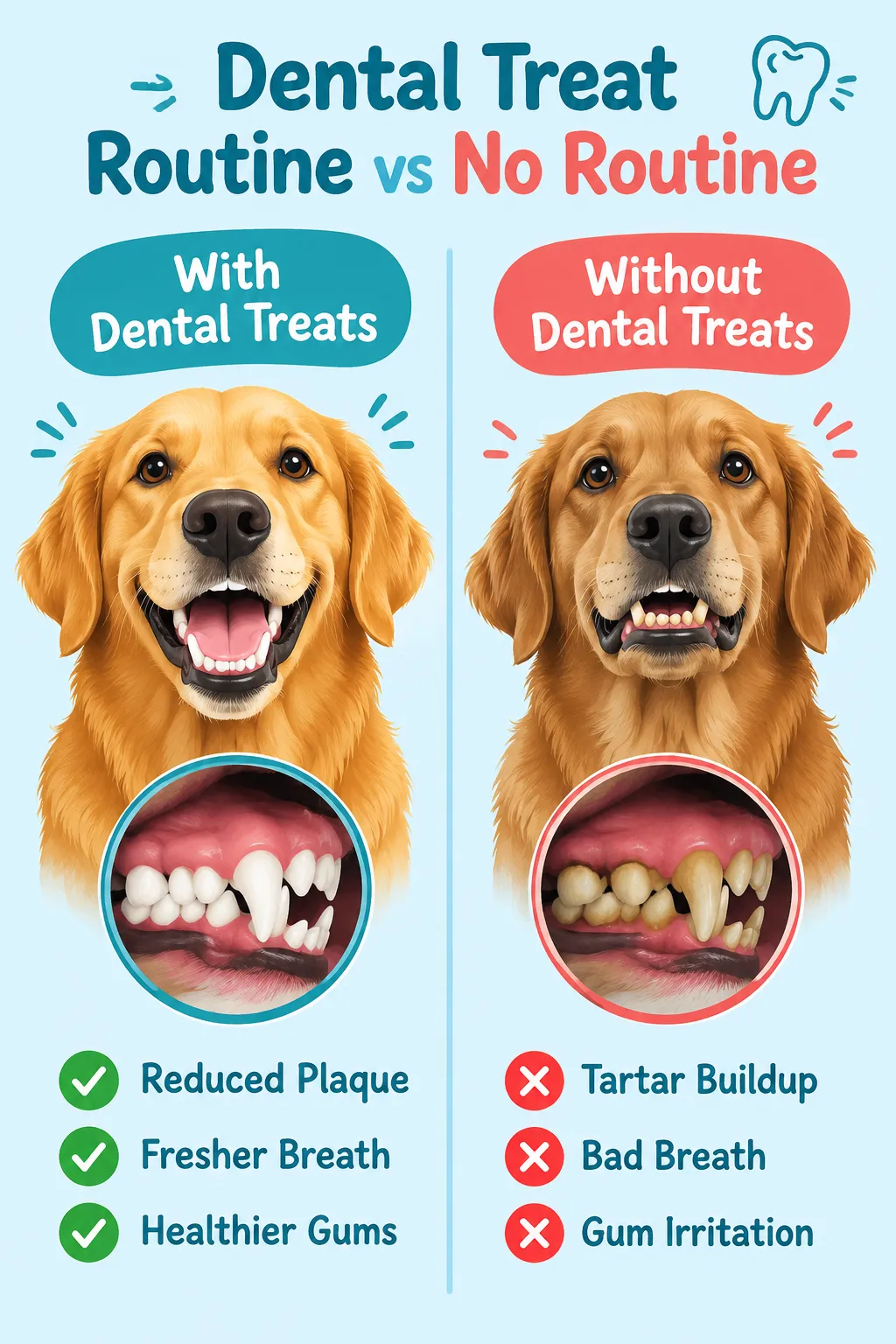
Bad breath in dogs is often a sign of plaque and tartar buildup, and no treat – homemade or commercial – can fully address that on its own. According to veterinary dental health guidance, approximately 80% of dogs show signs of dental disease by age 3, making regular dental cleanings one of the most important things a dog parent can do.
DIY dog dental treats and daily brushing help slow the buildup between professional cleanings, but they do not remove existing tartar below the gum line. That requires a professional cleaning under anesthesia.
What a good dental routine looks like:
- Daily tooth brushing with dog-safe toothpaste (see our DIY dog toothpaste recipes for homemade options)
- One dental treat per day
- Annual or bi-annual professional dental cleanings
- Regular at-home checks for red gums, loose teeth, or unusual odor
Services like HealthySmiles Non-Anesthetic Pet Dental Spas offer a middle-ground option for light cleaning between full professional dental cleanings. These can be a good addition to your pup’s routine, especially for dogs who are anxious about full anesthesia procedures.
For more on removing buildup at home, see this guide on how to remove tartar from dogs’ teeth.
Can Puppies Have Dental Treats, and What About Sensitive Teeth?
Puppies can have dental treats, but texture matters more than anything else. A young pup’s teeth are still developing, so hard baked chews or dense dehydrated chews can cause tooth fractures. Stick to softer options like frozen yogurt bites or lightly baked treats until your pup is past the teething stage (usually around 6-7 months).
For dogs with sensitive teeth – whether due to age, dental disease, or a recent cleaning – frozen treats and soft no-bake options are the safest choice. The cold from frozen treats can actually help soothe sore gums while still delivering breath-freshening herbs.
Treat texture guide by life stage:
- Puppies (under 6 months): Frozen bites, very soft no-bake treats
- Adult dogs: Any texture – baked, dehydrated, frozen
- Senior dogs: Softer baked treats, frozen bites, avoid very hard chews
- Dogs post-dental cleaning: Frozen treats only for the first 48 hours
Do Dental Treats Replace Brushing Dogs’ Teeth?
Dental treats do not replace brushing – they complement it. Brushing physically removes plaque from tooth surfaces and the gum line in a way that chewing cannot fully replicate. Veterinary sources consistently frame dental treats as an adjunct to, not a substitute for, daily brushing and professional dental cleanings.
That said, many dog parents struggle to brush their dog’s teeth daily. In those cases, dental treats combined with water additives and dental wipes are a reasonable second-best approach. Something is always better than nothing.
If you want to get better at brushing your dog’s teeth, this guide on how to brush your dog’s teeth has 5 easy hacks that make the process much less stressful for both of you.
Dental Treats for Small Breeds vs. Large Breeds
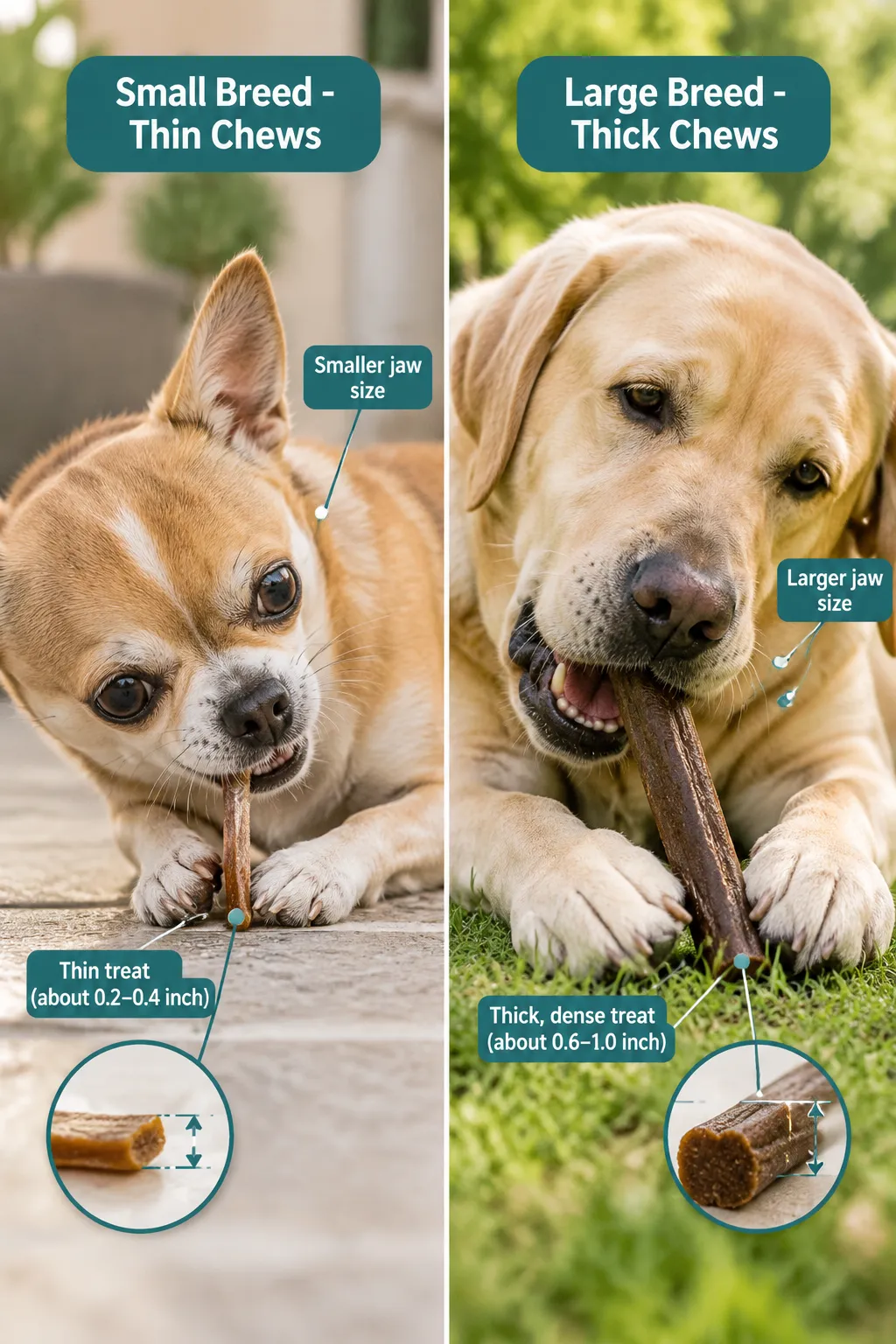
Treat size and hardness should always match the dog’s jaw size and chewing strength. A treat that is perfect for a Labrador could be a choking hazard for a Chihuahua, and a treat sized for a small breed won’t give a large dog enough chewing time to do any real dental work.
Small breeds (under 20 lbs):
- Cut treats to thumbnail size or smaller
- Use thinner rolled dough (1/8 inch) for baked treats
- Frozen bites work great – use mini ice cube trays
- Avoid very dense or hard chews
Large breeds (over 50 lbs):
- Make treats finger-thick or larger
- Dehydrated sweet potato strips can be left in longer strips
- Dense baked sticks hold up to strong chewing
- Longer chewing time means more mechanical cleaning
Dog-friendly treats in Houston, Texas and across cities like Plantation, Florida; Fort Lauderdale, Florida; Miami, Florida; and Boca Raton, Florida are increasingly available at dog-friendly parks and pet cafes, but homemade options give you full control over what your pup is chewing.
Cheapest Way to Make Homemade Dog Dental Treats
The cheapest homemade dental treats use oat flour, fresh parsley, and a single egg – ingredients that cost very little and are often already in your kitchen. A full batch of 20-30 treats typically costs under $3-5 when made with pantry staples.
Budget-friendly recipe formula:
- Base: oat flour or whole wheat flour (~$0.50 per batch)
- Binder: 1 egg (~$0.20)
- Breath herb: fresh parsley or mint (~$0.50 for a bunch that lasts multiple batches)
- Optional: 1 tablespoon coconut oil (~$0.15)
Total cost: under $1.50 per batch of 20 treats.
Compare that to commercial dental chews, which often run $1-2 per treat. Making your own is a genuinely smart way to keep your dog’s dental health routine active without spending a lot.
For more budget-conscious treat ideas, see these 12 easy dog treats homemade with 2 ingredients.
Frequently Asked Questions About Homemade Dog Treats for Bad Breath
What dissolves plaque on dogs’ teeth naturally?
Chewing fibrous foods like raw carrots, celery, and dehydrated sweet potato helps mechanically remove surface plaque. Coconut oil has antimicrobial properties that may reduce oral bacteria. Enzymatic dog toothpastes are the most effective natural option for dissolving plaque, and they work best when applied with a brush or dental wipe daily.
What are some good natural dental treats for dogs?
The best natural dental treats for dogs include dehydrated sweet potato strips, baked mint-and-parsley biscuits, frozen yogurt bites with parsley, and raw carrot sticks. Ingredients like mint, parsley, and coconut oil help freshen breath, while fibrous textures in carrots and sweet potato provide mechanical plaque-scraping action during chewing.
What are some homemade treats I can make for my dog who has no teeth?
Dogs with no teeth can still enjoy soft, smooth treats. Good options include frozen Greek yogurt bites with mashed banana and parsley, soft pumpkin puree frozen into small cubes, or blended broth-and-parsley ice cubes. Avoid any baked or dehydrated treats that require chewing. Always check with your vet about appropriate textures for your dog’s specific dental situation.
Can you give me a recipe for homemade greenies for dogs?
A simple homemade Greenies-style treat: mix 2 cups oat flour, 1/4 cup fresh chopped parsley, 1 tablespoon fresh mint, 1 egg, 2 tablespoons coconut oil, and 1/4 cup water into a firm dough. Roll into finger-thick sticks or bone shapes. Bake at 350°F for 25-30 minutes until firm and golden. Let cool fully before serving. These mimic the breath-freshening herbs and firm chewing texture of commercial Greenies.
Do homemade dental treats freshen a dog’s breath?
Yes, homemade dental treats made with mint and parsley do help freshen a dog’s breath. Both herbs contain chlorophyll and natural deodorizing compounds that neutralize odor-causing bacteria in the mouth. Results are temporary – similar to chewing gum for humans – so daily use as part of a broader dental routine gives the best ongoing results.
Can dental treats replace brushing or professional cleanings?
No. Dental treats are a helpful addition to a dog’s oral care routine, but they cannot replace brushing or professional dental cleanings. Brushing removes plaque from surfaces and the gum line that treats cannot reach. Professional dental cleanings address tartar below the gum line. Treats work best as a daily supplement between brushings and annual vet cleanings.
How often can I give my dog dental treats?
Most dogs can have one dental treat per day safely. Treats should make up no more than 10% of your dog’s daily calorie intake. For small dogs, use half-sized portions. If your dog is overweight or has health conditions, check with your vet about appropriate treat frequency and portion size before adding new treats to their diet.
Conclusion
Making DIY dog dental treats at home is one of the easiest and most cost-effective ways to support your dog’s dental health between professional cleanings. With fresh mint, parsley, fibrous vegetables, and a simple binder, you can make treats that genuinely help freshen breath and reduce surface plaque – all without the artificial additives found in many commercial options.
Your action plan:
- Start with one simple recipe – the baked mint-and-parsley biscuits or frozen yogurt bites are the easiest entry points
- Match treat size to your dog’s breed and jaw strength
- Add daily brushing to your routine (it takes under 2 minutes once your pup is used to it)
- Schedule a professional dental cleaning if your dog hasn’t had one in the past year
- Check every ingredient against the toxic foods list before making any new recipe
Your pup’s dental health directly affects their overall quality of life. Fresh breath, healthy gums, and clean teeth help dogs eat comfortably, stay active, and live longer. Start with one batch this week – your dog will love you for it.