Last updated: September 21, 2026
Quick Answer: The best rescue dog training tips all share one thing in common – trust comes first, obedience second. Rescue dogs often arrive with unknown histories, stress, and fear. Building emotional safety through routine, patience, and consent-based interaction creates the foundation that makes every command you teach actually stick.
Key Takeaways 🐾
- The first 24-72 hours should be a quiet decompression period – no commands, no pressure
- A predictable daily routine is one of the most powerful trust-builders you have
- Consent-based interaction (letting the dog approach you) reduces fear faster than forcing contact
- Short training sessions of 5 minutes, 2-3 times daily, work better than long ones for rescue dogs
- High-value treats with a clear marker word (like “Yes!”) speed up learning for stressed dogs
- Rescue dog training differs from puppy training – past trauma changes the timeline
- Signs of progress include relaxed body language, voluntary approach, and calm eating
- Avoid dog parks, busy spaces, and too many visitors for at least the first two weeks
- If your rescue was abused, go slower – patience is not optional, it’s the method
- Obedience built on trust is more reliable and longer-lasting than obedience built on pressure
The Best Way to Build Trust With a Rescue Dog
Trust with a rescue dog is built through safety, predictability, and choice – not commands. Before your dog can learn “sit,” they need to feel that your home is a place where nothing bad will happen to them.
According to rescue training experts, the S.P.A.C.E. framework covers the five pillars of trust: Safety, Predictability, Allow (choice), Communication, and Empowerment. These come before any formal obedience work.
Start by simply being present without demanding anything. Sit near your dog. Read a book. Let them observe you. That quiet time does more in the first week than any training session.
Tip 1 – Give Your Rescue Dog a Proper Decompression Period
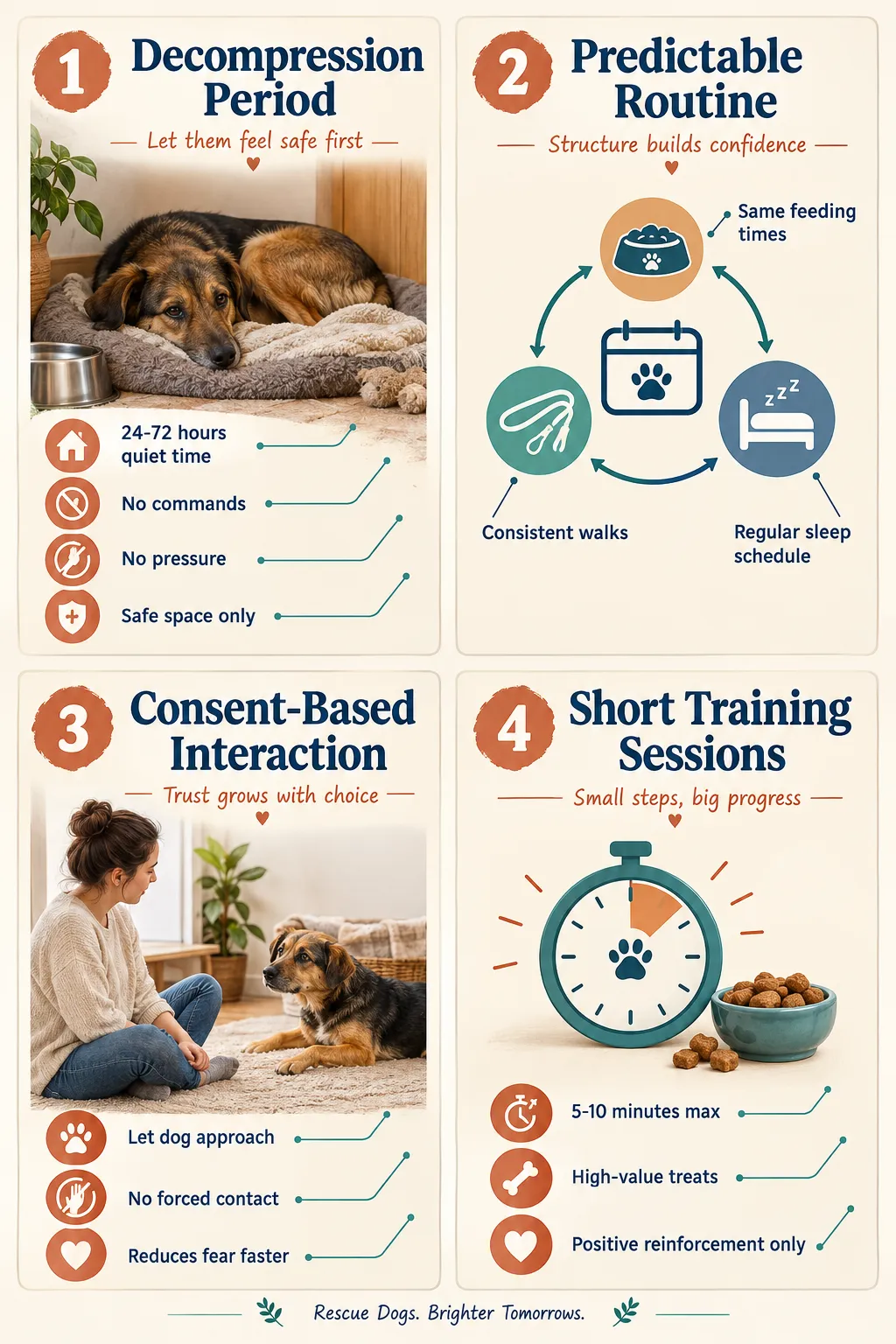
The first 24-72 hours in your home are critical. Rescue support organizations advise taking your new dog to a potty area first, walking them through only the essential rooms, showing them their water bowl and bed, offering a small meal, and then letting them rest – without repeatedly calling or touching them.
This is not neglect. It’s respect.
Your dog has just gone through a shelter, a transport, and a brand new environment. Their nervous system is overloaded. The kindest thing you can do is reduce stimulation.
What to do in the first 72 hours:
- Keep the home quiet and calm
- Limit visitors and loud noises
- Don’t force cuddles or pick them up
- Let them sniff and explore at their own pace
- Avoid busy public spaces for at least two weeks
“The early goal is calm observation and safety, not teaching cues.” – 2026 rescue training guidance
If you’re also working on housebreaking during this time, these puppy potty training tips apply to rescue dogs too – patience and routine are the core of both.
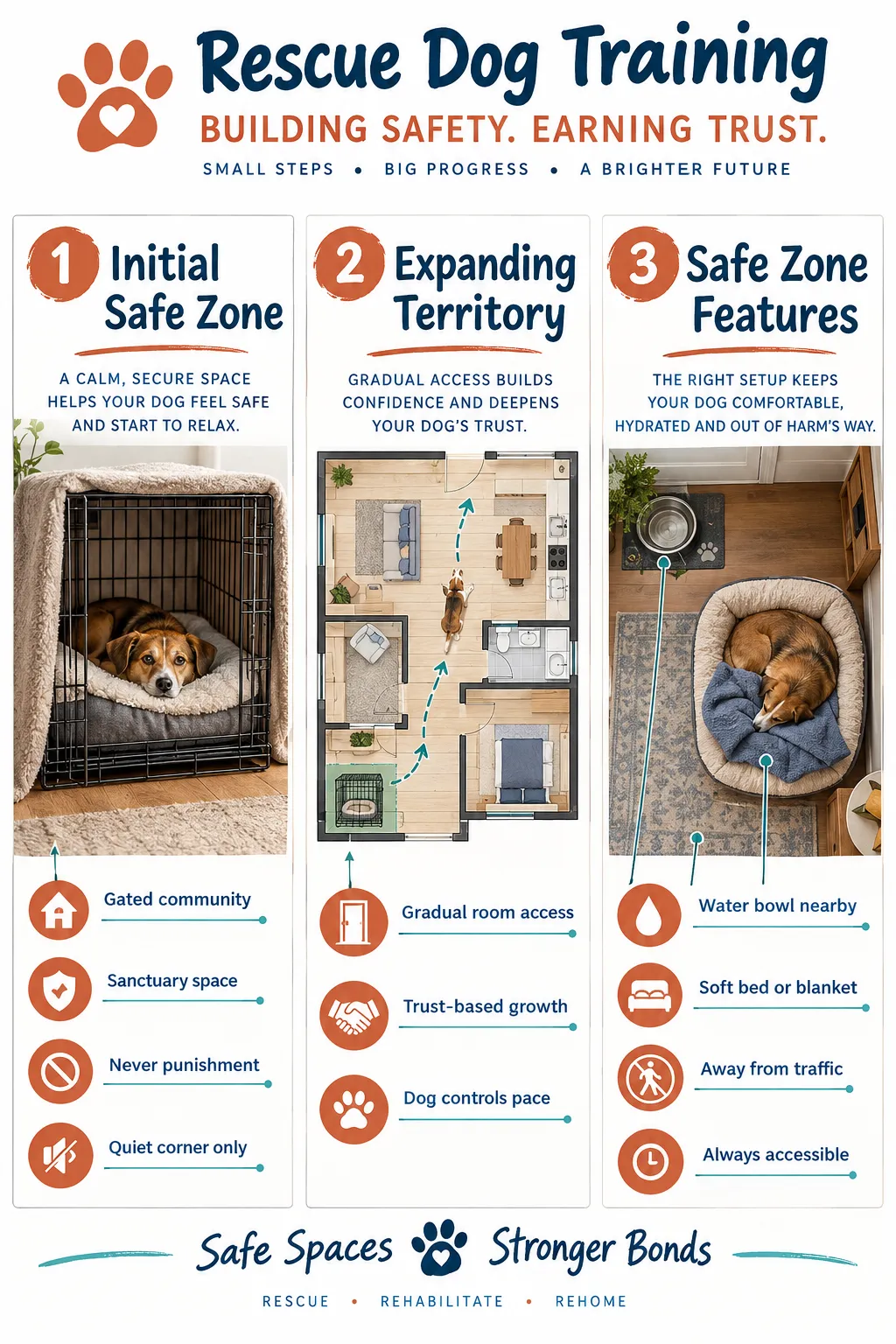
Tip 2 – Create a Safe Zone Your Dog Can Always Retreat To
Every rescue dog needs a designated space that is theirs and theirs alone. A 2026 rescue organization describes this as a “gated community” – a crate, bed, or quiet corner that slowly expands as trust grows.
This space is a sanctuary, not a punishment tool.
Use baby gates to confine your dog to one quiet room at first. Introduce the crate as a cozy retreat by tossing treats inside without closing the door. Never use it as a consequence for bad behavior.
When your dog can retreat to this space and not be bothered, they learn that they have control. That sense of control is what starts to dissolve fear.
✅ Free Dog Training Workshop: If you’re struggling with the early days of rescue dog ownership, this free online workshop teaches you how to housebreak your dog, stop bad behaviors, and build the kind of obedience service dog trainers use – it’s a great starting point alongside these trust-building steps.
Tip 3 – Use Consent-Based Interaction and Non-Threatening Body Language
Rescue dogs are often hyperaware of human body language. Looming over them, reaching for their head, or making direct eye contact can all read as threats.
A New Zealand training guide recommends sitting on the floor, turning sideways, letting the dog approach you, avoiding direct eye contact, and offering the back of your hand at their level. The dog closes the gap on their own terms.
This is called consent-based interaction, and it’s one of the most effective rescue dog training tips in 2026.

Practical body language tips:
- Crouch or sit on the floor instead of standing tall
- Turn slightly sideways rather than facing them head-on
- Offer the back of your hand, not the palm, for sniffing
- Use a soft, calm voice – avoid high-pitched excitement
- Only pet them when they lean into you first
Tip 4 – Build a Predictable Daily Routine
Consistency is one of the most underrated rescue dog training tips there is. A bonding guide from Canine Journal states that feeding, walking, and training on a predictable schedule is “one of the most important ways to build trust.”
When your dog knows what comes next, their anxiety drops. Predictability is safety.
A simple daily rhythm might look like this:
| Time | Activity |
|---|---|
| Morning | Potty, short walk, breakfast |
| Mid-morning | Quiet rest in safe zone |
| Afternoon | 5-min training session, sniff break |
| Evening | Feeding, calm play, potty |
| Night | Settle in crate or bed |
Stick to the same times each day. Use the same words for transitions (“time to eat,” “let’s go outside”). Your dog will start to anticipate the routine, and that anticipation builds confidence.
Tip 5 – Use Positive Reinforcement With High-Value Treats and a Marker
For rescue dogs, positive reinforcement is not just one option – it’s the only training approach that builds genuine trust in dogs that have been through the shelter system.
Use small, soft, smelly treats – think tiny pieces of chicken, cheese, or hot dog. These are high-value rewards that cut through stress and distraction.
Pair treats with a clear marker word like “Yes!” said the moment your dog does something right. Timing matters – mark the behavior within 0.5 seconds of it happening. This precision helps stressed dogs connect their actions with rewards.
Session structure that works:
- Keep sessions to 5 minutes, 2-3 times per day
- Always end on a success, even if it’s something easy
- Reward calm behavior, voluntary eye contact, and approaching you – before asking for any formal cues
For a structured approach to daily training, check out this 14-day dog training plan that works even if you’ve tried everything before.
Rescue Dog Training vs Puppy Training – Key Differences
Rescue dog training and puppy training are not the same thing. A puppy is a blank slate. A rescue dog may carry fear, trauma, or deeply ingrained habits from a previous life.
Trainers working with rescue dogs outline trust, communication, routines, and consistency as the first steps – with obedience and socialization only coming later in the sequence.
Key differences at a glance:
- Decompression time: Rescue dogs need weeks; puppies bond almost immediately
- Fear triggers: Rescue dogs may have specific triggers; puppies generally don’t
- Session length: 5 minutes for rescue dogs; puppies can handle slightly longer
- Obedience start: Only after trust is established for rescue dogs; earlier for puppies
- Socialization: Must be slower and more controlled for rescue dogs
If your rescue dog is also showing stubborn behavior, these stubborn dog training tips can help you work through resistance without damaging the trust you’ve built.
How to Help a Rescue Dog With Anxiety and Fear
Anxious rescue dogs need their trigger load reduced before training can begin. A step-by-step anxiety guide recommends minimal visitors for the first two weeks, quiet home routines, and carefully staged low-stimulus outings before moving to more complex environments.
Signs of anxiety in rescue dogs:
- Panting, yawning, or lip-licking without reason
- Tucked tail, flattened ears, crouching posture
- Refusing food (a big red flag in early days)
- Hiding or freezing when approached
- Excessive barking or destructive behavior
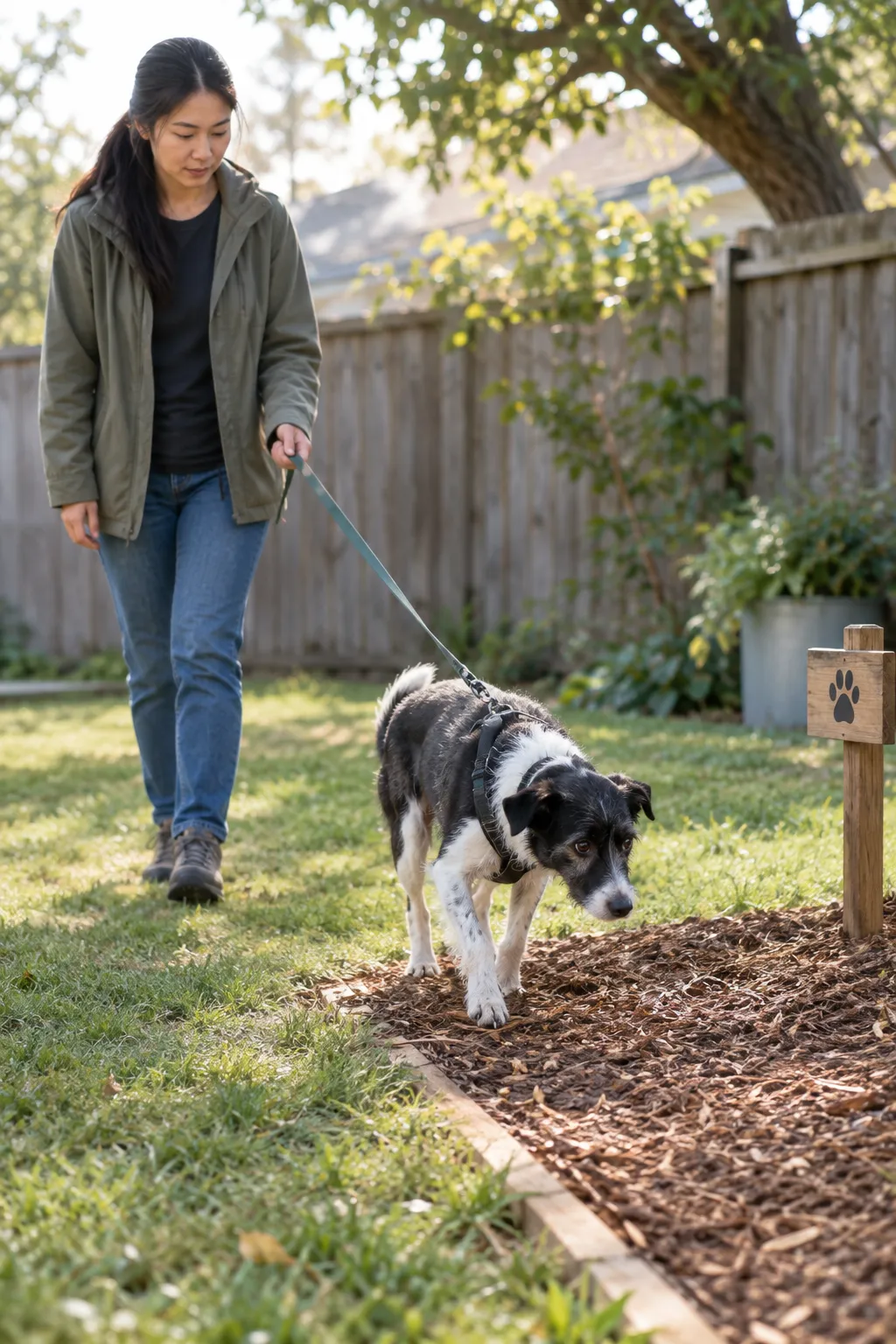
If walks are too overwhelming, switch to short sniff breaks in the backyard. Sniffing is mentally exhausting in the best way – it calms the nervous system.
For dogs showing reactive behavior on leash, this guide on training a reactive dog offers practical steps that pair well with trust-first methods.
What If My Rescue Dog Was Abused?
If your rescue dog shows signs of past abuse – flinching at hands, cowering near men, panicking at loud noises – the trust-building timeline gets longer. That’s not a problem. That’s just the reality.
Specialist guidance for fearful rescue dogs recommends a calm, low voice, avoiding sudden movements, and offering treats from an open palm while allowing the dog to initiate contact.
Never punish fear responses. Growling, hiding, or freezing are communication, not defiance.
What helps abused rescue dogs most:
- Absolute consistency – no surprises, ever
- Letting them opt out of interactions without consequence
- Desensitization to specific triggers at a very slow pace
- Counterconditioning (pairing scary things with treats)
- Working with a certified behaviorist if fear is severe
Why Is My Rescue Dog Not Listening to Commands?
If your rescue dog ignores commands, it’s almost never about stubbornness. It’s usually about trust, stress, or unclear communication.
As Indian Express trainers noted in a 2026 feature, rushing obedience can actively undermine recovery. A dog in a stress response literally cannot learn – their brain is in survival mode, not learning mode.
Common reasons a rescue dog won’t listen:
- They don’t yet trust you enough to take direction from you
- The environment is too distracting or overwhelming
- The reward isn’t high-value enough to compete with their anxiety
- Commands were taught with punishment in a previous home
- They simply haven’t learned what the word means yet
Fix: Go back to basics. Reward eye contact. Reward calm. Reward coming to you voluntarily. Build the relationship before the skill.
How to Train a Rescue Dog That Won’t Come When Called
A rescue dog that won’t come when called is one of the most common challenges new adopters face. The “come” command requires trust – your dog has to believe that coming to you is always a good thing.
Never call your dog to you for something unpleasant (a bath, nail trim, or being put in the crate). If you need to do something they dislike, go to them instead.
Build a reliable recall:
- Start indoors with zero distractions
- Say your dog’s name in a happy voice, then “come”
- The moment they move toward you, mark it (“Yes!”) and reward generously
- Never punish a dog that comes to you, even if it took a long time
- Practice on a long line outdoors before trying off-leash
For more on building reliable commands, see these top daily training commands that work well with rescue dogs.
Can You Train an Older Rescue Dog?
Yes – absolutely. The idea that you can’t teach an old dog new tricks is simply wrong. Older rescue dogs can and do learn new behaviors, often faster than puppies because they have better focus.
The key difference is that older dogs may have more ingrained habits to work through, and their bodies may have physical limitations to consider. Adjust expectations around energy and session length, but don’t lower expectations around what’s possible.
Rescue Dog Training Timeline – What to Expect
There’s no single timeline, but here’s a realistic framework based on 2026 guidance:
| Phase | Timeframe | Focus |
|---|---|---|
| Decompression | Days 1-14 | Safety, routine, no demands |
| Trust building | Weeks 2-6 | Consent, positive associations |
| Basic obedience | Weeks 4-8 | Sit, down, name recognition |
| Recall and leash | Weeks 6-12 | Come, loose leash walking |
| Advanced skills | Month 3+ | Stay, off, socialization |
Some dogs move faster. Some take longer. The only wrong move is rushing.
Should I Use Treats or Praise for Rescue Dog Training?
Use both, but start with treats. For a dog that doesn’t yet trust you, verbal praise means very little. Food is a biological motivator that works even when the emotional bond isn’t there yet.
As trust grows, your praise will start to carry more weight. Eventually, many rescue dogs become highly motivated by their owner’s approval. But you have to earn that.
High-value treats (chicken, cheese, hot dog) work better than dry kibble for stressed dogs. Keep pieces tiny – about the size of a pea – so you can reward frequently without filling them up.
✅ Want to fast-track this process? This free dog training workshop uses the same methods service dog trainers rely on – it covers everything from housebreaking to stopping bad behaviors, and it’s a perfect companion to the trust-first approach in this guide.
What Not to Do When Training a Rescue Dog
Knowing what to avoid is just as important as knowing what to do. These are the most common mistakes that set rescue dog training back.
Avoid these at all costs:
- Flooding (forcing exposure to fears to “get over it”)
- Punishment-based corrections like leash jerks or yelling
- Too many visitors or social demands in the first two weeks
- Expecting obedience before trust is established
- Inconsistent rules (allowed on the couch one day, not the next)
- Long training sessions that exhaust and frustrate
- Calling your dog’s name in a frustrated or angry tone
For a deeper look at what derails training progress, these 15 terrible dog training mistakes are worth reading before you start.
How to Know If Your Rescue Dog Is Making Progress
Progress with a rescue dog is often subtle at first. You’re not looking for perfect obedience – you’re looking for emotional shifts.
Signs your rescue dog is making real progress:
- They eat their meals without hesitation
- They approach you voluntarily (without being called)
- Their body language is looser – relaxed tail, soft eyes, wiggly body
- They sleep deeply and comfortably in your home
- They make eye contact with you
- They show interest in toys or play
- They recover faster after something startles them
These are the real milestones. Obedience follows naturally once these boxes are checked.
How Much Do Rescue Dog Training Classes Cost?
Rescue dog training classes typically range from $50-$200 for group classes (per session or per multi-week course) and $75-$300+ per hour for private trainers, depending on location and specialization. Behavior consultants for severe fear or aggression cases can run higher.
If cost is a concern, look for:
- Rescue organization training programs (often discounted or free for adopters)
- Online training resources and workshops
- Group classes at local humane societies
- Certified trainers who offer sliding-scale fees
FAQ – Rescue Dog Training Tips
How long does it take to train a rescue dog?
Basic trust takes 2-6 weeks to establish. Basic obedience follows from weeks 4-8. A fully settled, well-trained rescue dog typically takes 3-6 months – sometimes longer if there’s significant trauma.
Why does my rescue dog seem fine some days and scared other days?
This is normal. Stress and fear don’t resolve in a straight line. Two steps forward, one step back is the typical pattern. Consistency from you is what gradually smooths it out.
Should I crate my rescue dog?
Yes, used correctly. A crate is a safe retreat, not a punishment. Introduce it slowly with treats and never force your dog inside. Many rescue dogs find crates genuinely comforting.
Can I use a clicker for rescue dog training?
Absolutely. A clicker provides a precise, consistent marker that helps stressed dogs learn faster. Learn how to use a clicker for dog training to get the timing right from the start.
My rescue dog growls at me. What should I do?
Do not punish the growl. Growling is communication – your dog is telling you they’re uncomfortable. Back off, reduce pressure, and work on trust. Punishing growling suppresses the warning signal and can lead to biting.
How do I find a good trainer for my rescue dog?
Look for trainers certified by the CCPDT (Certified Council for Professional Dog Trainers) or IAABC (International Association of Animal Behavior Consultants). Ask specifically about their experience with fearful or shelter dogs and confirm they use force-free methods.
Is it normal for a rescue dog to hide for days?
Yes. Some dogs hide for the first few days or even weeks. As long as they’re eating, drinking, and eliminating, give them time. Forcing interaction will slow the process down.
When can I start leash training my rescue dog?
Start loose leash walking once your dog is comfortable going outside with you – usually after the first 1-2 weeks. For dogs that pull, this guide on leash training a dog that pulls has practical steps that work well with rescue dogs.
What if my rescue dog was abused by a man or a specific type of person?
This is a specific fear trigger. Work on gradual desensitization – have the person sit at a distance, toss treats without looking at the dog, and let the dog approach on their own terms. Never force an introduction.
How many times a day should I train my rescue dog?
Two to three short sessions per day, each lasting about 5 minutes. This is more effective than one long session and less likely to overwhelm a stressed dog.
Do rescue dogs ever fully recover from trauma?
Most do – with time, patience, and the right environment. Some dogs carry residual sensitivities their whole lives, but that doesn’t stop them from being happy, well-adjusted companions. Many rescue dog owners say their dog’s transformation is one of the most rewarding things they’ve ever witnessed.
Should I let my rescue dog sleep in my bed?
That’s a personal choice. If your dog seems comfortable and it doesn’t create resource guarding issues, co-sleeping can strengthen the bond. If your dog seems anxious or restless in your bed, a crate or dog bed nearby works just as well.
Conclusion – Build the Bond First, Then Build the Skills
Every rescue dog training tip in this guide points to the same truth: the bond comes before the behavior.
Your rescue dog doesn’t need a drill sergeant in the first weeks. They need a safe person in a safe place with a predictable routine. Once they have that, the training almost teaches itself.
Start with decompression. Create a safe zone. Let them approach you on their terms. Feed them on a schedule. Mark and reward every small win. And be patient – not because it’s nice advice, but because patience is the actual method.
The dogs that seem the most “untrainable” in week one are often the most devoted companions by month three. Trust the process.
✅ Ready to go deeper? Join this free dog training workshop – it’s a first-of-its-kind online resource that teaches you to train your dog to service-dog-level obedience using the same methods professional trainers use. It pairs perfectly with the trust-first approach you’ve just learned.